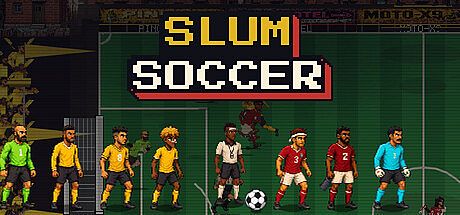


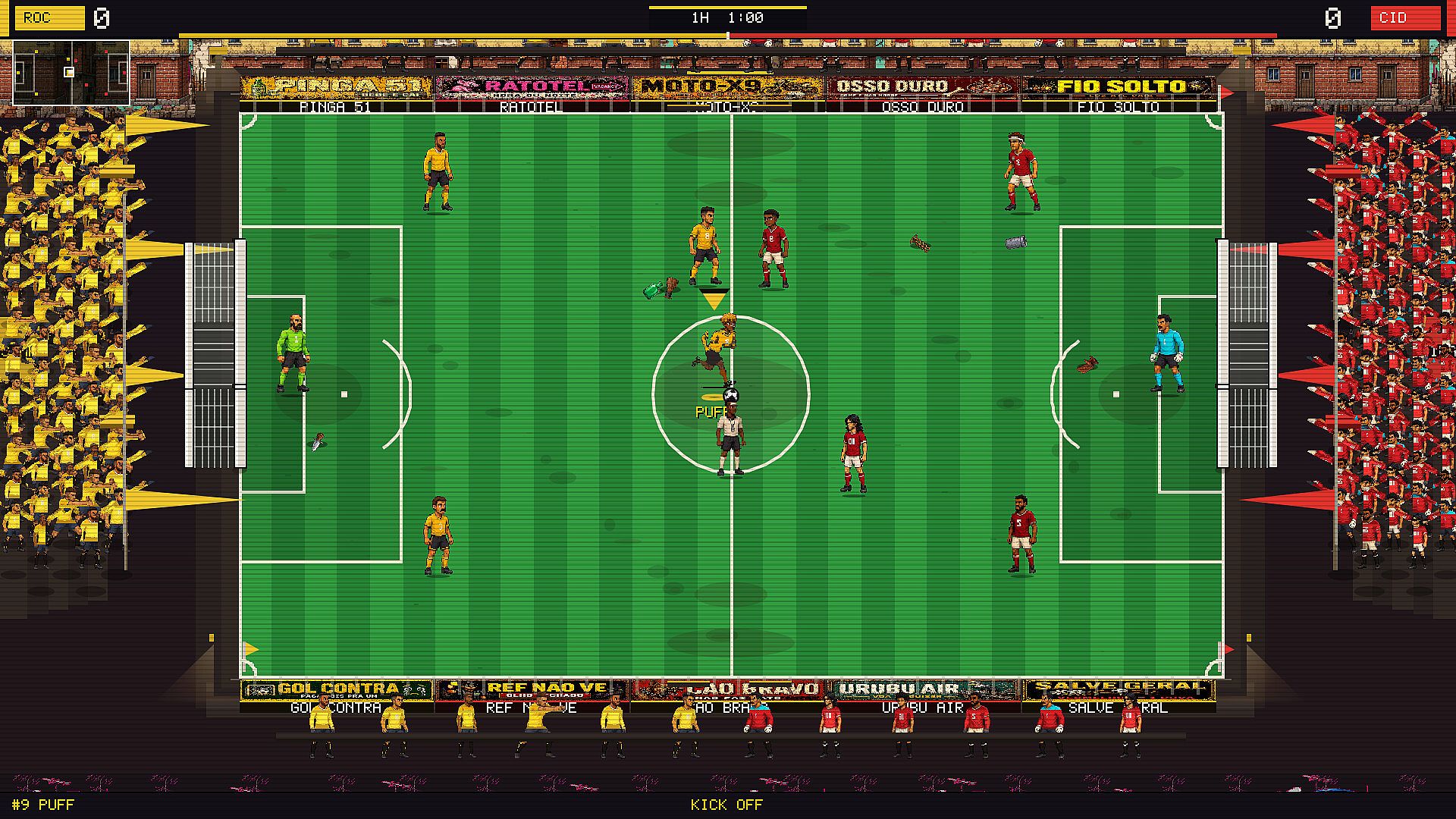
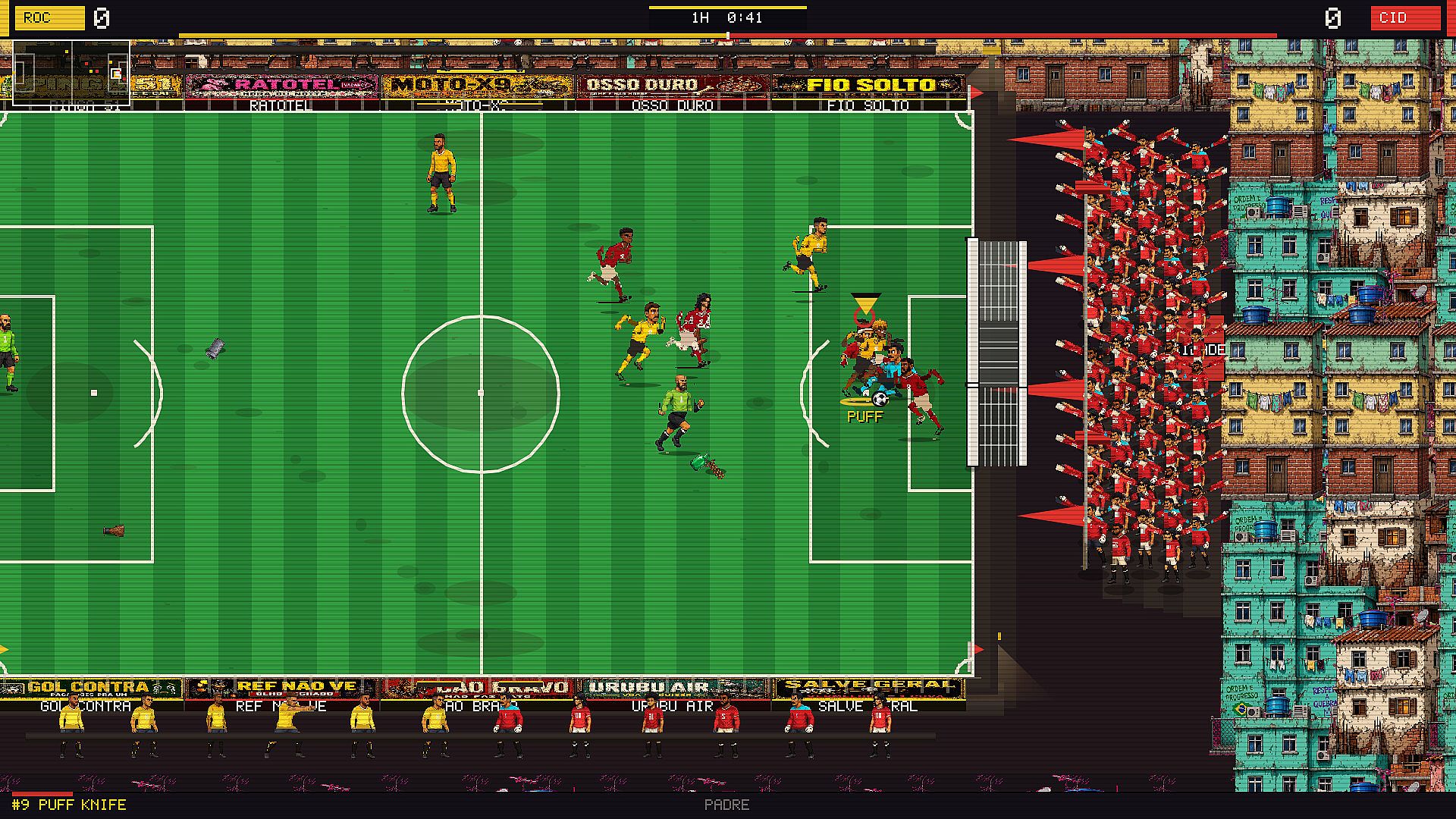
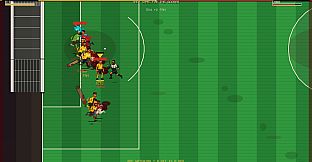
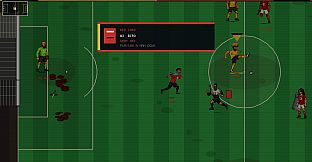
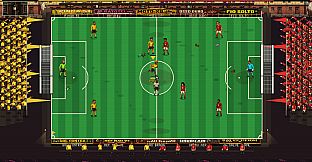
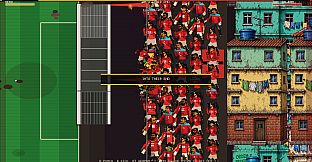
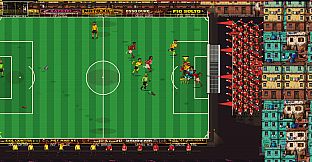
Slum Soccer is an indie sports title that delivers fast five-a-side arcade football set in a Brazilian favela. The game uses a distinctive 16-bit pixel art style reminiscent of classic Mega Drive games, placing matches between Rocinha and Cidade under floodlights with houses stacked right up to the touchline. Players select squads, manage on-pitch actions, and handle occasional scraps when tempers flare, all while the ball stays in play by rebounding off surrounding walls.
Gameplay
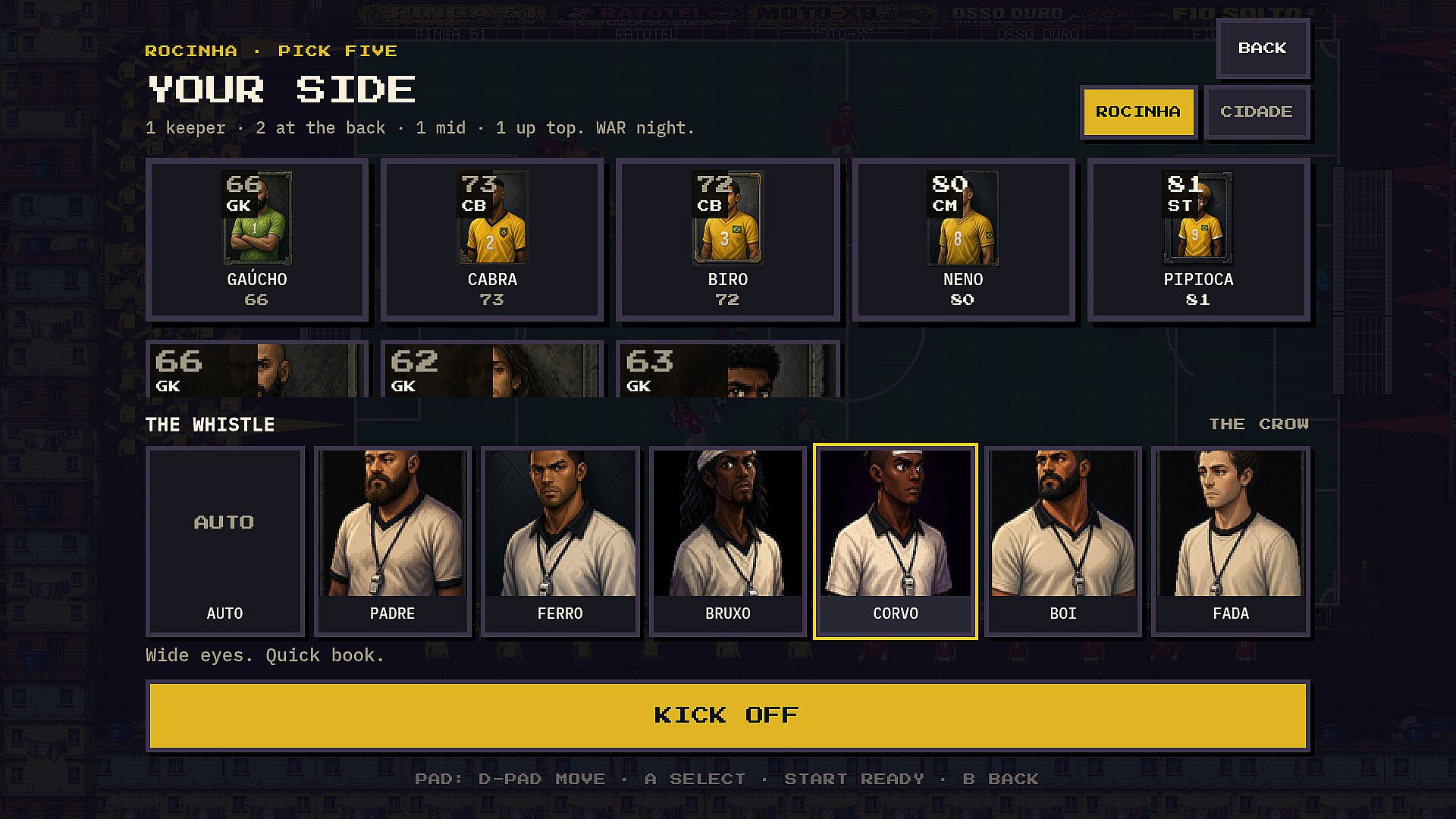
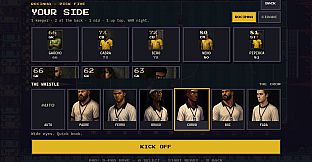
Matches emphasize quick decision-making and direct control. Players pick five from a squad of twenty, assigning roles that include one keeper, two defenders, one midfielder, and one forward. Each player carries ratings for pace, shooting, passing, and tackling along with a unique trait and short description that hints at their style on the pitch. Teams appear in gold for Rocinha or crimson for Cidade, and the host or player can choose a referee from six options with distinct behaviors before kickoff.
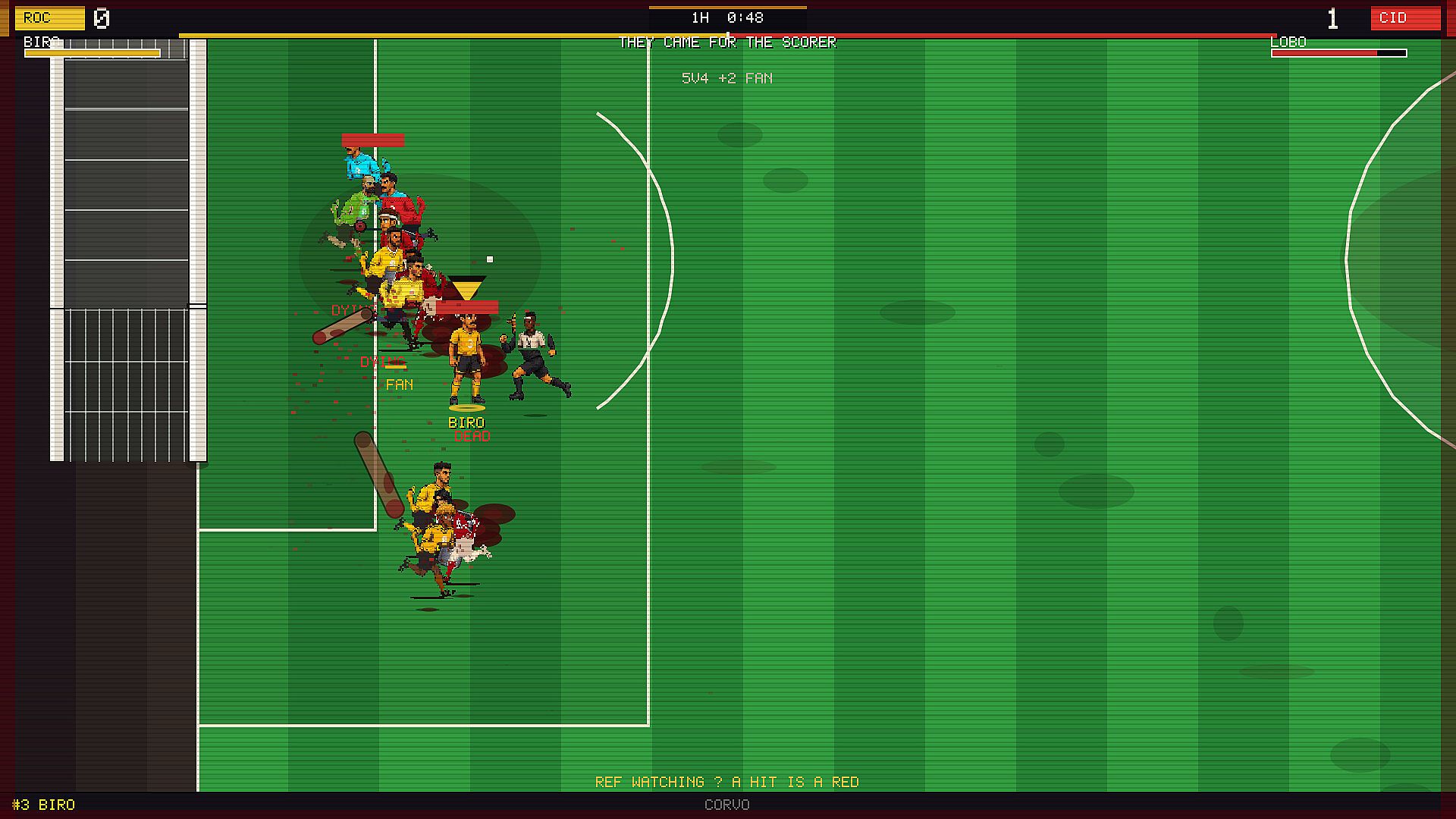
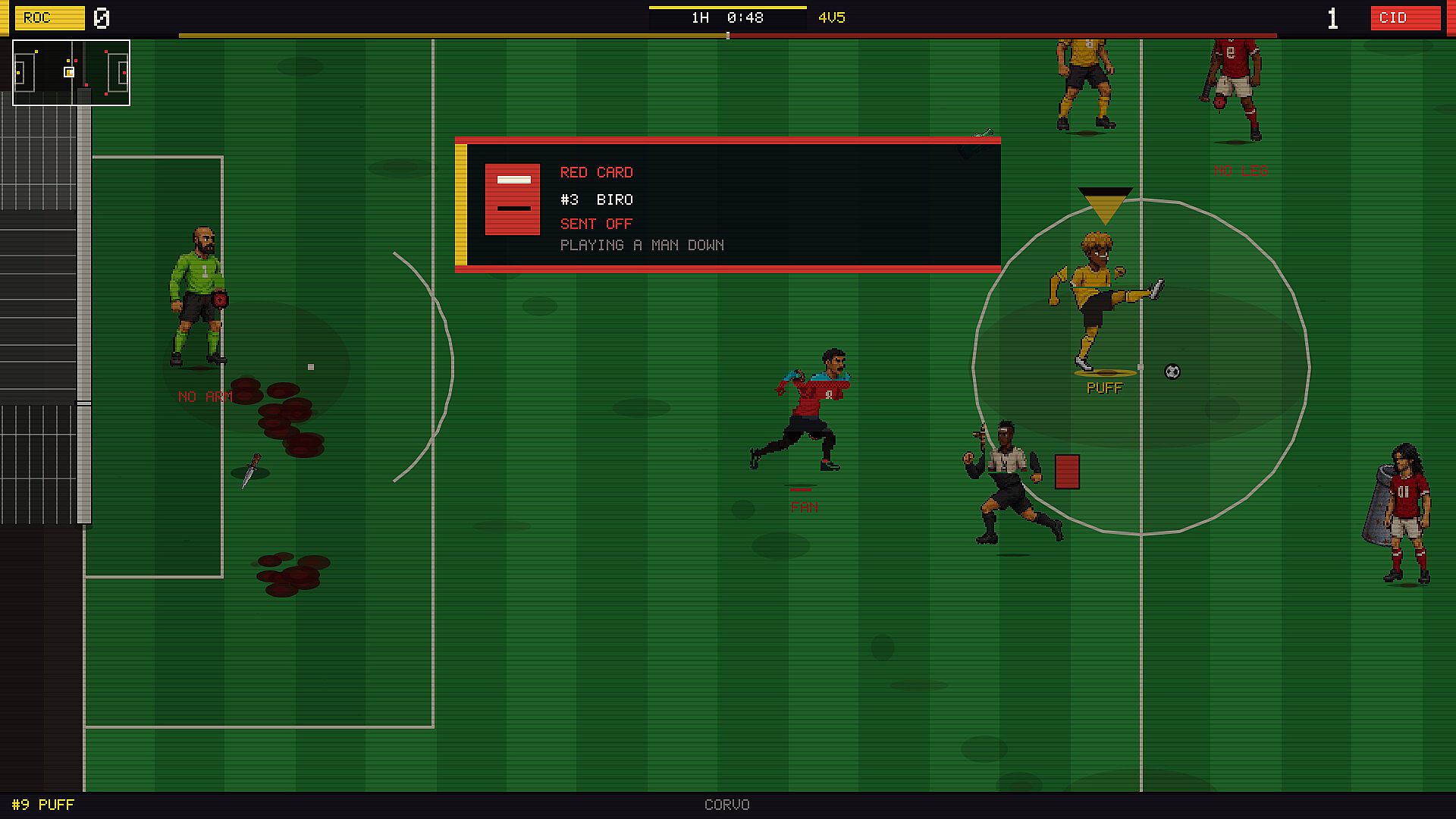
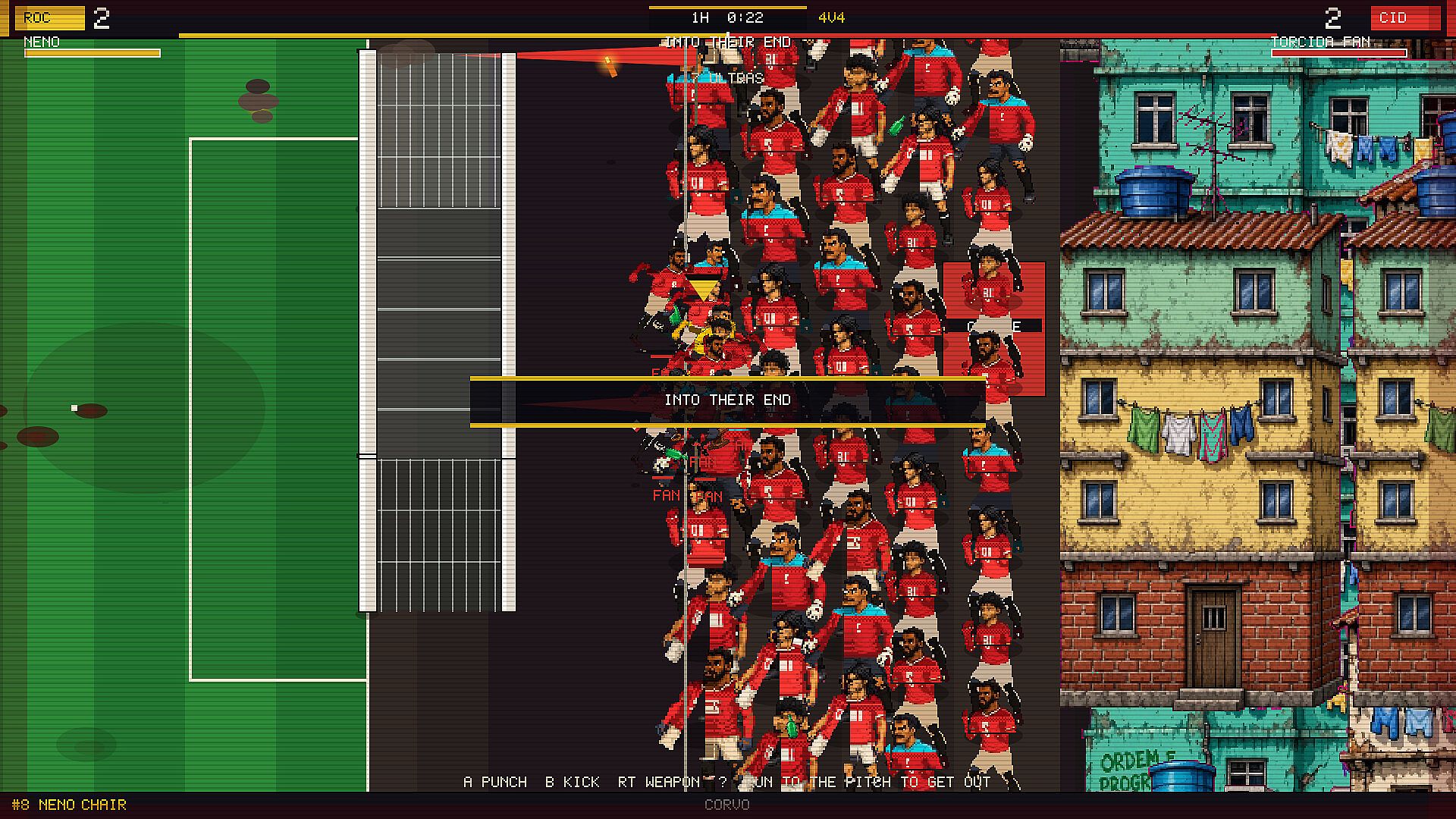
Core actions include charged passes and shots that reward timing for first-time finishes, lofted balls, through balls, standing tackles, slides, and jockeying. Skill moves such as the cut, rainbow, and fake add options for beating defenders. There are no corners or throw-ins; instead, the ball returns from the walls, turning touchline passes into crosses. Control switches automatically to the player nearest the ball, though manual swaps remain available. When play stops after a foul, goal, or restart, scraps can begin. Participants punch, kick, or grab nearby objects like bats, chains, pipes, or chairs to gain an edge. Referee reactions vary, with some issuing cards more readily than others, and injuries from cuts can leave a team short-handed until the match ends or a forfeit occurs.
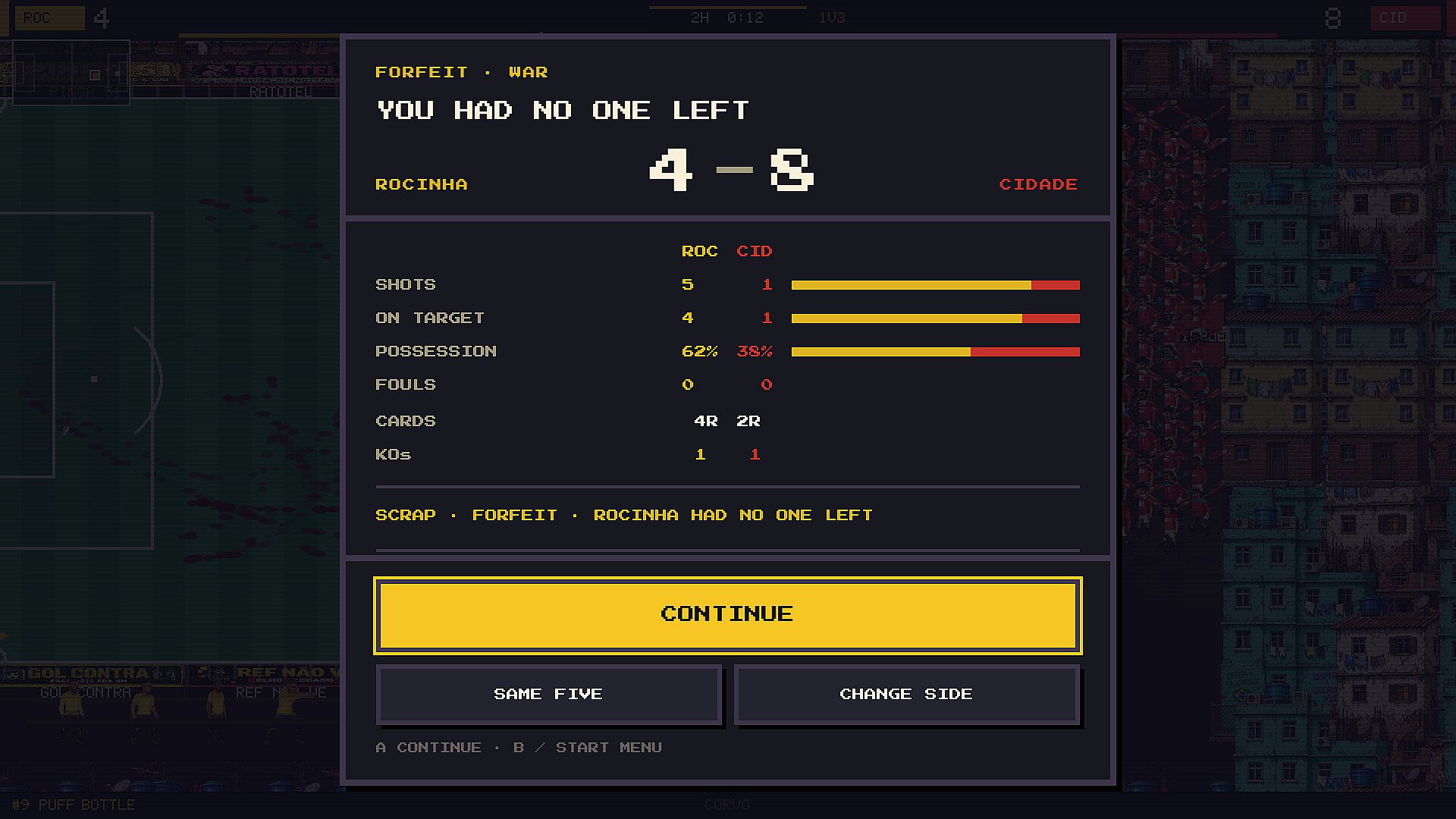
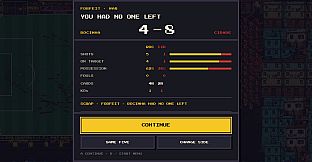
End-of-match statistics track shots, shots on target, possession, fouls, cards, and knockouts. A career record on the title screen records overall matches, wins, goals, and KOs across sessions.
Game Modes
Three difficulty settings shape CPU behavior and match intensity. STREET mode grants the opponent more time on the ball for a measured pace. RIOT increases pressing, tackling aggression, and quicker loss of temper. WAR closes down space immediately and triggers frequent physical confrontations. These settings alter how matches unfold without changing the core ruleset.
Online play supports 1v1 matches through friend invites or matchmaking. One participant selects five players in gold while the other chooses in crimson. Both sides confirm readiness before the whistle blows. The experience runs entirely on controller input, with full menu navigation supported, though keyboard controls also function.
Setting and Presentation
The visual style captures the cramped, intense atmosphere of favela football with stacked housing and floodlit pitches. Pixel art keeps movement readable at arcade speed while the limited camera and wall rebounds keep the action contained and continuous. Referee selection adds personality to each match, as different officials react differently to late slides or physical challenges. The overall loop focuses on short, high-tension games rather than long campaigns or extensive customization.
Is It Worth Playing?
Slum Soccer suits players who enjoy retro-inspired arcade sports games with added physicality and simple squad management. The combination of charged mechanics, skill moves, and post-whistle scraps creates a distinct rhythm that rewards precise timing and quick reactions. Those seeking realistic simulation or large-scale leagues will find the scope narrower, yet the focused 5-a-side format and variable referee and difficulty options provide repeatable short sessions. Controller support and straightforward 1v1 online play make it accessible for both solo practice against CPU opponents and direct competition with others. As an Early Access title, the current feature set centers on these core systems without additional confirmed modes or updates beyond the described content.