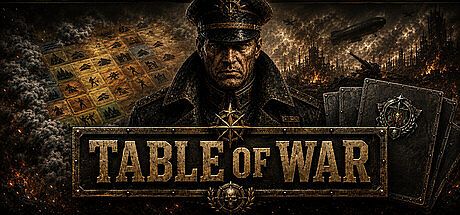


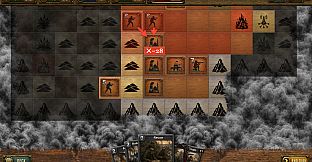
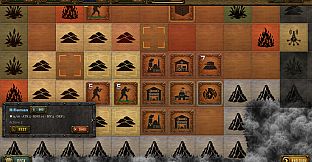
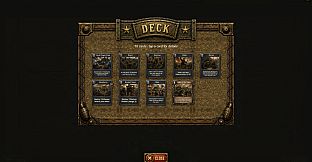
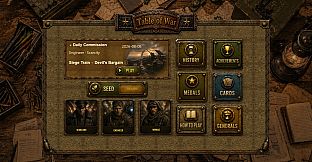
Table of War is a strategy indie game for PC that combines board-based tactics with deckbuilding in a single-player campaign. Players command a company of named soldiers across procedurally generated battlefields rather than controlling a single hero. The core loop separates movement and combat on the board from command decisions handled through a deck of cards.
Gameplay
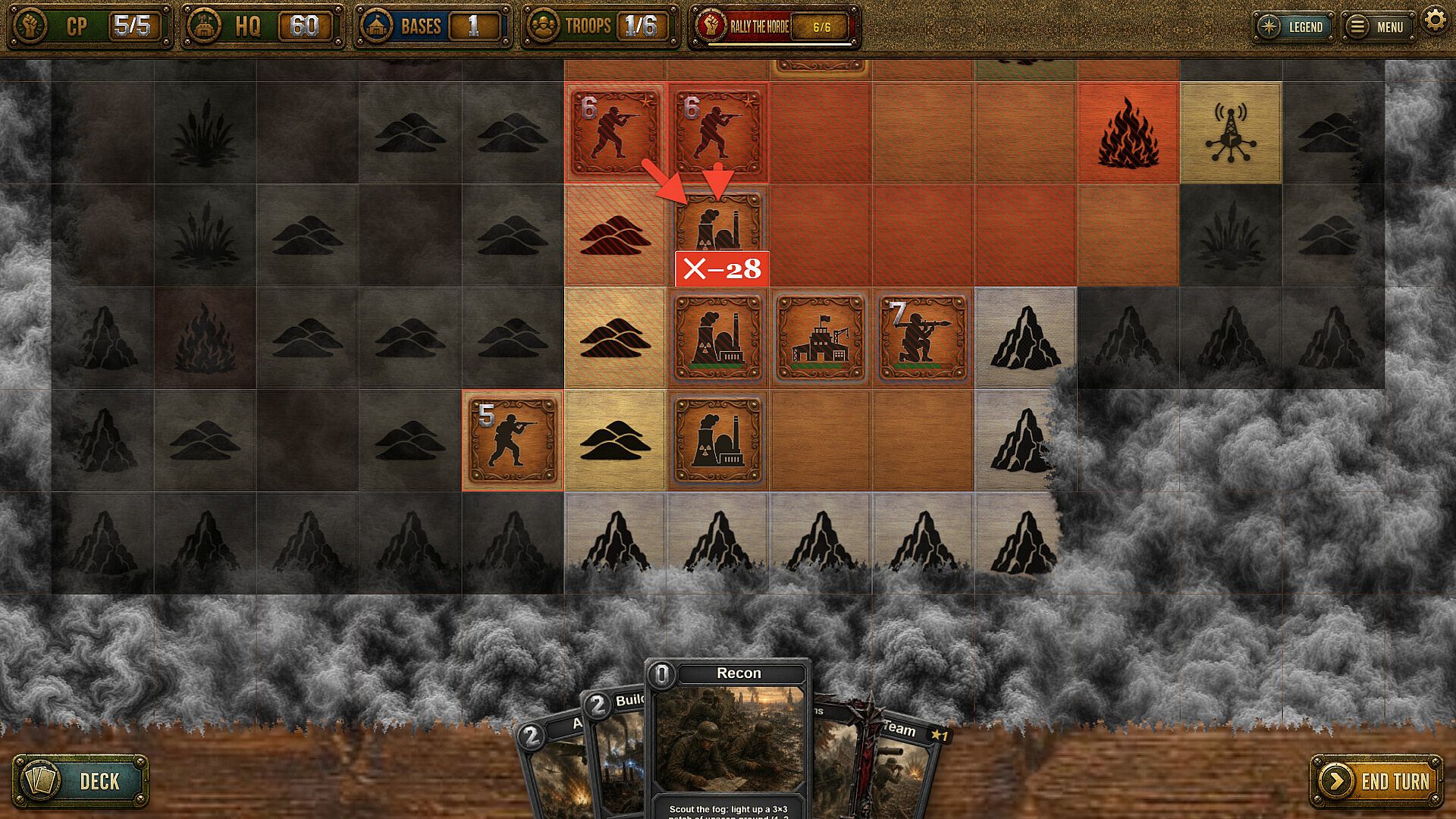
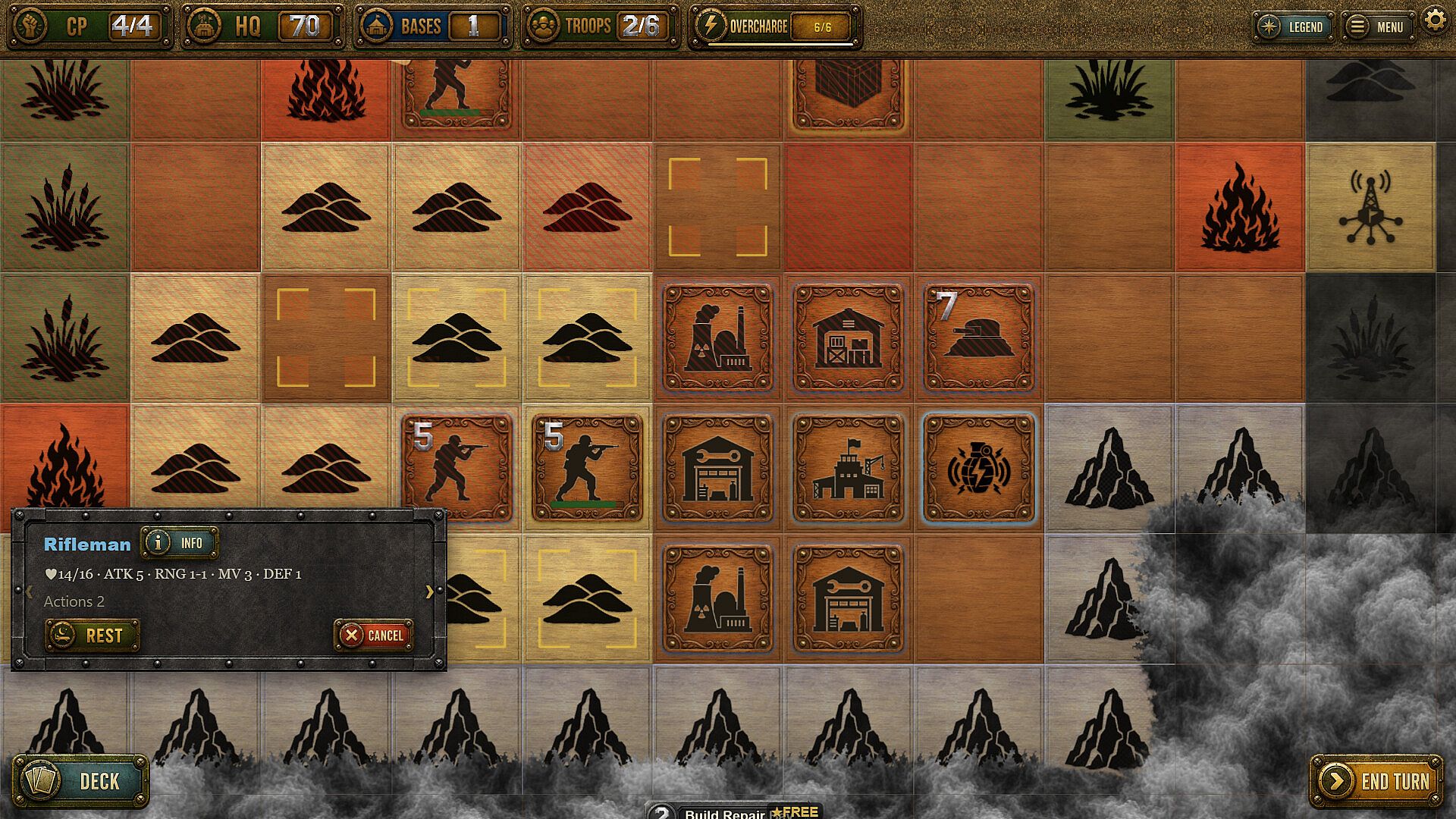
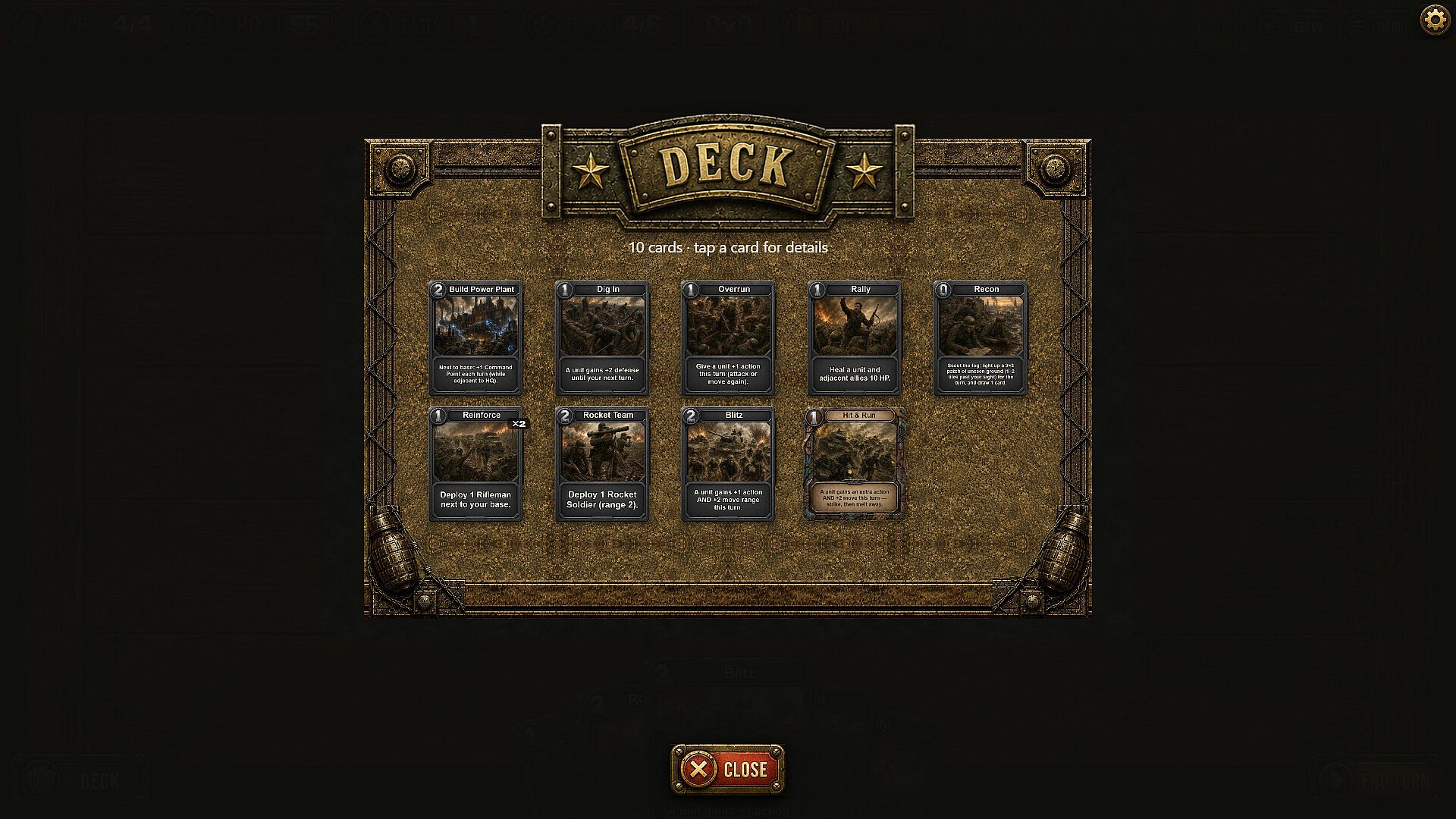
Units operate on their own action points for walking, flanking, and holding positions without needing cards. The deck functions as a command channel for reinforcements, ordnance, standing orders, structures, and the general's signature power. Positioning matters through zones of control that prevent sprinting past enemies, flanking that requires an adjacent second body, and fog of war that limits visibility. Terrain includes forest, hills, water, and rock, with some elements that can be altered. Environmental hazards such as inferno, toxic, mire, and EMP fields appear alongside drifting storms that affect all units present.
Every soldier carries a persistent name, rank, experience, and scars. Troops promote through branch-specific ladders and earn permanent perks at camps. Losses are permanent, which shapes the run economy around survivors and salvage purchases. Enemy intent appears through telegraphed ghosted positions, projected attack arrows, and a two-tier danger overlay that updates as moves occur. Friendly fire from artillery splashes can hit any unit, and objectives often require surviving turns or holding contested positions instead of total elimination. Raiders can steal salvage and escape unless stopped.
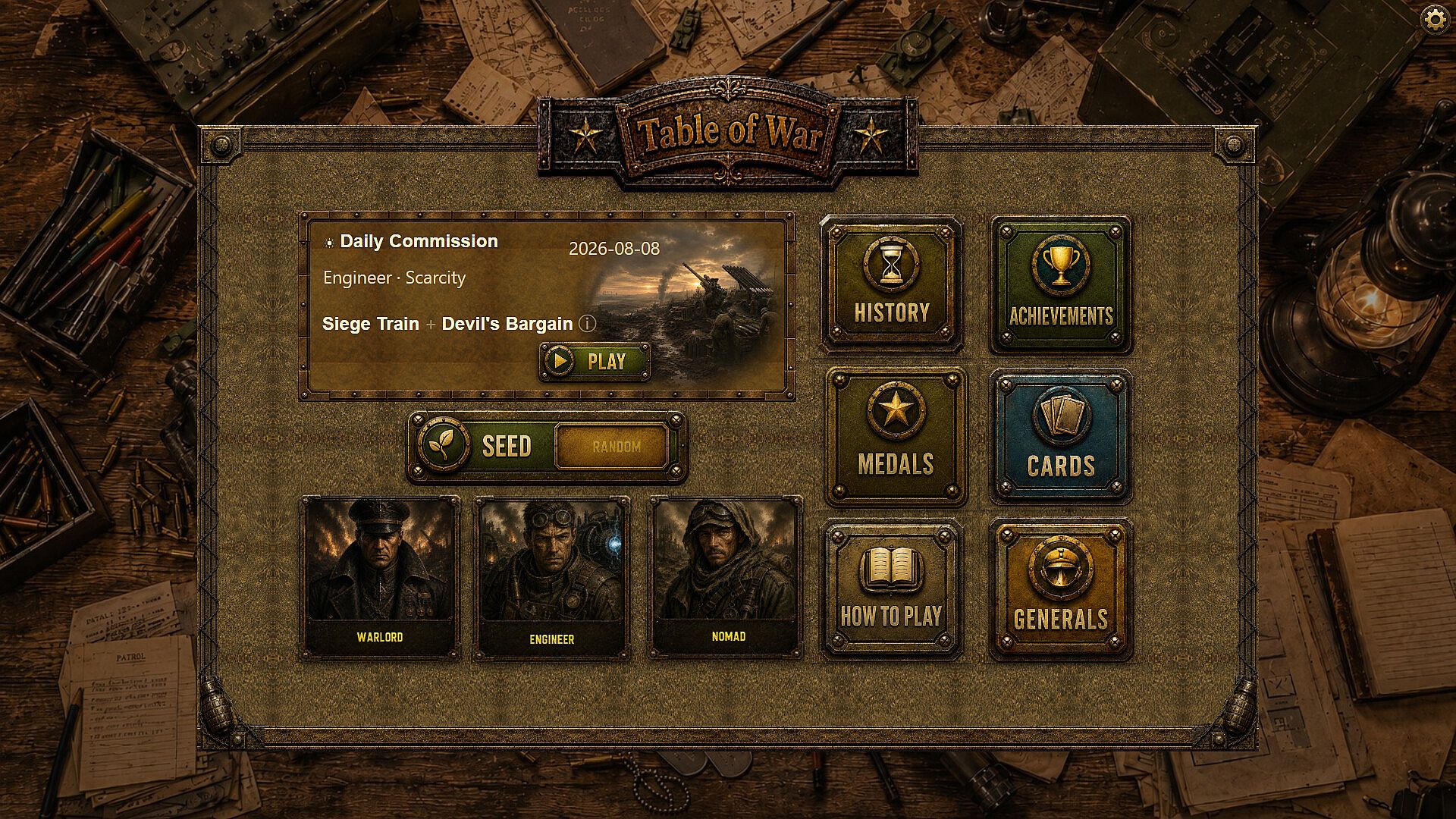
Three commanders alter the experience. The Warlord uses cheap reinforcements and a Wrath gauge filled by kills and losses to deploy free riflemen via Rally the Horde. The Engineer receives one free structure each turn and charges a gauge through adjacent power plants for Overcharge effects that double turret fire and repair damage. The Nomad treats the HQ as a mobile vehicle, building Momentum through movement to trigger Break Camp and allow the entire army to act again. Each commander starts with a unique army and accesses exclusive cards.
Game Modes
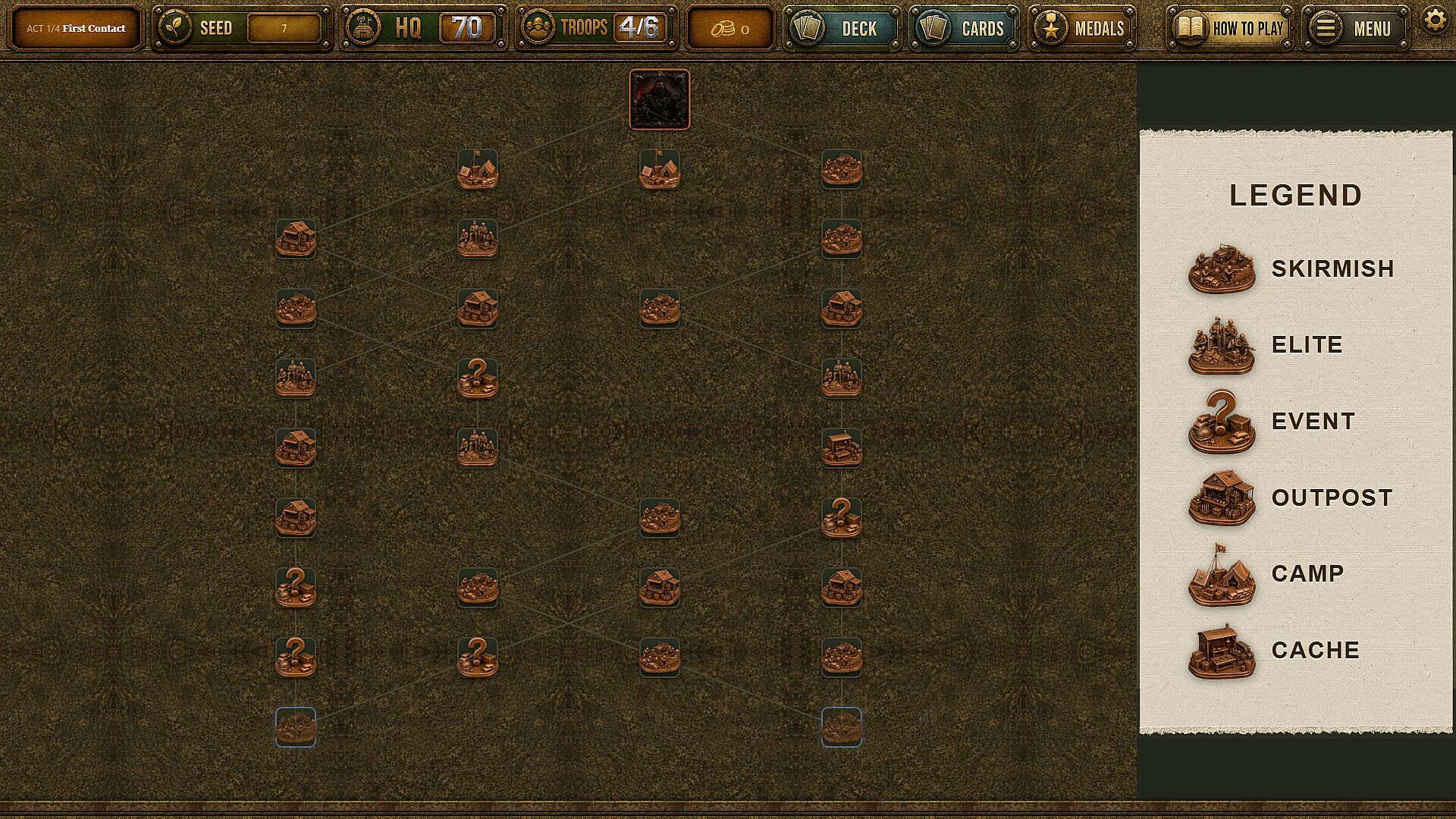
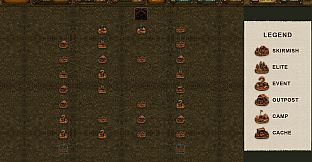
The primary experience unfolds across a four-act branching expedition on a node map with seven node types. Acts progress through First Contact, Two Fronts, Encirclement, and Conquest. A Field Compass relic allows jumping between tracks. Battles occur on non-rectangular procedural maps with eight distinct silhouettes. Players build runs from 94 cards across six categories, 35 relics with compounding effects including eight cursed ones, and 53 events that present double-edged choices.
Ascension adds twelve rungs of increasing rules that rotate themes. Seven run modifiers can be stacked for score challenges. A Daily Commission places all players on the same seed. Seeded runs allow exact replication for comparison. The game supports save and resume mid-run and runs fully offline without accounts or telemetry.
Commanders and Progression
Each of the three commanders brings distinct starting armies, deck skews, and strictly exclusive cards. Progression involves drafting from the card pool, upgrading nearly all options, and managing curses injected by enemies that require removal at outposts. Eight hand-authored bosses introduce unique mechanics such as endless waves or rule changes at half health. Fourteen elite variants and five enemy archetypes appear with advance notice of their presence.
The roster system encourages careful management because experienced troops carry forward while replacements cost salvage. Camps provide opportunities for promotions and perks that persist across battles within a run.
Is It Worth Playing?
Table of War suits players who enjoy tactical positioning on irregular maps combined with persistent roster management and deckbuilding decisions. The separation of board tactics from strategic command cards creates a layered loop where positioning and resource choices both matter. Permadeath on named units adds weight to every engagement, while the three commanders provide replay variety through exclusive mechanics and cards.
The demo runs directly in a browser with no download or account required, allowing direct testing of the systems. Features such as ascension rungs, run modifiers, and the daily commission extend play for those seeking repeated challenges on identical or varied seeds. The game targets fans of strategy titles that emphasize careful unit placement, hazard navigation, and long-term roster decisions over fast-paced action.