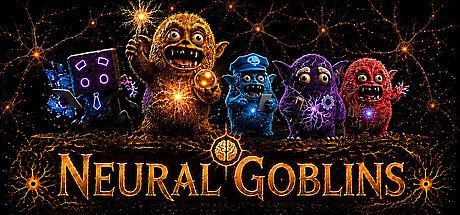



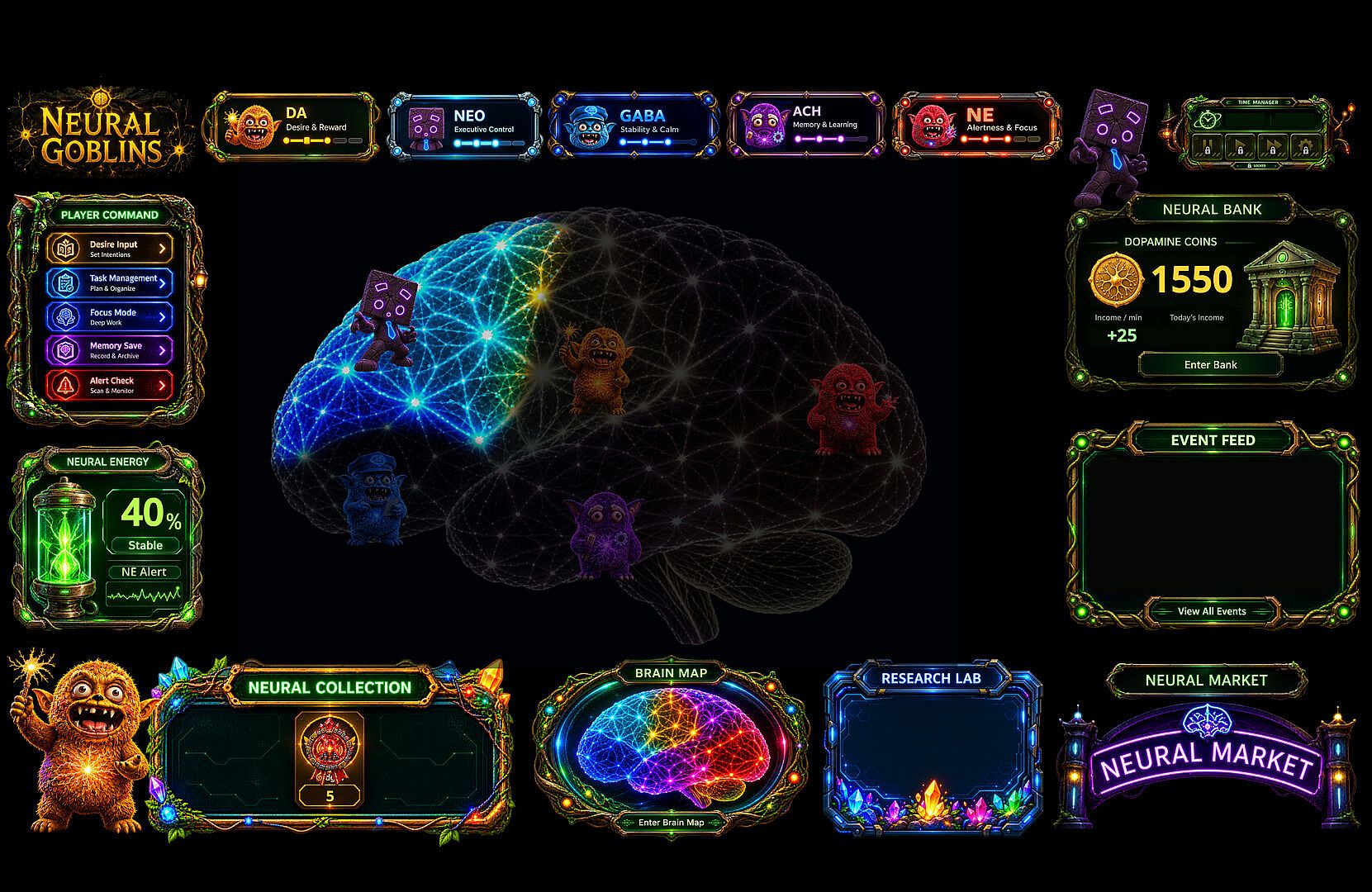

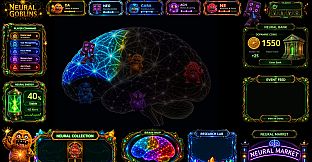
Neural Goblins is an indie simulation game for PC that places players in charge of a miniature civilization living inside a human brain. The experience centers on five distinct types of neural goblins, each tied to a core mental force. DA pursues rewards and curiosity. NEO focuses on planning and carrying out ideas. GABA maintains balance and calm. ACH safeguards memories and learning. NE stays alert to threats and maintains vigilance. These creatures form the foundation of a growing settlement that players shape over time.
Gameplay
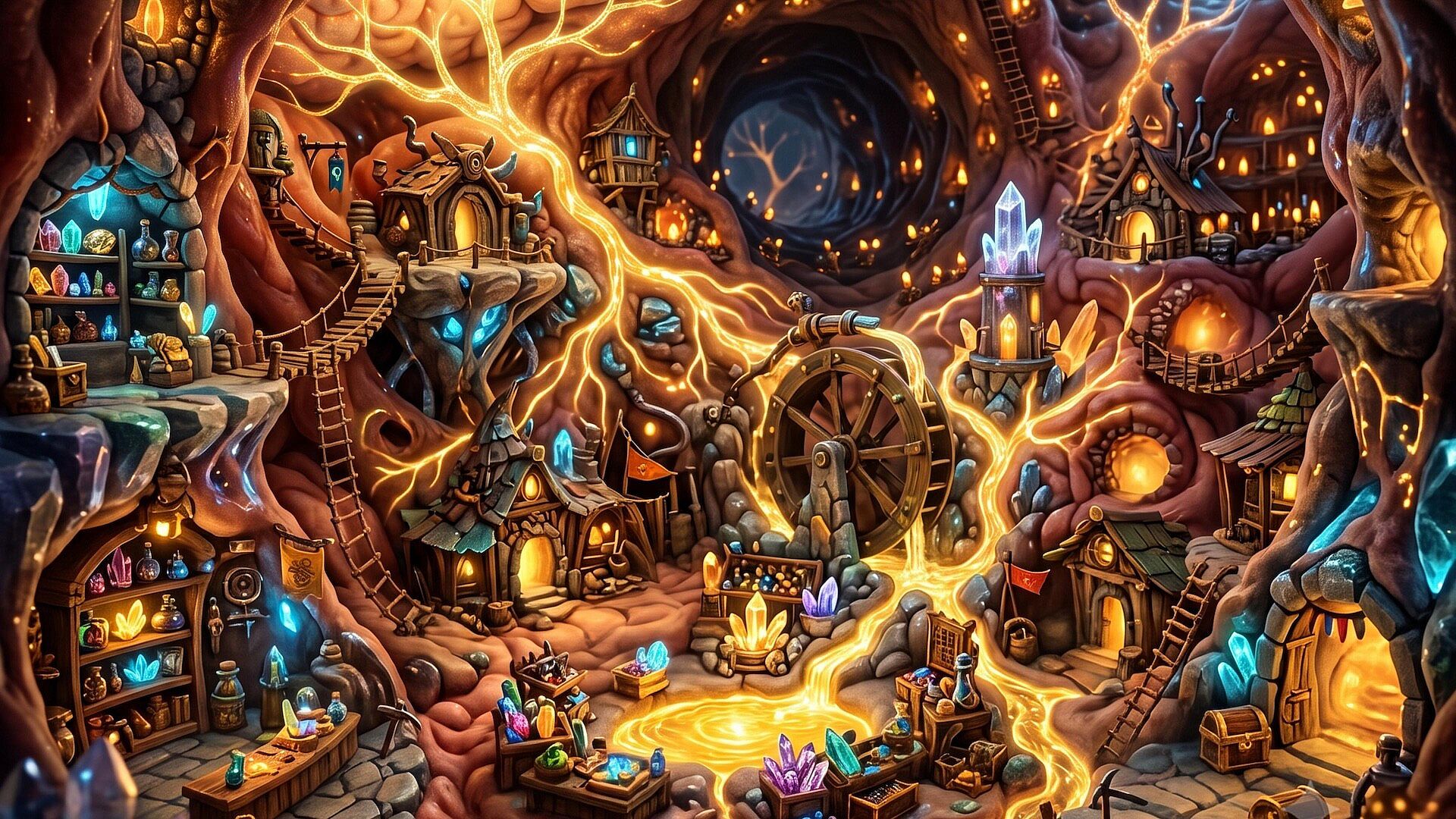
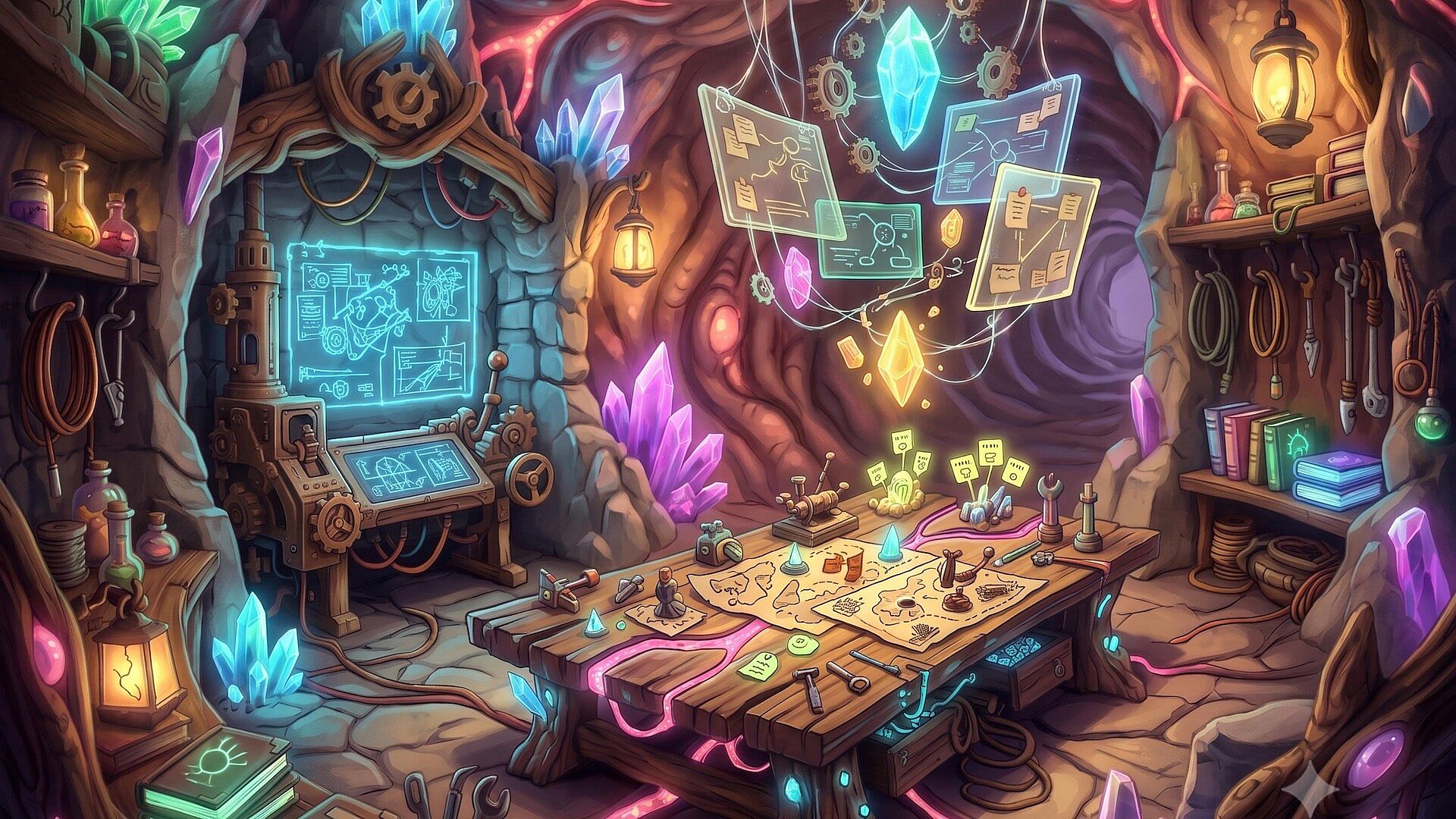
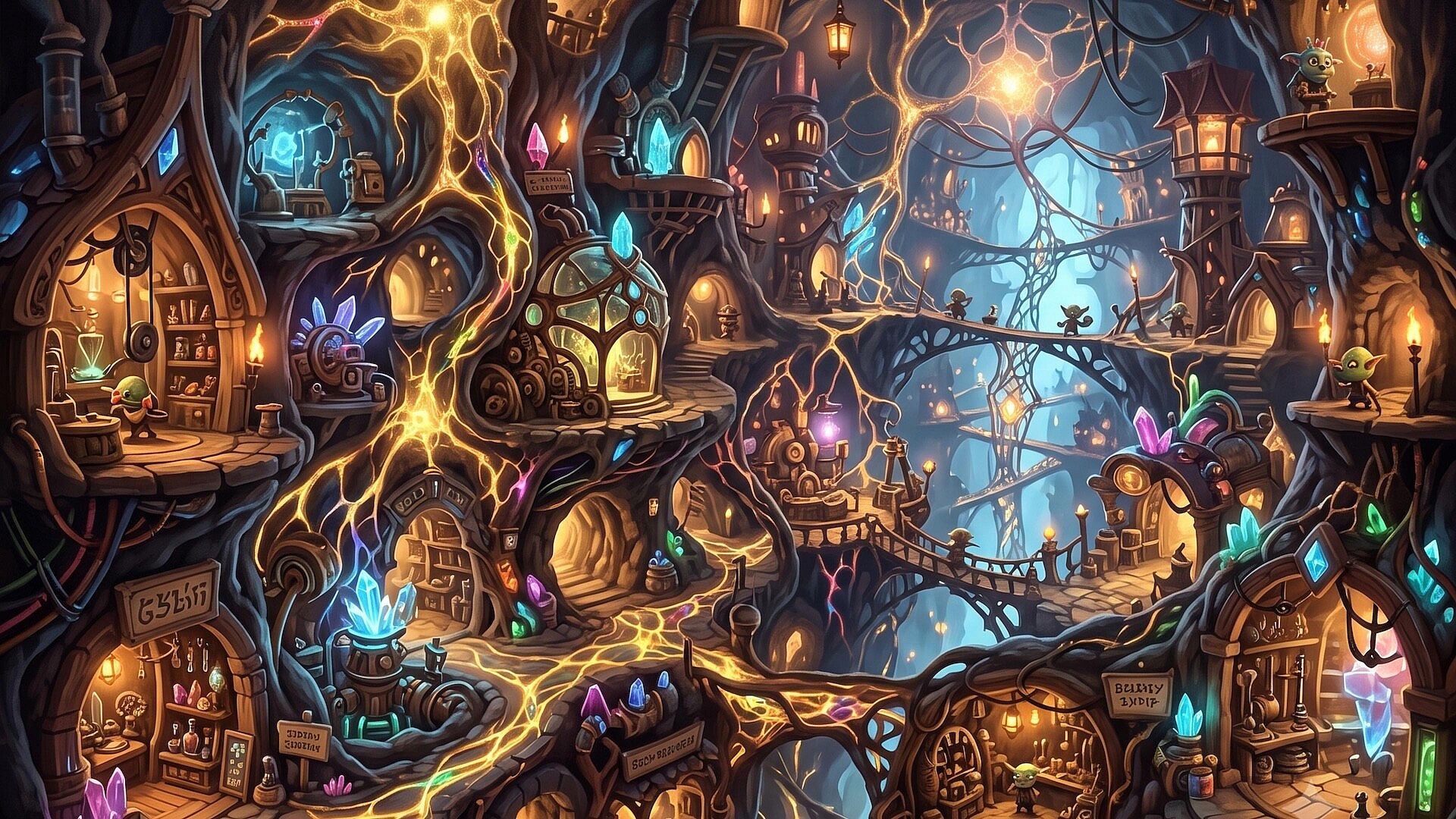
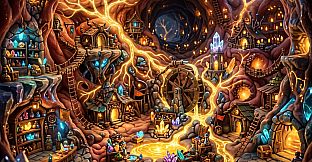
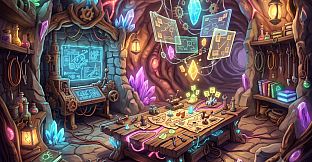
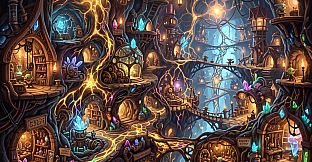
The core loop begins with a modest neural goblin nest. From there, players expand the settlement into a full brain city by unlocking additional goblin types and balancing the resources each one requires. Resource management involves tracking how the different goblin forces interact, since their behaviors influence one another in unexpected ways. Exploration of unknown areas within the brain reveals new opportunities and challenges that affect the overall system. The simulation emphasizes observation over perfection. Players watch how the goblins respond to changes in their environment and to each other, learning what kind of mind emerges from their decisions rather than aiming for an idealized outcome.
Game Modes
Neural Goblins operates as a single-player simulation experience. The primary activity involves building nests, expanding the city, and monitoring the ongoing interactions among the goblin population. There are no separate competitive or cooperative modes described. Progress comes through steady growth of the settlement and discovery of new areas, with the emphasis placed on understanding the living system rather than completing discrete objectives or competing against others.
Key Mechanics and Features
Five goblin archetypes drive the simulation. Each type contributes unique pressures and benefits to the city. DA encourages pursuit of new stimuli. NEO supports structured development. GABA helps stabilize the population. ACH supports retention of progress. NE adds awareness of external risks. Players manage these forces by constructing appropriate nests and allocating resources so the groups can coexist productively. The simulation highlights emergent behavior. Small adjustments to one group can ripple through the others, creating surprises that reflect the complexity of a living mental ecosystem. Exploration adds variety by opening new zones that introduce fresh variables into the city.
Is It Worth Playing?
Neural Goblins suits players who enjoy thoughtful simulation games focused on systems and observation. The experience rewards patience and curiosity about how different elements interact over time. Those seeking fast-paced action or structured campaigns may find the open-ended nature less engaging. The game presents a clear premise centered on building and understanding rather than winning or optimizing to a single standard. Availability on PC makes it accessible to anyone interested in indie simulation titles that explore unconventional themes. The emphasis on a living system full of surprises offers a distinct alternative to traditional city builders or management games.