






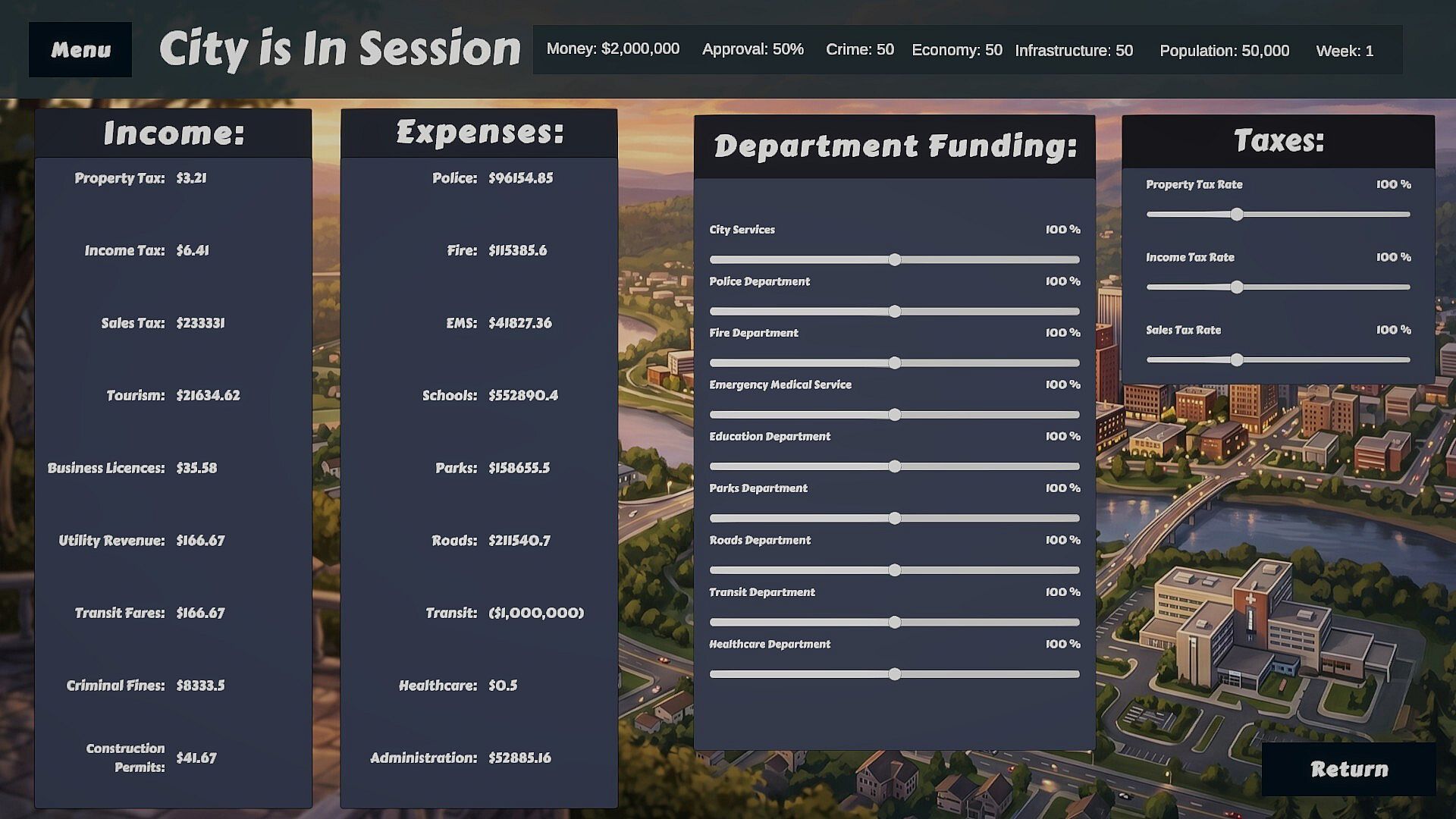
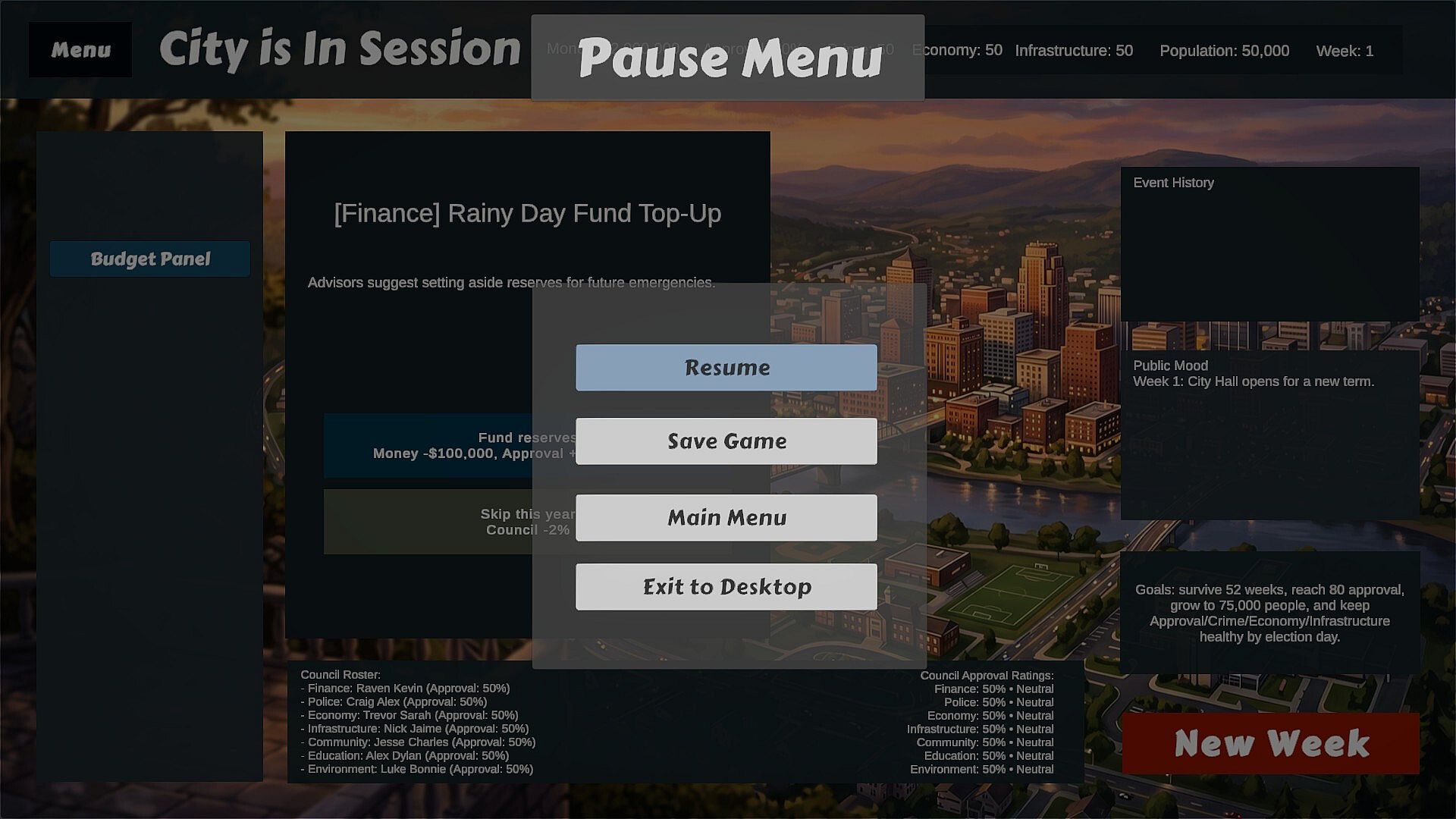
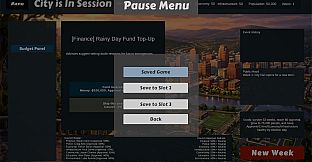
Mayor: City in Session è un gioco di strategia, indie e simulazione per PC che mette il giocatore nei panni di un sindaco impegnato a guidare lo sviluppo urbano attraverso una serie di riunioni settimanali del consiglio comunale. Ogni scelta ha un peso concreto: gli interessi in conflitto si scontrano e gli effetti a lungo termine delle politiche si manifestano nel corso di più settimane di gioco.
Gameplay
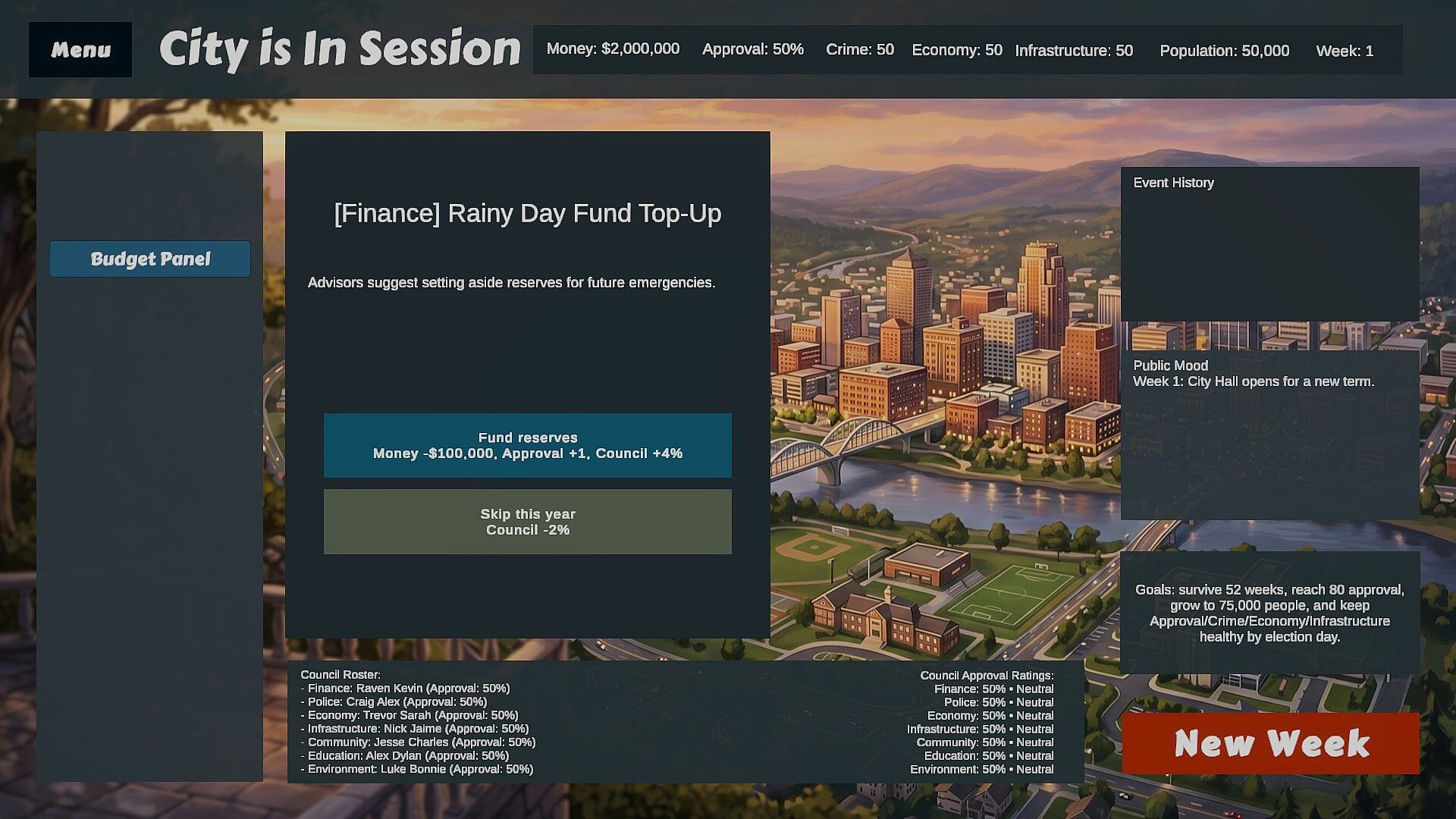
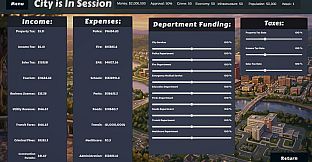
Il ciclo di gioco ruota attorno alla gestione di una città che cresce o declina in base alle decisioni prese durante le sessioni del consiglio. Il giocatore valuta le proposte e distribuisce le risorse tenendo sotto controllo sei indicatori chiave: Denaro, Consenso, Criminalità, Economia, Infrastrutture e Popolazione. Azioni come il finanziamento di progetti infrastrutturali, la modifica del budget della polizia o la variazione delle aliquote fiscali generano variazioni immediate e, al tempo stesso, conseguenze che si manifestano nelle settimane successive.
Eventi unici compaiono regolarmente e impongono di valutare i vantaggi immediati rispetto ai possibili problemi futuri. Le scelte passate possono accumularsi e trasformarsi in difficoltà più grandi se non vengono affrontate, creando situazioni in cui investimenti iniziali in un settore possono alleviare o aggravare problemi in altri ambiti. La città cambia visibilmente nel tempo: il livello della popolazione, la salute economica e la qualità delle infrastrutture rispecchiano l'impatto cumulativo delle decisioni del sindaco.
Modalità di gioco
Mayor: City in Session è un'esperienza single-player strutturata su cicli decisionali settimanali sequenziali. Non esistono modalità competitive o cooperative: il gioco punta invece su partite ripetute che si differenziano in base all'approccio individuale di fronte alle stesse sfide e opportunità.
Ogni partita genera un percorso urbano unico, determinato dall'ordine e dalla combinazione delle scelte compiute durante le riunioni del consiglio. Il giocatore può sperimentare priorità diverse, come privilegiare la crescita economica o la sicurezza pubblica, e osservare come queste strade influiscano sulla stabilità complessiva, senza elementi multiplayer o condivisi.
Evoluzione della città e conseguenze delle decisioni
Nel corso delle settimane l'ambiente urbano riflette i risultati cumulativi delle azioni precedenti. Miglioramenti infrastrutturali possono sostenere una popolazione più numerosa, mentre tagli a determinati servizi possono far crescere la criminalità o abbassare il consenso, influenzando le opzioni future. Il sistema invita a pianificare in anticipo, poiché i problemi si accumulano gradualmente anziché manifestarsi all'istante.
Eventi e dilemmi introducono varietà all'interno della struttura settimanale, costringendo a soppesare compromessi politici che incidono su più indicatori contemporaneamente. L'assenza di condizioni di vittoria fisse permette di concentrarsi sul mantenimento di una crescita equilibrata o sul recupero da fasi di crisi attraverso una leadership adattiva.
Vale la pena giocarci?
Il titolo si rivolge a chi apprezza le simulazioni di gestione urbana ponderate e guidate dalle conseguenze, dove il giudizio politico e l'allocazione delle risorse rappresentano la sfida principale. Il formato single-player e l'enfasi sulla rigiocabilità attraverso percorsi decisionali diversi si adattano a chi desidera esplorare stili di leadership differenti senza competizione esterna né eventi a tempo limitato.
Prevista per luglio 2026 e ancora priva di recensioni, l'opera si trova in fase pre-lancio. Chi è attratto da meccaniche basate su cicli di feedback ritardati e statistiche cittadine in evoluzione potrebbe trovare i sistemi descritti soddisfacenti al momento dell'uscita, soprattutto se preferisce un ritmo riflessivo rispetto all'azione frenetica o alle interazioni multiplayer su larga scala.











