

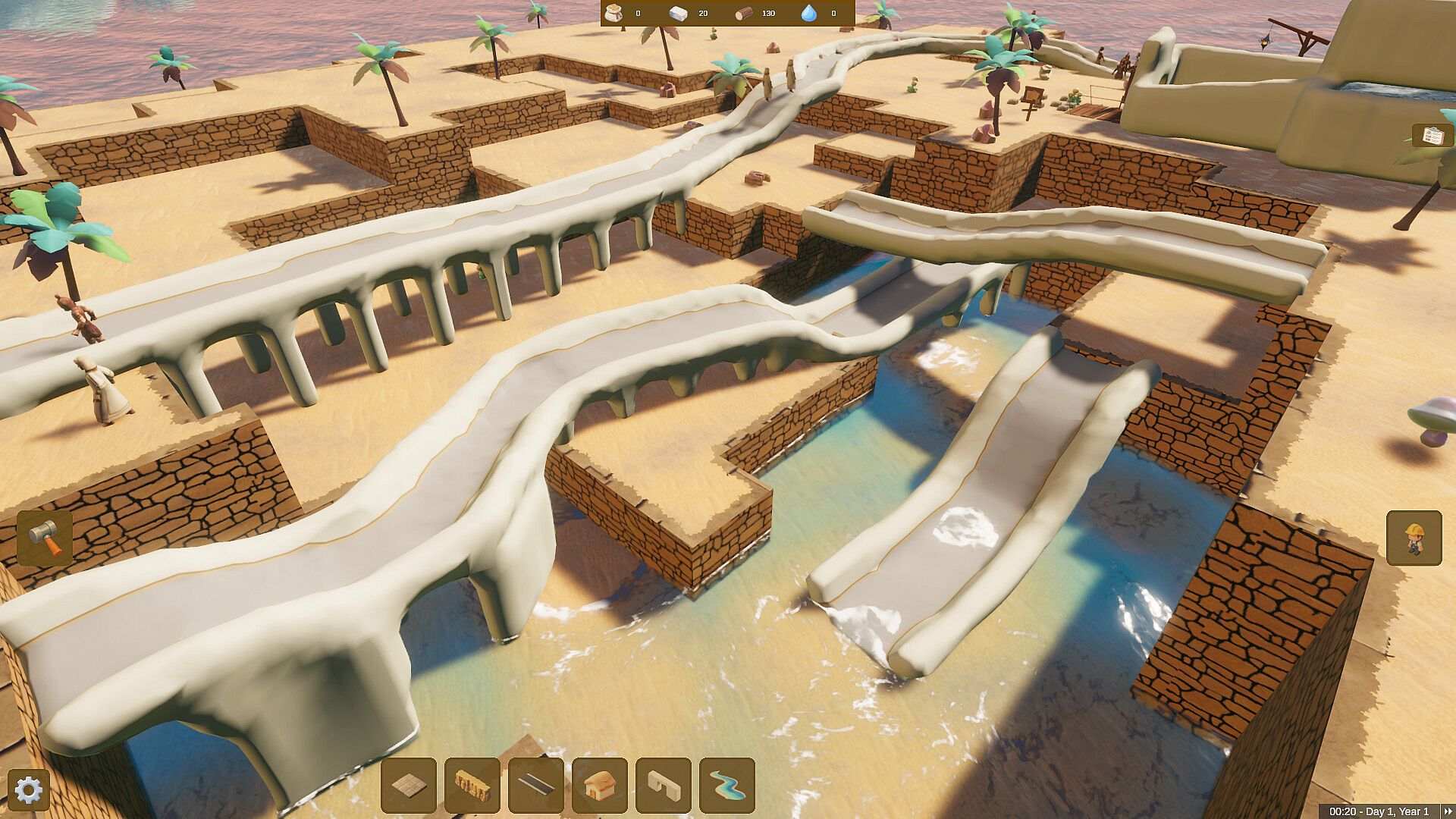
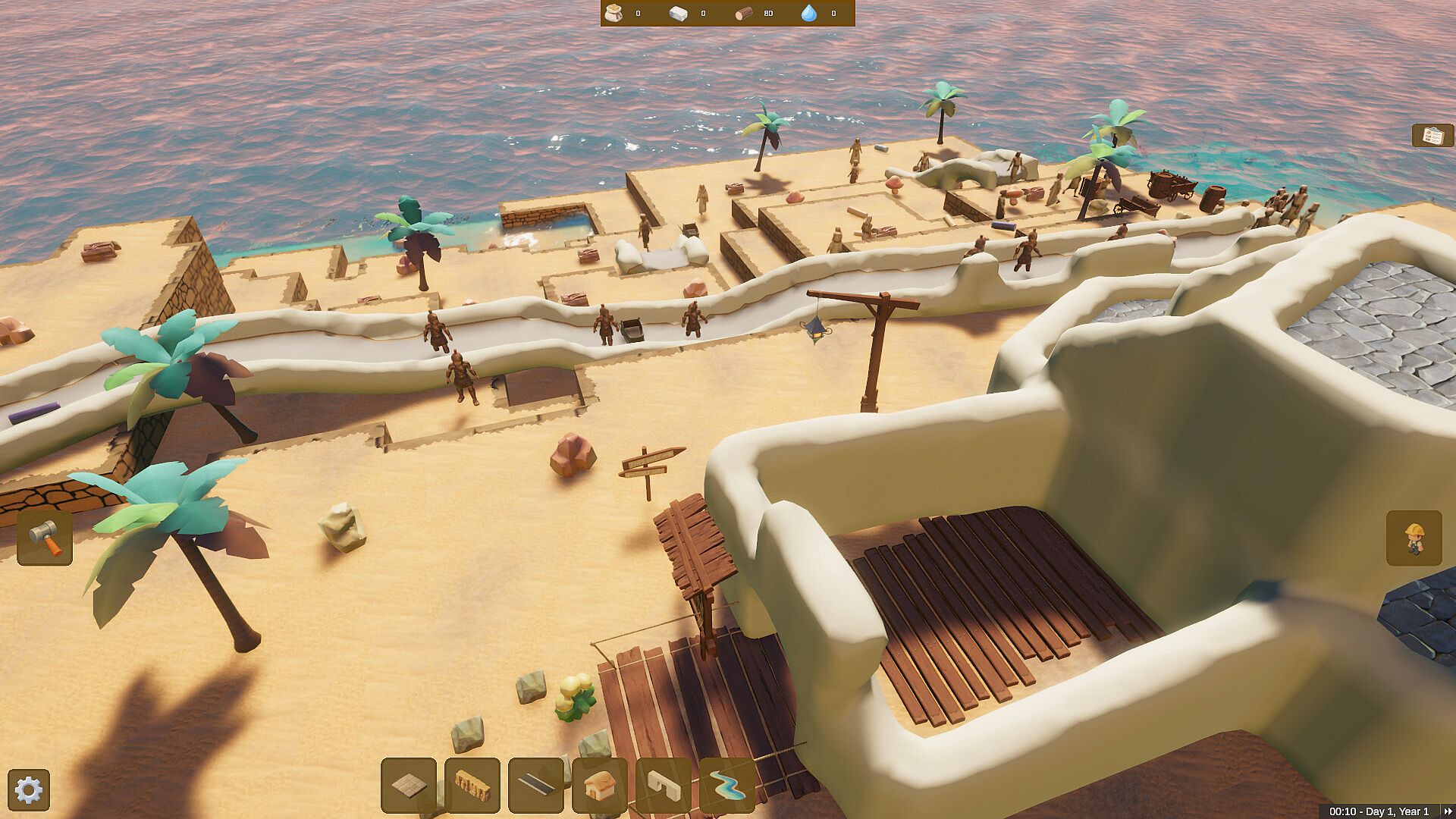
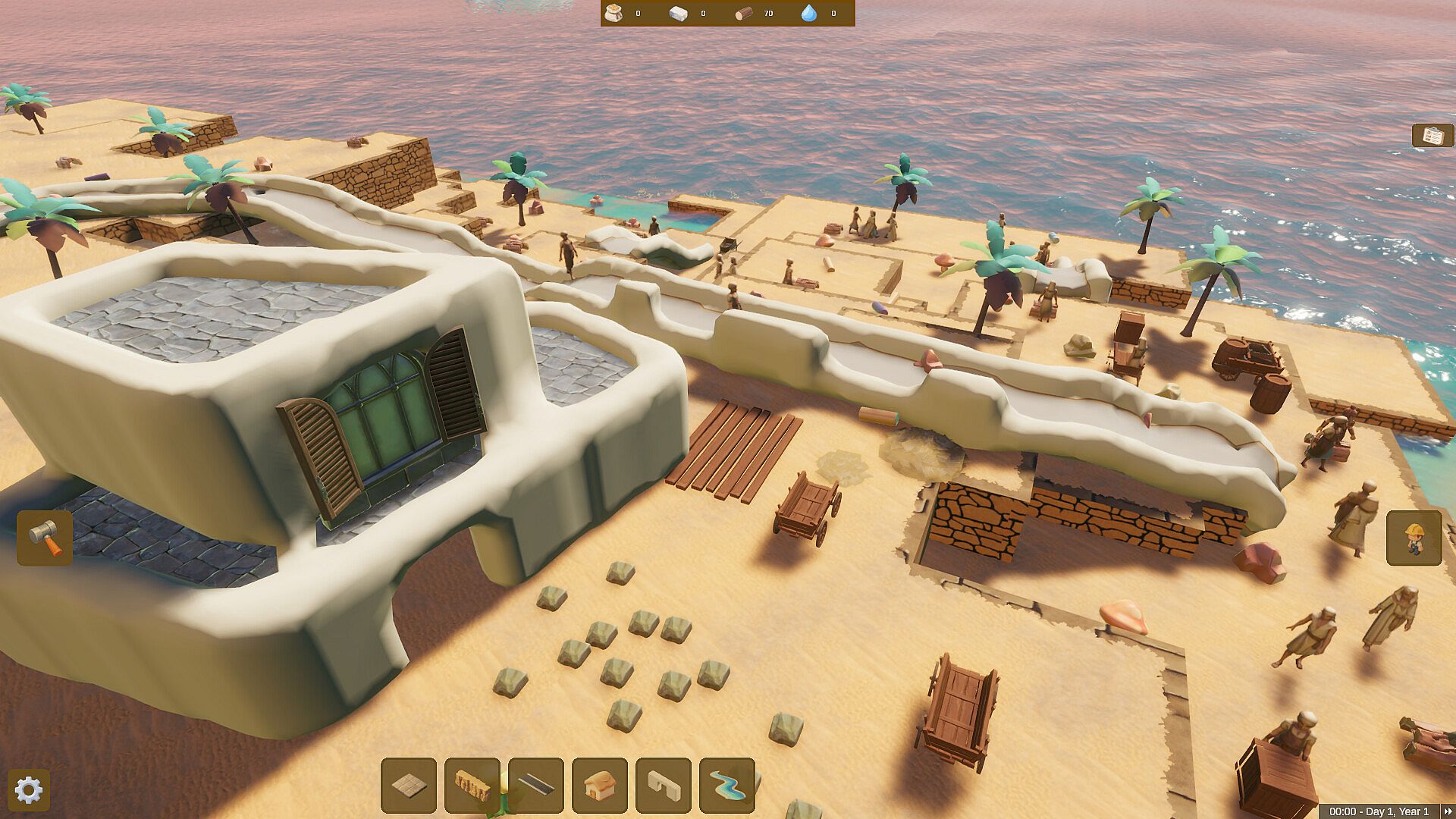
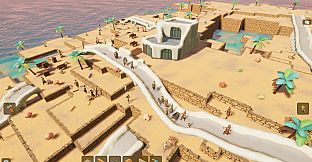
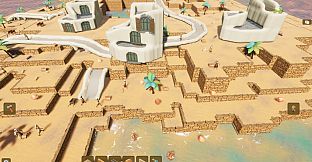
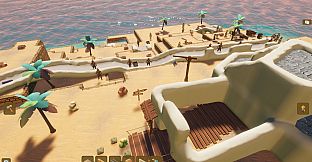
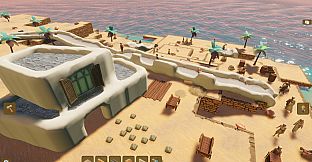
Finguedom is an indie casual simulation game centered on constructing and managing a seaside housing community on a vertical island terrain. Players begin with an empty plot and shape layered buildings that take advantage of the natural slopes for distinct ocean views while handling resource flows and worker tasks across forests, mines, ponds, and farms.
Gameplay
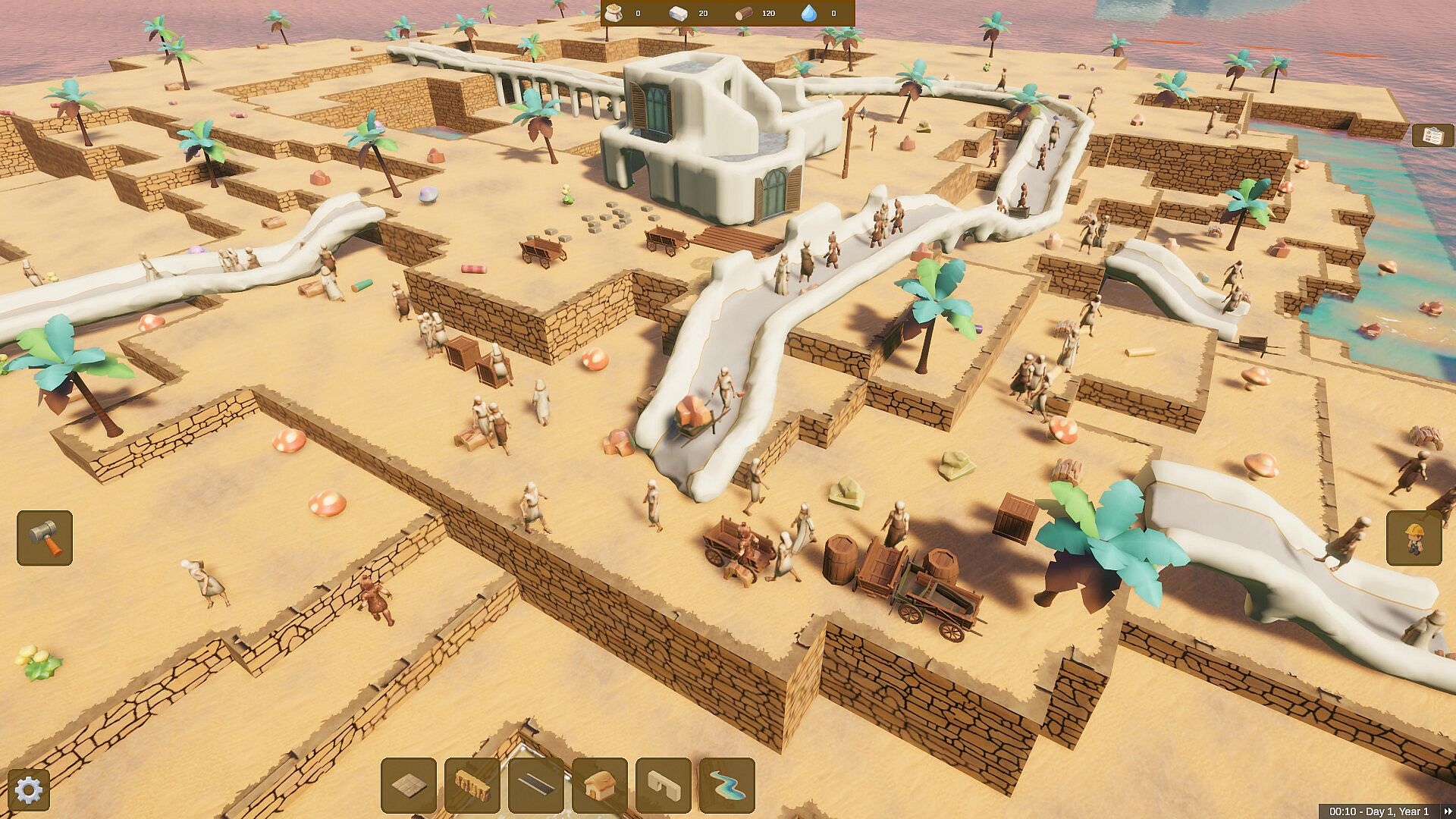
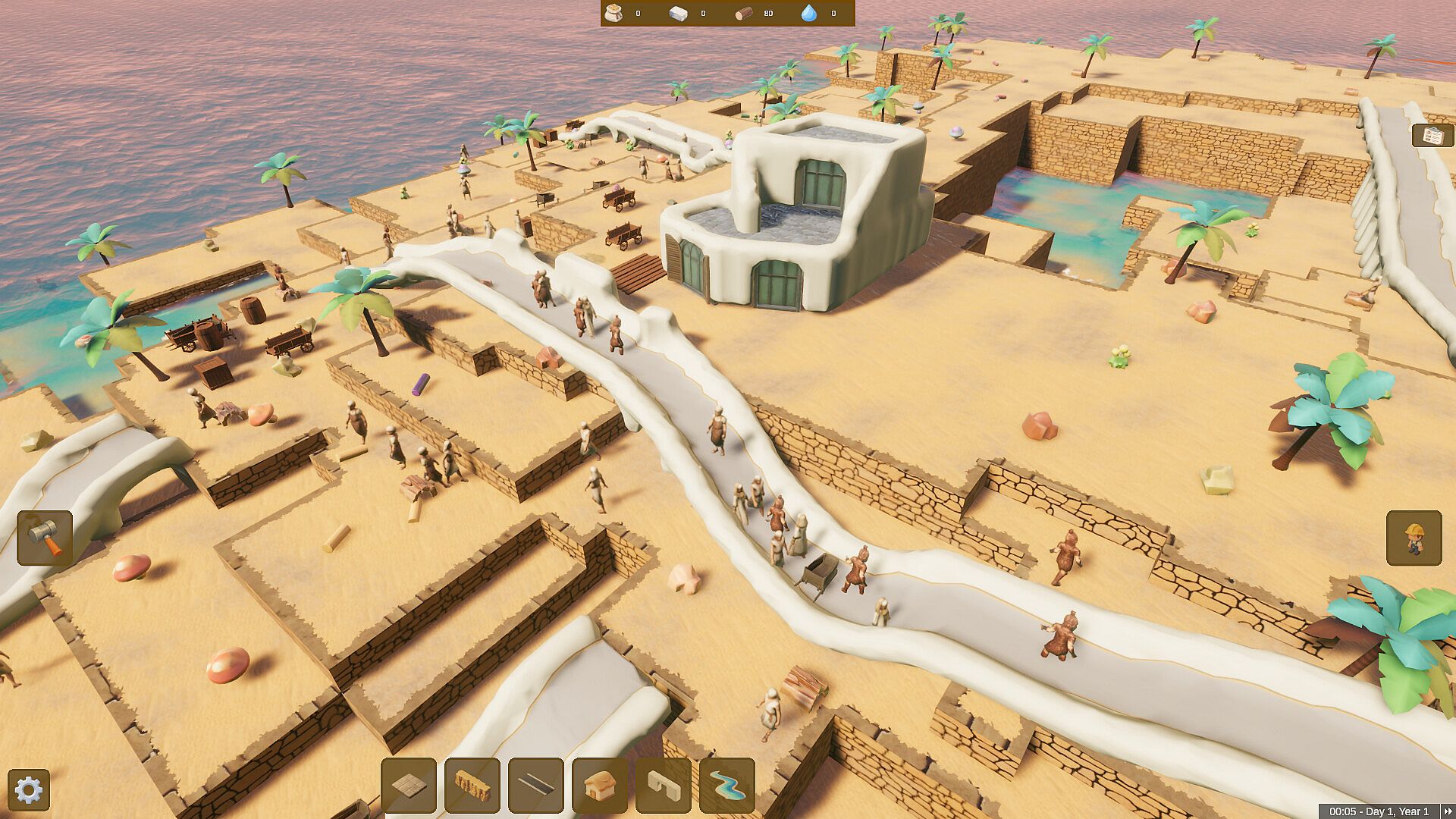
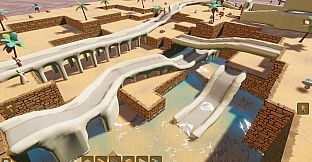
The core loop revolves around gathering materials from the island ecosystem and directing workers to fish, mine, farm, and tend animals. Concrete serves as the primary building material, allowing structures to fuse together in flexible configurations that follow the terrain contours without rigid grid constraints. Transportation networks develop through player-placed roads, elevated bridges, and canals, supplemented by custom vehicles that automate the movement of goods between production sites and storage areas.
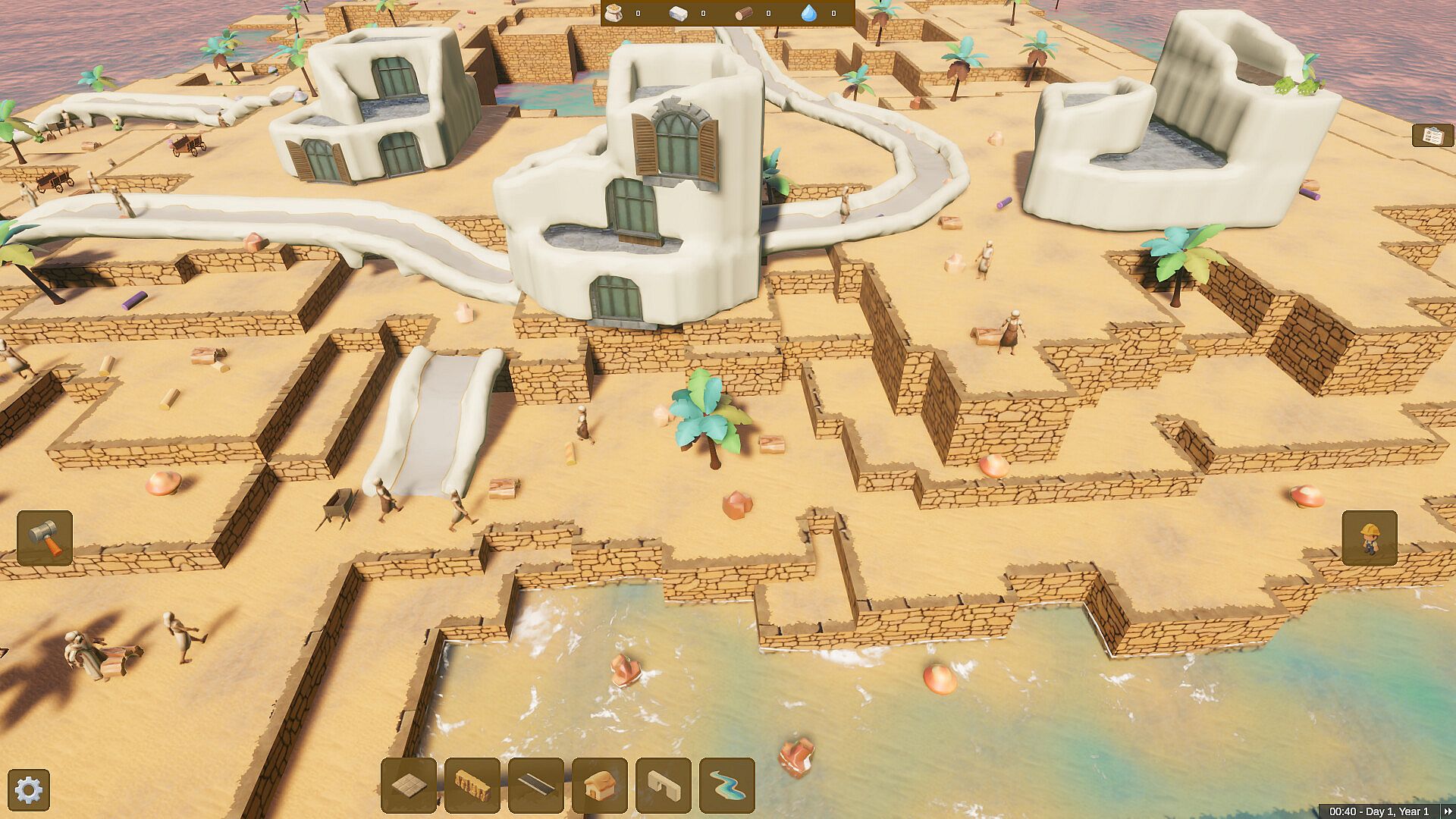
Interior construction emphasizes efficient material use with walls that double as supports, floor placement, and furniture arrangement inside multi-story homes. Each floor can connect vertically or horizontally to adjacent buildings, creating integrated complexes that maximize space on the sloped landscape. The system supports both residential layouts for personal use and expanded commercial setups that scale into larger operations.
Game Modes
Finguedom operates as a single-player experience without separate competitive or cooperative modes. The entire session centers on progressive island development, where players alternate between expansion, resource balancing, and refinement of logistics networks. Progress occurs through iterative building cycles that respond to terrain challenges and production demands, allowing the same core systems to support both modest personal projects and larger-scale community growth.
Building Systems and Ecosystem Management
Workers operate within a living environment that includes natural resource nodes players must locate and integrate into supply chains. Automated elements reduce manual oversight once vehicles and routes are established, freeing attention for creative placement of multi-level structures. Room interiors reward careful planning, as wall positioning conserves concrete while furniture and flooring define functional spaces across connected buildings.
The vertical nature of the island encourages layered designs where upper levels gain premium views and lower sections handle heavier industry or storage. Concrete connections between buildings eliminate the need for separate foundations in many cases, streamlining construction while maintaining structural variety.
Is It Worth Playing?
Finguedom suits players who enjoy relaxed building and management simulations with a focus on creative freedom and logistical planning. The combination of terrain-aware construction, worker-driven resource gathering, and automated transport creates a steady progression loop that rewards experimentation with layouts and production efficiency. Those seeking a single-player sandbox for designing seaside communities or scaling personal projects into broader operations will find the verified mechanics align directly with that interest. As an upcoming title with no player reviews available yet, its appeal rests on the described systems rather than external validation, making it a consideration for fans of casual indie simulations who prefer hands-on building over combat or narrative elements.