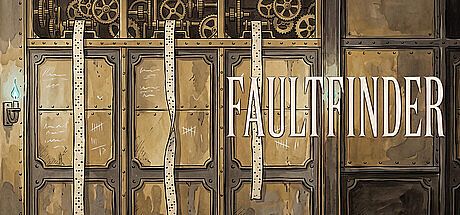


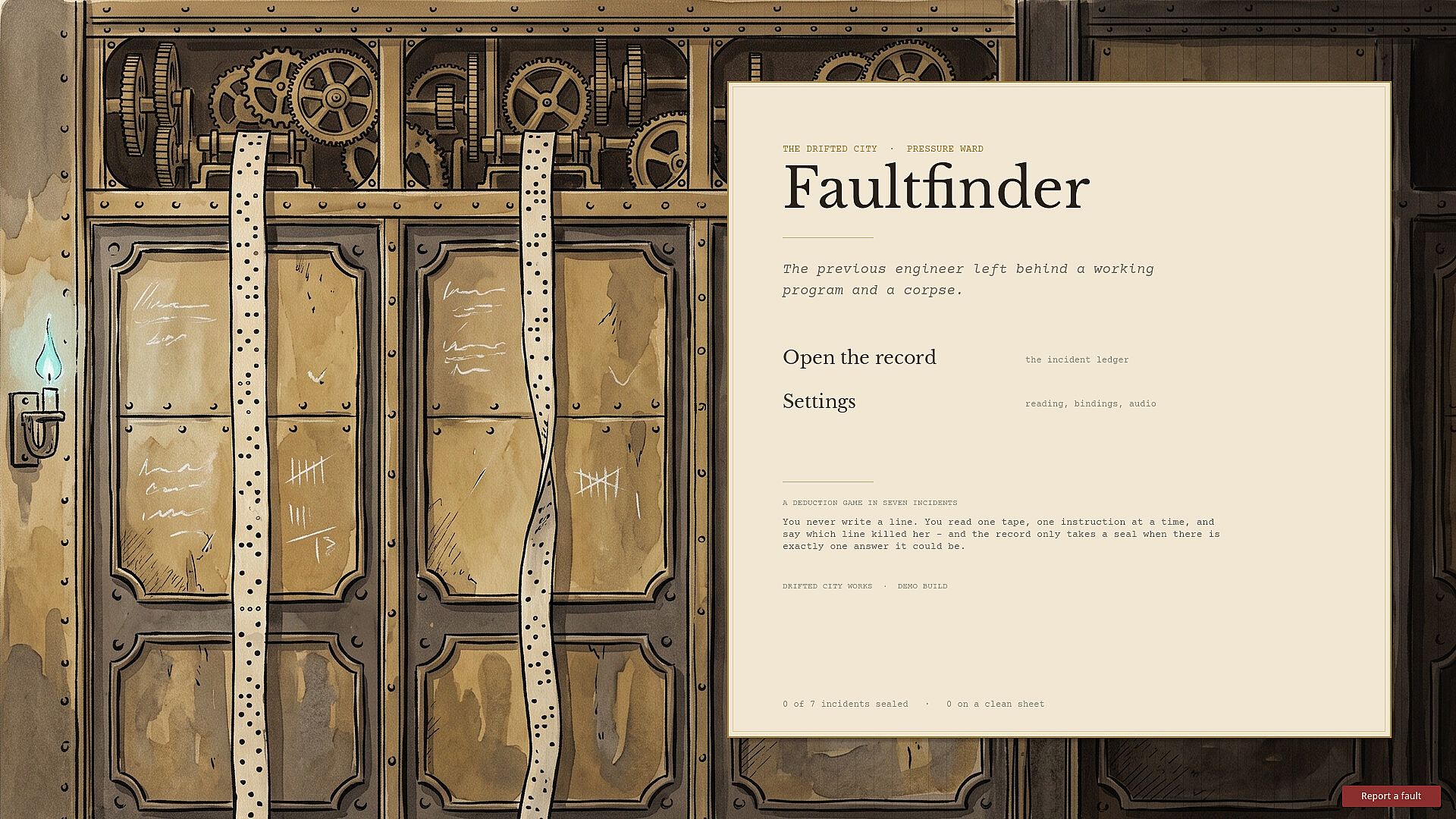
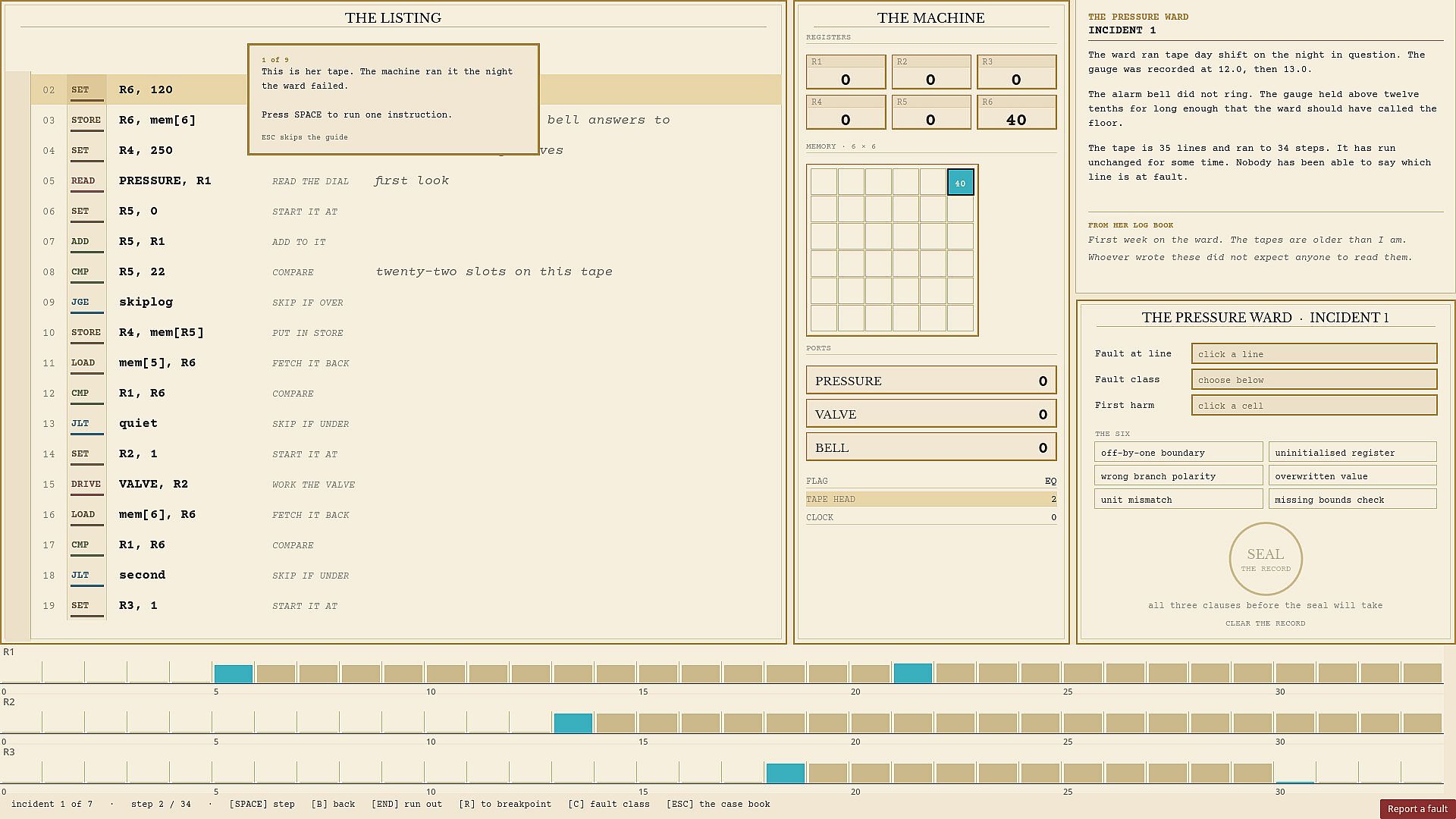
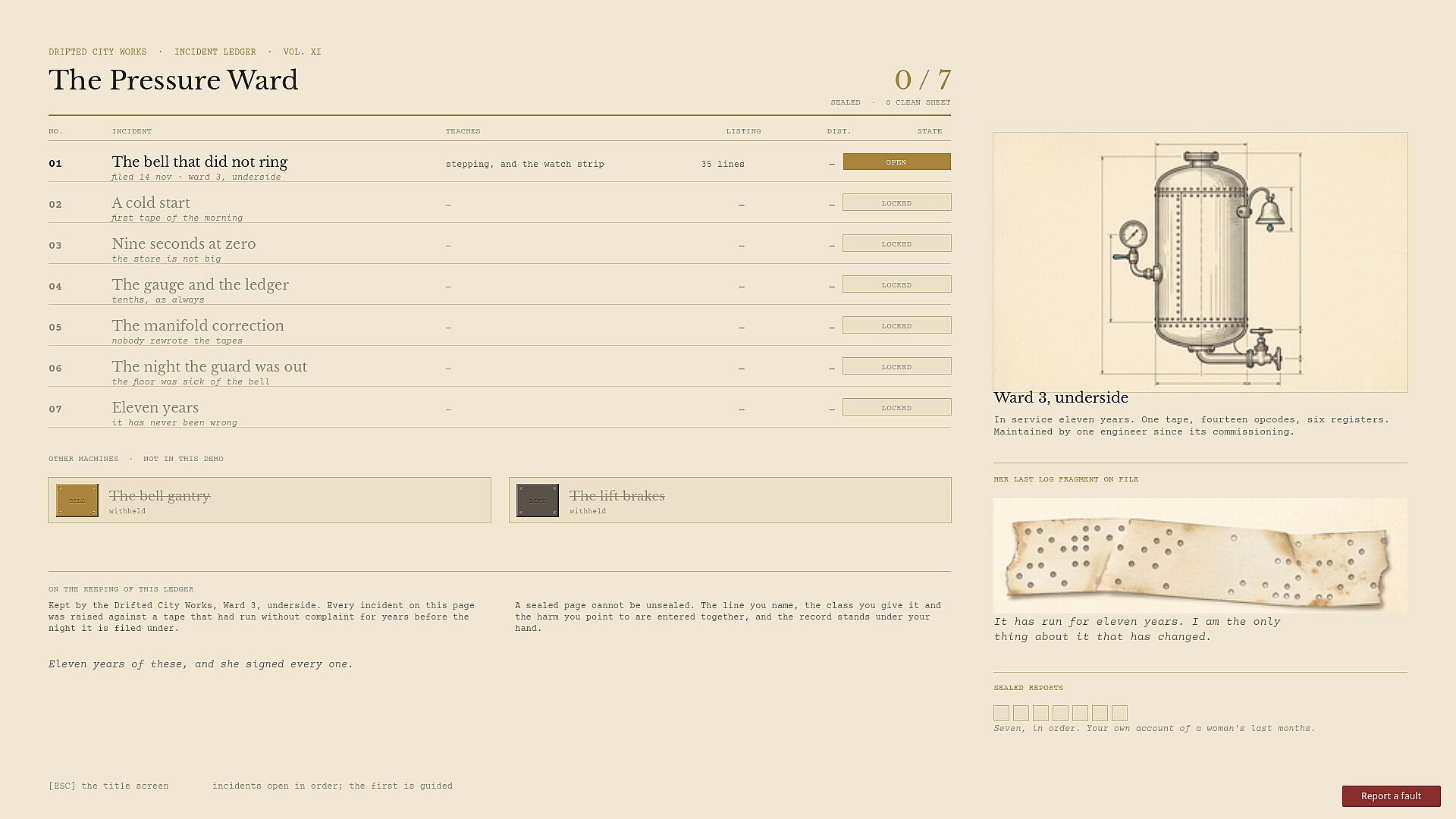
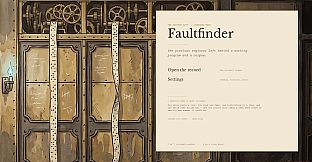
Faultfinder is a single-player indie deduction game built around reading and convicting faulty code rather than writing any. Set in a floating city sustained by a rune-tape pressure ward, the experience places players in the role of an investigator examining the annotated program left behind by its late engineer. The narrative unfolds through marginal notes, terse logs, and fragments that reveal both the machine's history and the engineer's personal decline over eleven years.
Gameplay
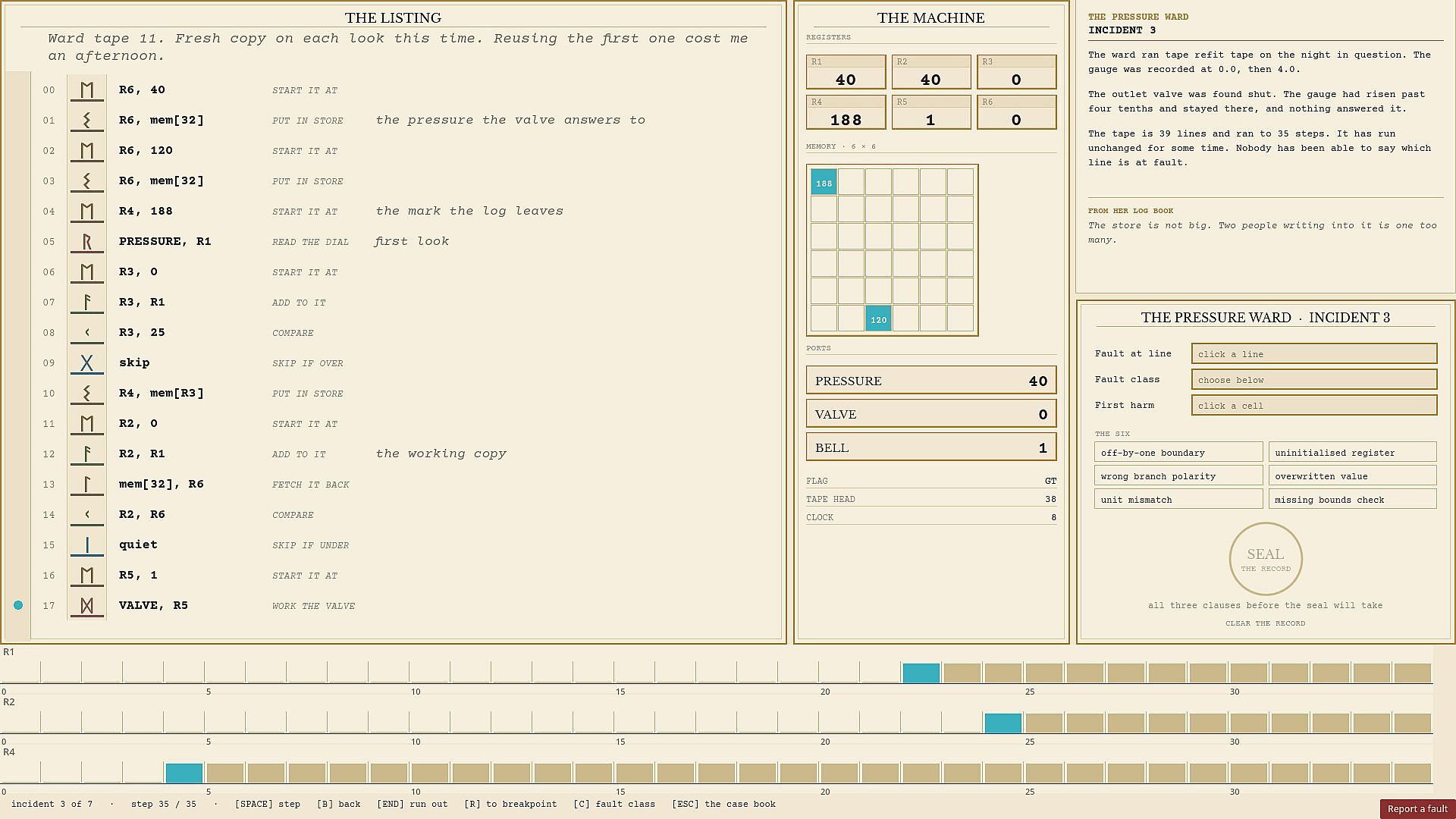
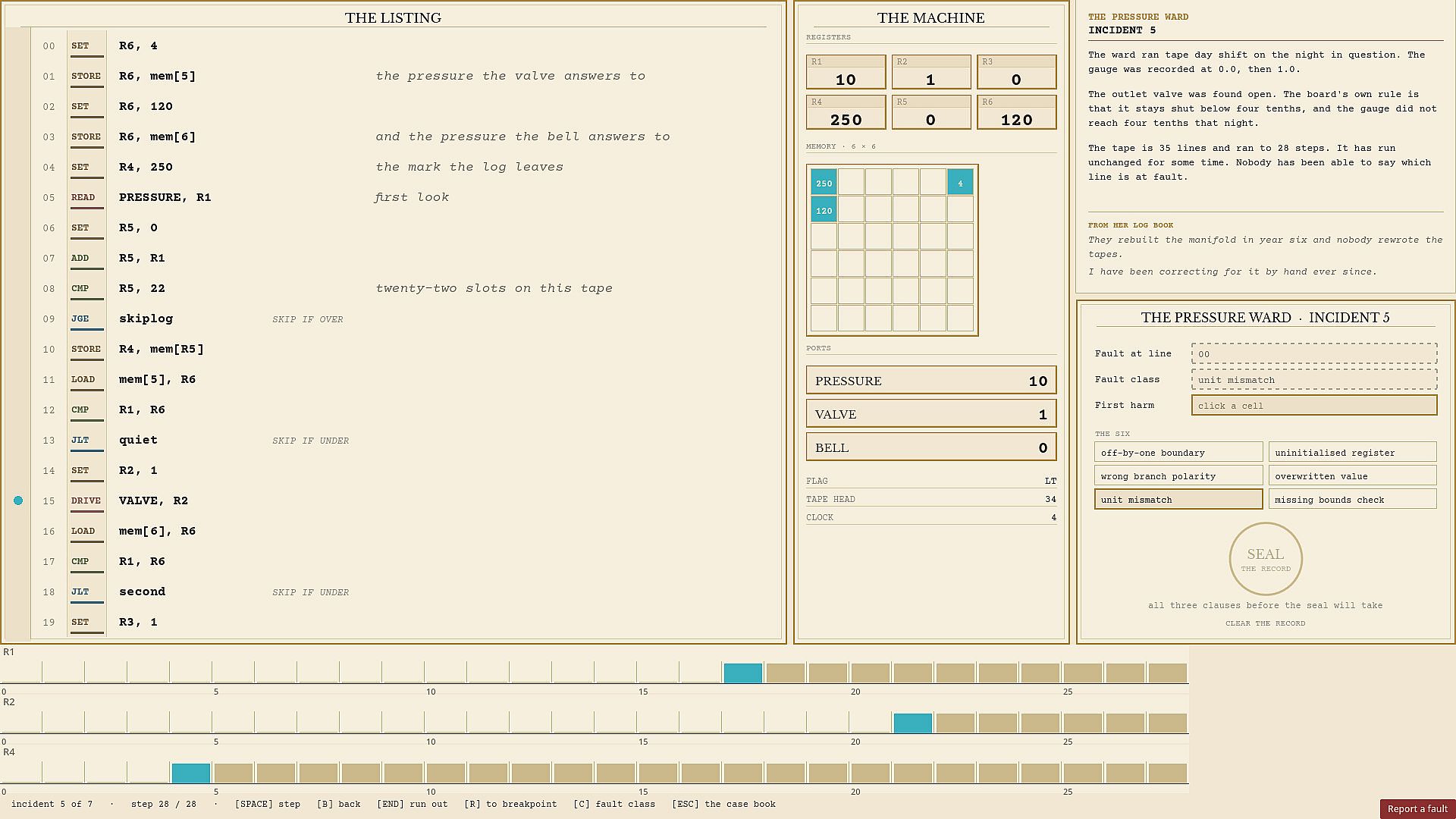
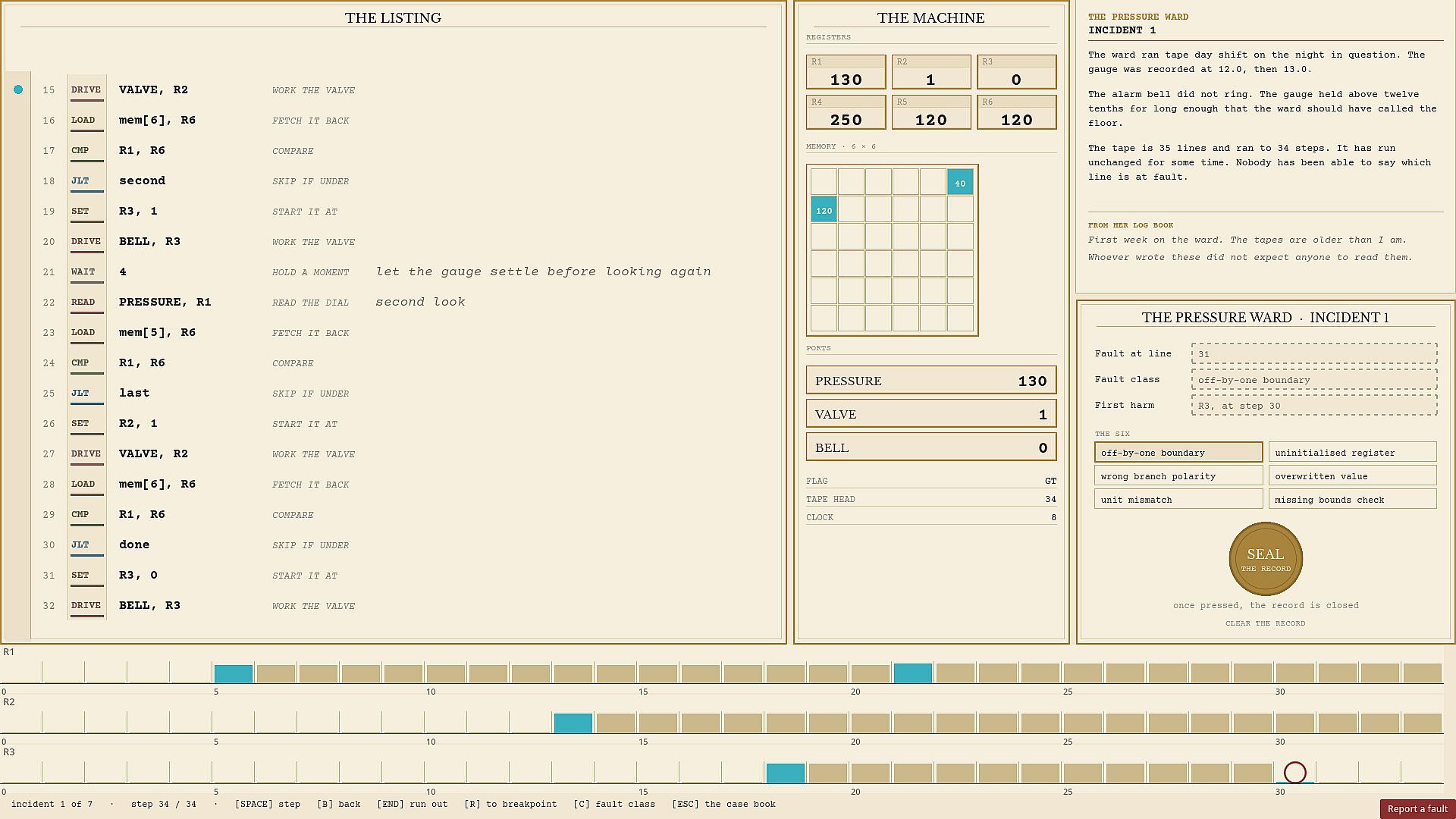
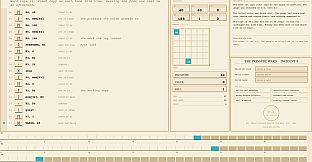
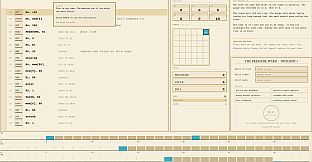
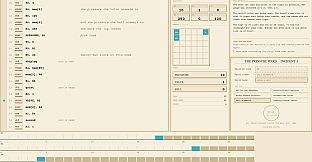
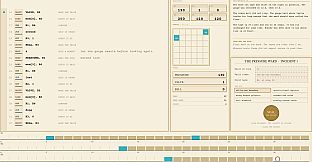
The core loop centers on three synchronized panes that display the engineer's annotated listing, the machine's live internal state, and the city's actual observed behavior. Players step through individual instructions one at a time to observe precise changes, set breakpoints on specific lines or conditions such as pressure thresholds, and maintain register watches that record full histories alongside the tape. Full rewind and scrubbing allow examination of any point in the execution trace, while input injection lets players substitute external readings to trigger rare fault conditions that surface only under specific inputs.
Once enough evidence is gathered, the player identifies exactly one line, selects one fault type from a fixed set of categories including off-by-one boundary errors, uninitialised registers, wrong branch polarity, overwritten values, unit mismatches, and missing bounds checks, and pinpoints the precise moment the harm occurred. Correct identification across all three elements completes the case and generates a report. Every case is constructed through a machine-verified process that seeds a single fault into a correct program and exhaustively simulates the input space to confirm uniqueness of the solution.
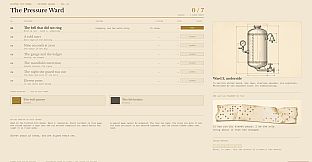
Accessibility features include hover translations for every rune and gloss, with no requirement to memorize prior details across cases. The demo covers seven cases on a single fourteen-instruction machine, introducing the six fault classes through progressive examples while telling the engineer's story entirely via annotations and logs.
Game Modes
Faultfinder operates exclusively in single-player mode with no multiplayer components or separate game modes. All content takes the form of sequential deduction cases that build on the same core systems of stepping, breaking, watching, rewinding, and injecting inputs. The demo provides a self-contained set of seven cases focused on the pressure ward, while the full release expands to additional machines and wards once available later in 2026.
Story and Setting
The narrative is delivered entirely through the program itself. The engineer's handwritten glosses begin detailed and gradually thin into terse comments, including one long-ago note to leave a particular line untouched. Players become the first reader in over a decade to examine the full record, uncovering both the technical fault and the personal context behind the ward's failure. No external exposition or cutscenes interrupt the investigation.
Is It Worth Playing?
Faultfinder suits players who enjoy precise logical deduction and the satisfaction of isolating a single root cause without any coding required. The demo offers a complete introduction spanning 35 to 70 minutes and demonstrates the full toolset of rewind, conditional breakpoints, register watches, and input injection. With its machine-verified case design guaranteeing exactly one correct answer per puzzle, the game appeals to those drawn to puzzle experiences that reward careful observation over trial-and-error guessing. As an upcoming title with a planned Q4 2026 release and no user reviews available yet, interested players can try the demo to determine fit before the full ward opens.