







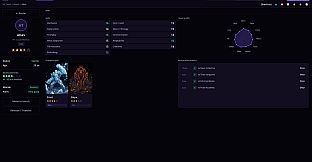

Esport Manager: Last Pick is a simulation sports game that places players in the role of an esports team coach on a MOBA circuit. The experience centers on long-term club building, roster decisions, and match preparation rather than direct control of in-game action.
Gameplay
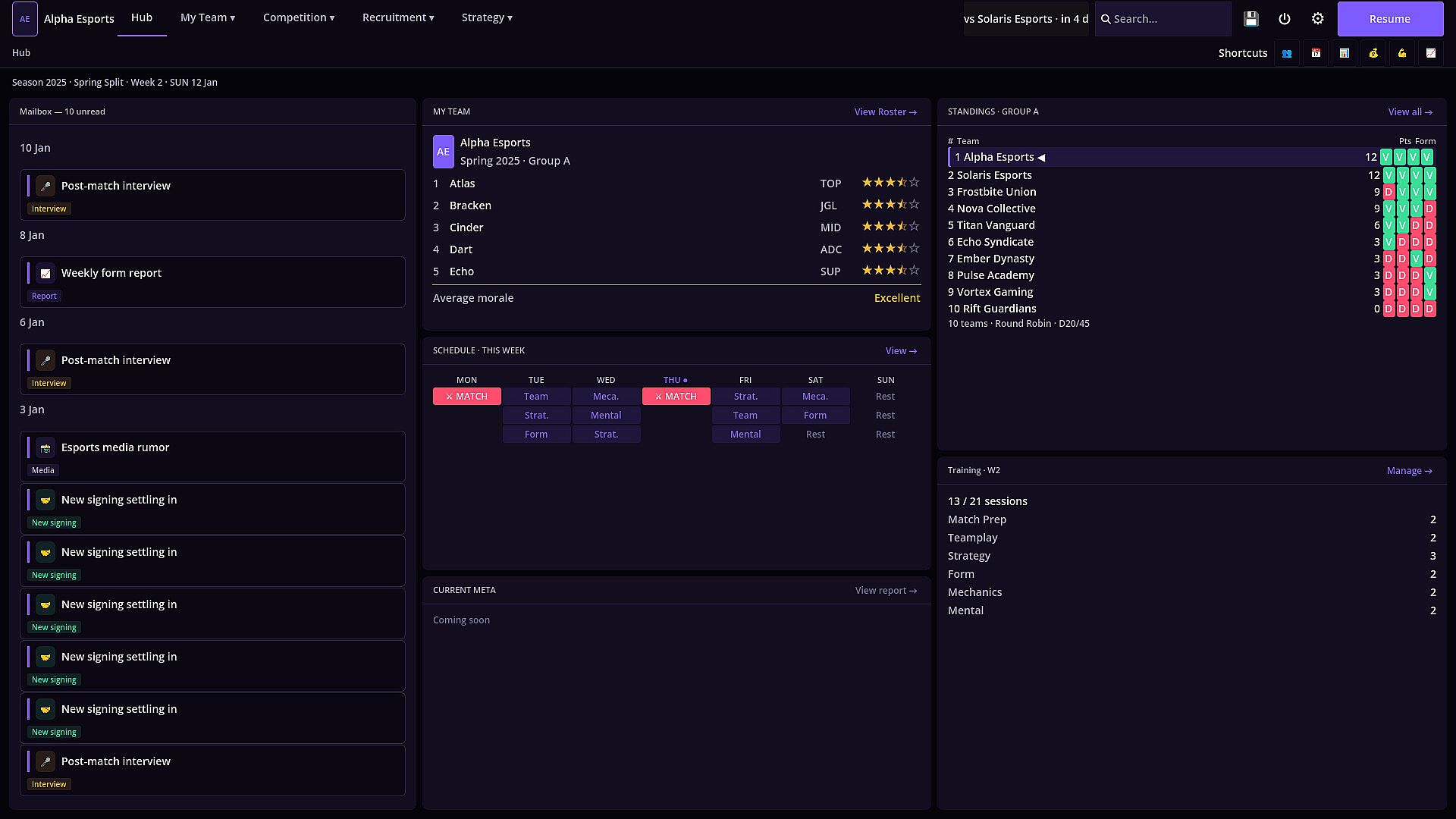
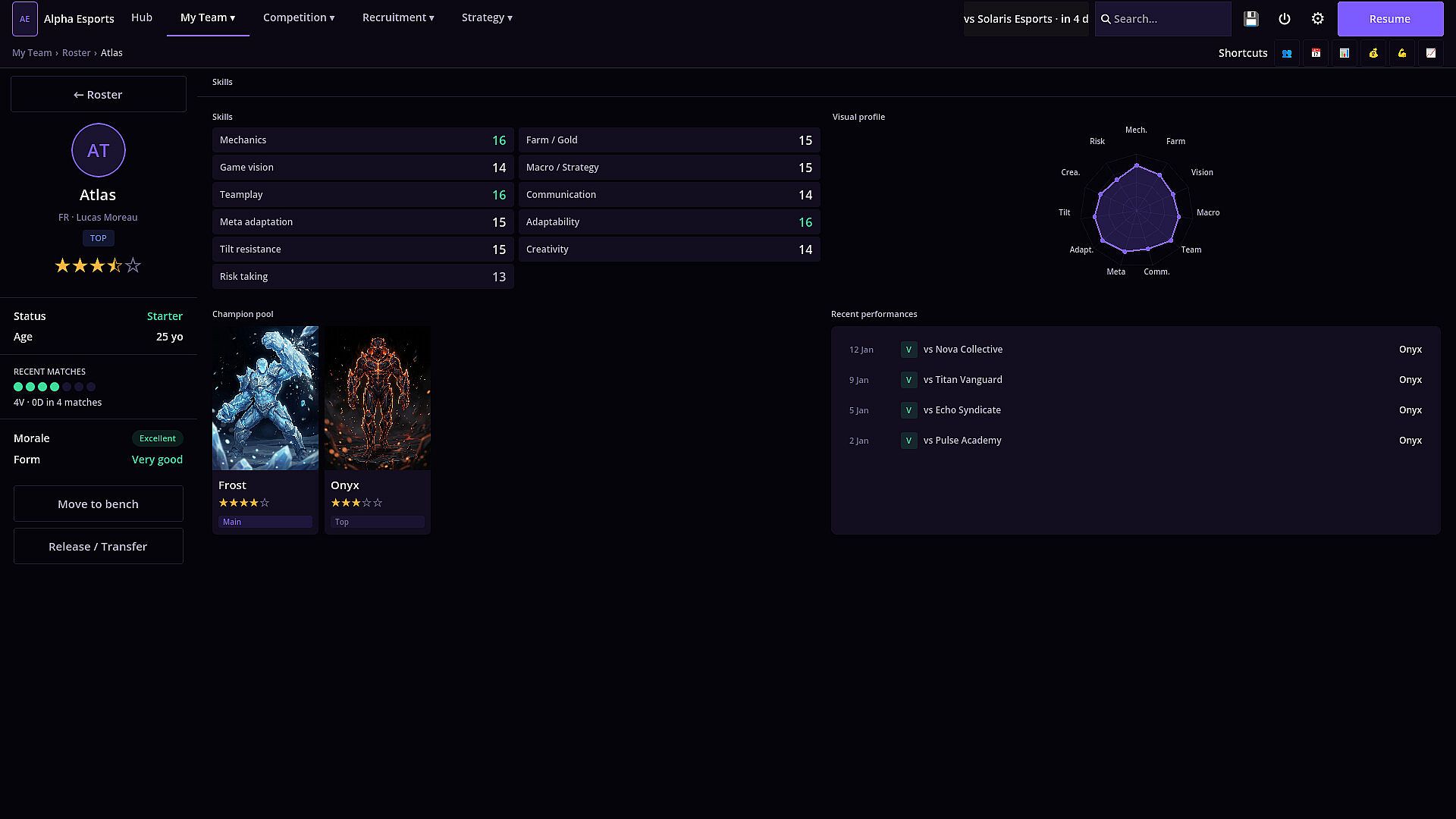
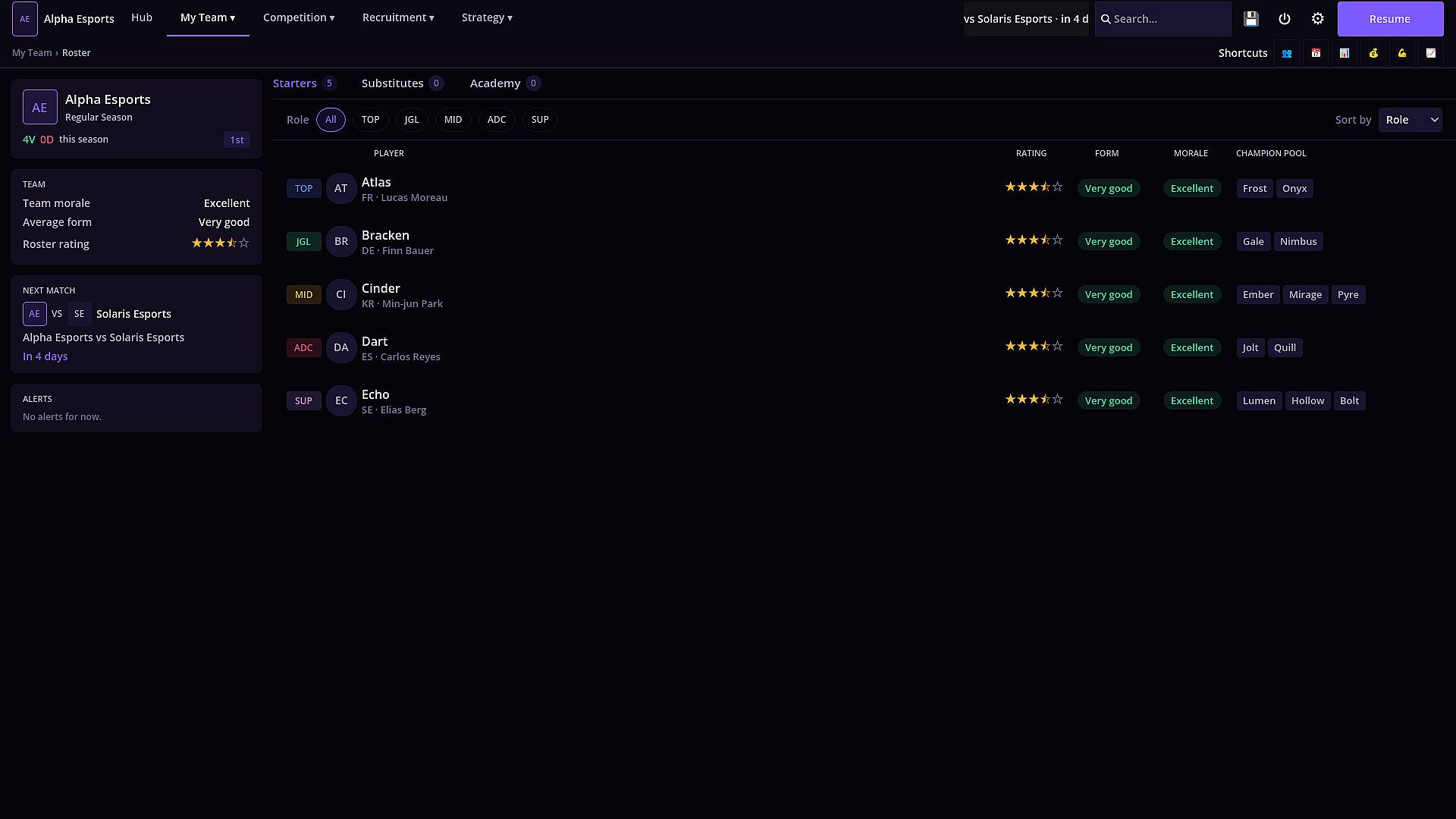
The core loop revolves around managing an esports organization across multiple seasons. Sign undiscovered players, schedule their training in mechanics, strategy, mental resilience, and form, and balance the budget that responds to on-field results. Choices made in one season influence the next, from who starts matches to who remains on the roster or moves on during the off-season.
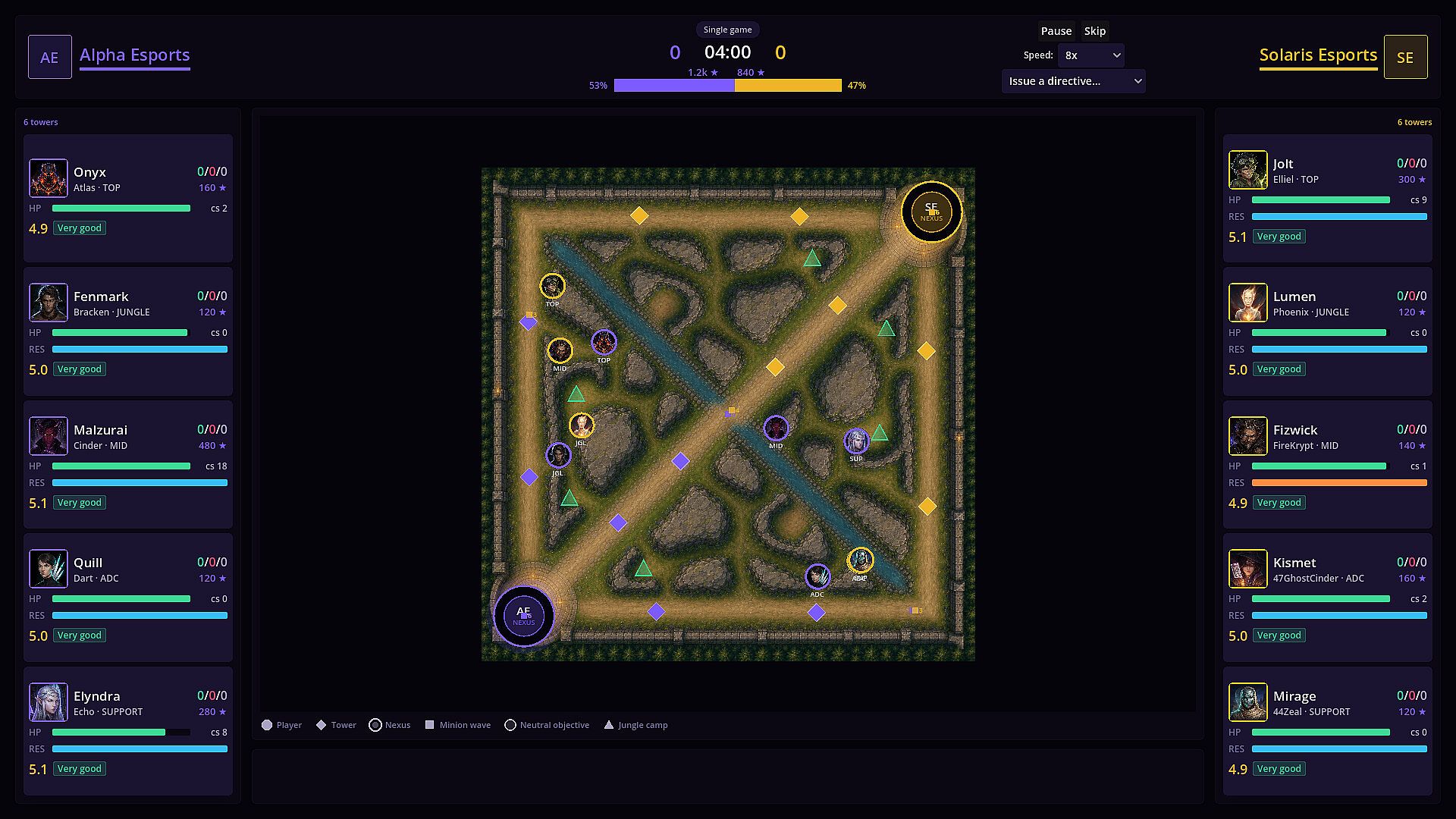
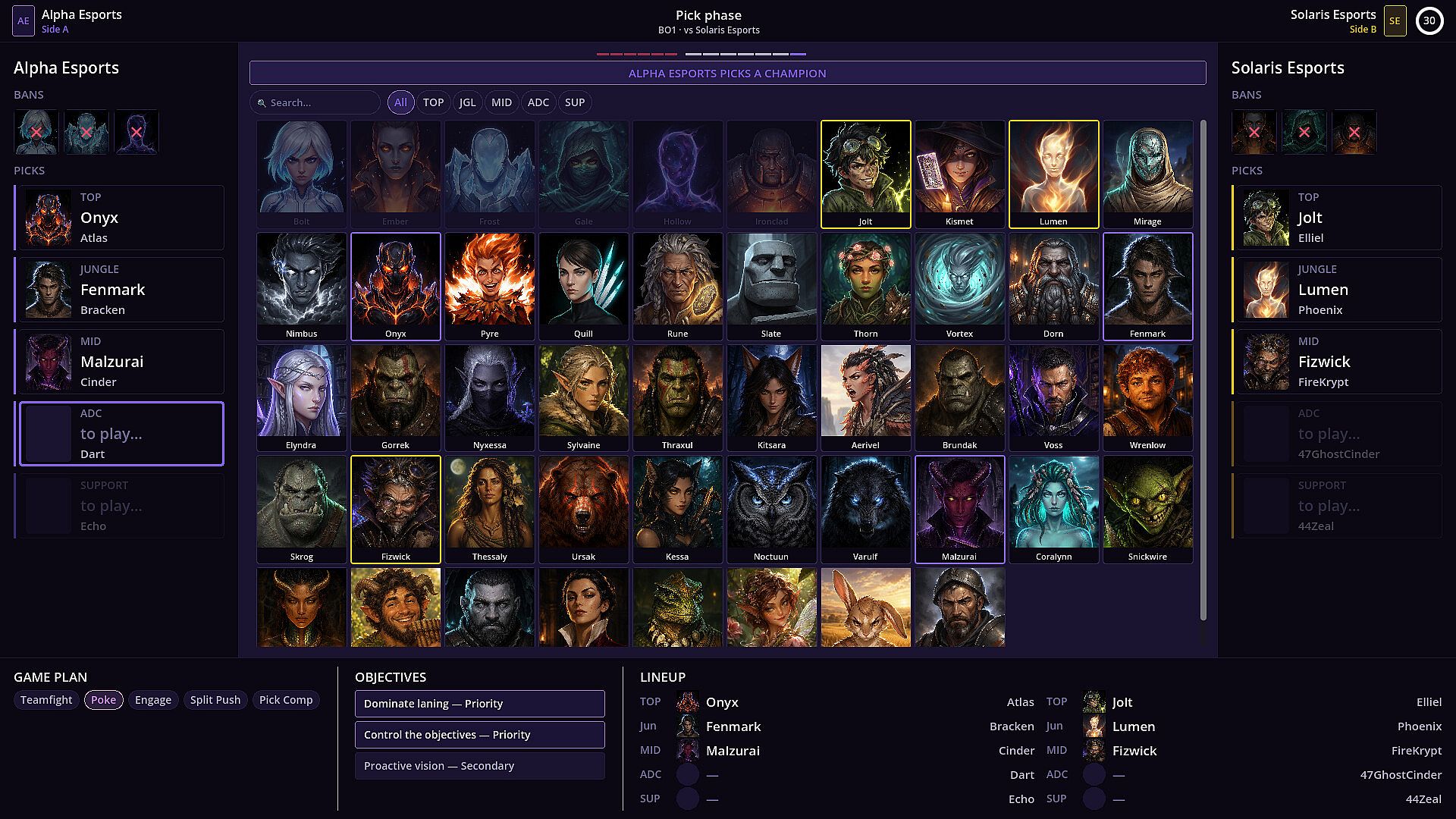
Once a fixture begins, the five players handle their own decisions on the map according to individual temperaments. A creative player approaches situations differently from a cautious one, even with identical champions and instructions. Preparation happens beforehand through game plans that define team priorities, laning approaches, neutral objective focus, and overall composition style.
The draft stands out as a decisive phase. Knowledge of opposing players' champion pools allows targeted bans, while observing the enemy's emerging composition informs the final picks to create favorable matchups.
Game Modes
The primary structure follows a regular season format with ten teams competing in a round robin. Standings determine playoff qualification, where series unfold as best-of-three matches leading to a best-of-five final. The off-season then redistributes talent across the league, ensuring each new campaign begins with an altered squad.
Club management ties directly into this seasonal progression. Scouting, training regimens, and contract decisions feed into performance over time, with financial stability emerging from consistent results rather than upfront investment.
Club Building and Long-Term Strategy
Roster construction emphasizes patience and foresight. Spotting overlooked talent, planning weekly training across multiple attributes, and accepting that budget constraints follow performance create a realistic cycle of growth and adaptation. Players develop or regress based on consistent attention to mechanics, strategy, mental state, and form.
Seasonal turnover adds depth. The redistribution of players after each campaign forces ongoing evaluation of who starts, who sits on the bench, and who departs, keeping the management challenge fresh across years of simulated play.
Is It Worth Playing?
Esport Manager: Last Pick suits players who enjoy deep, decision-heavy management simulations focused on esports team operations. The emphasis on player temperaments, draft counterplay, and multi-season roster evolution delivers a thoughtful take on the genre for those interested in MOBA circuits.
The game already supports full end-to-end careers spanning multiple seasons in its current Early Access state. However, updates during this phase may render existing saves incompatible, a detail noted in patch notes when relevant. Those comfortable with iterative development and long-term strategic planning will find the systems rewarding, while anyone seeking polished, unchanging progression might prefer to wait for further refinement.











