




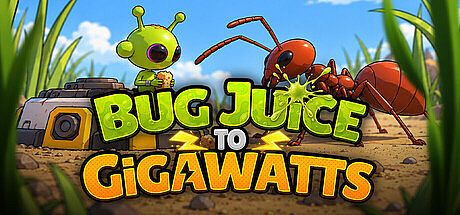




Bug Juice to Gigawatts is a strategy indie game for PC that puts players in charge of an alien industrial outpost. The core loop involves extracting resources, building production chains, expanding an energy grid, and pushing technology forward while venturing into a living insect world that reacts to every disturbance.
Gameplay
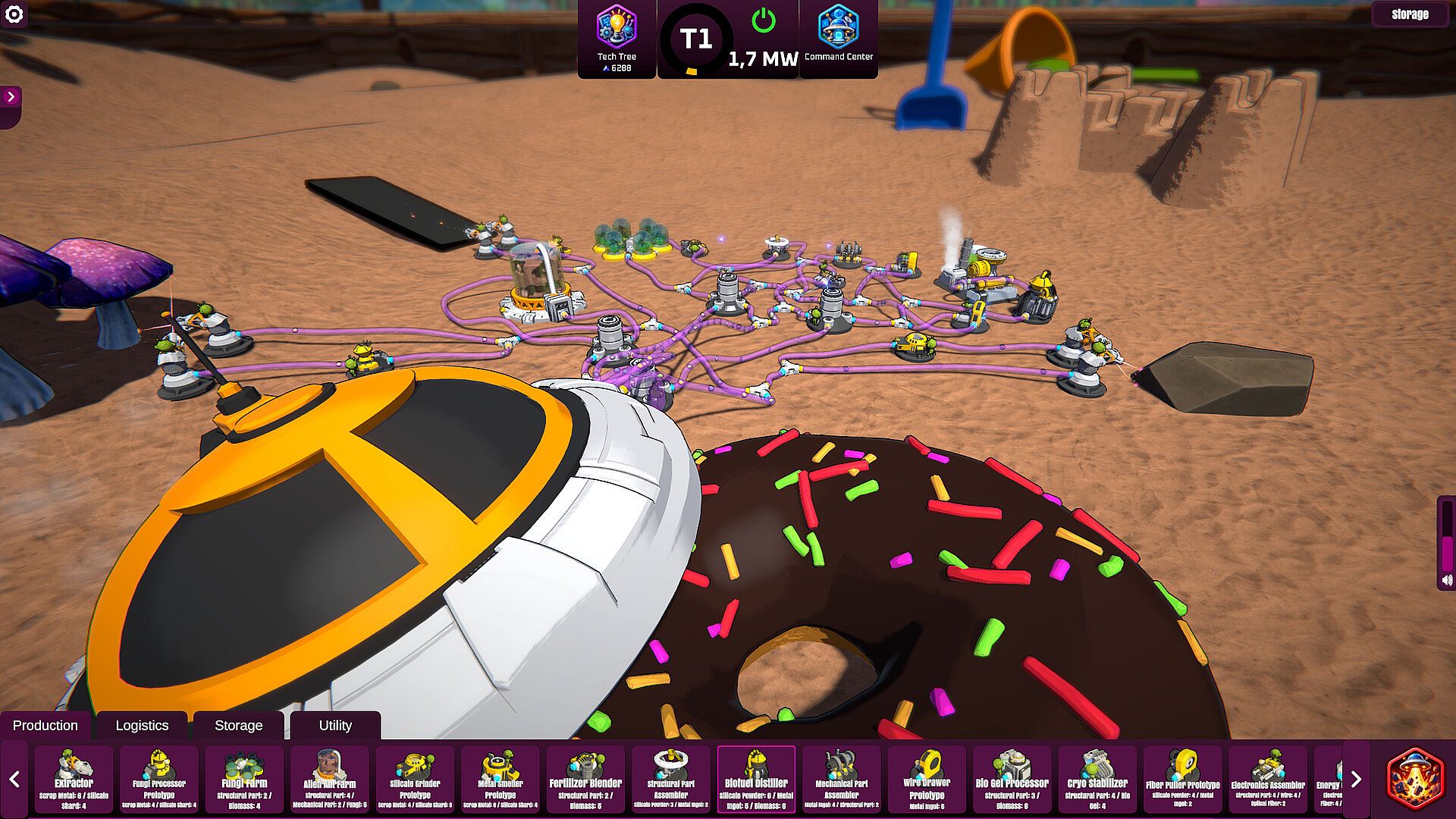
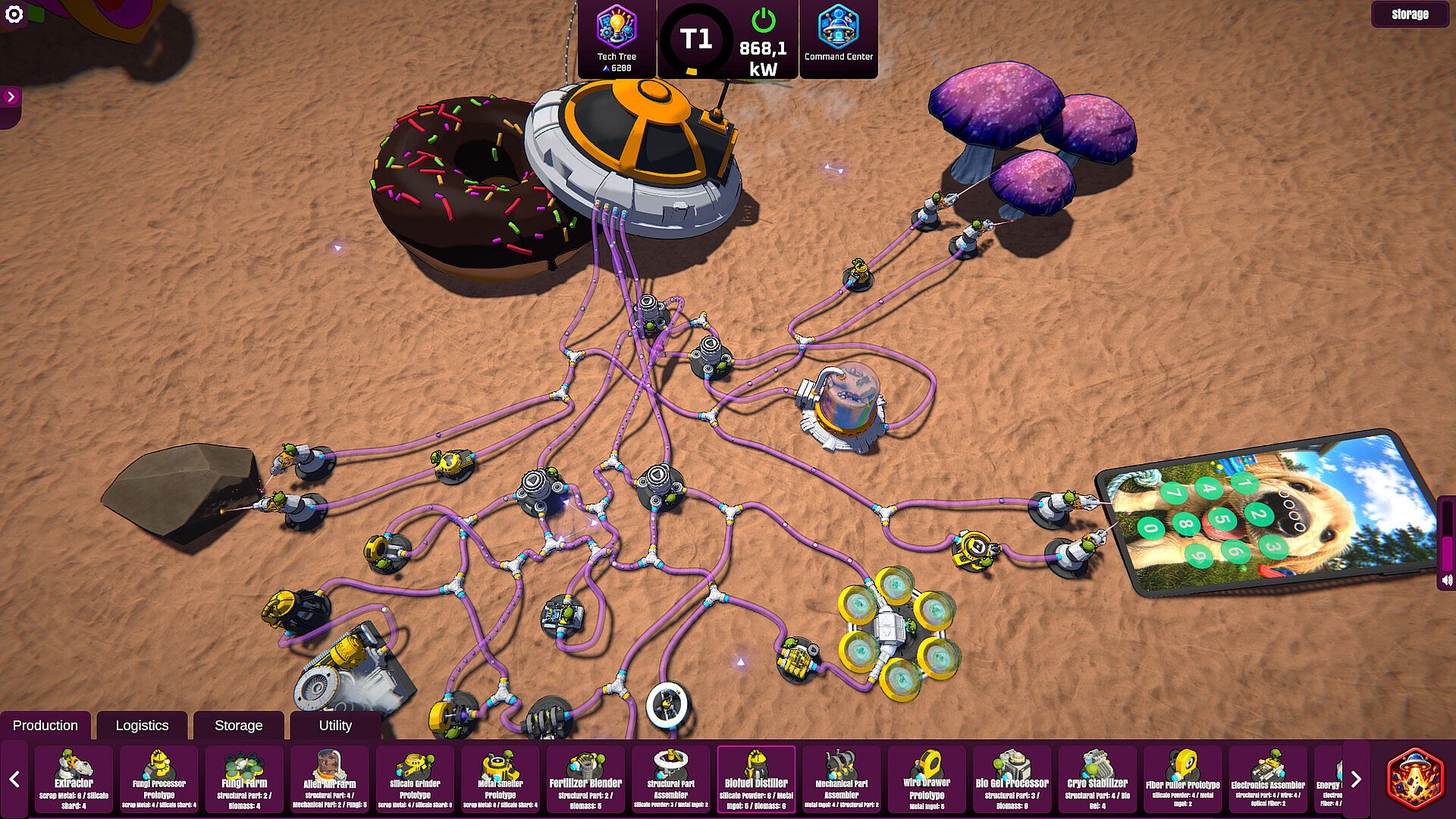
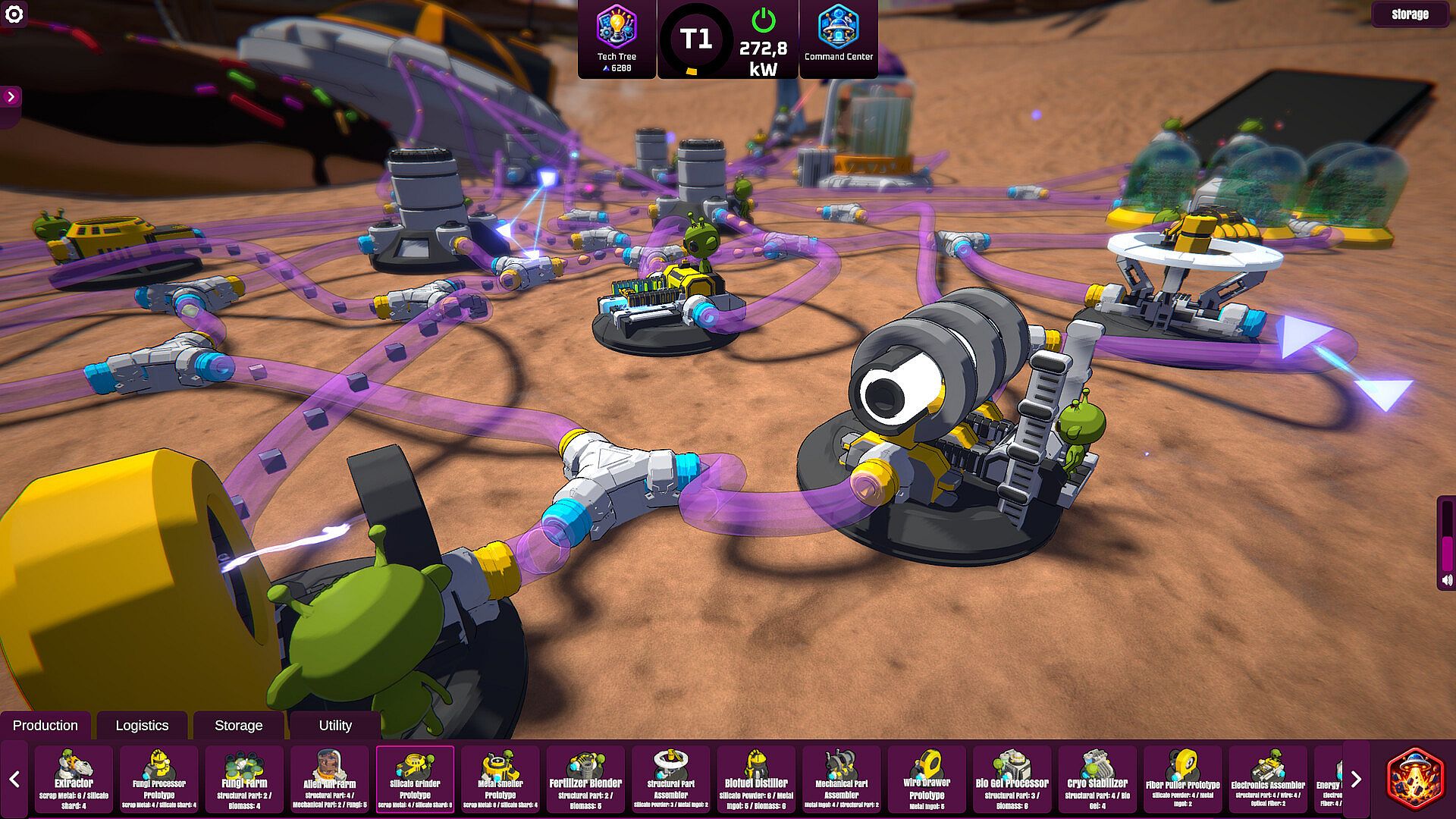
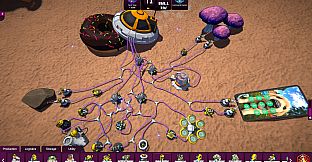
Players begin with basic resources and improvised machinery at a small outpost. Materials are extracted and processed through production chains that connect machines via transport networks. Energy infrastructure grows gradually as new resources unlock additional buildings and technologies. What starts as a survival operation scales into a complex industrial system capable of generating enormous amounts of power.
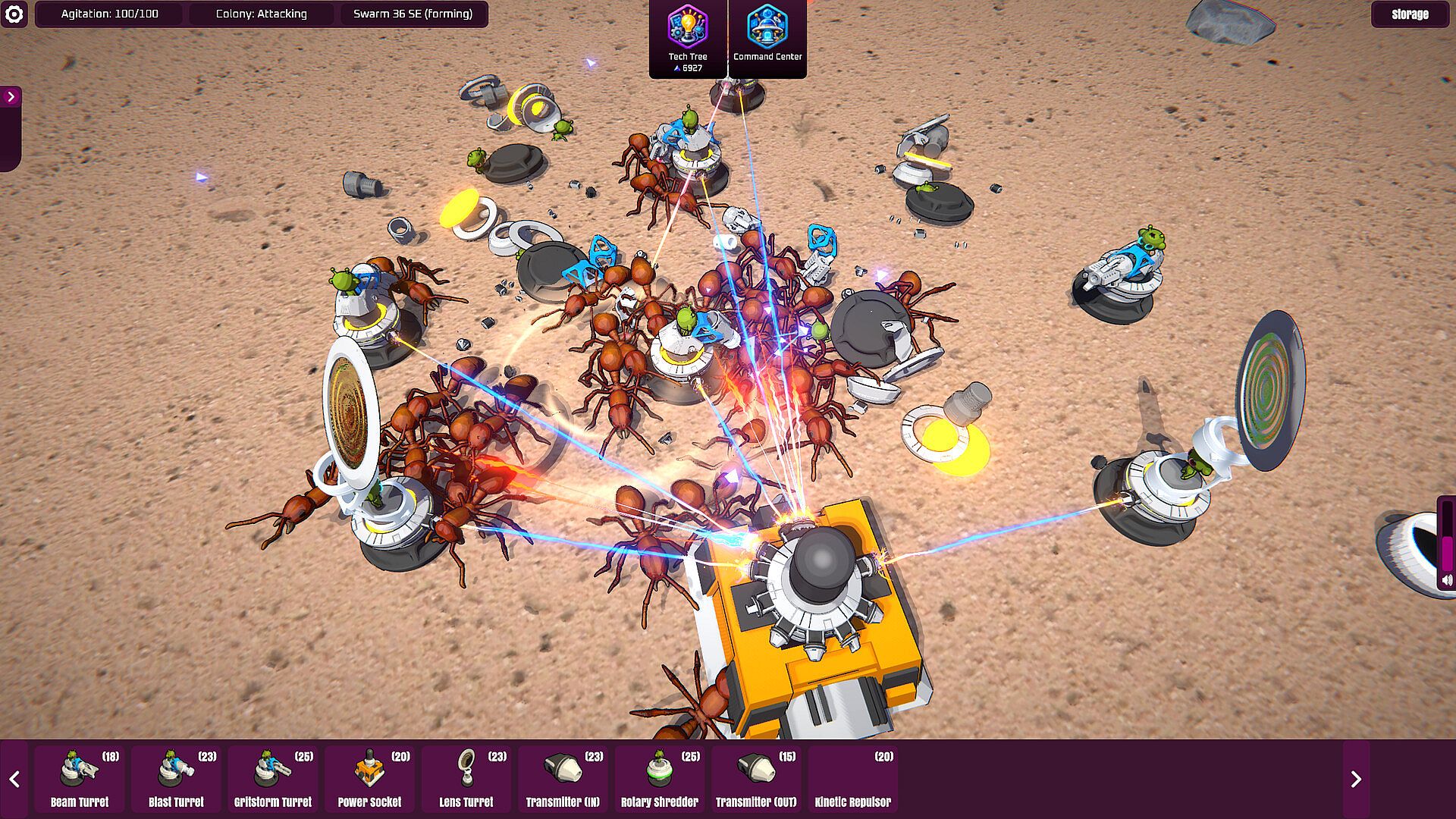
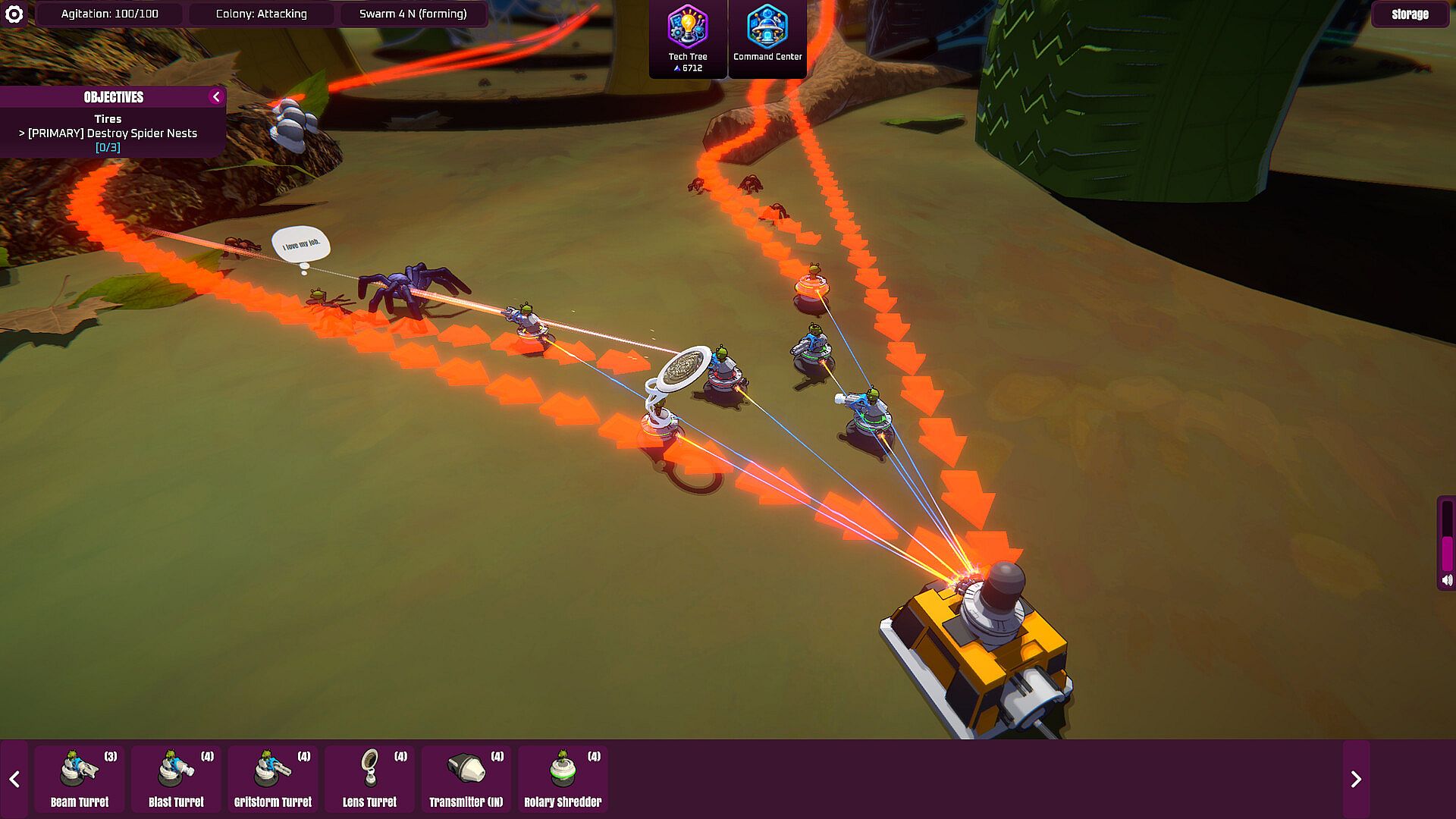
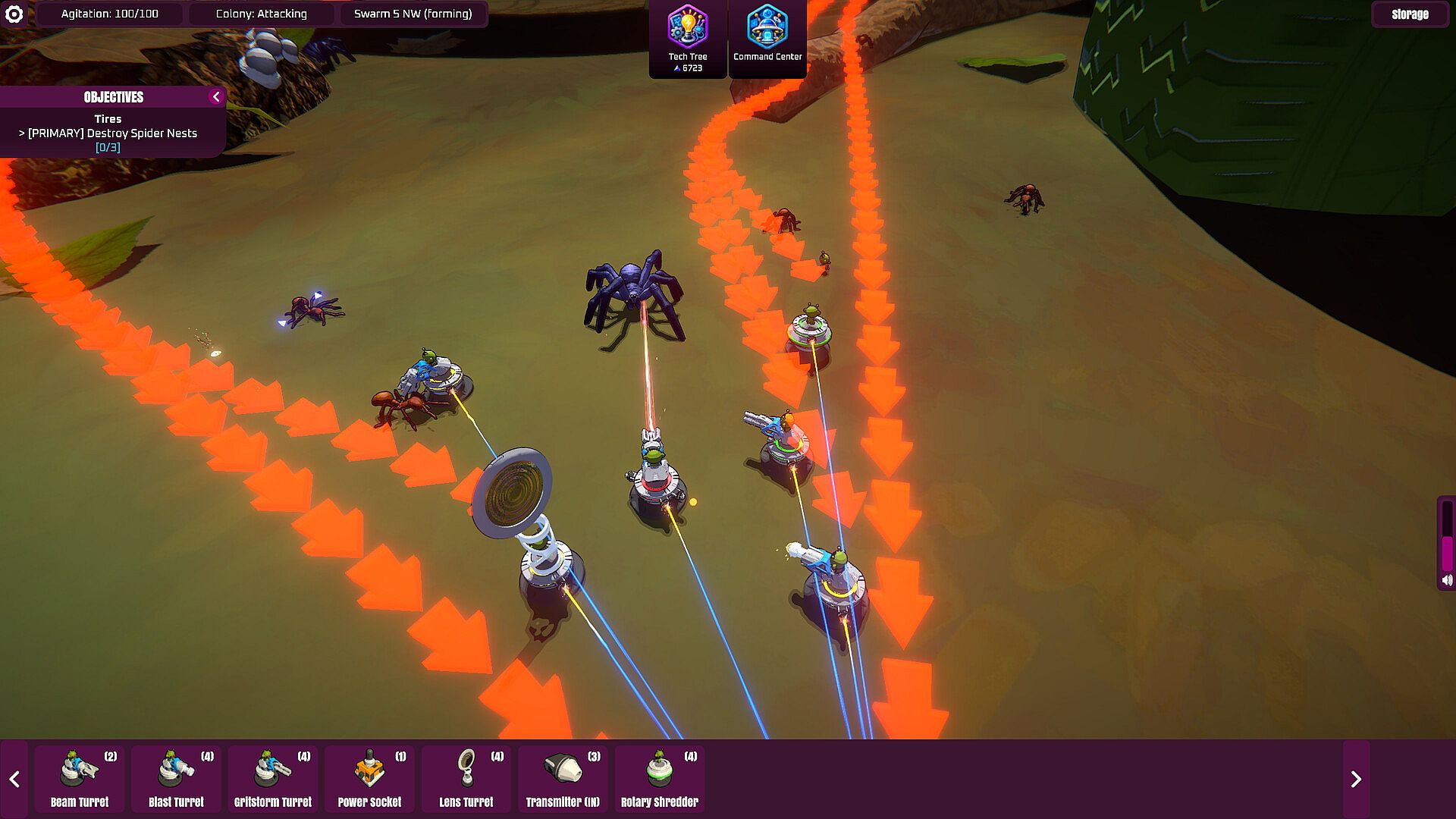
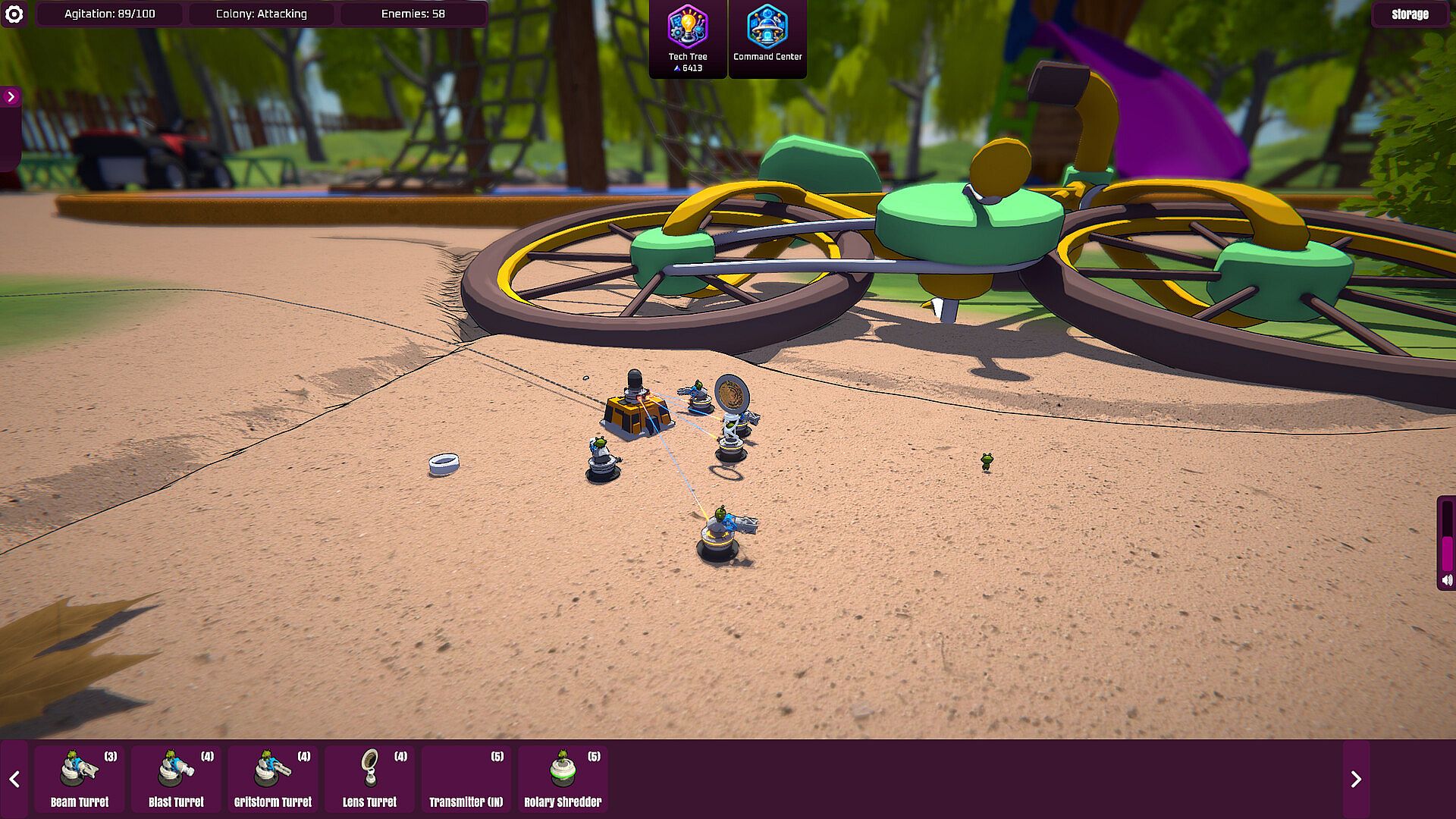
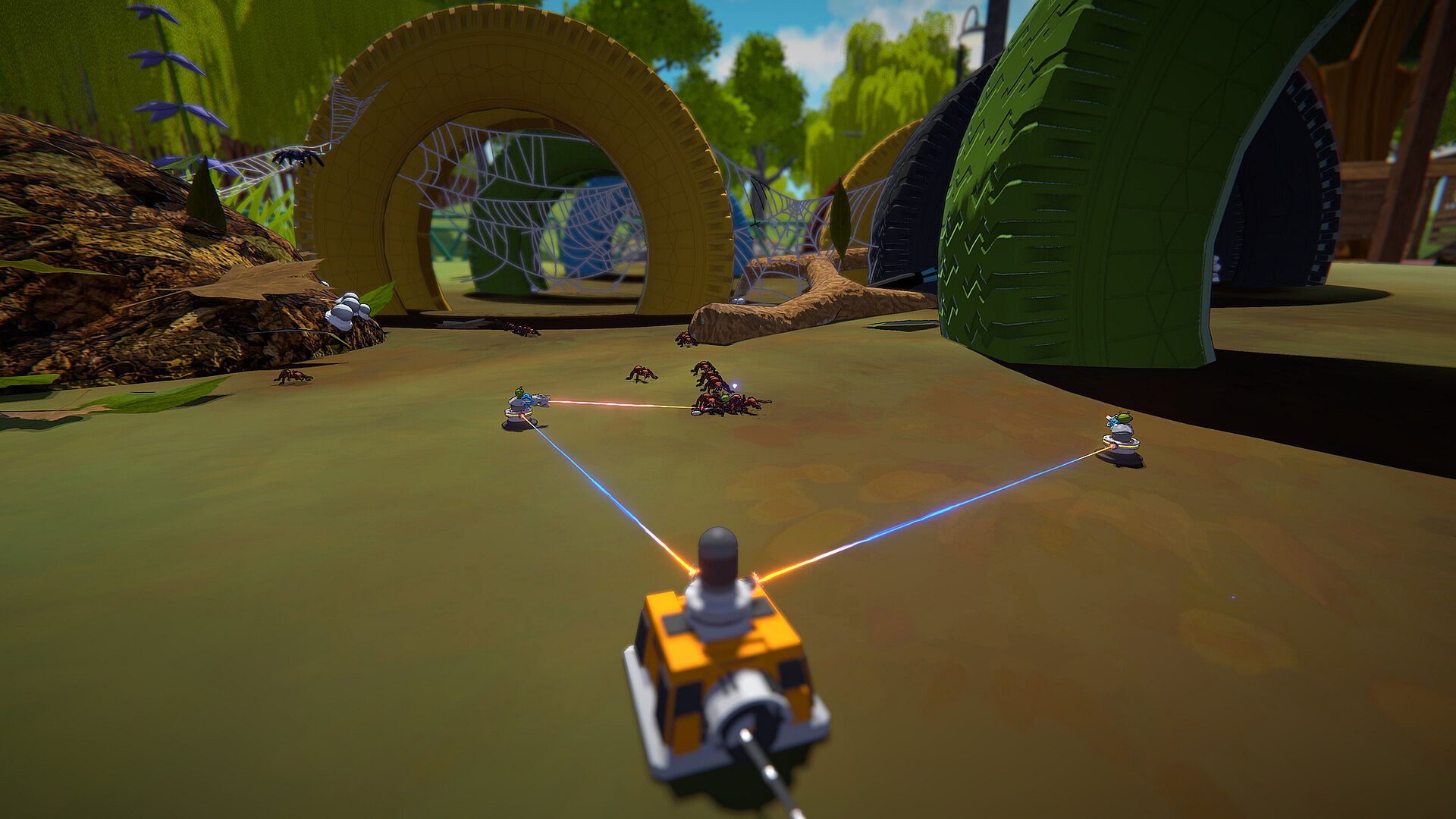
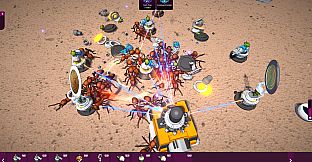
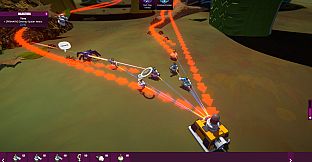
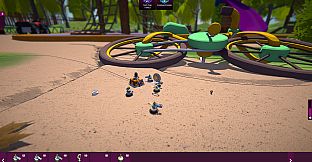
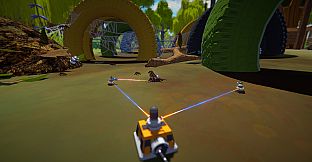
Expeditions take the action beyond the outpost into active insect habitats. Creatures move between nests and food sources, reacting to player presence and disturbances. Defenses must be established around a foothold, with power flowing through linked nodes that can be stored, redirected, or modified. The system encourages experimentation with different components and technologies rather than simple upgrades to existing structures. The further expeditions push, the stronger the colony response becomes, turning small confrontations into larger organized swarms.
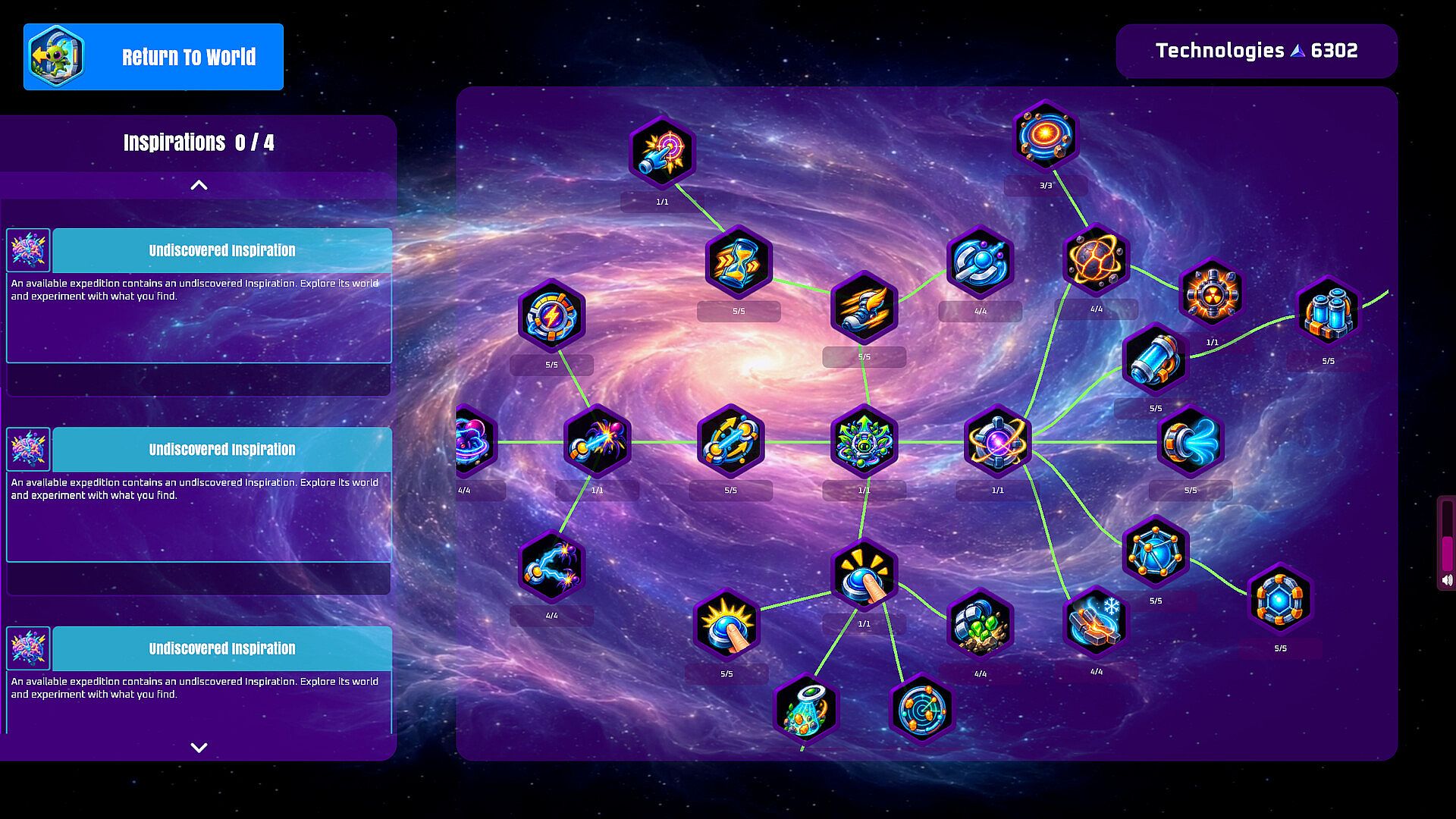
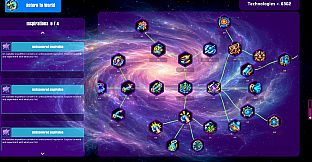
A persistent tech tree drives adaptation. Discoveries from the world turn into new machines, systems, and approaches for both production and combat. Progress expands the range of solvable problems instead of only boosting numbers. The insects inhabit the environment independently, with some traveling set paths and others wandering, so player actions can trigger local incidents or increase pressure on entire colonies.
Game Modes
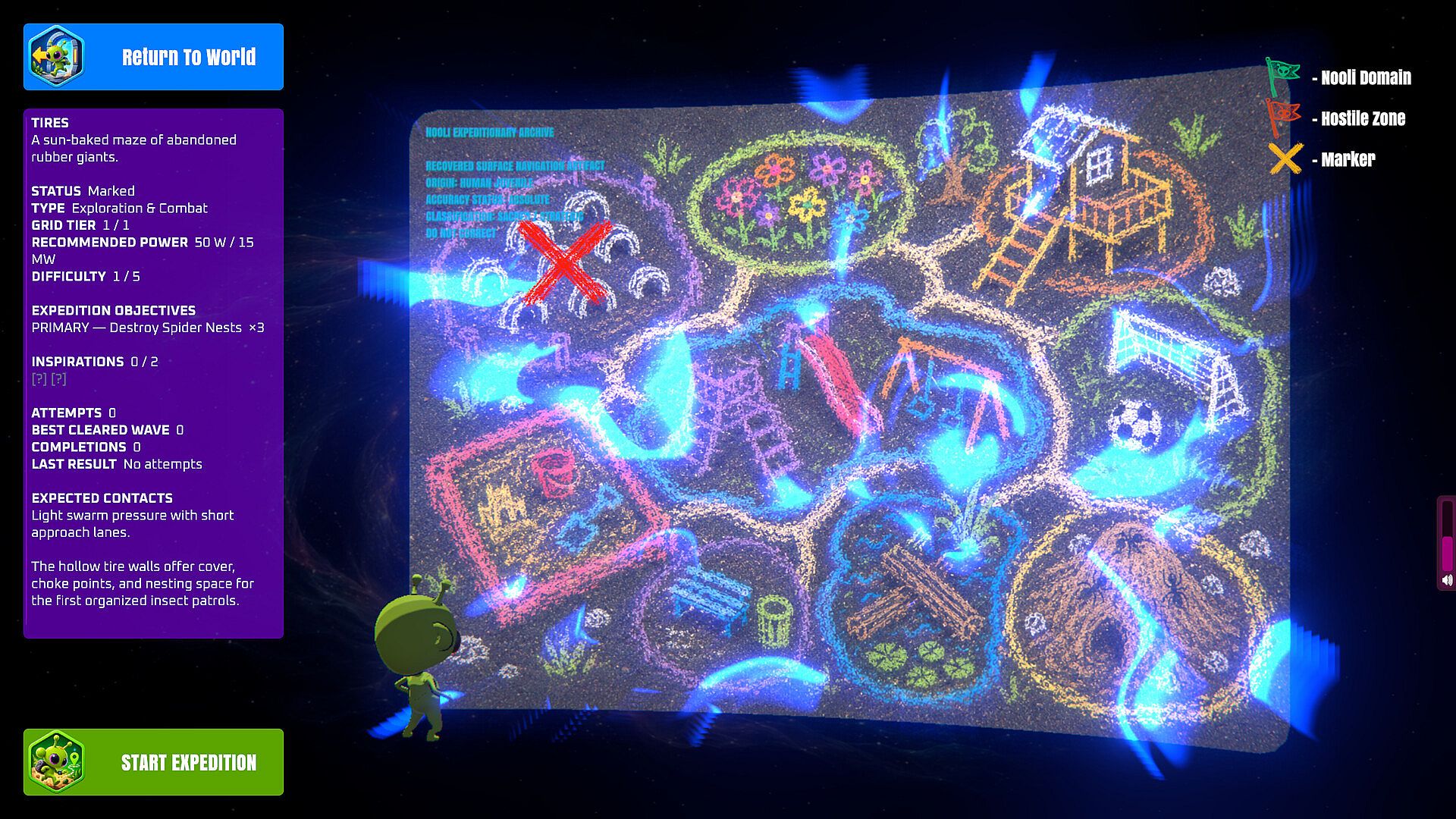
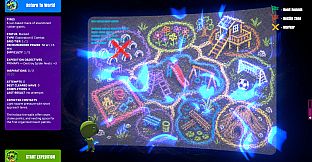
The game focuses on a single-player experience built around outpost management and expeditions. Outpost building forms the foundation, where production chains and power networks are developed over time. Expeditions combine exploration, resource gathering, defense construction, and survival against reactive insect colonies. Each expedition contributes to long-term progress through discoveries and technology unlocks, with greater risk tied to longer stays that allow colonies more time to respond.
Players decide how far to push into hostile regions before returning. The living world means understanding colony behavior and timing interventions becomes key to success. No separate competitive or cooperative modes appear in the design, keeping the emphasis on individual experimentation with the energy network and tech tree.
Building and Expanding the Outpost
Resource extraction and processing form the backbone of growth. Machines link together through transport networks, and power connections allow energy to move efficiently across the base. New resources open fresh building options and technological paths, turning an initial survival setup into an advanced industrial operation. The outpost serves as the safe hub from which all expeditions launch, making steady expansion essential for tackling deeper territory.
The Reactive Insect World
Insects do not spawn at fixed points. They already occupy the environment with natural movement patterns between nests and food sources. Player actions can disturb these patterns, raising local pressure and eventually provoking larger organized responses. Defenses connect through the energy network, where power routing and component choices shape how weapons perform against swarms. Understanding when to engage and when to withdraw adds a layer of decision-making to every expedition.
Is It Worth Playing?
Bug Juice to Gigawatts suits players who enjoy strategy games that blend base building with active offense rather than passive defense. The production chains, energy network experimentation, and reactive insect world create a focused loop of expansion and risk management. Those drawn to indie titles with sci-fi themes and systems that reward careful planning over raw power increases will find the mechanics align closely with the described systems. The game remains in active development based on available details, with the core loop centered on outpost growth and expeditions into living territory. Fans of thoughtful strategy experiences that emphasize adaptation through technology and environmental awareness should consider trying it.











