




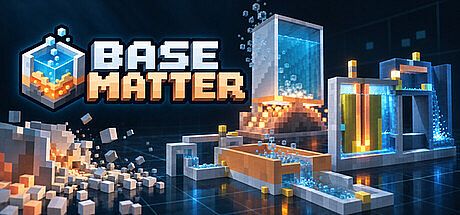


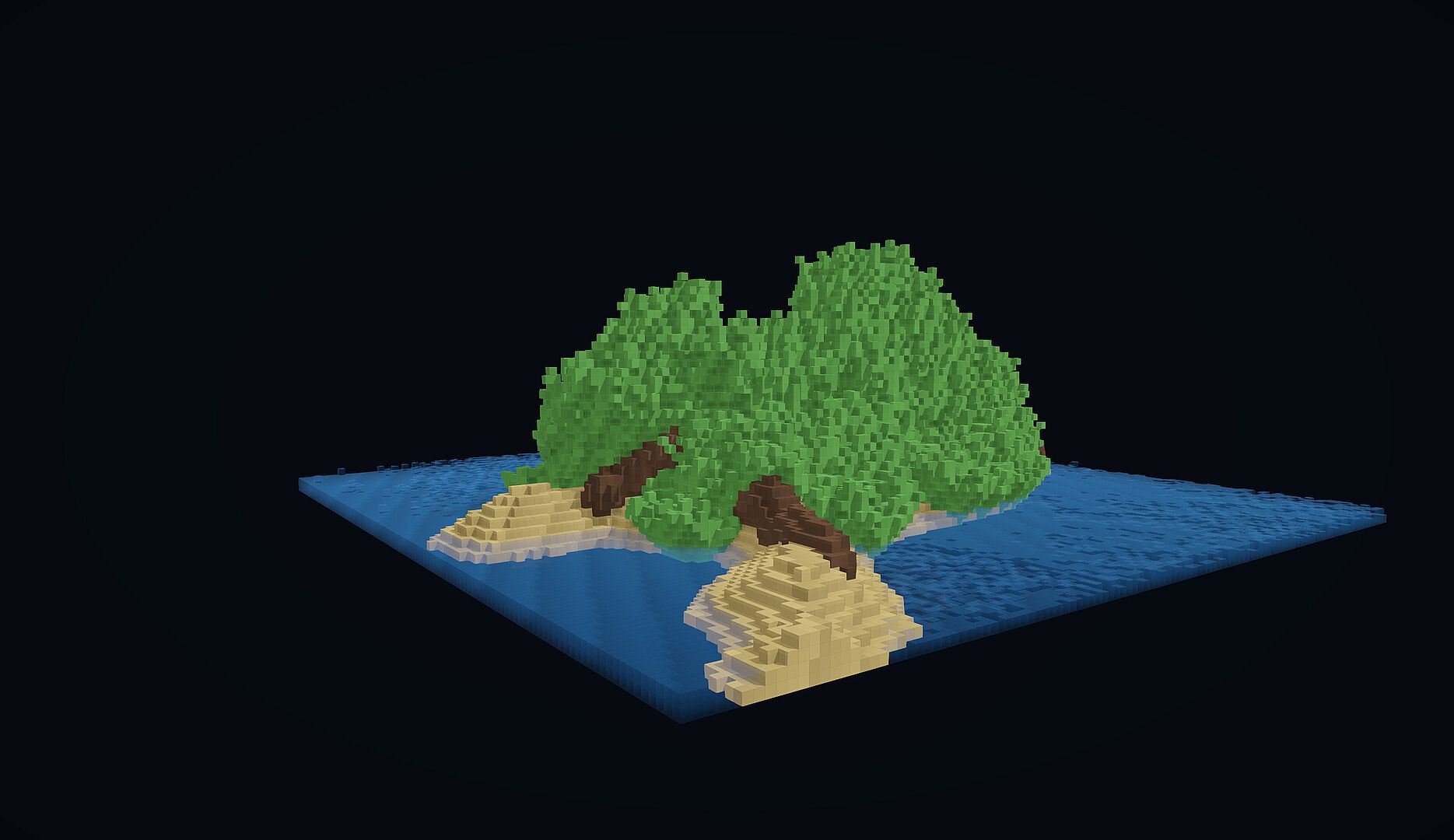
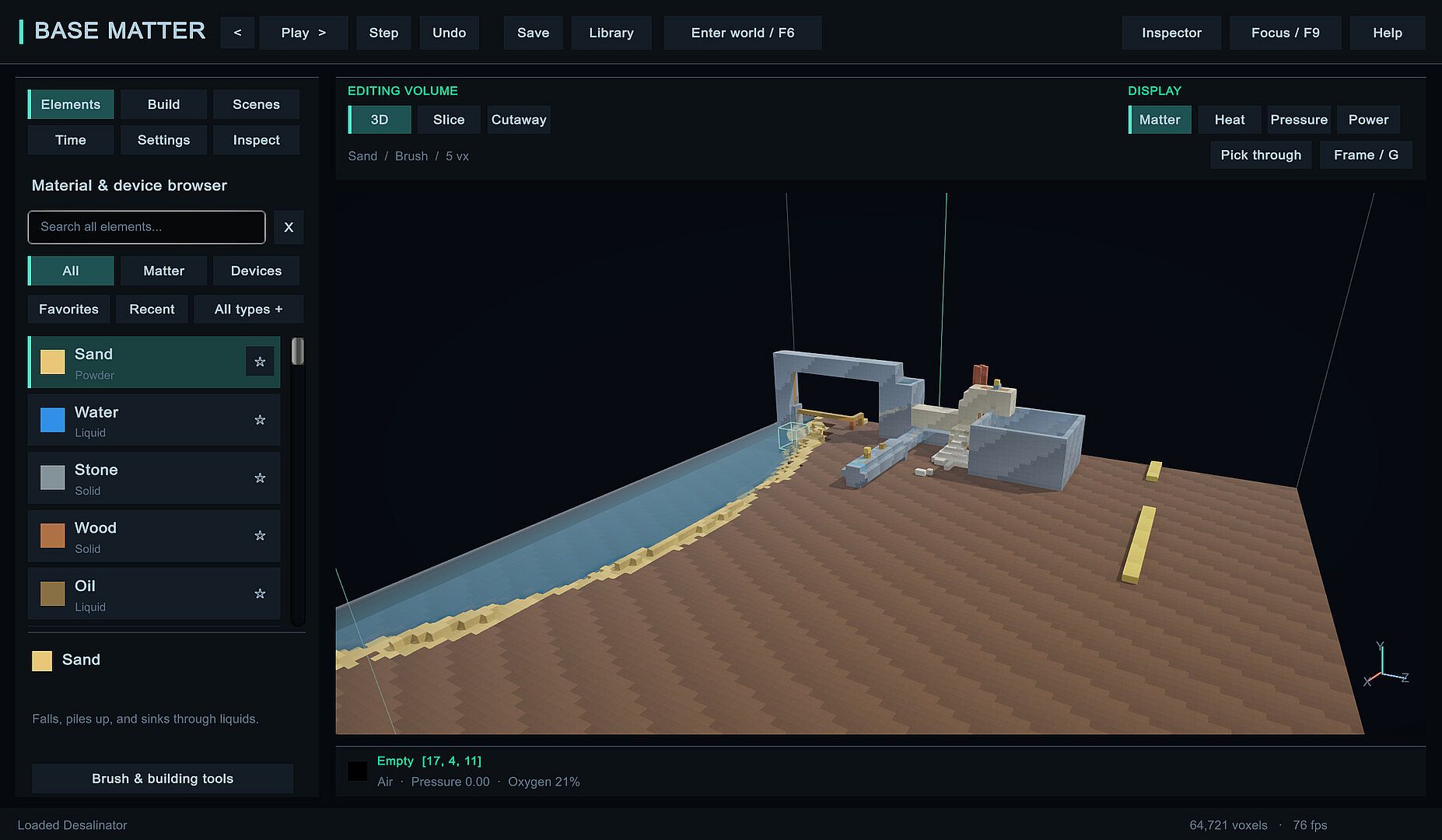
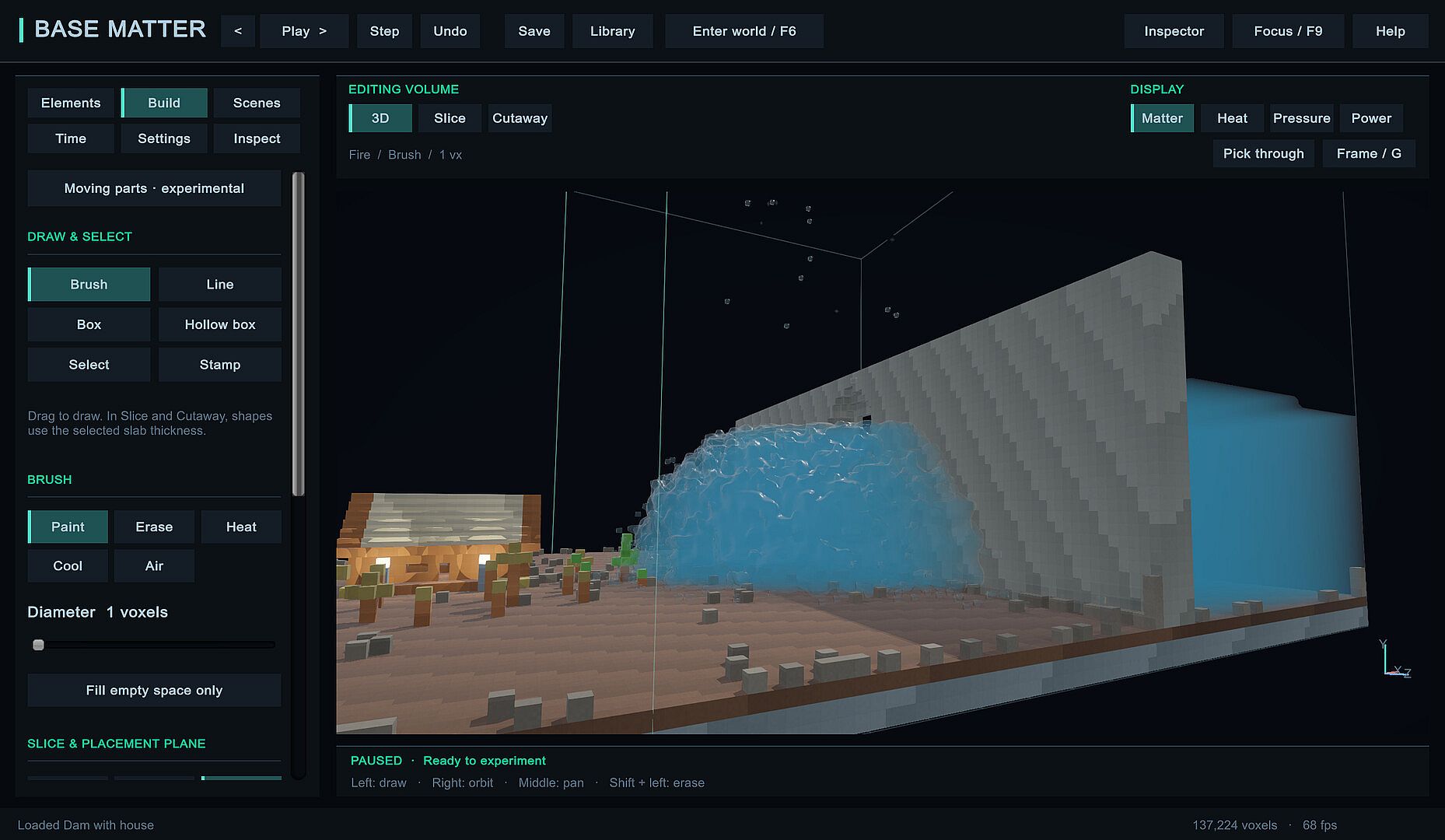
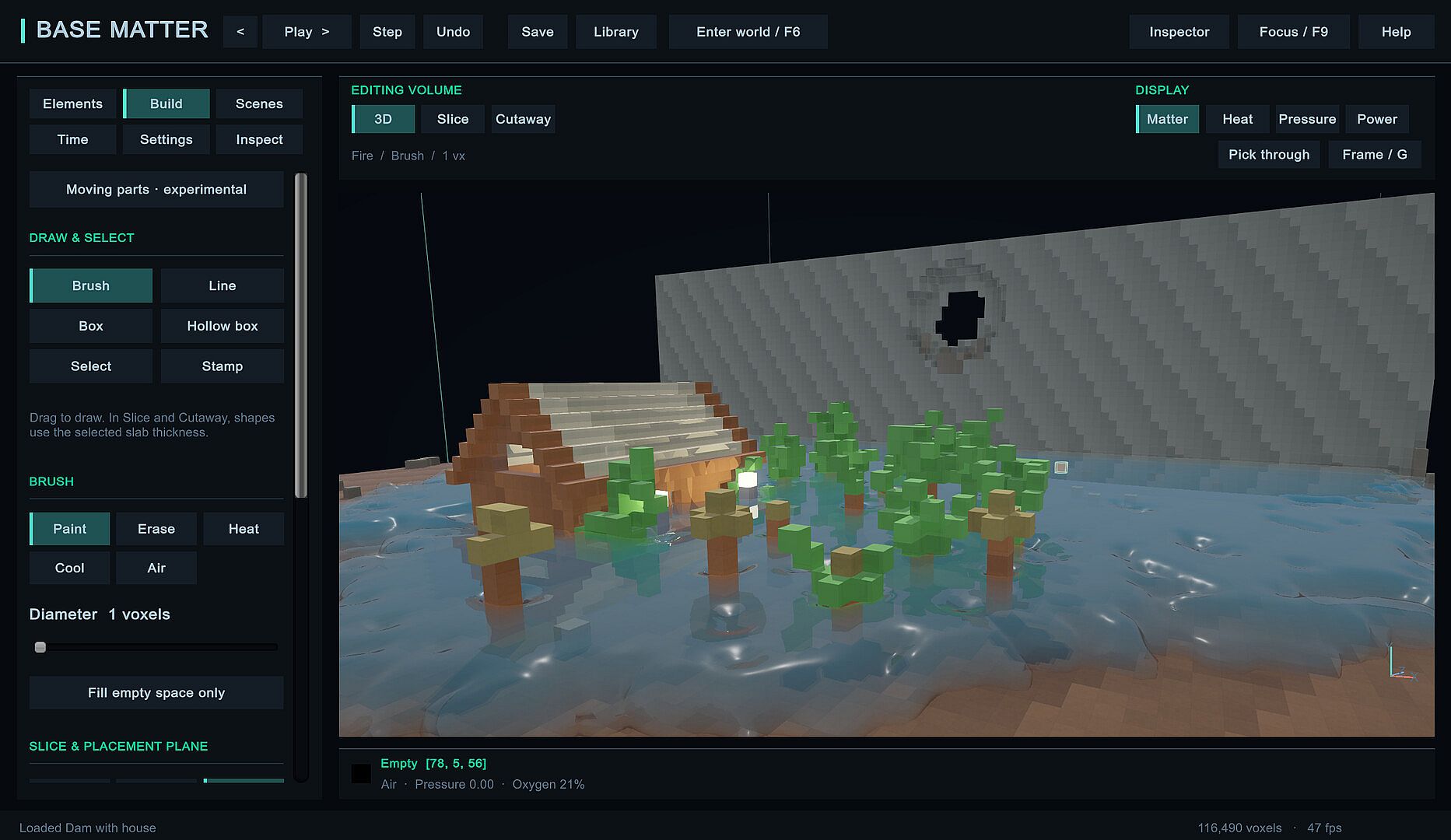
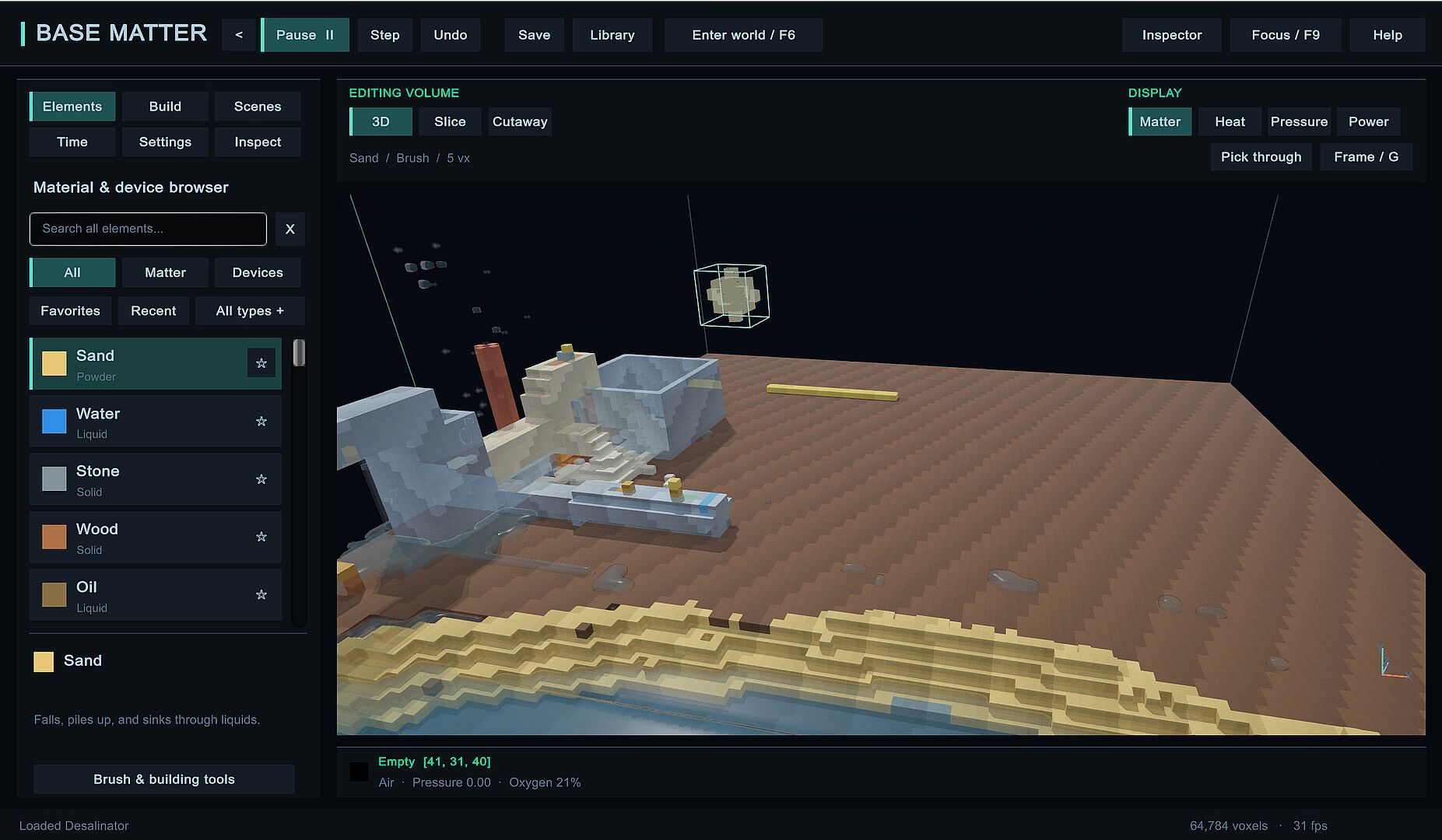
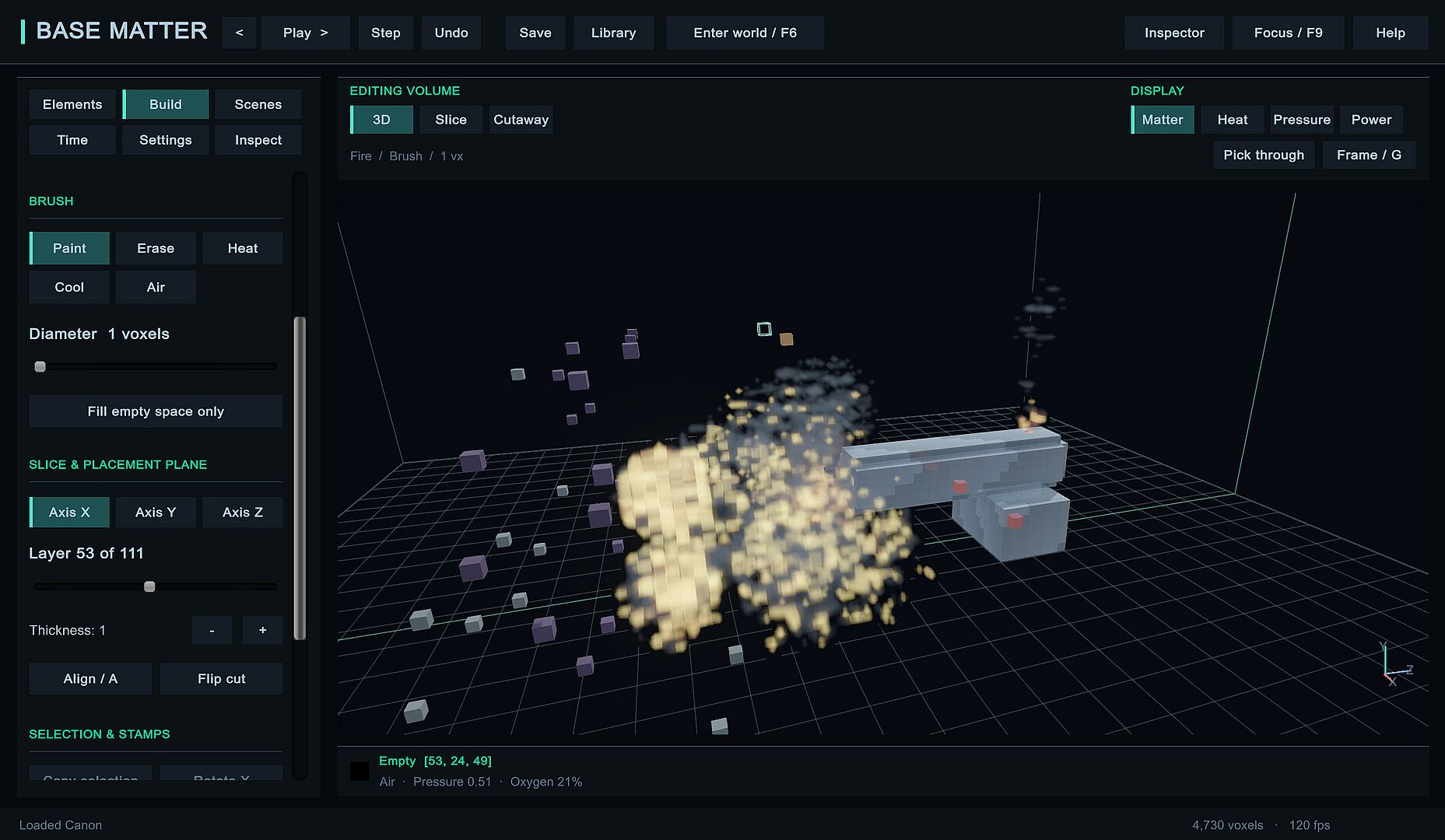
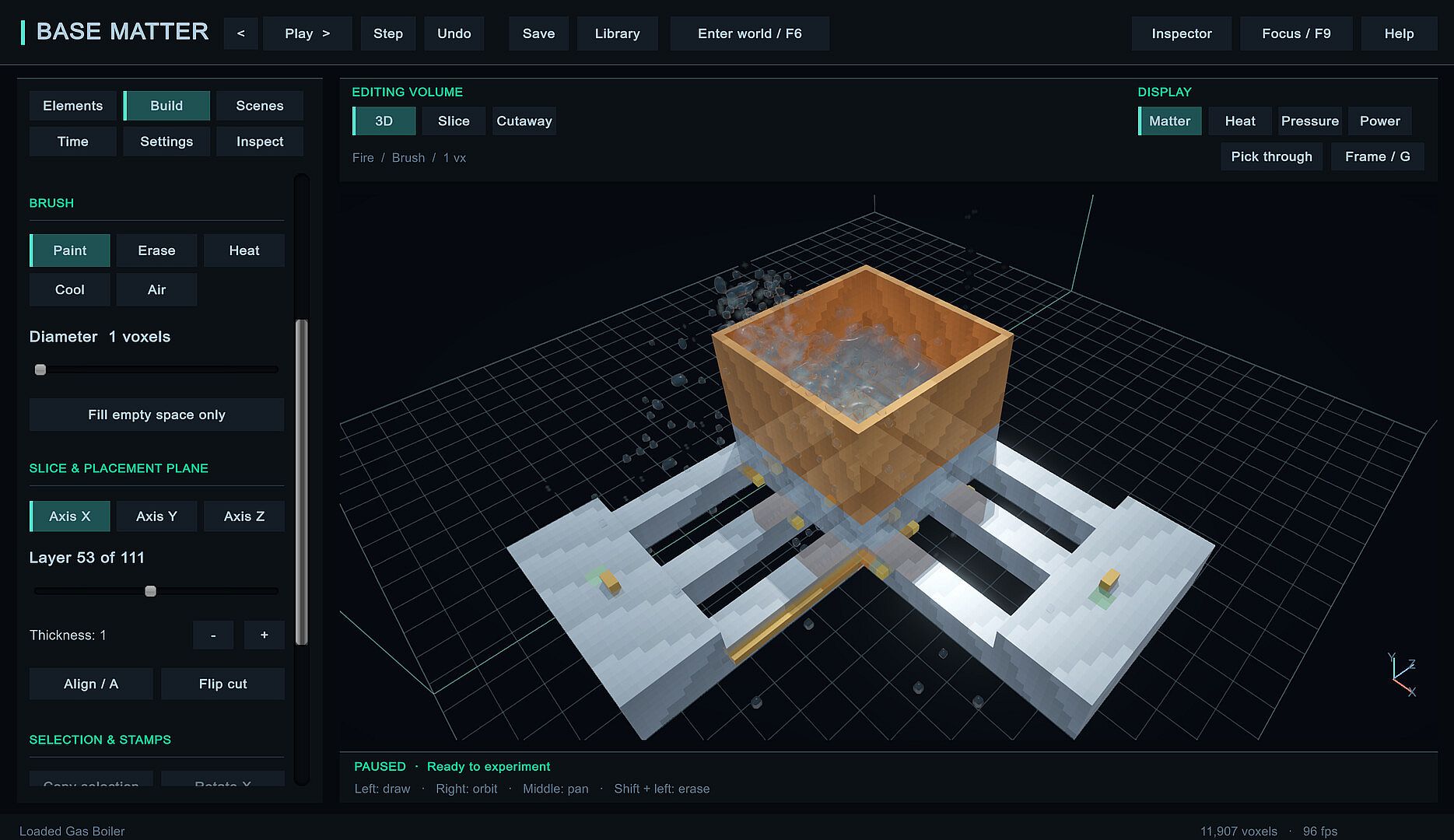
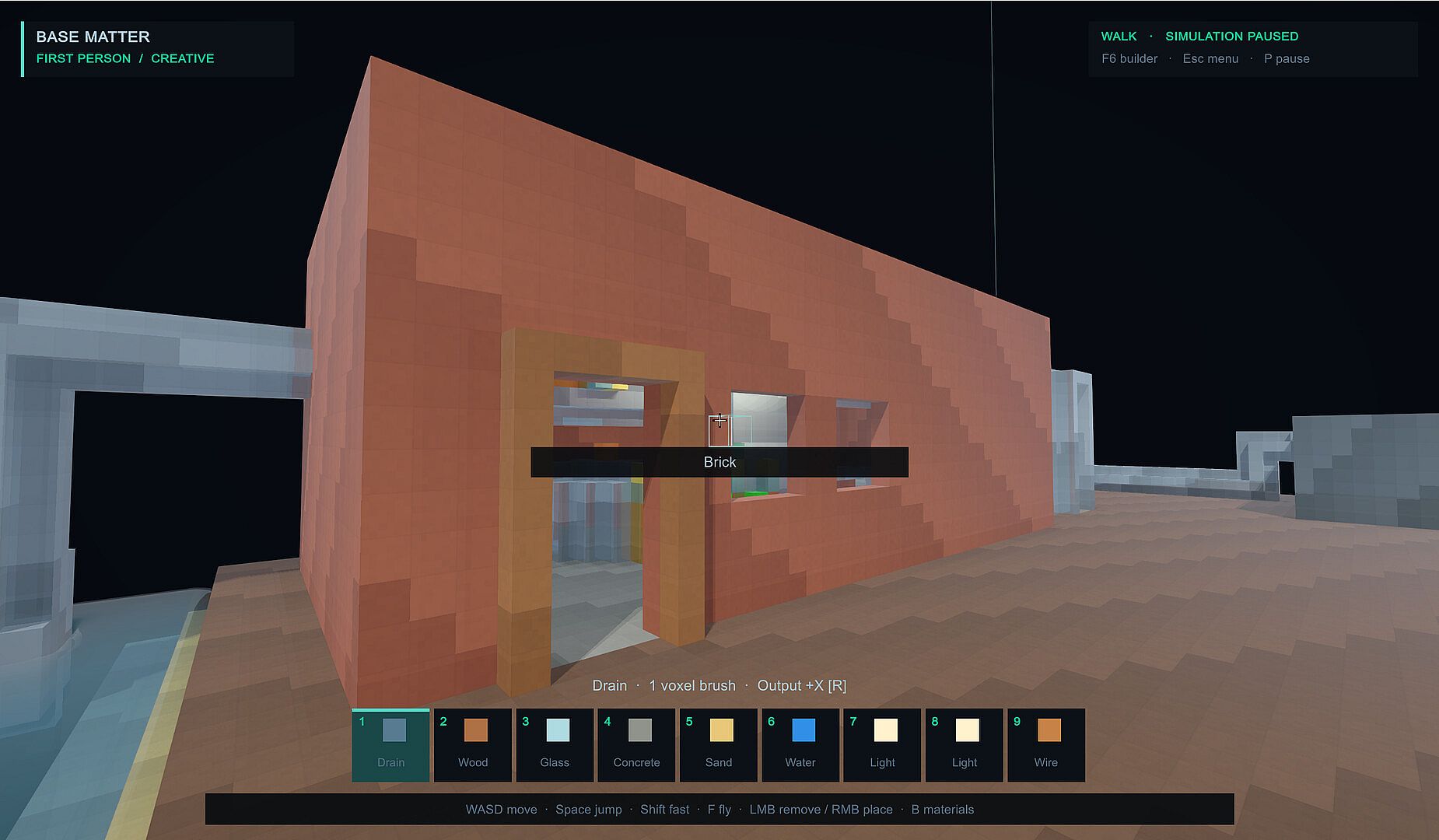
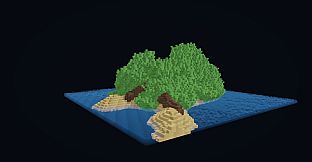
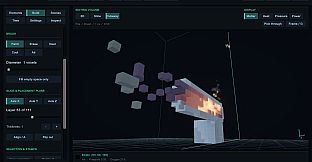
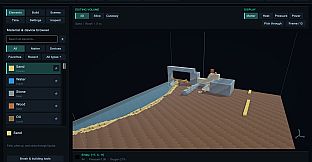
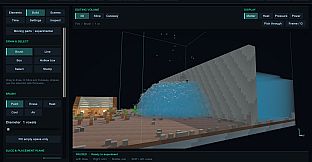
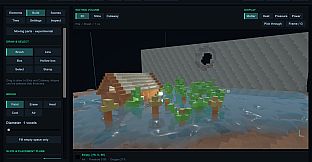
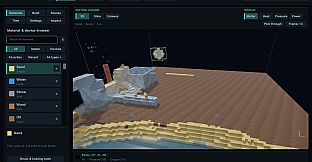
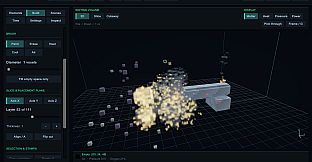
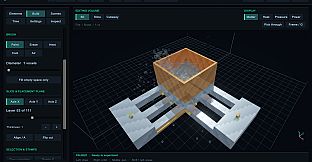
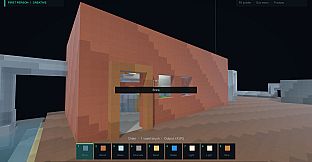
Base Matter is an indie simulation game built as a fully three dimensional material sandbox on PC. Players construct structures, machines, and fluid systems from a grid of simulated materials, then run the physics to observe the outcomes in real time.
Gameplay
The core loop centers on building experiments with powders, liquids, gases, solids, and other substances that interact according to simplified physical rules. Sand piles under gravity, liquids flow and separate by density, heat moves through materials, and phase changes occur when water freezes, boils, or condenses. Sealed chambers build pressure that can rupture weaker walls, while combustion requires oxygen and gunpowder can chain react. Additional interactions include salt dissolving in water, plants growing by consuming resources, acid corroding surfaces, and basic nuclear materials such as uranium and control rods that produce heat and neutrons.
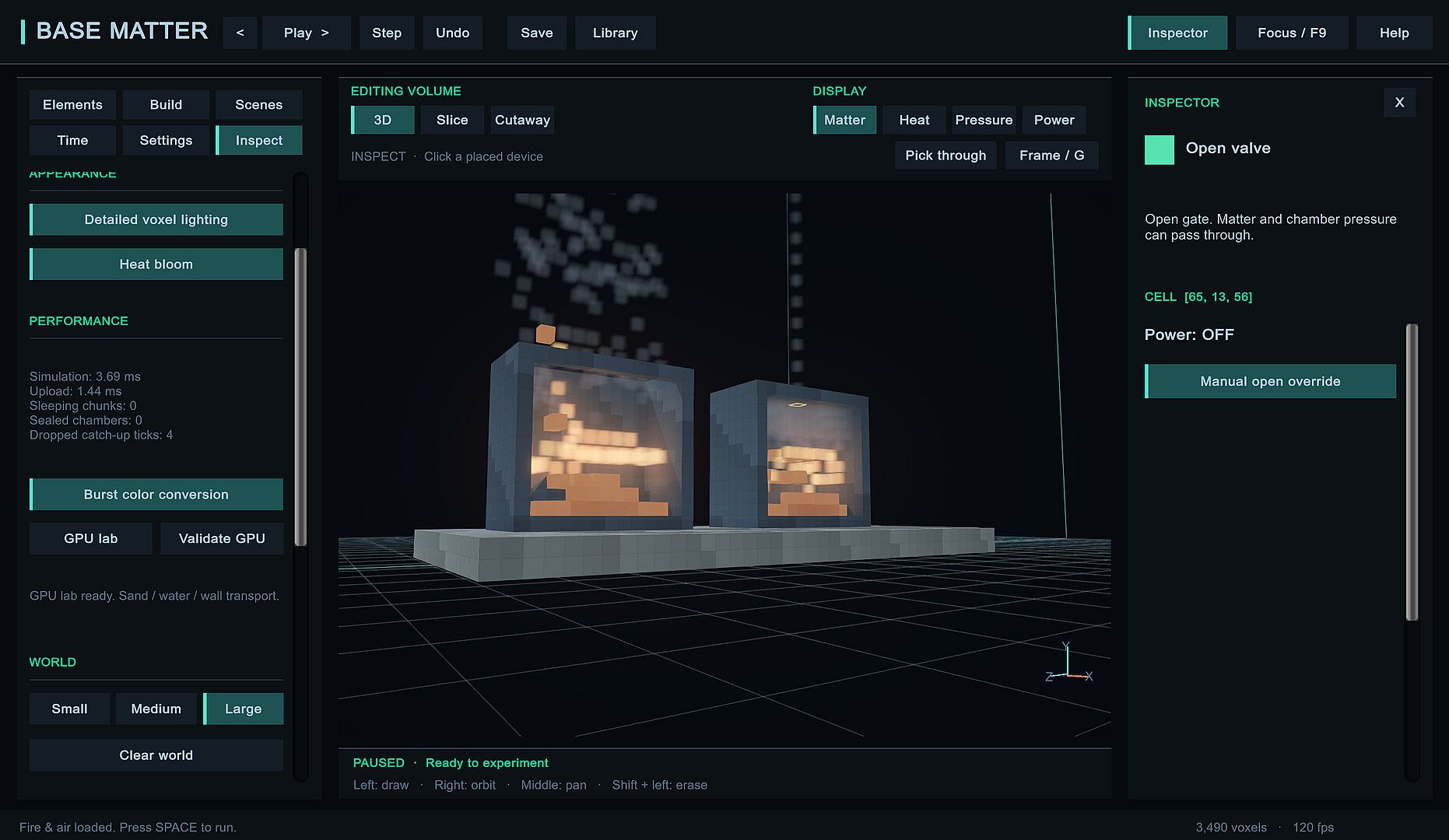
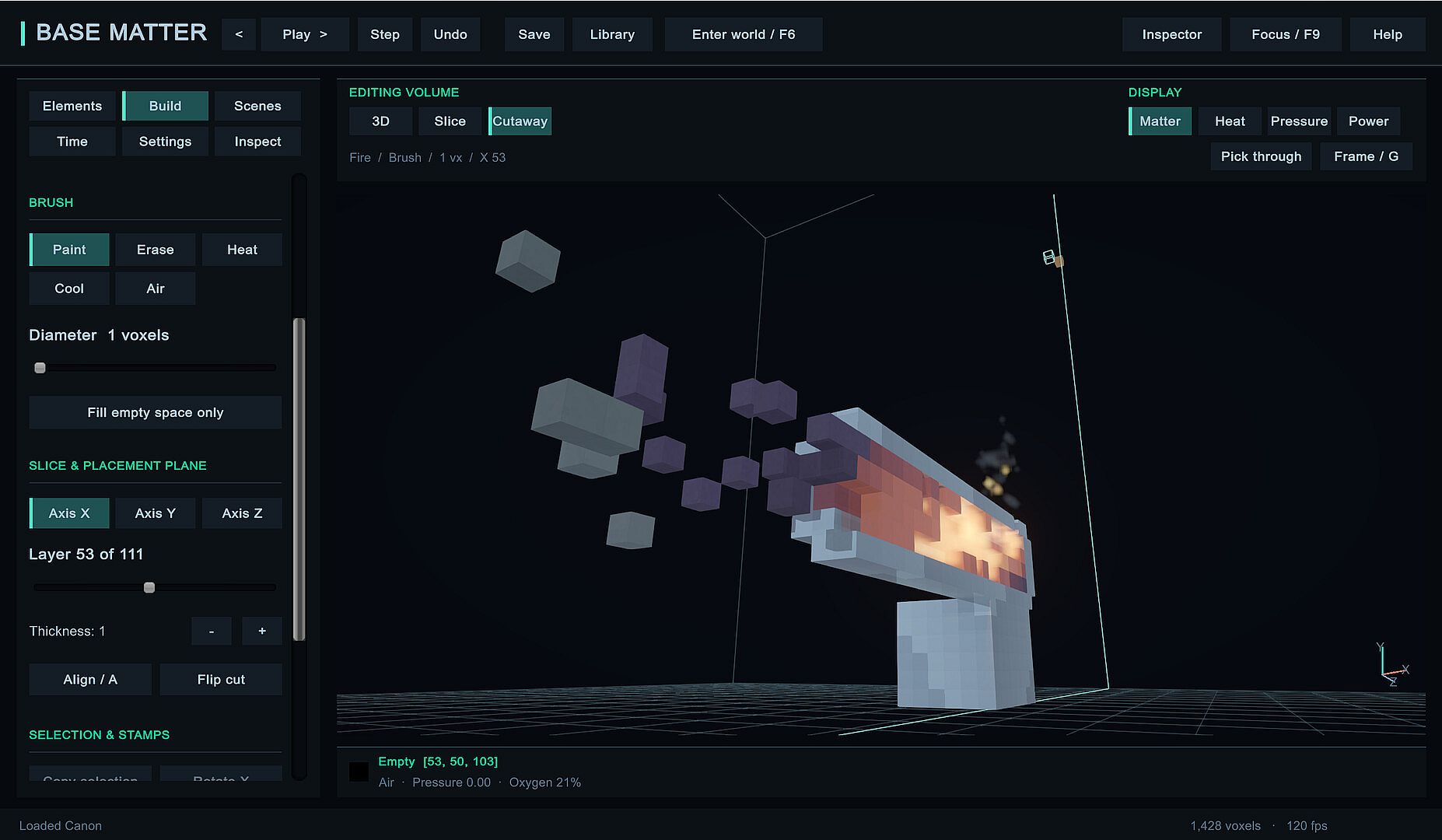
Machinery expands the possibilities for automation. Pumps, valves, heaters, coolers, filters, fans, pistons, pushers, timers, sensors, switches, and logic gates allow creation of functional systems that move matter, regulate flow, or respond to conditions. Recent additions include reactor steel and copper heat conductors for more complex thermal setups. Players switch between full three dimensional editing, thin slice views, and cutaway modes to inspect or modify interiors of dense builds. Visualization tools display heat, pressure, power, and material states, while probes record values over time for later review.
Experimentation tools support iteration without permanent loss. The simulation can pause or advance one tick at a time, worlds save and load, machines copy as reusable stamps, and limited rewind history recovers prior states. Large worlds support roughly one million cells, though performance depends on active simulation volume and world size.
Game Modes
Base Matter offers a single open ended sandbox mode with no missions, progression systems, or prescribed objectives. Players freely design any structure or machine, start the simulation, examine results, adjust parameters, and repeat. This design encourages repeated testing of ideas ranging from simple fluid circuits to intricate automated reactors.
Built in example scenes provide starting points for new users, while the optional guided tutorial introduced in recent updates demonstrates core tools through a practical water to steam experiment. The experience remains entirely single player with no multiplayer components or competitive elements.
Building and Automation Systems
Construction relies on a volumetric grid where every cell holds a specific material or device. Players place blocks, erase sections, and use box tools for rapid filling. Once assembled, devices such as gas pumps and pistons respond to electrical logic or timers, creating closed loops that run independently after the simulation begins. Pressure vessels and fluid networks demonstrate how sealed systems behave under stress, while filters and sources manage resource flow in larger assemblies.
Visualization and inspection features help diagnose issues inside complex machines. Cutaway views reveal internal layers, and display modes highlight temperature gradients or pressure zones. Probes placed at key points generate graphs of changing values, supporting precise tuning of experiments before full runs.
Current Development State
Base Matter remains in active early access development with systems subject to change. Recent updates added a guided tutorial for new players, native Linux support alongside Windows, and continued refinement of simulation stability. Bugs are expected, and performance varies with world complexity. The simulation prioritizes experimentation over precise scientific modeling.
Is It Worth Playing?
Base Matter suits players who enjoy open ended physics sandboxes and iterative experimentation. The absence of goals or story focuses attention on building, observing, and refining systems using the listed materials and machinery. Those interested in voxel based material interactions, fluid dynamics, thermal systems, or simple automation will find repeated value in testing new configurations.
Because the game stays in active development, buyers should expect ongoing changes and occasional instability. The current feature set already supports substantial creative work within its simplified ruleset, making it a solid choice for anyone seeking a pure sandbox experience without external objectives or multiplayer pressure.











