




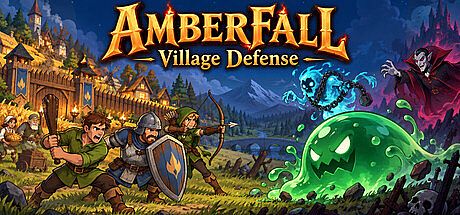


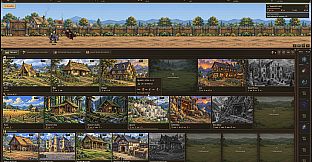
Amberfall: Village Defense is a strategy game that combines village building with resource management and automatic battles in a medieval fantasy setting. Players start with a modest settlement on PC and work to expand it into a sustainable community capable of withstanding repeated assaults from fantasy monsters. The core experience revolves around balancing economic growth against defensive preparations in a repeating cycle of construction, combat, and recovery.
Gameplay
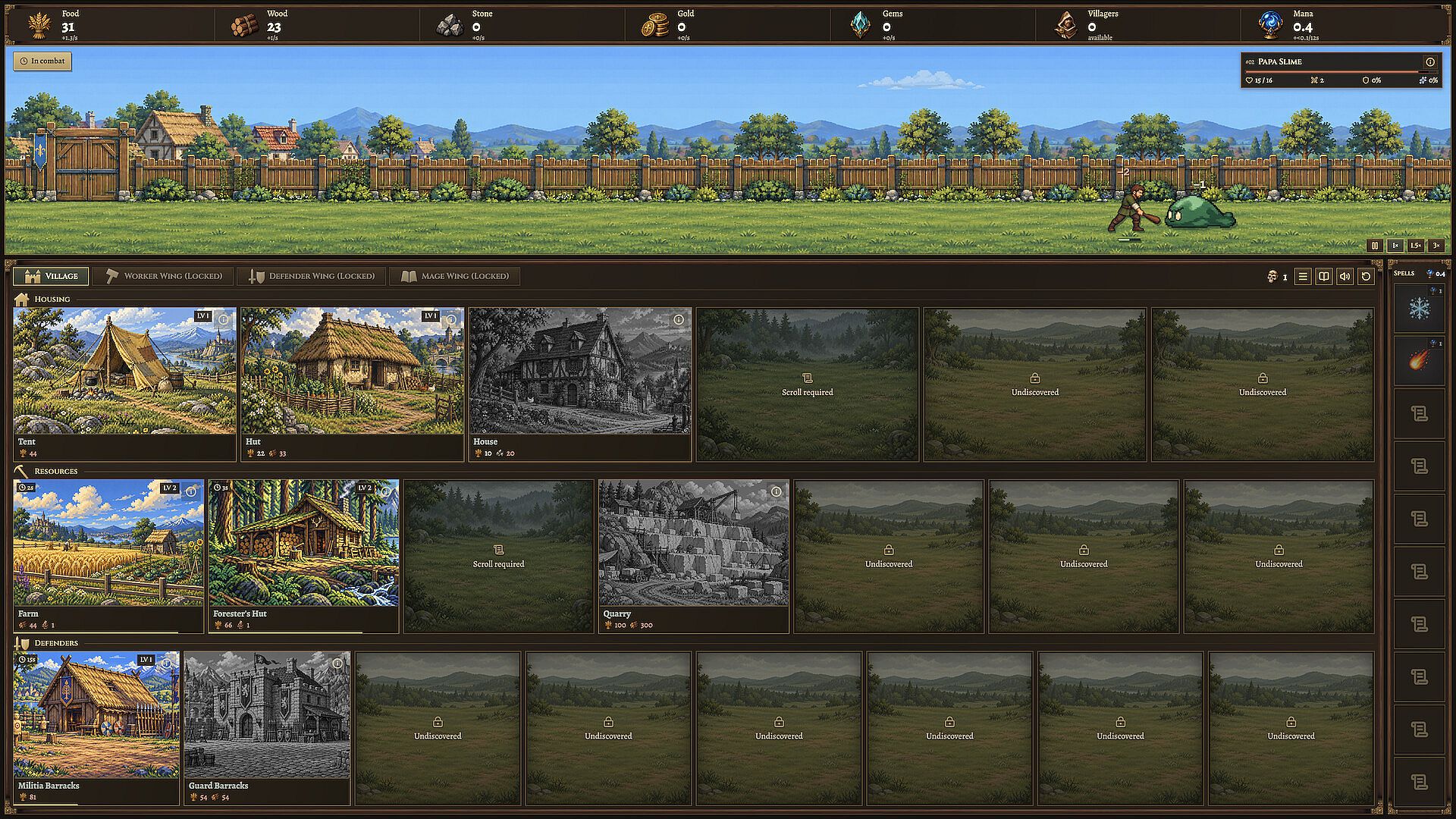
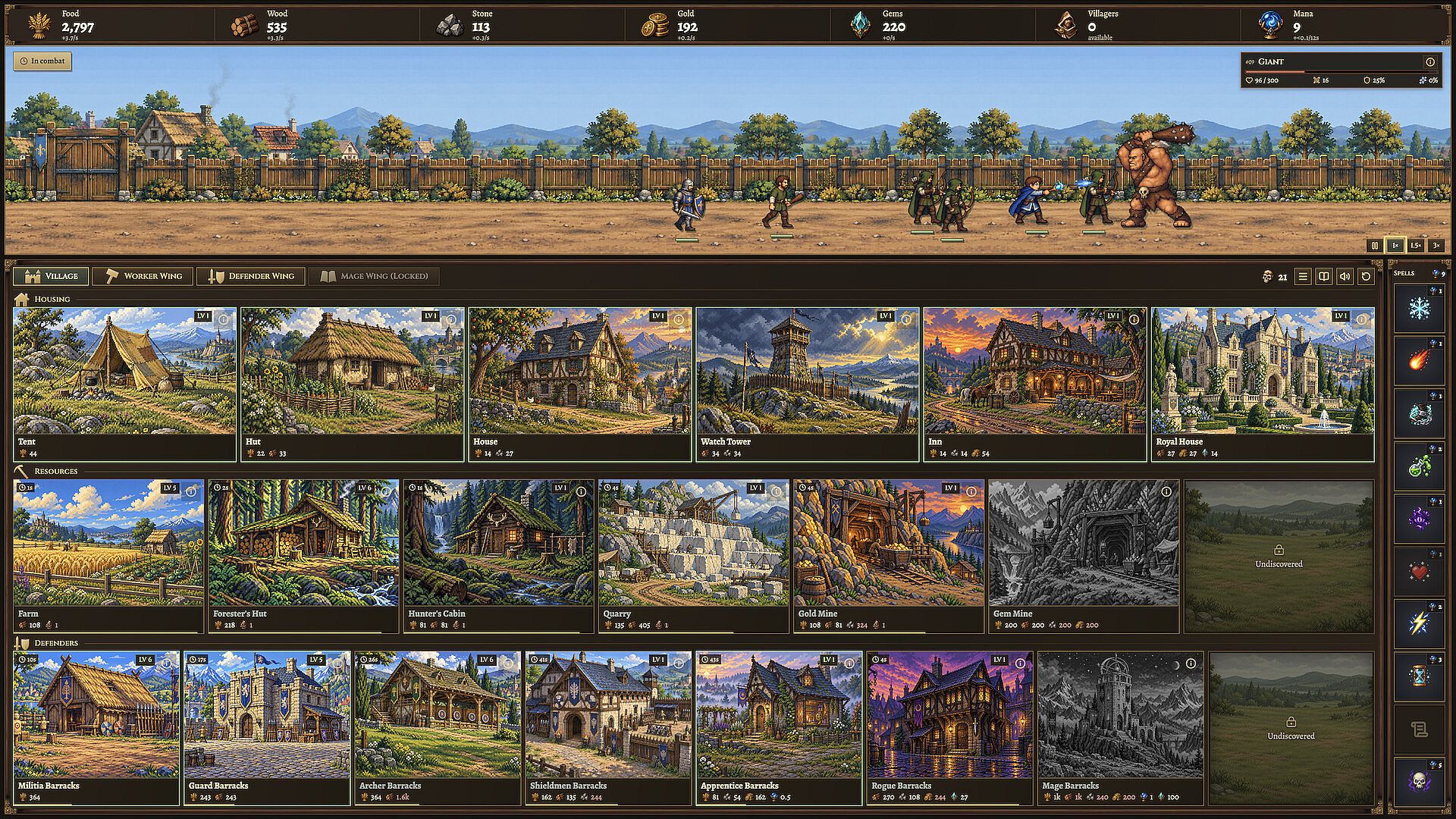
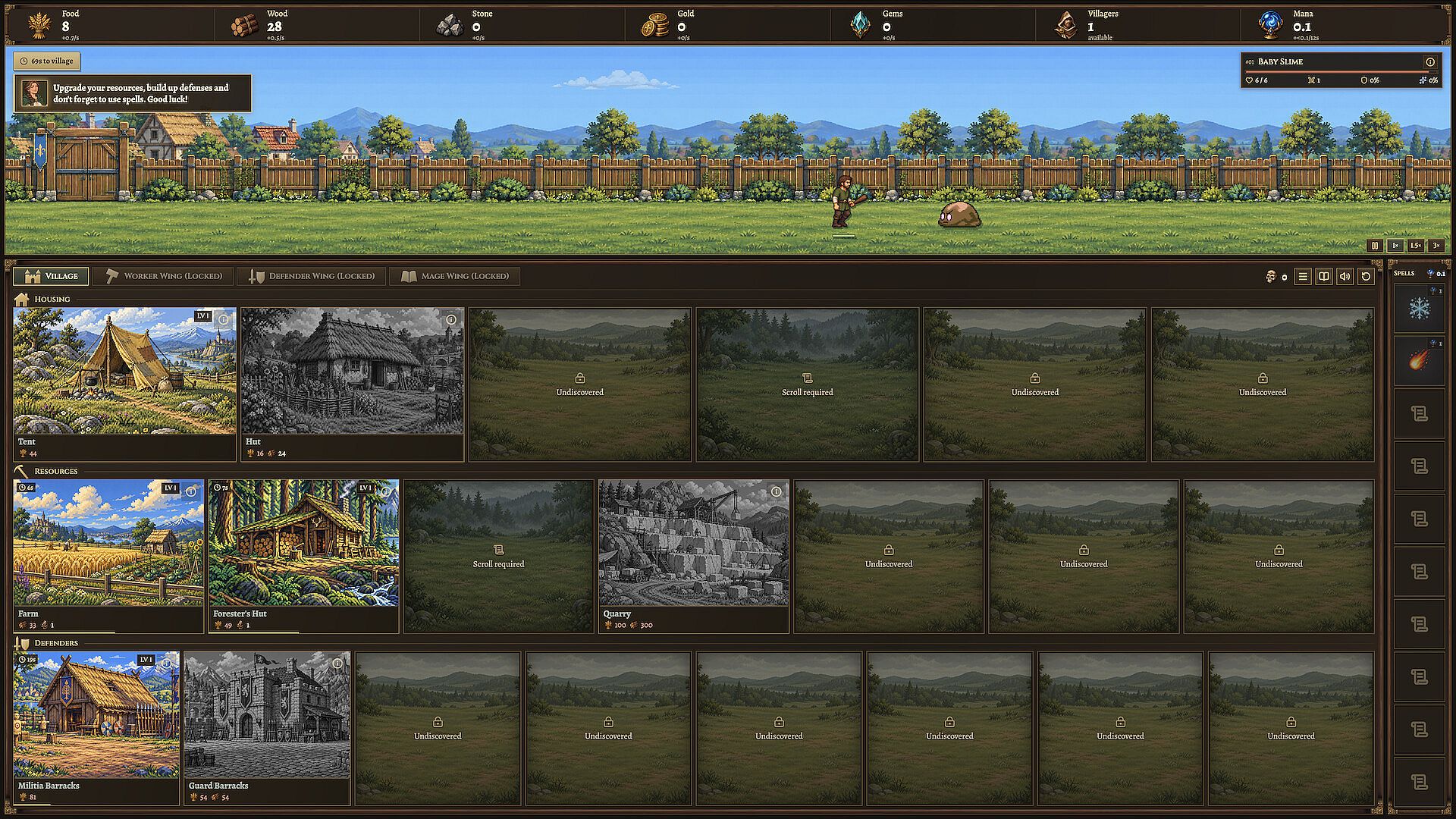
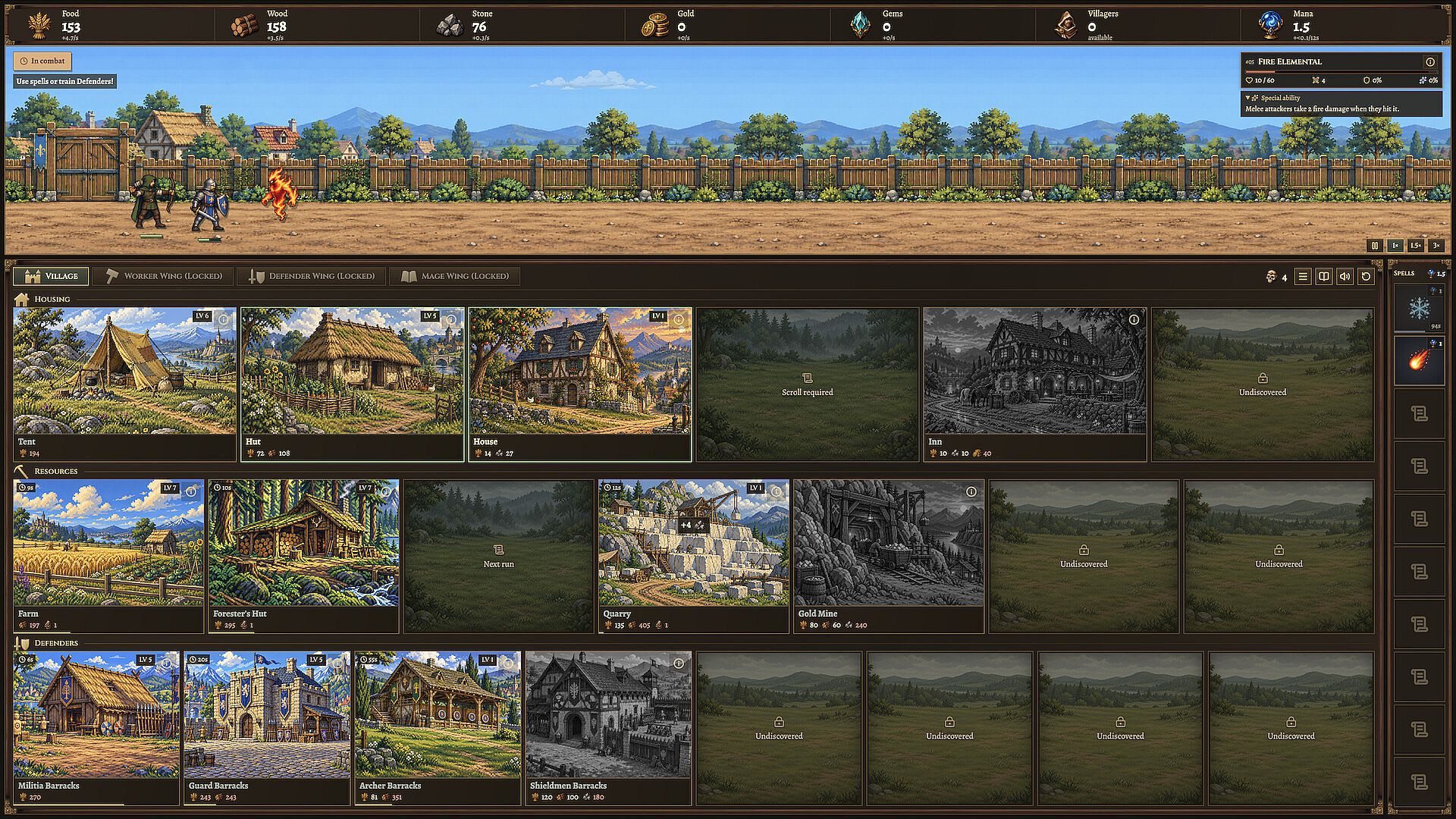
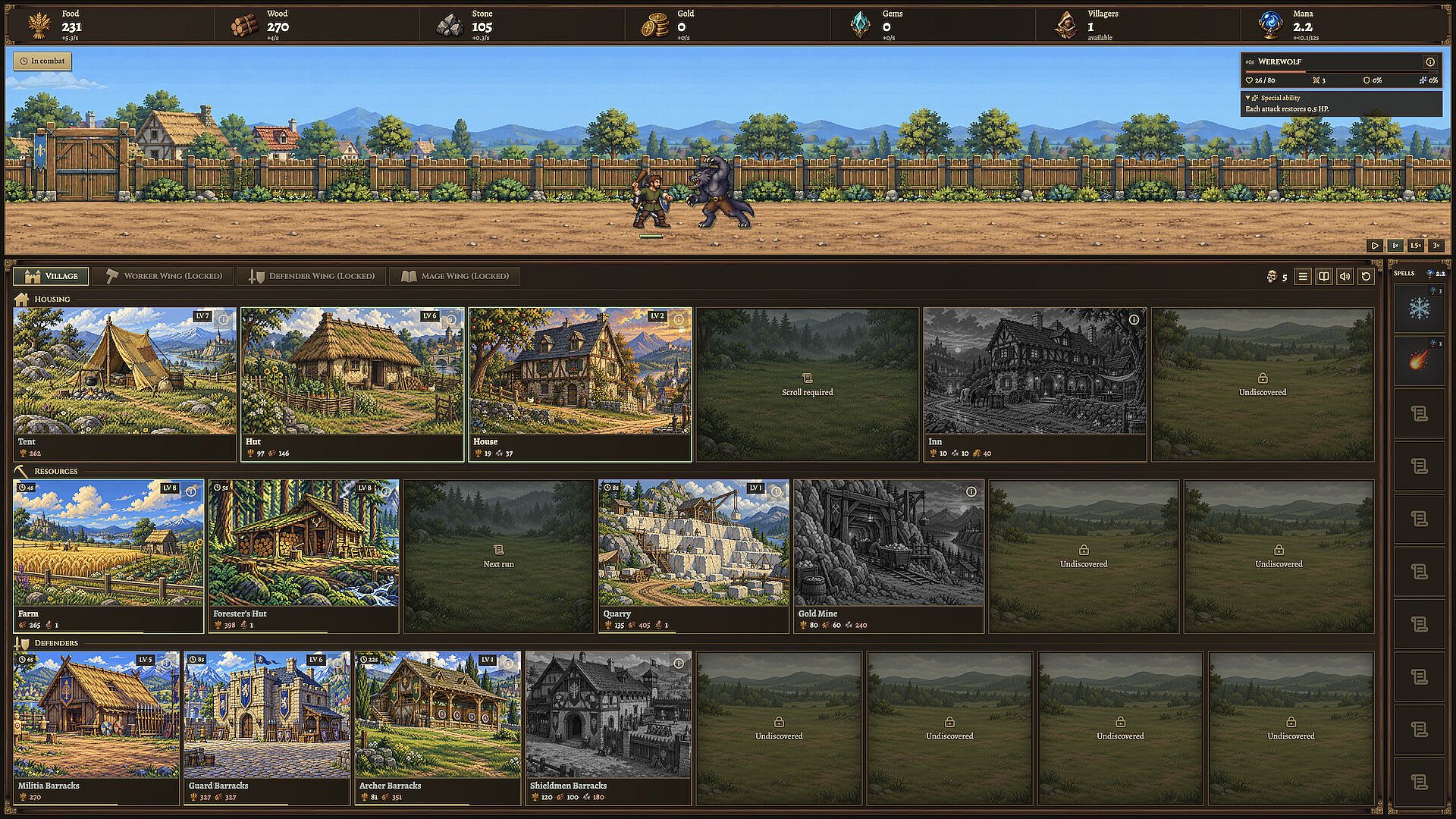
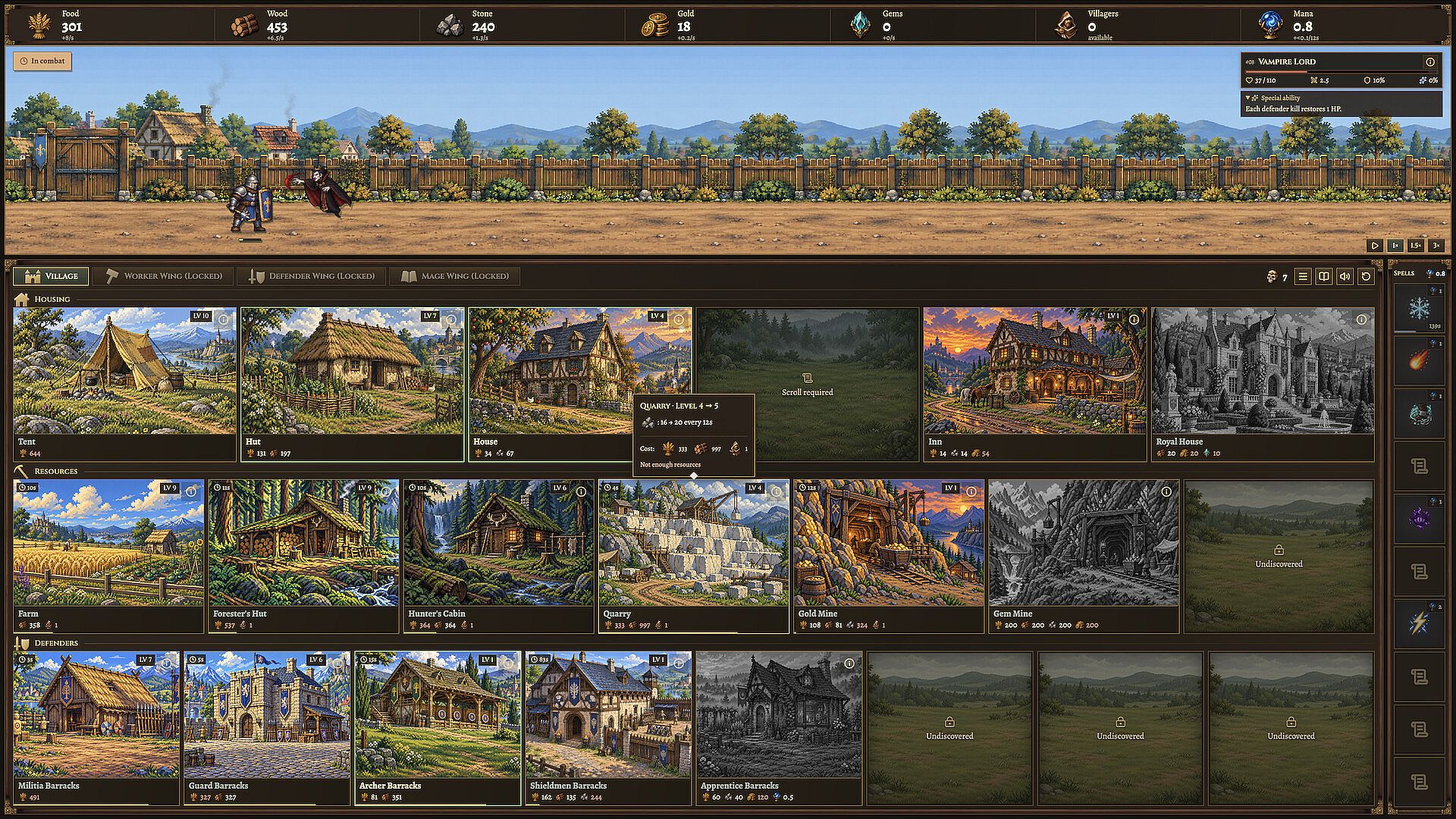
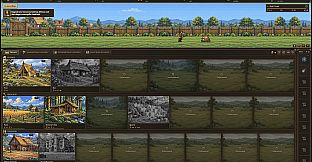
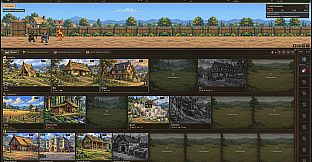
The gameplay centers on developing a village through careful placement of buildings and allocation of resources. Simple homes and production structures form the foundation, with farms, foresters, and quarries providing the materials needed for expansion. As the settlement grows, players decide how to divide efforts between increasing output and preparing for threats, since overcommitting to one area can leave the other vulnerable.
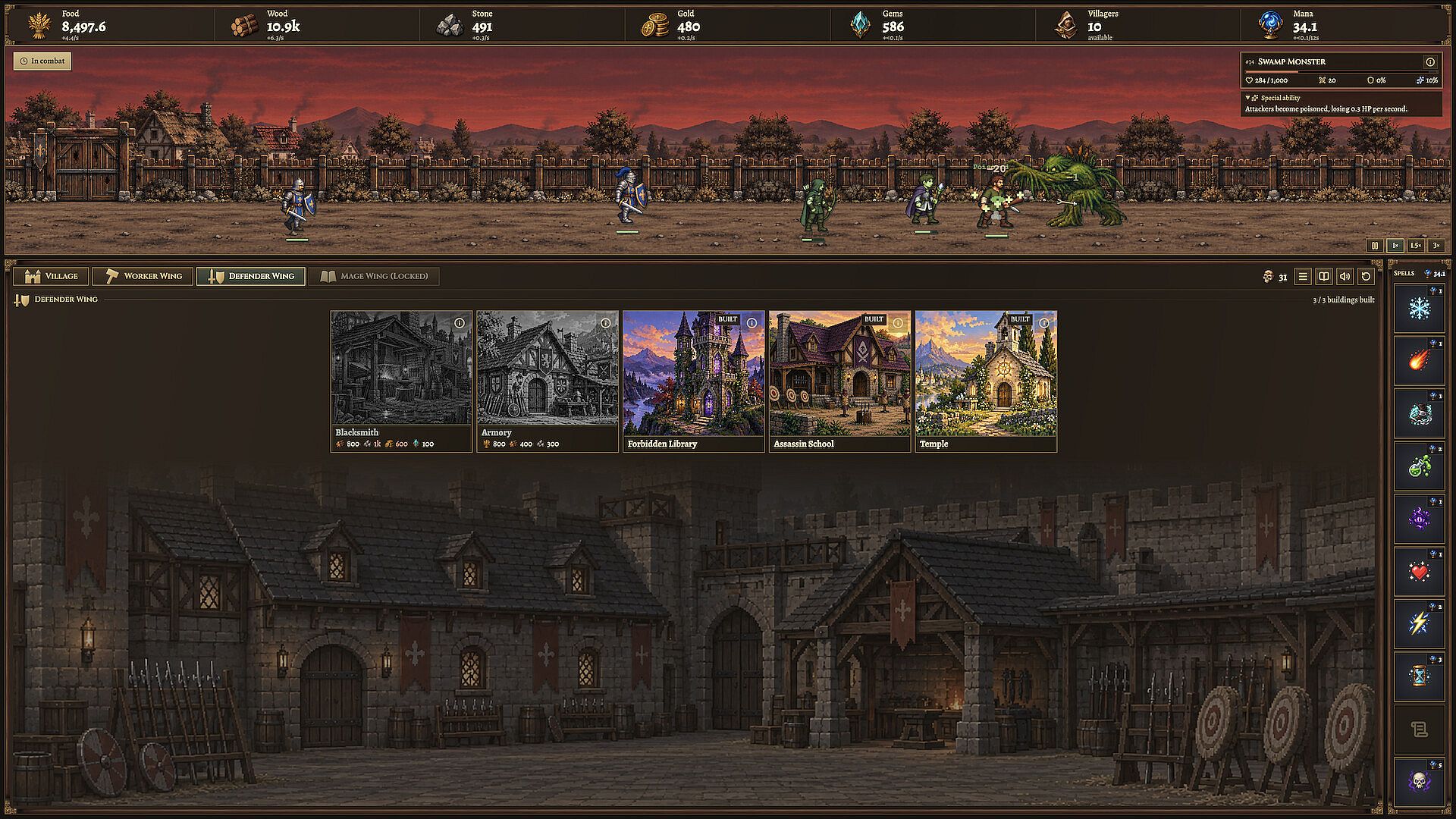
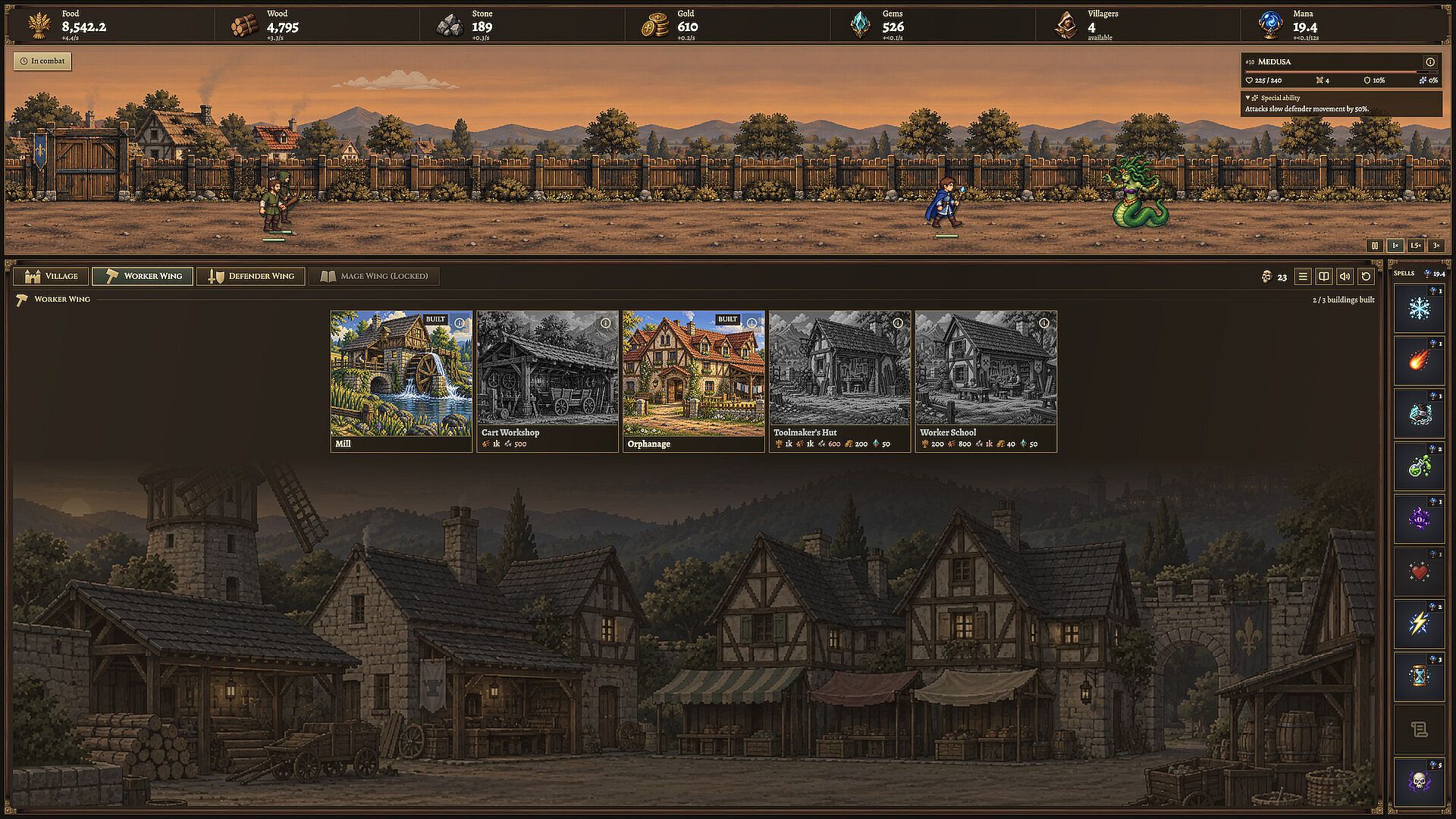
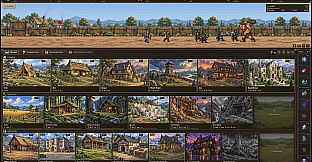
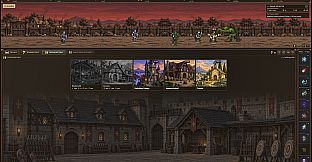
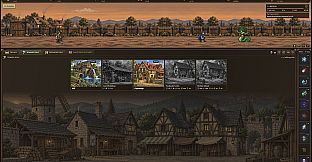
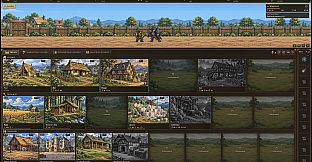
Defensive forces come from military buildings that train warriors, archers, and magic users. These units engage enemies automatically along the village walls during monster waves. Battles unfold in side view, pitting the settlement's defenders against creatures of varying sizes and strengths. Success depends on having the right mix of troop types and sufficient numbers to hold the line until the wave ends.
Resource management requires ongoing attention to housing needs, production efficiency, and the costs of military development. Players adjust investments before each incoming threat arrives, learning from previous outcomes to refine their approach in subsequent attempts.
Game Modes
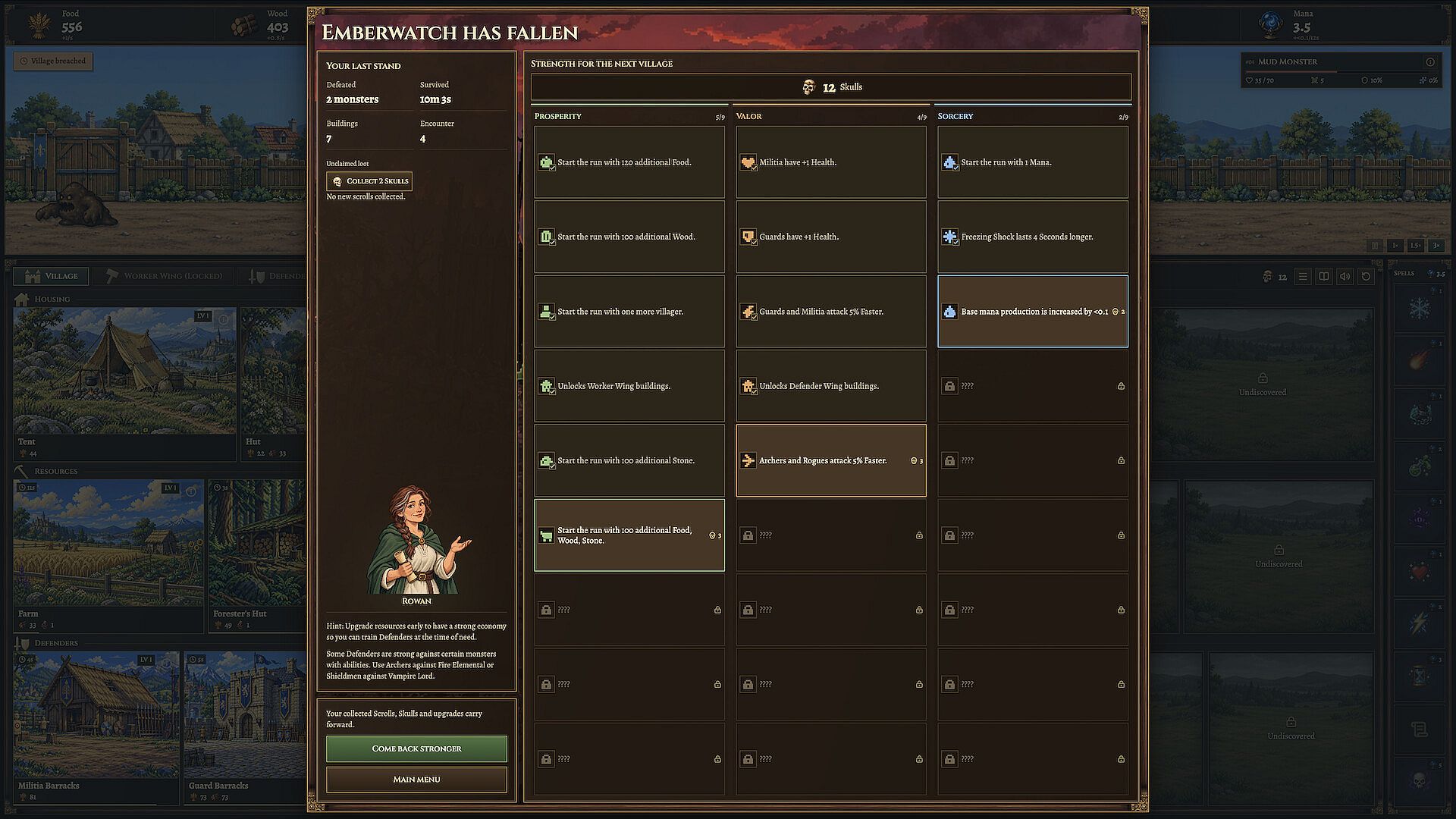
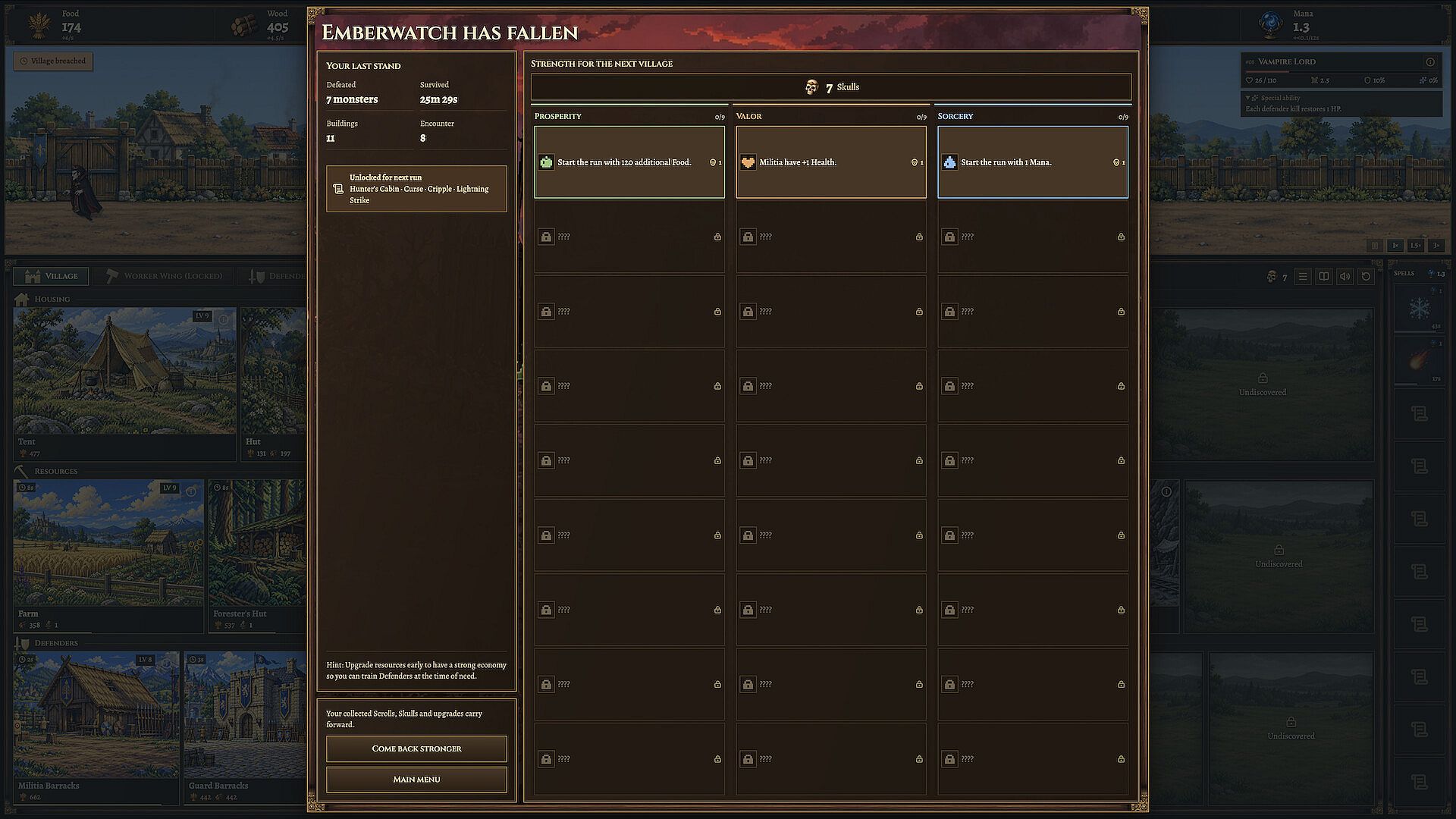
The game operates through a single-player loop focused on repeated village runs. Each attempt begins with a fresh settlement that players expand and defend. When the village falls, earned Skulls allow investment in persistent upgrades that carry forward, encouraging experimentation with different priorities across multiple playthroughs.
This structure emphasizes replayability through the cycle of growth, defense, and rebuilding rather than separate named modes. Players can adjust their balance of economic and military focus each time, testing how changes in one area affect survival against escalating monster waves.
Progression and Upgrades
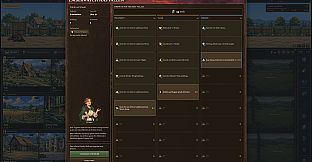
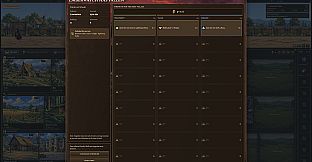
Lasting advancement comes from Skulls collected after each village falls. These points fund upgrades in three categories: Prosperity for economic improvements, Valor for fighter enhancements, and Sorcery for magic-related benefits. The system rewards trying varied strategies, as different upgrade paths support distinct approaches to village layout and troop composition.
Upgrades strengthen the settlement's foundations for future runs without altering the core challenge of each individual defense. This creates a sense of steady improvement while keeping every new village a fresh test of preparation and adaptation.
Presentation and Setting
The game uses a medieval fantasy style with detailed village buildings and side-view combat scenes. Structures and units receive visual attention that highlights the settlement's development from basic outpost to fortified community. Enemy designs range from smaller creatures to larger threats, providing visual variety during the automatic battles.
Is It Worth Playing?
Amberfall: Village Defense suits players who enjoy casual strategy titles centered on village building and resource decisions alongside automated combat. The indie approach keeps the focus on the core loop of expansion, defense, and persistent upgrades without additional layers. With a planned release in 2027 and no user reviews available yet, those interested in the described mechanics can follow its development for more details closer to launch. The combination of building, management, and wave defense offers a straightforward experience for fans of the genre who appreciate replay through upgrade choices and strategic balancing.











