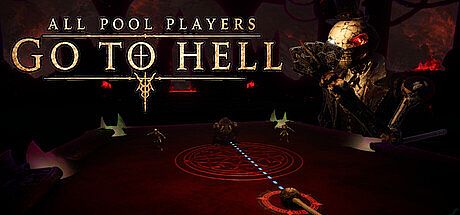


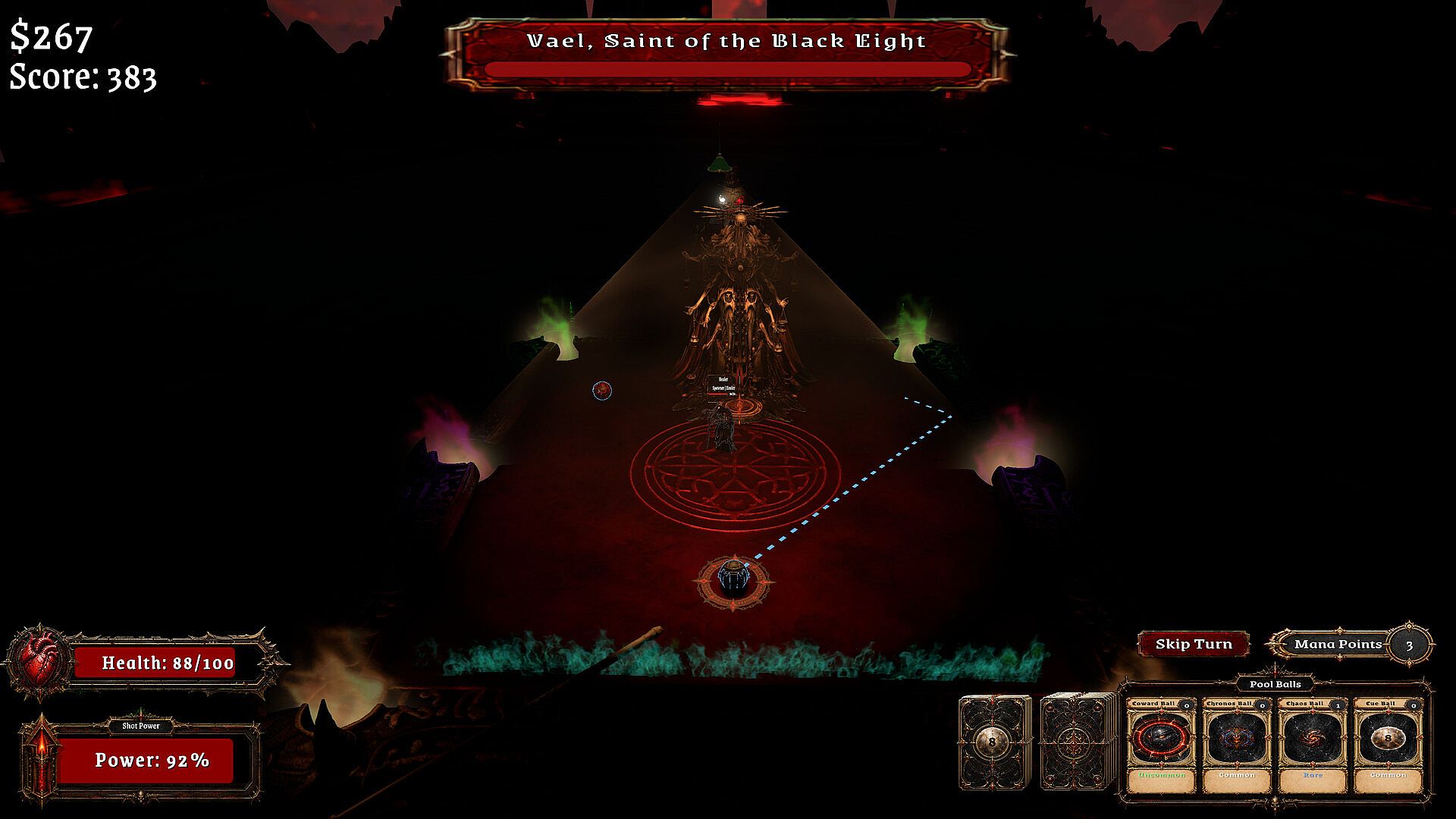
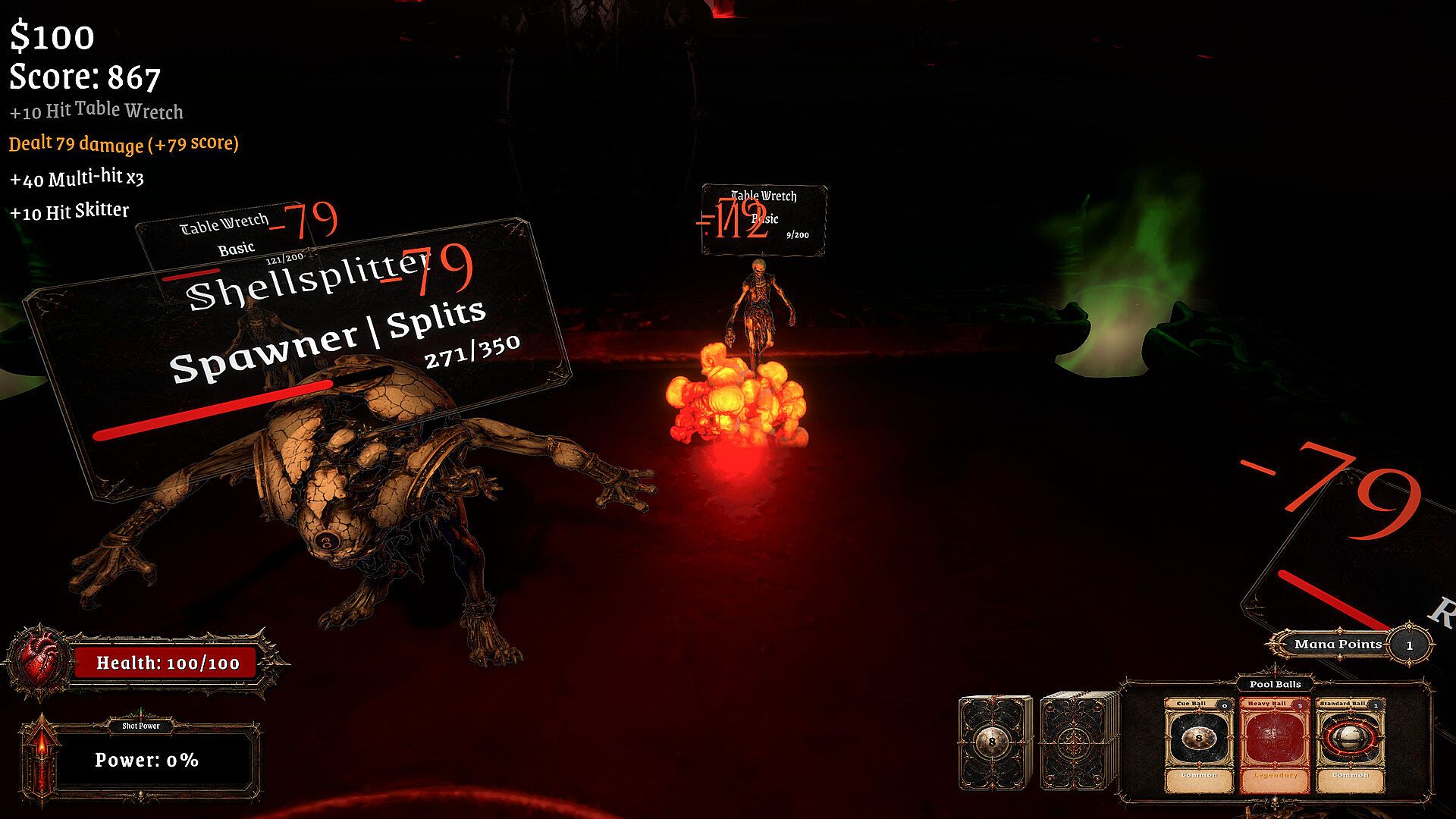
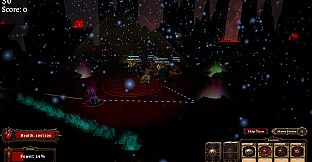
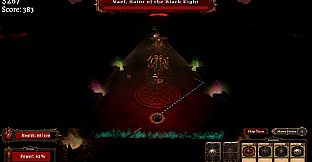
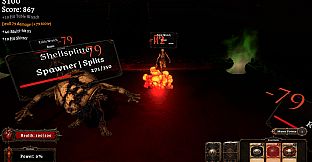
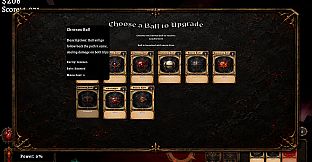
All Pool Players Go To Hell is a single-player strategy indie game on PC that blends deck-building with real-time physics combat in a roguelite structure. Players control pool balls as weapons to fight through procedurally generated challenges set in hellish environments.
Gameplay
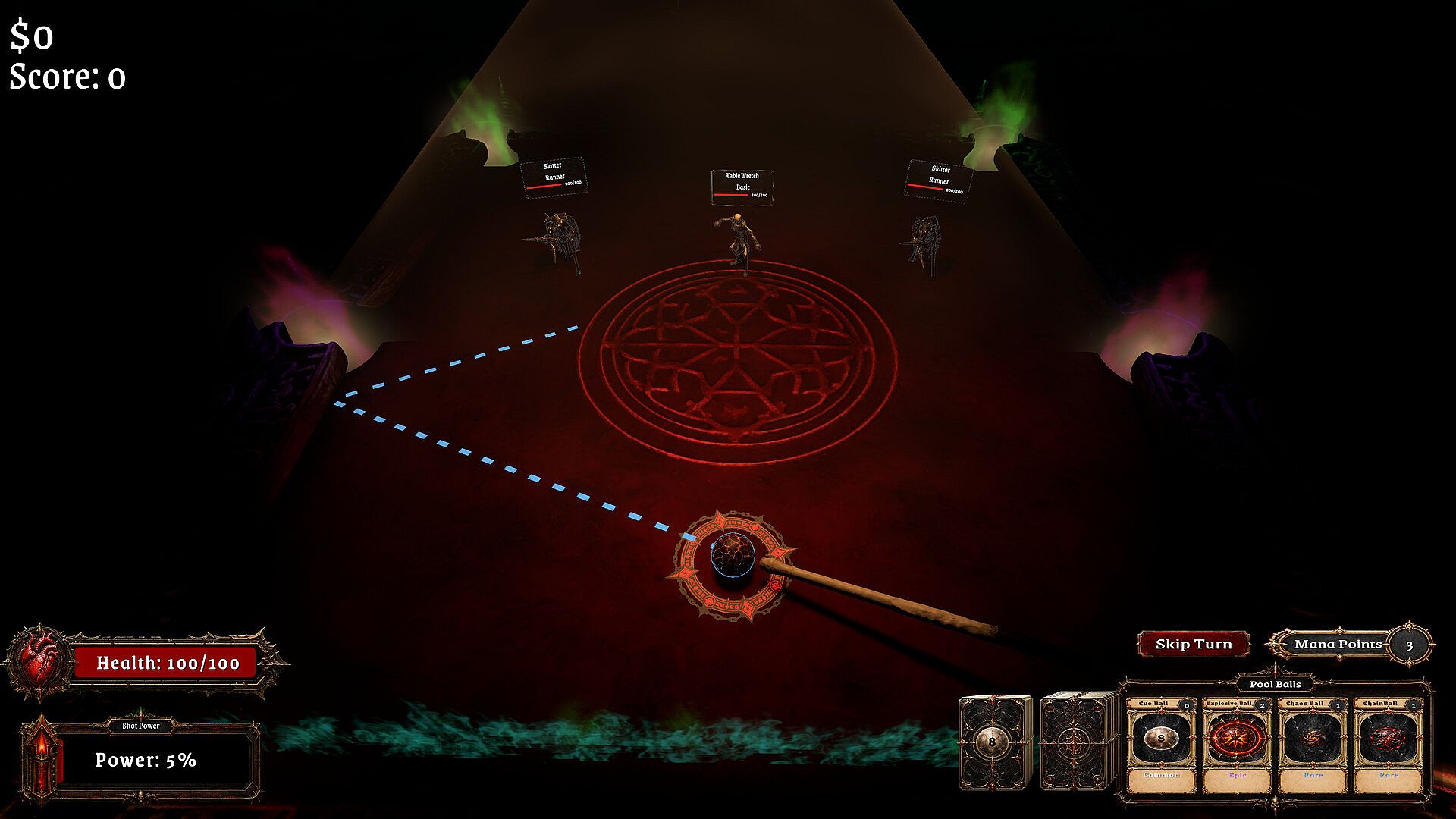
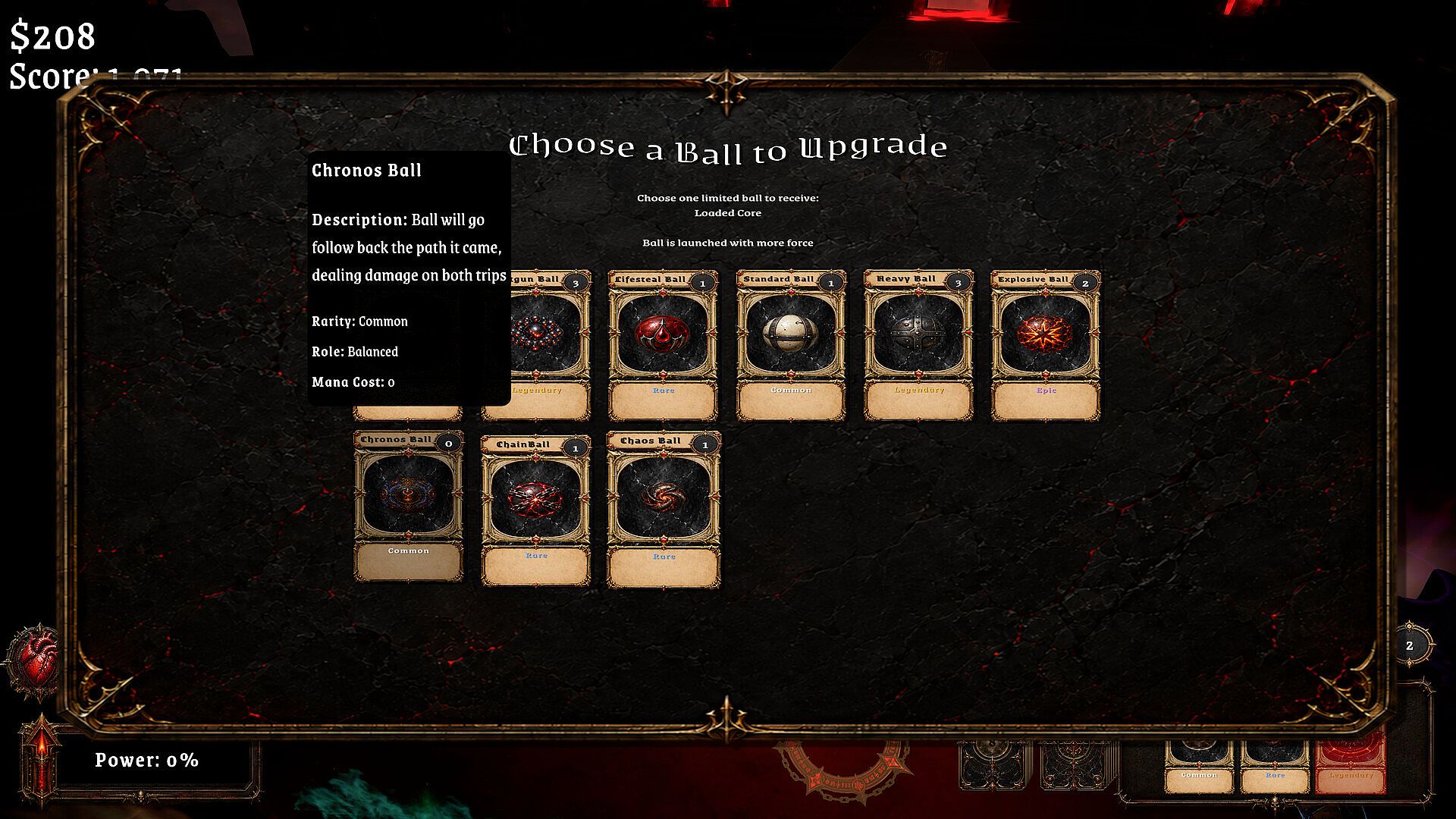
The core loop centers on building a deck of pool ball types and upgrades before each descent. Different balls alter combat approach through variations in damage, force, behavior, and special abilities. Upgrades further modify these traits, encouraging experimentation with combinations that turn basic shots into powerful tools.
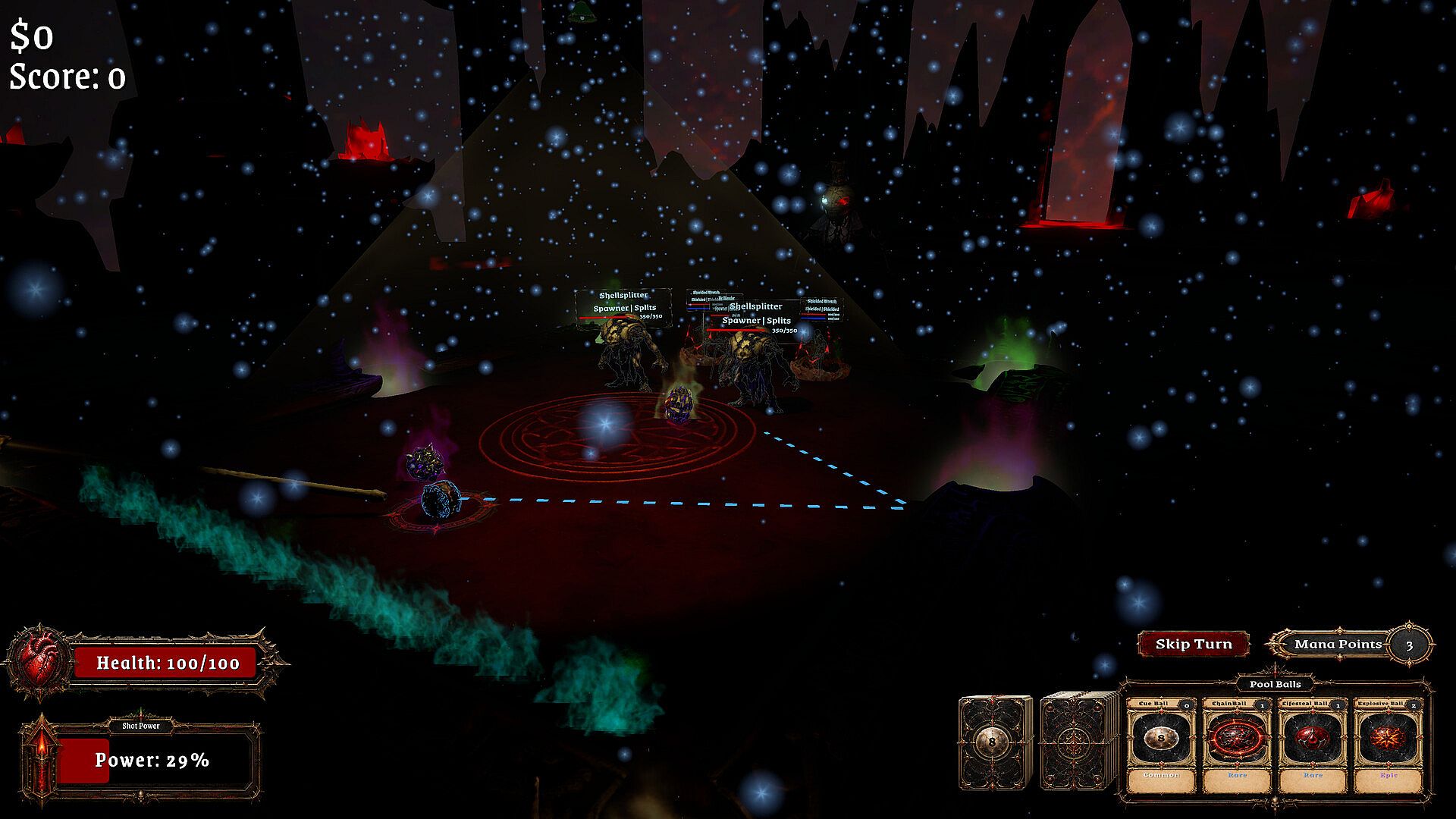
Combat unfolds in real time with full physics simulation. Players select a ball, choose an angle, and apply force, then manage the resulting ricochets, collisions, positioning, and momentum. Accurate shots can clear groups of enemies efficiently, while miscalculations leave the player exposed to counterattacks from Hell Spawn enemies that vary in movement patterns, abilities, weight, and damage output.
Progression involves navigating randomized paths across multiple maps per run. Choices about which encounters to pursue affect available cards and upgrades, allowing builds to evolve organically. Each map ends with a unique boss fight that tests both the assembled deck and precise shot execution.
Game Modes
The experience revolves around repeated runs that generate fresh layouts and enemy placements each time. Players unlock different starting decks and abilities to alter the foundation of every attempt, combining these with randomized elements and upgrades to create varied strategies.
Encounters include waves of enemies leading into bespoke boss battles. Survival through these sequences advances the run deeper into the environment, with no fixed routes repeated across attempts.
Key Mechanics and Features
Deck construction forms the strategic backbone, where ball selection and upgrades determine viable tactics against diverse threats. Physics interactions add unpredictability, as momentum and collisions can either amplify or derail plans.
A companion character named Scratch Jack provides ongoing commentary during runs, alongside other figures encountered in the depths. This narrative layer accompanies the combat without altering core systems.
Procedural generation ensures each run presents new combinations of paths, enemies, and rewards, supporting repeated play focused on refining builds and shot precision.
Is It Worth Playing?
The game targets players who enjoy roguelite progression paired with hands-on physics mechanics and deck experimentation. Its single-player focus emphasizes individual skill in shot planning and adaptation to random elements.
With a planned 2026 release and no reviews available yet, interest depends on preference for this specific mix of pool-inspired combat and strategic layering. The described systems suggest strong replay value through build variety and physics-driven outcomes for those drawn to indie strategy titles with unconventional weapons.