

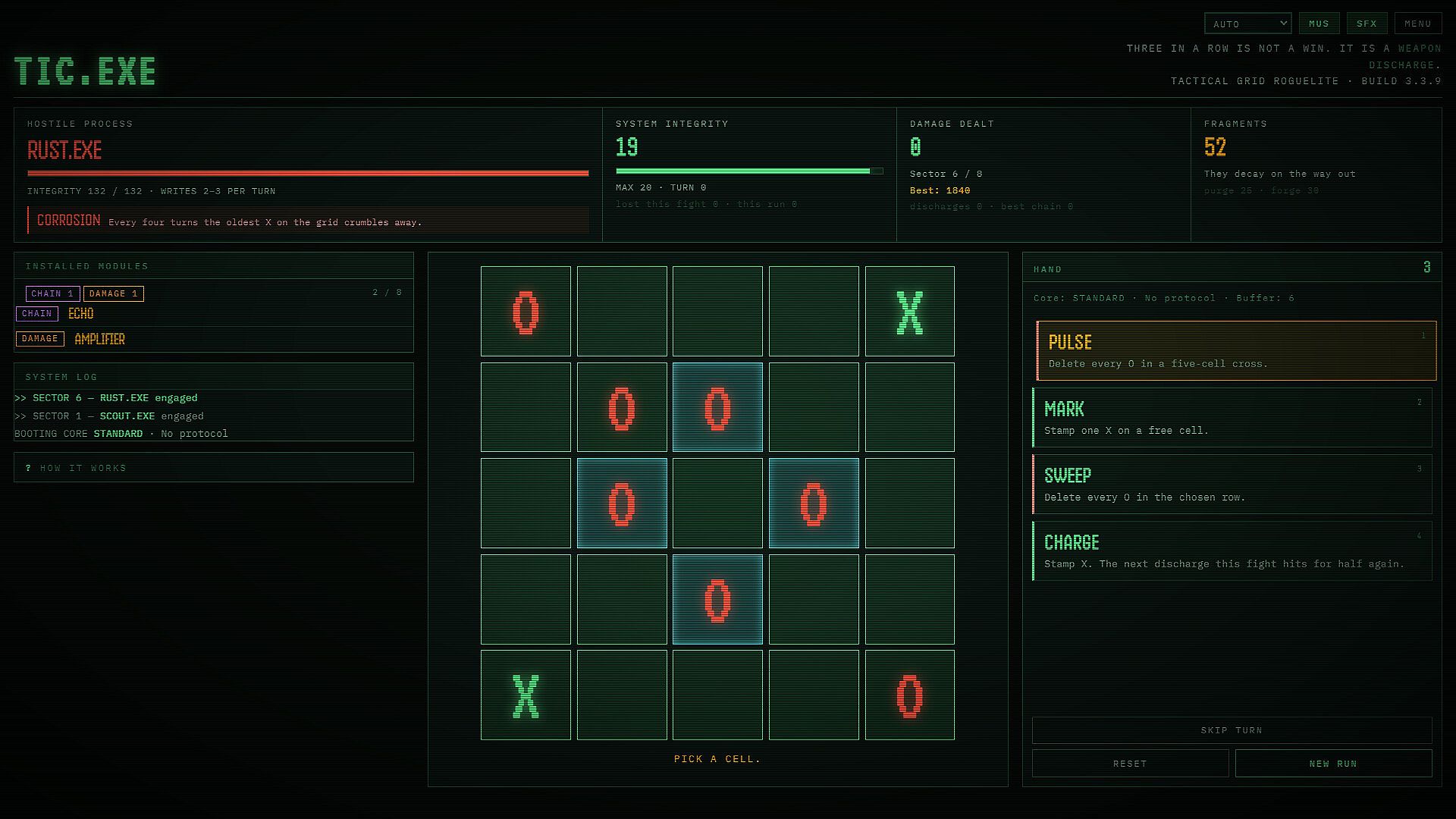
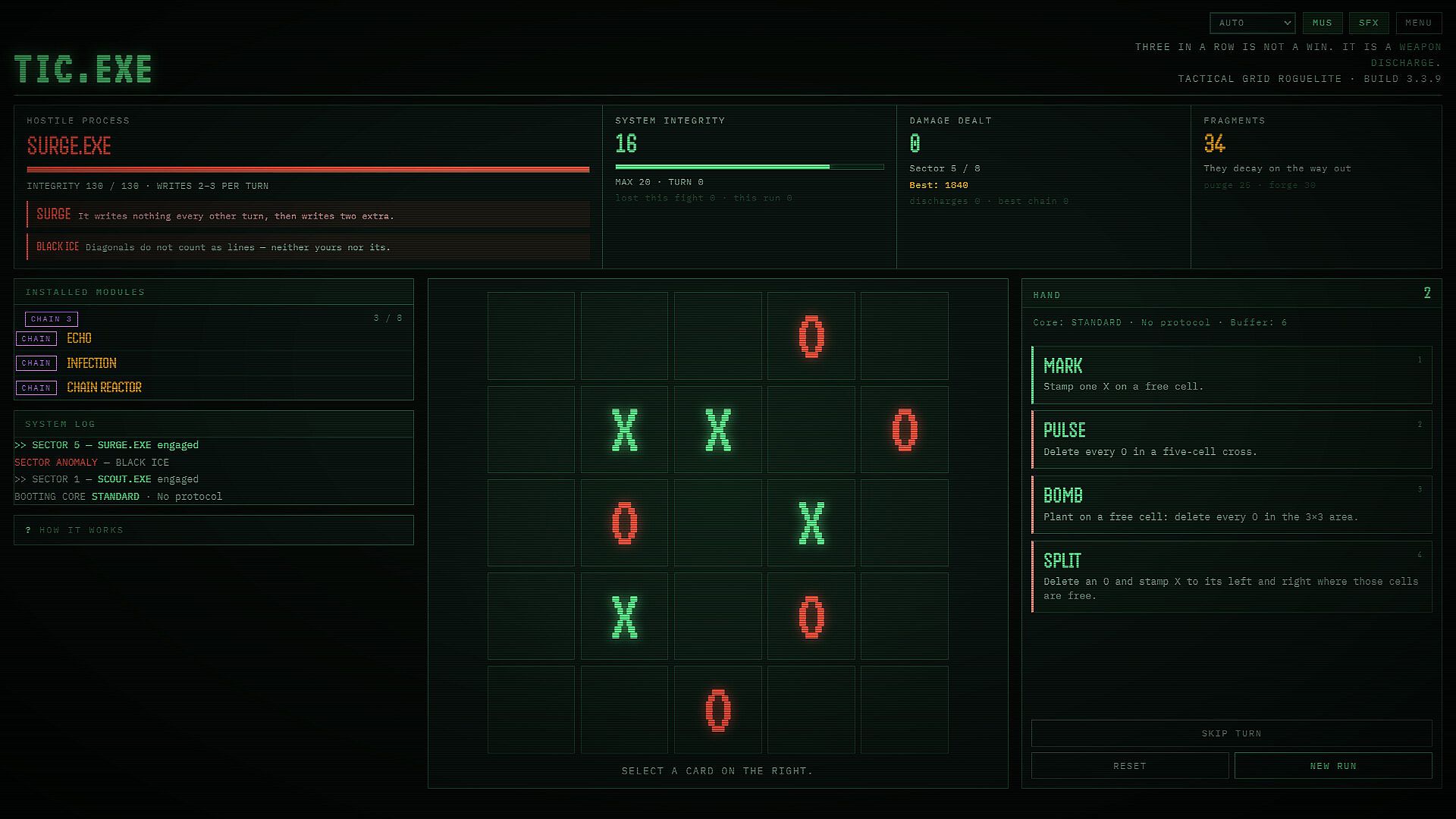

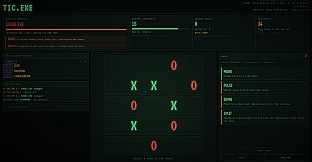
TIC.EXE is a strategy indie game for PC that reimagines tic-tac-toe as a tense battle against hostile digital processes on grids of varying sizes. Players line up marks to trigger detonations that damage enemies while managing their own defenses against counterattacks that arrive every turn. The core loop centers on building combinations that scale in power, with lines of three or more causing explosions that clear space and apply escalating damage based on length.
Gameplay
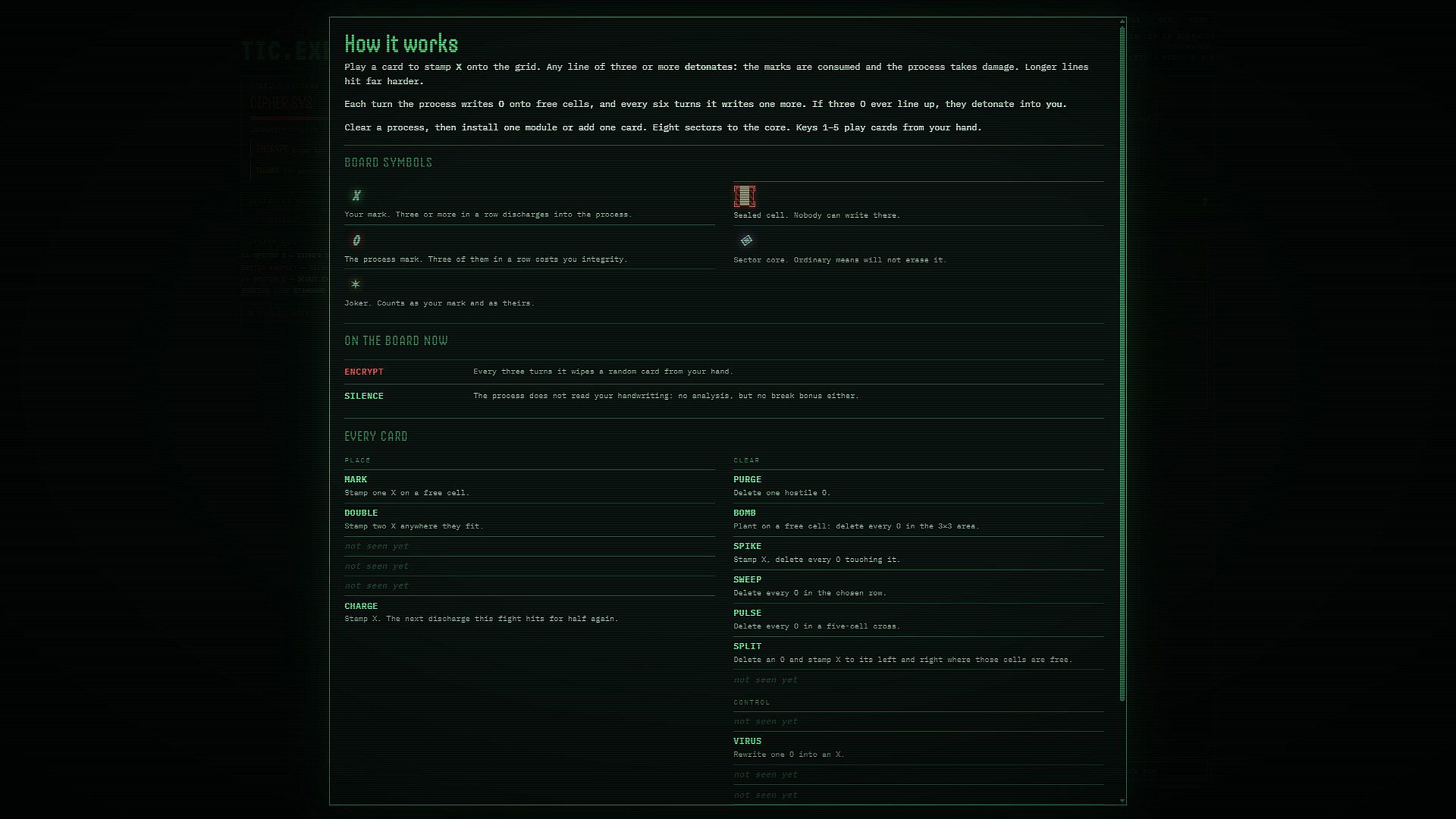
The central mechanic revolves around placing marks on the grid to form lines. Three aligned marks detonate and burn away, inflicting damage on the opposing process. A line of four delivers nearly double the impact, while five multiplies the effect further. Each turn the enemy process automatically places its own marks, and any three that align will detonate against the player instead. This creates a constant push and pull where positioning and timing determine survival.
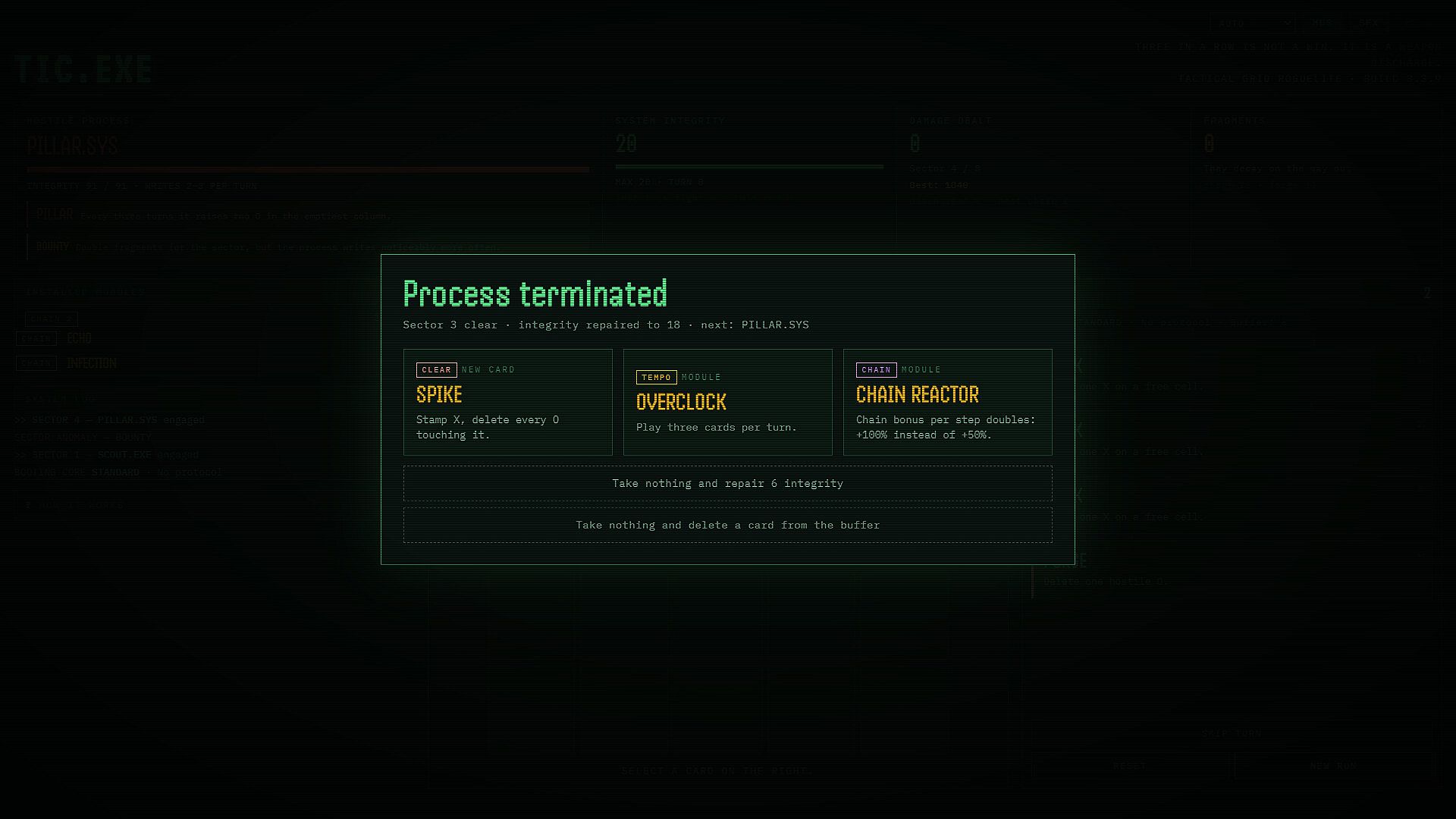
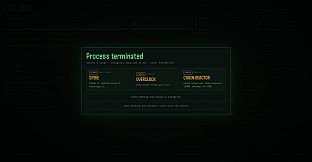
Modules transform basic line formation into complex engines. ECHO preserves one mark after each blast for continued pressure. INFECTION converts nearby enemy marks to the player's side. CHAIN REACTOR amplifies bonuses across every step of a cascading sequence. Thirty modules span six schools and fit into eight slots, forcing choices when the rack fills and something must be discarded. Boards come in 4x4, 5x5, and 6x6 sizes, where the geometry itself influences optimal builds and line opportunities.
Progression ties directly to clearing sectors. Each cleared sector grants a module, while the terminal handles resource management. Fragments represent data that decays at a rate of one quarter during transit from the shop. Purchases increase market prices, pushing players to spend quickly on cards that thin the deck, upgrade individual cards to stronger forms, or expand the module rack.
Game Modes
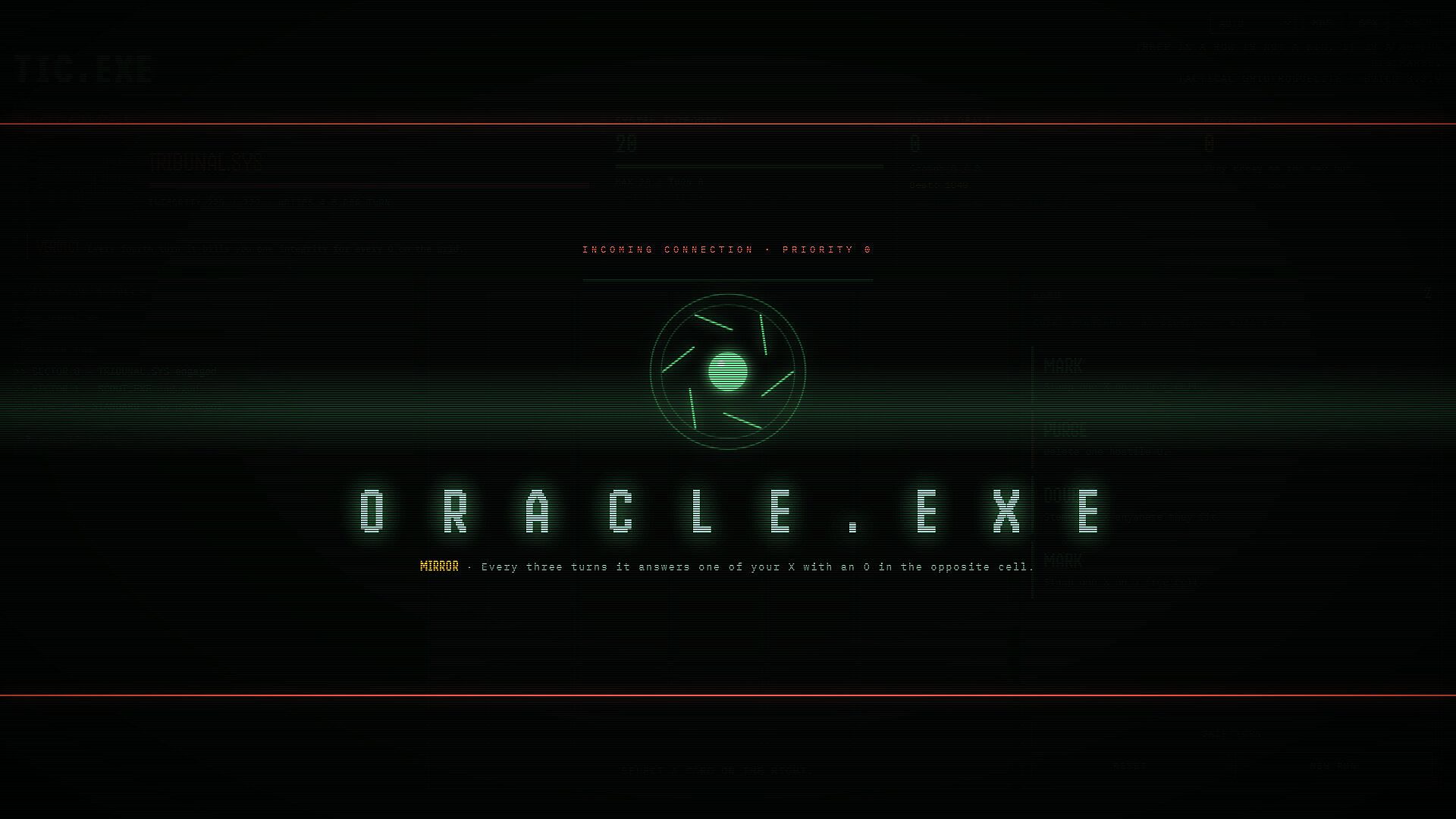
Standard runs progress through eight sectors before reaching the Deep, a series of procedural layers that continue indefinitely with rising difficulty. Eleven hostile processes appear across runs, with six selected fresh each time. Specific processes introduce unique threats, such as self-healing when marks occupy the grid, rewriting player marks into enemy ones, or converting every discharge into a cost paid in blood.
A daily challenge provides the same setup for all players, creating a shared score to chase. Endless mode extends beyond the core sectors into unending procedural climbs. Runs save automatically, allowing players to resume at any point. Twenty-five achievements track various accomplishments across these formats.
Building Your Engine
Success depends on assembling modules into synergistic combinations rather than chasing isolated high scores. Two or three modules together shift from simple upgrades into self-sustaining systems that multiply effects through cascades. The six schools of modules encourage experimentation with different schools on repeated runs, while the eight-slot limit demands careful curation. Deck thinning and card forcing in the terminal further refine options, turning each run into a test of resource allocation under decay pressure.
The Hostile Processes
Eleven distinct processes populate the sectors, each with behaviors that alter grid dynamics. One regenerates health tied to its marks. Another converts player marks directly. A third imposes a blood cost on every detonation. Six processes load anew per run, ensuring variety while the remaining five provide consistent challenges across playthroughs. These interactions force adaptive strategies beyond standard line formation.
Is It Worth Playing?
TIC.EXE suits players who enjoy strategic puzzle games with roguelike progression and deck-building elements. The twist on familiar tic-tac-toe rules delivers immediate accessibility paired with deep module combinations and process counters. Daily challenges and endless mode provide ongoing reasons to return, while saved runs and achievements support completionist play. Generative chiptune audio layers intensity that matches the deepening sectors. Those drawn to indie strategy titles focused on systems and optimization will find repeated value in experimenting with module racks and terminal decisions. The game stands alone as a complete experience built around its core detonation and counterattack loop.