



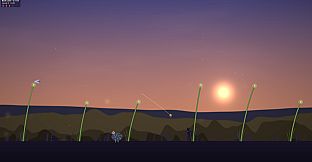

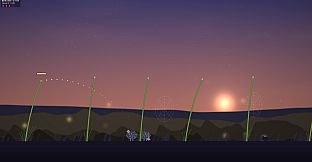
Questing: A Tick's Tale is a casual single-player game for PC in which players control a tick performing real-world questing behavior. The core loop involves climbing to the tip of a blade of grass, stretching forward, and launching at the precise moment a warm host passes by. Wind serves as the primary force for propulsion, and timing determines success or failure on each attempt.
Gameplay
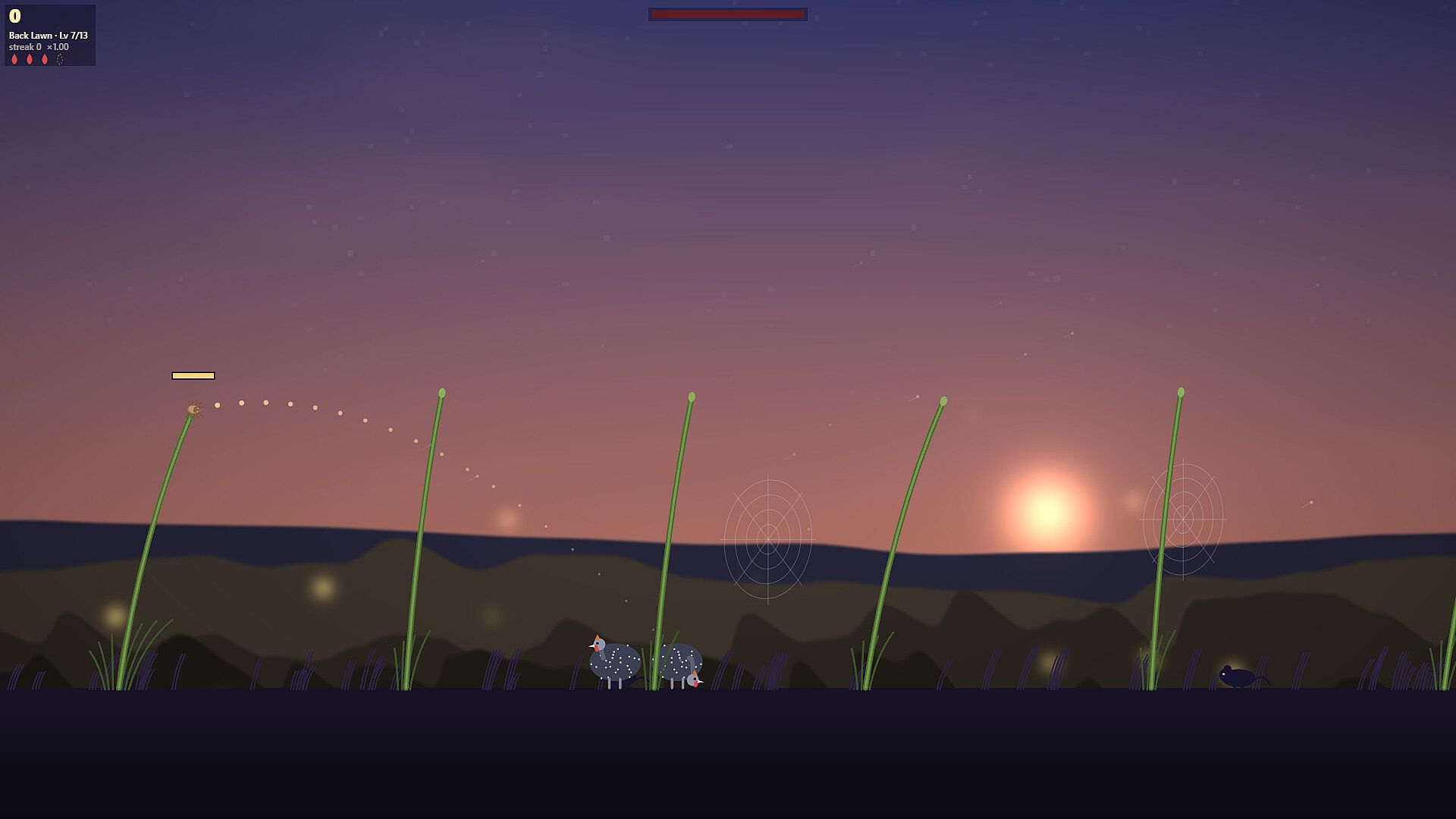
The central mechanic requires holding position while reading wind patterns, then releasing to follow a visible trajectory arc. A successful launch lands the tick on a host for feeding, with precise hits triggering a capillary crit that boosts the score multiplier up to three times. Missing a host allows the tick to clip a nearby blade and continue across the map without touching the ground.
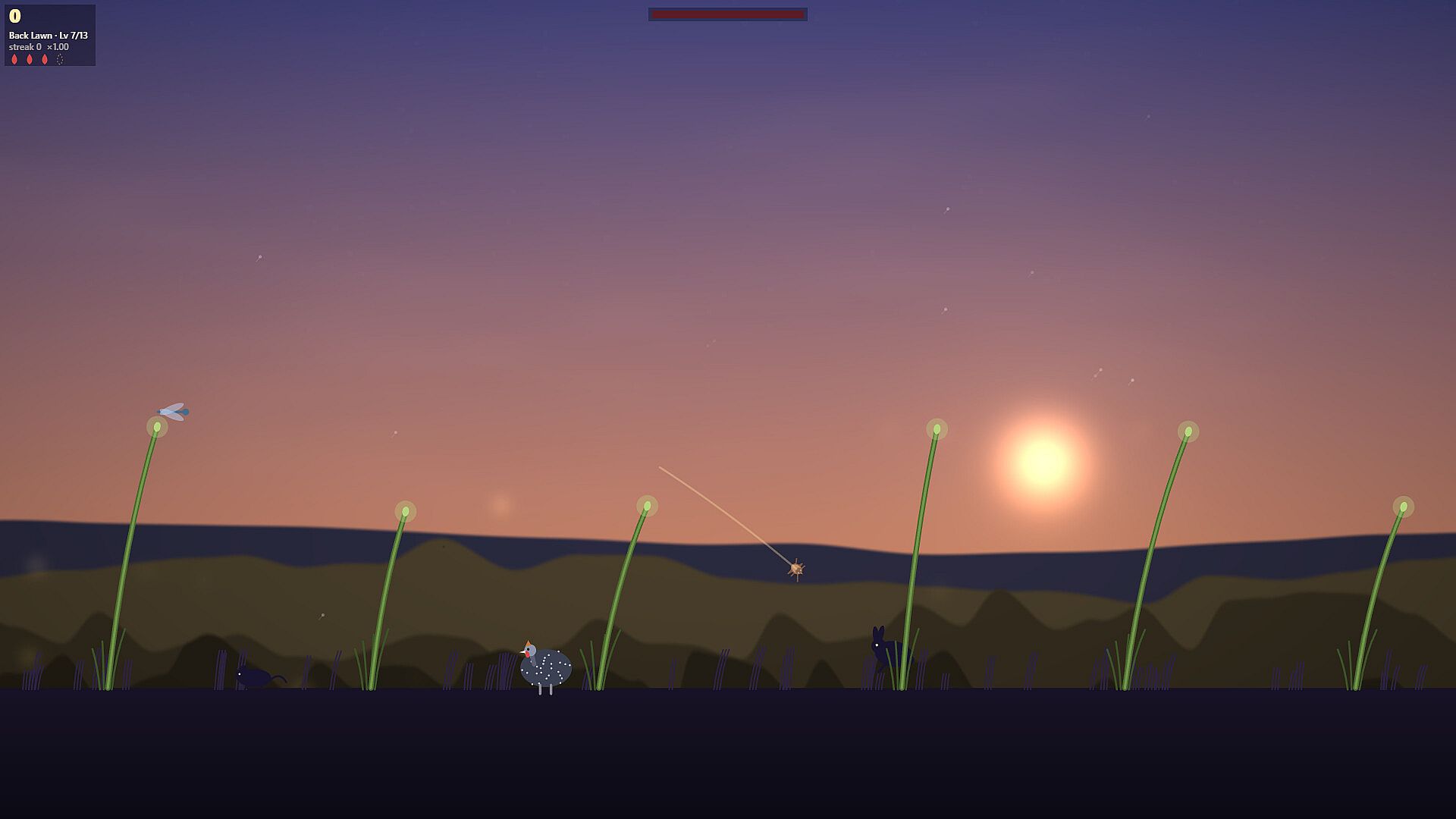
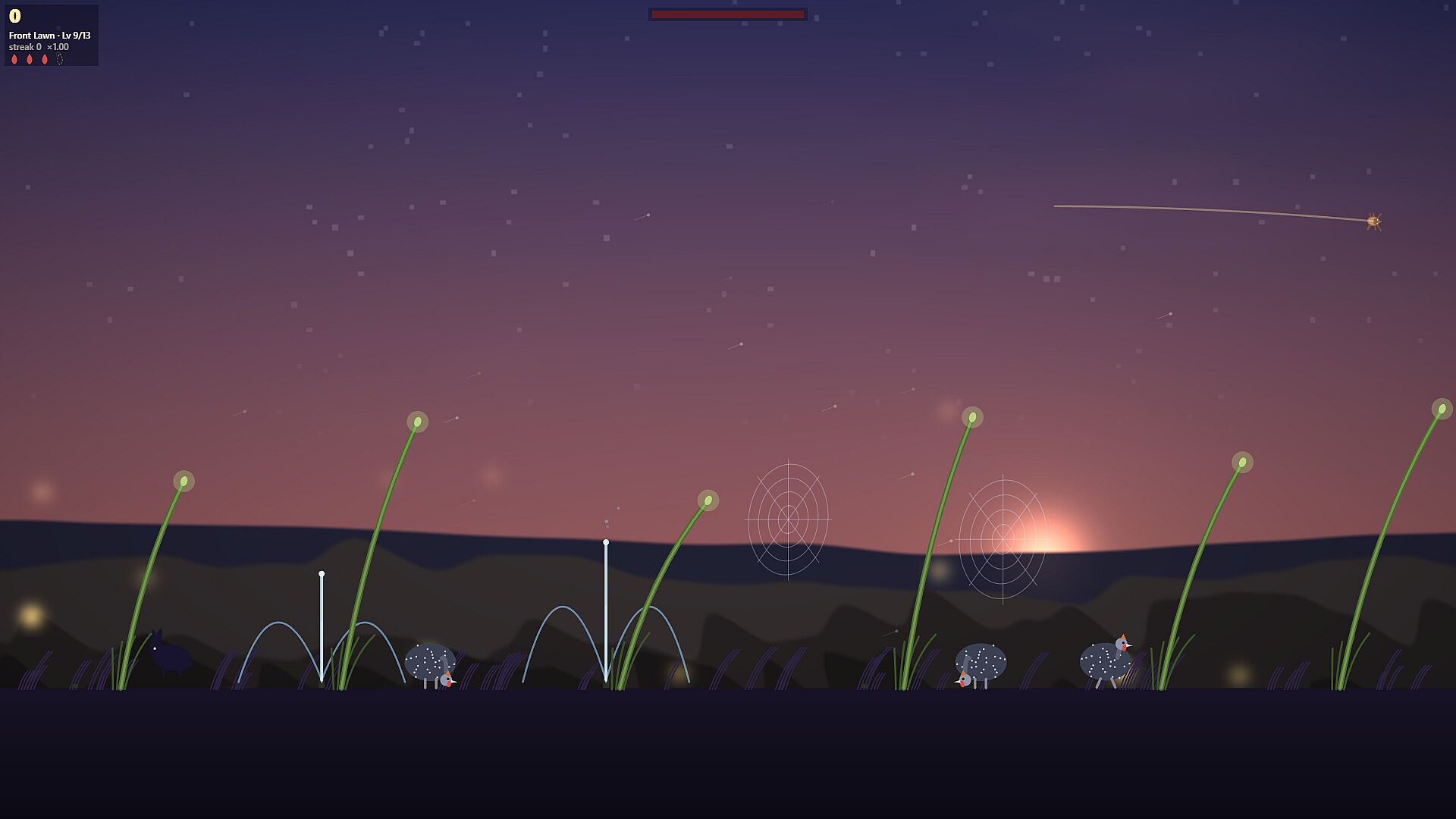
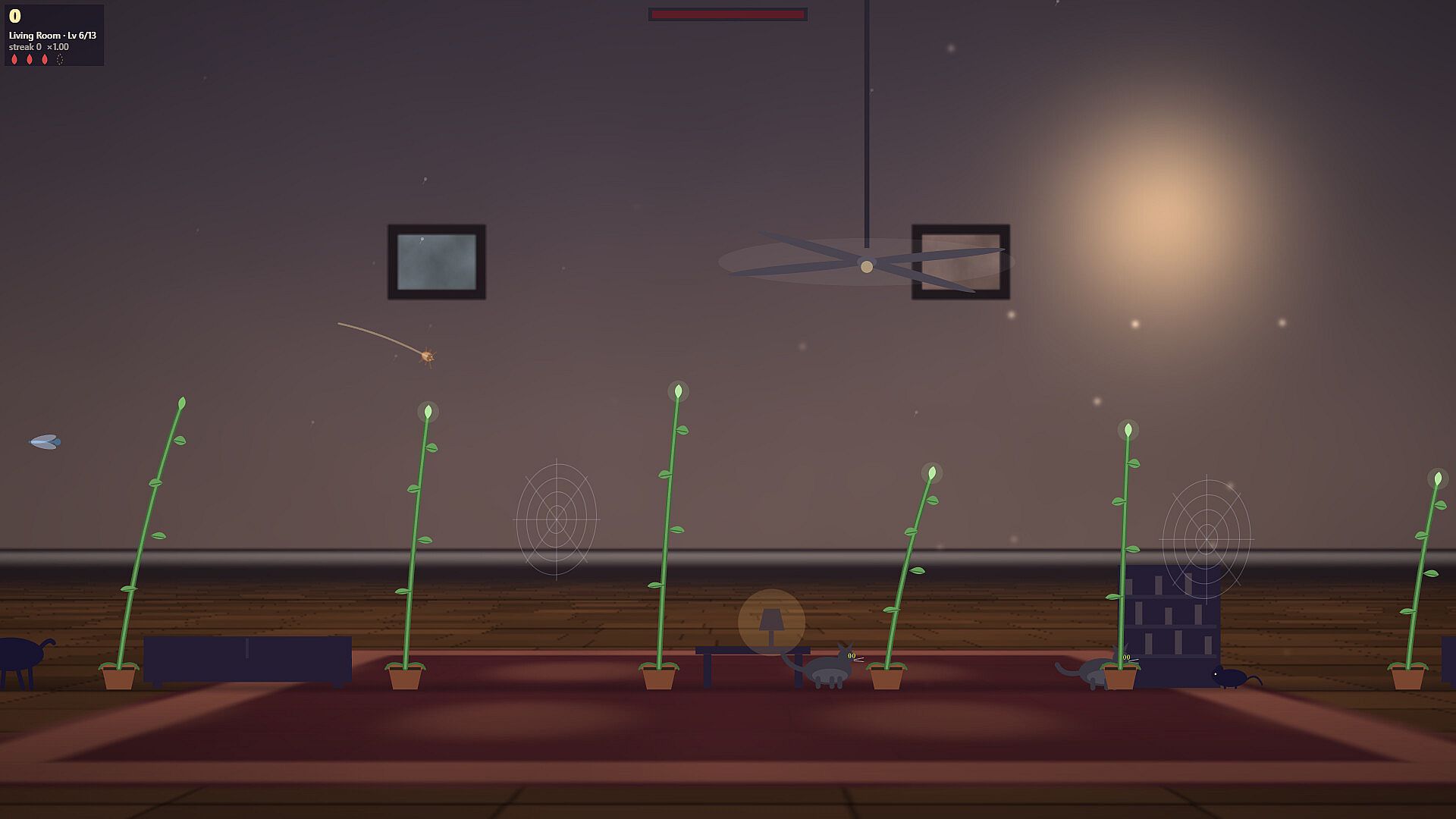
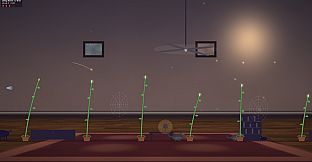
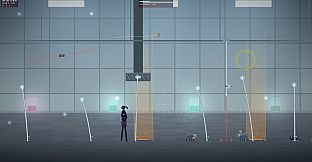
Four distinct zones alter the rules in sequence. The Back Lawn features gusty winds and a guinea fowl that leaps to snatch ticks from the air, rewarding high flights for safety. The Living Room shifts to indoor potted plants with a predictable ceiling fan draft that players can time, though the fan becomes a hazard and a house cat watches from below. The Front Lawn introduces faster gusts, multiple predators, pop-up sprinklers that knock ticks from the sky, and a lawnmower that sweeps the area. The Lab replaces natural wind with scheduled machinery, including an extractor that flattens perches on a clock and a pipette arm that demands precise timing.
Players select from four tick types that change launch and control properties. Ixodes offers balanced performance as the standard choice. Amber features a sweeping power meter where hitting the green zone delivers a bonus launch and guaranteed crit while allowing mid-air steering. Bruno provides heavy power and an iron grip that ignores wind entirely. Pip remains tiny and floaty, riding drafts easily while awarding twenty-five percent extra score.
Additional systems include chaining hosts for multipliers, collecting shed blood beads for an extra life, and pursuing varied hosts such as mice, rabbits, the family dog, a crawling baby, deer, and joggers reachable only at the ankle. The game contains fifty-two hand-tuned levels spread across the four zones, with a level picker that allows return visits to any reached stage.
Game Modes
Questing: A Tick's Tale operates as a single-player experience built around progressive level completion across the four zones. A level picker supports replay of unlocked stages without requiring a full restart, enabling focused practice on specific challenges or wind patterns.
Zone progression introduces new environmental rules and hazards that build on prior mechanics, creating a structured sequence of fifty-two levels. The soundtrack supports an in-game jukebox with options to loop, shuffle, or repeat tracks, and newly unlocked music plays first on subsequent sessions.
Controls and Accessibility
Full controller support covers every menu, card, and prompt, allowing complete playthroughs without a mouse. On-screen button prompts appear throughout. The game runs as a single file with hand-drawn 2D visuals over one custom shader and performs on modest hardware, including native support for the Steam Deck at 1280 by 800 resolution.
Is It Worth Playing?
Questing: A Tick's Tale suits players who enjoy precise timing challenges and short-session casual gameplay centered on physics-based launches. The four tick types and zone-specific hazards provide variety within the core loop of reading conditions and executing clean attachments. Fifty-two levels across distinct environments offer substantial content for completionists, while the level picker supports repeated attempts on difficult stages.
Features such as the original soundtrack with jukebox controls and extra-life blood beads add replay incentives without complicating the straightforward structure. Controller optimization and broad hardware compatibility make it accessible for portable or relaxed play. Those drawn to unusual premises and mechanical focus rather than narrative depth will find the experience consistent with the described systems.