







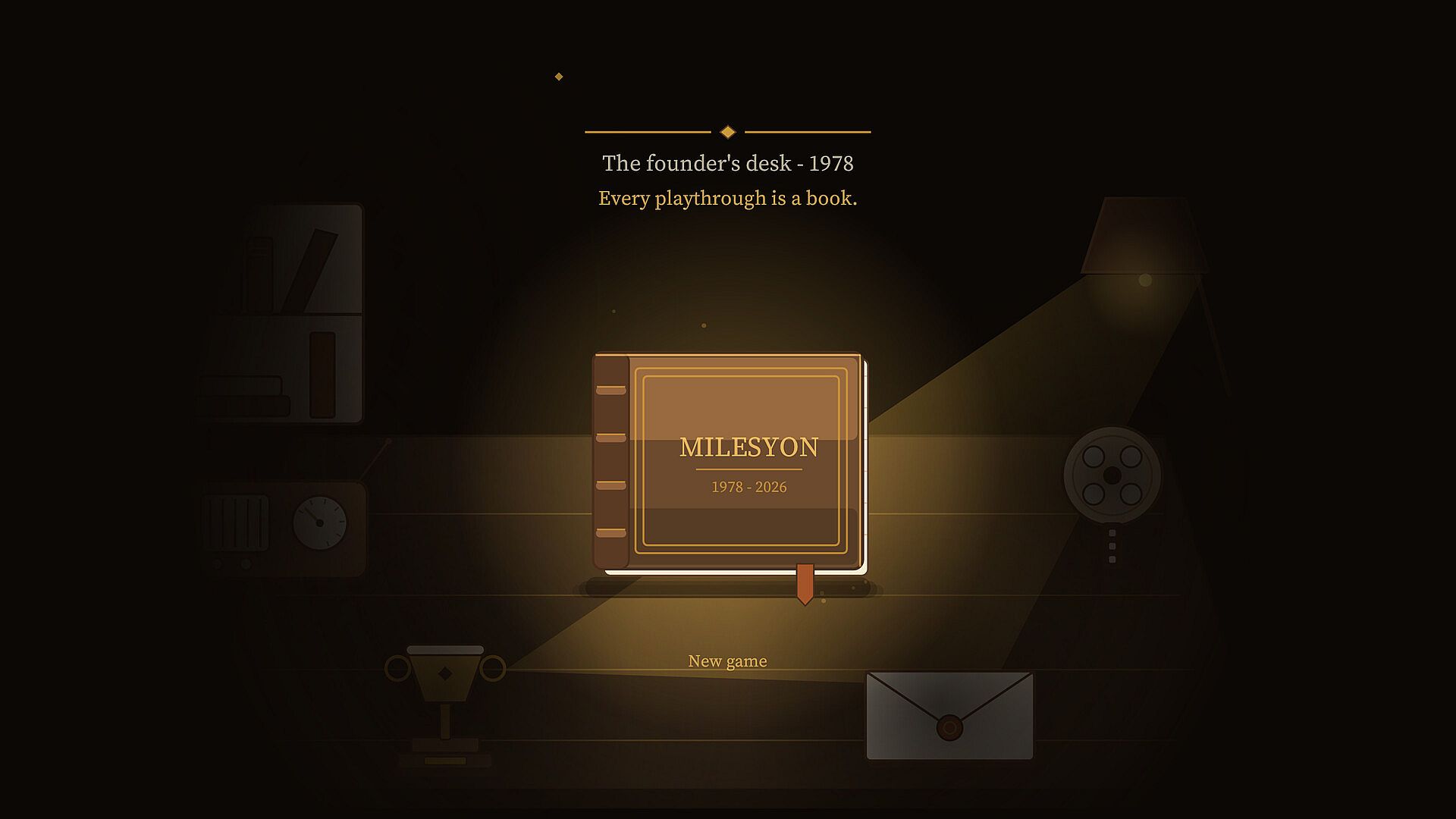
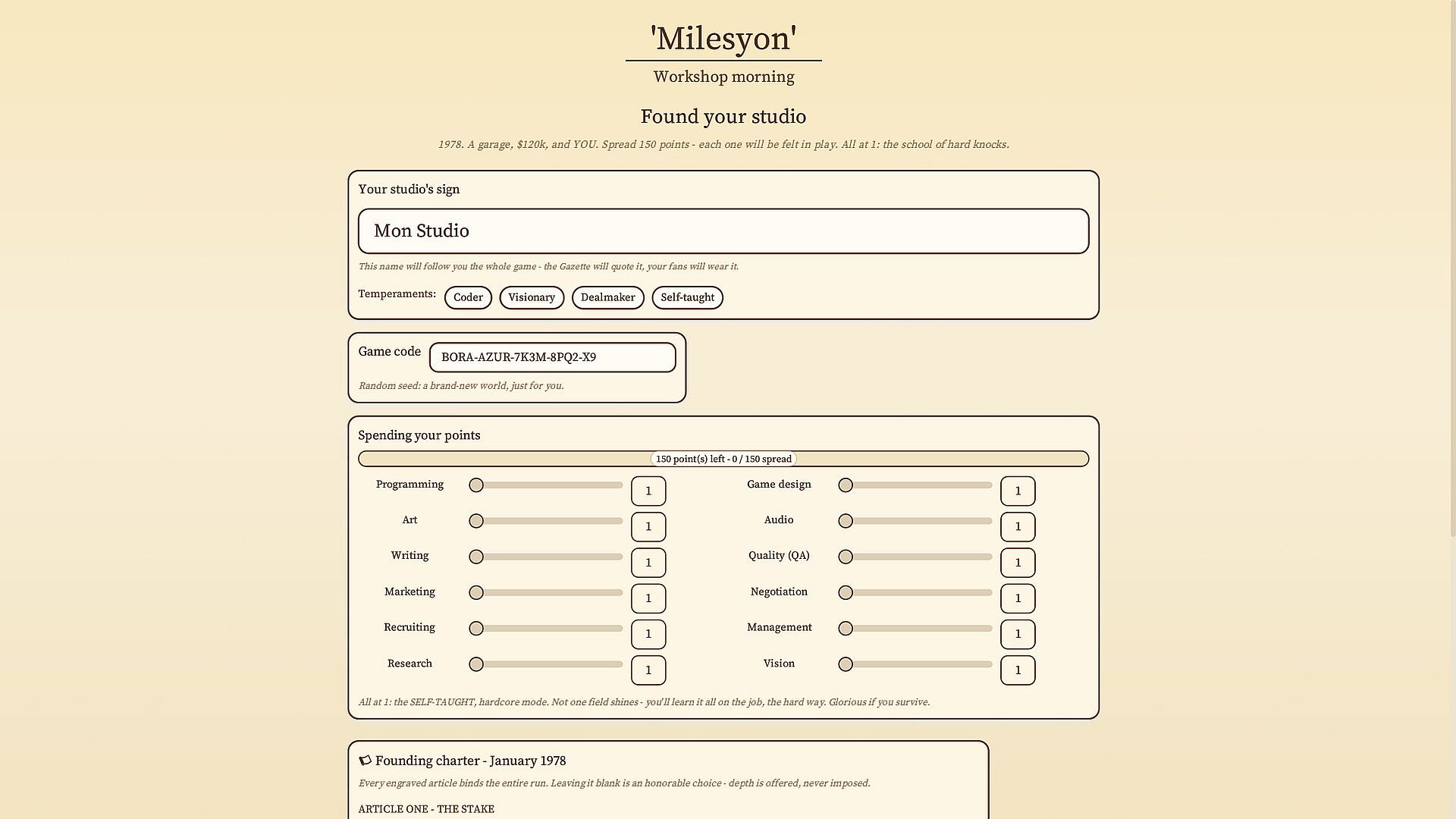
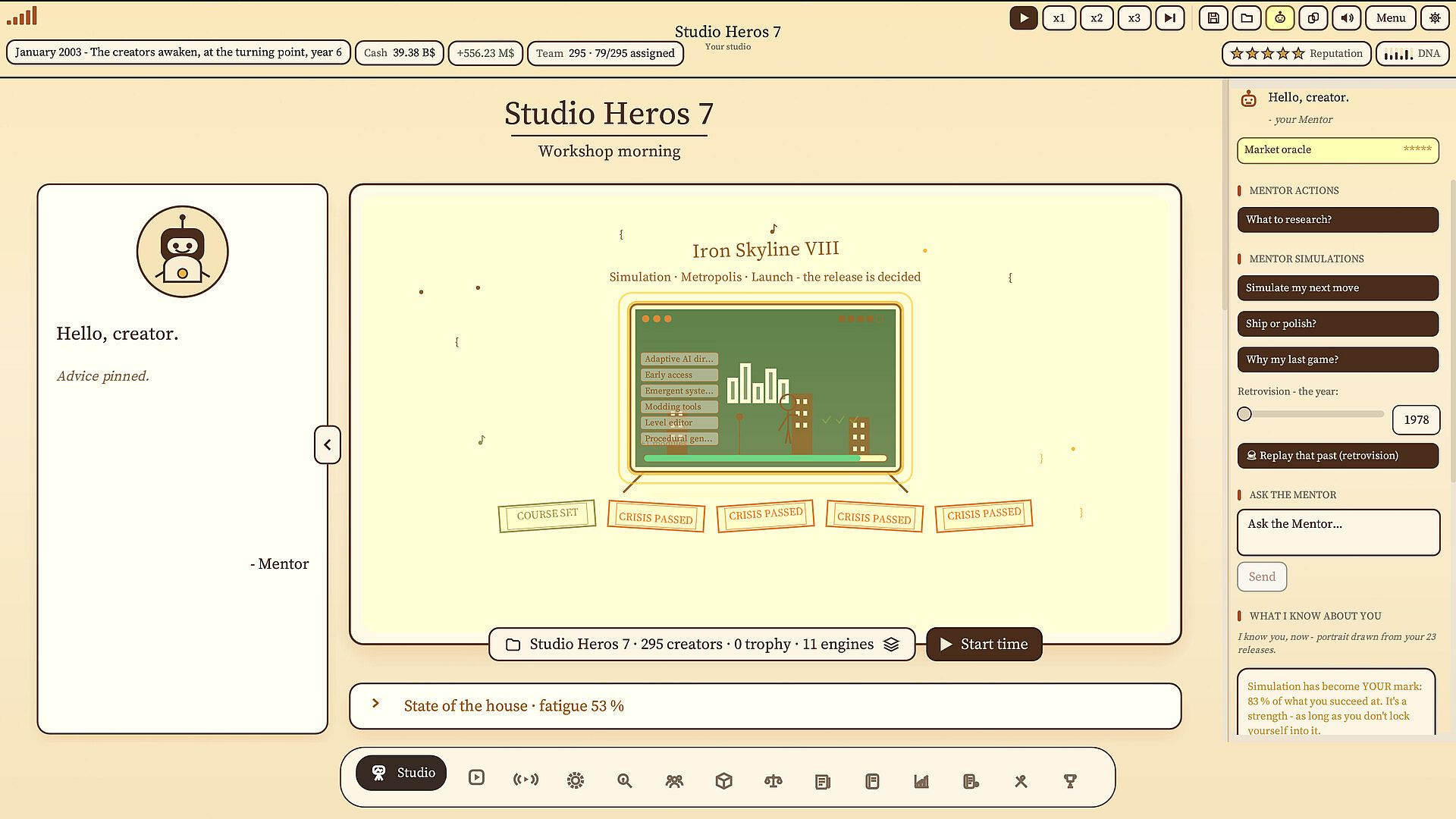
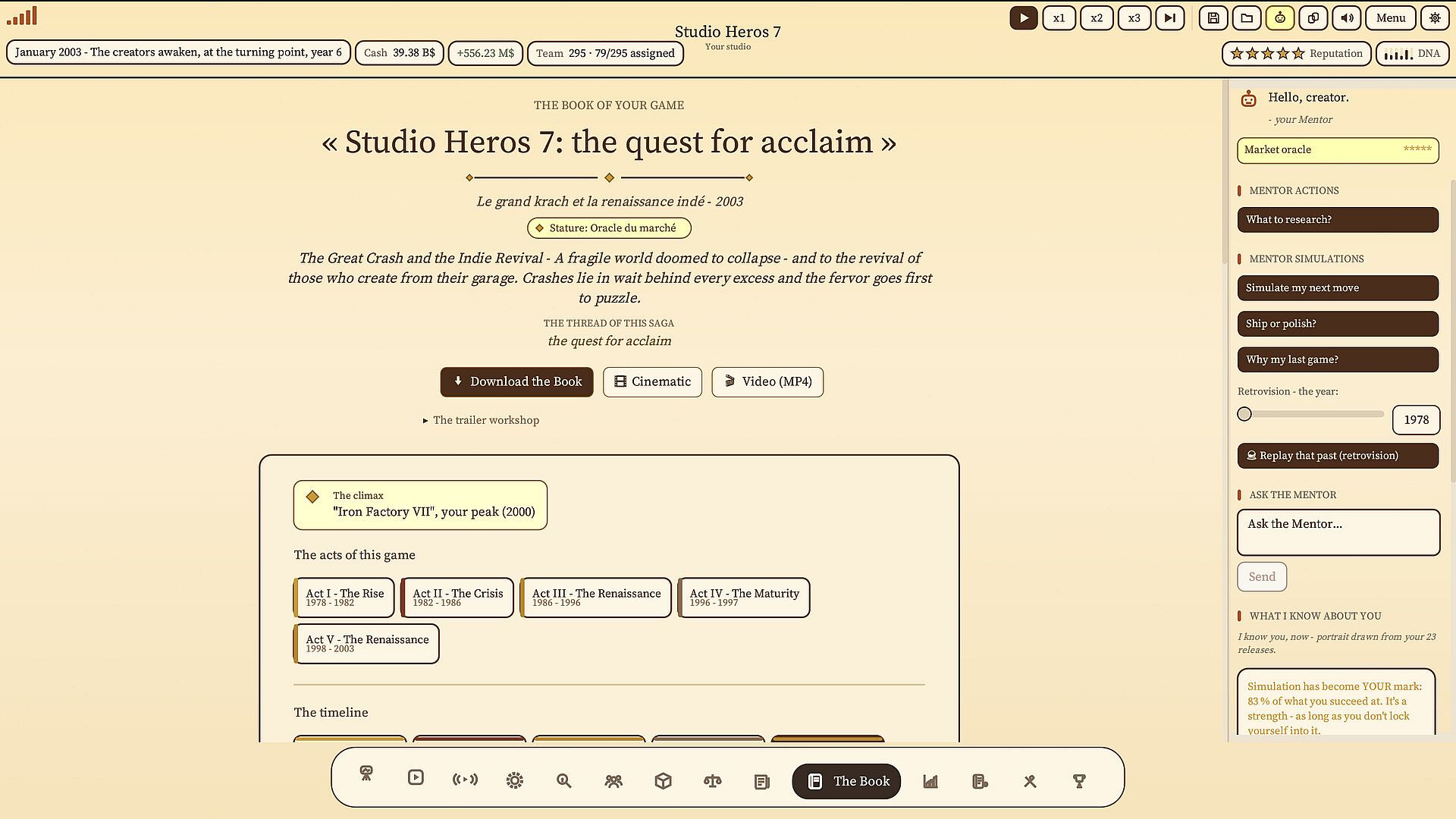
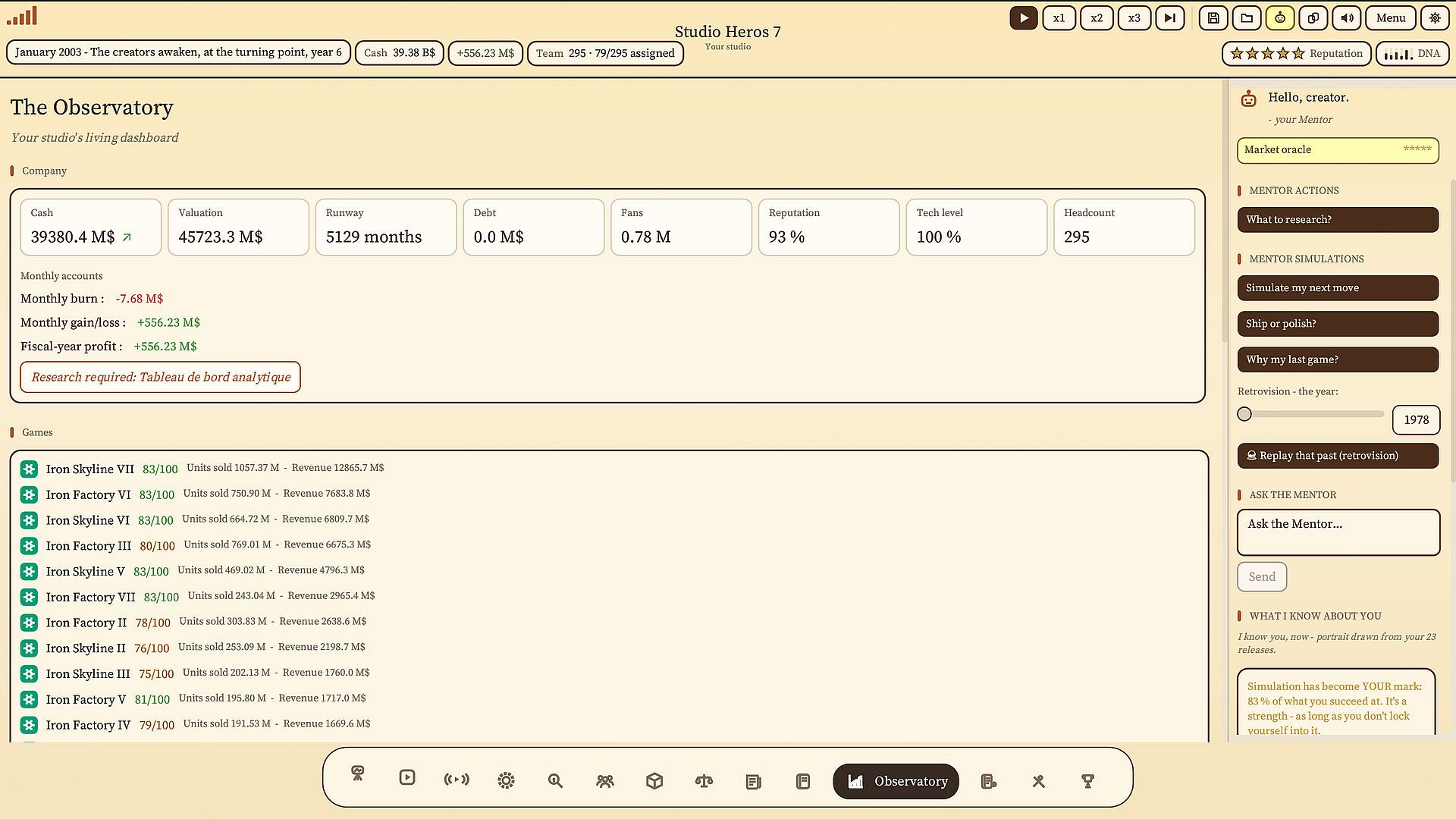
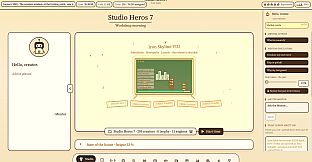

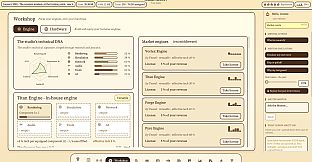
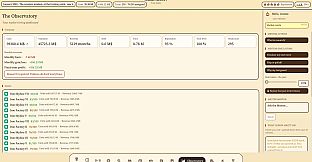
Milesyon is a single-player strategy and simulation game in which players build and manage a video game studio across nearly five decades of industry history. Set in 1978, the experience begins with limited resources in a garage and extends through evolving hardware, shifting market trends, and the rise and fall of platforms and competitors. The core appeal lies in its fully deterministic simulation, where outcomes depend entirely on player decisions rather than random chance, and every completed run generates a unique illustrated book that chronicles the studio's story.
Gameplay
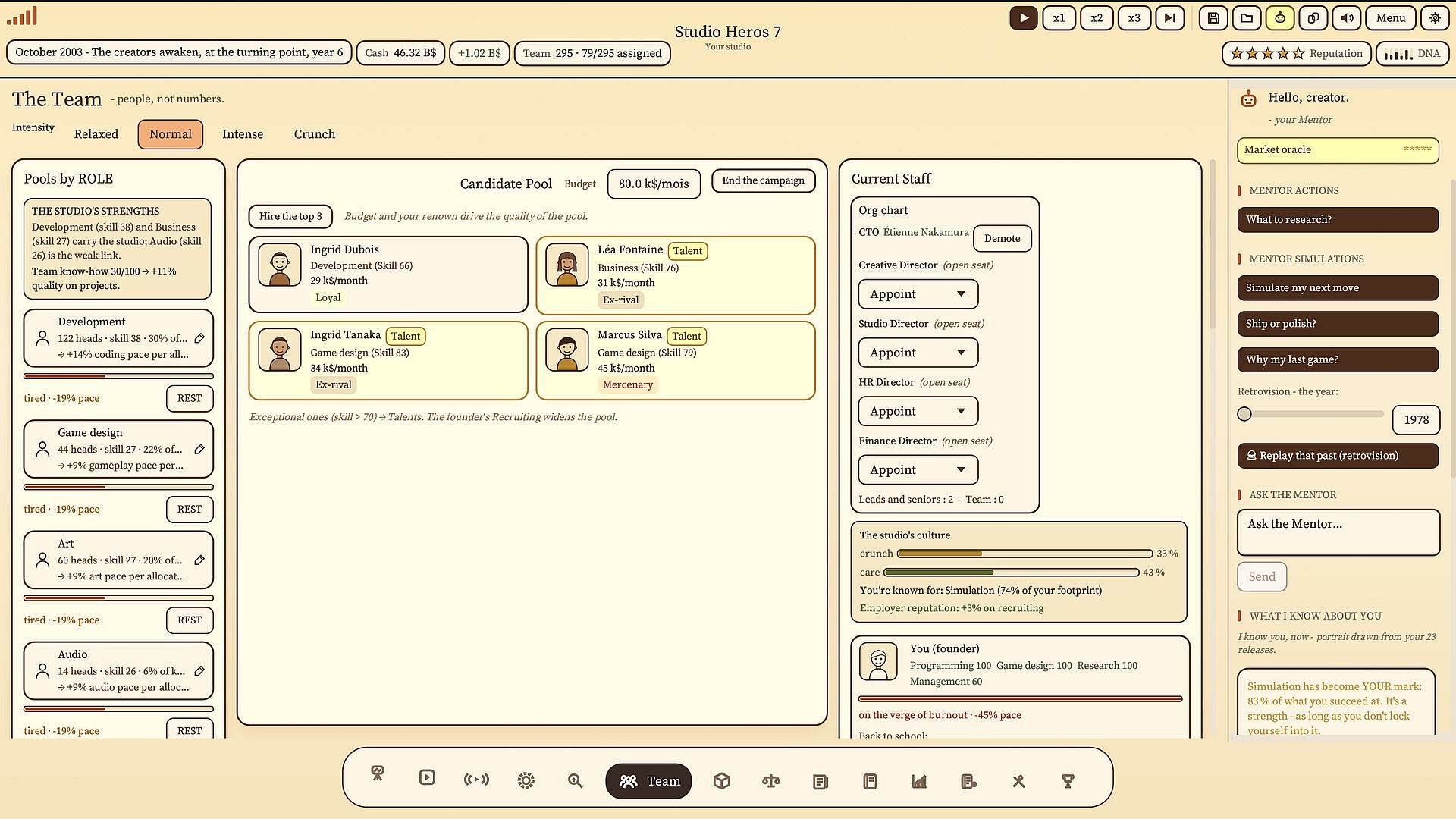
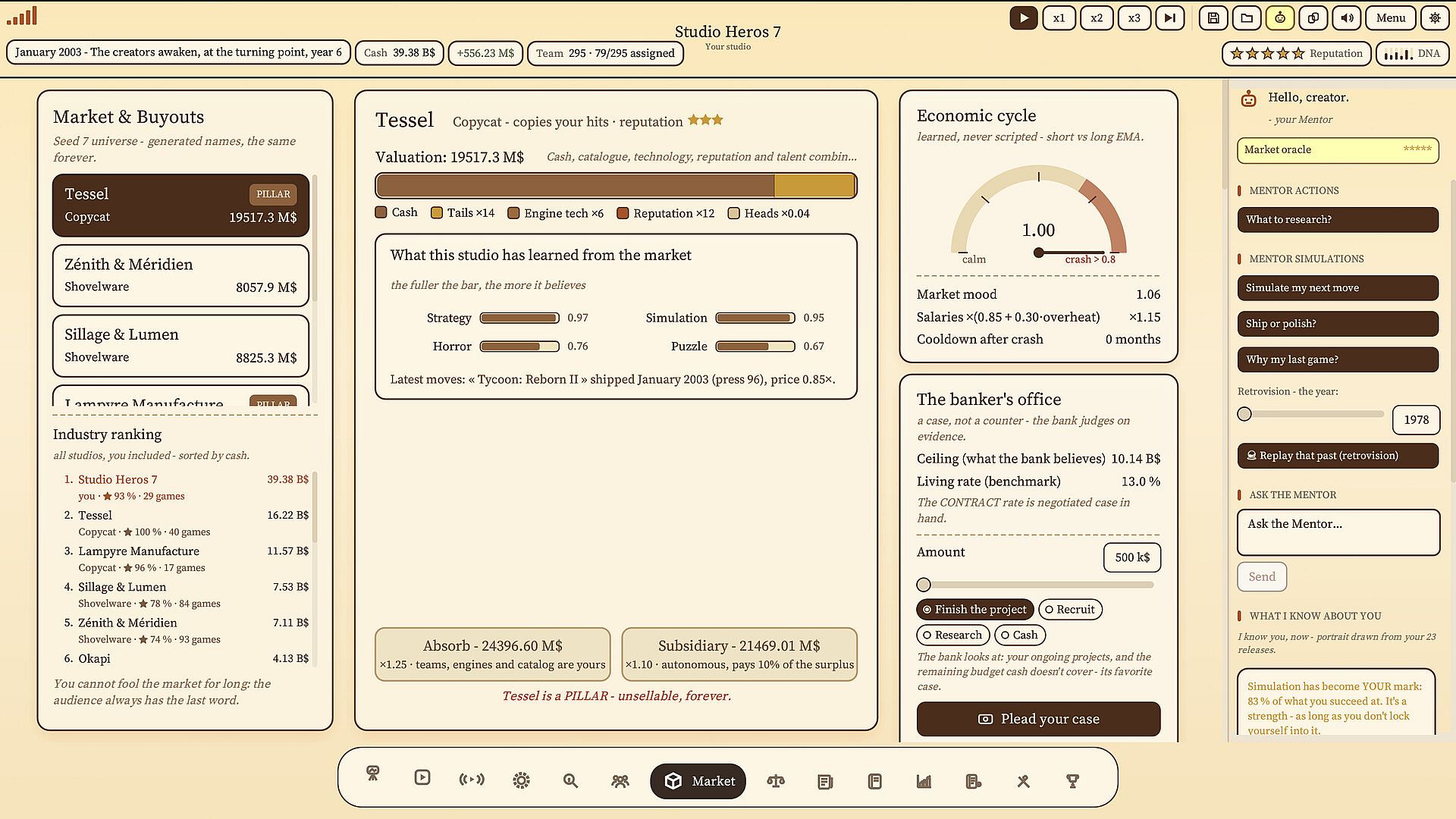
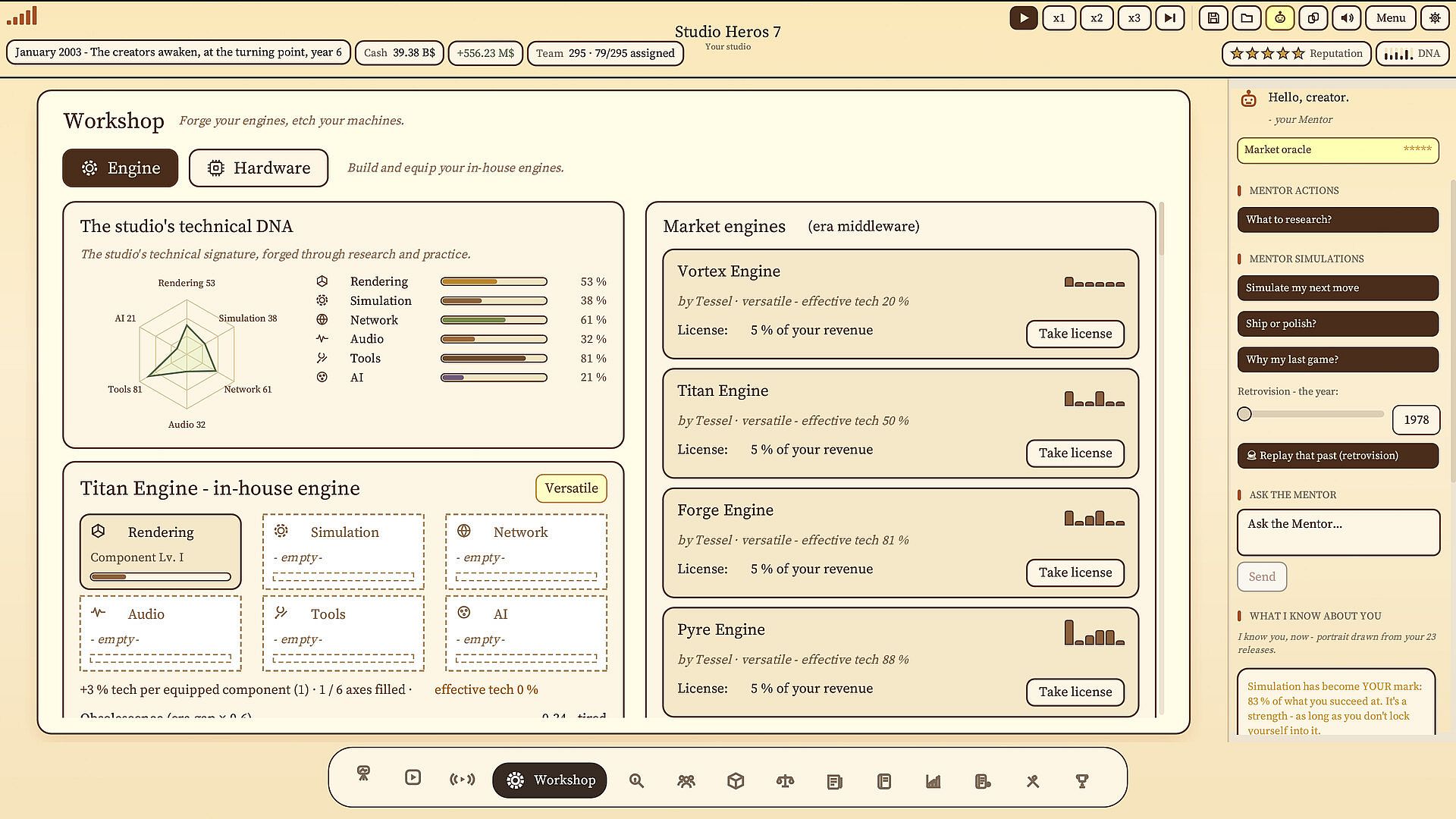
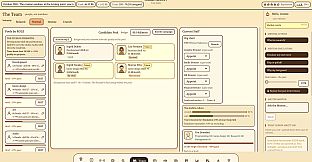
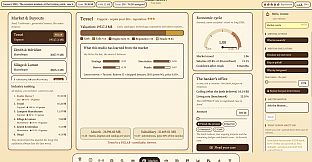
Players start with modest capital and must navigate the early days of the video game industry by hiring staff, conducting research, developing titles, and responding to emerging platforms. The simulation tracks broader industry events such as the birth and decline of hardware generations, changes in popular genres, and the actions of rival studios that can acquire, merge, or fail independently of the player's studio. Decisions compound over monthly and yearly cycles, with economic pressures, technological shifts, and competitive dynamics shaping long-term viability.
Studio management involves balancing team composition, project scope, and financial health while adapting to a world that continues evolving regardless of individual performance. Research trees and platform availability change over time, forcing strategic pivots as older technologies become obsolete and new opportunities arise. The deterministic nature means identical starting seeds produce identical external conditions, allowing players to test different approaches within the same historical framework and compare results precisely.
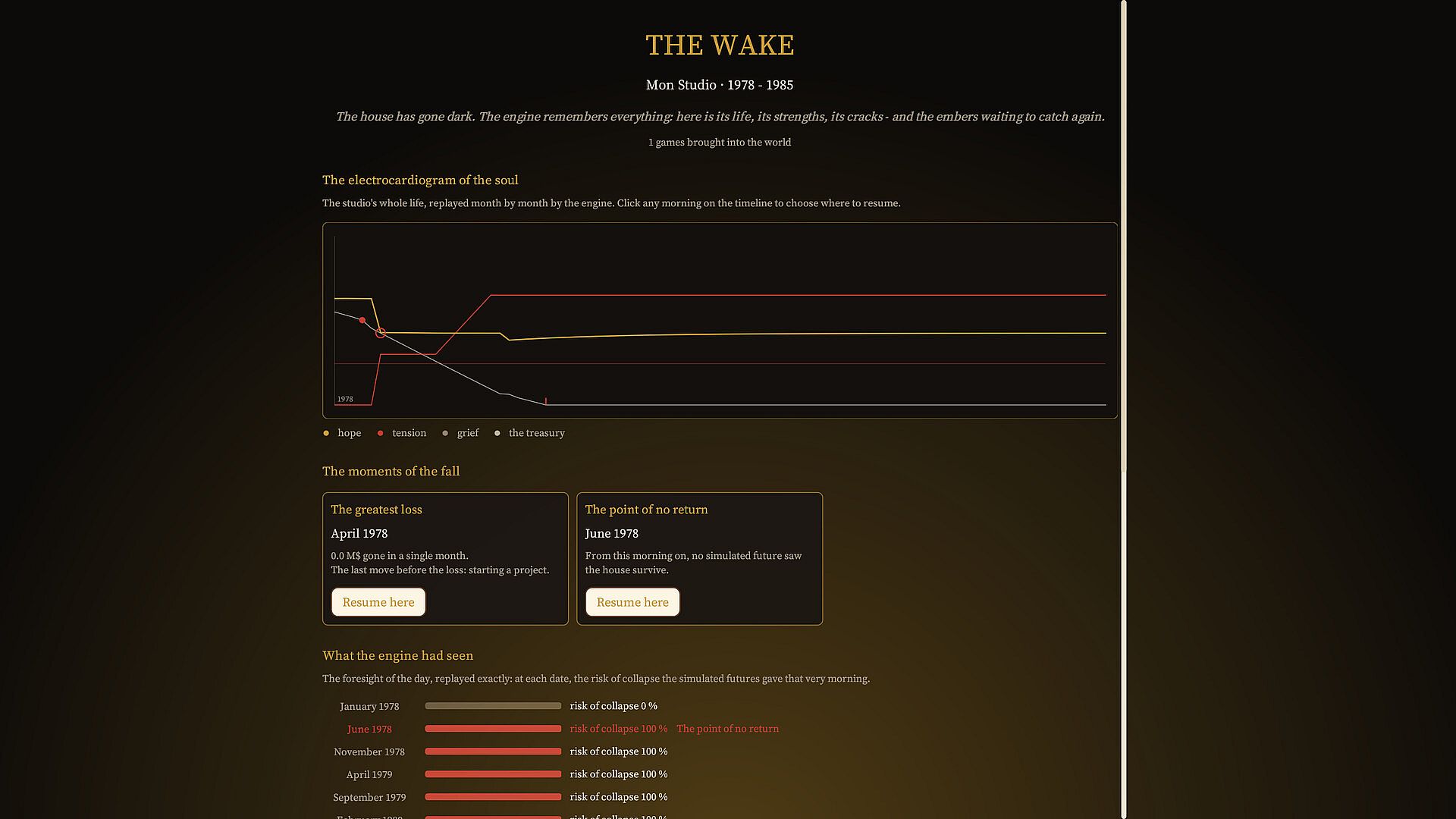
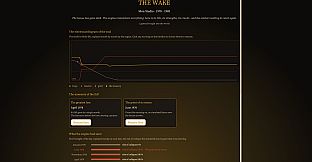
Failure remains a documented outcome rather than an abrupt end. When a studio collapses, a detailed record called the Vigil breaks down the sequence of decisions and external factors that led to that point, turning closure into part of the narrative record instead of a simple loss screen.
Game Modes
Milesyon operates as a single-player experience centered on one continuous run from 1978 through 2026. There are no separate multiplayer or competitive modes; the focus stays on solitary studio building within the fixed historical timeline. Each playthrough functions as its own self-contained campaign, with the deterministic seed system enabling exact replication of conditions for repeated attempts or sharing with others.
The structure emphasizes long-term progression across decades rather than short sessions or distinct scenarios. Players manage the full arc of studio growth, potential crises, and eventual outcomes in a single unbroken sequence, with the generated book serving as the primary record of that specific journey.
The Book and Local AI Features
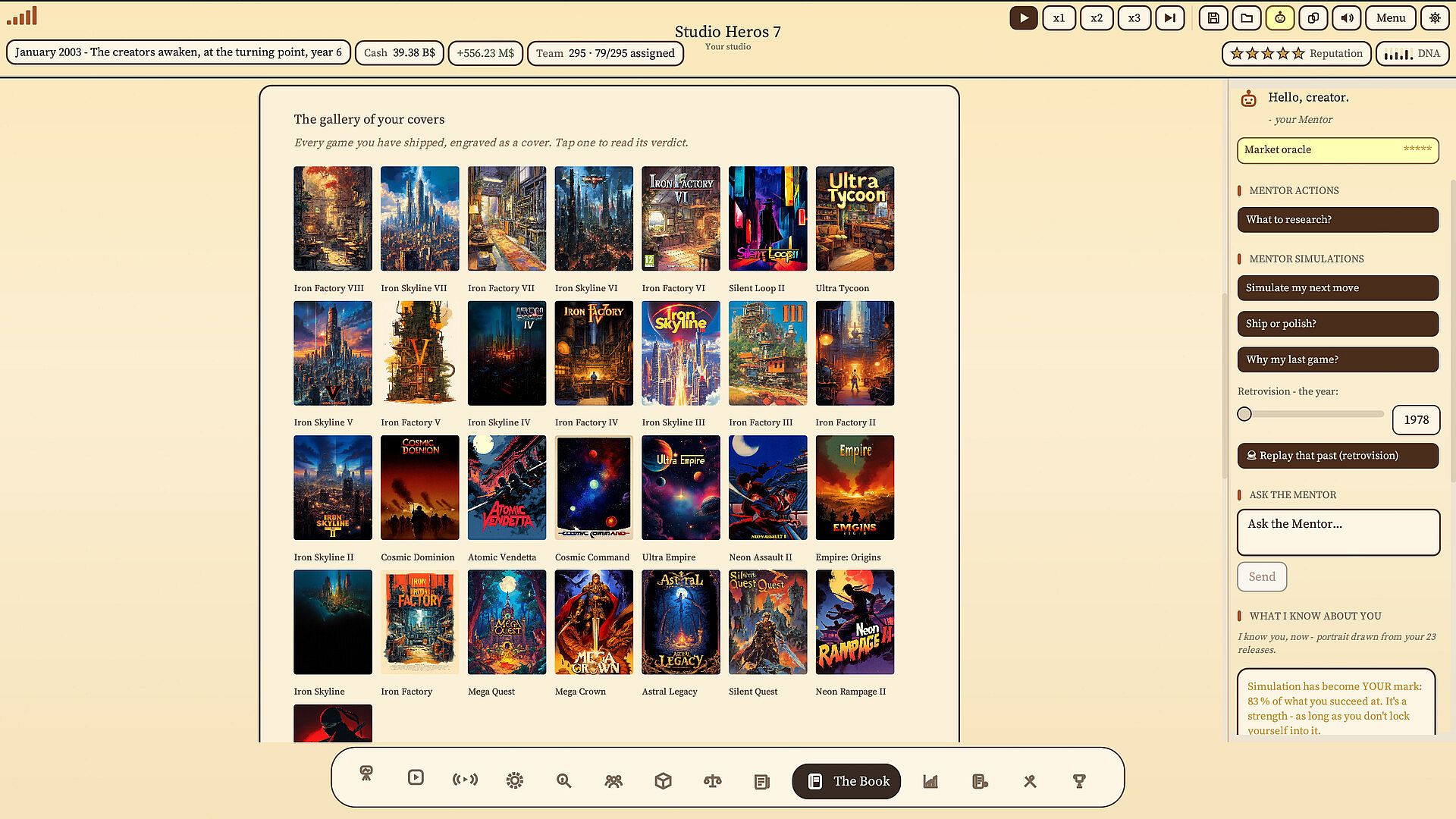
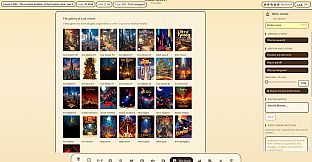
At the conclusion of a run, the game produces a personalized book containing prose descriptions of key events, custom illustrations tied to released games and pivotal moments, and accompanying music. This output is generated entirely on the player's machine using embedded models that interpret the actual decisions and results from that playthrough. The book can be read in-game, exported, or shared, and it exists only for that particular seed and set of choices.
All processing occurs offline with no external services or accounts required. The AI components analyze and narrate what occurred rather than generating new gameplay elements or altering simulation outcomes. This approach keeps the experience self-contained while providing a tangible artifact that captures the unique history of each studio.
Is It Worth Playing?
Milesyon suits players who value precise, consequence-driven simulations over randomized elements or forgiving mechanics. Its deterministic systems reward careful planning and repeated experimentation within consistent conditions, while the emphasis on earned outcomes appeals to those comfortable with extended periods of difficulty or outright failure as meaningful parts of the experience.
The game is currently in development for Early Access, with a playable version spanning the full 1978-2026 timeline already available for testing. Planned expansions include deeper industry-side systems such as hardware design and rival studio mechanics, which will be shaped by community input during the Early Access period. Those drawn to management simulations that produce lasting, exportable records of play will find the current foundation substantial enough to explore immediately, particularly if they appreciate the challenge of building without safety nets.











