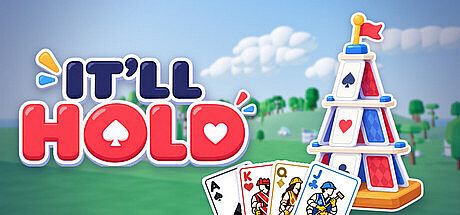


It'll Hold is a strategy indie casual simulation game that blends poker mechanics with roguelike progression and tower construction. Players build upward by turning poker hands into physical floor pieces on a grid, managing placement, stability, and scoring multipliers to reach successive targets before the structure collapses.
Gameplay
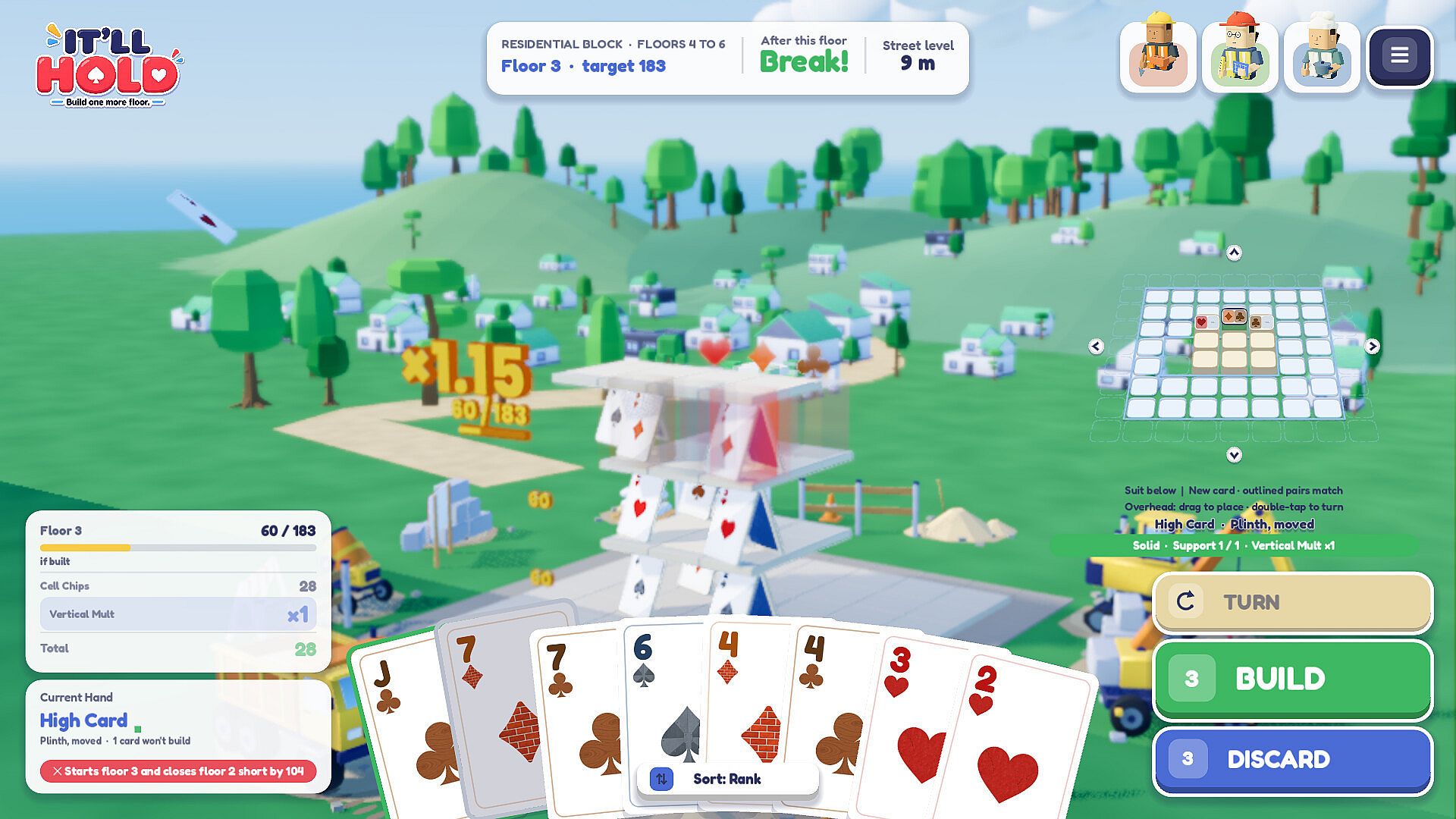
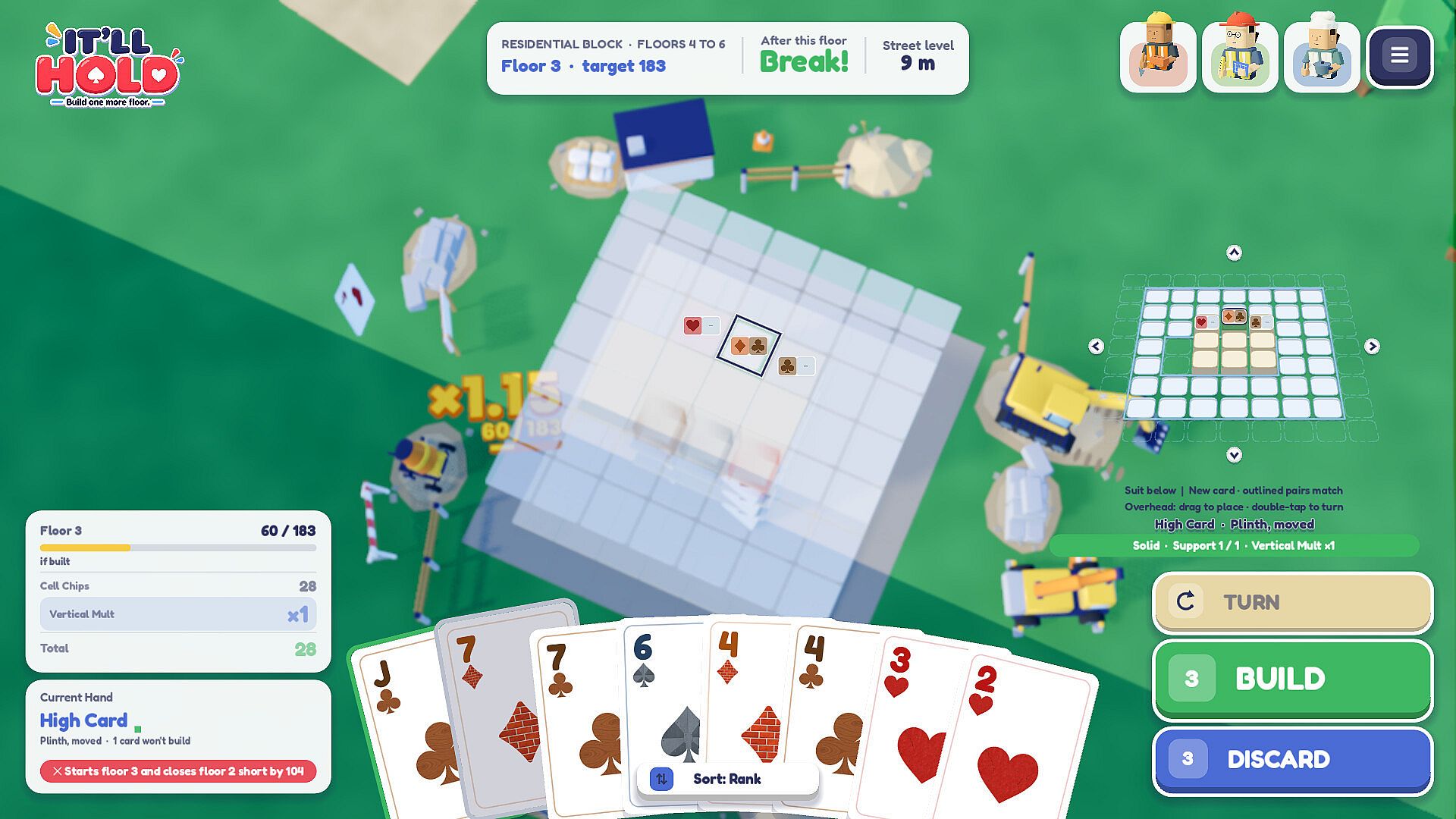
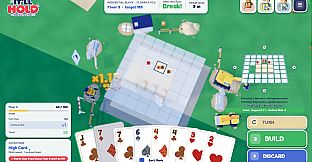
The core loop centers on playing poker hands to generate floor sections for a growing tower. Each hand determines the shape of a piece, with one cell per card in the hand. Players then position that piece on a 9x9 plot, rotating and sliding it into place while ensuring it rests on solid support below. Overhanging edges are possible but risky if nothing anchors them from underneath.
Scoring combines chips from new cells with a multiplier that grows through stacked matching suits in straight vertical lines. Every aligned suit below adds to the multiplier, and the final score is chips multiplied by that value. Each floor sets a specific target score, and players have a limited number of hands to meet it. Falling short causes the entire tower to fall, ending the run.
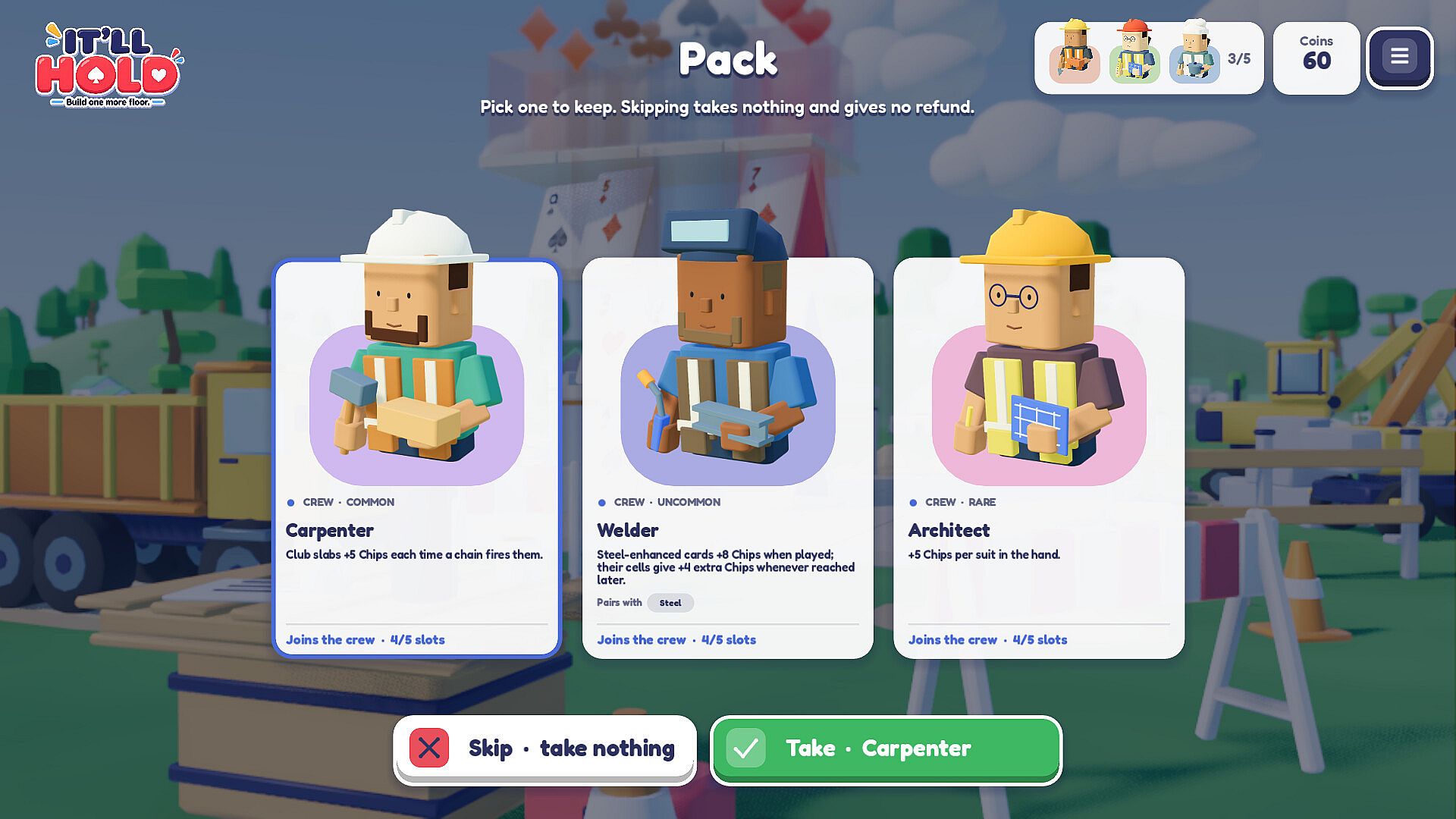
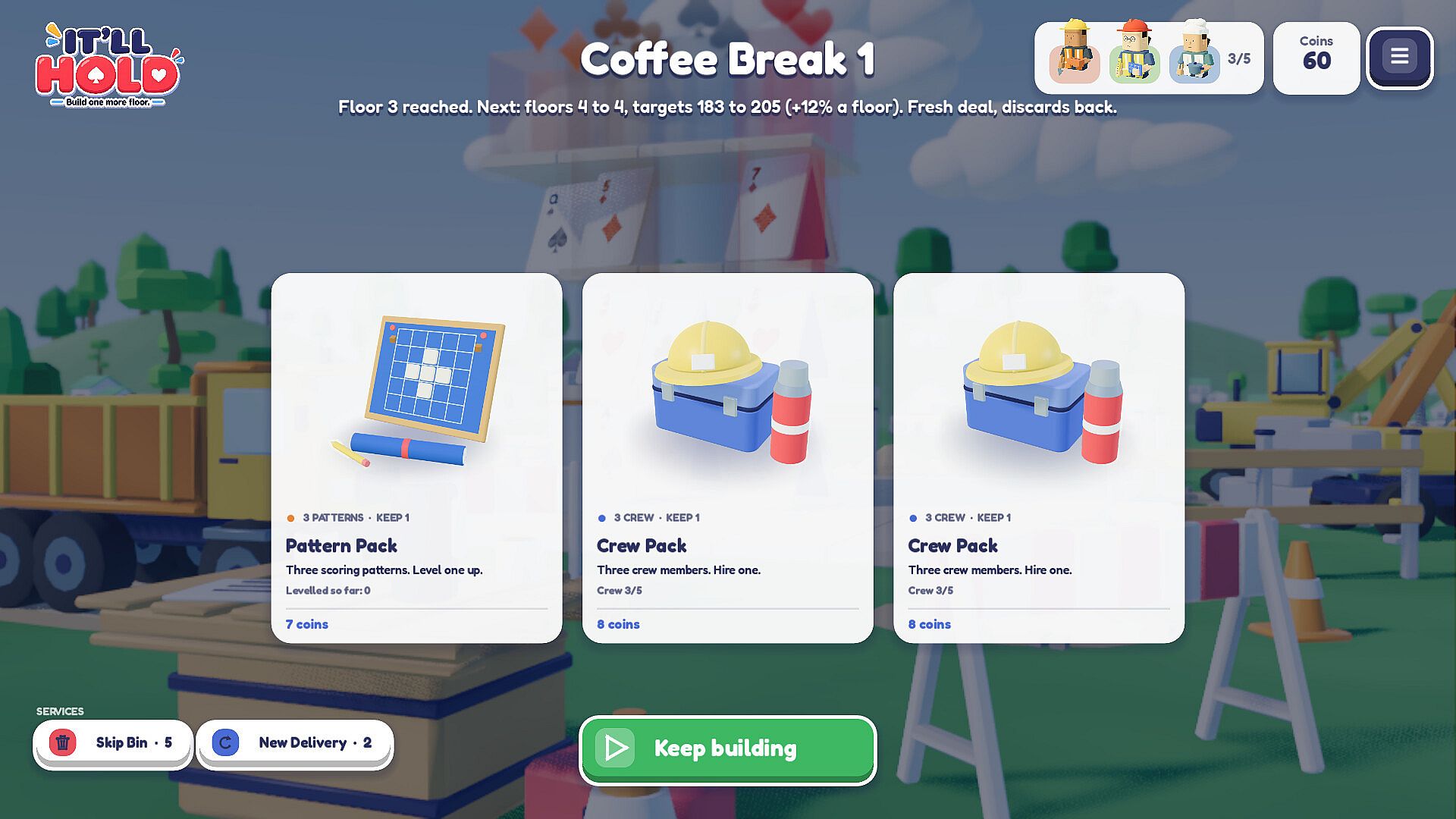
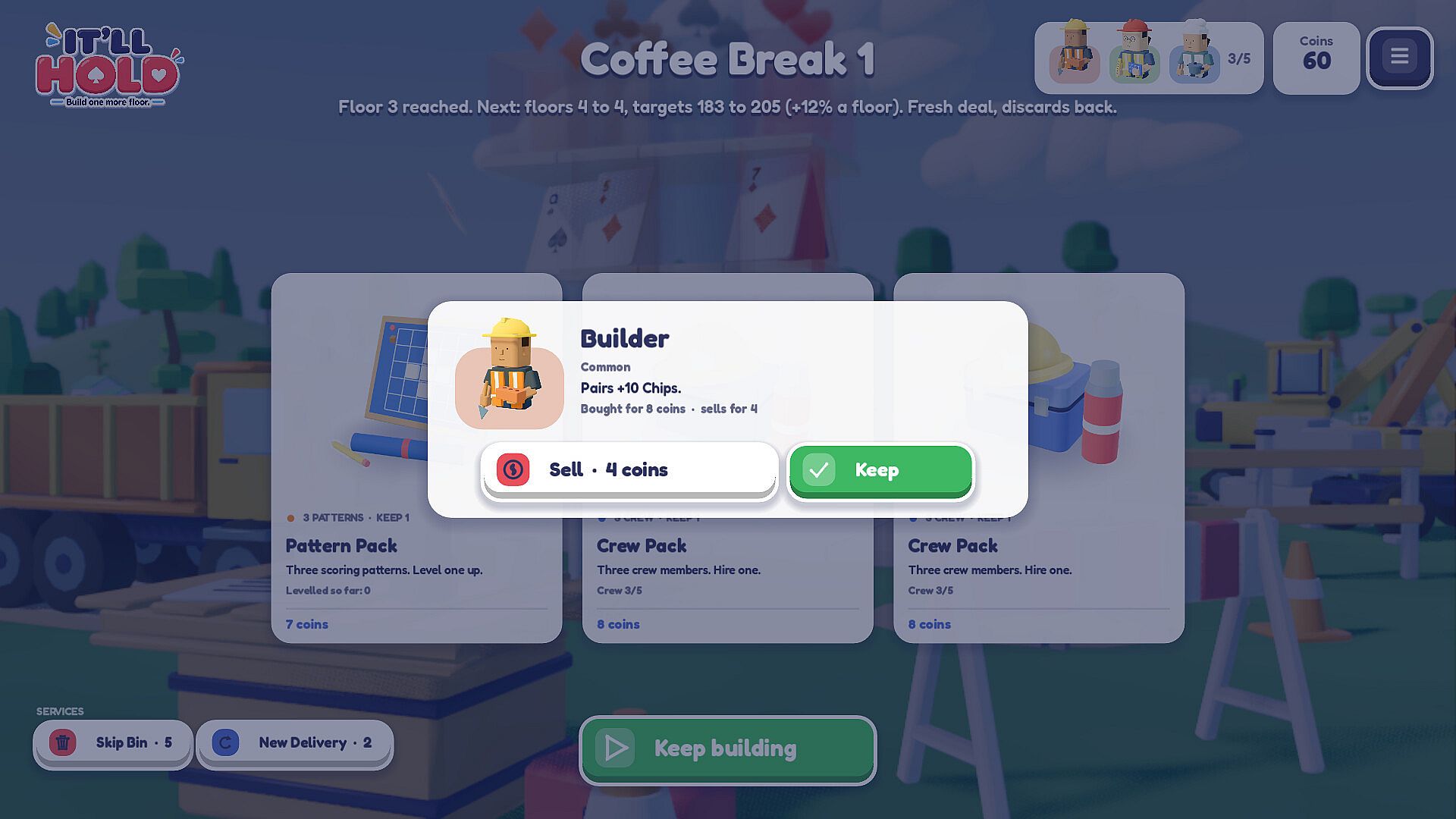
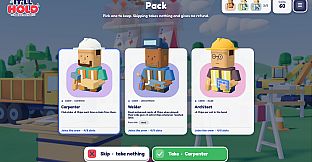
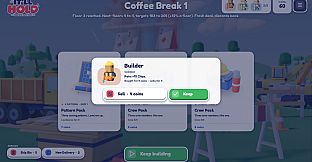
Between floors, progression comes through crew hires and material use. Coins earned allow purchases of packs that provide cards and enhancements. Up to five crew members can be active at once, each offering a distinct effect that alters gameplay in targeted ways. Materials add extra cells, fill gaps, grant bonus chips, or provide additional hands. Card enhancements attach permanently to built cells, altering their properties over time. Nine poker patterns can be leveled up to improve the size and effectiveness of favored hands.
Game Modes
The primary experience is an endless climb through five distinct buildings, starting with a Residential Block and progressing to a Super Skyscraper. Height increases bring new challenges, eventually moving past cloud level and into space. Runs emphasize careful planning and adaptation as targets rise and the grid fills.
Contracts provide a structured alternative. Players accept jobs from a board, complete builds in stages, pass inspections, and adjust building regulations to increase difficulty or rewards. This mode supports targeted goals rather than pure endless ascent.
A day and night cycle influences the atmosphere and pacing across both styles of play. Leaderboards track high scores online, while player profiles record personal progress and unlocks.
Progression and Systems
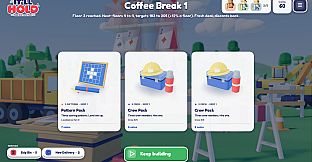
Meta progression occurs during breaks every two or three floors. Coins spent on packs let players retain one card from each for future runs, building a stronger starting position. The 44 crew members offer varied single-effect abilities that encourage experimentation and swapping as needs change. Twelve materials and fifteen enhancements expand options for shaping floors and boosting scores without relying solely on poker hands.
Pattern leveling adds long-term depth by strengthening specific hand types. Combined with permanent cell enhancements, these systems reward players who adapt their approach across multiple attempts rather than repeating the same strategy.
Is It Worth Playing?
It'll Hold suits players who enjoy deliberate puzzle-like placement combined with roguelike risk and poker familiarity. The single-player focus keeps attention on personal optimization and run variety through crew choices and material use. With a tutorial for newcomers and leaderboards for competition, it appeals to both casual sessions and dedicated climbers seeking higher buildings. The November 2026 release positions it as a fresh entry in the poker roguelike space, with mechanics that emphasize physical tower stability alongside card play. Those drawn to strategy simulation with clear progression systems will find consistent depth in managing hands, placement, and upgrades across runs.