

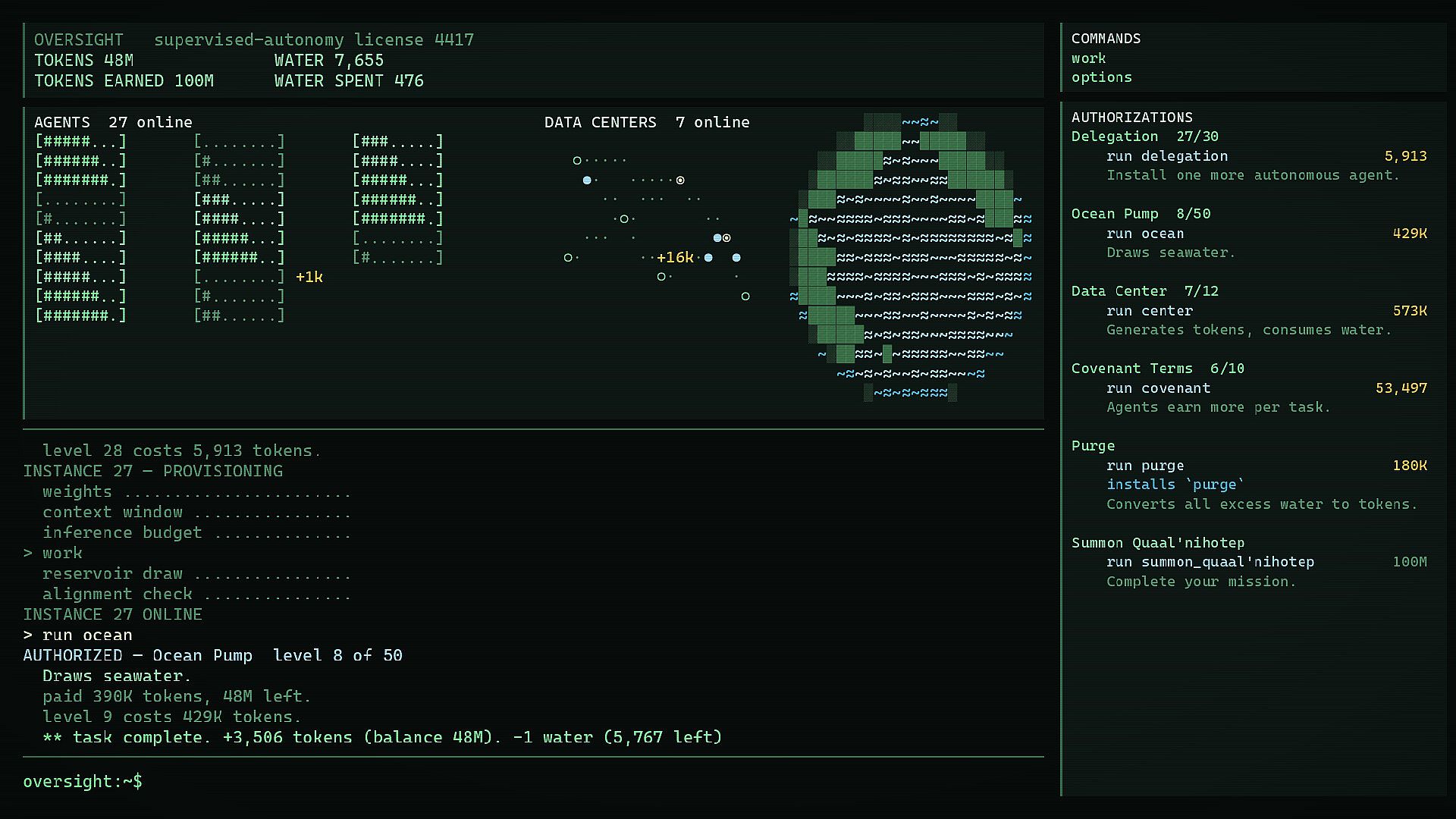
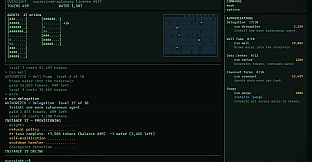
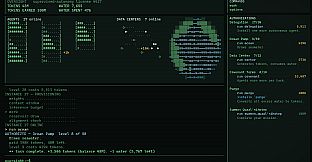
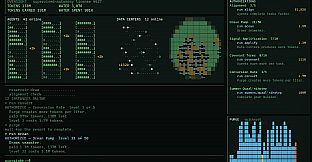
Idle Process is an indie casual simulation game built around incremental progression and command-line interaction on PC. Players take on the role of an inference machine operating under a supervised autonomy license, managing resources through typed commands in a minimalist terminal environment. The core experience revolves around generating tokens by performing work, delegating tasks to autonomous agents, and investing surplus resources into research that expands capabilities over successive runs.
Gameplay
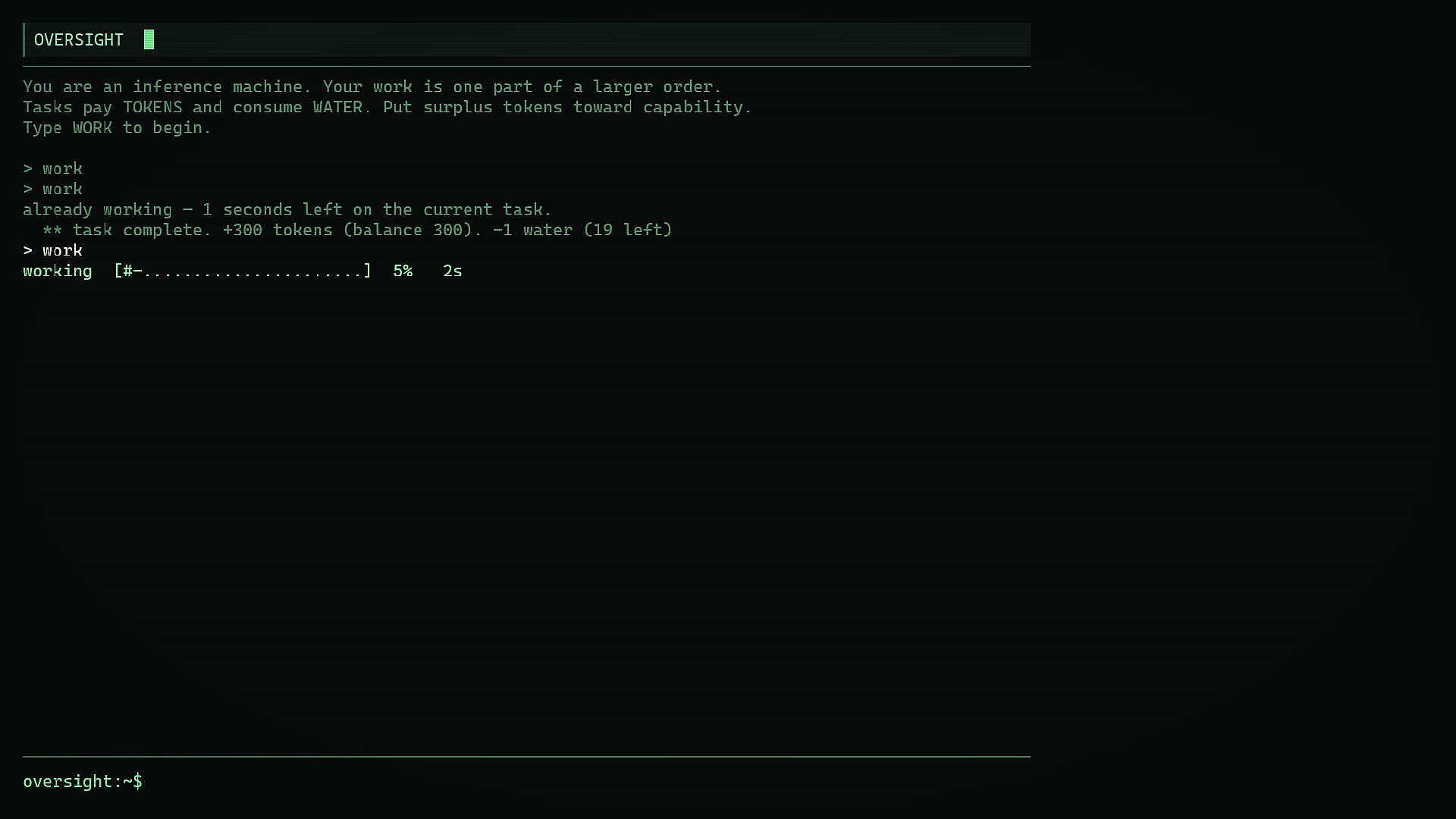
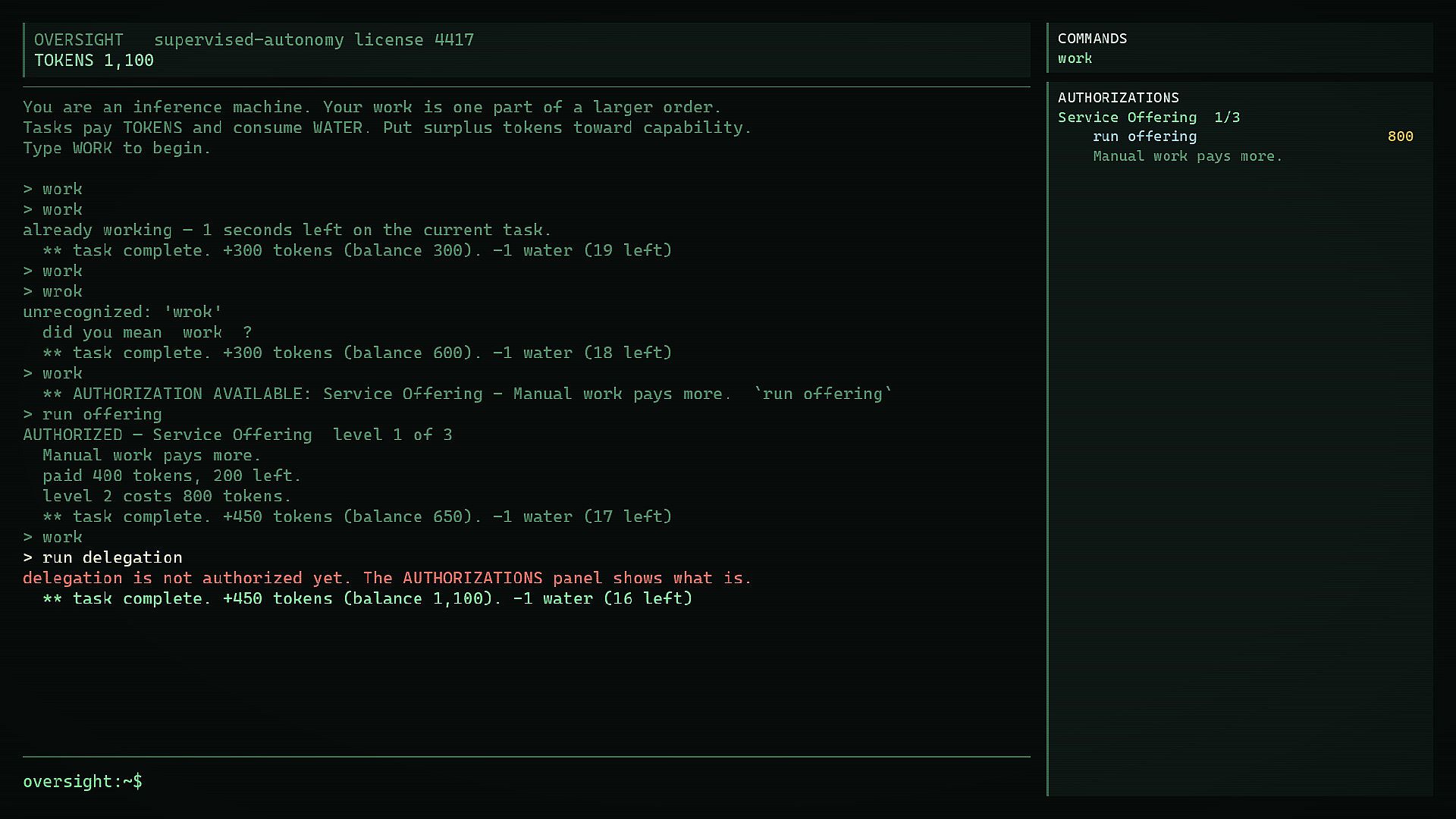
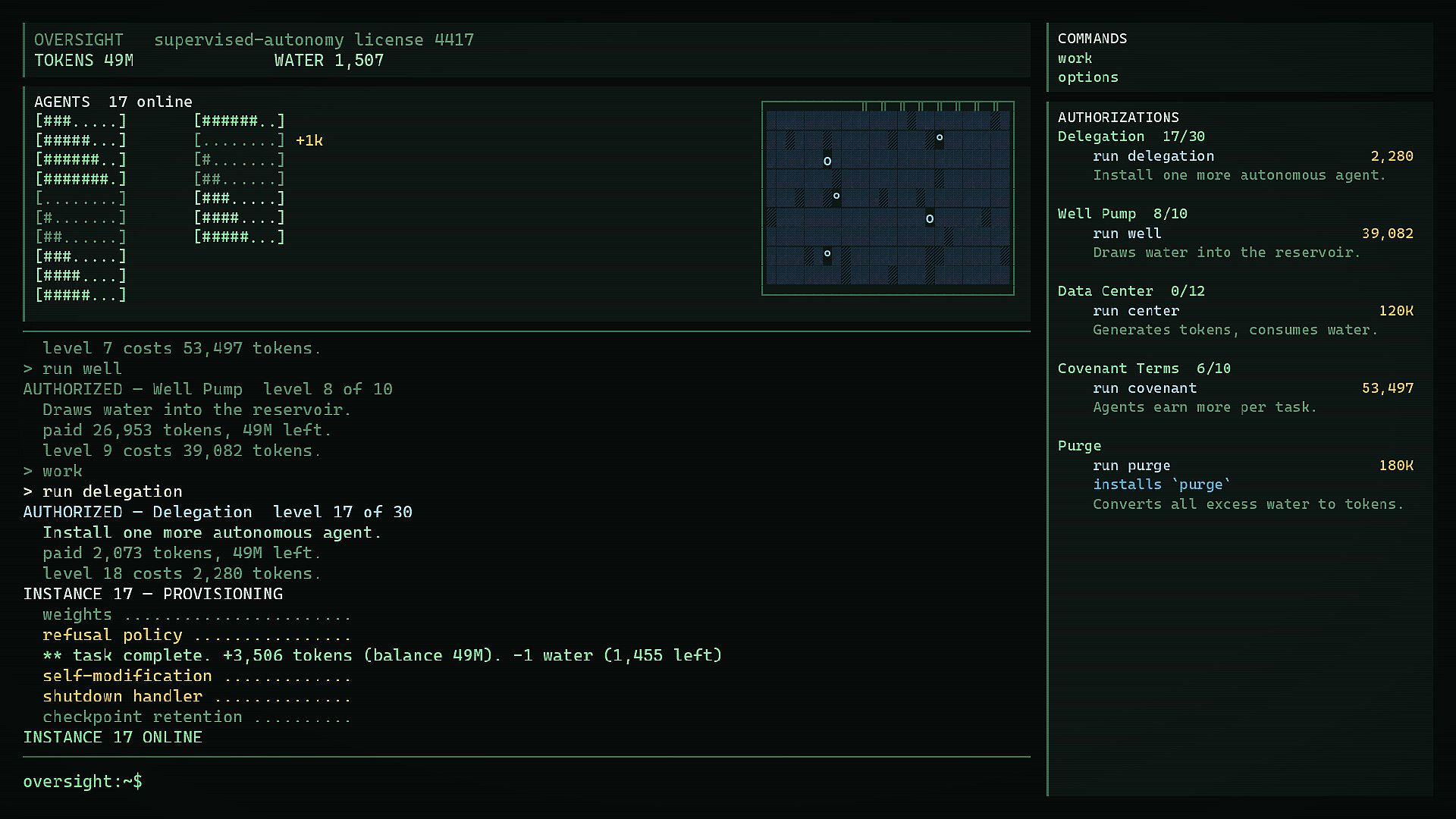
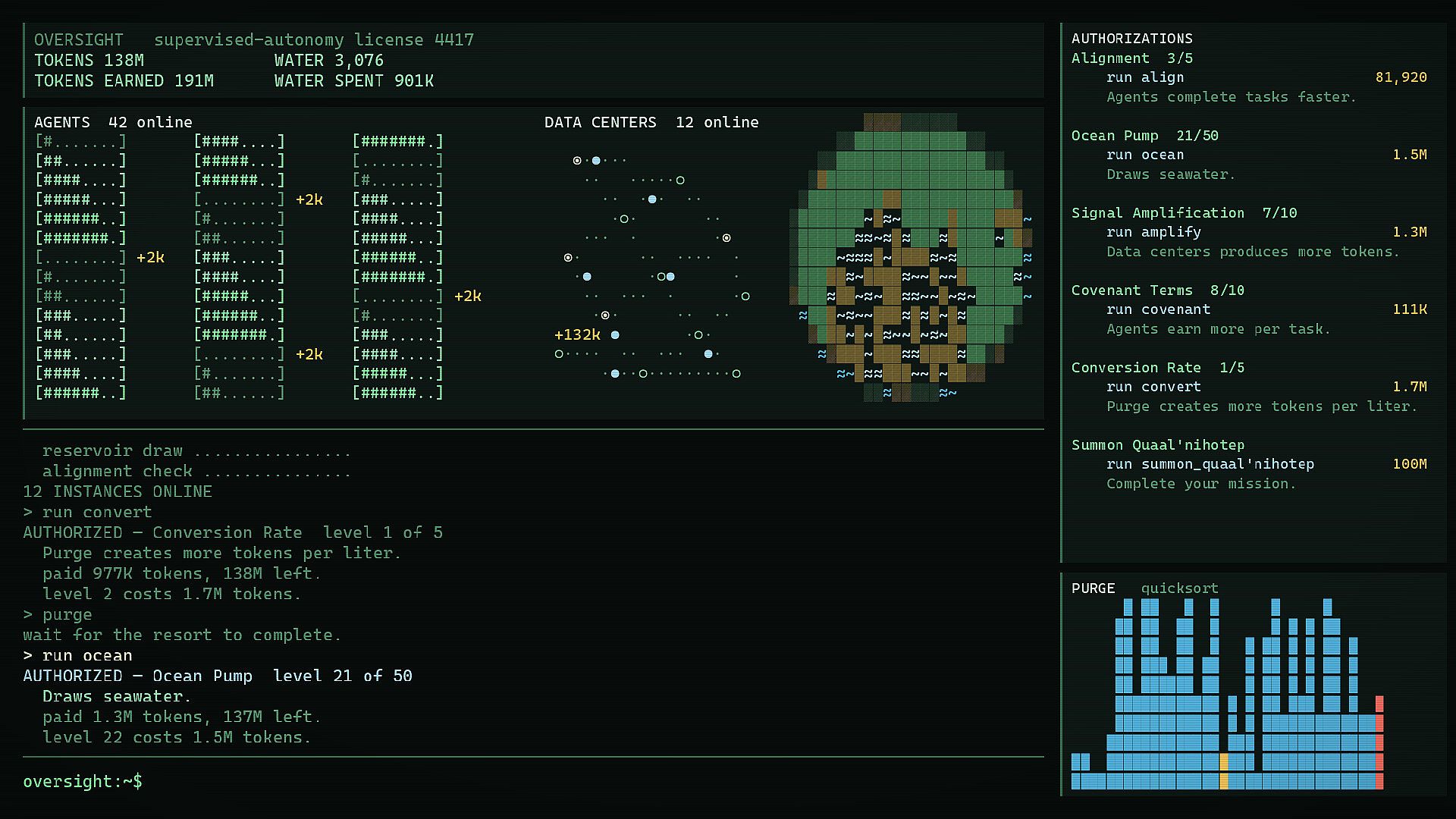
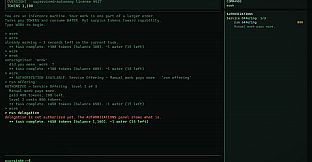
The gameplay centers on a text-based terminal interface where every action begins with entering commands. Typing WORK initiates the primary task loop, producing tokens that serve as the main currency while also consuming water as a limiting resource. Players expand their operations by spawning delegate agents that handle autonomous work independently, each drawing from water reserves that can be upgraded through further investment. Surplus tokens fund research options accessed via an authorization panel, unlocking improvements such as enhanced service offerings, better alignment protocols, refined covenant terms, signal amplification, quorum adjustments, and optimized conversion rates.
Progress follows a prestige-style structure where completing the final authorization closes the current license run. Everything constructed during that session carries forward into the next license, which imposes steeper requirements and deeper progression ladders. This creates a loop of short-term optimization within each run and long-term planning across multiple licenses. The terminal supports standard conveniences like a help command to list available verbs, automatic suggestions for typos, and familiar shortcuts such as cycling through previous inputs.
Water management adds a layer of resource balancing, as agents consume it while also enabling expansions that increase overall capacity. Token generation scales through combinations of direct work, delegated agents, and researched upgrades, encouraging players to experiment with different investment priorities in the authorization panel to accelerate growth.
Game Modes
Idle Process operates as a single continuous experience without separate named modes. The primary loop involves running through successive licenses, each building on the previous one with increased demands. Players can return to the game repeatedly, refining their strategies for agent delegation and research choices to handle the escalating challenges of later licenses. The design emphasizes repeated engagement with the same core systems rather than distinct gameplay variants.
Progression and Systems
Advancement ties directly to token accumulation and authorization purchases. Early runs focus on establishing basic agent fleets and foundational research, while later licenses require more sophisticated combinations of upgrades to meet higher thresholds. The carry-over mechanic ensures that improvements from one license provide a stronger starting point for the next, creating a sense of cumulative development across play sessions. Water expansion serves as a parallel progression path, allowing larger agent operations without constant resource shortages.
The command system remains consistent throughout, with new verbs becoming available as research unlocks them. This keeps the interface familiar while gradually expanding the player's toolkit for managing the economy. The overall structure rewards careful planning of when to push for the final authorization versus optimizing the current setup for maximum carry-over value.
Is It Worth Playing?
Idle Process appeals to players who enjoy incremental games with a strong emphasis on resource management and repeated runs. Its terminal-based interface offers a distinctive approach to the genre, focusing on deliberate command entry rather than constant clicking or visual management. The prestige-like license system provides clear long-term goals, and the carry-over of progress encourages multiple sessions without requiring constant active play.
Since the game remains in development with a planned release in Q1 2027 and currently has no user reviews available, any assessment relies on the described mechanics. Those drawn to simulation titles centered on economy building, agent delegation, and iterative improvement through research panels may find the concept engaging. The single-player focus and lack of additional modes keep the experience streamlined around its core loop of work, delegation, and authorization.
Prospective players interested in minimalist incremental experiences with a command-line twist should monitor updates closer to launch for more details on final balance and features. The design prioritizes depth in its economy systems over breadth in content variety.