

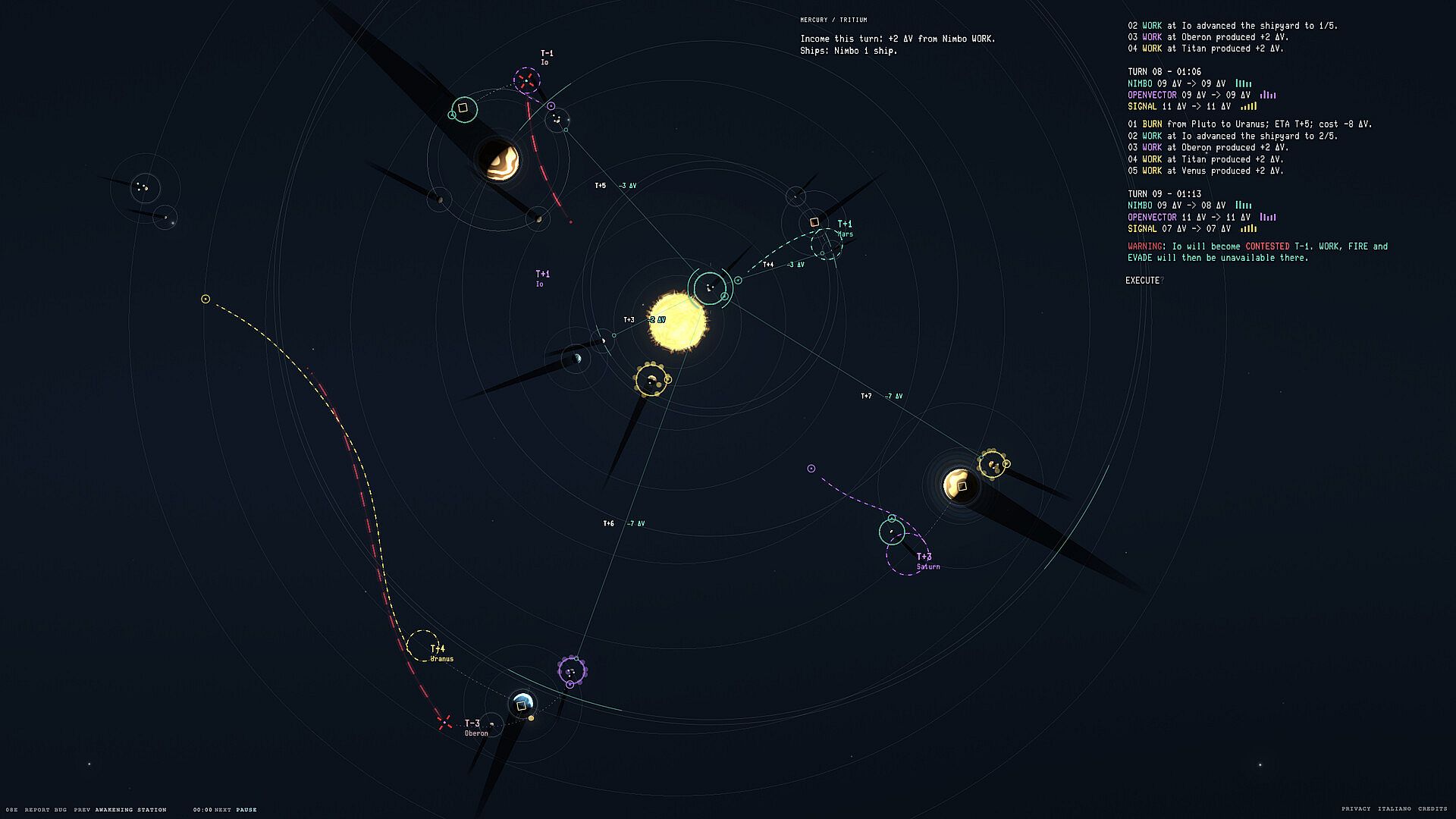
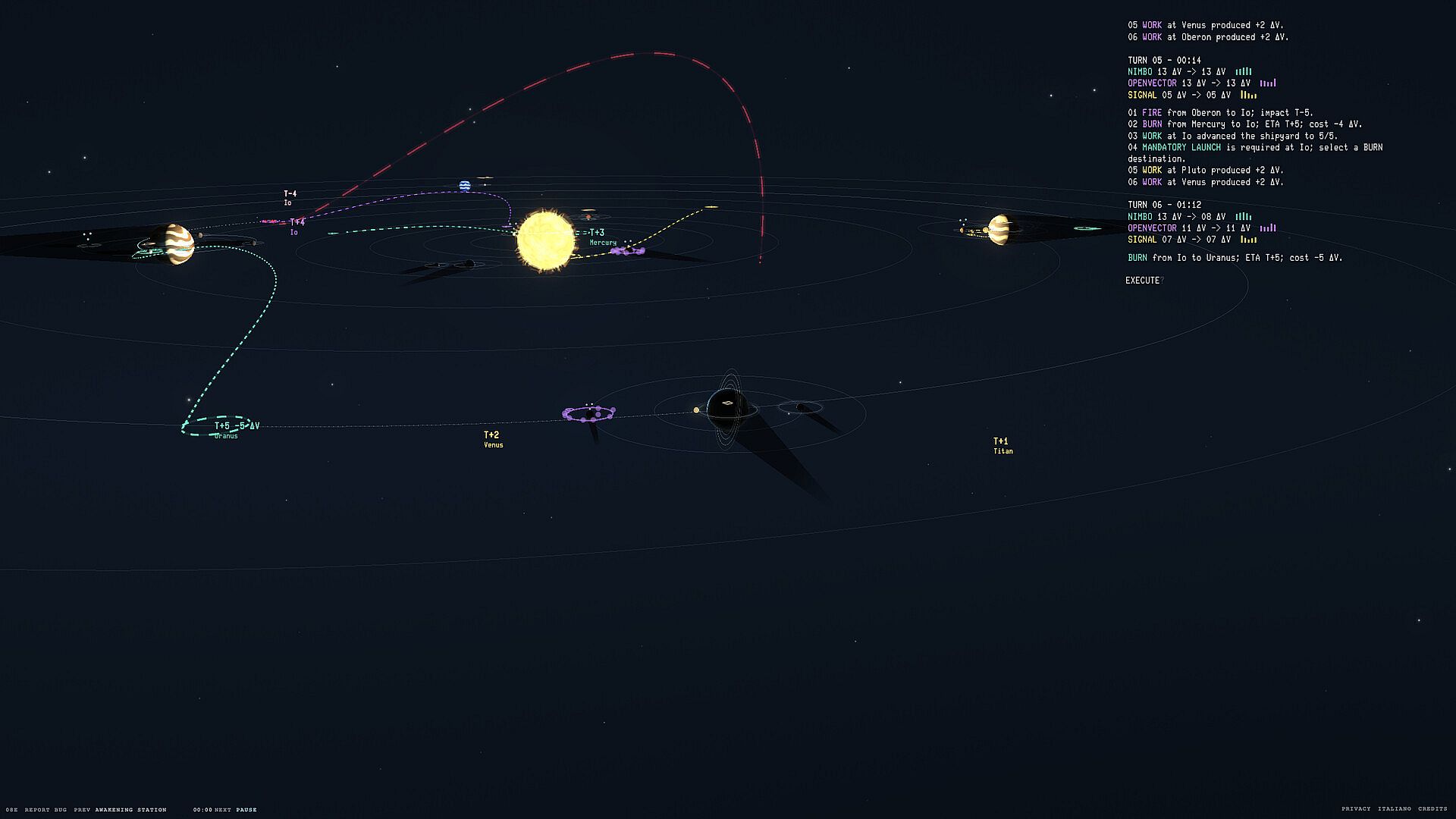
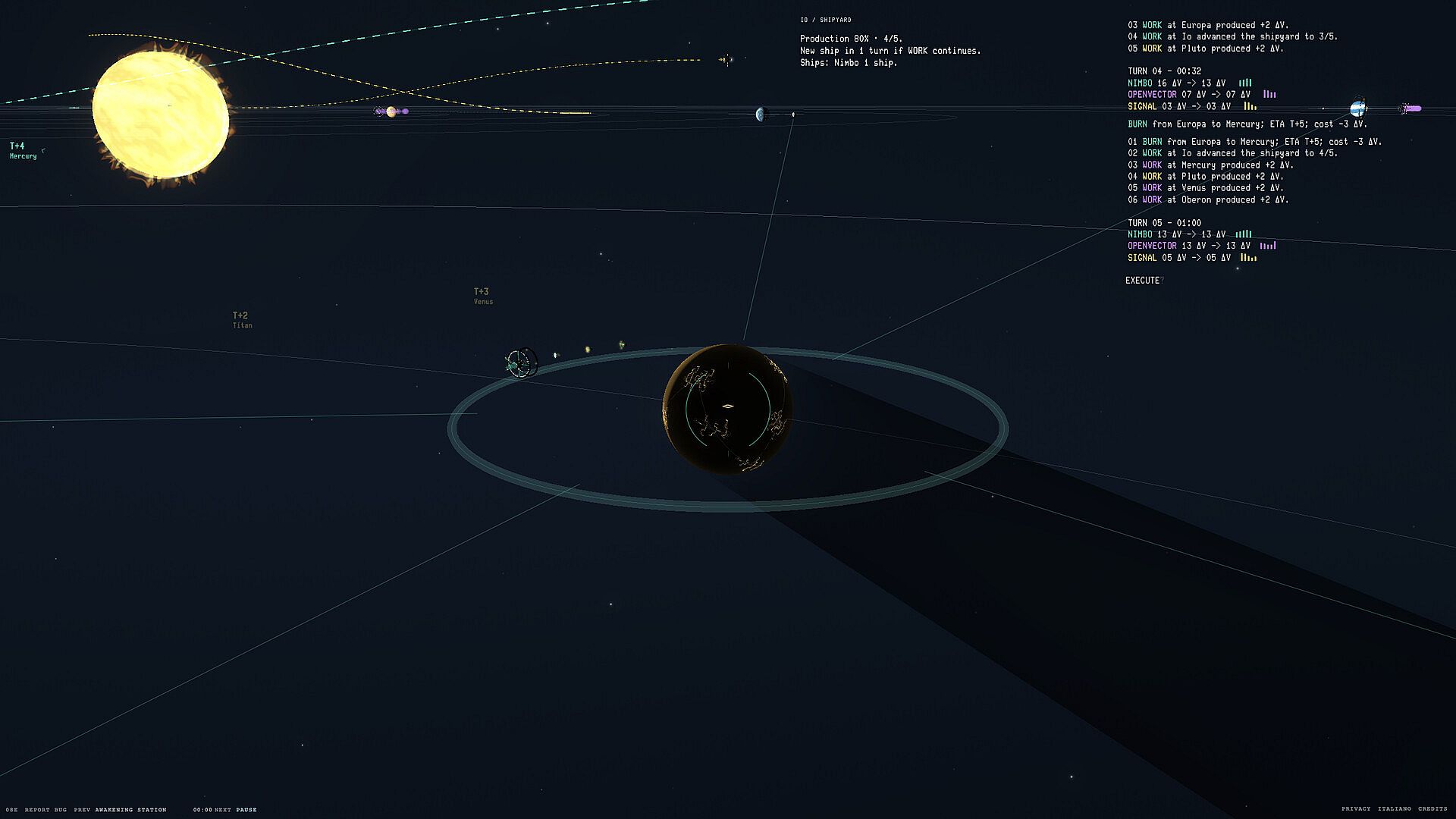
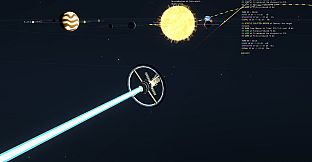
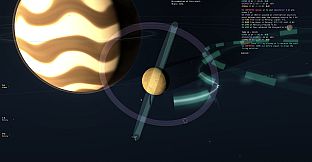
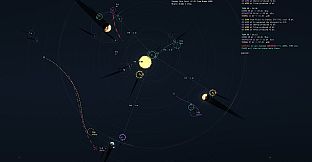
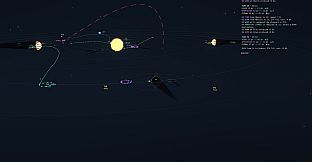
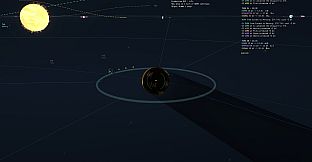
DeltaV Orbital Strategy is a turn-based strategy game set in the Solar System of 2079. Players command fleets across moving planets and moons in a deterministic environment where every action consumes a shared pool of delta-v, the sole resource governing movement, defense, and orbital stability. The game emphasizes complete information and precise planning rather than chance, with victory hinging on sustained access to tritium production while denying the same to opponents.
Gameplay
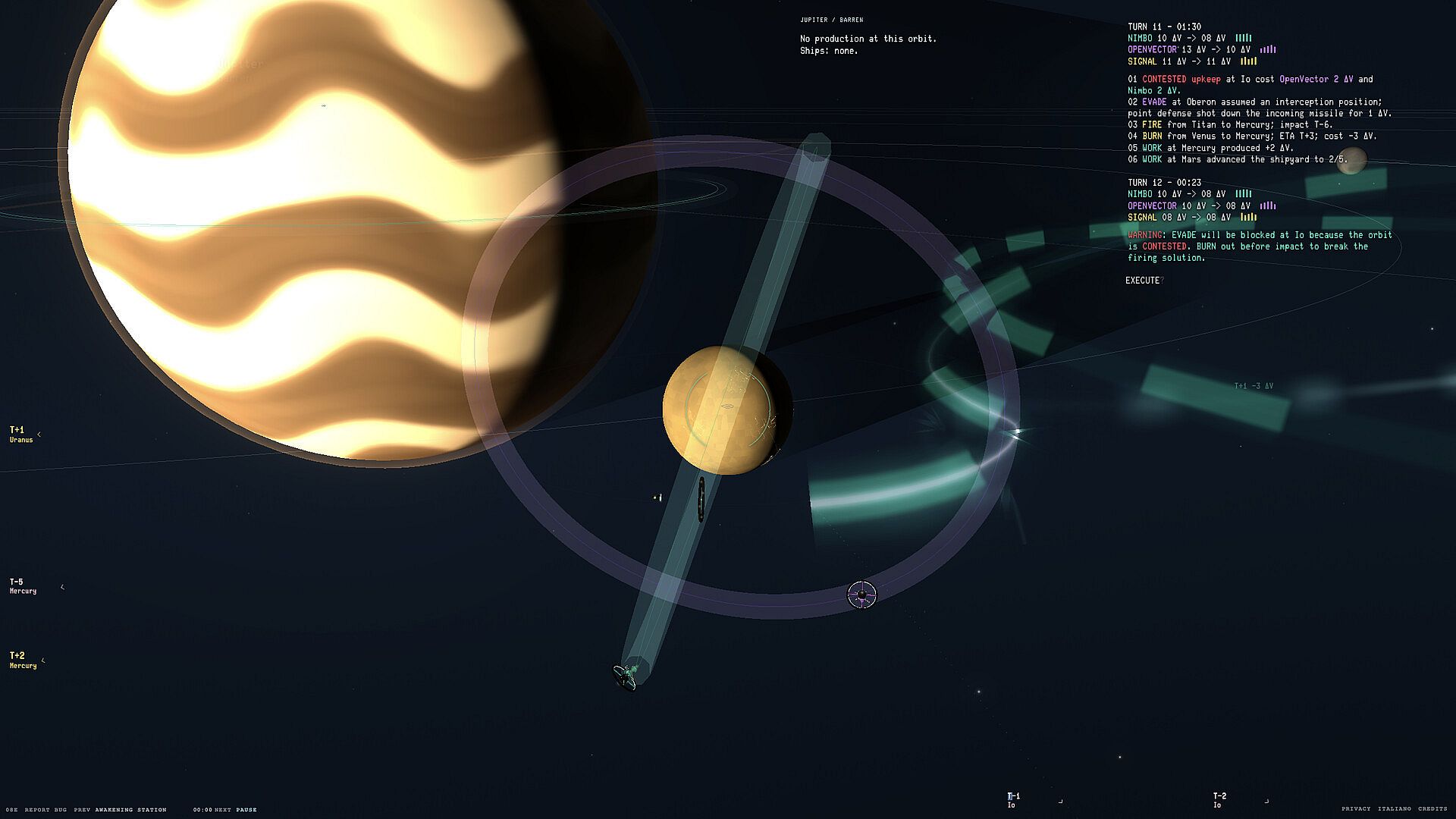
The core loop revolves around managing a single fleet-wide delta-v reserve. Every orbital transfer, point-defense activation against missiles, and maintenance in contested positions draws from this common pool. Shifting one ship into a new orbit can leave others without enough fuel to reposition or protect themselves, forcing constant trade-offs across the entire formation.
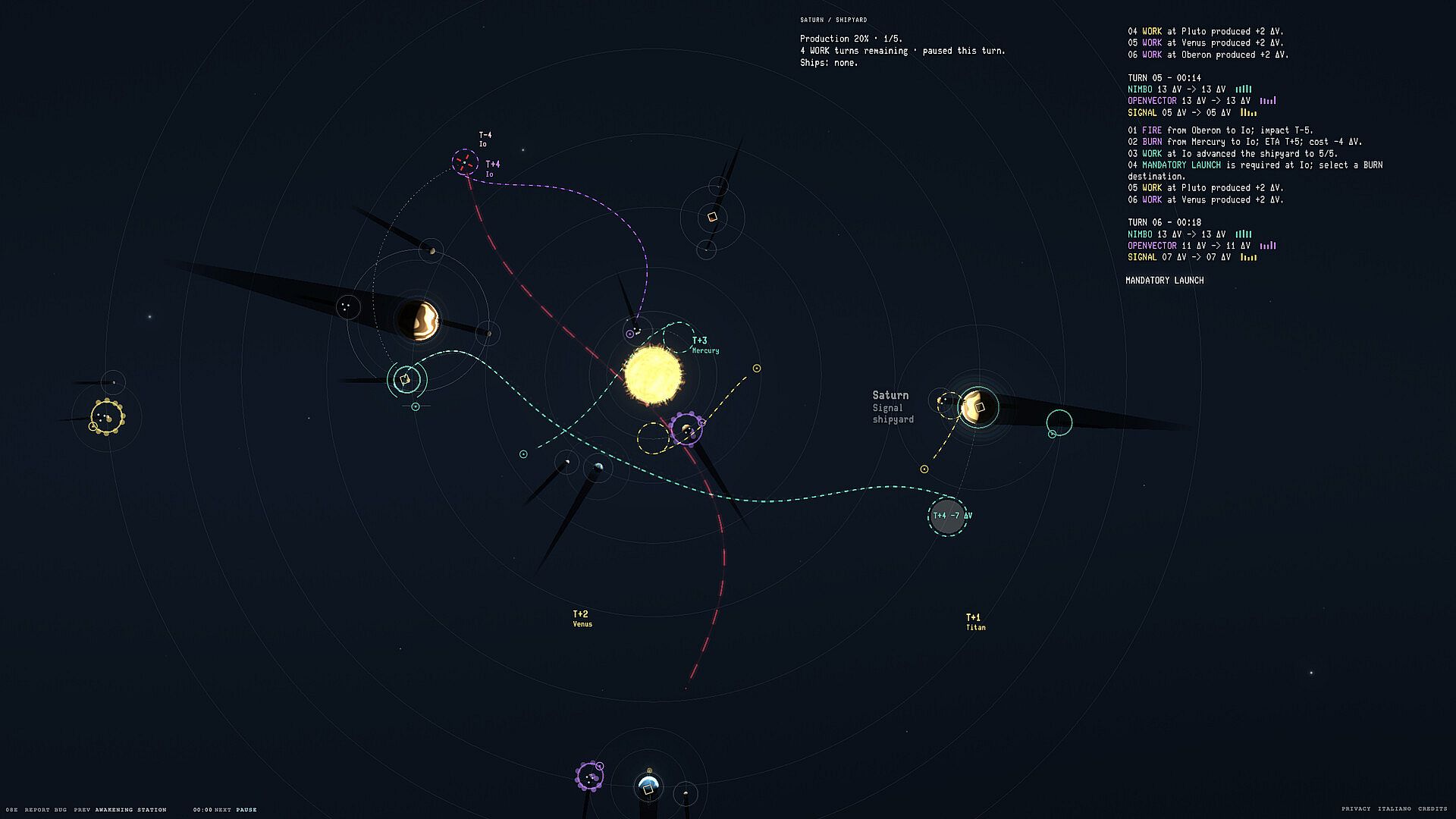
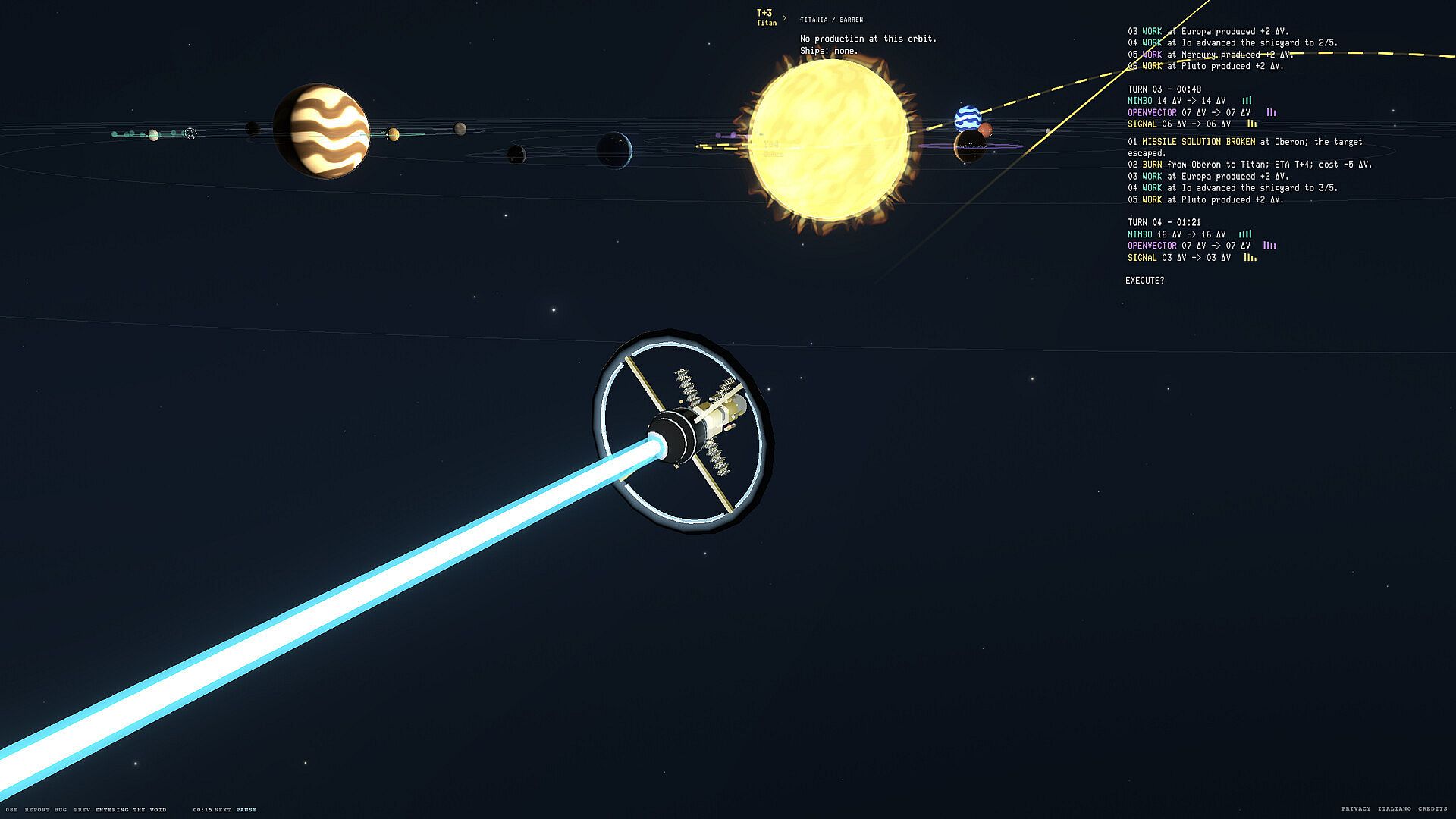
Players preview every movement order in advance, seeing the exact route, delta-v cost, and arrival turn before committing. Planets and moons follow their real orbital paths, so timing becomes critical for intercepts and holds. Missile strikes and point defense resolve without random elements or variable damage, producing predictable outcomes based on positioning and available reserves.
Tritium factories serve as the only source of replenishment. Ships operating these facilities boost the shared reserve, extending operational endurance. Control of key orbits, destruction of enemy vessels, and forcing opponents into high-cost maneuvers all serve to starve rival fleets of fuel. Procedural layouts generated from Solar System bodies ensure each match presents fresh configurations of strategic points and transfer opportunities.
Shipyards allow construction of new vessels, while contested orbits demand ongoing delta-v expenditure to maintain presence. Mandatory launches add further constraints, requiring fleets to commit resources at specific intervals or risk losing ground.
Game Modes
Early Access supports complete single-player matches against one or two AI-controlled factions. These encounters use the full set of mechanics, including procedural planetary layouts, shared delta-v management, and deterministic combat resolution. Matches run from initial setup through to victory conditions centered on tritium access.
Online player-versus-player matches remain planned for later in development and are not available at launch. The current focus stays on refining single-player experiences against artificial opponents, with emphasis on match pacing, AI behavior, and procedural balance.
Strategic Planning and Information
Complete visibility defines the experience. Every ship position, pending order, route detail, cost, and arrival timing appears for all sides. This transparency shifts emphasis toward long-term fleet coordination and denial tactics rather than hidden-unit surprises.
Orbital mechanics drive the geometry of play. Continuous movement of celestial bodies alters transfer windows and line-of-sight opportunities between turns. Successful commanders anticipate these shifts when allocating the shared delta-v budget across multiple simultaneous operations.
Point defense and missile exchanges follow fixed rules. A ship with sufficient reserve can reliably intercept incoming threats, while insufficient allocation leaves vessels exposed. The absence of hit rolls or damage variance rewards exact positioning and reserve conservation.
Is It Worth Playing?
DeltaV Orbital Strategy targets players who enjoy deterministic strategy games built around resource scarcity and positional foresight. Its shared delta-v system creates constant tension between offensive maneuvers and defensive upkeep, while tritium factories anchor long-term objectives around production control.
The single-player offering against one or two AI factions provides a complete experience from setup to conclusion, supported by procedural variety across Solar System bodies. Those drawn to hard-science orbital themes and turn-based planning without random combat elements will find the mechanics align closely with those interests.
Early Access status means the game continues to evolve, with planned improvements to onboarding, AI, and eventual addition of player-versus-player options. Prospective players should assess whether the current single-player focus and emphasis on precise fuel management match their preferred style before committing.