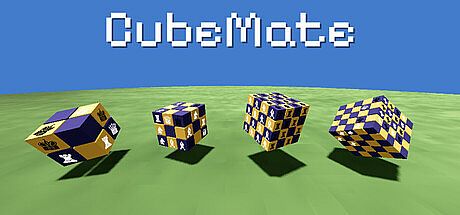


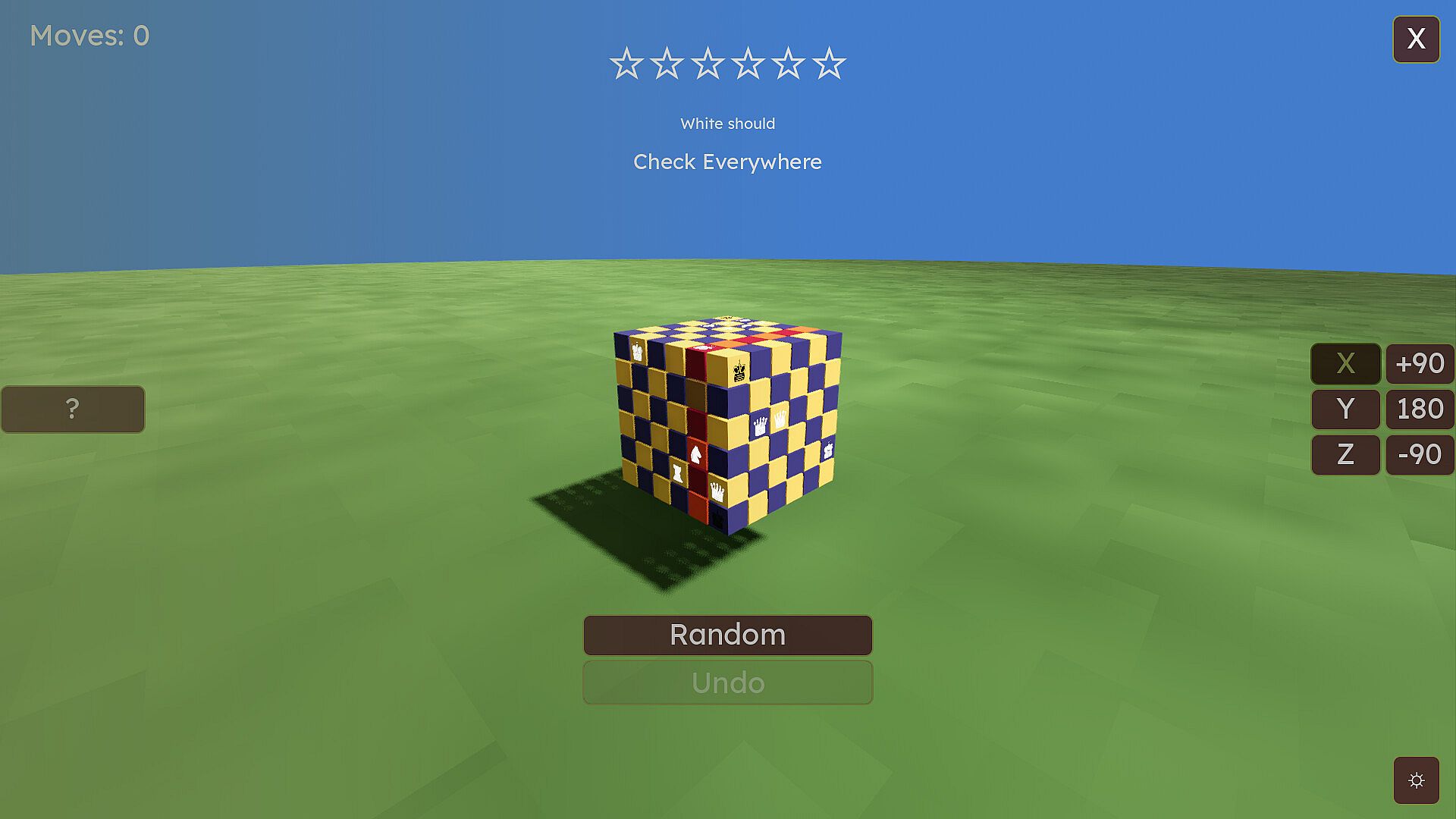
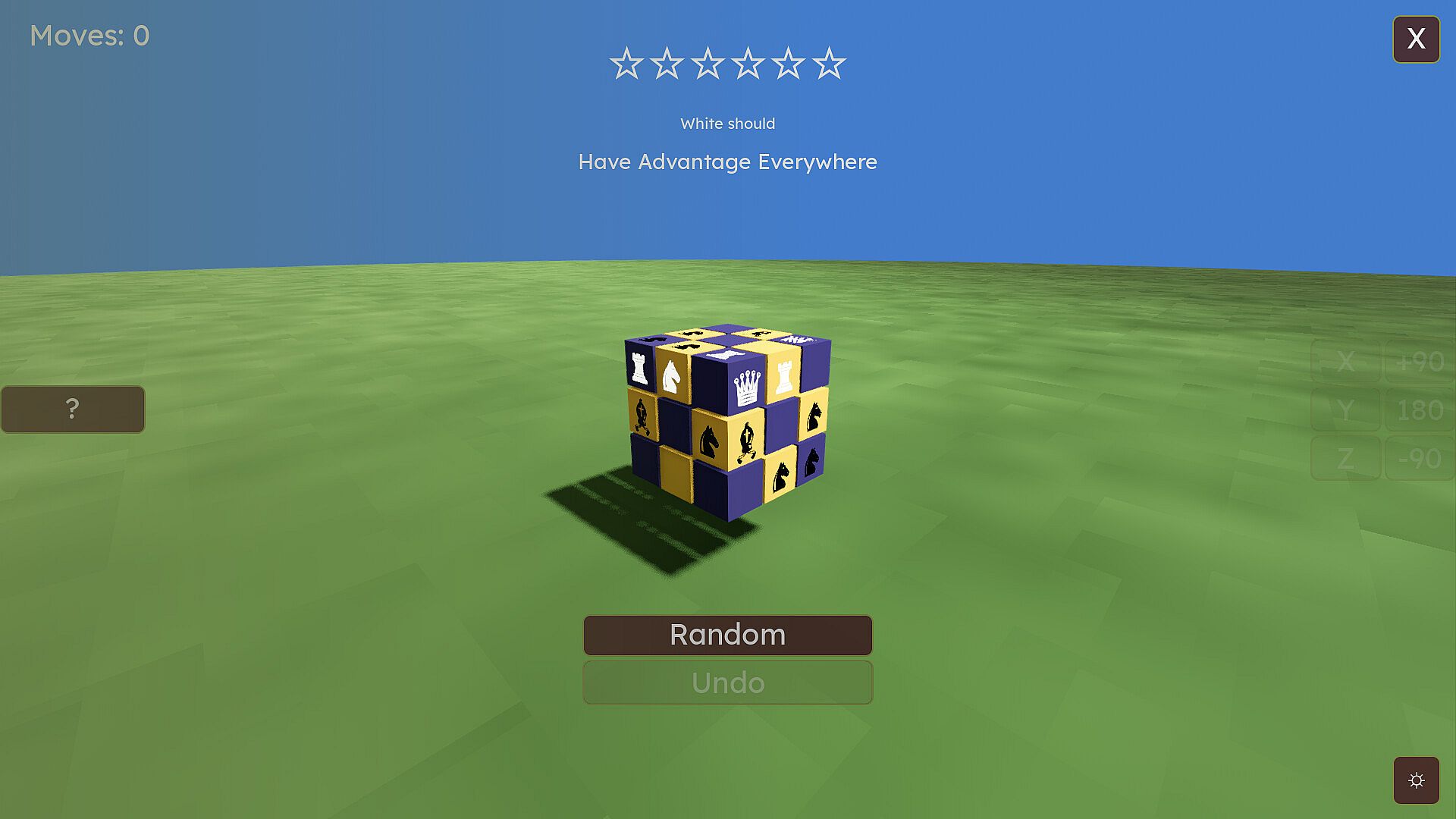
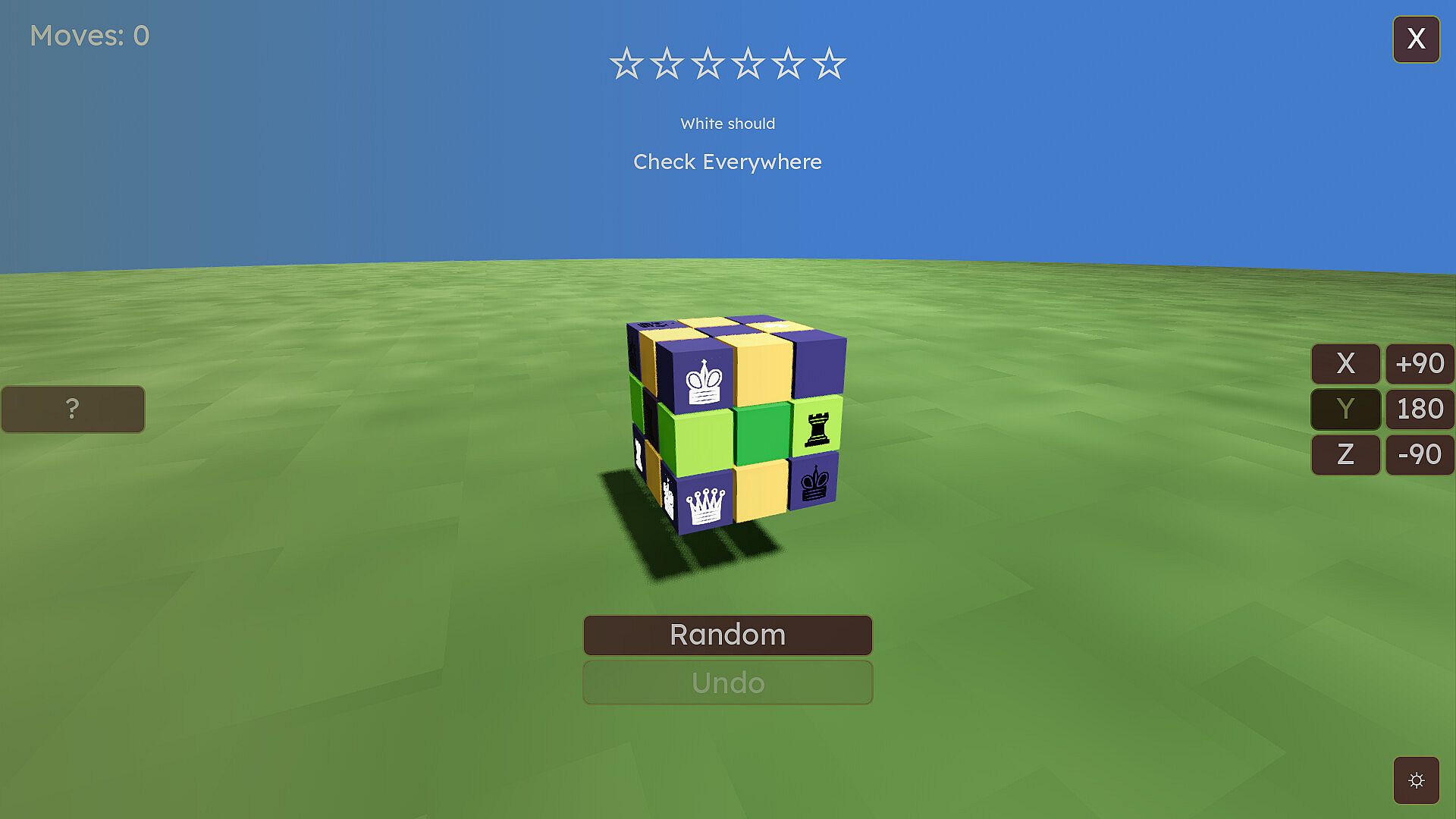
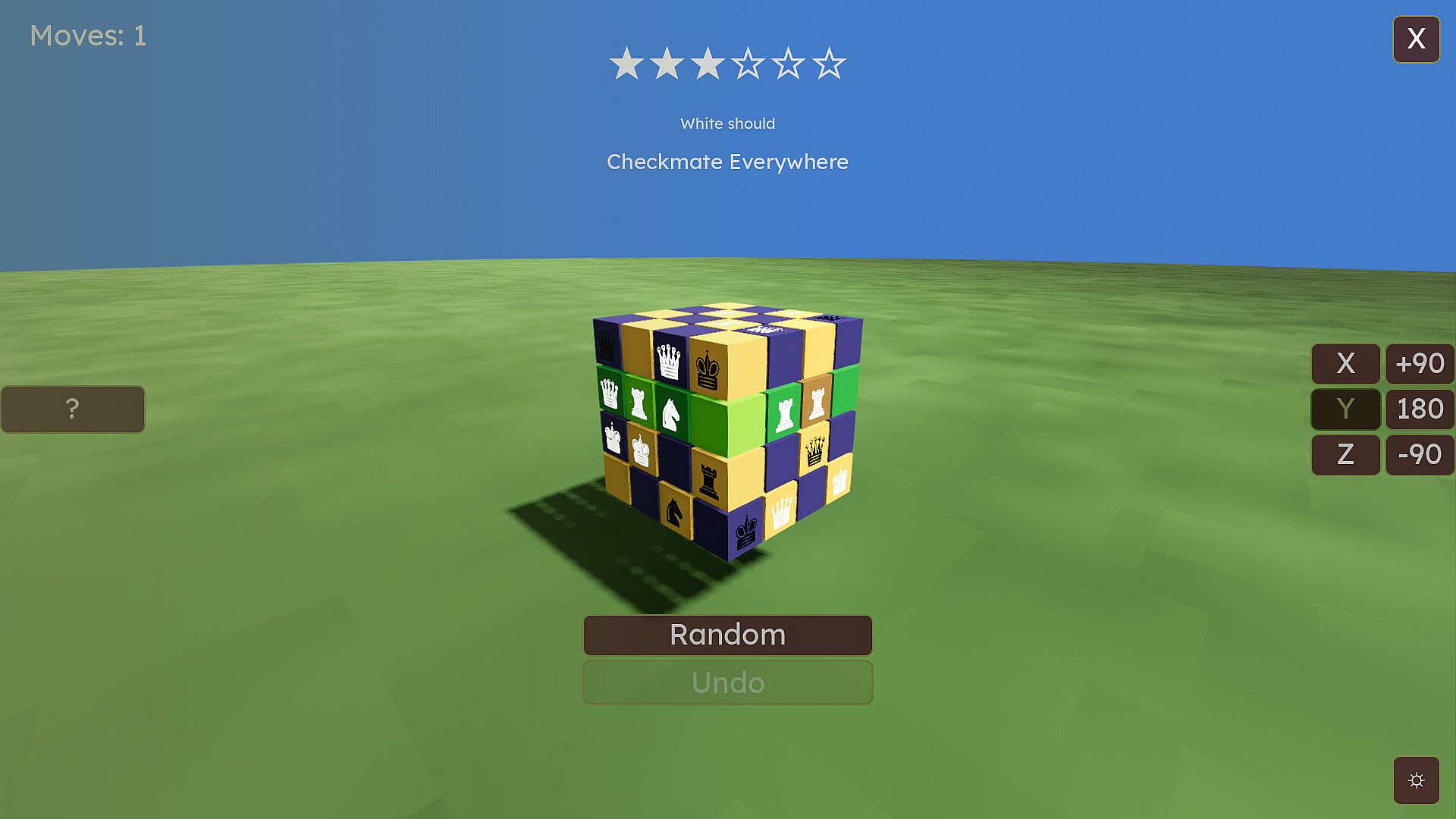
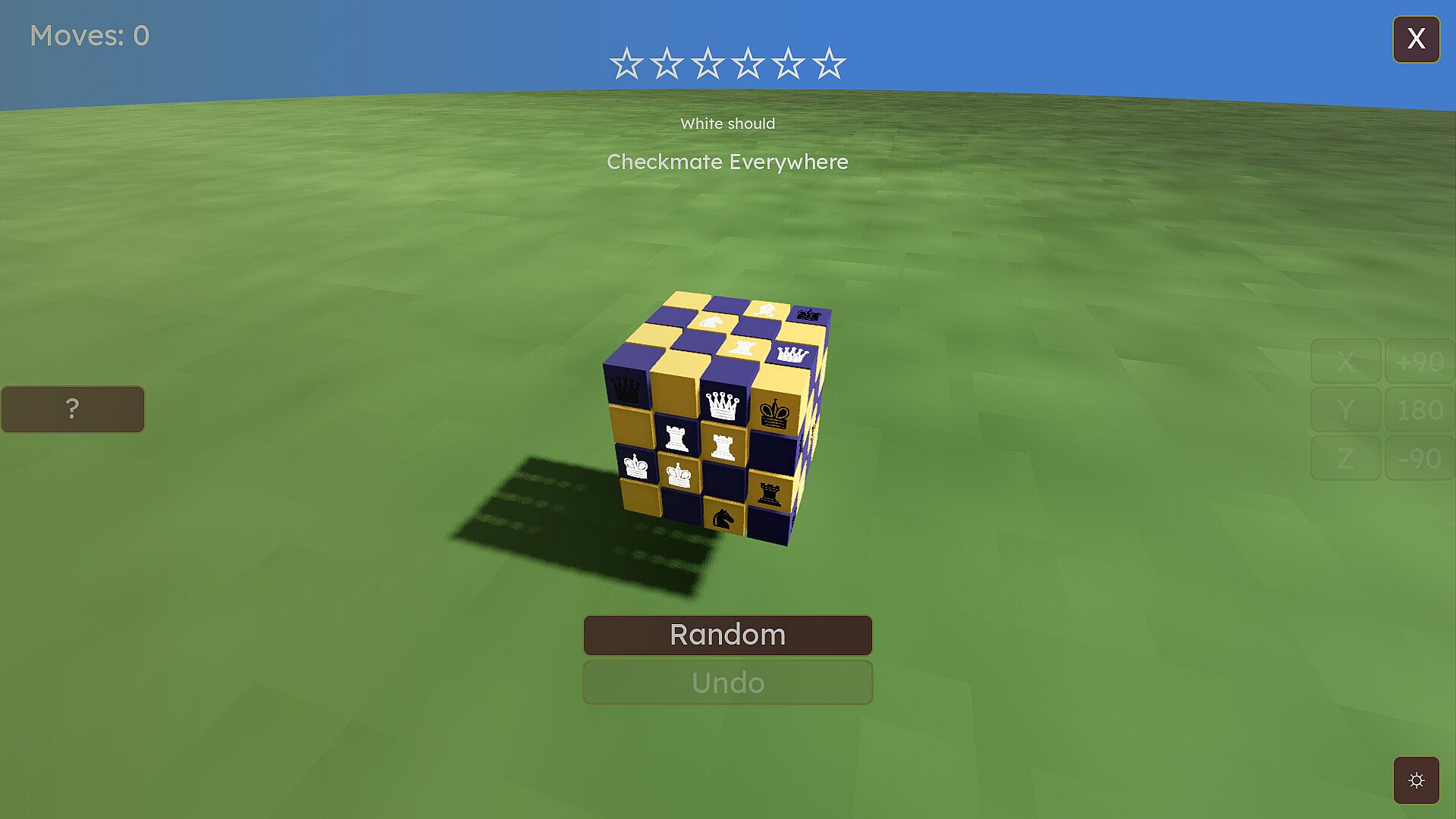
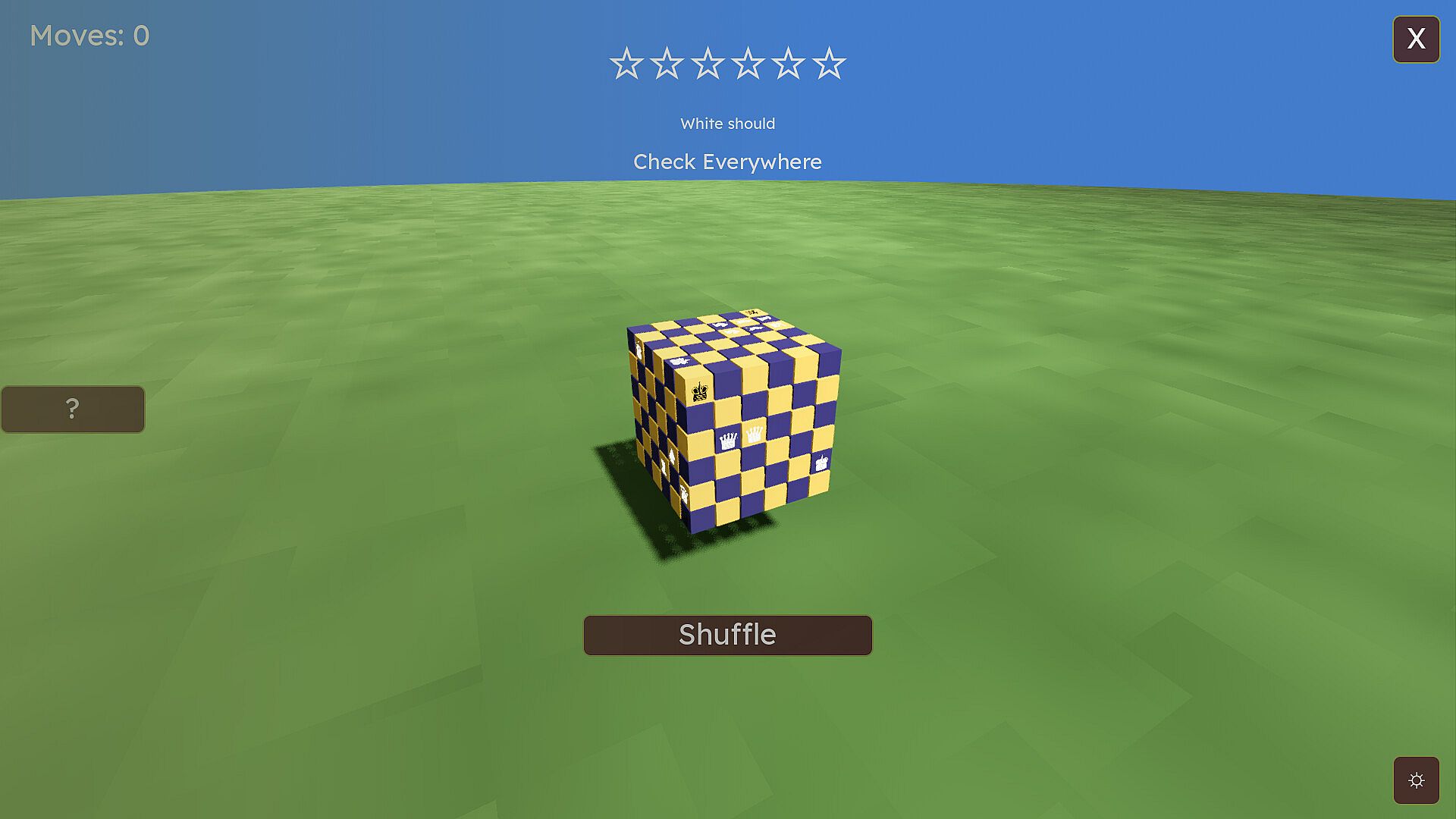
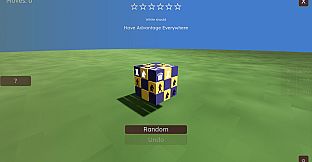
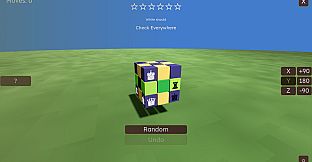
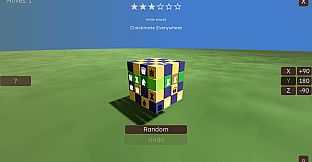
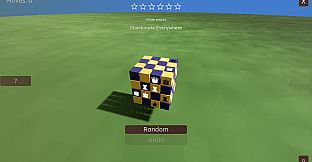
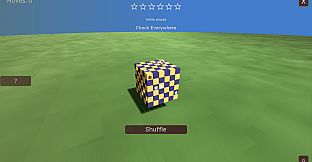
CubeMate is a single-player strategy and casual puzzle game for PC that blends chess mechanics with three-dimensional spatial reasoning on a rotating cube. Players position and move standard chess pieces across the faces of a cube that can be rotated freely, turning familiar chess problems into challenges that require viewing the board from multiple angles to uncover solutions hidden by perspective.
Gameplay
The core loop centers on rotating the cube to inspect positions from different viewpoints before selecting and executing a chess-legal move. Standard chess rules govern piece movement and capture, yet the three-dimensional layout means lines of sight and attacks change with each rotation. A position that appears blocked or unsafe from one side may reveal a check or mate when viewed from another angle.
Levels introduce new mechanics gradually across the hand-crafted campaign. Each puzzle builds on the previous ones by adding constraints or variations that force players to reconsider how rotation affects piece interactions. The minimal visual style keeps focus on the board geometry and piece placement without unnecessary distractions.
Controls support keyboard and mouse input for precise rotation and selection. The game runs on Windows and was built in Godot 4, delivering clean performance even on modest hardware. Controller support is listed as coming soon in development notes.
Game Modes
The primary experience comes through the campaign, which consists of ten hand-crafted levels. Each level presents a unique puzzle designed to teach or test a specific aspect of three-dimensional chess thinking.
Free play mode allows players to set up any chess position on cubes of varying sizes and experiment without constraints. This sandbox-style option supports open-ended exploration of ideas that may later appear in campaign puzzles.
Additional systems such as a weekly challenge mode remain in planning and are not yet available in the current build.
Who the Game Appeals To
CubeMate targets players who enjoy chess puzzles but do not need advanced opening knowledge or competitive ranking. The emphasis on spatial perspective and "aha" moments makes it accessible to anyone with basic familiarity with chess piece movement. Those who appreciate logic puzzles, Rubik's Cube-style rotation challenges, or short, focused brainteasers will find the format rewarding.
Because the game avoids timers and high-pressure elements, sessions can last as long or as short as desired. The single-player structure suits solo play without requiring coordination with others.
Current Development State
The title is scheduled to enter Early Access in Q4 2026. A free demo covering the first campaign levels is already available for download, allowing players to try the core rotation and movement systems without commitment. The developer, working solo, continues to refine features based on community input.
Performance notes indicate that larger cube sizes may show limitations on lower-end hardware, while smaller configurations run smoothly. The existing build already includes a fully functional free play mode across multiple cube dimensions.
Is It Worth Playing?
Players interested in chess puzzles combined with three-dimensional thinking will likely enjoy the demo and the planned campaign. The absence of required mastery and the presence of a no-pressure free trial lower the barrier to entry significantly. Those seeking quick, satisfying puzzle sessions rather than long campaigns or multiplayer competition will find the design aligned with their preferences.
Because the game remains in active development with no completed reviews available, prospective players should start with the demo to determine whether the rotation-based perspective shifts match their taste. The single-developer approach and focus on core mechanics suggest steady updates toward the full release.