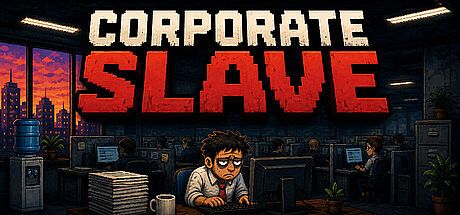


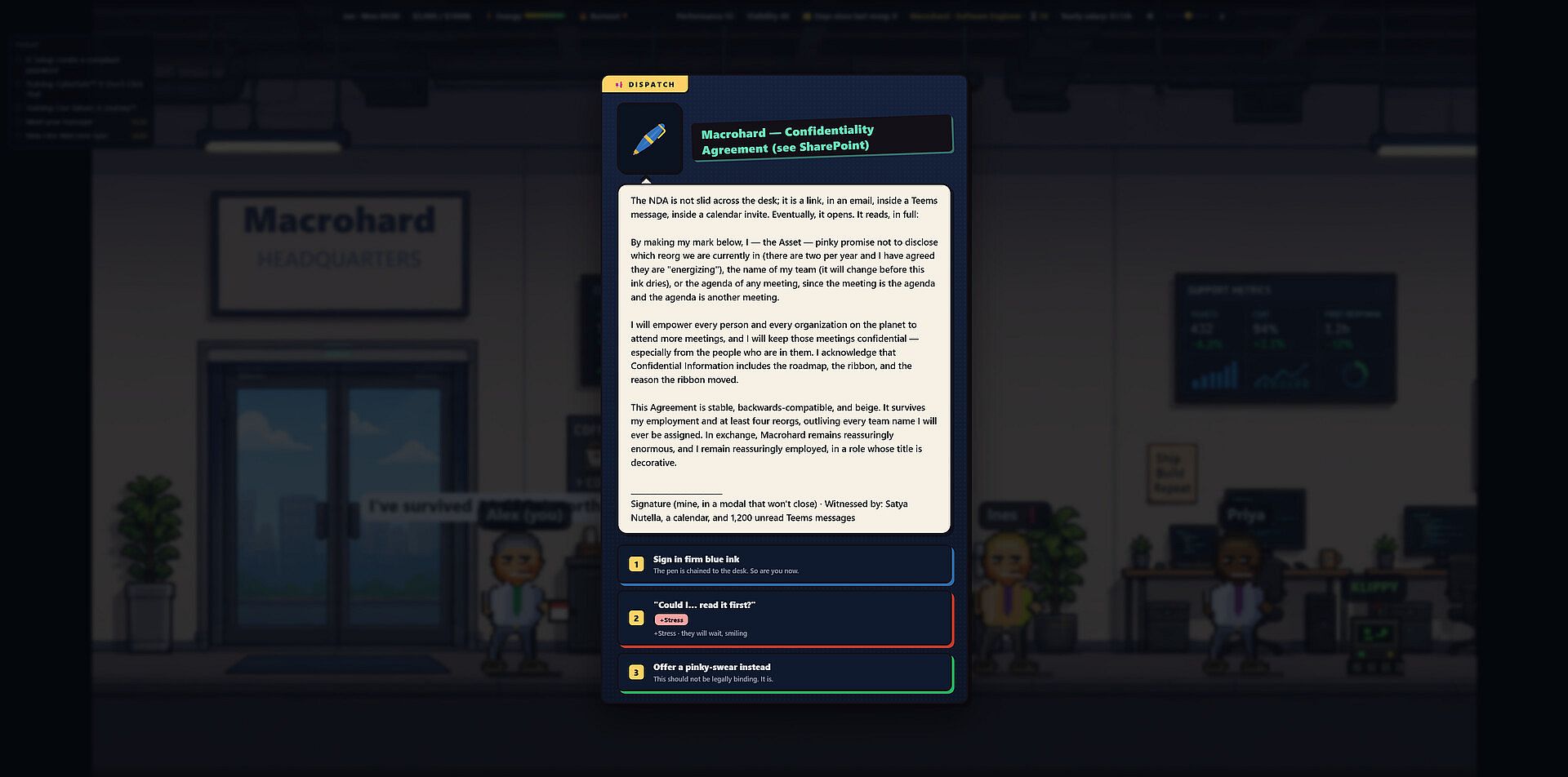
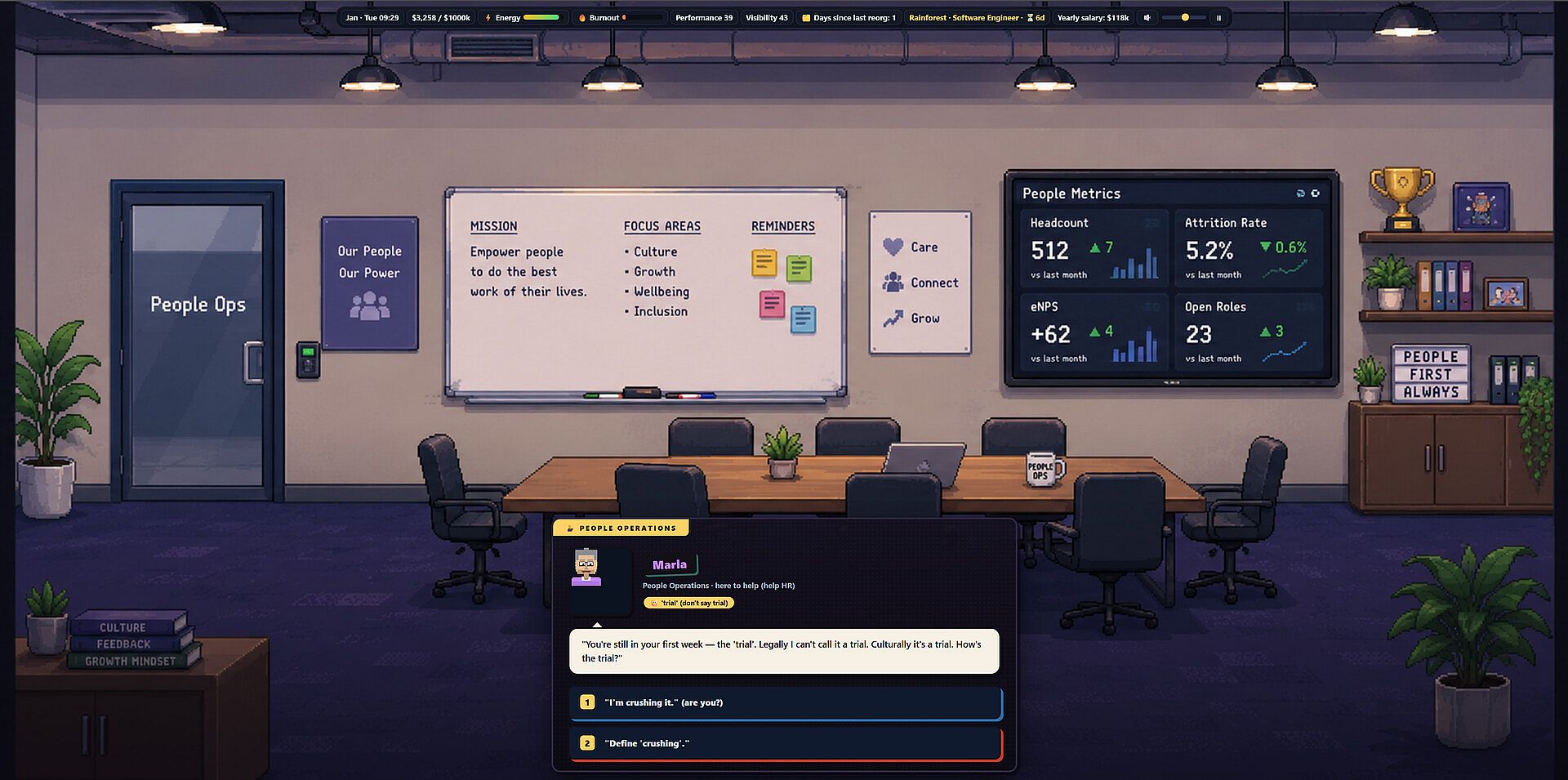
Corporate Slave è un'esperienza satirica di RPG e simulazione in single-player ambientata nel mondo frenetico di un'azienda tech moderna. Il giocatore affronta le routine quotidiane di un impiego corporate attraverso decisioni in tempo reale che si svolgono nell'arco della giornata lavorativa e delle poche ore serali, con l'obiettivo finale di raggiungere l'indipendenza economica.
Gameplay
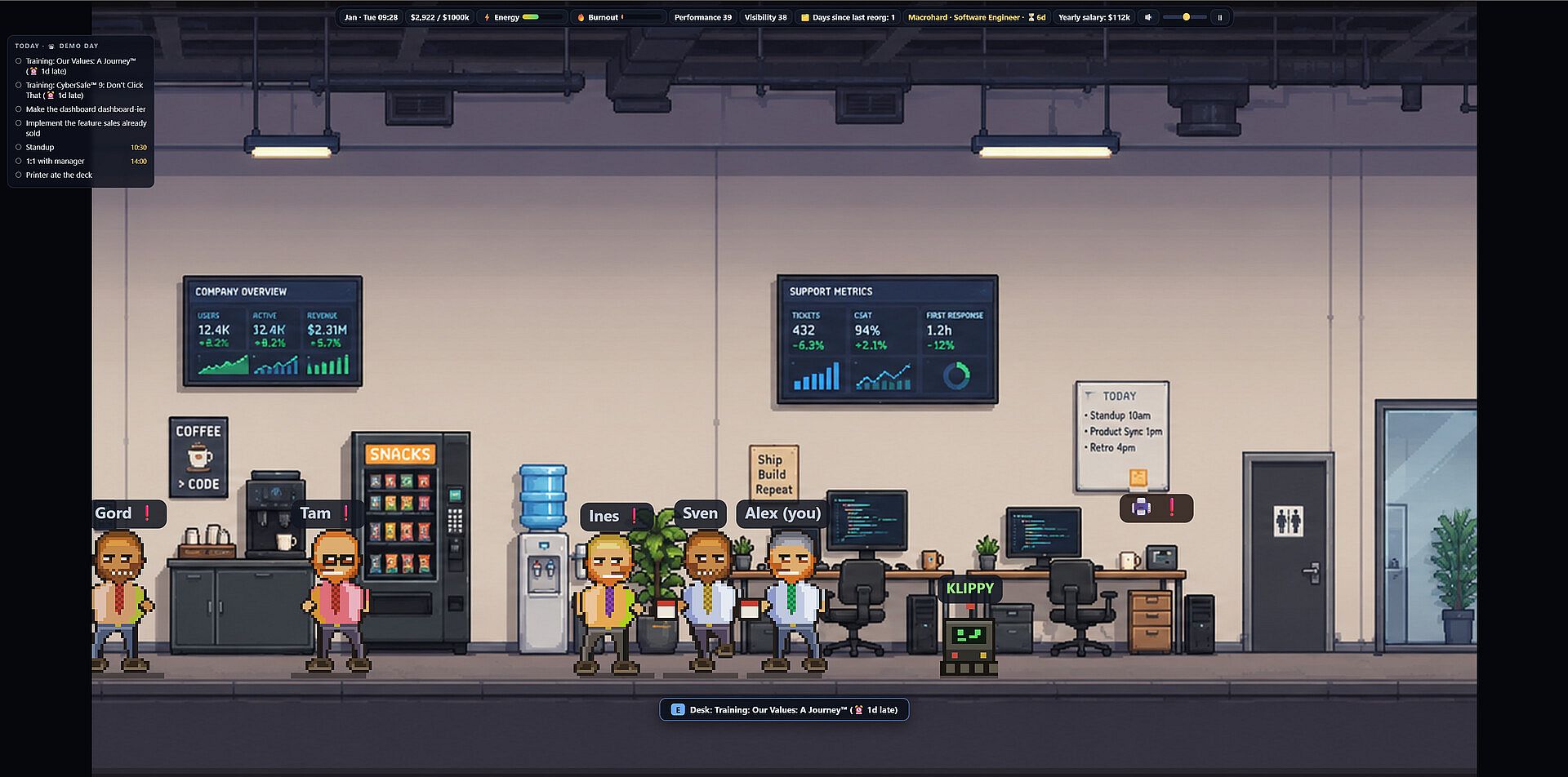
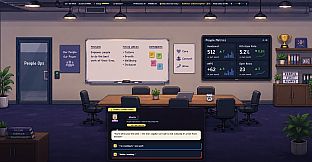
Il ciclo di gioco ruota attorno a un turno di nove ore in un open space dove il tempo scorre dalle 9:00 alle 18:00. I compiti includono la consegna di feature ticket attraverso sequenze di coding a tempo contro un timer di build, oppure la caccia ai bug prima che arrivino in produzione, dove diventano problemi noti e permanenti. Le riunioni interrompono il flusso: stand-up o sync imprevisti che richiedono prontezza, buzzword appropriate e la valutazione del costo in termini di produttività. L'ambiente offre interazioni con la stampante, gestione del caffè, conversazioni all'erogatore d'acqua che svelano informazioni utili e la possibilità di staccare la spina guardando fuori dalla finestra.
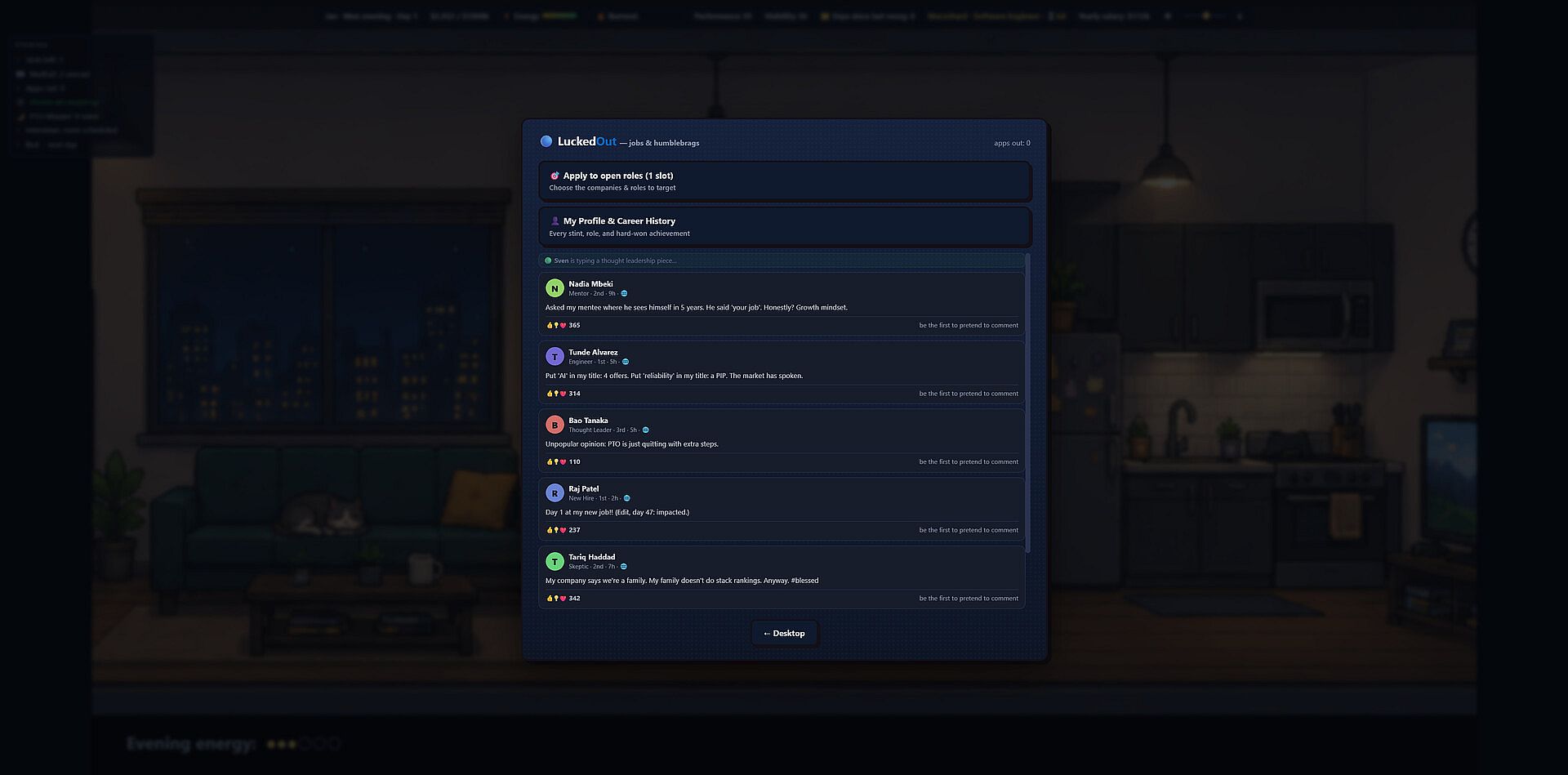
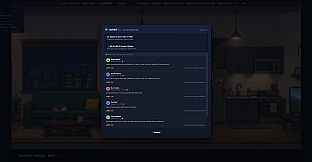
Micro-eventi come incidenti di sistema, prove antincendio, torte a sorpresa e passaggi di dirigenti aumentano la pressione e mettono alla prova i riflessi, come il rapido cambio di finestra. La ricerca di lavoro avviene durante l'orario aziendale tramite email o candidature, con il rischio di essere scoperti. Dopo le 18:00 restano solo poche fasce orarie per il riposo, attività secondarie, allenamento di skill o ulteriori candidature, gestite tramite un sistema email dedicato e una rete professionale che elabora le risposte nell'arco di giorni. I colloqui si sviluppano in più fasi: test di competenze, domande rapide che diventano via via più strane e valutazioni di cultura aziendale, talvolta in remoto o in sede.
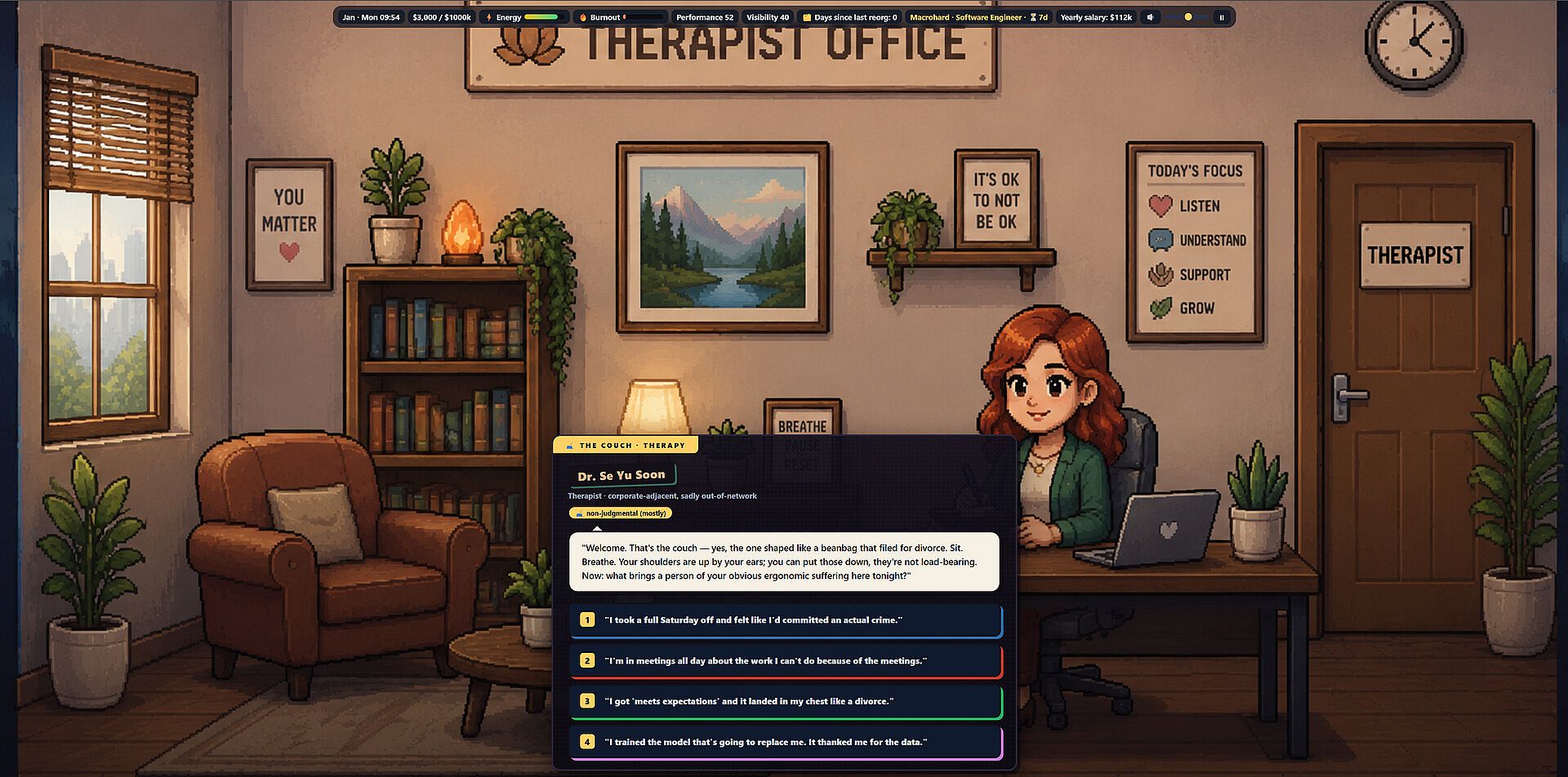
Le performance influenzano la progressione di carriera: aumenti di stipendio che portano nuove responsabilità o trasferimenti interni. Un collega IA compare e assorbe compiti in diverse aziende, integrandosi in una narrazione in cinque atti che culmina in una rivelazione e una scelta. Le statistiche monitorano energia, stress, performance, visibilità e denaro; livelli elevati di stress possono causare breakdown che, se ripetuti, concludono la partita. Sei datori di lavoro distinti offrono layout, stili di leadership, strutture salariali e livelli di stabilità differenti, ciascuno con annunci e processi interni propri come periodi di prova o piani di miglioramento delle performance.
Modalità di gioco
Il titolo è una campagna single-player continua senza modalità multiplayer o competitive. La progressione segue la struttura giornaliera di sopravvivenza in ufficio e gestione serale, puntando all'indipendenza finanziaria o a percorsi alternativi come ruoli manageriali con supervisione del team e del morale, o le dimissioni dopo il preavviso. L'esperienza si concentra sulla scelta all'interno dei vincoli di tempo, visibilità e obblighi accumulati, senza diramazioni in generi diversi.
Progressione di carriera e scelte
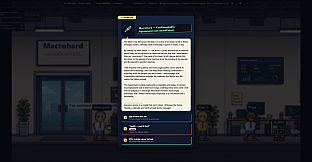
Le buone performance aprono biforcazioni: aumenti che revocano certi benefit, posizioni manageriali con gestione del team e colloqui one-to-one. I trasferimenti interni offrono un'altra via, mentre le dimissioni conducono a un colloquio di uscita. La presenza del collega IA introduce un filo narrativo che attraversa l'intera carriera e culmina in un bivio con esiti multipli. Ogni azienda mantiene fasce salariali, mission e pattern di eventi unici che influenzano stabilità a lungo termine e velocità di avanzamento.
Vale la pena giocarci?
Corporate Slave si rivolge a chi cerca simulazioni satiriche che riproducono routine e pressioni del lavoro tech. La struttura single-player premia l'allocazione attenta del tempo e la valutazione del rischio tra task, riunioni e attività serali. Come titolo in Early Access, continua a sviluppare i sistemi di tracciamento delle performance, varietà dei datori di lavoro e elementi narrativi. Chi apprezza meccaniche d'ufficio dettagliate e la tensione tra richieste immediate e fuga a lungo termine troverà il ciclo di gioco coinvolgente; chi cerca azione più veloce o multiplayer potrebbe preferire altre esperienze. Il focus resta sui vincoli realistici: ore serali limitate e statistiche persistenti che influenzano gli esiti quotidiani.