




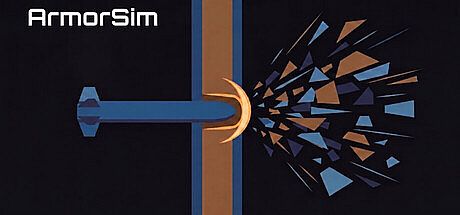


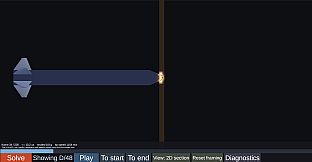
ArmorSim is a simulation game centered on terminal ballistics for PC in Early Access. It lets users construct armor configurations and projectiles drawn from historical arsenals, then observe the physical results of impacts through accurate modeling rather than scripted effects.
Gameplay
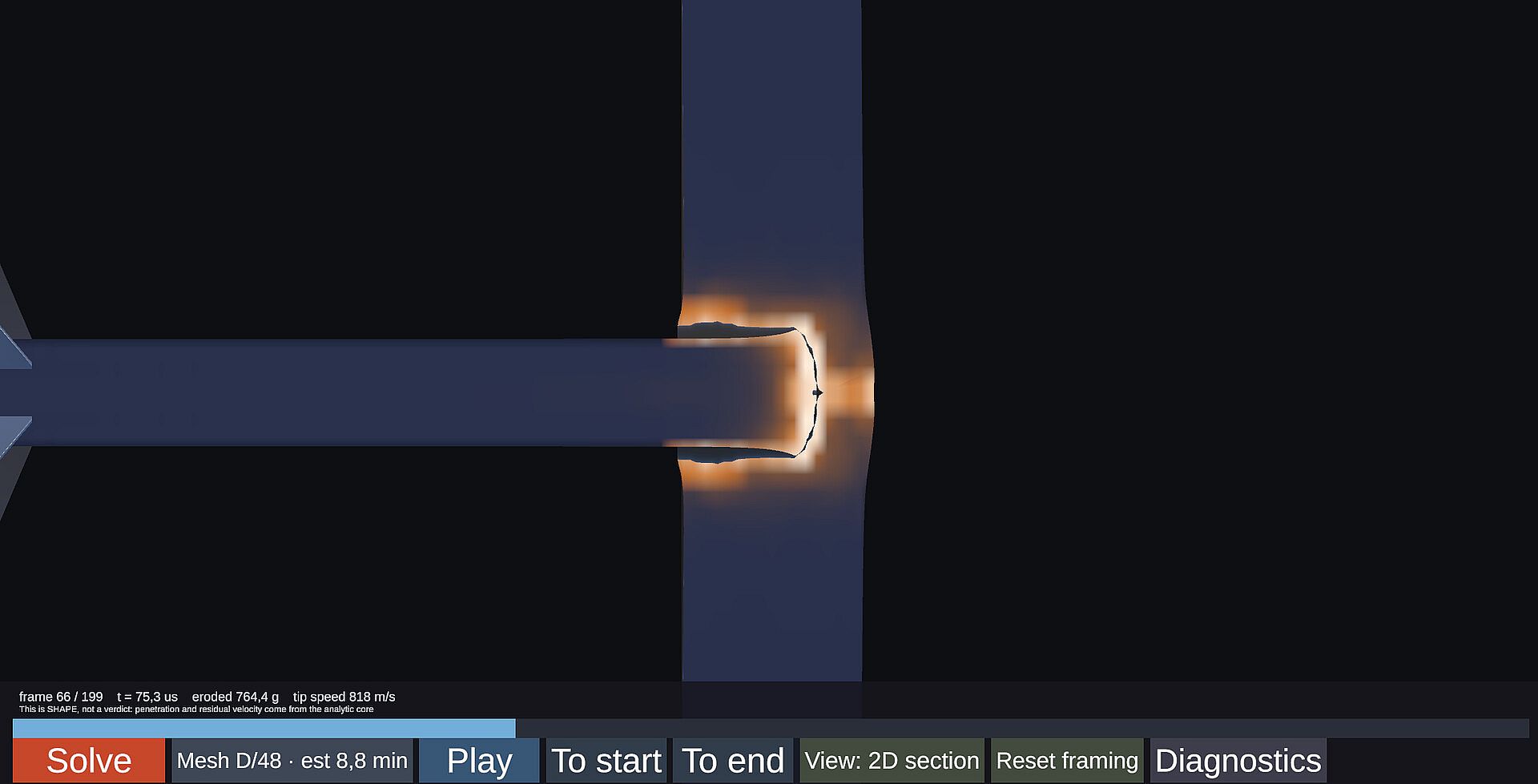
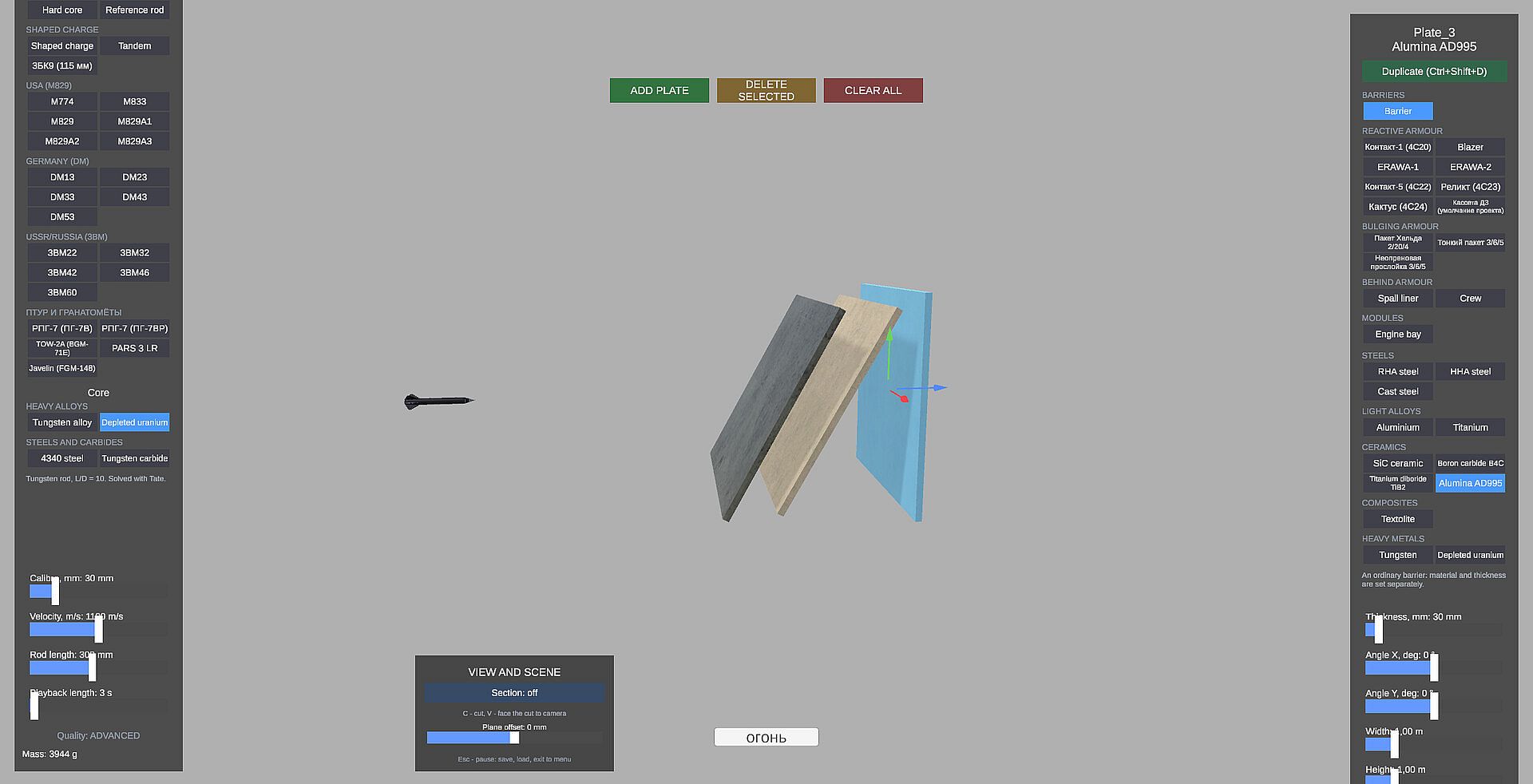
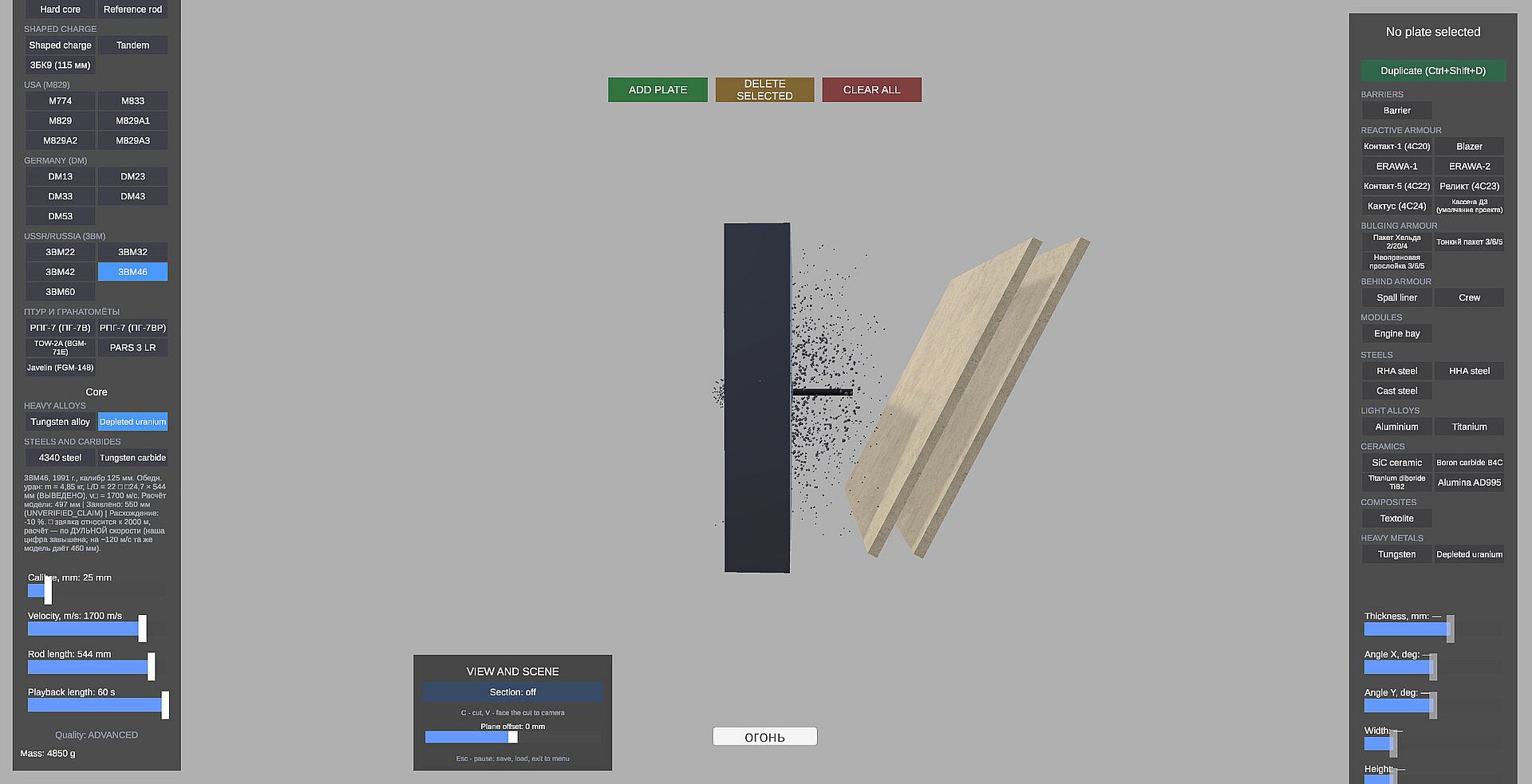
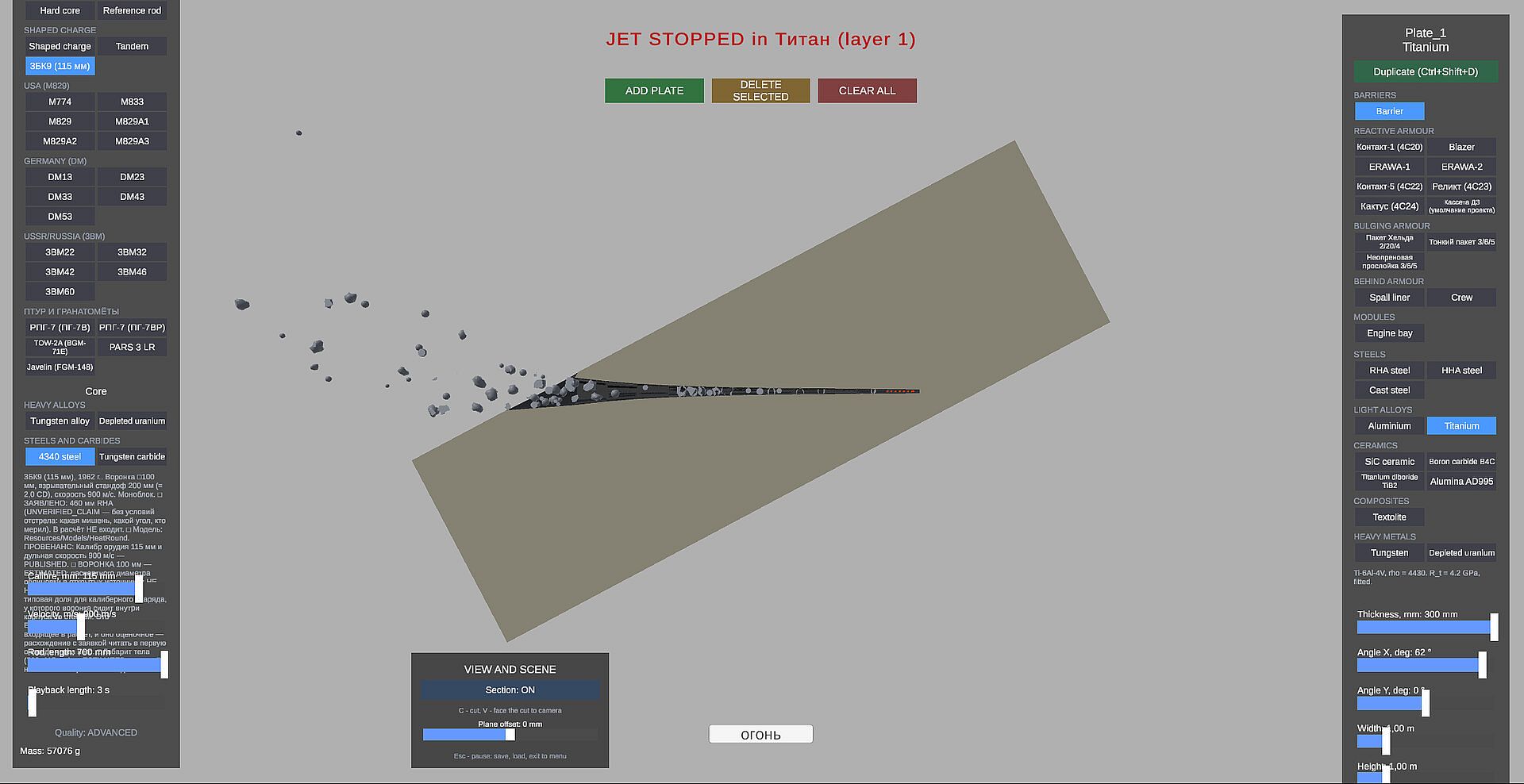
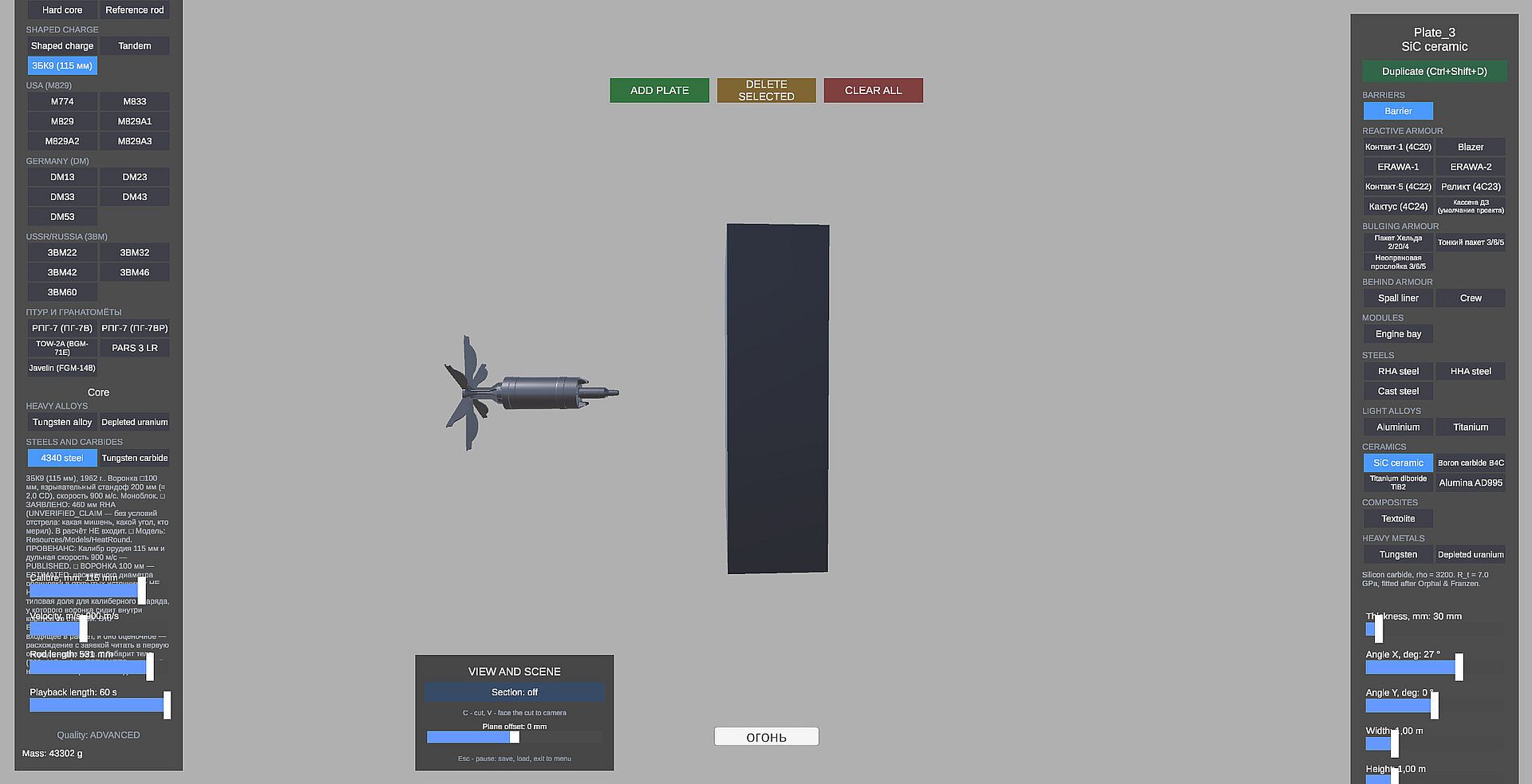
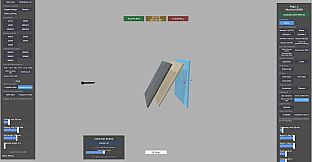
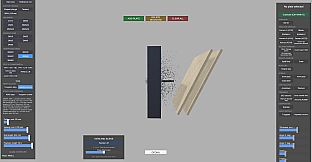
The core loop involves assembling a target from plates of varying thickness, angle, spacing, and material. Projectiles come from American, Soviet or Russian, and German service ammunition lists, or users can define custom ones. Upon firing, the simulation calculates outcomes based on material properties such as density and yield strength. The projectile erodes, the plate deforms or fails in specific ways, and fragments carry realistic mass and velocity. A free-orbit camera supports slow-motion inspection of the entire event from any viewpoint, revealing details like plug ejection or ragged hole formation without artistic embellishments.
Material data carries explicit sourcing tags, distinguishing measured values from derived, fitted, or assumed ones, along with references to the originating studies. Unsupported entries receive clear documentation rather than substitution. The system avoids hit points entirely, deriving every result from the underlying equations and constants.
Game Modes
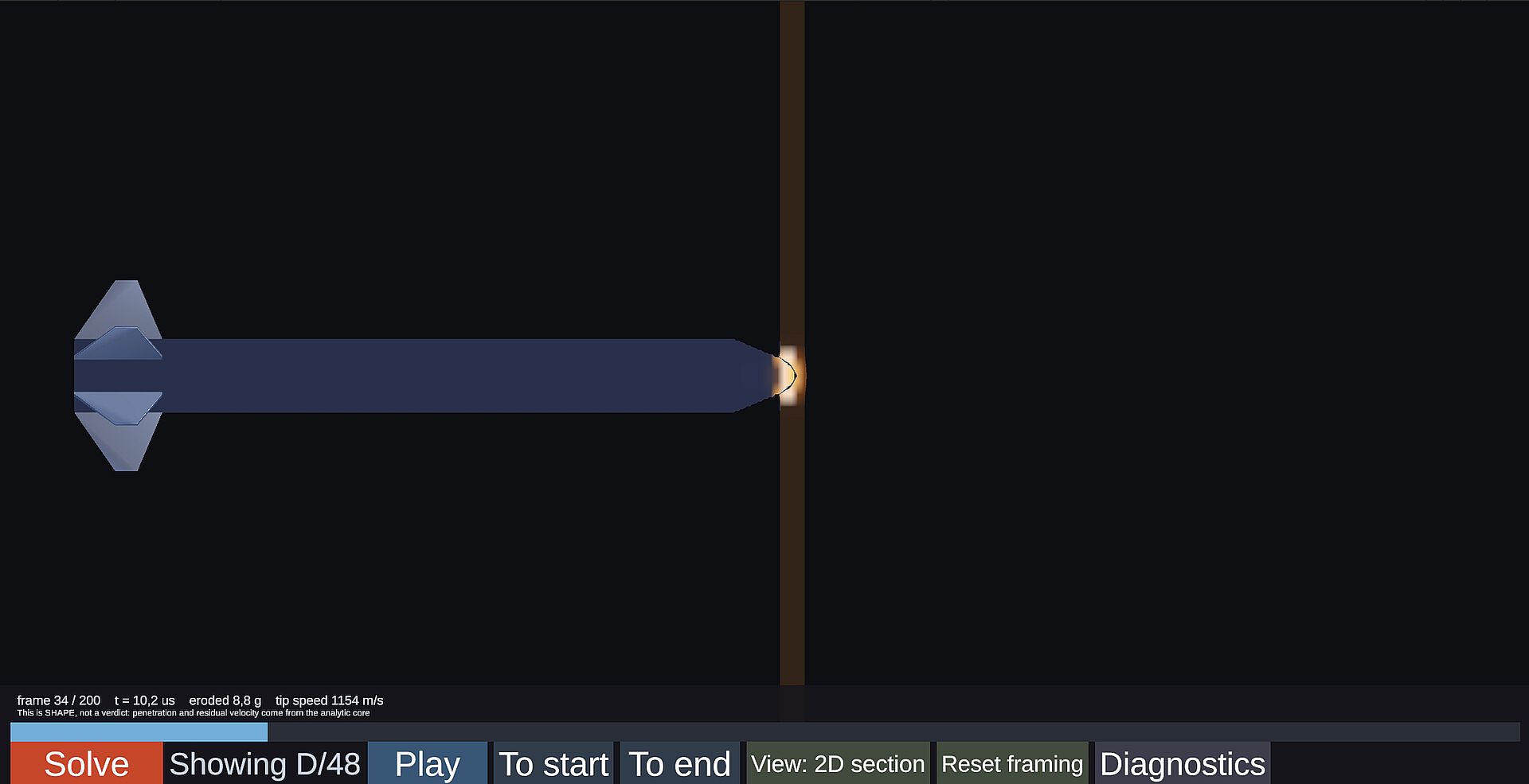
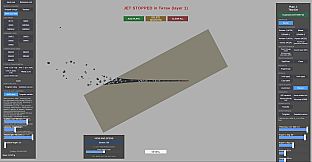
Three distinct solvers operate within the same sandbox environment. NORMAL delivers rapid analytic solutions using established models for erosion, residual velocity, ricochet, and fragmentation. ADVANCED extends this with per-layer tracking across spaced or layered arrays, including reactive armor, and reports energy depletion at each stage. ULTRA applies a continuum mechanics approach with an axisymmetric Lagrangian mesh, incorporating plasticity, equation of state, shear banding, and element removal to generate crater geometry directly from the physics. The analytic solvers determine final outcomes even when ULTRA visualizes the damage shape, maintaining consistency across modes.
Scene Construction and Tools
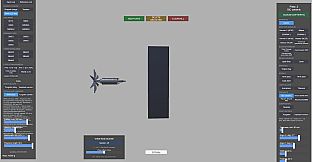
A free-build editor supports placement, rotation, and material assignment for individual plates or complex stacks. The database includes fourteen armor materials and four penetrator core types, plus options for ceramic composites, backing plates, and shaped-charge jets at normal incidence. Replays export as compact files suitable for sharing. Interface support covers five languages. No single element relies on abstracted hardness ratings; every interaction traces back to laboratory-derived constants.
Is It Worth Playing?
ArmorSim suits anyone interested in detailed examination of armor penetration mechanics without requiring specialized engineering software. Its Early Access status means the feature set focuses on the described simulation tools and solvers, with documented limitations such as the axisymmetric restriction in ULTRA mode. The absence of visual effects like sparks or smoke keeps attention on the metal behavior itself. For users who value verifiable physics over entertainment abstractions, the current build provides a focused sandbox that rewards iterative testing and angle or thickness adjustments. Those seeking broader gameplay variety or multiplayer elements will find the scope narrower by design.











