




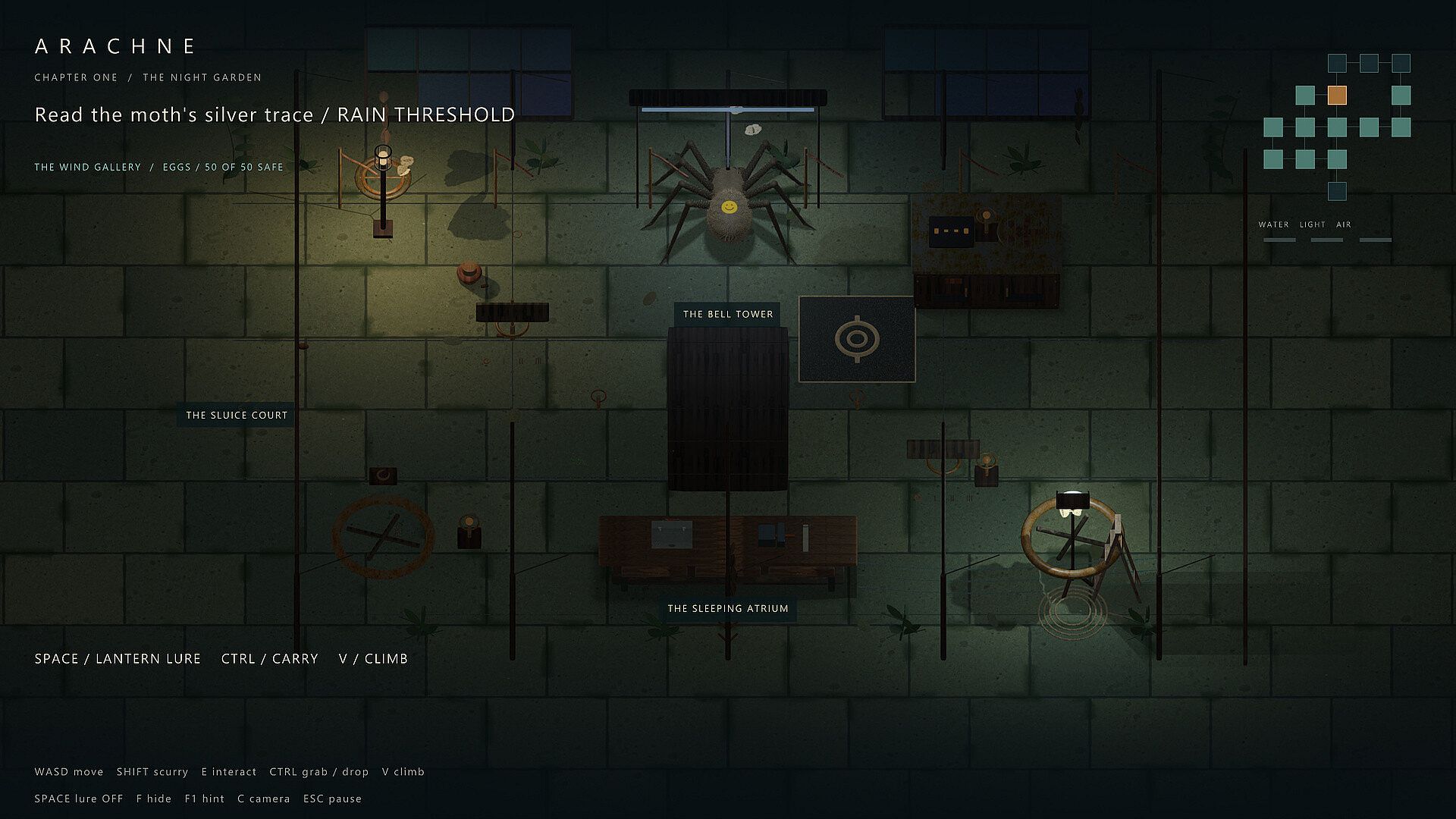
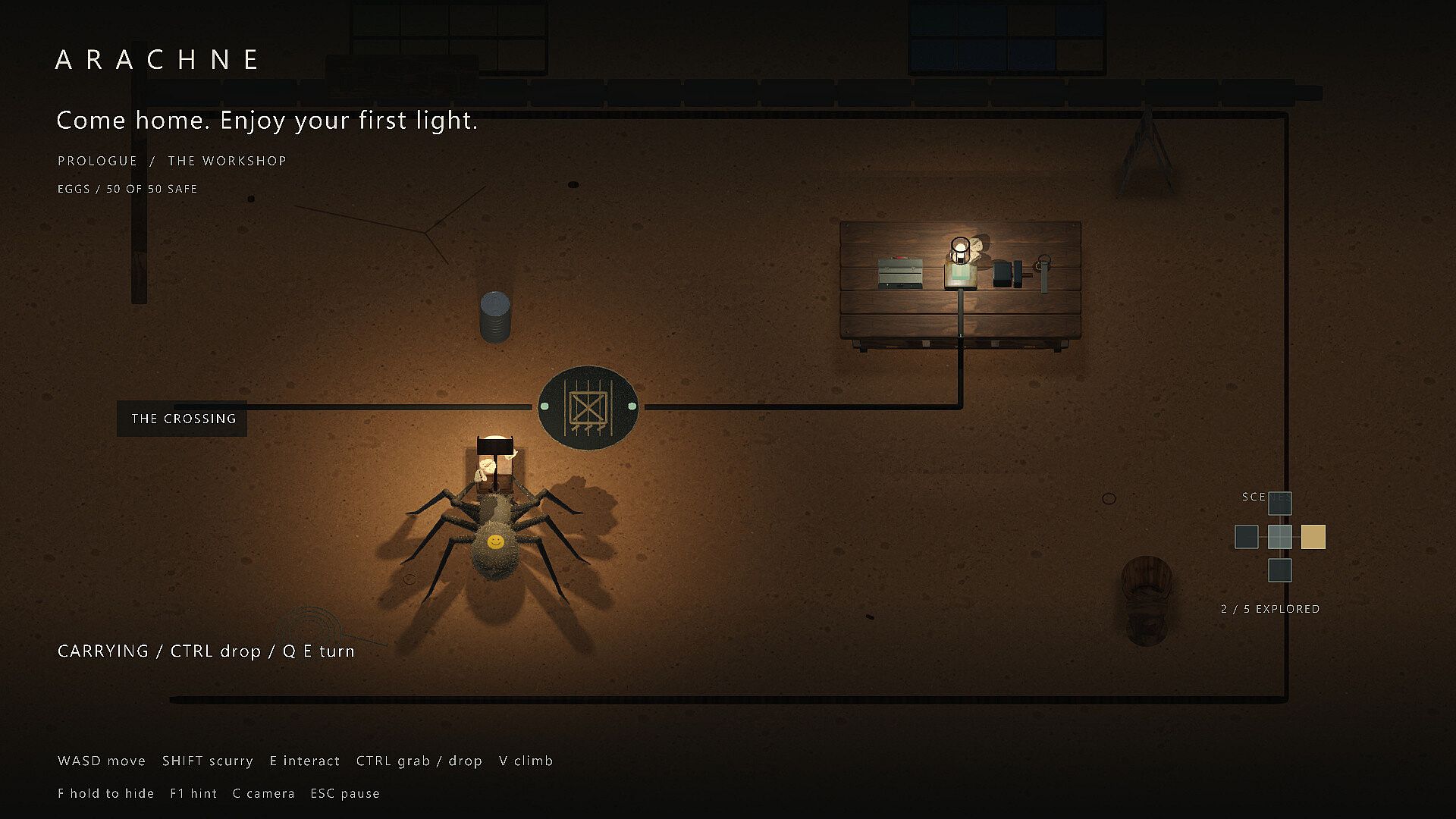
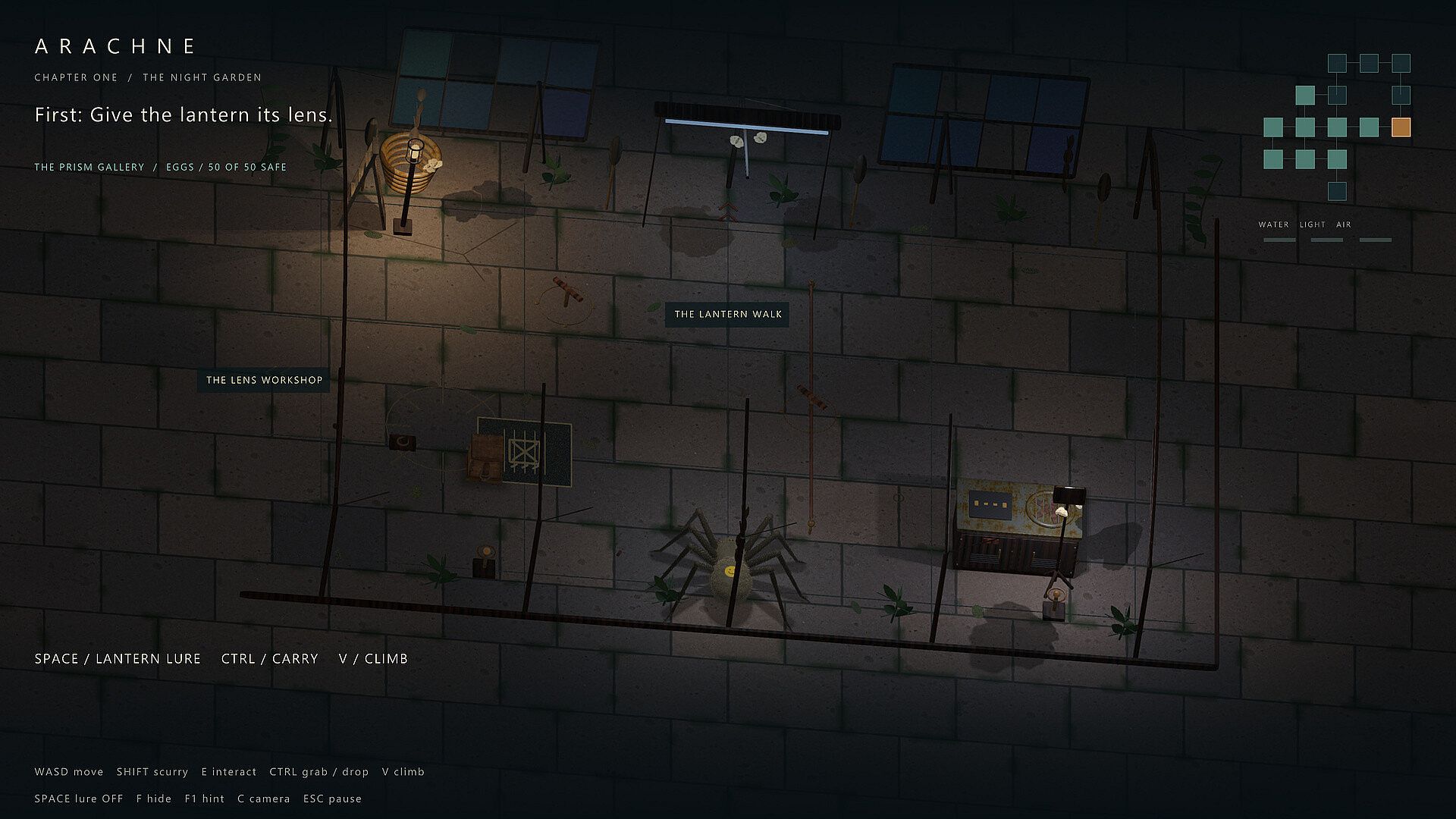
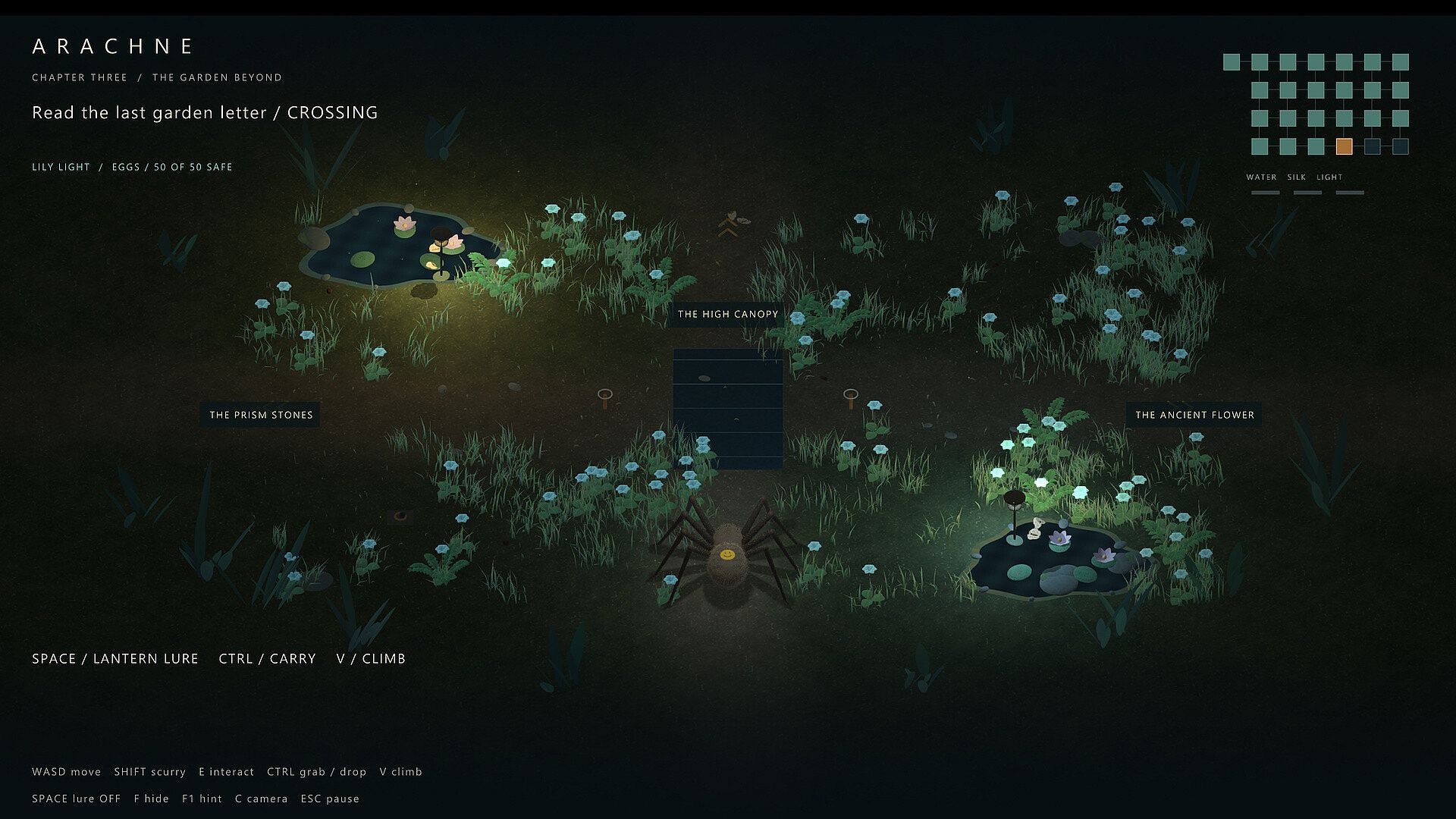
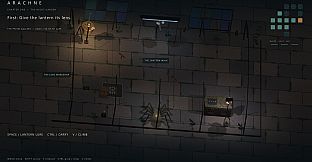
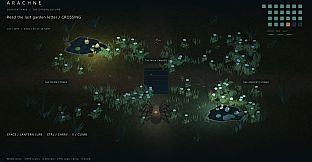
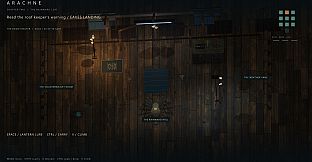
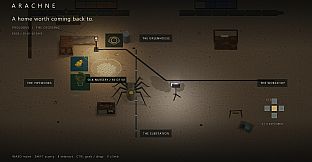
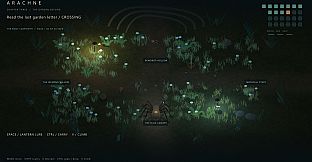
Arachne is a single-player indie adventure that places players in the role of a small spider navigating a detailed indoor and outdoor environment through exploration and physics-based puzzles. The game emphasizes careful interaction with objects and environmental elements to restore spaces and complete a personal journey across connected areas.
Gameplay
The core loop centers on moving through rooms and areas while manipulating the world around the spider. Players use front legs to carry and rotate smaller items, push heavier objects, and climb textured surfaces. Puzzles involve routing water through pipes and plants, adjusting pressure levels, aligning beams of light, guiding wind to activate chimes, and constructing silk pathways to bridge gaps. These mechanics link separate spaces into continuous sequences where progress in one area affects others.
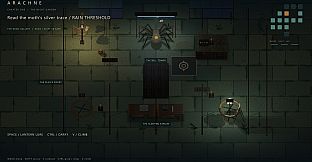
Exploration rewards attention to detail, such as locating optional memories or useful items to bring back to a central nest. The spider can restore power to mechanisms and water plants to encourage growth. Camera perspectives shift between authored room views and an overhead map to help players plan routes and understand spatial connections without frustration.
Controls rely on keyboard and mouse, with local saving of milestones and settings. The experience supports offline play entirely, though one optional radio feature requires an internet connection. Progress resumes from the most recent safe checkpoint after any setbacks.
Game Modes
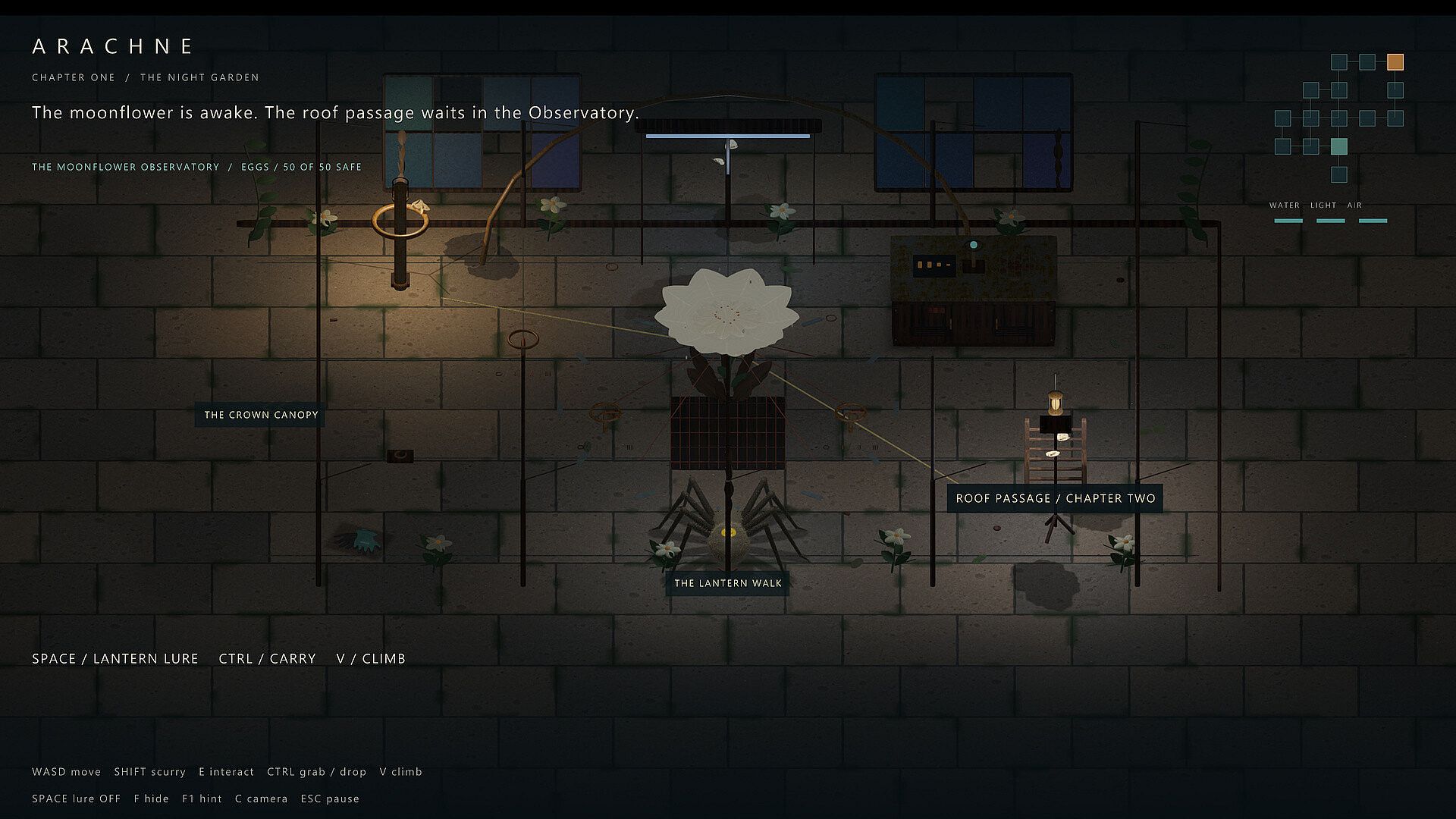
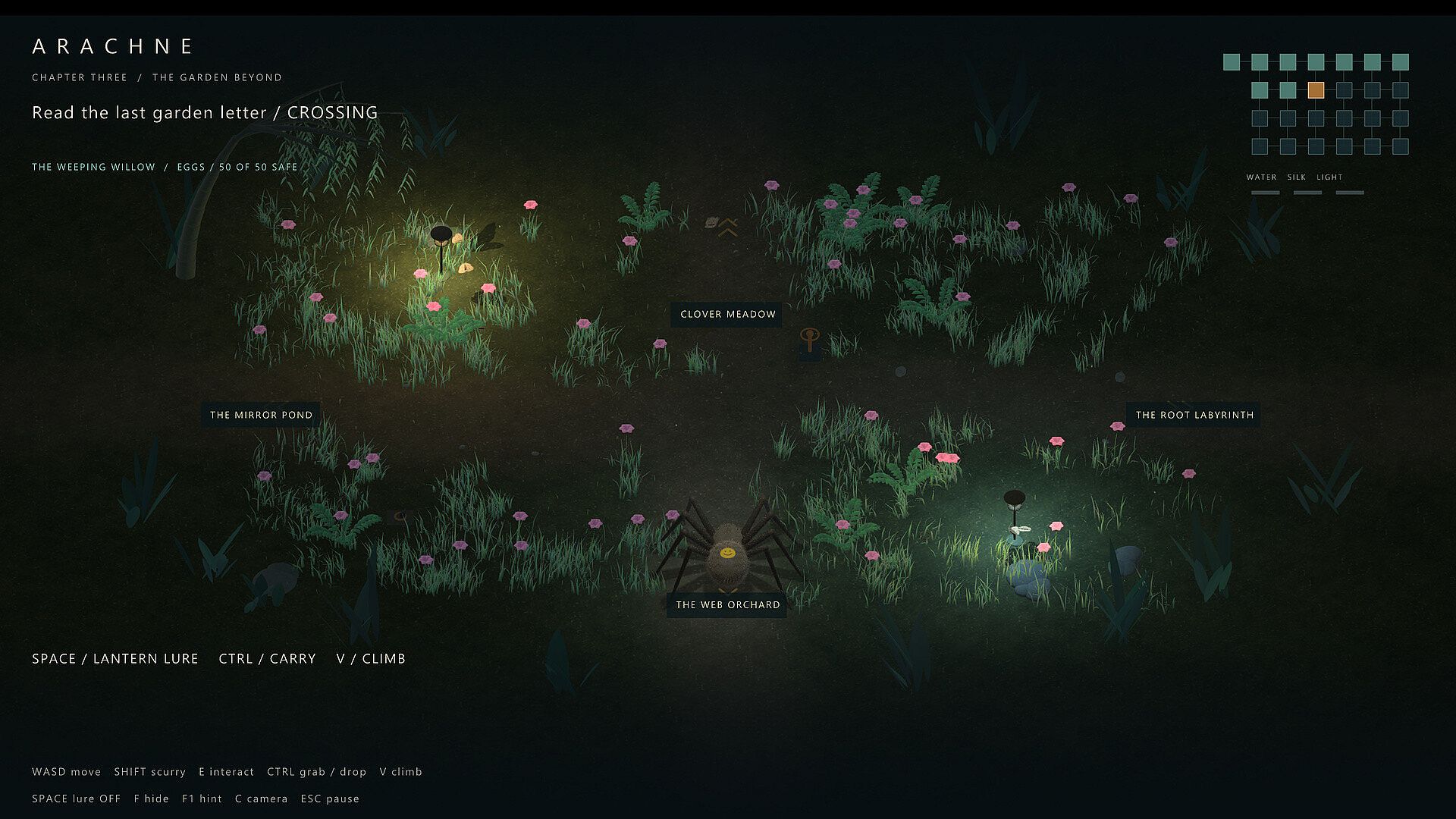
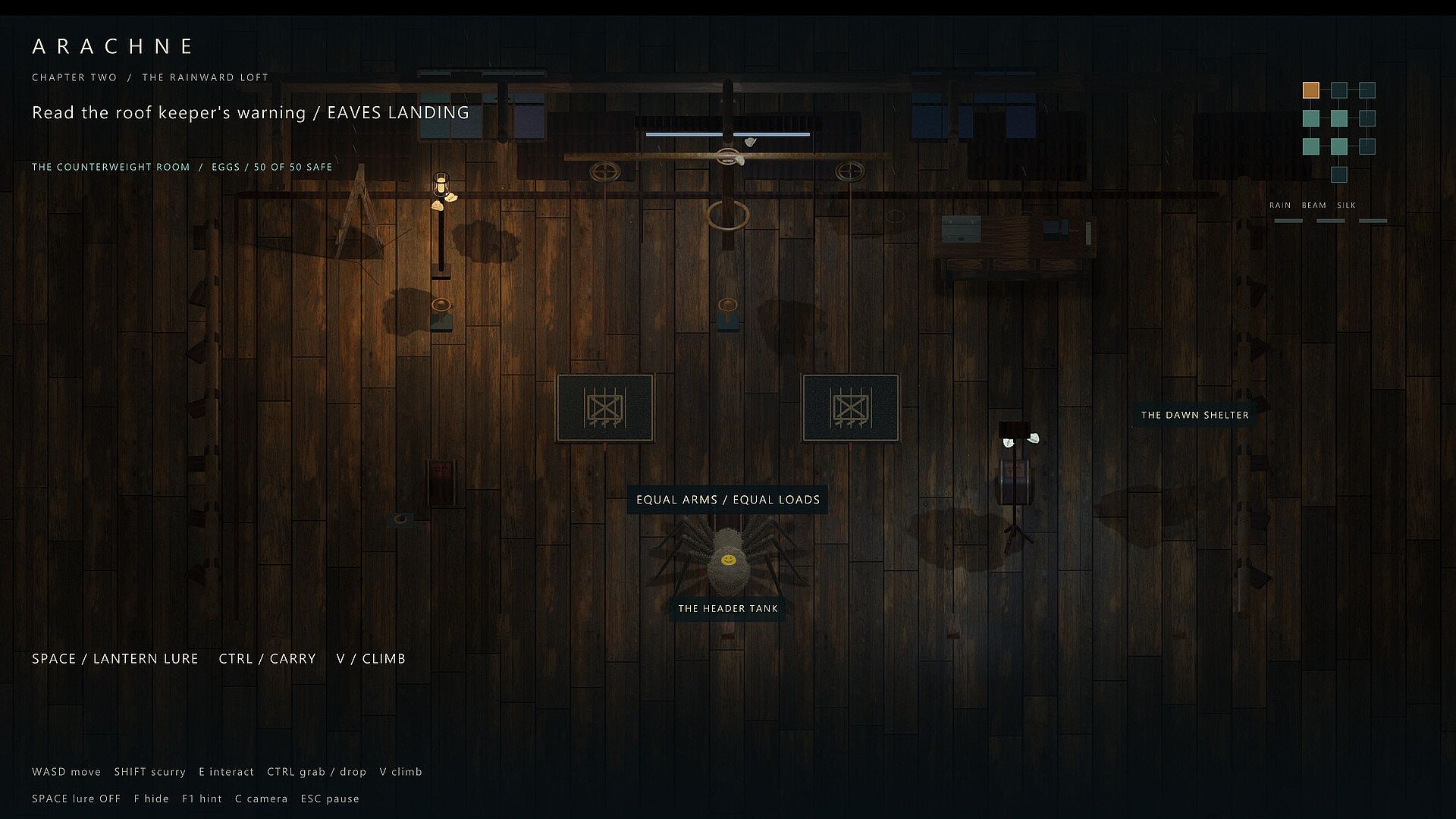
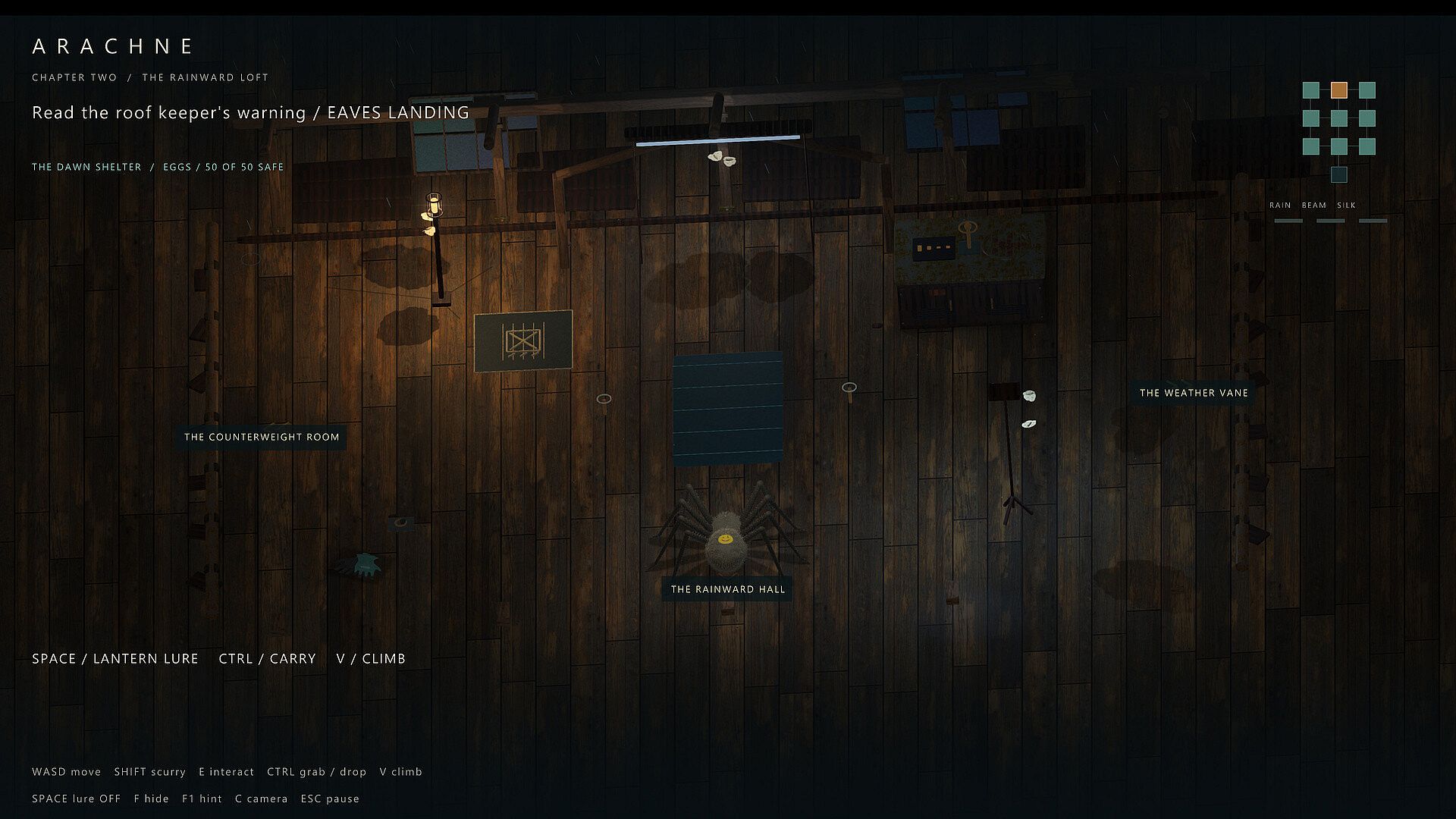
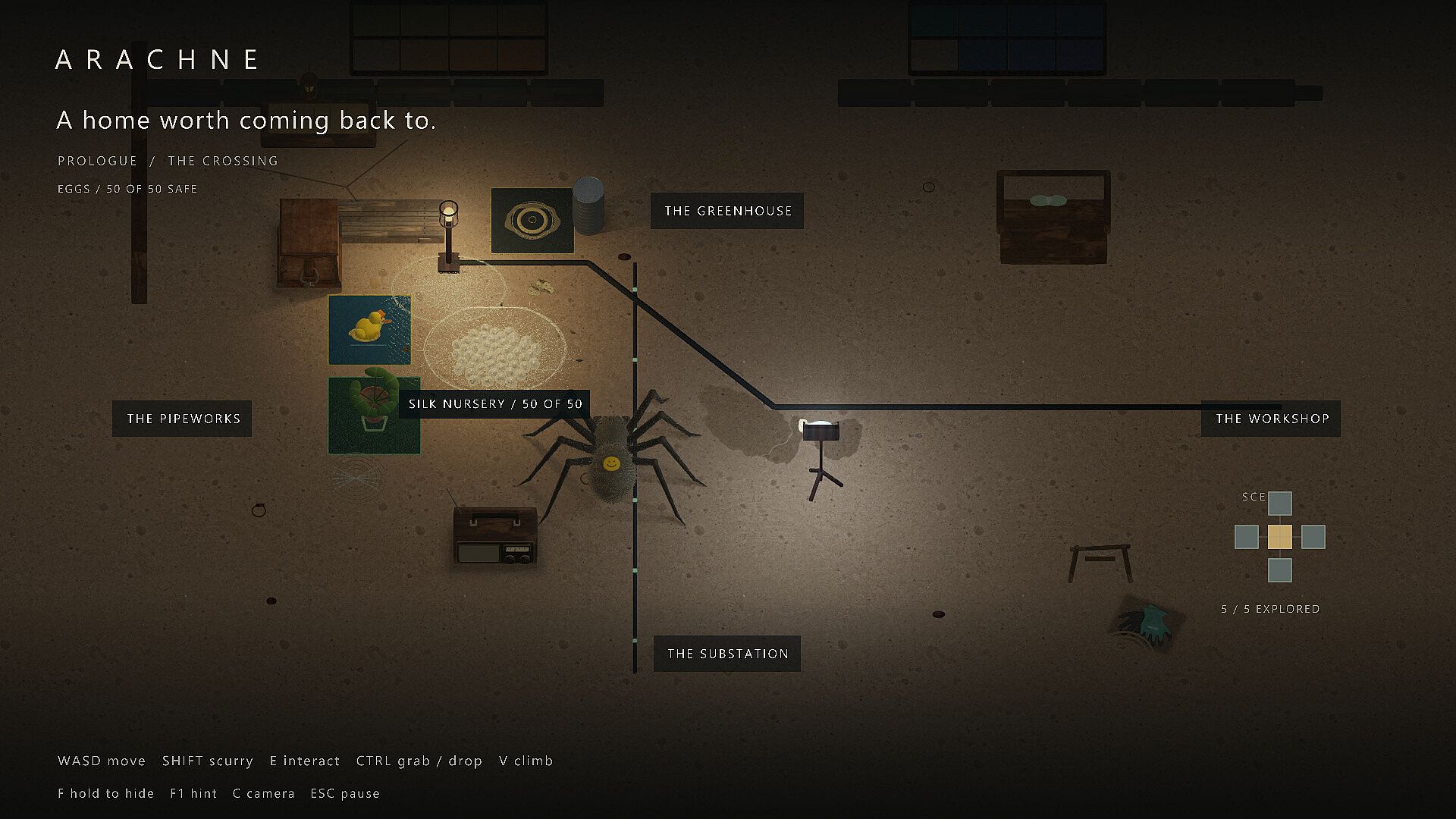
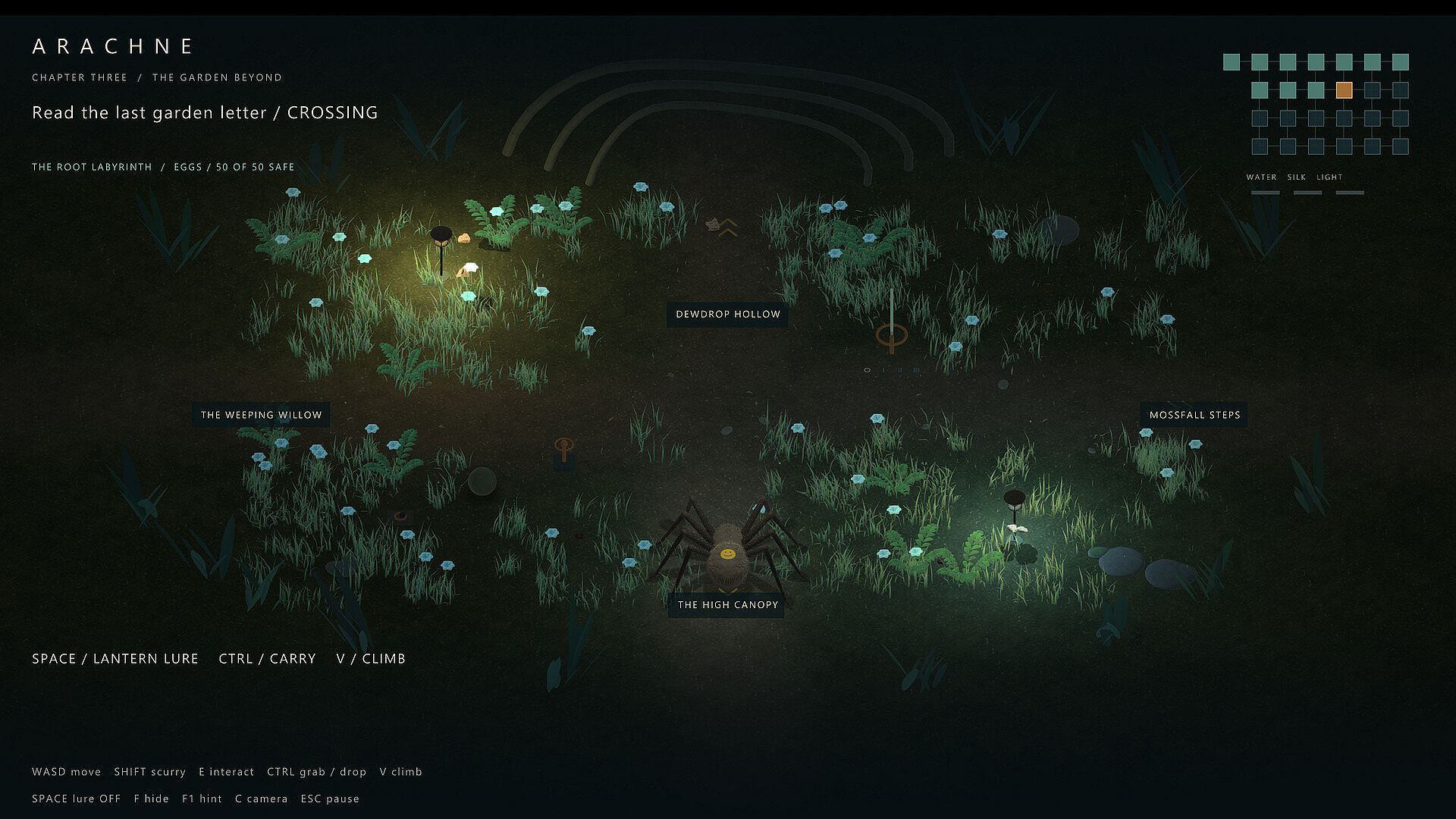
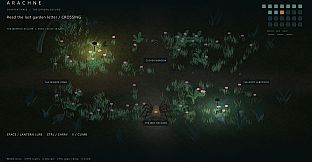
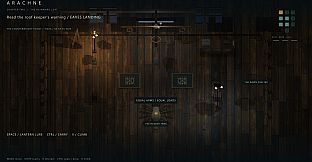
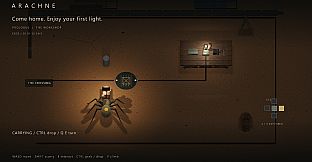
Arachne offers a single continuous adventure structured around distinct chapters rather than separate competitive or multiplayer modes. The Prologue introduces the basic mechanics across five rooms focused on building a small home. Chapter One expands into fourteen connected conservatory rooms centered on night garden restoration. Chapter Two covers nine roof rooms involving drainage and shelter repairs. Chapter Three opens twenty-four outdoor garden areas that culminate in awakening an ancient flower and returning its seed.
Within the nursery sections, players protect eggs by managing ant visits, which can be disabled entirely through the pause menu. Optional wasp settings introduce pursuit and refuge elements for added challenge, while Adventure mode keeps these encounters inactive. A final hatching sequence and epilogue with fifty spiderlings provide closure after the main journey.
Exploration and Puzzles
Each chapter builds on the previous one by introducing new environmental interactions while reusing core physics tools. Silk crossings, weighted plates, and switches create logical chains that unfold gradually across connected spaces. Moths serve as guides in several sections, requiring players to clear paths or adjust conditions for them to reach destinations.
The garden chapter shifts focus outward with routes that follow water, silk, and light flows through larger outdoor zones. These areas emphasize navigation and route-finding alongside the established puzzle types. The physics playground included in the current build allows free experimentation with object manipulation separate from the story progression.
Is It Worth Playing?
Arachne suits players who enjoy deliberate single-player puzzle adventures with a strong emphasis on environmental storytelling and careful object interaction. The Early Access version already contains the complete Prologue through Chapter Three, the hatching sequence, and the epilogue, giving a substantial amount of content focused on restoration and discovery.
Those drawn to physics-driven challenges, spider-themed perspectives, and paced exploration without combat or time pressure will find the described systems engaging. The option to toggle ant visits and wasp encounters allows customization of difficulty and pacing. Since the build remains in active development with plans for refinements based on feedback, interested players can participate in shaping the final experience through reported suggestions on controls, puzzle clarity, and presentation.











