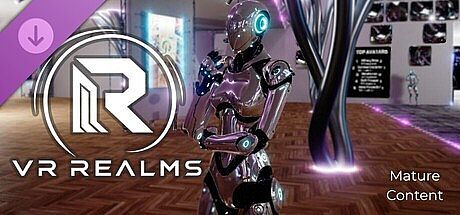





VR Realms Mature Content serves as a free optional add-on for the social VR experience VR Realms. This PC title blends simulation, adventure, and massively multiplayer elements in a community-driven environment where players interact in a persistent hub and explore player-published worlds.
Gameplay
VR Realms centers on a shared hub that runs continuously on dedicated servers. Players enter their personal space before moving into the main area where others are already present. From there, individuals navigate to community-created worlds through portals or a session browser. Avatars from the Steam Workshop appear in the same spaces, supporting full-body tracking and custom rigs compatible with VRoid, VRM, or MetaHuman assets.
Cross-play allows VR headset users and desktop players with mouse, keyboard, or gamepad controls to share the same sessions. Spatial voice chat and text messaging keep conversations natural across distances. Interactive props such as video screens, jukeboxes, and grabable items function in real time for everyone in the instance. The system checks ownership of the Mature Content add-on to determine visibility of tagged community items during browsing and search.
Creators build maps and avatars in Unreal Engine 5.8 using a free kit, then publish directly to Steam Workshop. Once subscribed, content loads on demand with host migration handling player departures without dropping the group. Personal content tagging lets owners restrict their uploads while still allowing invited access.
Game Modes
Built-in modes include free-for-all and team deathmatch. Creators place spawn points, scoreboards, and health or damage settings directly in their maps using simple tags. Matches track kills, apply smart respawns, and display live results with player names and team totals.
Additional creator-supported activities extend to scoring zones for points-based games, ball physics for sports setups, and round rules that define win conditions through clocks or objectives. These elements integrate without custom scripting, letting any Workshop map host competitive or casual play sessions up to the creator-defined player limit of 64.
Portal drops in the hub let groups transition together into these experiences. Desktop and VR participants join the same matches seamlessly.
Community and Content Access
Every world and avatar originates from the player base through Steam Workshop. The Mature Content add-on unlocks visibility for items creators have marked as mature. Without it, those tagged entries remain hidden in lists and searches, preserving a filtered default view. Ownership requires only the base VR Realms application, which itself stays free with no purchase needed for the gate.
Players manage their experience by adding or removing the add-on at any time. All unlocked material stays community-sourced, with no official worlds or files included in the add-on itself. Support for twelve languages, including proper right-to-left rendering for Arabic, broadens accessibility across regions.
Current State and Development
VR Realms operates in early alpha with ongoing updates focused on tools, networking, and creator features. Leaderboards in the hub track playtime, creator hours, supporter tenure, and popular Workshop items. Points systems reward engagement, and events appear on in-hub displays. The single-developer project emphasizes rapid fixes and community feedback through Discord channels.
Supporter subscriptions exist as an optional way to fund servers while providing cosmetic and convenience items that do not alter core gameplay. Workshop publishing remains open, with approval times typically short during the alpha phase.
Is It Worth Playing?
VR Realms suits players interested in social VR hangouts, exploring user-generated spaces, and participating in simple competitive matches without upfront costs. The free base game and add-on structure remove barriers, while cross-platform support and persistent hub reduce wait times for interaction. Those seeking mature community content gain direct access through the optional gate, which integrates cleanly into browsing tools.
Reception remains limited due to the early stage, yet the emphasis on creator tools and host migration addresses common pain points in similar experiences. Individuals who enjoy building or discovering player-made environments will find consistent value in the growing Workshop library and regular tool improvements. Desktop mode ensures participation even without a headset, broadening the potential audience for casual sessions or longer explorations.