

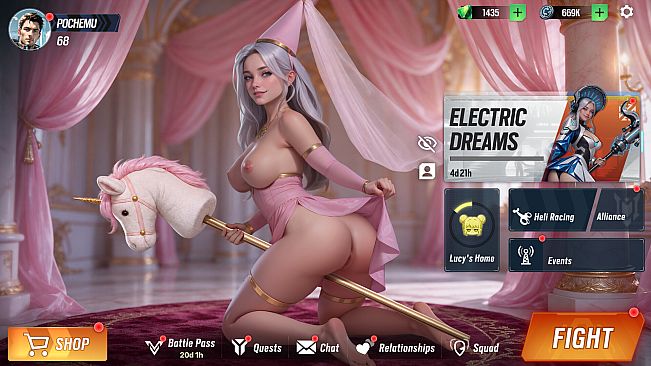



Lust Goddess is a free-to-play adult collectible card game that blends strategy, RPG progression, and adventure in a sci-fi setting. Players take on the role of a commander leading squads of mercenary women through turn-based battles against bandit factions in a neon-lit future city and surrounding wastelands. The core loop revolves around recruiting mercenaries, assembling teams, and engaging in tactical combat while developing personal connections with squad members through chats and story scenes.
Gameplay
Combat takes place on a grid where commanders and mercenaries deploy as units. Each mercenary card carries abilities tied to its faction and class, allowing for combo chains and positioning tactics that determine outcomes more than raw power. Commanders serve as central units with their own health pools and unlockable abilities that influence the battlefield. Team building requires attention to faction synergies, as certain effects boost allies from the same group, and class roles shape offensive or defensive options. Progression involves leveling cards, evolving them, and unlocking relationship levels that reveal additional story content and visuals. The game supports both manual control and automated battle speeds for repeated encounters.
Game Modes
Story-driven PvE missions pit squads against bandit groups in structured campaigns that advance the narrative. PvP matches allow direct competition against other players using custom decks. Alliance Wars involve coordinated efforts across seasonal maps divided into sectors, with weekly turns and rewards based on control and influence. Recurring events introduce limited-time commanders, special mazes with resource collection, and themed challenges that rotate frequently. These modes emphasize squad composition and timing over single-card strength.
Factions and Team Building
Three main factions shape mercenary availability and battlefield interactions: Peacekeepers focus on structured defense and support, Freemen emphasize mobility and disruption, and Syndicate leans into aggressive or utility effects. Within each faction, classes such as Sentinel, Fighter, and Replica further define roles, with abilities that interact across the grid. Rarity tiers from common to legendary influence base stats and upgrade paths. Effective squads often mix factions for broader coverage while prioritizing synergy bonuses that activate during fights.
Progression and Social Elements
Recruitment draws from events and in-game systems that add new mercenaries regularly. Relationship systems unlock personalized dialogues and scenes as trust increases through repeated interactions. Alliances provide group features like shared units and competitive leaderboards. Regular updates introduce balance changes, new events, and seasonal content that keep the roster expanding without requiring prior knowledge of older additions.
Is It Worth Playing?
The game maintains an active schedule of events and patches that introduce fresh commanders and mechanics on a near-weekly basis. Player feedback on Steam shows mixed reception centered on the free-to-play model and gacha elements, with over twelve thousand reviews reflecting varied experiences. It suits those who enjoy tactical card battles combined with character-driven story elements in a persistent online environment. The absence of a one-time purchase means engagement depends on tolerance for ongoing resource management and event participation. Those seeking straightforward turn-based strategy with adult-themed progression will find consistent updates and multiple competitive outlets, while others may prefer titles without heavy monetization layers.