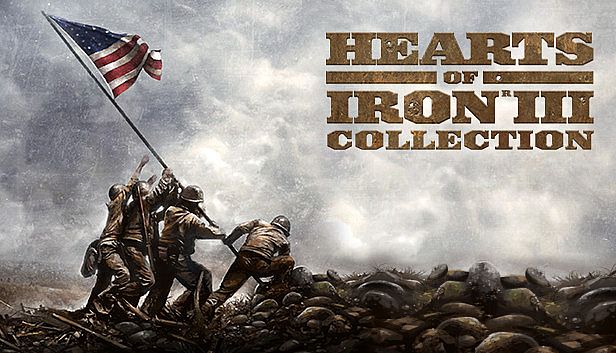





























Hearts of Iron III Collection is a grand strategy game set during World War II. Players assume leadership of any nation and direct its path through the conflict from 1936 to 1948. The experience centers on managing national resources, directing military operations, and navigating international relations across more than 150 countries.
Gameplay
The core loop revolves around balancing industrial output, technological advancement, diplomatic maneuvering, and military campaigns. Players allocate factories to produce equipment and supplies while advancing research projects that unlock new units and doctrines. Diplomacy involves aligning with or against major powers, while espionage adds layers of covert operations to influence events behind enemy lines.
Combat unfolds on a detailed map with thousands of provinces. Armies consist of customizable divisions built from brigades that determine combat effectiveness and logistical demands. Air forces provide support through bombing runs and interception, and naval fleets contest sea lanes with carriers, submarines, and battleships. The three primary factions are the Axis, the Allies, and the Comintern, with smaller nations gradually shifting alignment based on ideology and relations.
Order of battle management lets commanders organize units into hierarchies for efficient theater-level control. Supply lines and organization levels directly affect unit performance in the field. Automation options allow delegation of routine tasks to artificial intelligence, freeing attention for high-level strategy.
Game Modes
Single-player scenarios begin in 1936 for open-ended campaigns, 1938 for a compressed buildup phase, or 1939 for immediate conflict. These historical starting points allow different degrees of preparation before major hostilities erupt.
Multiplayer supports competitive or cooperative sessions where participants direct nations in real time. A custom game mode introduced in the Their Finest Hour expansion permits tailored starting conditions, including immediate unit production and research without historical constraints.
Battle plan tools enable creation and sharing of operational directives, useful for coordinating large-scale offensives or defensive lines with allies.
Key Mechanics and Features
Division design stands out as a central system. Each formation combines two to five brigades chosen for specific roles, affecting speed, firepower, and cost. This granularity extends to air wings and naval task forces, where composition influences effectiveness in different environments.
Political and ideological sliders track domestic stability and international standing. Shifts in these values open or close alliance opportunities and influence internal events. Espionage missions target enemy research, leadership, or infrastructure to gain advantages without direct confrontation.
The game runs on the Clausewitz engine, delivering a three-dimensional map view that supports varied screen resolutions and detailed terrain representation.
Is It Worth Playing?
Hearts of Iron III Collection suits players who enjoy deep, systems-heavy strategy with a focus on World War II history. Its complexity rewards careful planning across production chains, research trees, and multi-front operations. The collection bundles the base game with all three expansions, expanding available content and refinements.
Reception improved substantially after launch patches addressed initial issues. The title appeals to those comfortable with detailed interfaces and long play sessions rather than quick matches. No ongoing seasonal content or major updates exist, so the experience remains fixed at its final patched state. Individuals seeking a comprehensive simulation of global conflict from the era will find substantial depth here, while those preferring streamlined mechanics may find the learning curve steep.