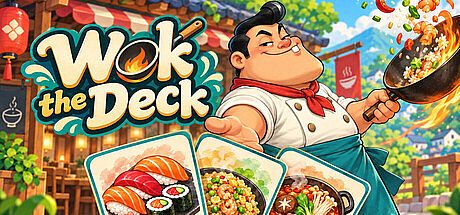





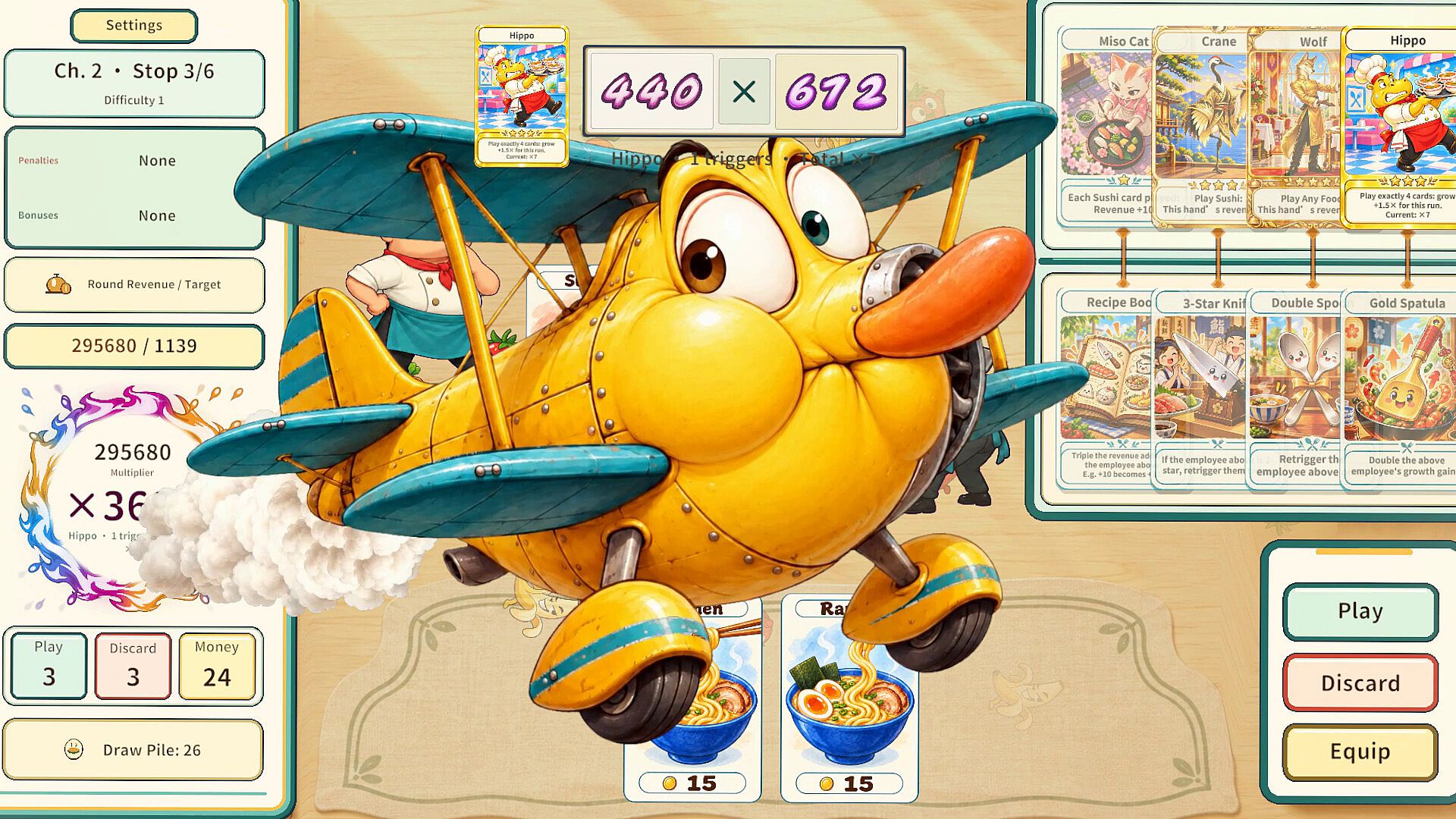
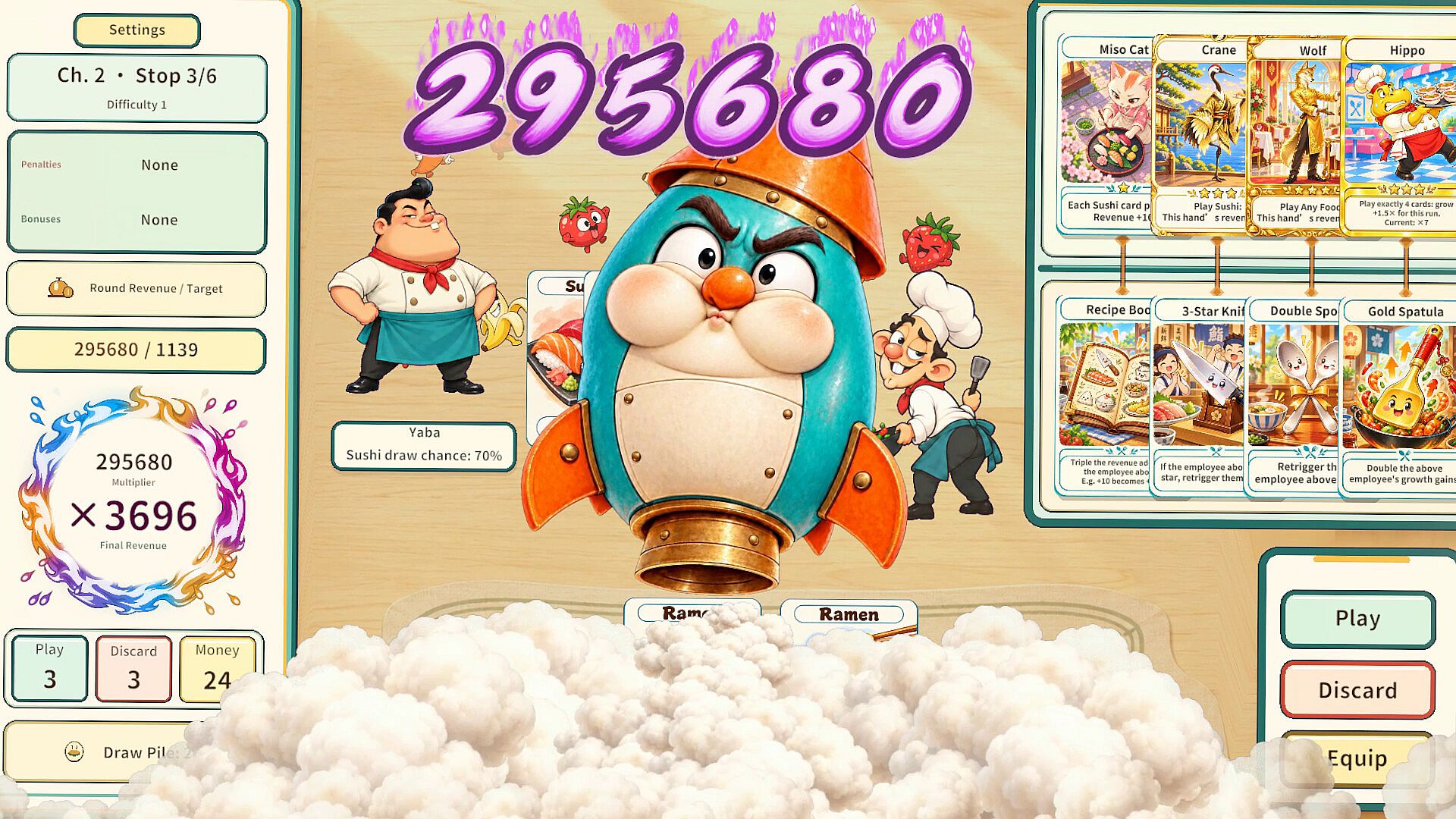
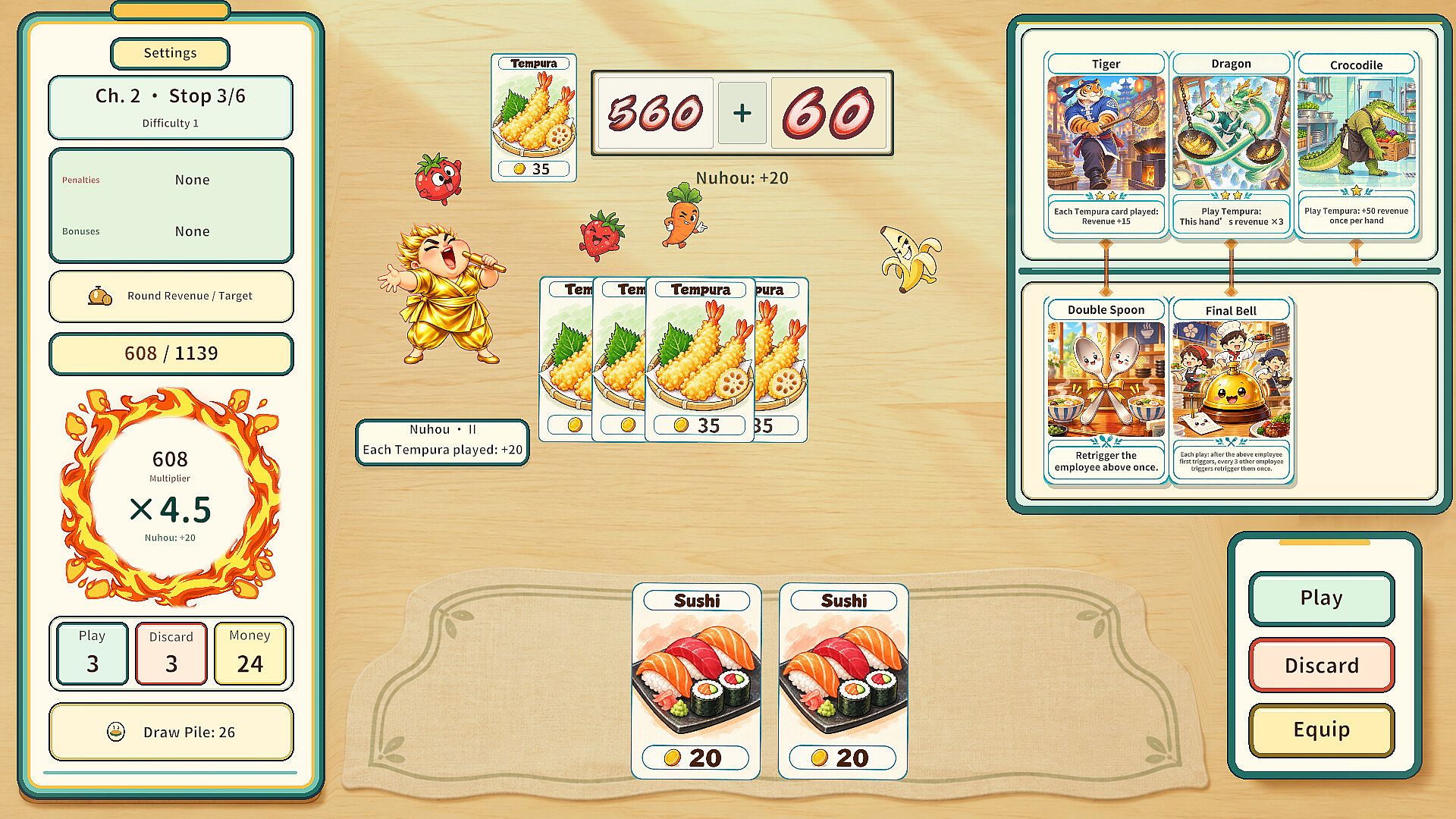



Wok the Deck is a single-player strategy indie game on PC that blends roguelike deckbuilding with restaurant management. Players select a chef and guide signature dishes through a series of challenges, aiming to meet sales targets while managing limited plays and discards. The core loop revolves around building and refining a deck of food cards, staff members, utensils, and seasonings to maximize earnings in each encounter.
Gameplay
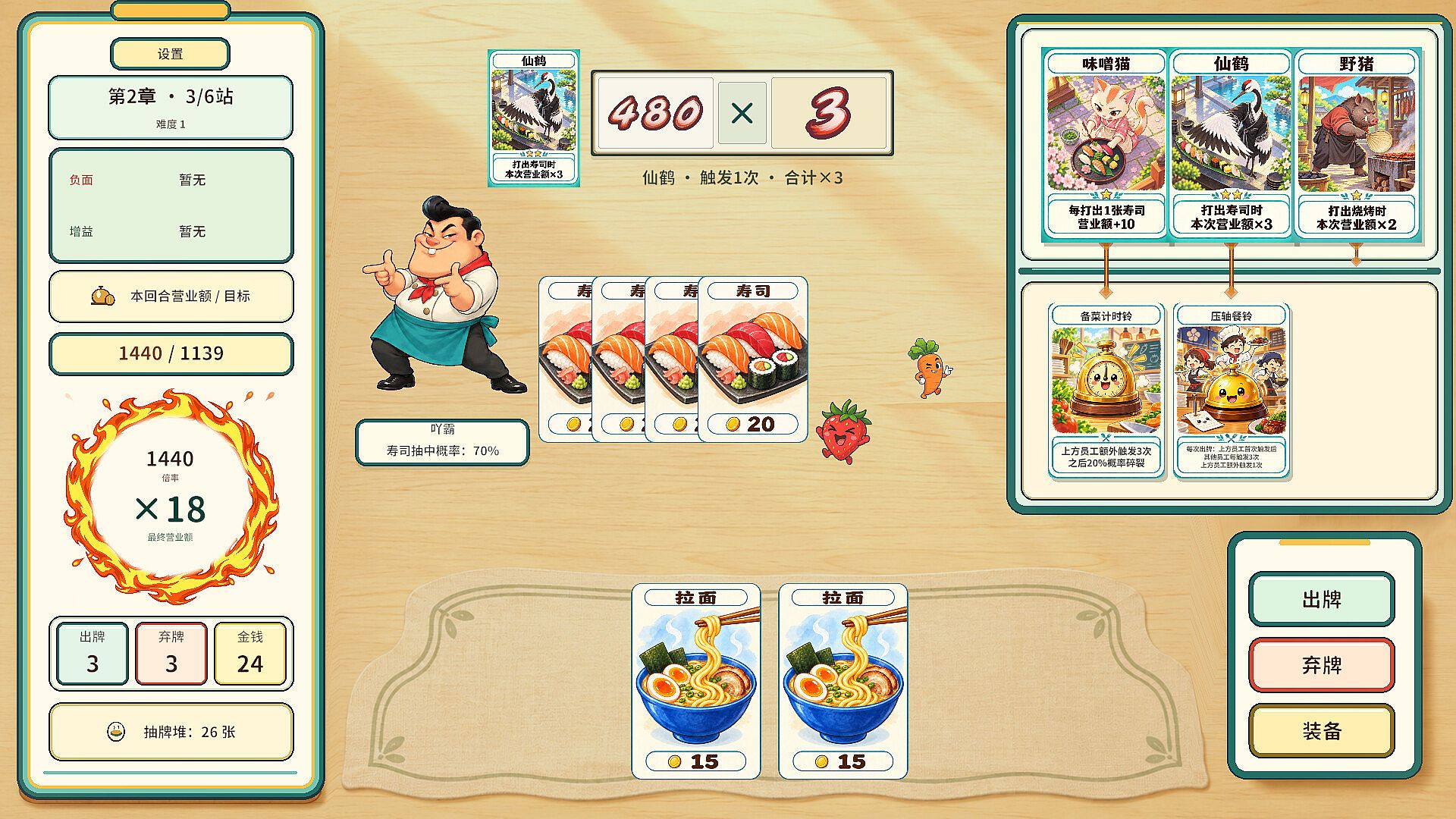
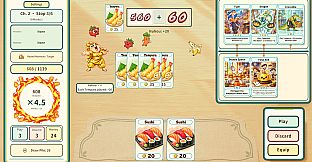
The gameplay centers on hand management and strategic decisions during each challenge. Players draw from a deck of matching dishes such as sushi, hotpot, ramen, and BBQ. These cards can be played together for combined value, with staff abilities and seasonings applied to boost sales or trigger additional effects. Limited plays and discards force careful choices about when to serve a hand or search for stronger combinations. The draw pile and remaining plays remain visible, encouraging players to plan ahead while adapting to what appears.
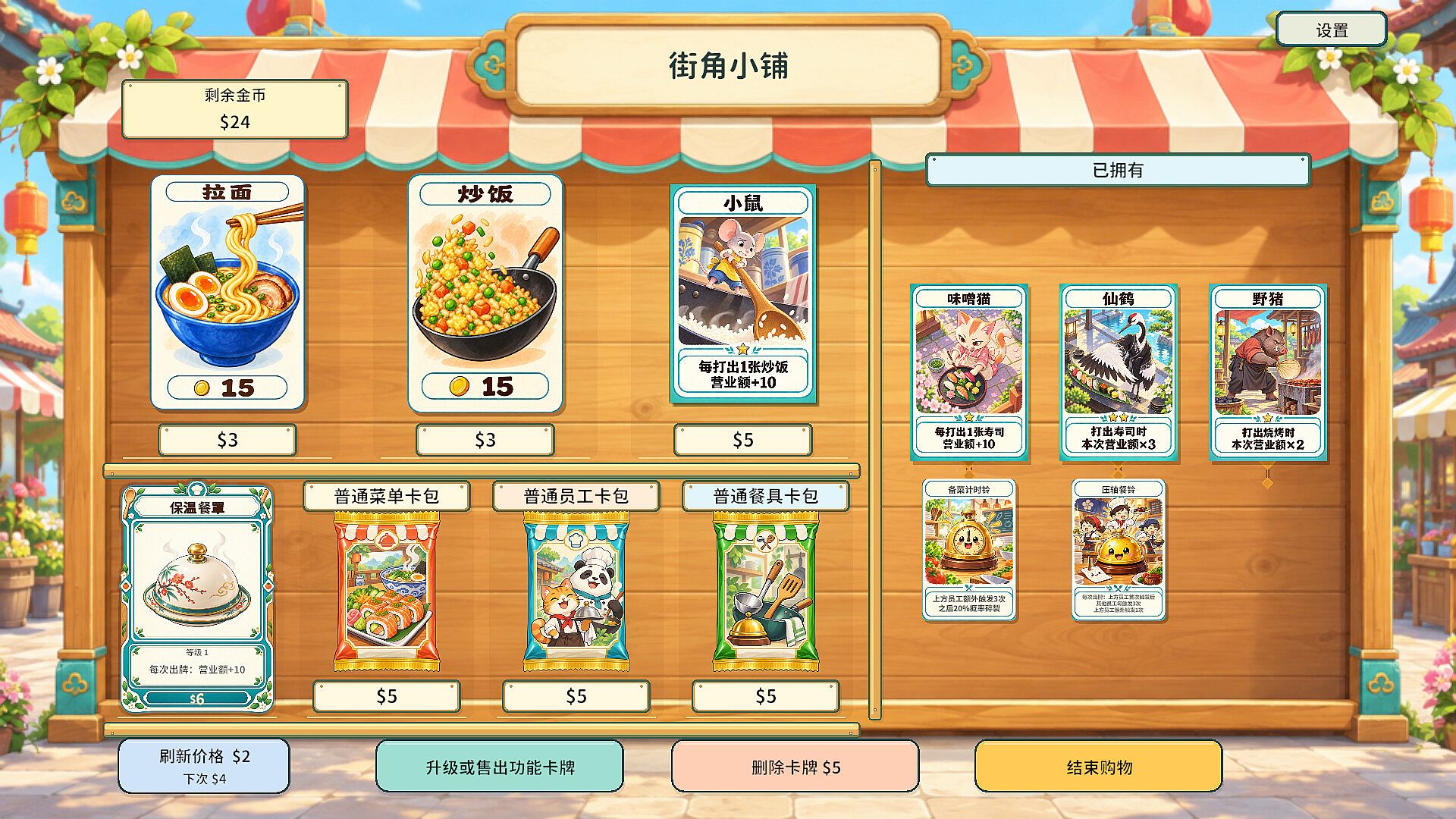
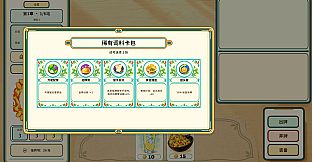
Deck construction happens between challenges through limited shop budgets. New cards can be purchased, existing staff upgraded for better abilities, or unwanted dishes removed to streamline the collection. Animal staff members form the backbone of synergies, with upgrades that add sales, increase multipliers, or enable repeated triggers. This system rewards experimentation with different pairings of food cards, staff, and utensils to create efficient scoring engines.
Game Modes
The game operates entirely in a single-player roguelike format with no separate multiplayer options. Runs progress through three chapters, each containing six stops. These stops include battles against sales targets, shops for upgrades, supply points, and random encounters. Branching routes allow players to select paths that align with their current deck strengths.
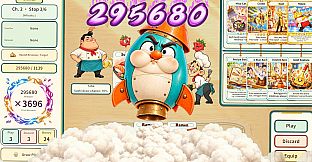
Chapter bosses impose unique restrictions that test deck adaptability. Completing challenges unlocks additional chefs for new starting options and higher difficulty levels. Ten progressively unlocked difficulty tiers provide scaling challenges, while a card collection and in-game achievements track overall progress across multiple runs.
Core Mechanics and Progression
Progression ties directly to chef selection and route choices. Each chef brings signature dishes that influence early deck composition. As runs advance, players encounter opportunities to expand the deck with complementary cards and effects. The emphasis remains on balancing immediate sales goals against long-term deck efficiency, with discards serving as a key resource for refinement.
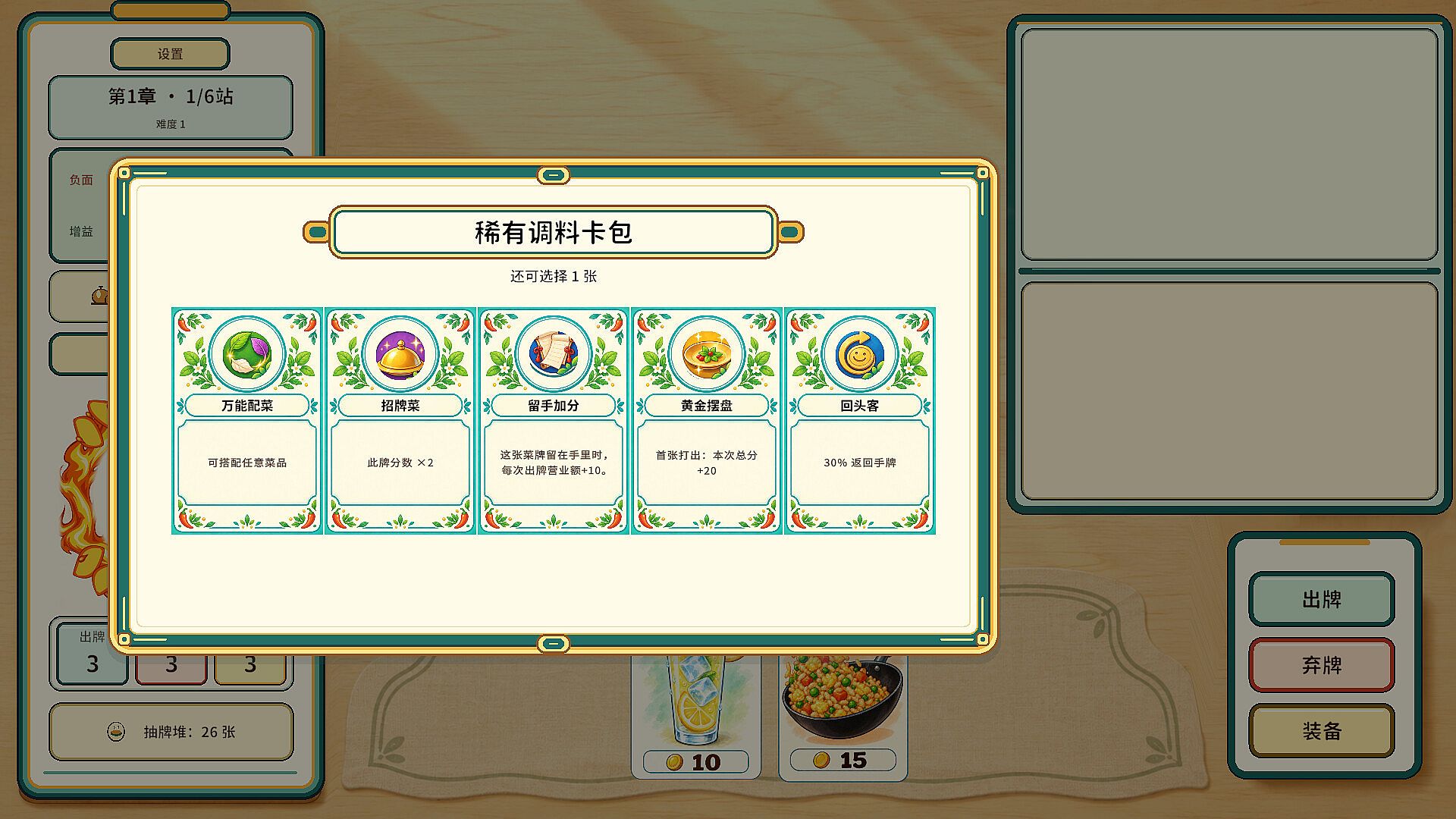
Staff recruitment and utensil pairing add layers of customization. Effects that multiply sales or chain triggers turn basic hands into high-value combinations. Shop decisions require trade-offs, as budgets limit how much can be invested in any single run. This structure supports repeated playthroughs focused on discovering new synergies and optimizing for tougher difficulties.
Is It Worth Playing?
Wok the Deck suits players who enjoy roguelike deckbuilders with a thematic twist on resource management and hand optimization. The single-player campaign through branching chapters offers substantial replayability through chef unlocks, difficulty tiers, and route variations. Limited plays and discards create tension in every challenge, while staff upgrades and seasonings provide meaningful customization.
Those drawn to strategy games that reward careful planning and adaptation will find the systems engaging. The game remains in a coming-soon state with no user reviews available yet, so expectations should center on the described features of deckbuilding, sales targets, and chapter progression. It stands as a focused indie title for fans of the genre seeking a fresh setting built around food-themed cards and team-building mechanics.