


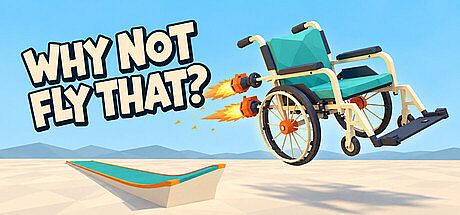


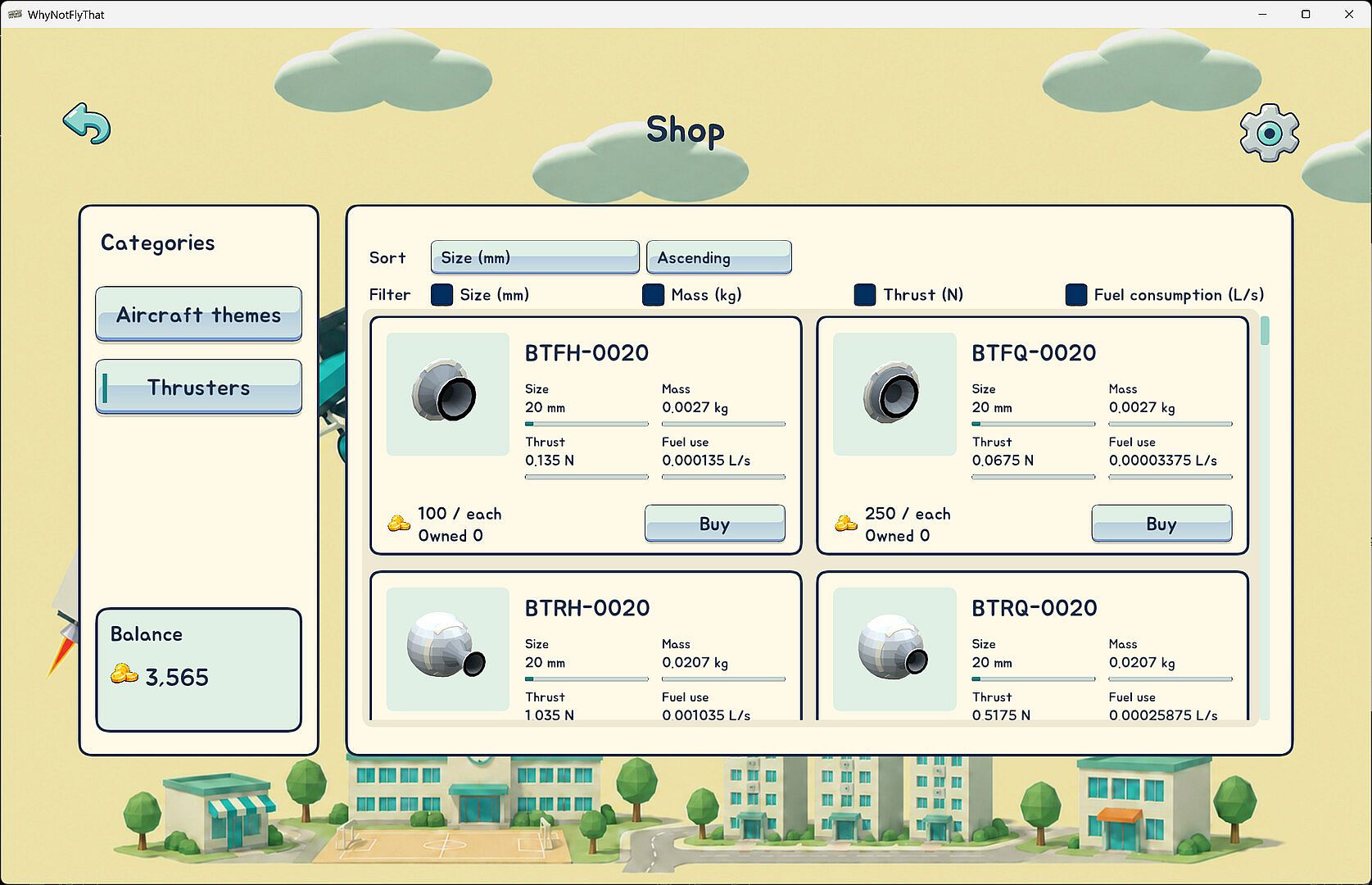
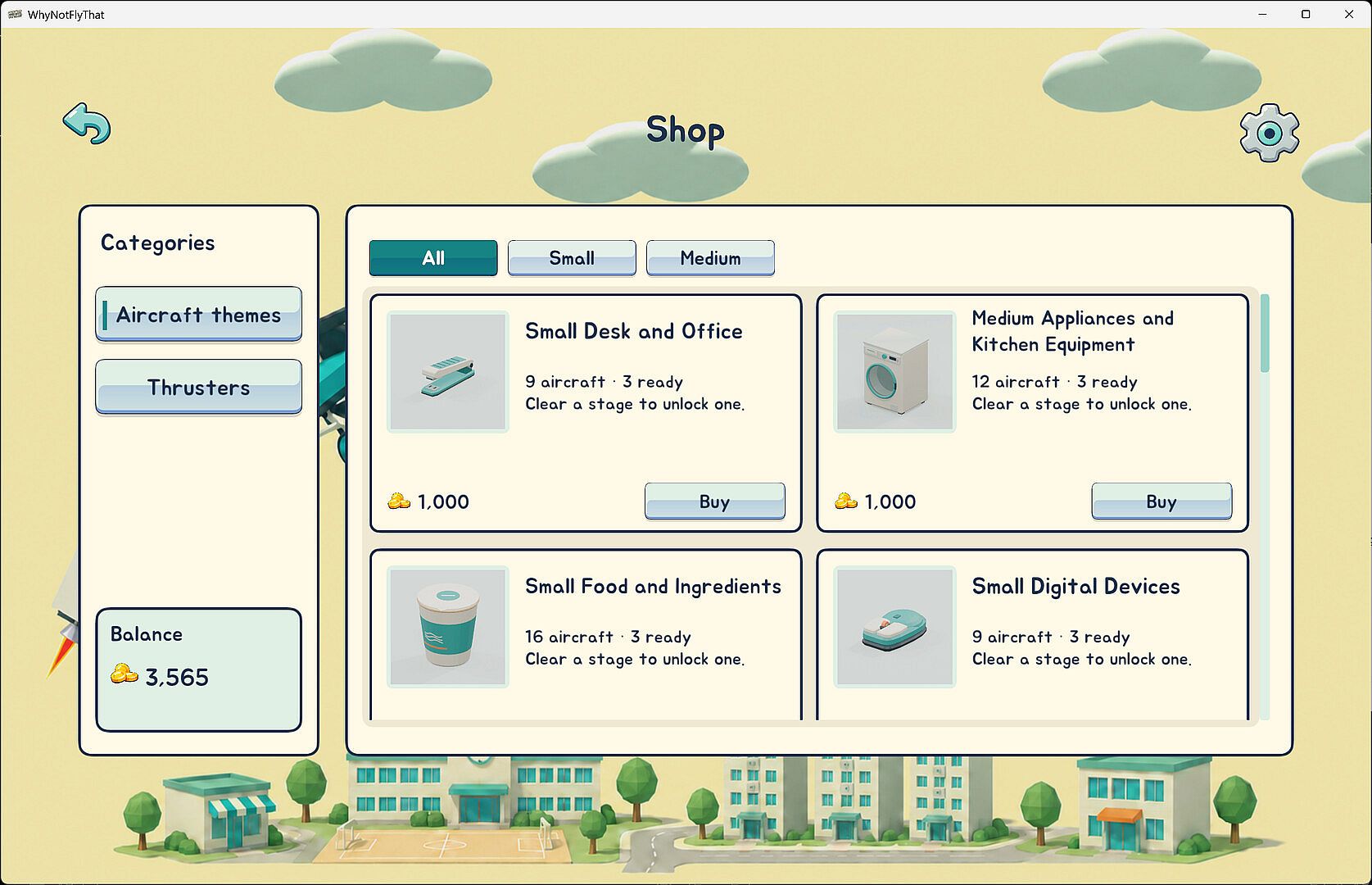
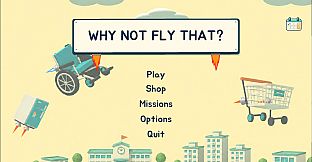
Why Not Fly That? is a casual simulation game for PC that puts players in charge of turning ordinary household items into experimental flying machines. In this single-player physics sandbox, the focus rests on attaching thrusters to objects such as shopping carts and refrigerators, then fine-tuning their placement, direction, and controls to achieve flight. The experience centers on trial, error, and incremental improvement rather than scripted missions or competitive play.
Gameplay
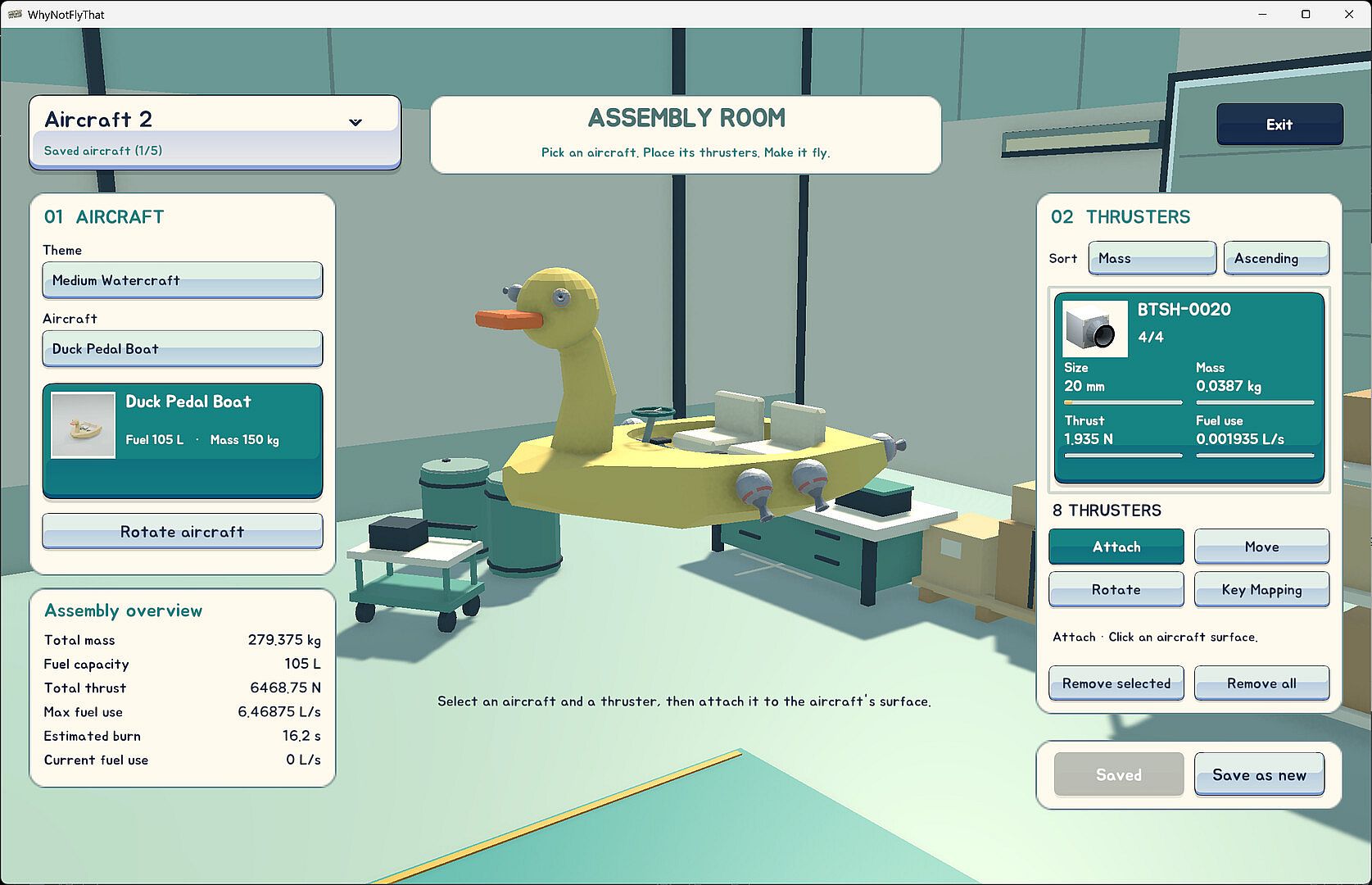
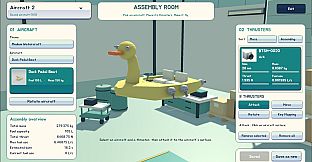
The core loop revolves around construction and testing. Players select a base object, position thrusters on its surface, and bind each one to specific keys. Small changes in angle or placement produce noticeable differences in lift, stability, and handling. Once assembled, the creation launches into the air, where physics governs every tumble, spin, and glide. Adjustments happen between attempts, encouraging repeated builds that refine balance between power and control.
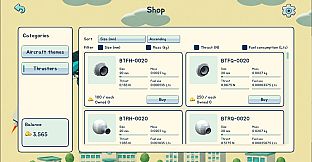
Thruster behavior depends entirely on user choices. A thruster pointed slightly off-center might provide unexpected torque, while multiple units firing in sequence can create forward momentum or chaotic rotation. The system rewards observation and quick iteration, as each flight reveals how the current layout performs under real conditions.
Game Modes
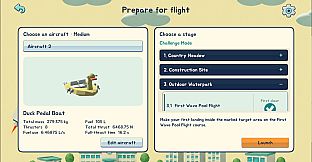
Practice Mode serves as the primary space for free experimentation. Here players can launch designs repeatedly without external pressure, focusing purely on how different configurations behave in open air. Ramp launches extend flight duration by providing initial speed, turning short hops into longer glides across open space.
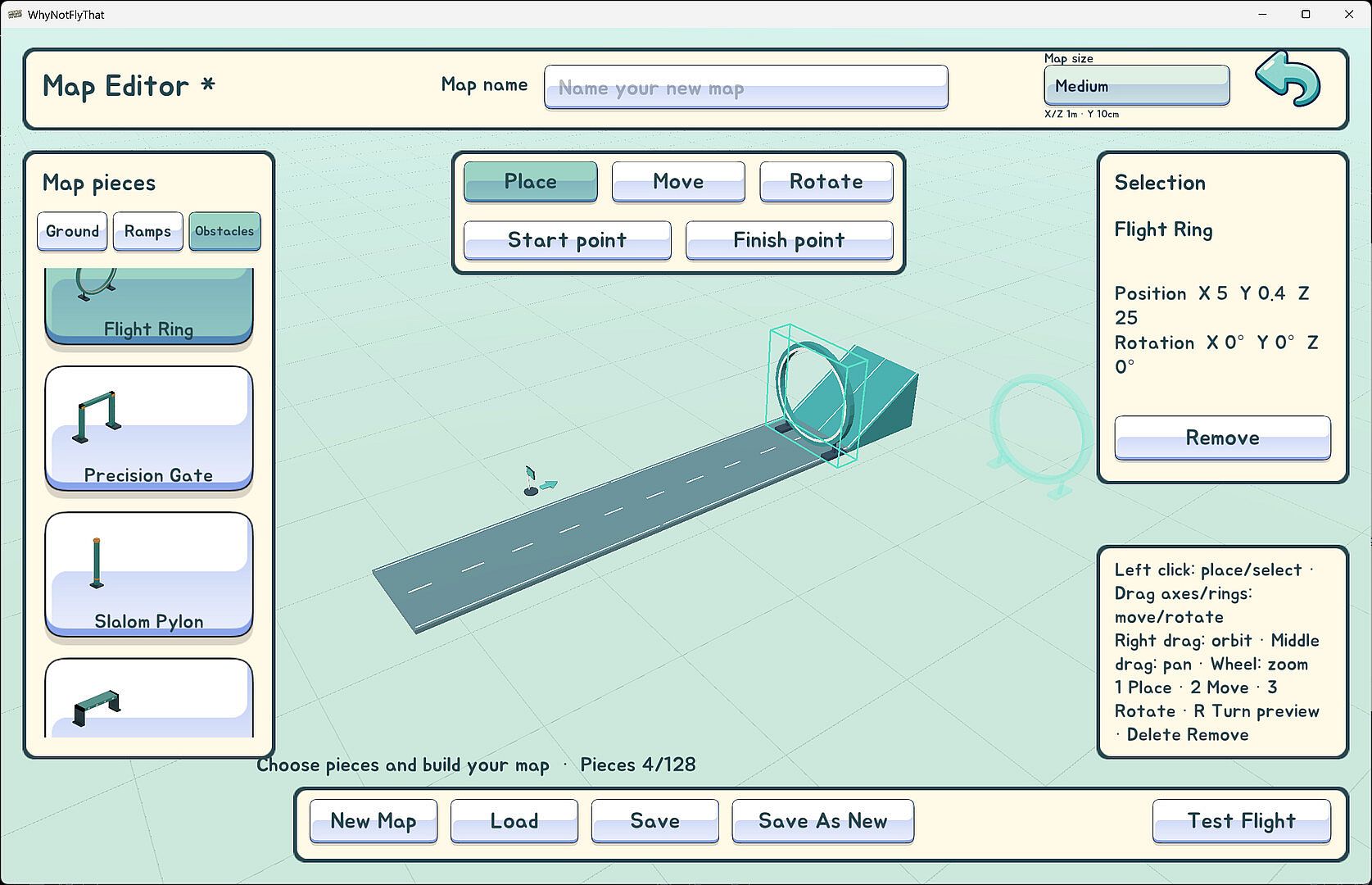
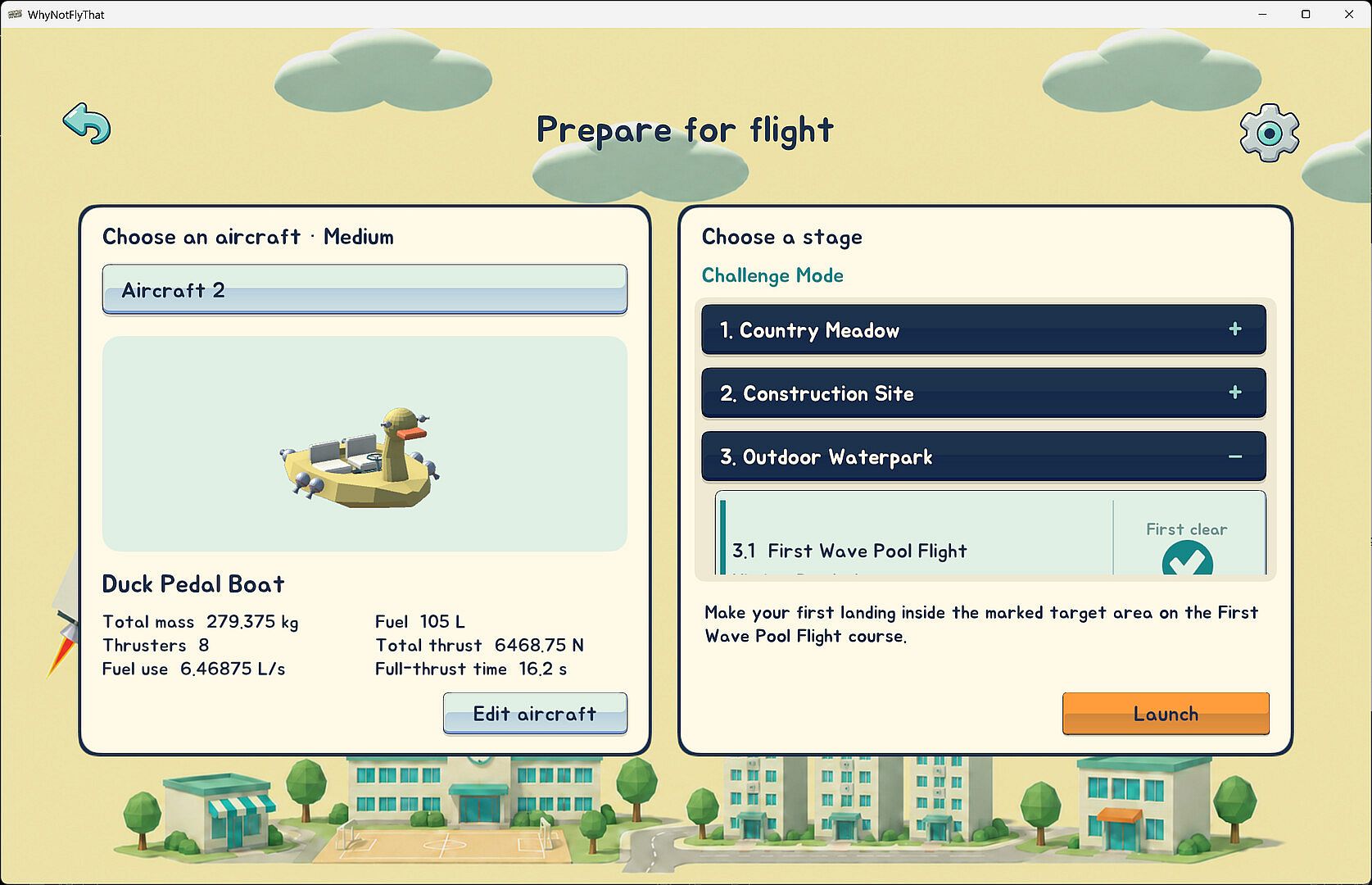
Obstacle courses add structure through roads, jumps, and barriers that test durability and steering. Success depends on maintaining control while navigating uneven terrain or clearing gaps. The built-in map editor allows placement of custom ramps and obstacles, letting players design personal courses tailored to specific design goals or challenges.
Building and Experimentation
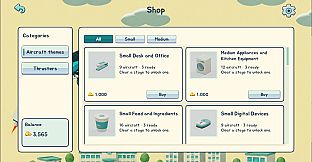
Object selection forms the foundation of every creation. Everyday items vary in weight and shape, which directly influences how thrusters interact with them. A lighter cart might rise quickly but lack stability, whereas a heavier appliance could require more careful thrust distribution to avoid tipping. Control assignment adds another layer, as players decide which keys trigger which thrusters and in what combination.
The emphasis stays on personal discovery. No two builds feel identical because minor repositioning alters flight characteristics in unpredictable ways. This setup suits players who enjoy tinkering and observing cause-and-effect relationships in a physics-driven environment.
Is It Worth Playing?
Why Not Fly That? appeals to anyone drawn to physics sandboxes and creative building without complex systems or multiplayer elements. Its single-player focus and level editor provide ongoing opportunities for custom challenges and repeated refinement. The game launches on November 25, 2026, with no user reviews available yet, so expectations should center on the described sandbox mechanics rather than established community feedback. Those who value experimentation over narrative or competition will find the most satisfaction in its straightforward loop of build, launch, and adjust.











