


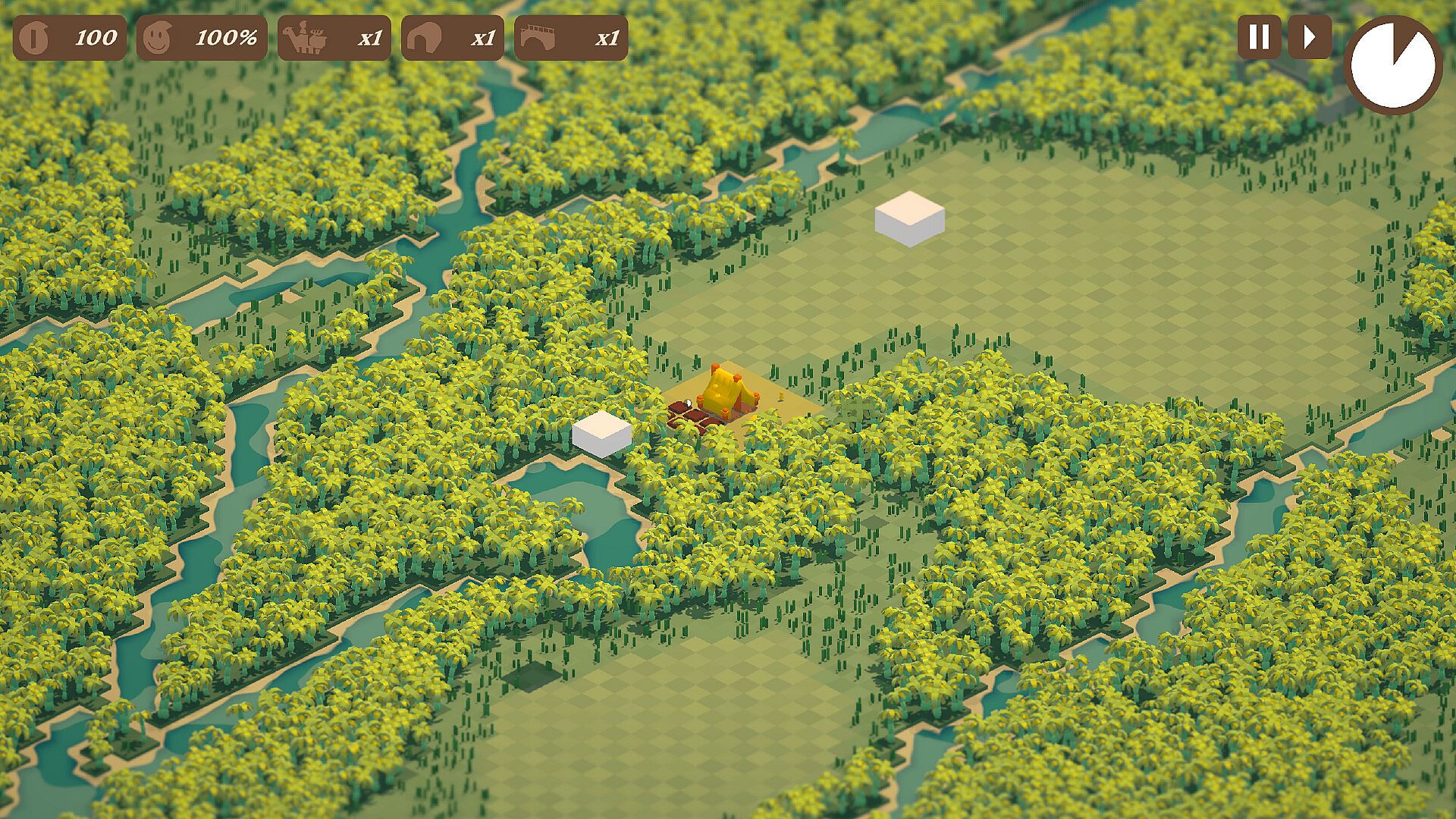
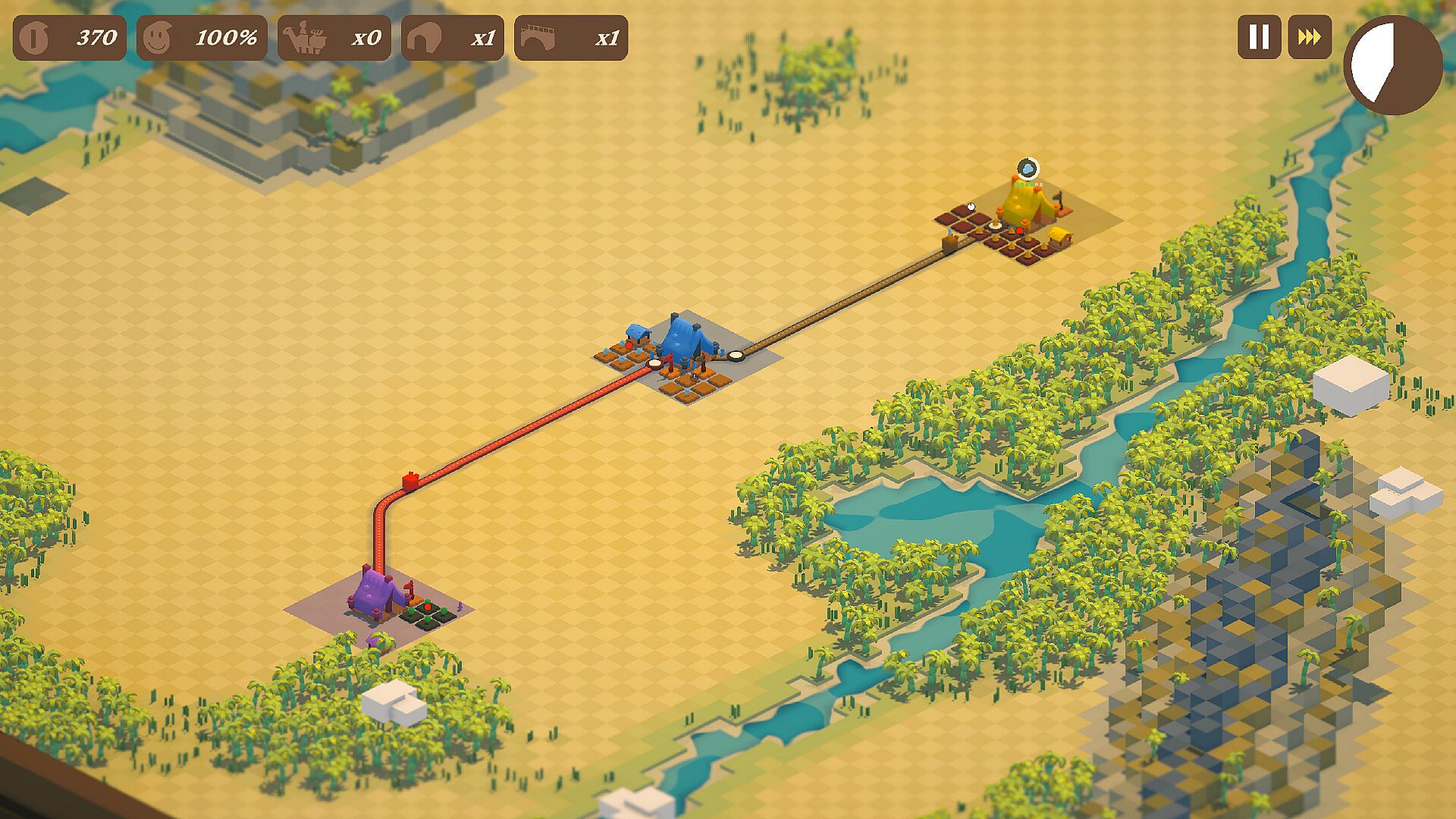
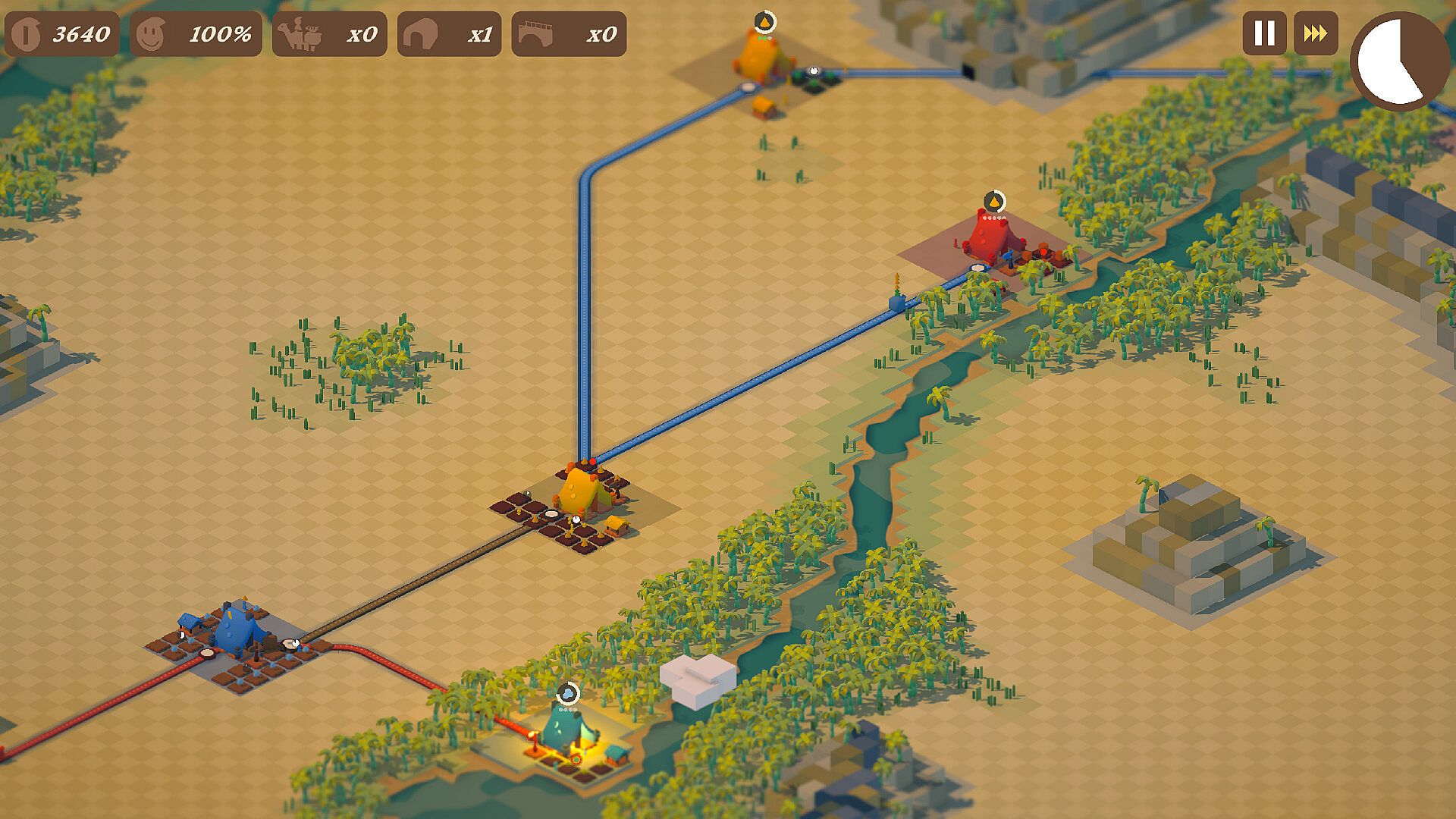
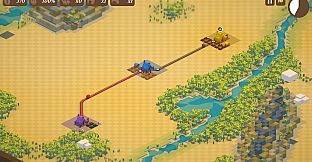
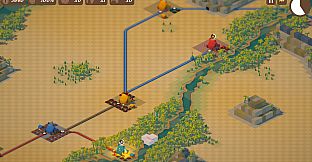
Tiny Traders is a strategy, casual, and simulation game for PC that centers on resource management and puzzle solving through trade route construction. Players build connections between cities based on their specific import and export requirements, forming an efficient empire that balances supply and demand while navigating real-world constraints like terrain and weather.
Gameplay
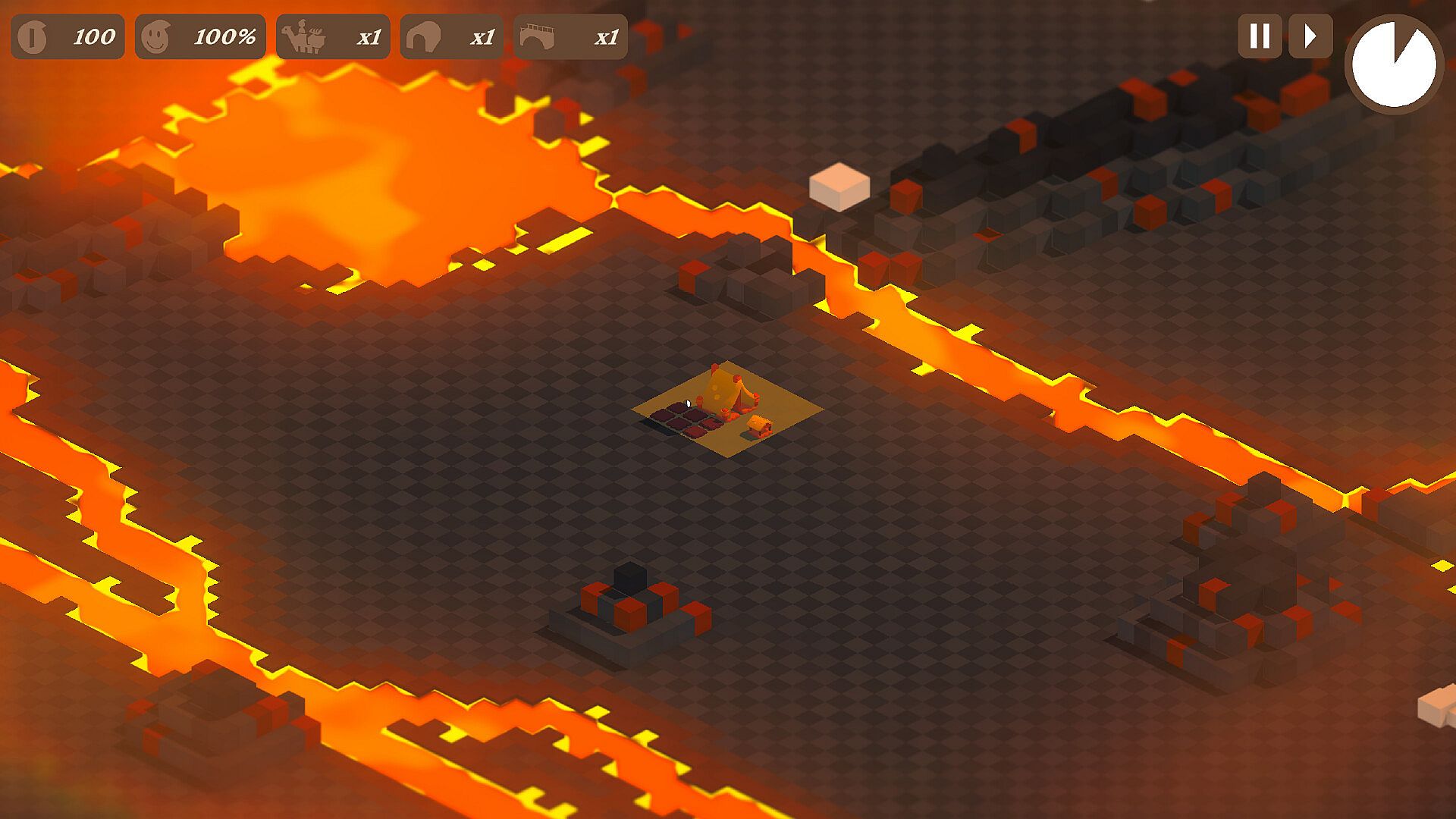
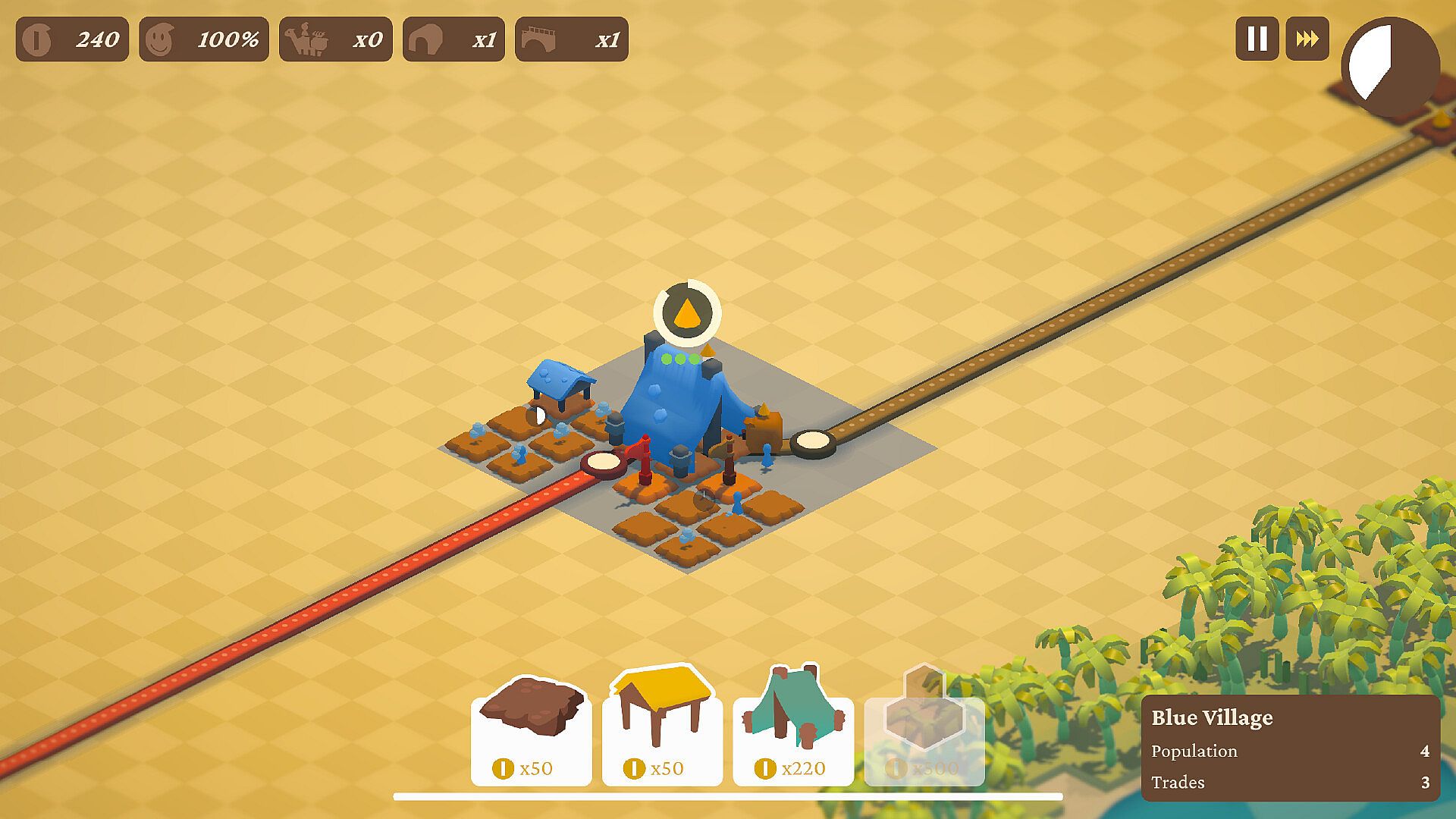
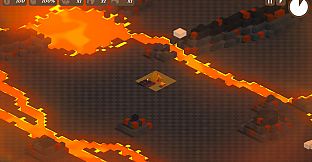
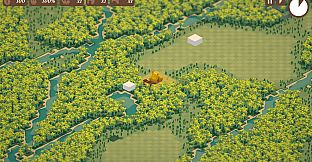
The core loop involves identifying city needs, planning routes that account for distance and obstacles, and optimizing transport to keep goods flowing steadily. Different environments demand tailored approaches, from arid deserts that test endurance to volcanic areas where heat and instability add layers of challenge. Players adjust paths around mountains, rivers, and forests while factoring in shifting weather that can slow progress or disrupt schedules.
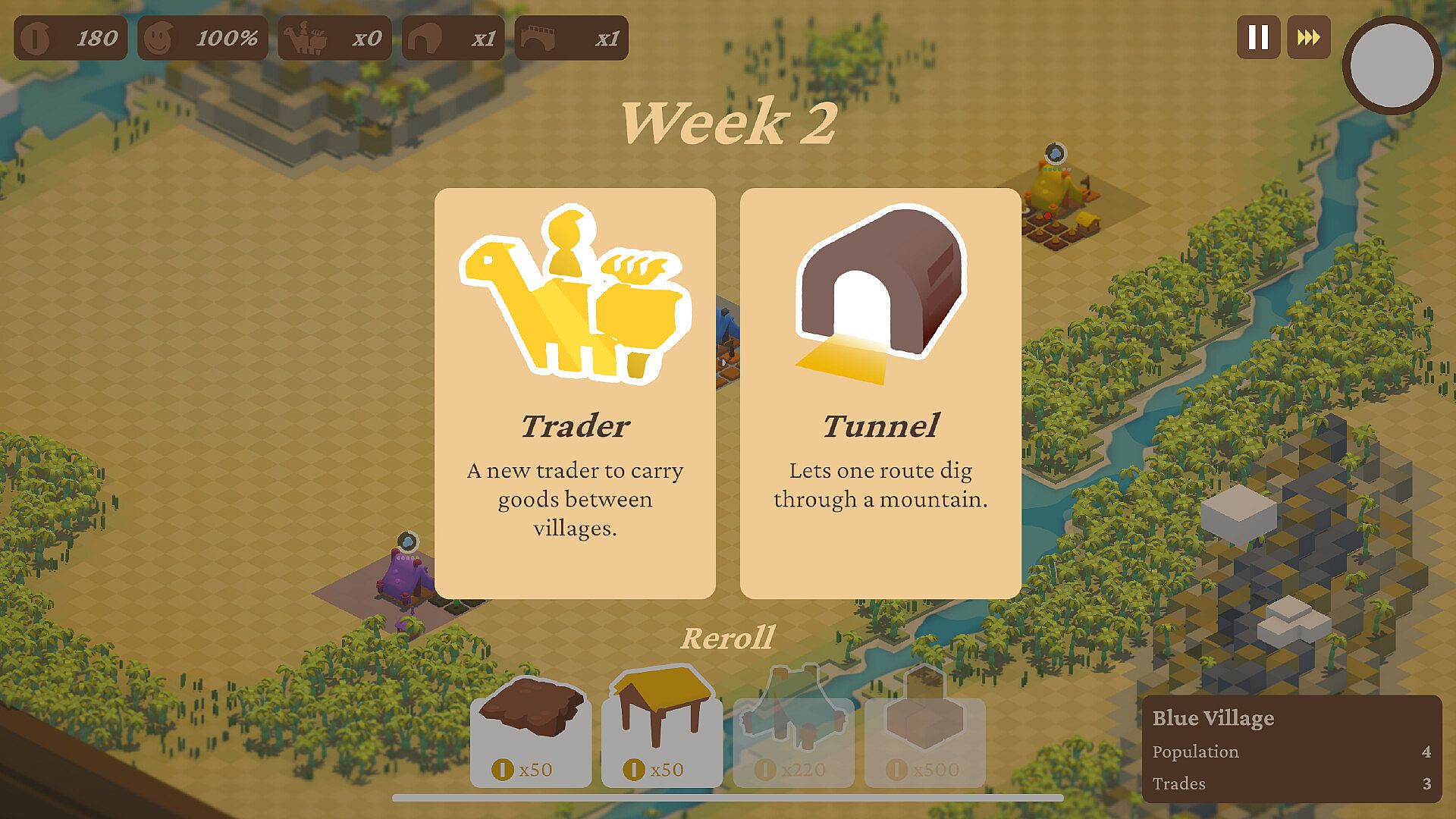
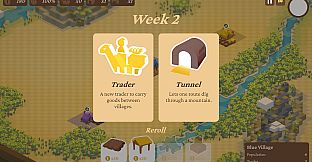
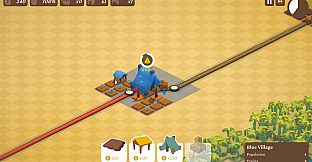
Upgrades play a central role in long-term success. Options include faster transport animals, tunnels through difficult terrain, and bridges to span gaps, each improving route reliability and speed. These enhancements help maintain steady trade even as the network expands across multiple cities. The system rewards careful planning over rushed decisions, creating a satisfying rhythm of observation, adjustment, and incremental improvement.
City variety adds depth to decision making. Producers of raw goods like wheat or olives pair with processors such as bakers or other specialists, forming chains that players must support without bottlenecks. Matching these needs efficiently turns isolated settlements into a thriving interconnected system.
Game Modes
Tiny Traders focuses on a single-player experience built around progressive empire building. The emphasis stays on thoughtful route design and resource balancing rather than competitive or timed challenges. Players work through increasingly complex maps at their own pace, experimenting with different city combinations and upgrade paths to refine their approach.
World variety supports extended play without repetition. Each environment type brings distinct layout considerations that influence how routes form and how upgrades are prioritized. The forgiving design allows room for trial and error, letting players refine strategies across sessions without harsh setbacks.
Worlds and Cities
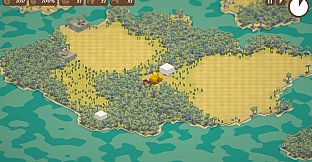
Twelve distinct world types provide the settings for trade empires. Deserts, forests, islands, and volcanic wastelands each present unique terrain and environmental factors that shape viable routes. Players adapt their planning to these conditions, learning which upgrades prove most valuable in each setting.
Ten city types represent different roles in the economy. Wheat producers supply raw materials, bread bakers convert them into finished goods, and olive farmers contribute specialized resources. Connecting these specialists creates interdependent networks where efficient routing benefits the entire system.
Is It Worth Playing?
Tiny Traders suits players who enjoy relaxed strategy and simulation games with a puzzle focus. The atmospheric presentation and emphasis on steady progress rather than high pressure make it accessible for casual sessions or longer planning periods. Those drawn to resource management and route optimization will find the upgrade system and city interactions rewarding over multiple playthroughs.
The forgiving nature supports experimentation, while the variety of worlds and city roles encourages repeated attempts with different priorities. For anyone seeking a thoughtful PC simulation centered on trade efficiency, the game delivers a consistent and engaging loop without unnecessary complexity.