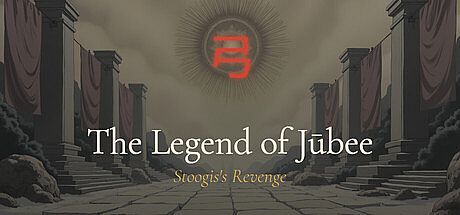


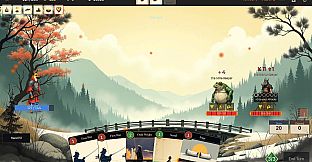
The Legend of Jūbee: Stoogis's Revenge is a single-player turn-based deckbuilding roguelike set in the strategy and indie genres for PC. Players take on the role of one of six distinct pilgrims who attempt to climb a mountain that changes with each ascent, building and refining a deck of cards along the way to overcome increasingly difficult encounters.
Gameplay
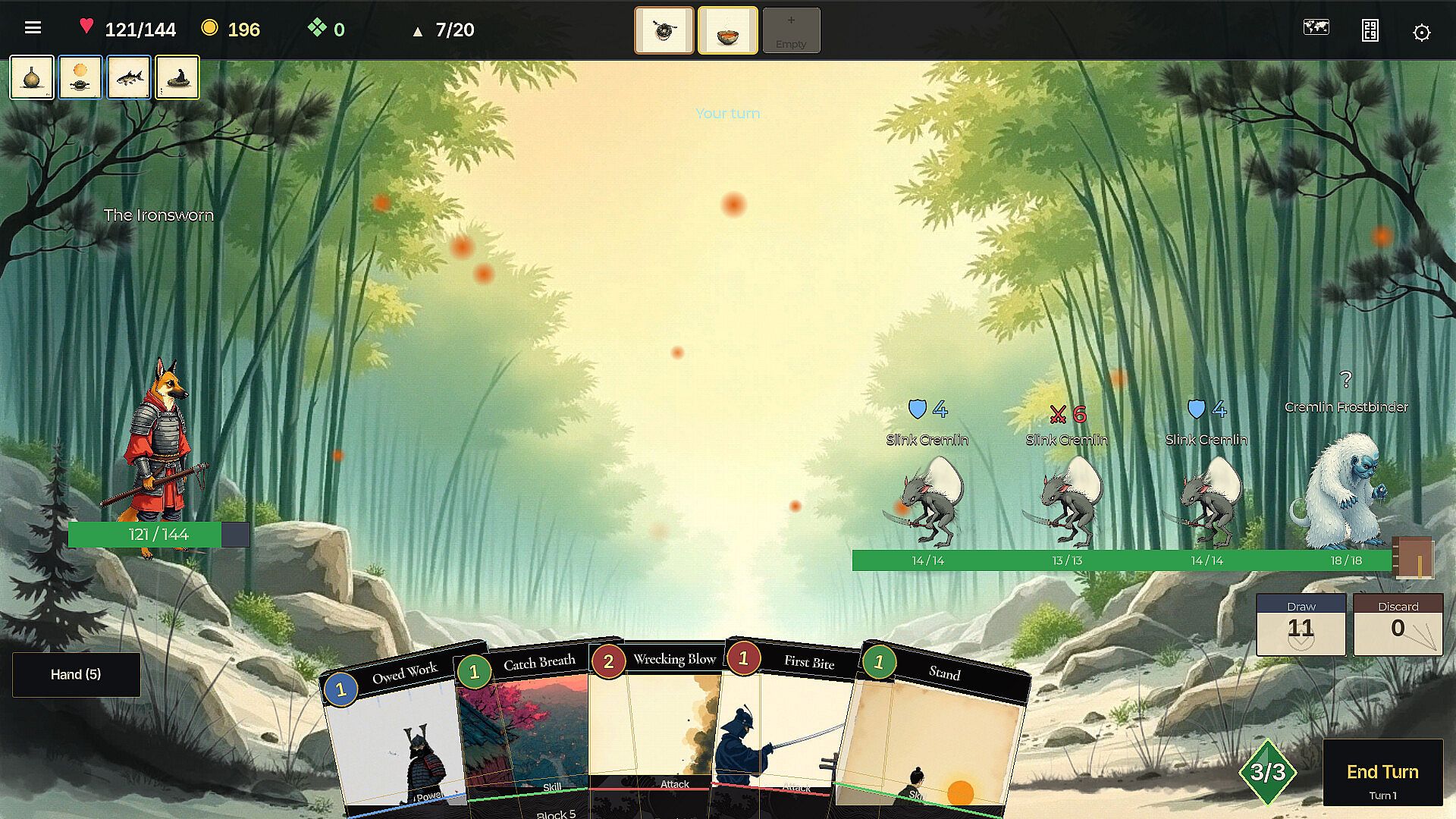
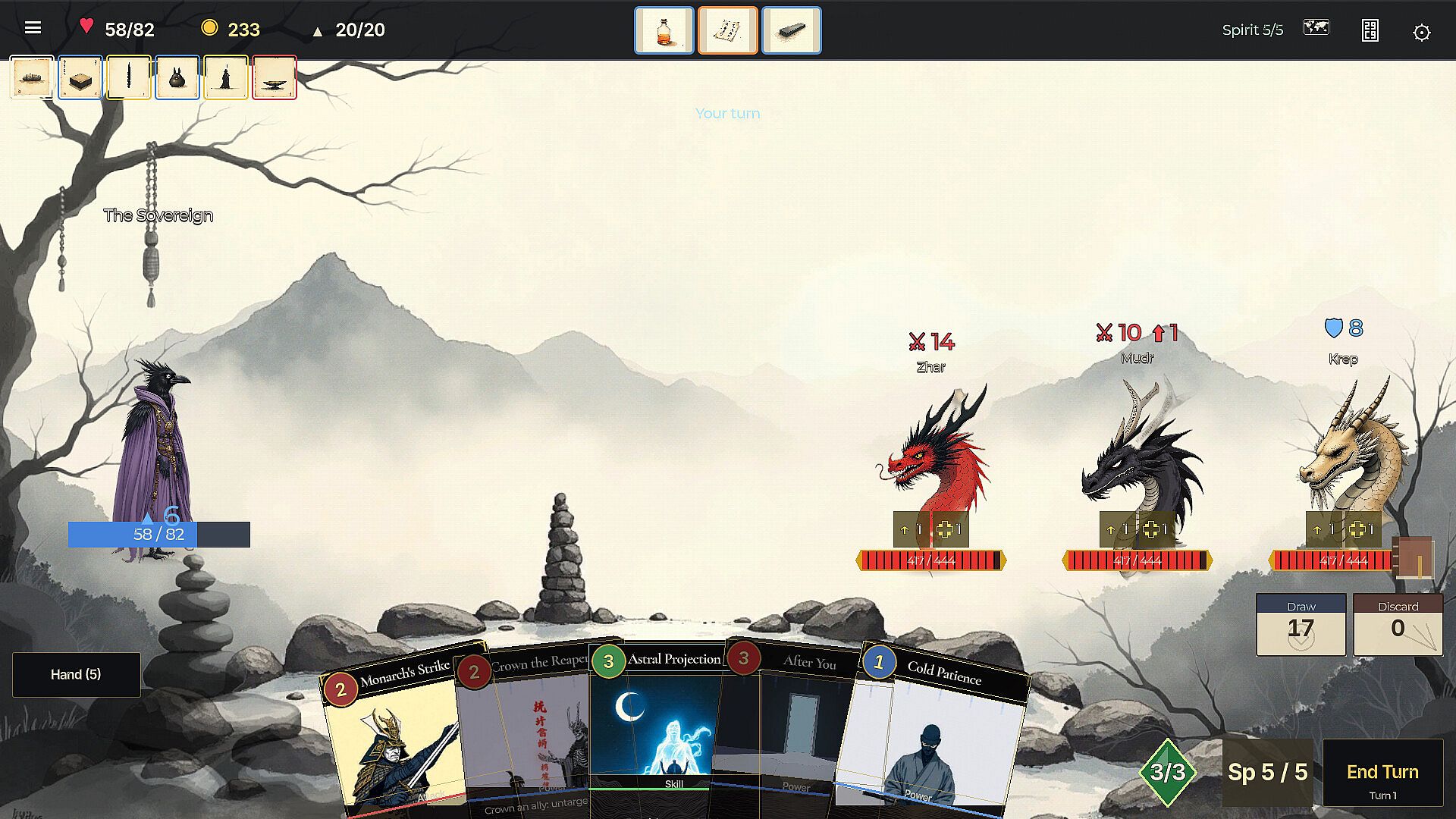
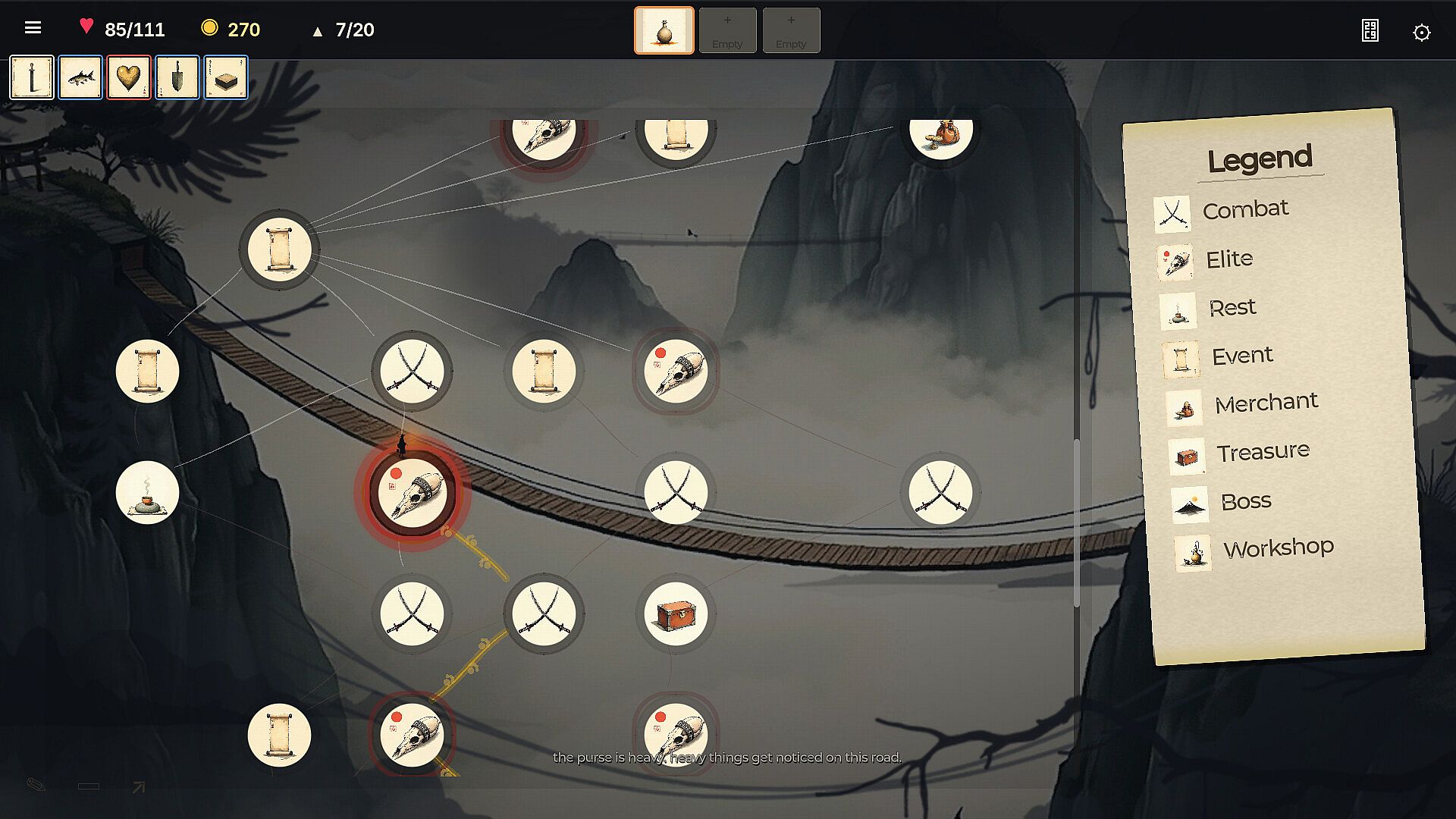
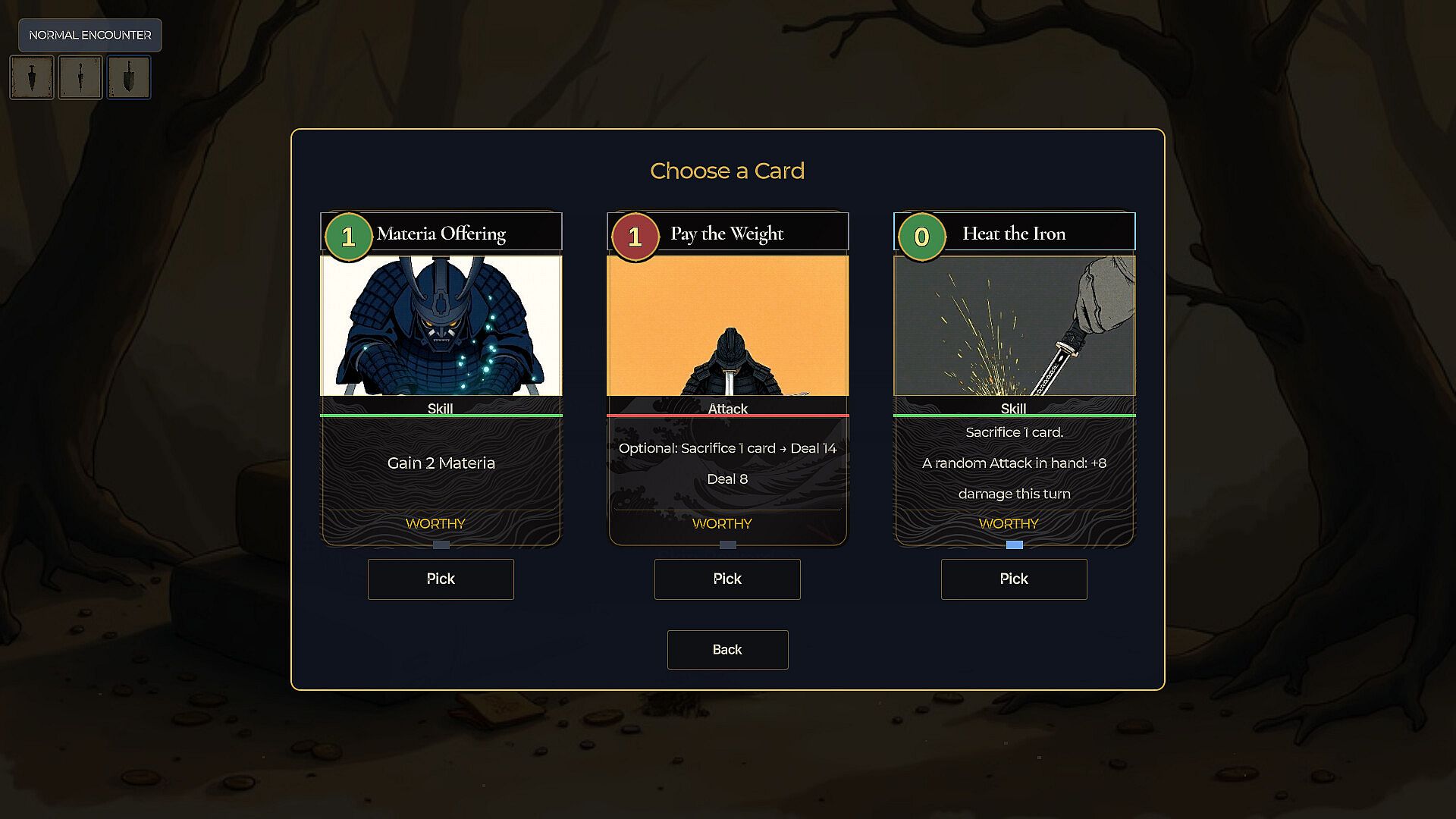
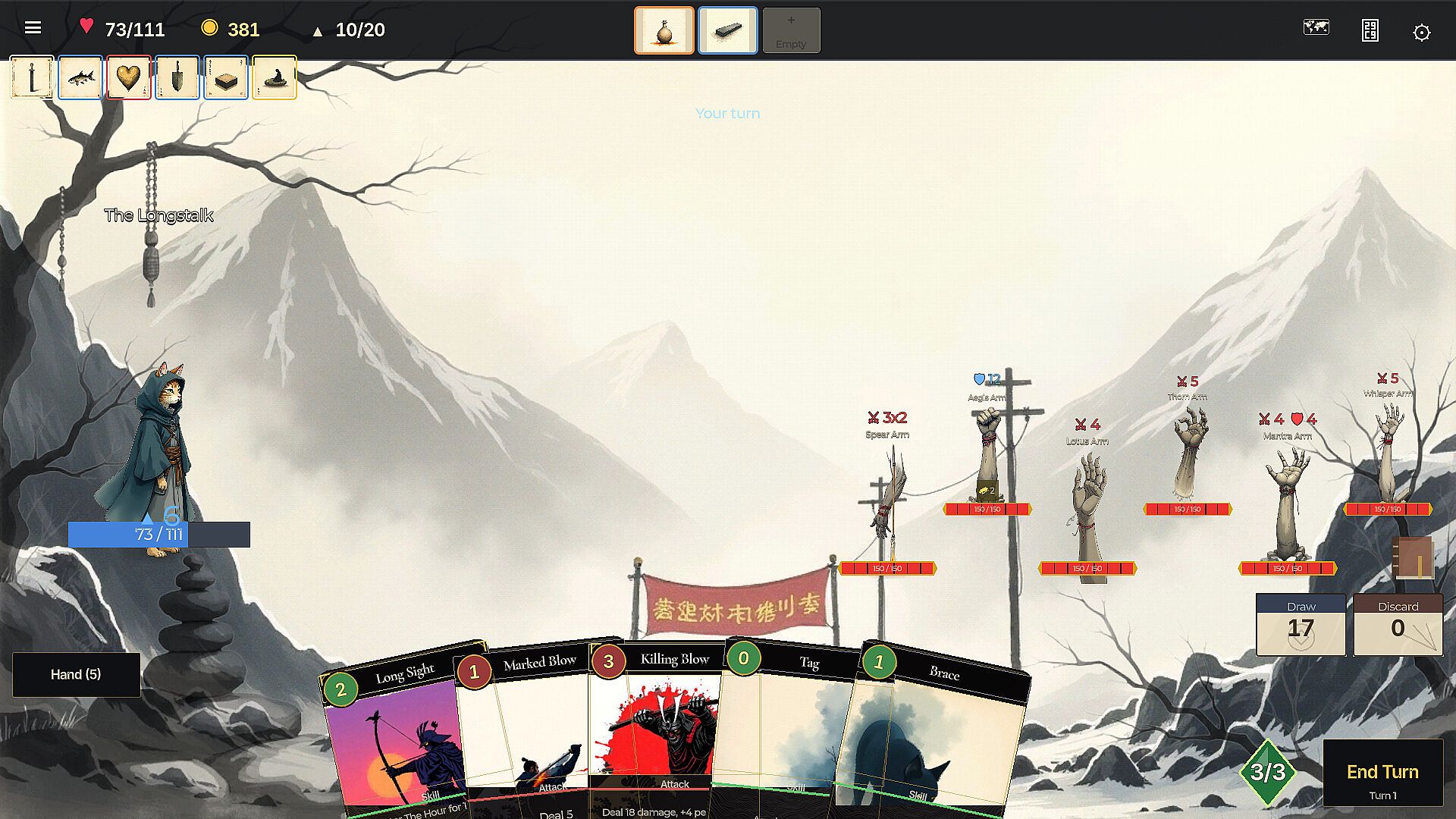
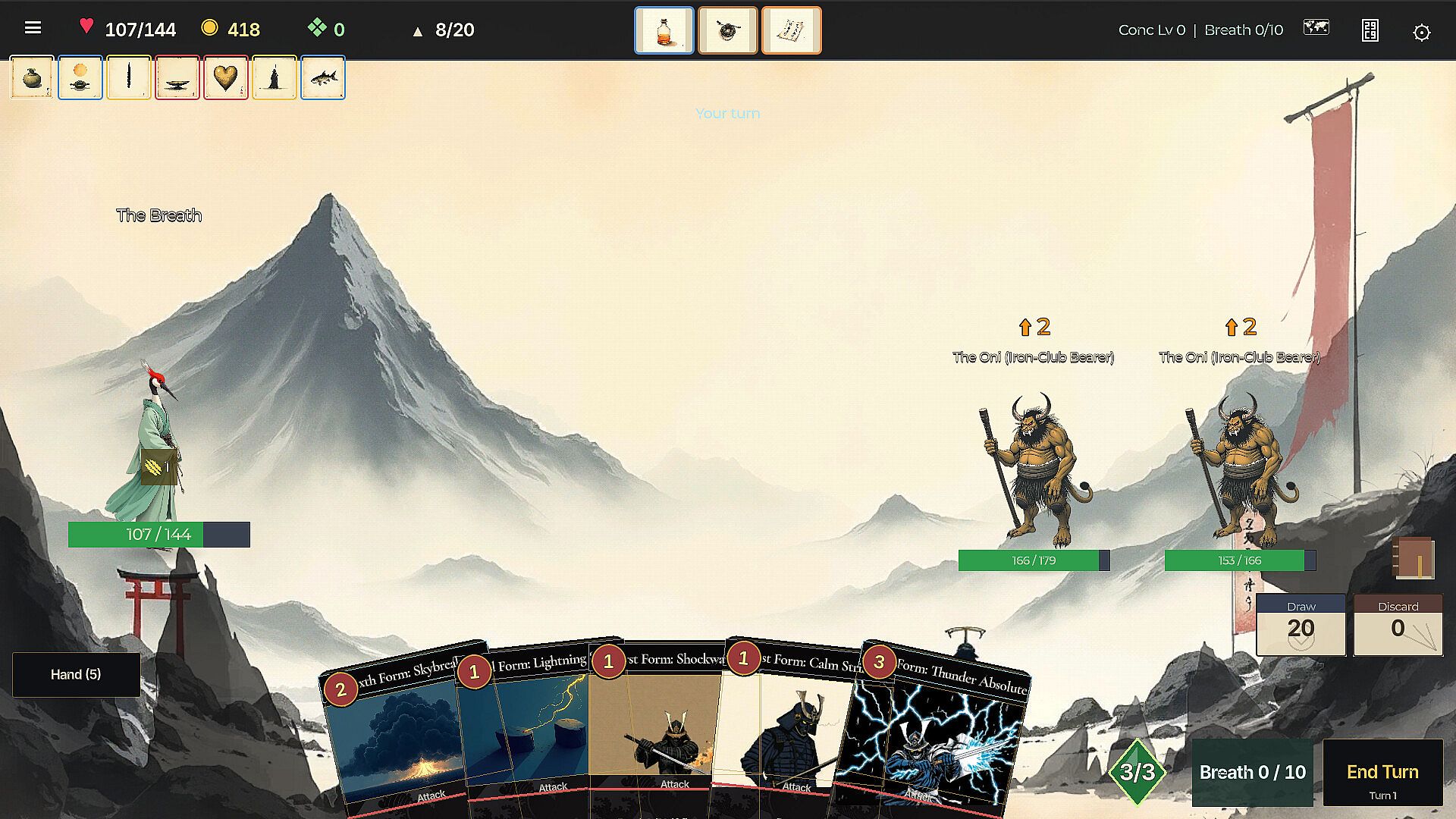
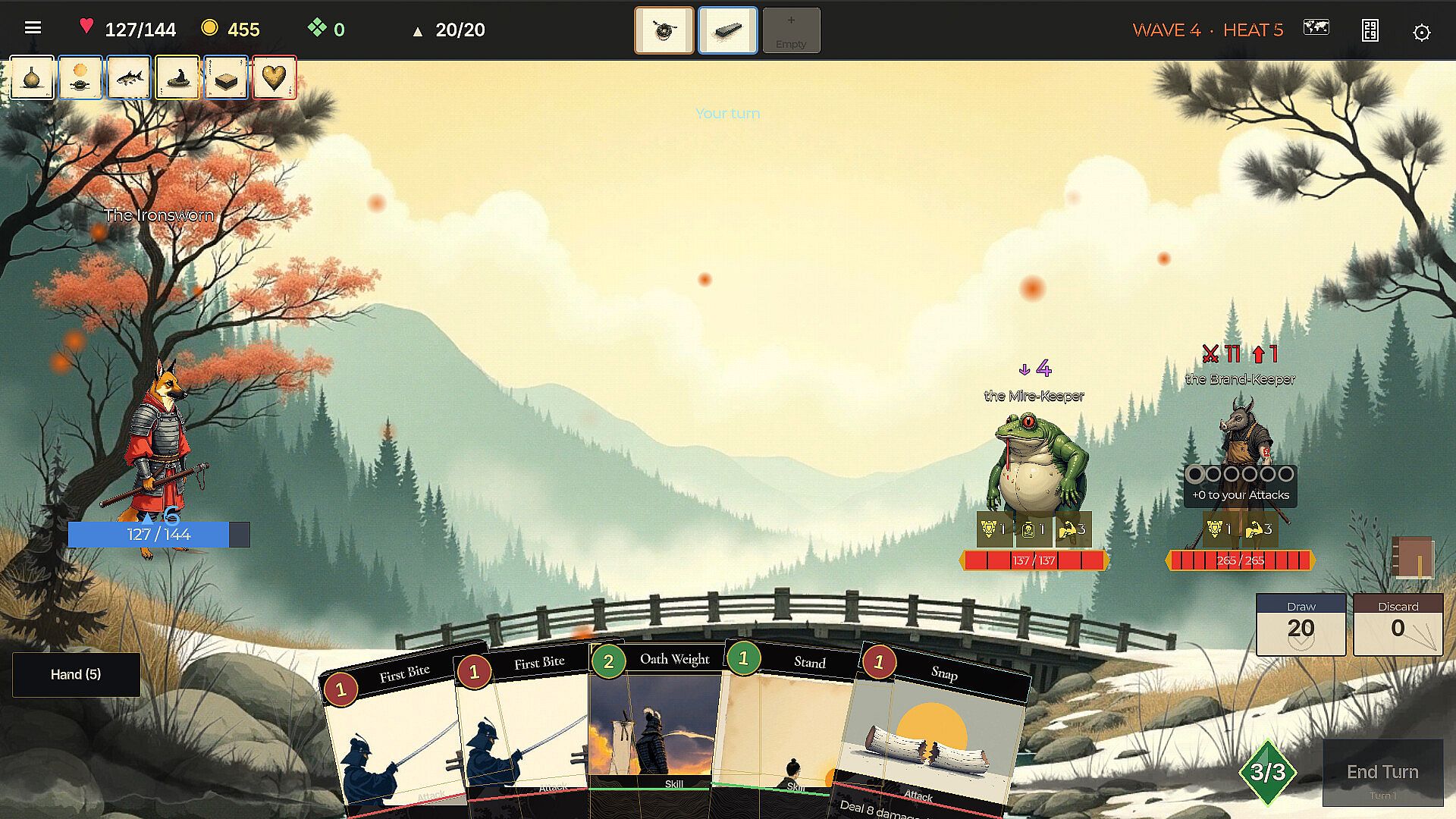
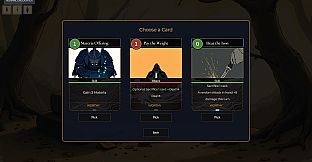
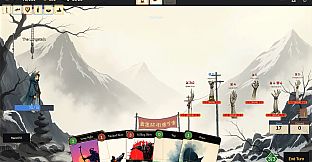
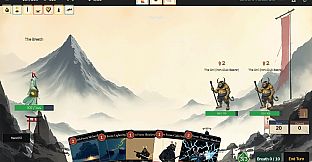
Each run starts with a modest deck at the base of the trail. Players draft new cards during the climb, collect Tokens that alter combat or provide advantages, and make choices that shape the build toward the summit. Fights unfold in turns where enemies display their planned actions in advance, allowing time to plan responses or counters. The system emphasizes reading intentions and adapting rather than relying on raw power alone.
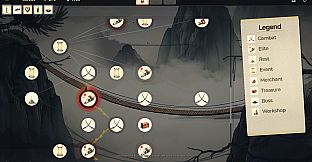
Progression follows three distinct acts. Act I takes place along the Bamboo Road amid initial skirmishes in a forest setting. Act II moves into the Cloudline with rope bridges and snowy high slopes. Act III reaches the Summit under the shadow of the peak itself. The environment grows stranger and more challenging with height, introducing new mechanics and threats that demand fresh strategies.
Six pilgrims each bring unique starting decks, mechanics, and personal burdens. The Ironsworn, a German Shepherd, focuses on steady buildup followed by powerful finishes. The Longstalk, a Working Cat, emphasizes quiet observation and preemptive strikes. The Breath, a Crane, relies on precise sequencing drawn from ancient techniques. The Transmuter, a Fox, exchanges resources for immediate gains at potential long-term cost. The Oathbearer, a Goat, draws on pact-based sorcery tied to a forgotten signature. The Sovereign, a Raven, interacts with the dead and survivors alike through binding effects. Every pilgrim offers a different path through the same mountain.
Game Modes
Standard runs use a seed system that allows players to enter or share a specific code. Replaying the same seed with identical pilgrim, specialty, Watch difficulty, and choices produces the same sequence of events, turning the experience into one of pure decision-making rather than random variance. Ten Watches scale the overall difficulty upward in measured steps.
Completing a full climb with any pilgrim unlocks Endless mode for that character. This variant shifts to repeated waves of increasing strength, introduces twin bosses on later laps, adds Omens that alter core rules, and lets players begin with a customized loadout drawn from previously unlocked content. The mode tests sustained builds against escalating pressure without a fixed endpoint.
The Mountain and Its Challenges
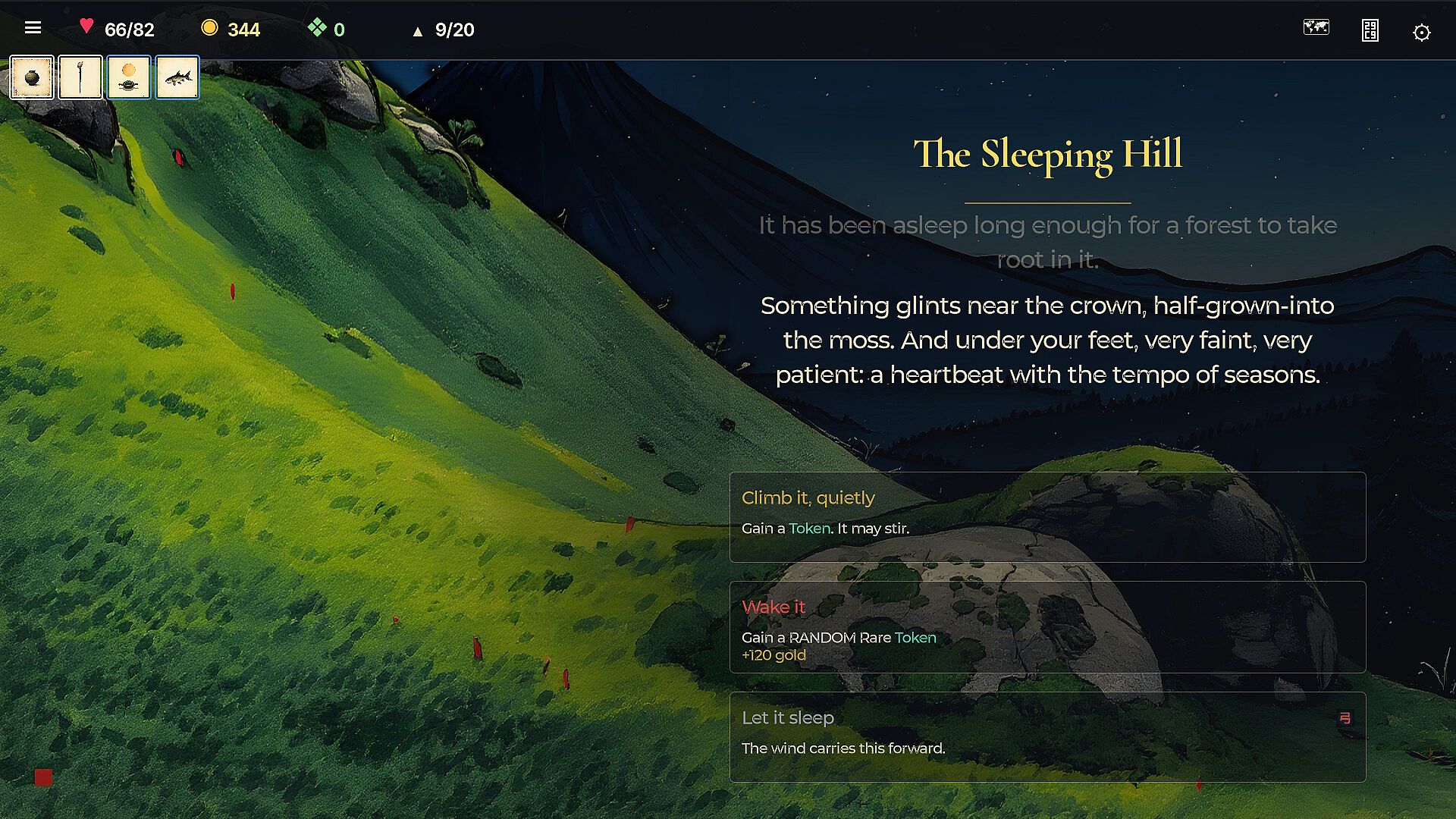
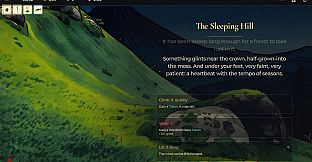
Hundreds of cards and Tokens combine with seventy Provisions and over one hundred events to create varied paths. Boss encounters feature specific mechanics that players must learn, counter, or exploit. Events scattered along the route offer branching decisions that can grant resources, alter the deck, or impose lasting effects. The roguelike structure ensures that failure sends the player back to the trailhead with new knowledge but no permanent progress on the current attempt.
Accessibility options include adjustable text sizes, color filters for common vision differences, reduced motion settings, separate audio sliders, and optional read-aloud features for cards and tooltips. The game supports mouse-only play with optional keyboard rebinding and includes a Gentle Road toggle for an easier profile experience with extra health and a free Provision.
Is It Worth Playing?
This title suits players who enjoy methodical deckbuilding roguelikes where foresight and adaptation matter more than speed or reflexes. The emphasis on enemy intent display and seed-based consistency rewards careful planning and repeated attempts with the same parameters. Six mechanically distinct pilgrims provide meaningful replay variety, while the unlockable Endless mode extends interest for those who master the standard climb. As an upcoming release from a small studio with no player reviews available yet, its appeal rests on the described systems and the promise of deep, varied runs across multiple acts. Those drawn to single-player strategy experiences with strong thematic cohesion around the mountain ascent will find the core loop worth exploring once it arrives.