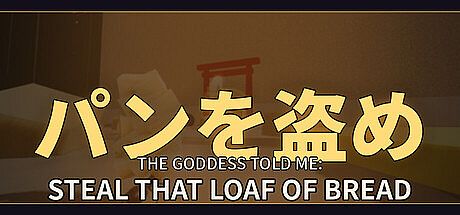


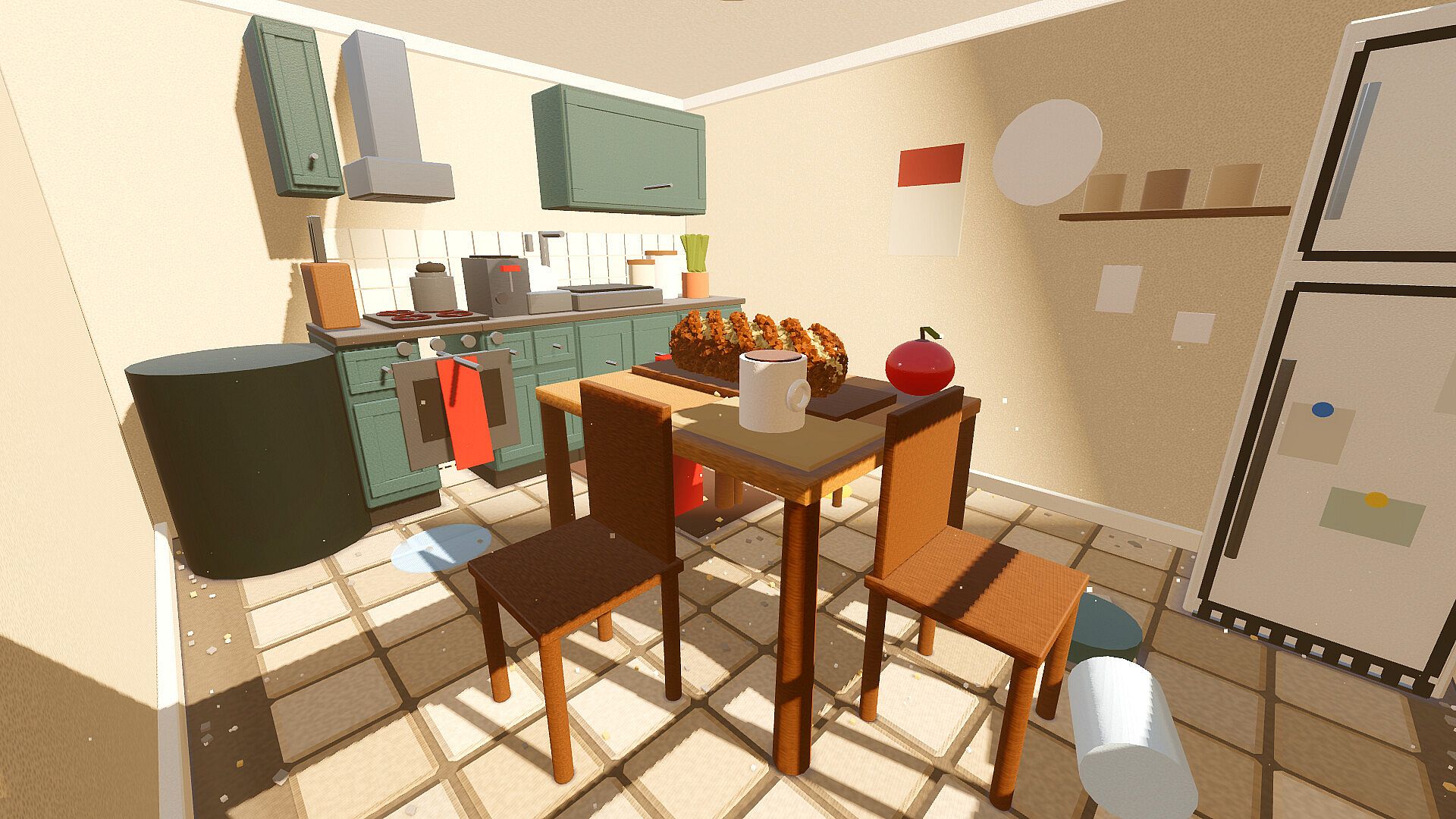
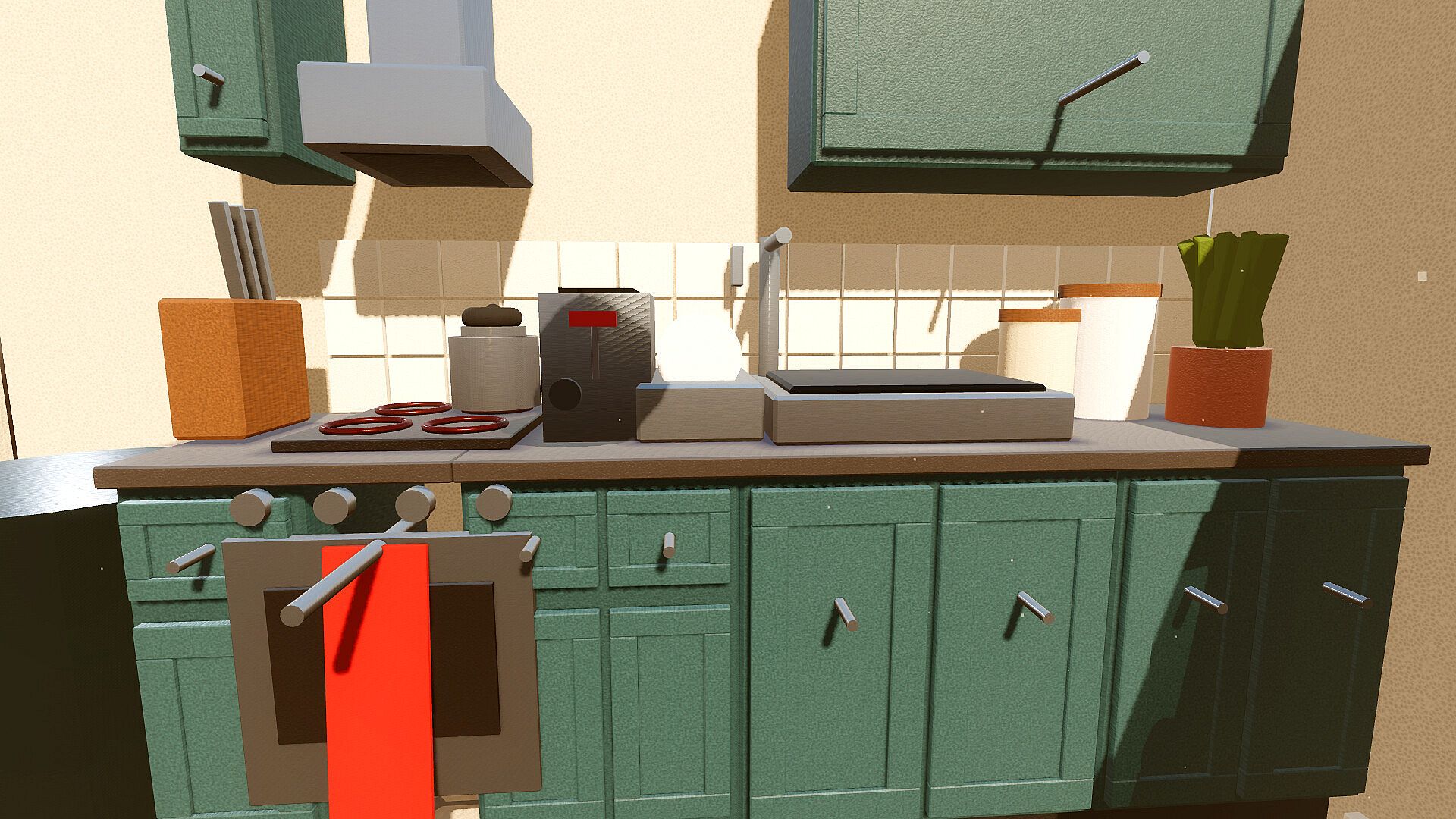
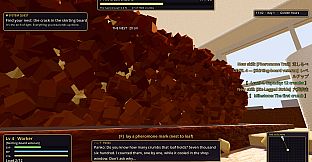
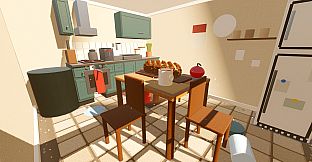
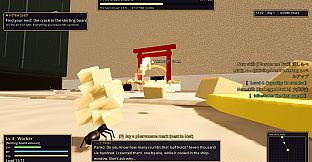
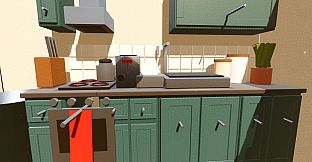
The Goddess Told Me: Steal That Loaf of Bread is an indie RPG adventure set entirely within a kitchen viewed from the perspective of a five-millimetre worker ant. The player controls an ant reincarnated by the goddess Kona with a single task: deliver every crumb of a specific loaf to a nest shrine. The entire environment scales to the ant's size, turning everyday objects into vast obstacles and opportunities. A four-metre kitchen becomes an open plain, floor-tile grooves serve as trenches for cover, and surface tension in puddles creates elastic barriers that require active struggle to escape. The human resident functions as unpredictable weather rather than a direct foe, with footsteps shaking the floor and the camera while the real threats come from slips of a slipper or thumb. A cat adds further danger through unpredictable movement.
Gameplay
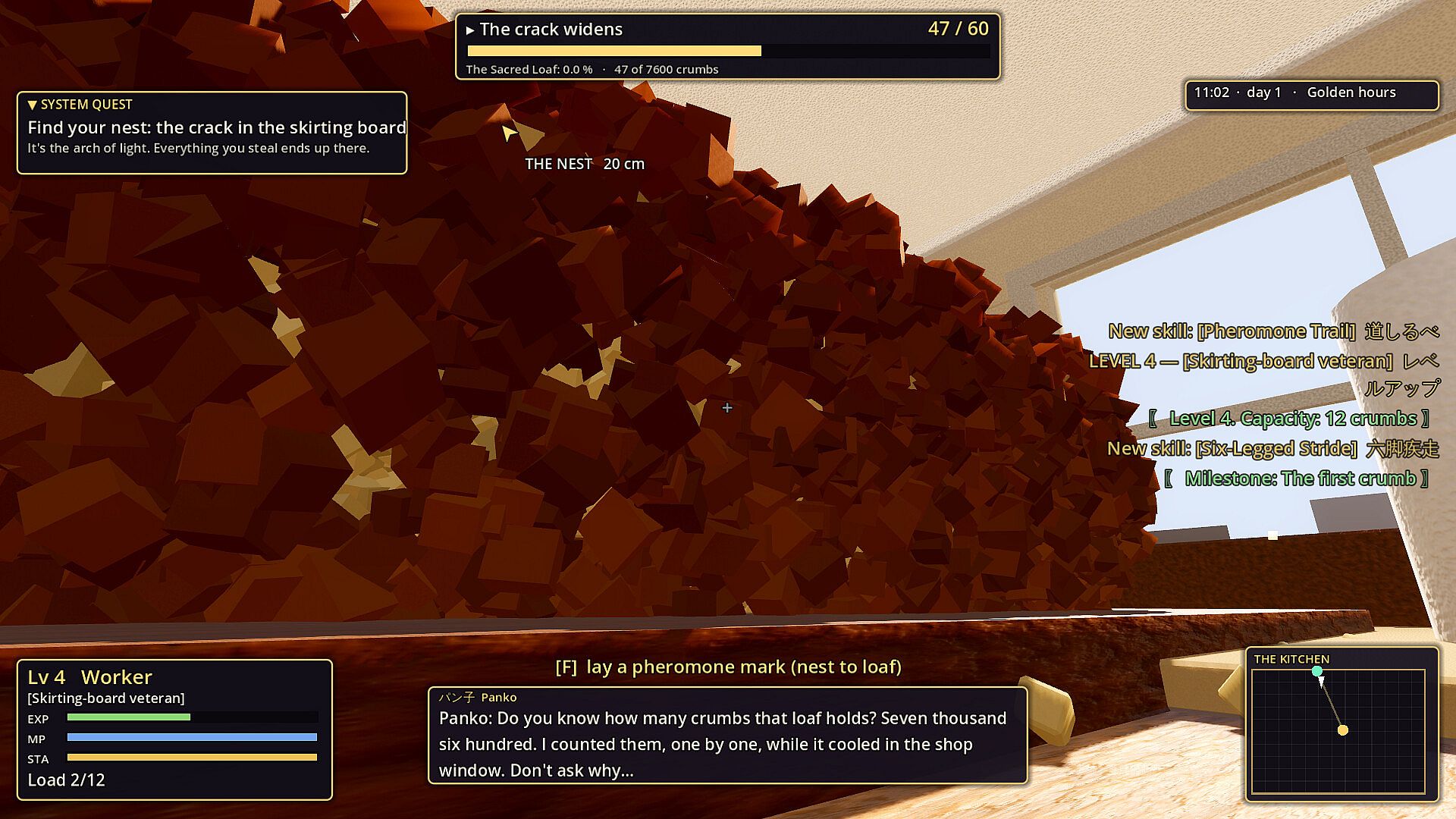
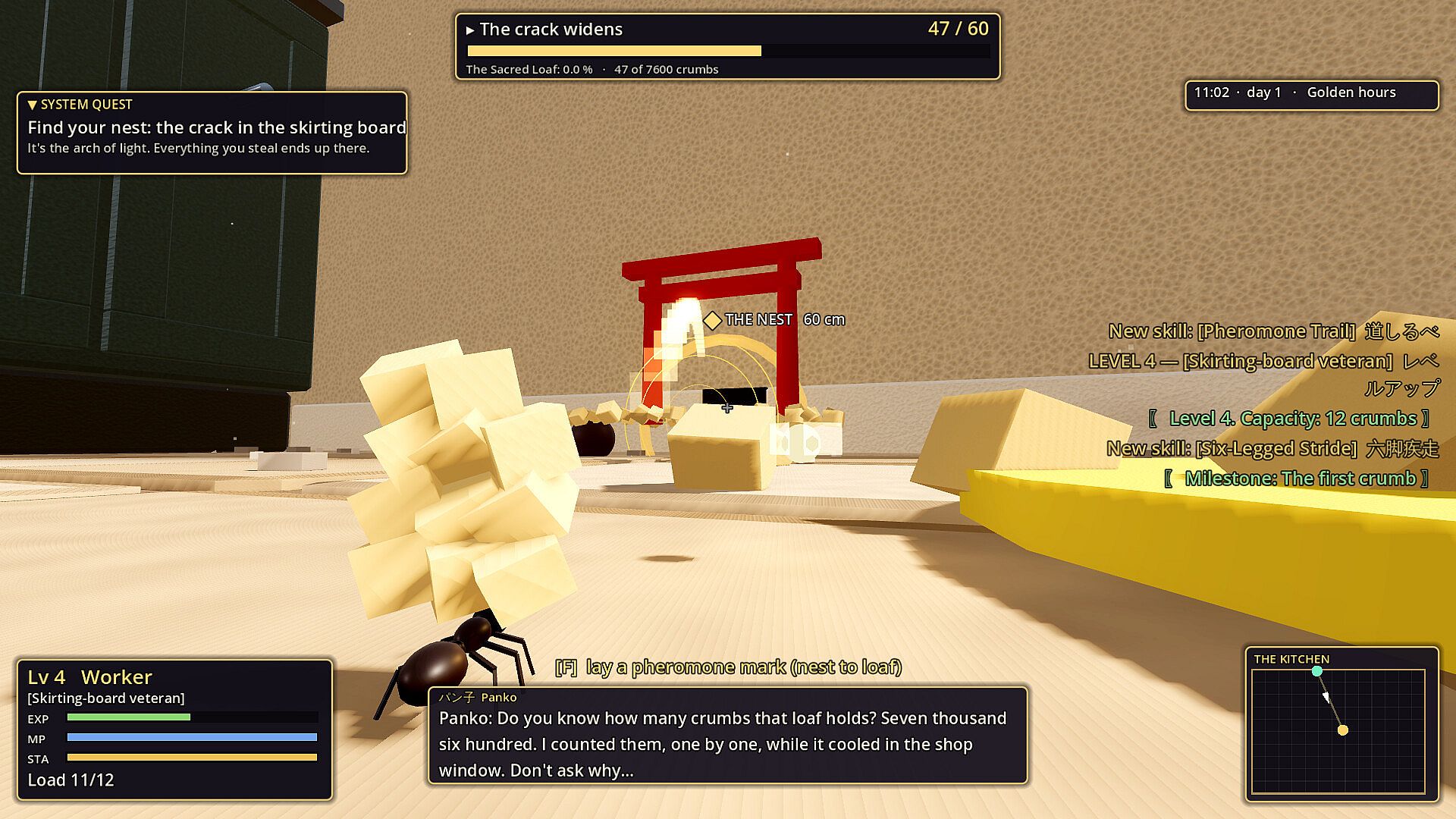
Core play revolves around repeated trips between the loaf and the nest. Each journey involves tearing off a crumb, descending from the table, crossing open ground or using under-unit corridors for safety, and returning the load. Carrying capacity starts low and increases through upgrades, directly affecting speed and risk on the return trip. The pheromone trail mechanic lets the player mark routes; once a chain connects the nest to the loaf, sister ants begin using it autonomously, shifting the player from carrier to route planner. Crumbs can also be planted to construct permanent ramps, bridges over grout lines, or towers that bypass obstacles such as hanging towels. These structures remain in the world and become part of the colony's shared infrastructure. Sisters carry individual names and numbers, and fallen ants appear in a readable graveyard. Midway through the story the queen dies, prompting the player to crown one of three daughters and lock in colony statistics for the remainder of the run. A second identical loaf introduced later forces careful identification of the target among moving locations.
Game Modes
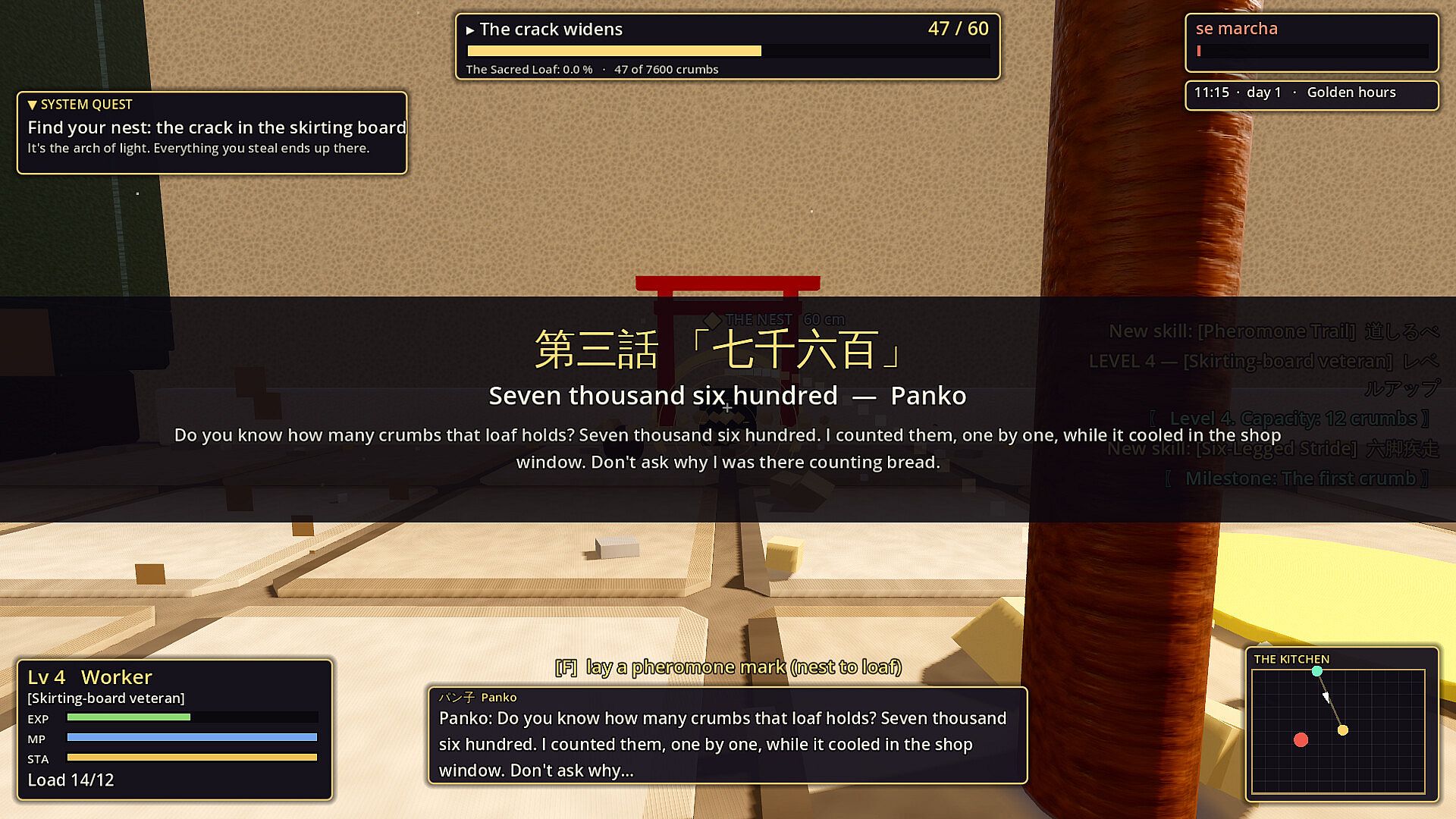
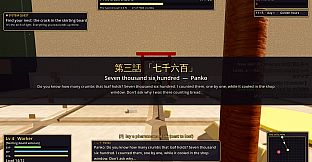
The experience is a single continuous narrative campaign divided into twenty-three chapters. Chapters advance strictly on crumb-delivery milestones rather than timers or completion percentages, triggering when the player drops a load and the camera focuses on the counter. Each chapter alters the kitchen environment or introduces new threats, such as releasing the cat or covering the loaf with a bread bin. The progression bar at the top of the screen counts toward the next chapter trigger, ensuring story events feel tied to player effort. Photo mode pauses the world, removes the interface, and frees the camera for static composition at floor level. Language options include English, Spanish, and Japanese, with the Japanese version serving as the original text and the others as translations, all switchable at any time.
Story and World
The narrative unfolds through five speaking characters and a total of eight hundred thirty-two words of dialogue, delivered at key moments without filler. The goddess's demand drives the central conflict, while the human's routines and the cat's presence create constant environmental pressure. Building and trail systems gradually transform the kitchen from hostile territory into colony-controlled space. The short overall length of two to three hours for a first playthrough keeps the focus on the evolving relationship between the ant's actions and the changing kitchen layout.
Is It Worth Playing?
Players who enjoy precise spatial navigation, incremental colony-building systems, and a compact story delivered through environmental change will find the game a distinctive fit. The scale-focused mechanics and permanent construction elements reward experimentation with routes and infrastructure, while the chapter triggers ensure steady narrative payoff tied directly to progress. The limited runtime suits those seeking a focused single-player experience rather than extended campaigns. Availability on PC supports keyboard, mouse, and controller input with full language switching. Those drawn to unusual perspectives and quiet management loops rather than combat or open-world exploration are most likely to appreciate the title's approach.