


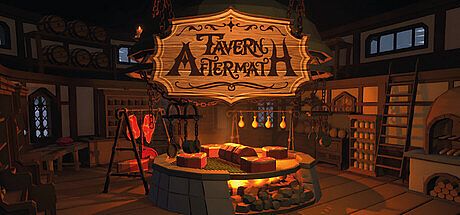


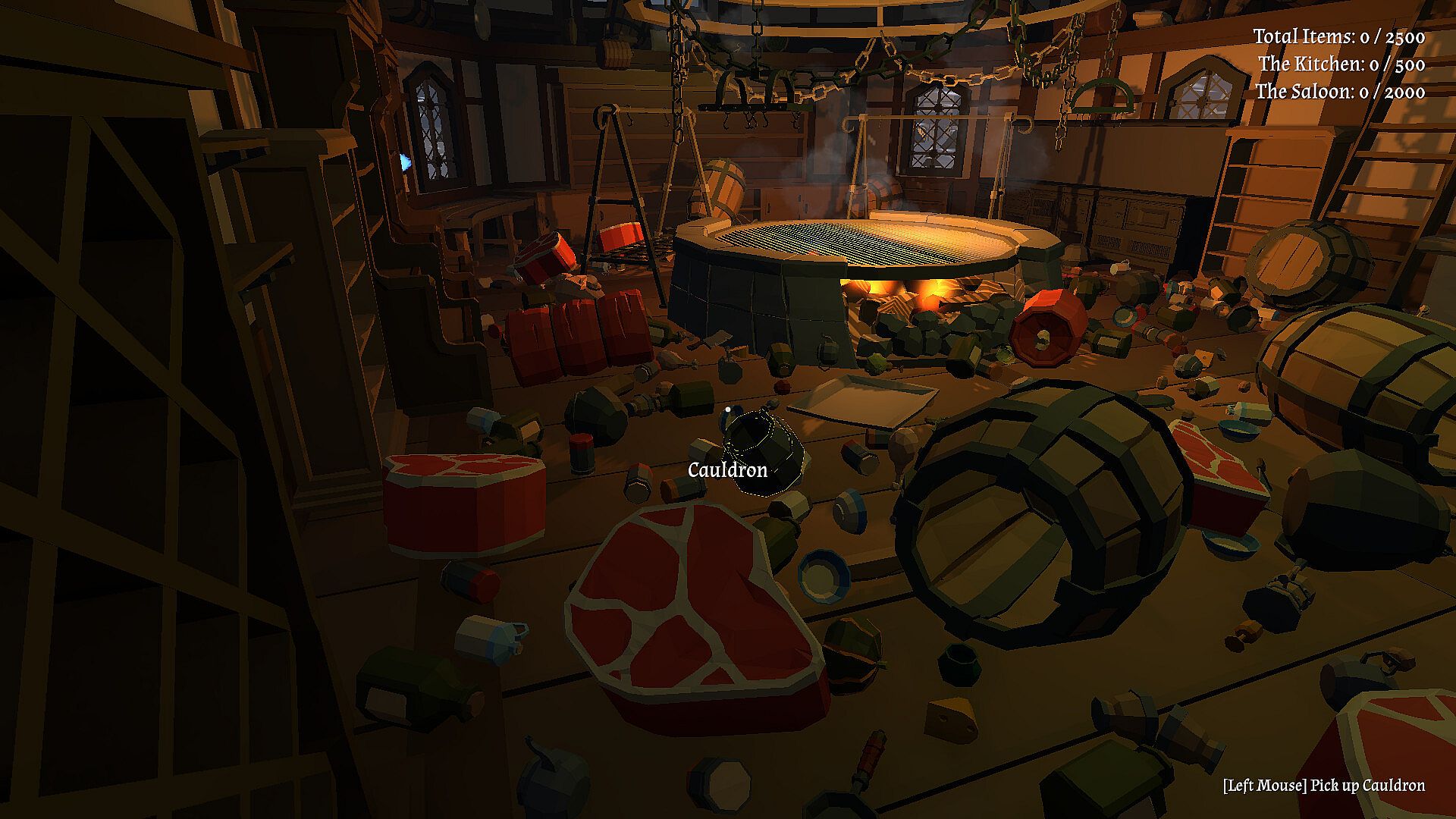
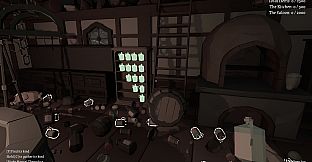
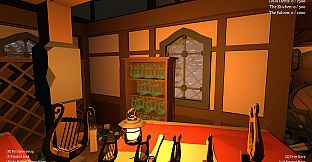
Tavern Aftermath is a cozy tidying simulation game set in a medieval tavern that has been overturned by soldiers. Players restore order by sorting thousands of scattered objects back into their proper places while uncovering fragments of a hidden story. The experience emphasizes deliberate pacing and visual transformation over any form of competition or urgency.
Gameplay
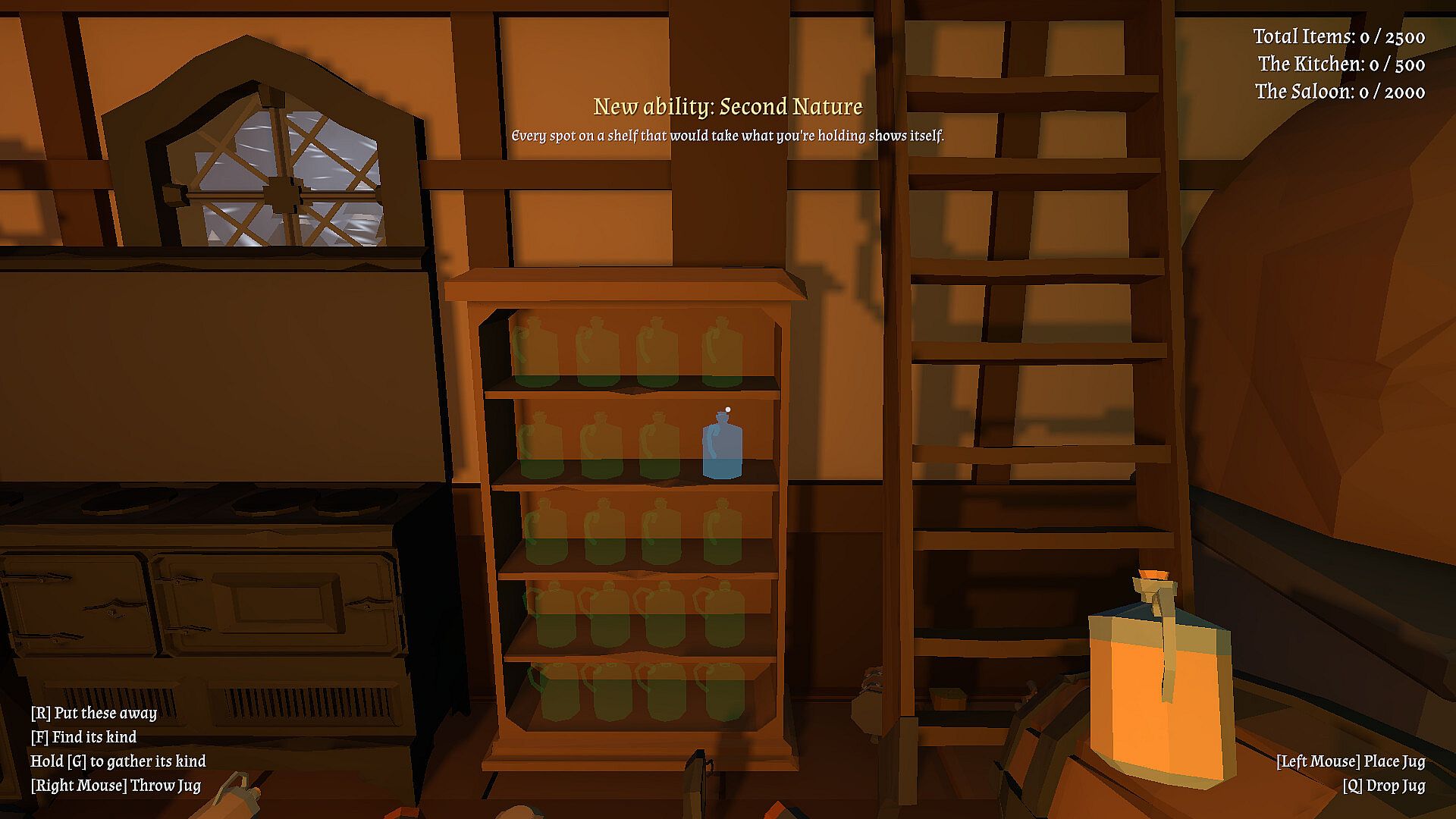
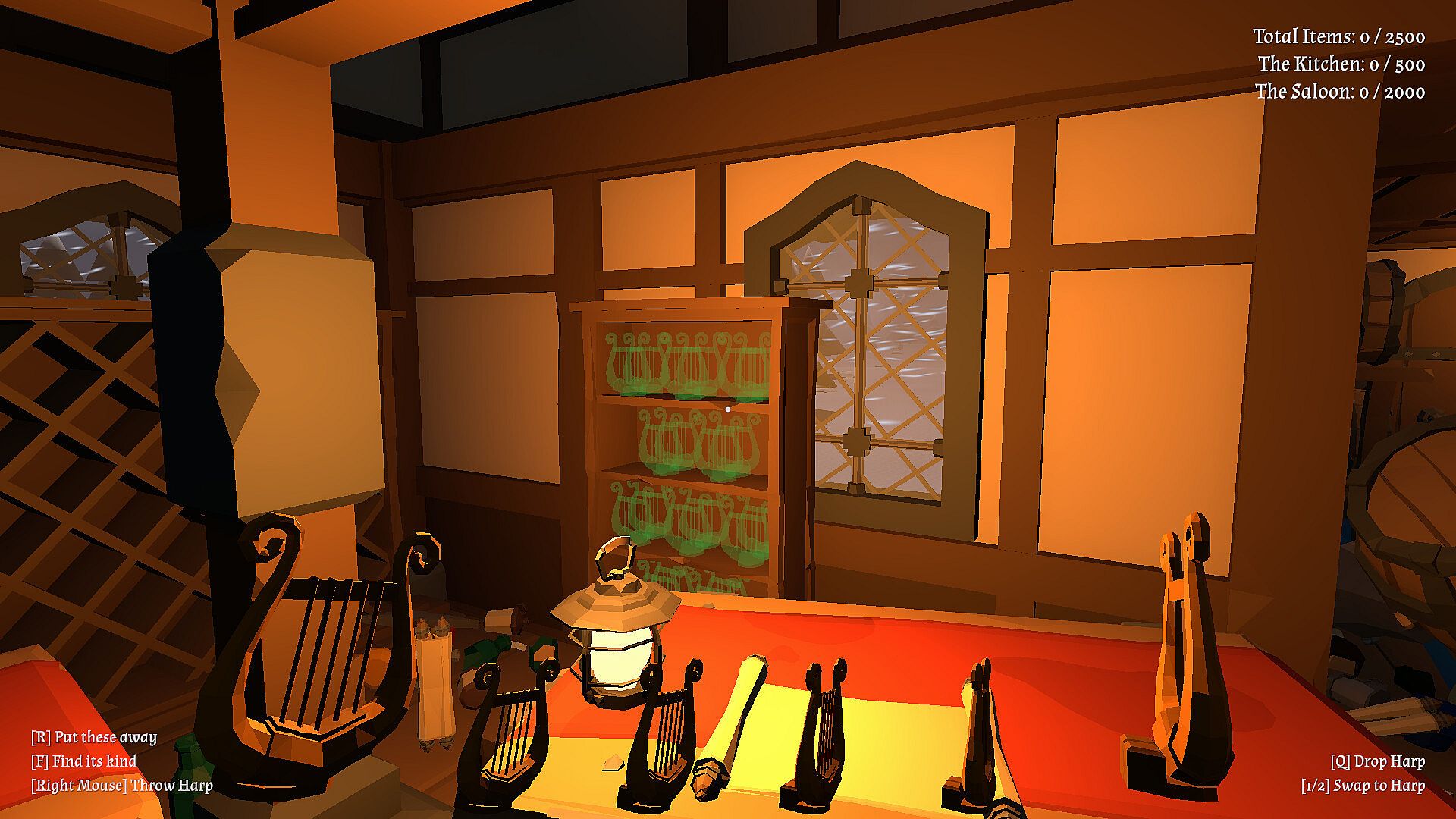
The core loop centers on locating individual items across multiple floors and rooms, then carrying each one to its designated shelf or rack. Every shelf accepts only one category of object, so observation and memory guide placement decisions. A translucent preview appears when an item is held near its correct location, confirming the fit before release. Broken glass and similar debris go into a designated trash barrel, which can be reached with a throw from a distance once the player gains reach upgrades.
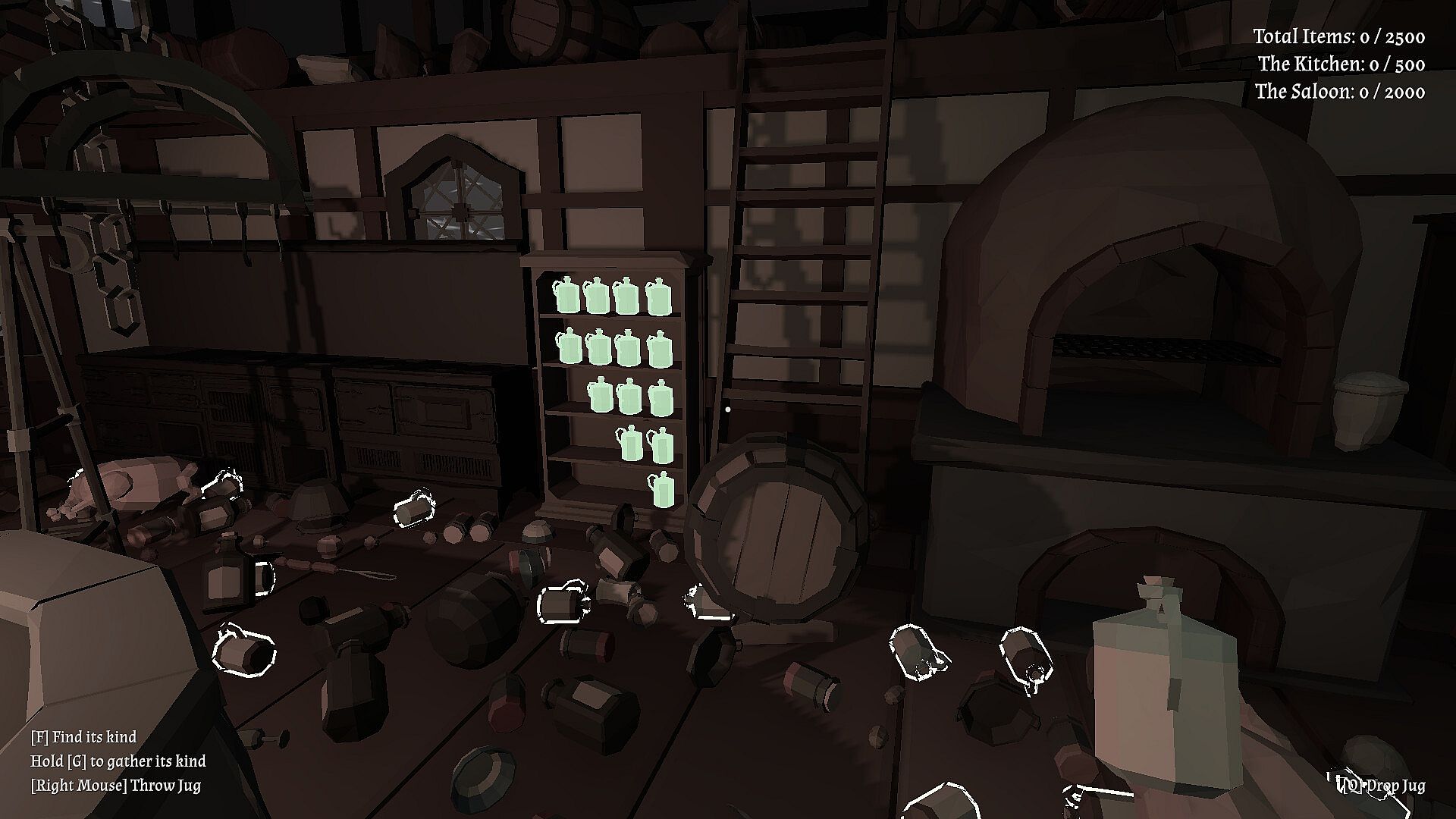
Progression comes through eight abilities that unlock gradually. These include faster movement, two-handed and then armful carrying capacity, extended reach and throw distance, and visual highlights for empty shelf spaces. Additional tools such as Keen Eye illuminate matching items and their homes, Steady Hands deposit an entire carried load at once, and Gather draws nearby objects directly into the arms. Each ability remains optional and can be disabled at any time to preserve a more hands-on approach.
Rooms begin completely bare and fill progressively as work continues. The kitchen, saloon, bar, library, and upstairs gallery each regain their original character through careful arrangement of bottles, books, bread, barrels, swords, flour sacks, instruments, and card chips. Old order scrolls left on tables provide optional clues about correct placements when examined closely.
Game Modes
Tavern Aftermath offers a single continuous play experience without separate modes or difficulty settings. The entire session unfolds as one uninterrupted restoration project across the full tavern layout. Players move freely between rooms at their own pace, deciding when to focus on specific areas or follow story clues. No timers, scoring systems, or branching paths alter the fundamental loop of picking up, transporting, and placing objects.
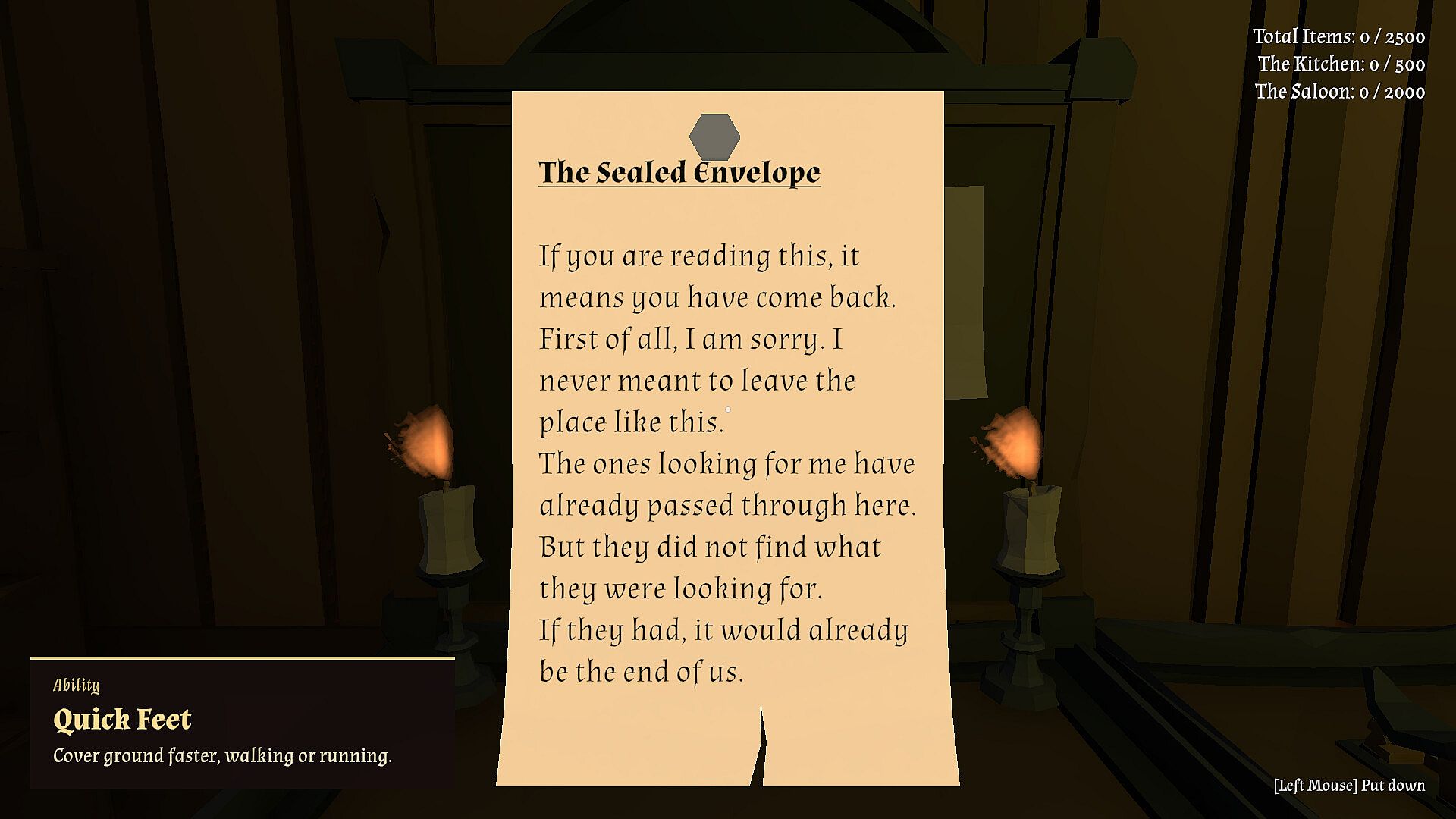
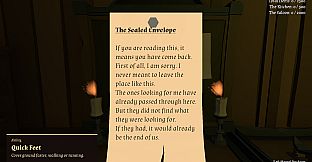
The narrative element integrates directly into this loop. Torn pages from the journal of royal advisor Merrin Vale appear among the debris. Each page can be pinned to a desk for reading, gradually revealing what the soldiers sought and what remains hidden. This discovery thread advances naturally as tidying continues rather than through any dedicated mode switch.
Atmosphere and Presentation
Firelight provides the primary illumination, creating warm, moody interiors that shift from chaos to comfort as shelves fill. A jukebox supplies the tavern's own soundtrack, which players can adjust or leave running in the background. The environment rewards close attention to detail, with every correctly placed item contributing to a lived-in appearance that feels earned through steady effort.
Controller support is built in, allowing comfortable play from a seated position. The absence of penalties or failure states keeps the focus on the satisfaction of incremental order rather than any performance pressure.
Is It Worth Playing?
Tavern Aftermath suits players who enjoy methodical organization tasks and gentle narrative discovery in a relaxed setting. The game delivers a clear visual payoff as empty rooms become fully stocked and functional once more. Its first-person perspective and toggleable assistance features let each person tailor the experience to their preferred level of guidance or challenge.
Because the title remains in development with no released version or player feedback available yet, expectations should center on the described mechanics of item sorting and light storytelling. Those drawn to cozy simulation titles that emphasize restoration and calm exploration will find the core loop aligned with that preference. The combination of precise placement rules, progressive ability unlocks, and an unfolding mystery provides enough structure to sustain interest through the full 2,500-item task without introducing external demands.












