




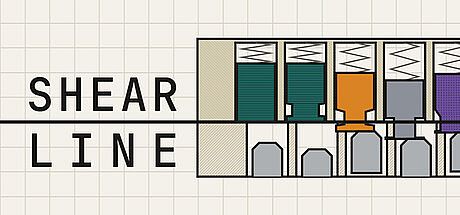


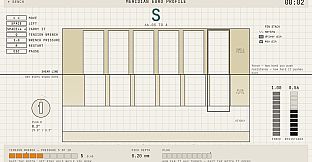
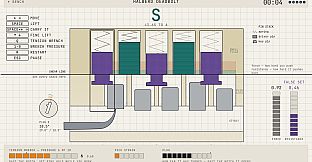
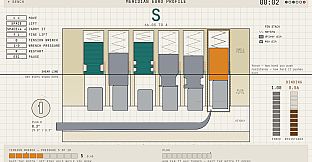
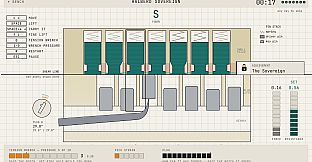
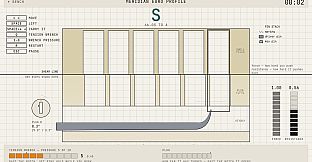
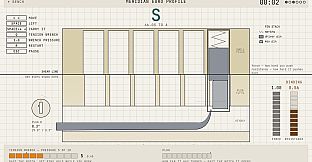
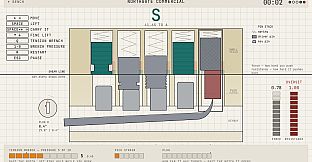
Shear Line is an indie simulation game focused on realistic lockpicking mechanics. Players engage with a detailed physics model of cylinder locks rather than abstracted minigames or random elements. The experience centers on precise control of tension tools and picks inside simulated mechanisms that respond to real principles like binding pins, false sets, and pin profiles.
Gameplay
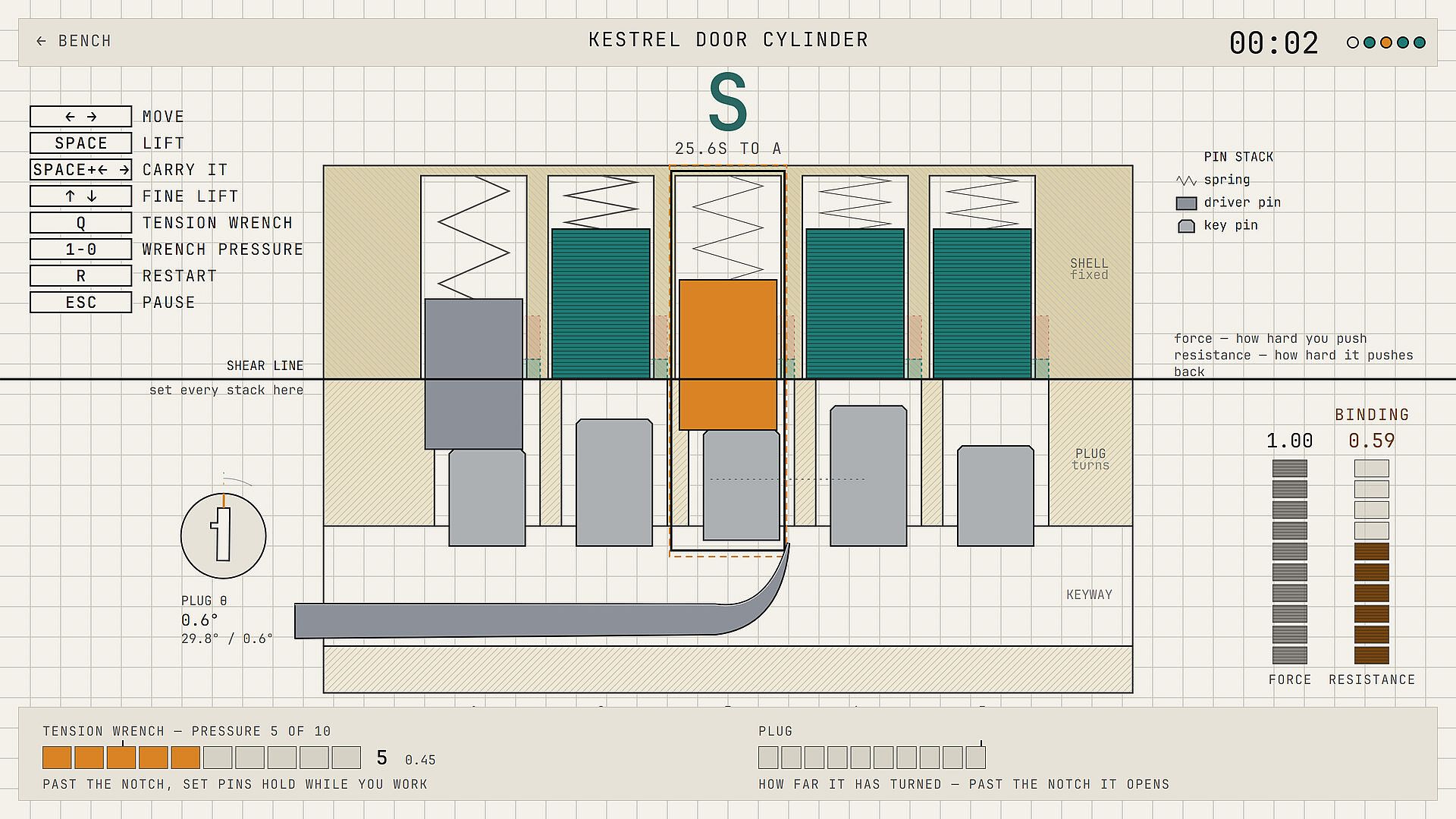
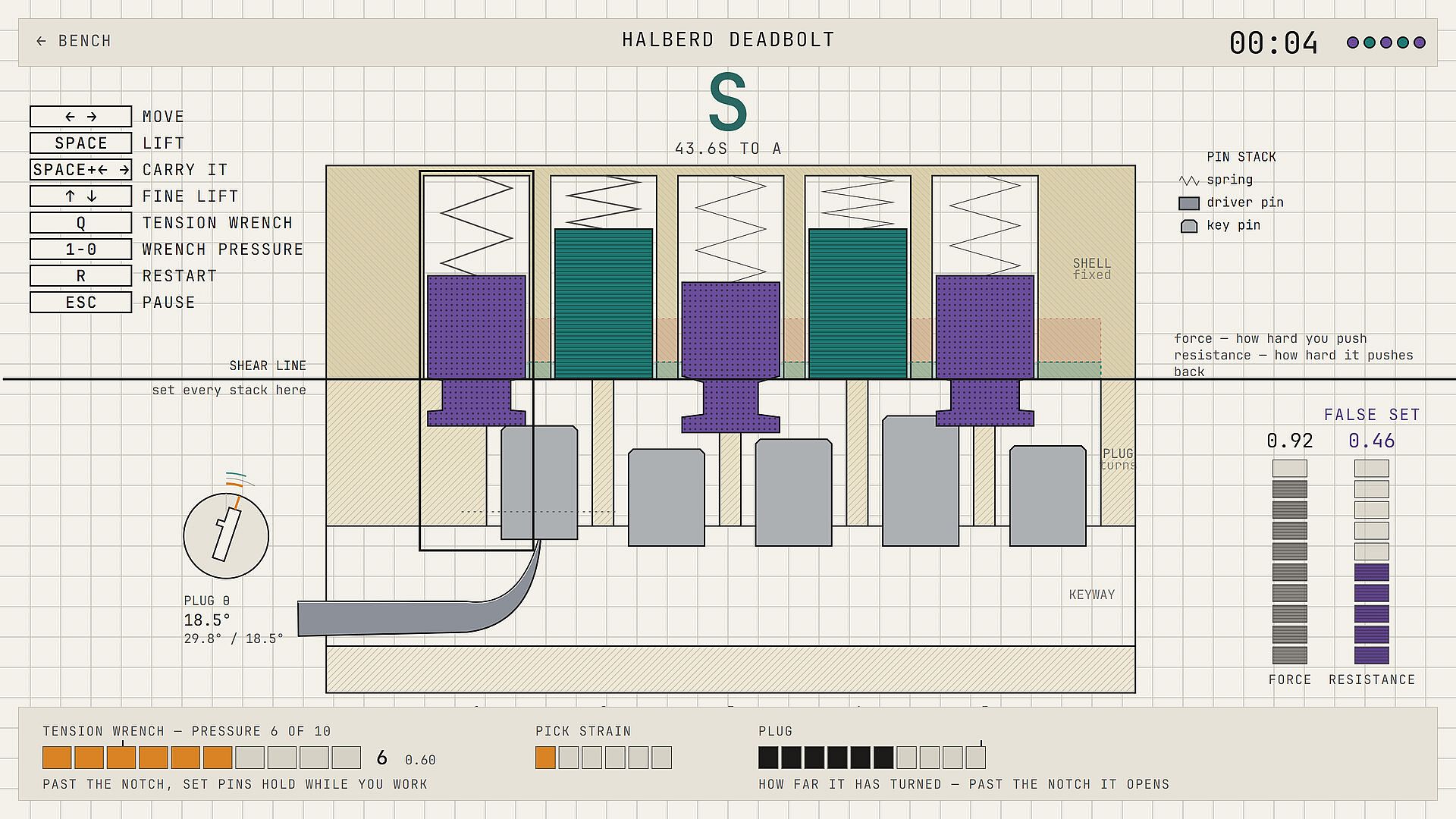
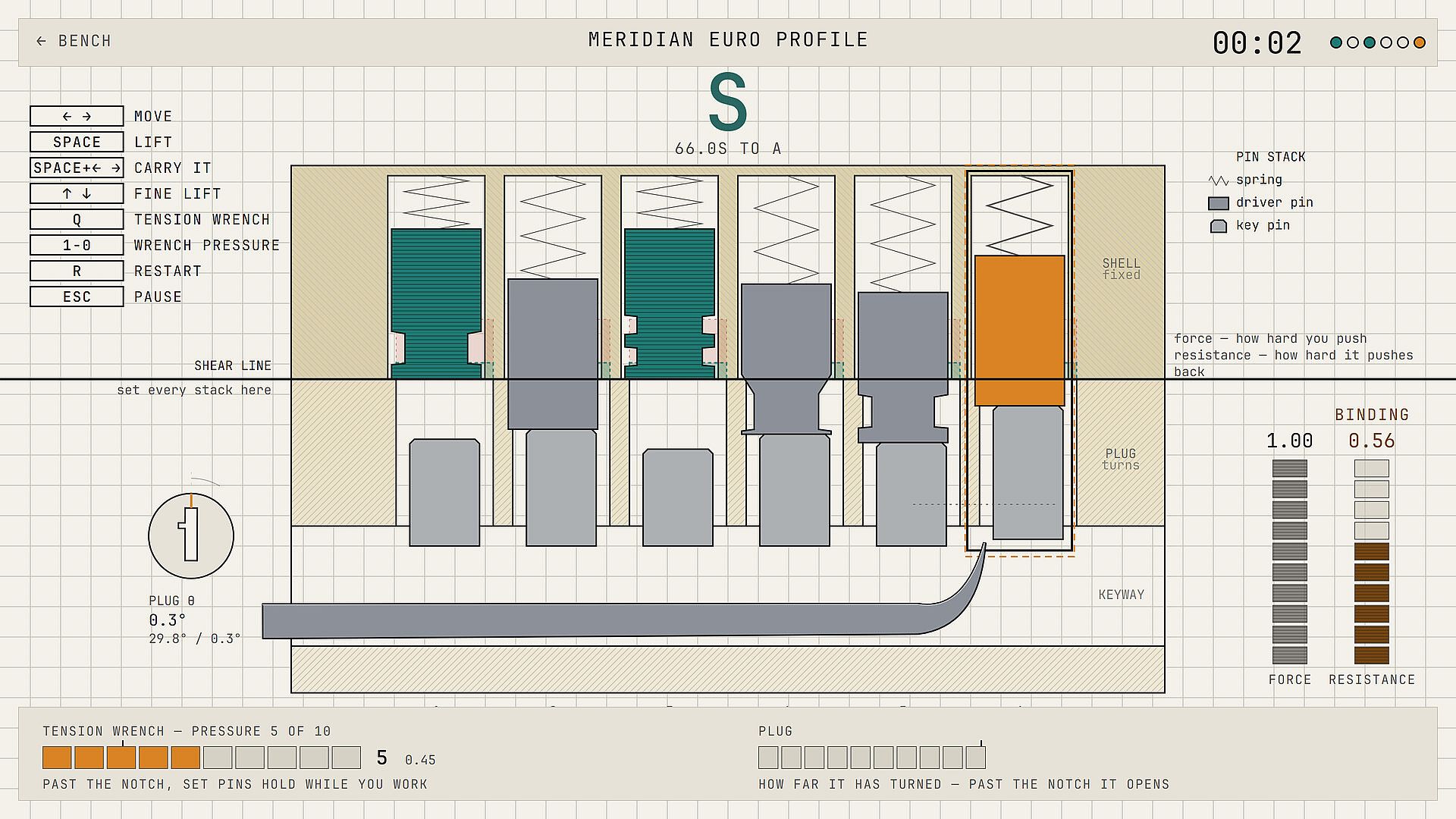
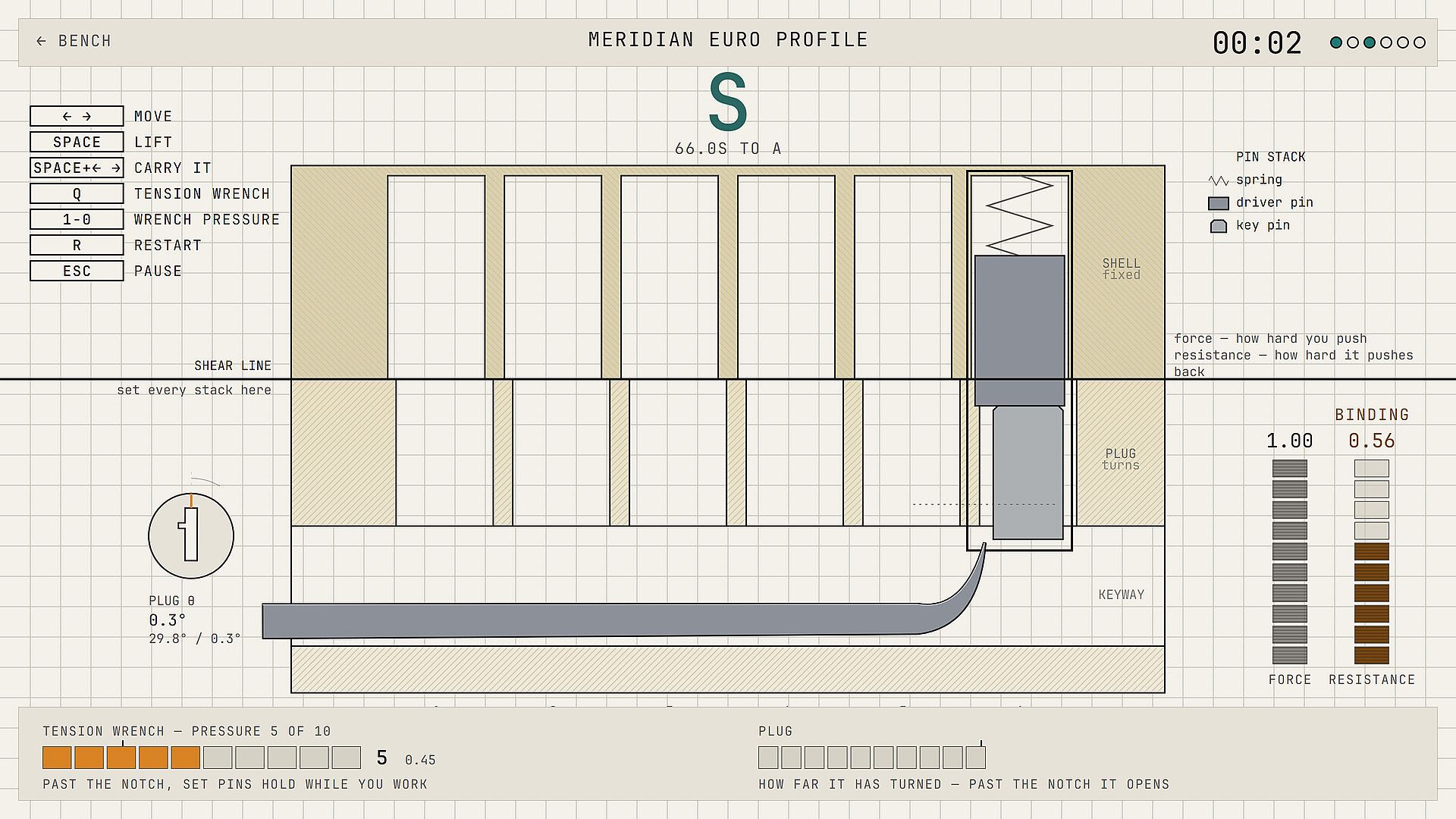
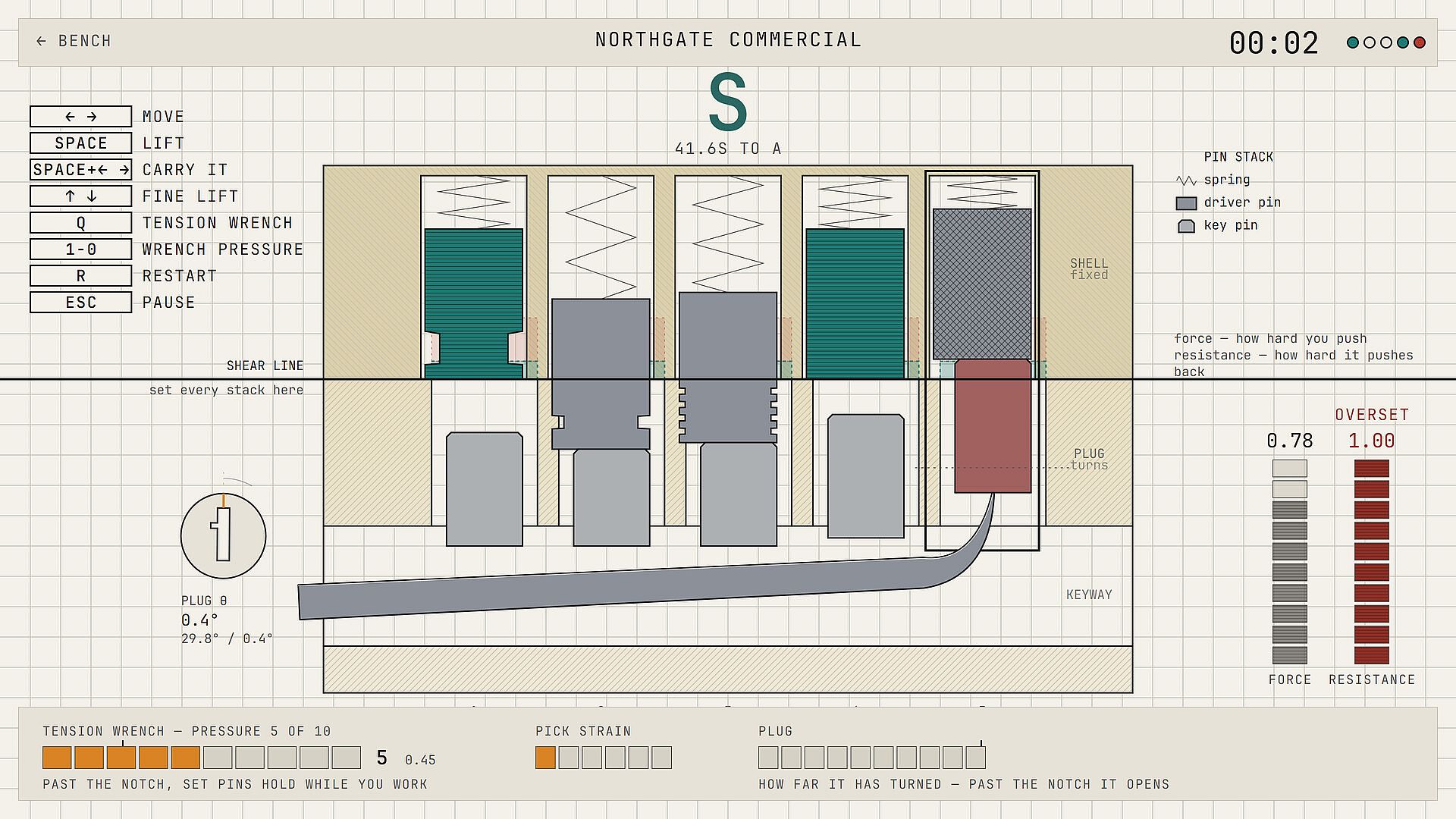
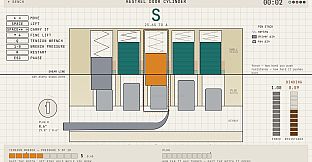
The core loop involves applying tension with a wrench while manipulating individual pins in a cutaway view of the lock cylinder. Springs, drivers, and the shear line operate under continuous simulation at 120 updates per second. A pin sets only when held steady within a narrow window, and spool or serrated pins create feedback through physical interactions such as wedges on bevels or catches that push picks outward. Serrated pins produce multiple lies during lifting, while mushrooms demand careful pressure to avoid bending or snapping the pick. The simulation distinguishes free pins that move easily from bound ones that resist, allowing players to read the lock through tactile and auditory cues.
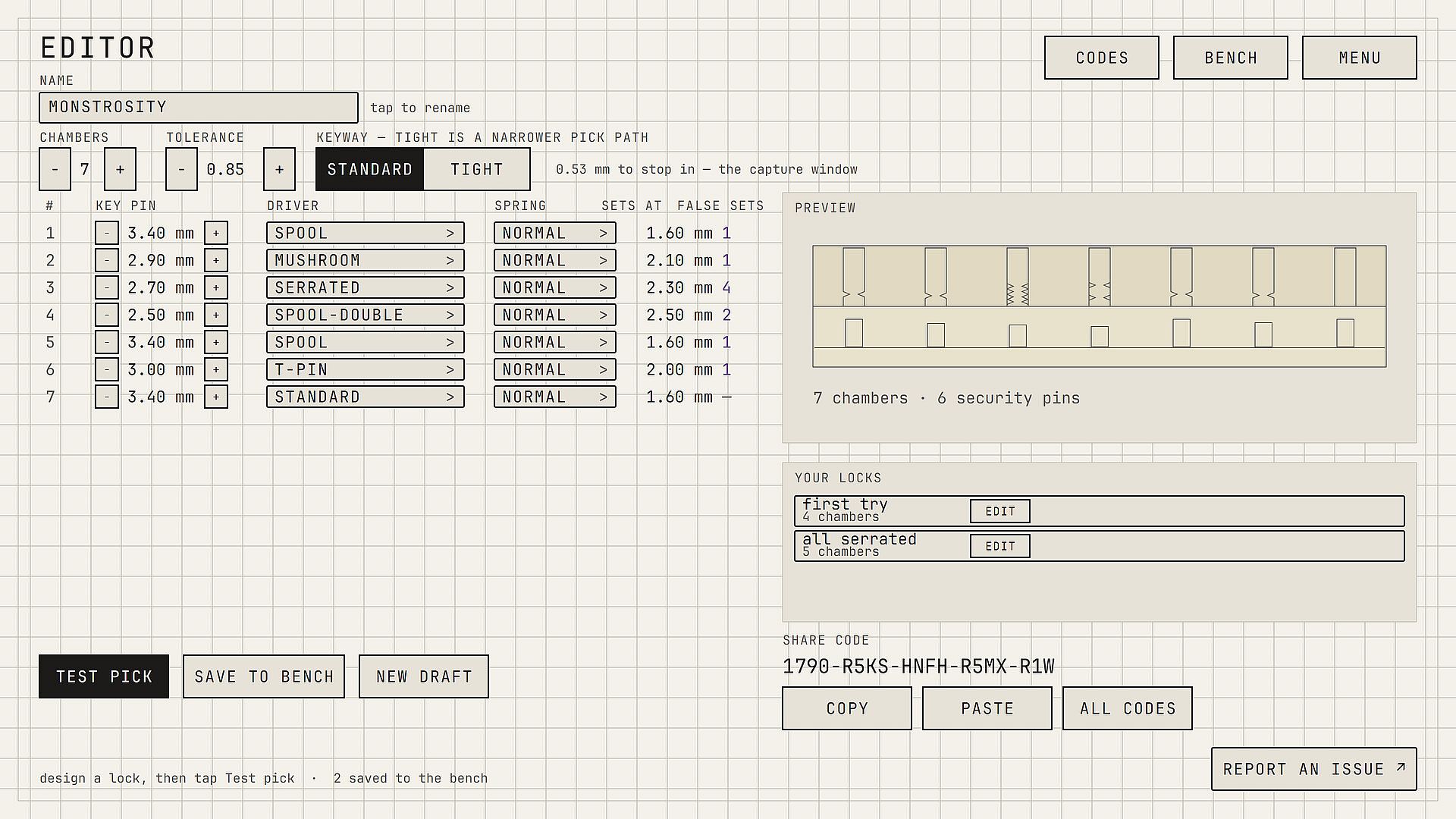
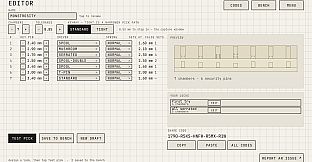
Twenty-two distinct locks span four tiers of increasing complexity. Each lock incorporates one of eight driver profiles, including spools, serrations, and mushrooms, with behaviors emerging directly from their shapes instead of scripted events. The lock editor supports custom configurations from one to sixteen chambers, generating short share codes that load exact setups for practice or sharing.
Game Modes
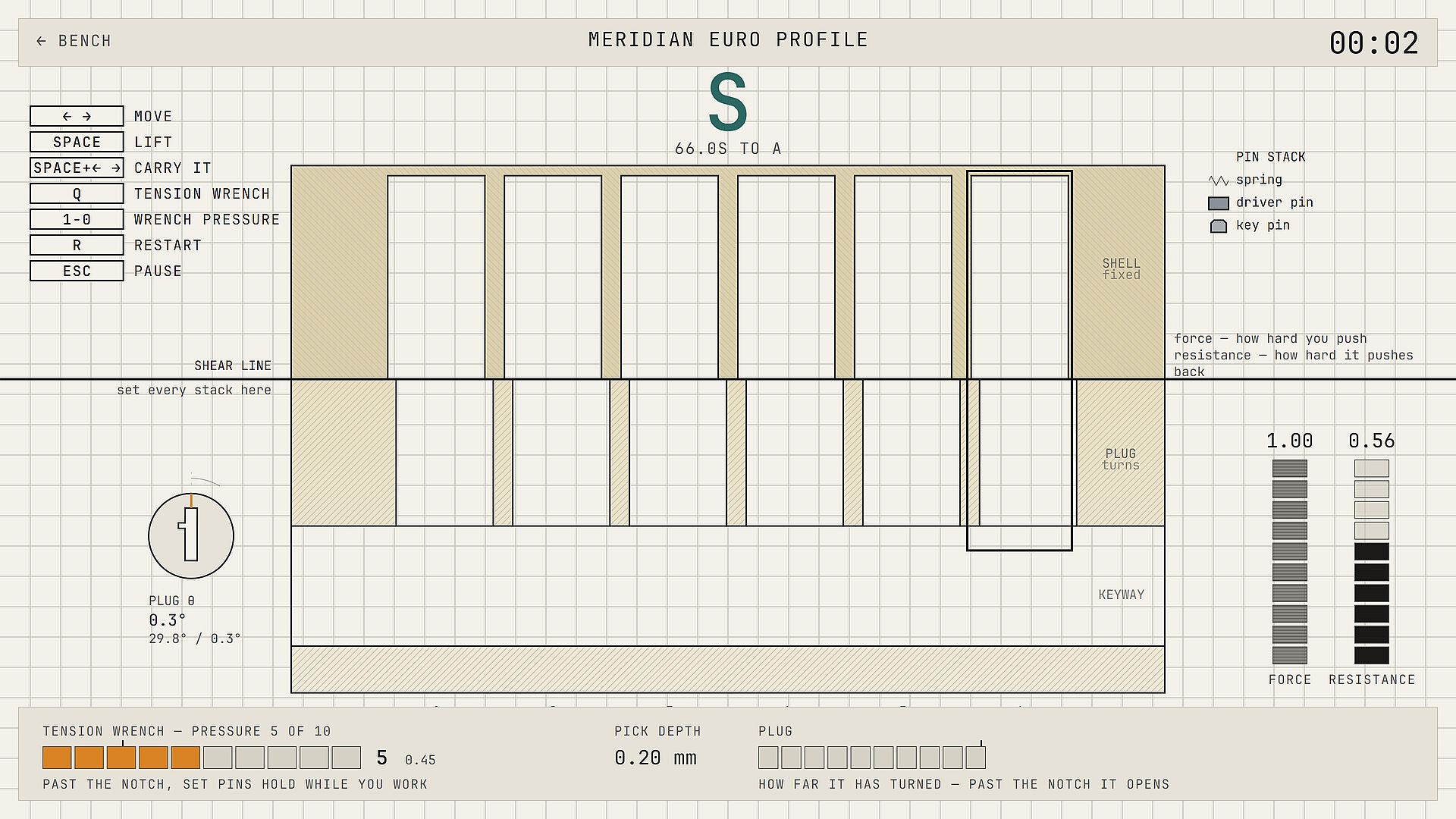
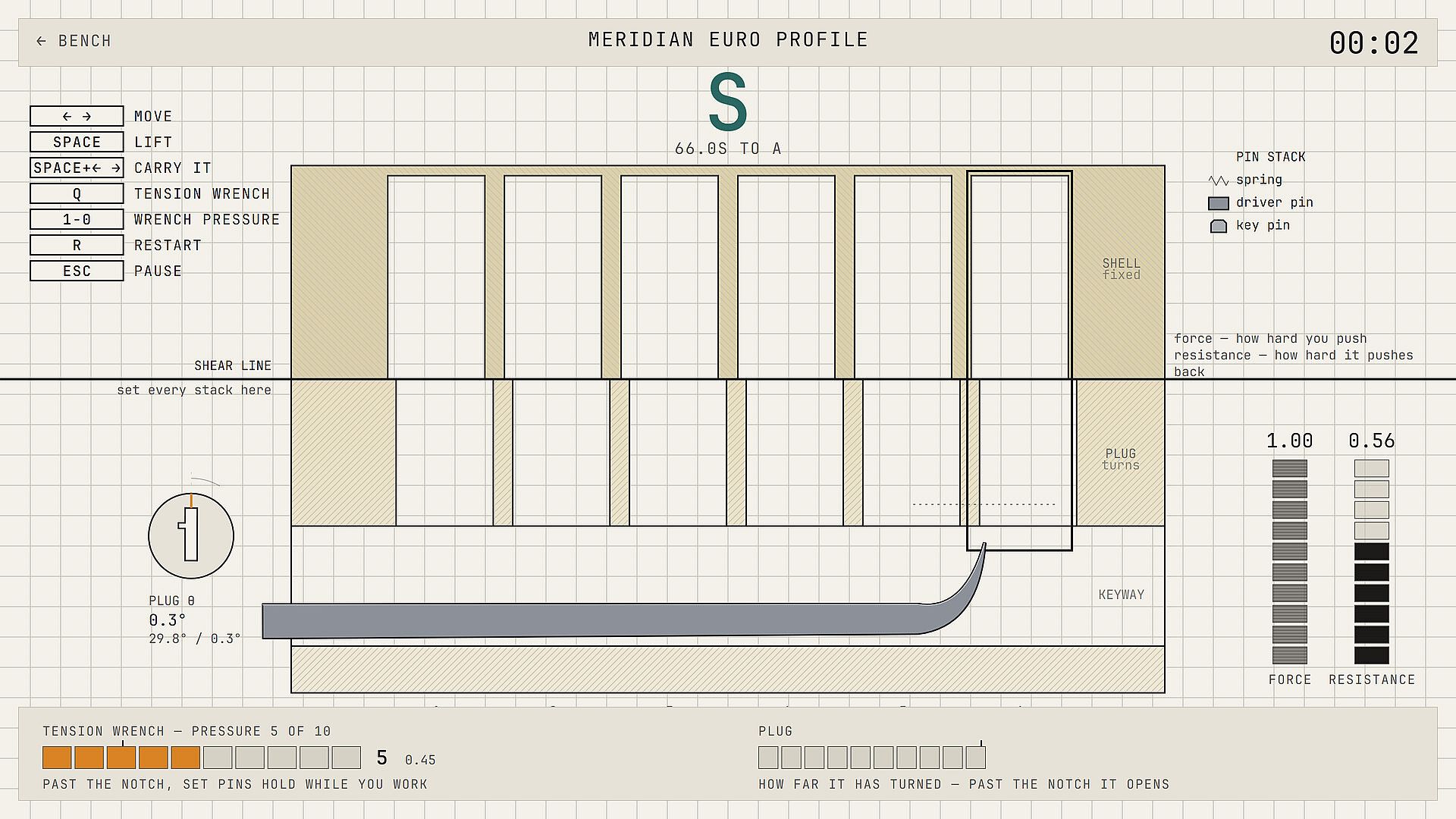
Standalone lockpicking sessions let players work through the full set of locks at their own pace, focusing on technique and timing. Four difficulty settings adjust visibility and feedback without altering the underlying physics. Easy mode provides full cutaway views and meters, while harder settings progressively remove visual aids until only the lock face and audio cues remain. Blind mode strips away all overlays, requiring reliance on sound and subtle feedback alone.
The labyrinth mode places players inside a procedurally generated prison maze each run. Corridors connect rooms such as chapels, forges, libraries, and treasuries, with every door and chest secured by a simulated lock. Picking occurs in real time while guards patrol, and tools are limited to two picks and a lamp. Specific guard types include a warden that carries keys and relocks doors, a sentry with long sight lines, and a listener that detects footsteps through walls. No combat exists; detection ends the attempt, and success is measured by completion time against par values for each lock.
Progression and Features
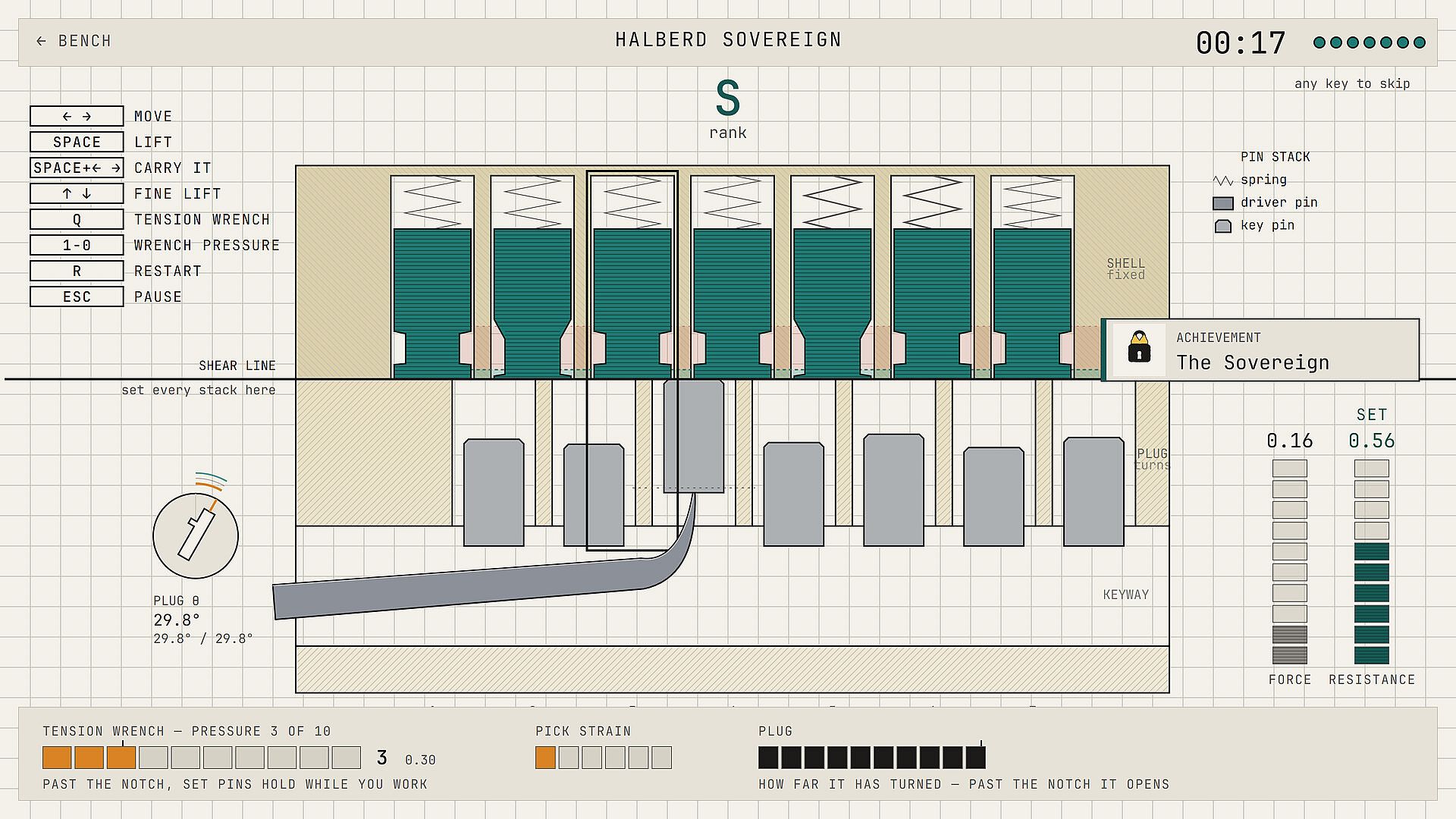
Ranks from S to F evaluate performance on each lock relative to its par time, serving as the sole measure of skill. No currency, shops, or grinding systems appear. Achievements track milestones such as returning across multiple days, supported by Steam Cloud saves. The editor enables creation and distribution of custom locks via compact codes that fail safely on errors rather than producing mismatched results.
Is It Worth Playing?
Shear Line suits players seeking a focused, physics-driven simulation of lockpicking without abstraction or luck elements. The detailed feedback on pin behavior and guard interactions in the labyrinth creates a deliberate pace that rewards patience and observation. Those drawn to precise mechanical systems or stealth challenges without combat will find the mechanics consistent and informative. The absence of additional progression layers keeps the experience centered on skill development across the verified lock roster and modes. Availability remains limited to PC at present, with the simulation depth providing clear value for the target audience.











