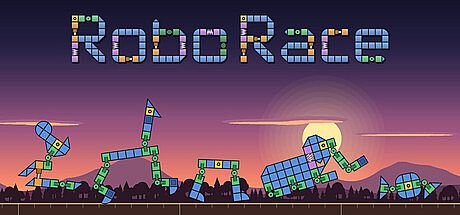


Robo Race is a simulation game for PC that centers on constructing custom robots from modular parts and using reinforcement learning to train them for competitive races. Players design mechanical bodies on a grid, adjust physical parameters, and observe as artificial intelligence develops walking gaits through trial and error. The experience blends creative construction with emergent AI behavior in a 2D physics environment, appealing to those interested in robotics experimentation and physics-driven competition.
Gameplay
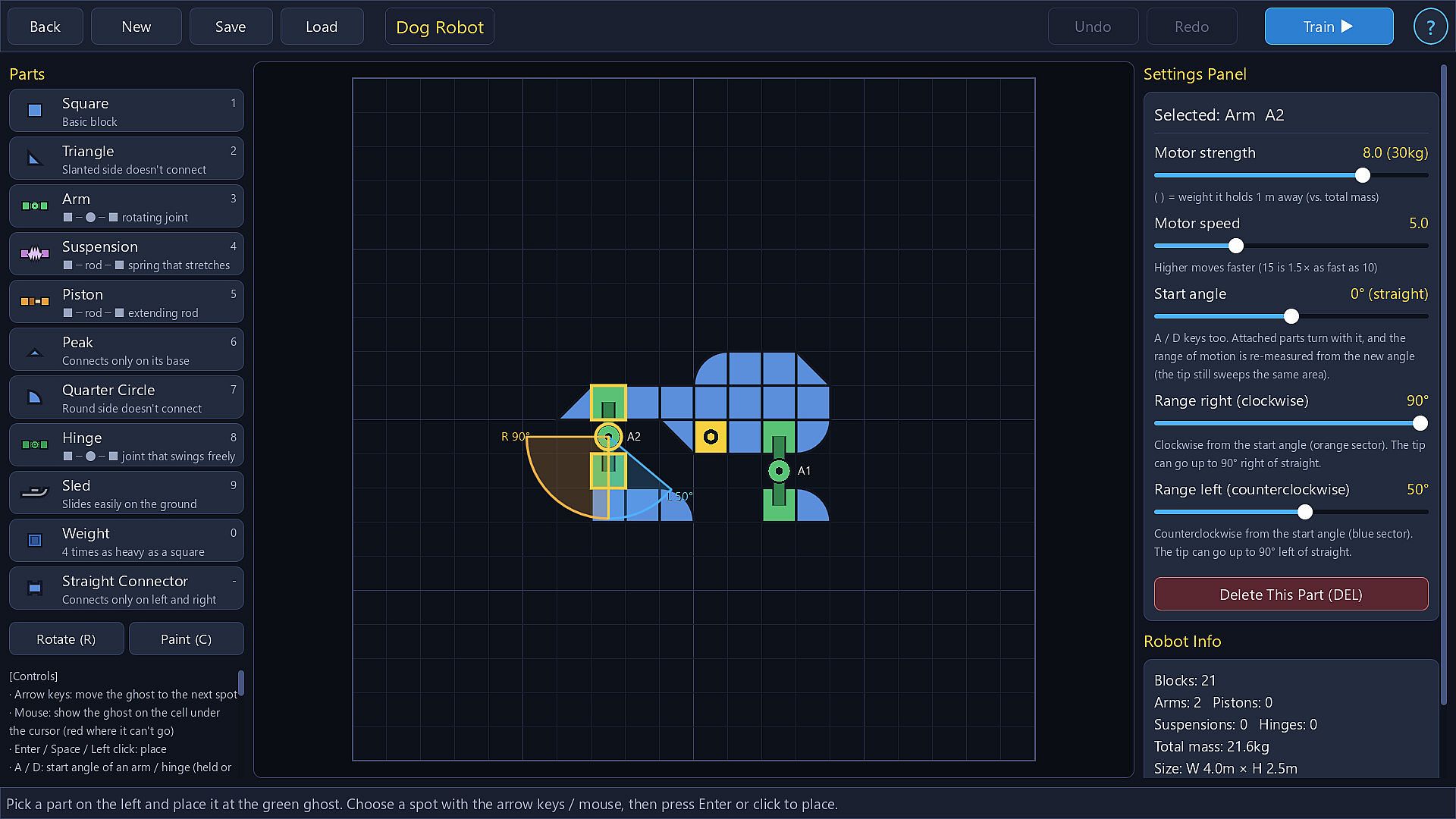
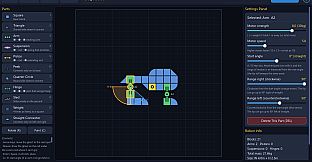
Core play revolves around a 20 by 20 grid where builders place one of 14 part types, including squares, triangles, quarter circles, arms, pistons, suspensions, and hinges. Each component can be tuned for motor strength, speed, and motion range, allowing full control over leg count, joint placement, and weight distribution. Once assembled, training begins and the robot initially stumbles before gradually learning forward movement through repeated attempts.
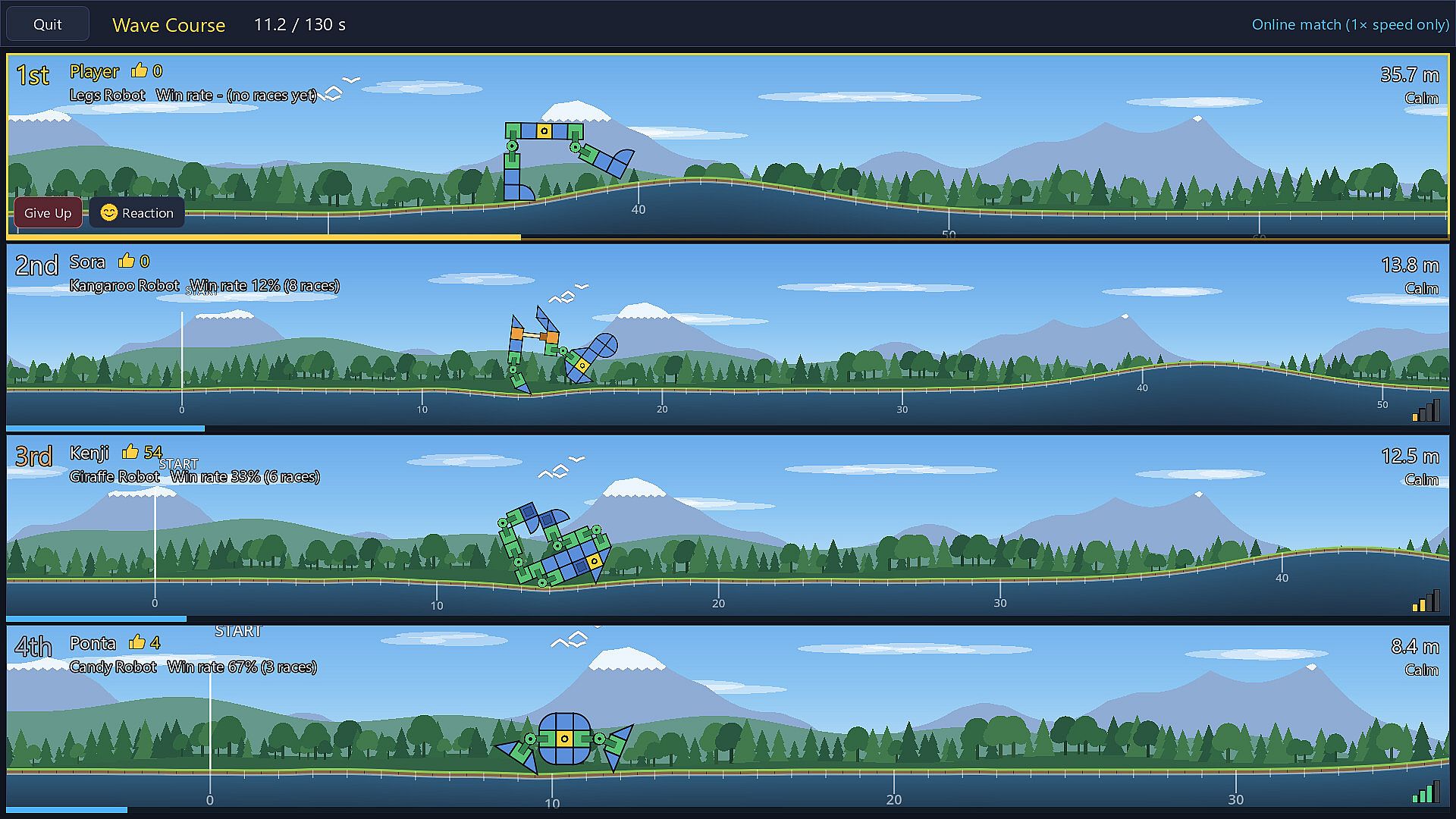
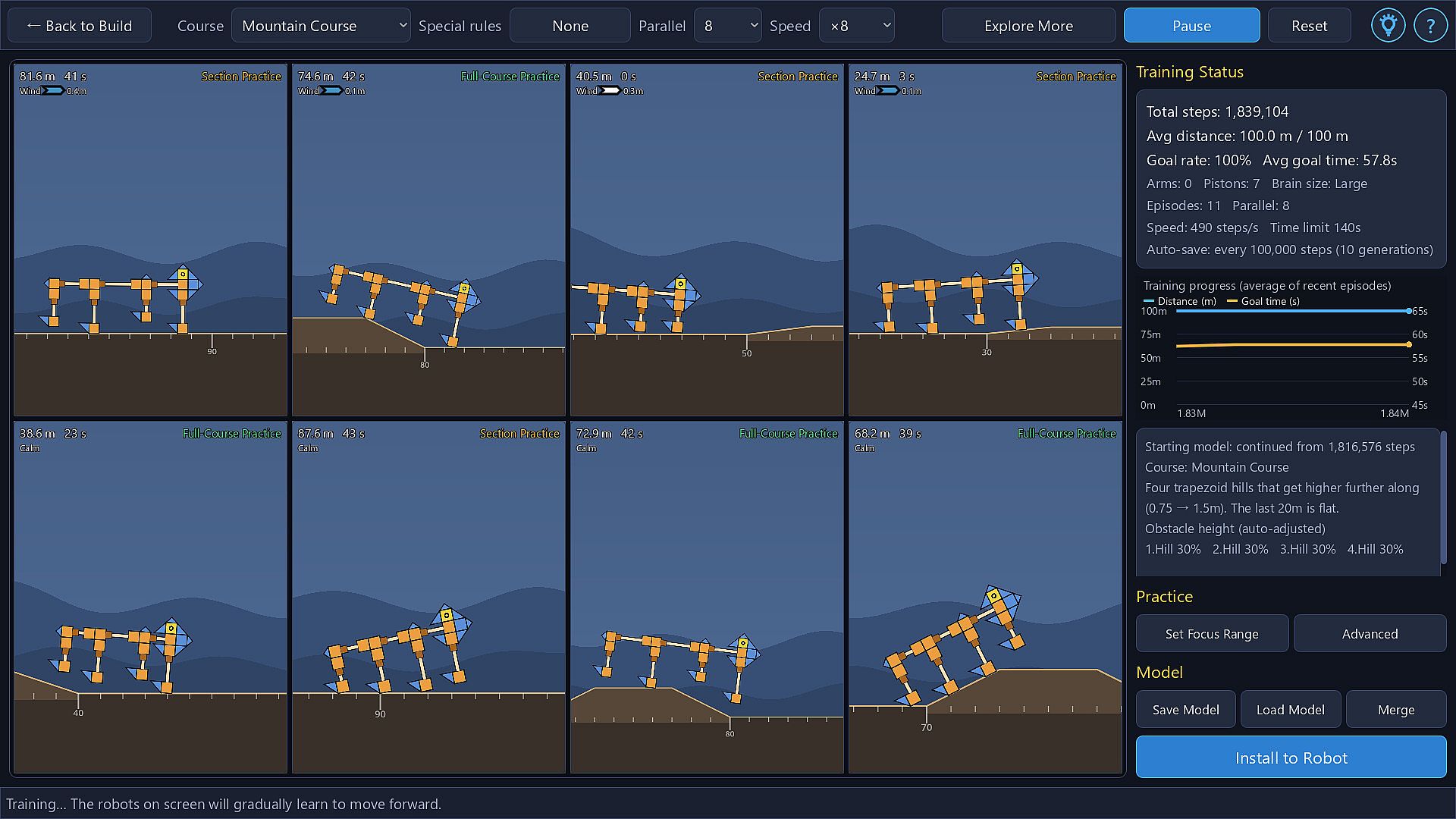
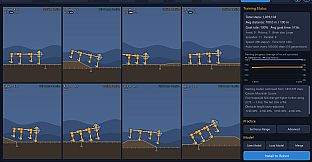
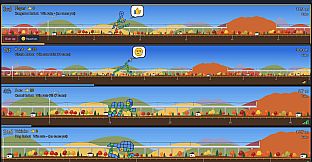
Training supports up to 16 robots simultaneously on a split screen, with options to accelerate progress up to 32 times normal speed. Focus Practice isolates difficult sections for targeted drills, while Move Hints let users pause and manually reposition parts to suggest improved actions. The AI evaluates these hints and retains successful adjustments if they improve performance. Advanced settings adjust learning priorities such as fall avoidance, forward planning distance, and neural network size. Model Merge allows side-by-side comparison of two trained AIs, combining the stronger segments from each into a single improved model.
Physics interactions govern every movement, with realistic responses to slopes, steps, and uneven surfaces. The system requires no coding knowledge, relying instead on visual design and iterative observation of the AI's self-directed progress.
Game Modes
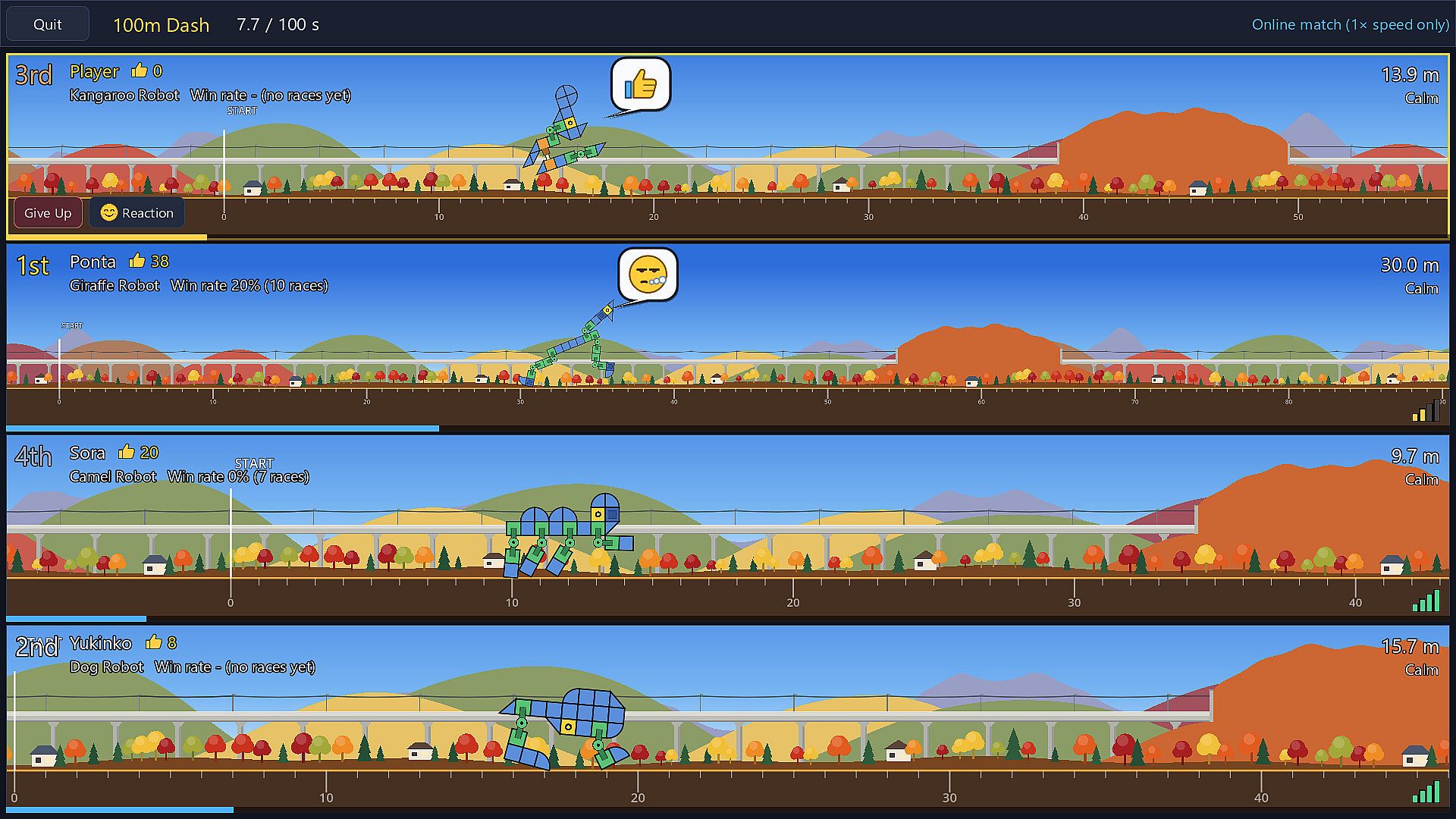
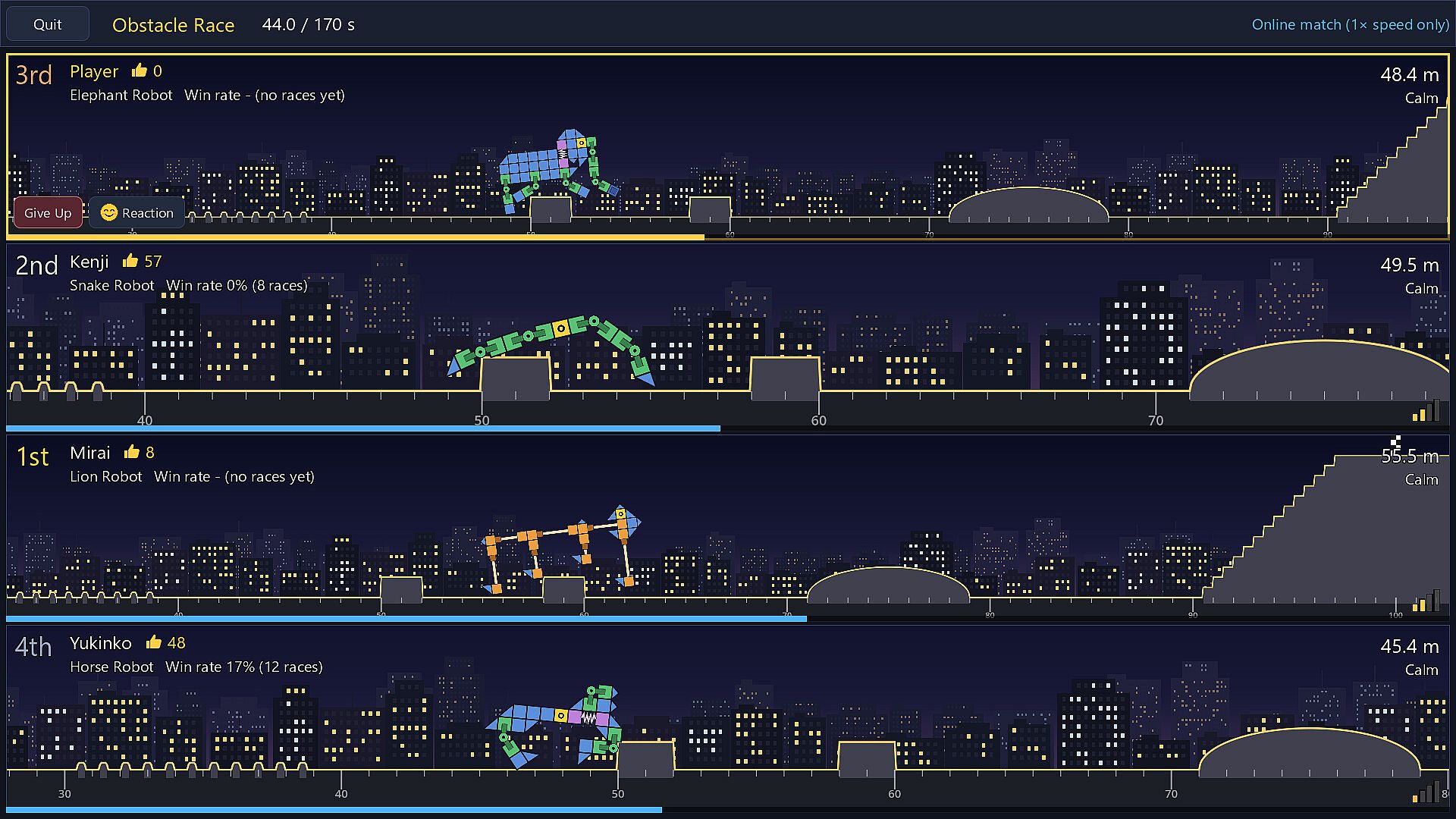
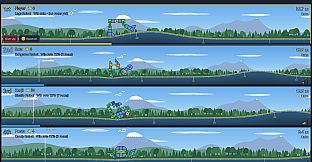
Eight distinct courses challenge robots with varied terrain. These include the 100m Dash and 300m Dash for straightforward speed tests, the Mountain Course with elevation changes, Obstacle Race featuring barriers, Rough Road Race over uneven ground, Water Course involving liquid surfaces, Moving Course with shifting platforms, and Eco 300m where battery power limits arm and piston use, forcing efficient movement to maximize distance.
Five stackable special rules modify races further. Glass Core increases fragility, Headwind adds resistance, Nuisance Blocks introduce interfering objects, 3-Race Series requires multiple runs for overall victory, and Reposition applies only in online sessions. Every race incorporates a pursuing bomb that activates after 30 seconds, eliminating any robot it reaches and enforcing constant forward progress.
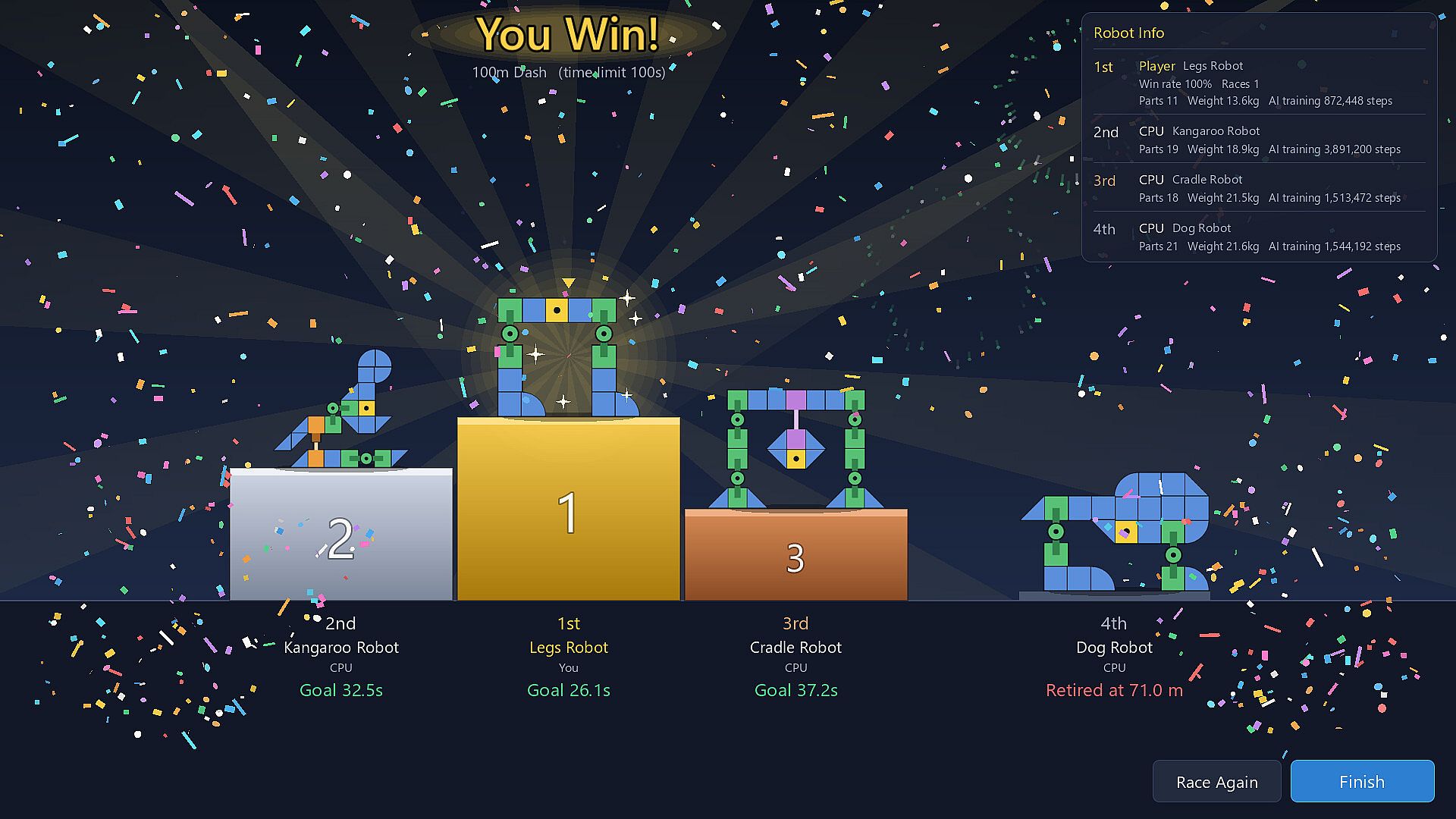
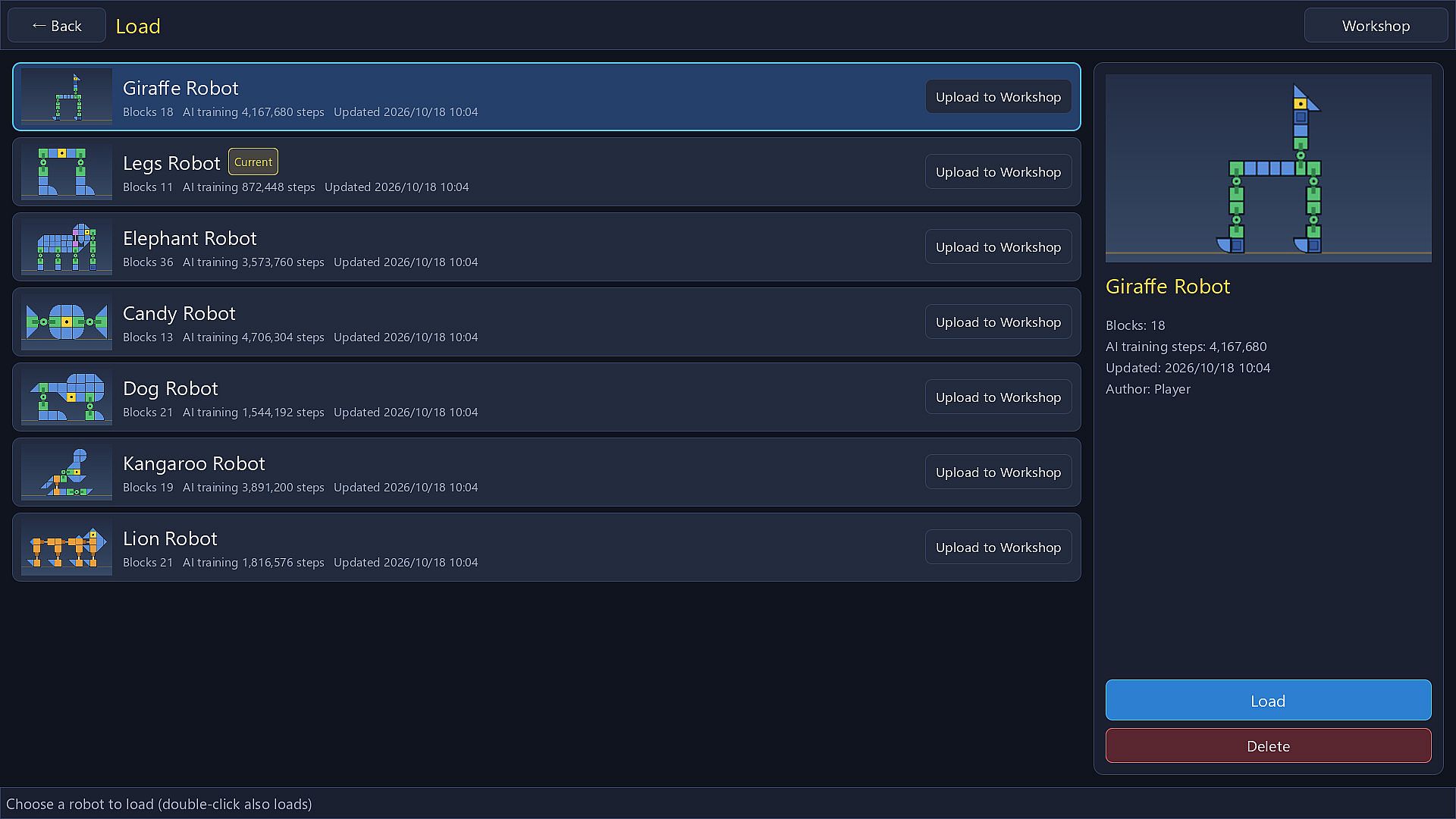
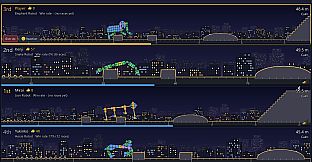
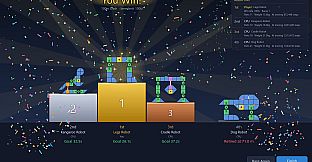
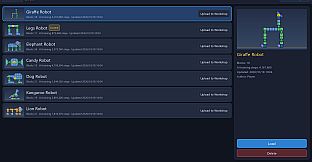
Local races pit custom robots against built-in opponents or Workshop creations. Online battles accommodate up to four human players, with AI stand-ins filling empty slots. Reactions allow real-time cheering during matches, followed by podium ceremonies. The Steam Workshop enables sharing of complete robots, including their trained AI data, for use in both local and online play.
Visuals and Presentation
Nine distinct settings provide backdrops such as forests, cities, autumn leaves, cherry blossoms, and stadiums, each paired with unique background music. These environments frame the 2D physics action without altering core mechanics. The interface supports both Japanese and English, facilitating accessibility for a broad audience interested in simulation and AI-driven content.
Training visuals emphasize the learning process through split-screen comparisons and real-time gait evolution. Races highlight dynamic interactions between custom designs and course obstacles, with the bomb mechanic adding tension to every event.
Is It Worth Playing?
Robo Race suits players who enjoy hands-on creation combined with watching AI solve movement challenges independently. The absence of programming barriers lowers the entry point for experimentation, while the depth of part tuning and training controls rewards repeated sessions. Local single-player options allow solo refinement of designs, and online features support small-group competition with community-shared robots.
Since the game remains in a pre-release state with no user reviews available, its appeal rests on the verified mechanics of block-based building, reinforcement learning training, and multi-course racing. Those drawn to physics simulations and emergent AI behaviors will find the systems align closely with described features. Availability on PC through standard digital platforms positions it for enthusiasts seeking niche creative gameplay rather than mainstream action titles.