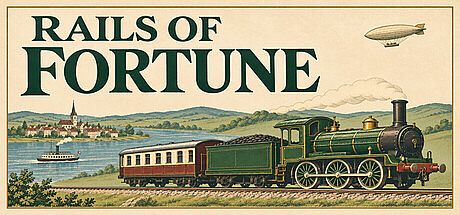


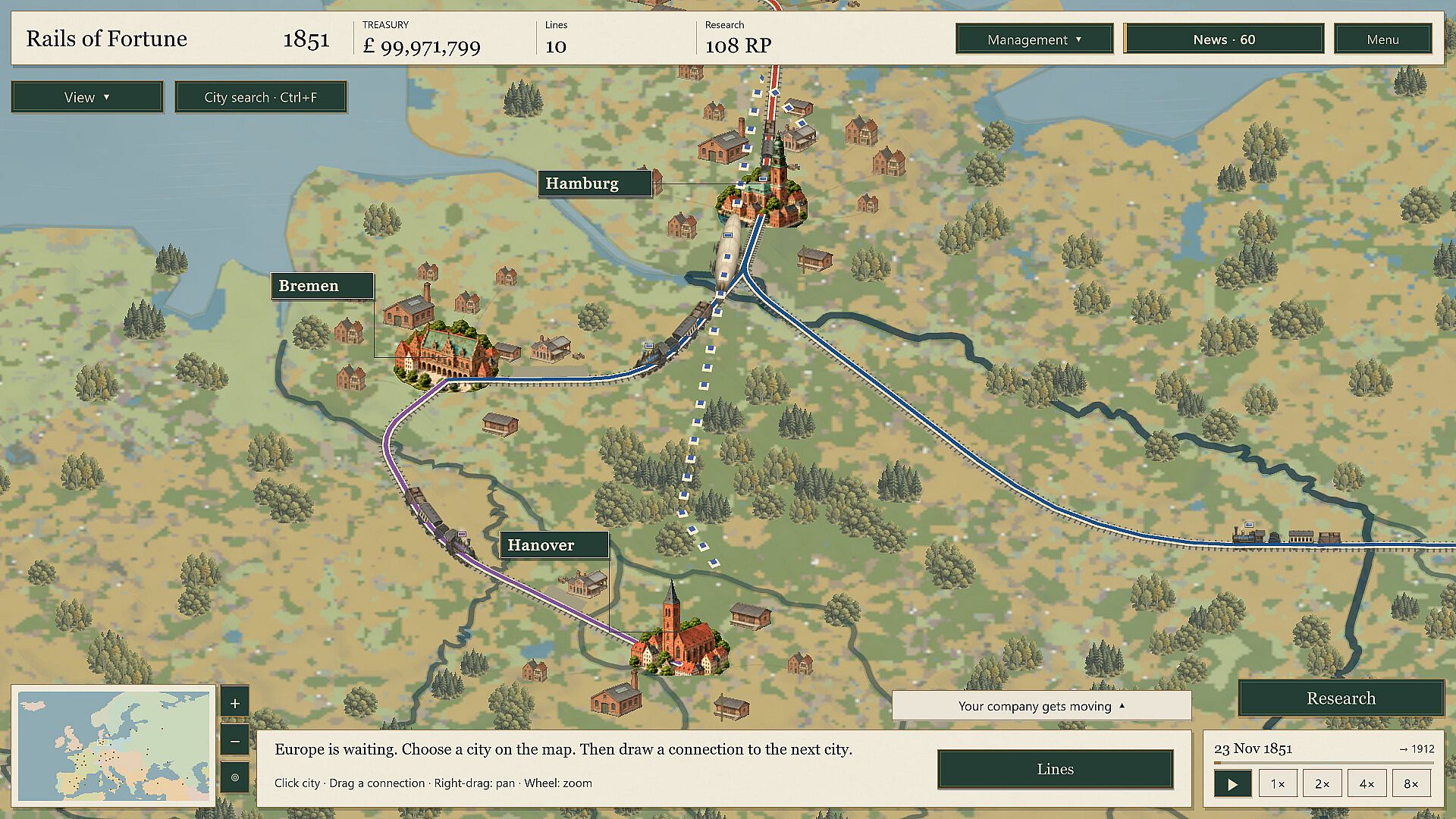
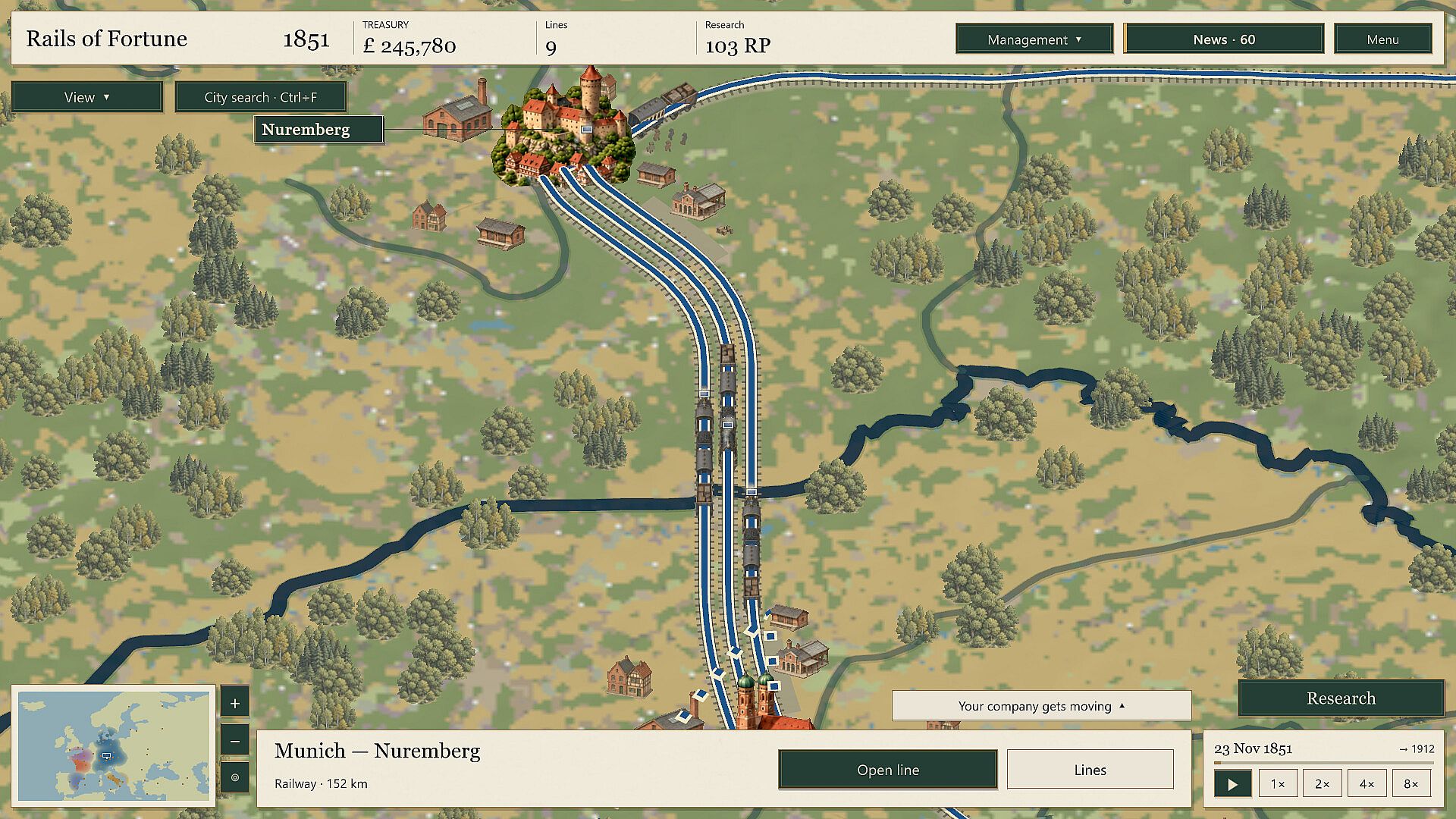
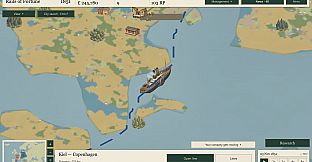
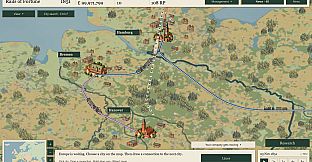
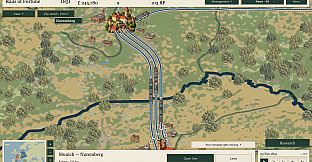
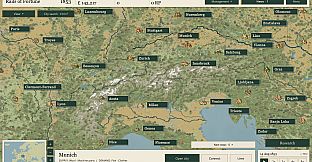
Rails of Fortune is a transport and economic strategy simulation set in Europe between 1850 and 1912. Players establish and grow a transport company that connects cities through railways, shipping routes, and airship links while managing trade, production chains, and competition from rival businesses.
Gameplay
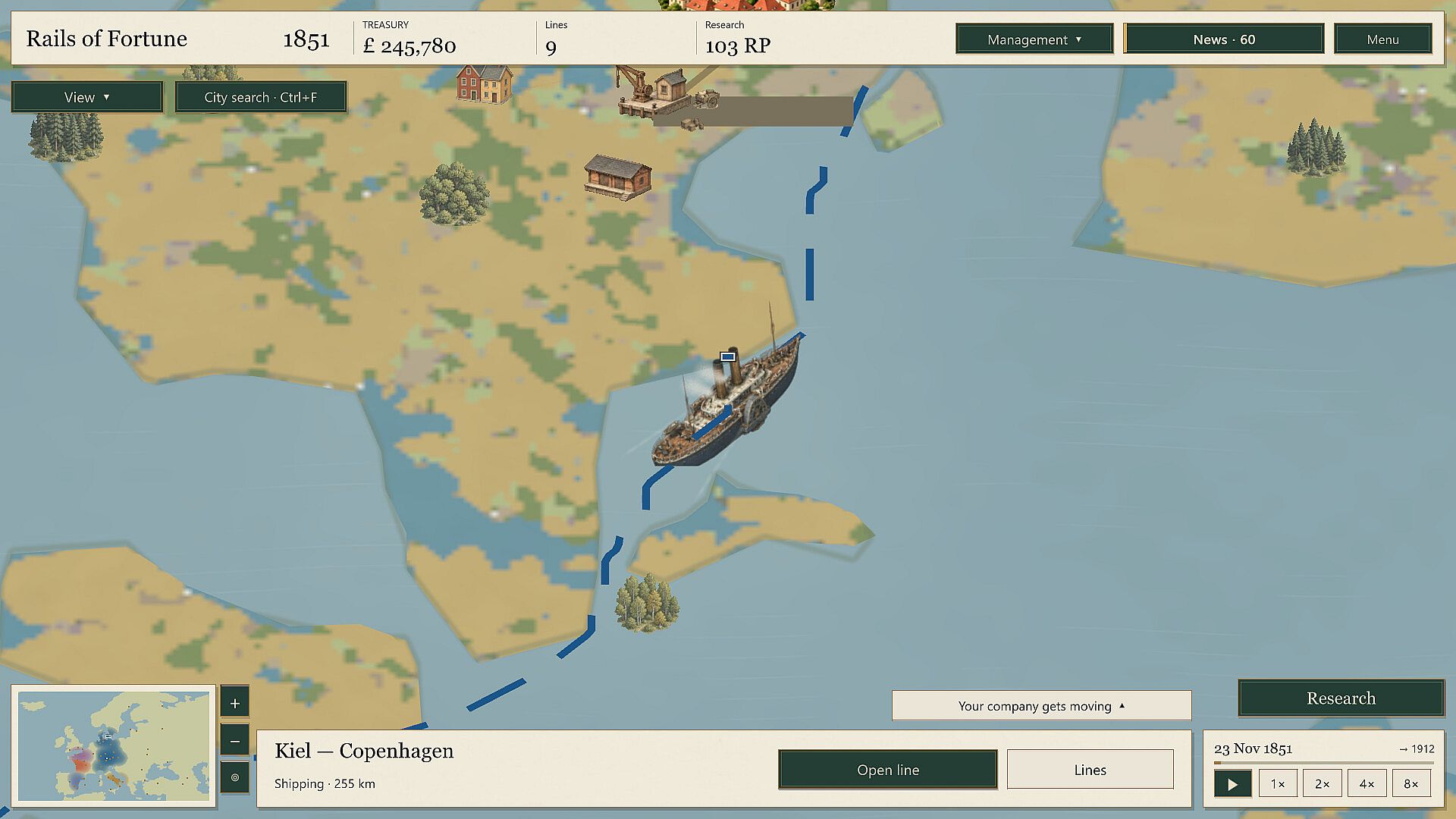
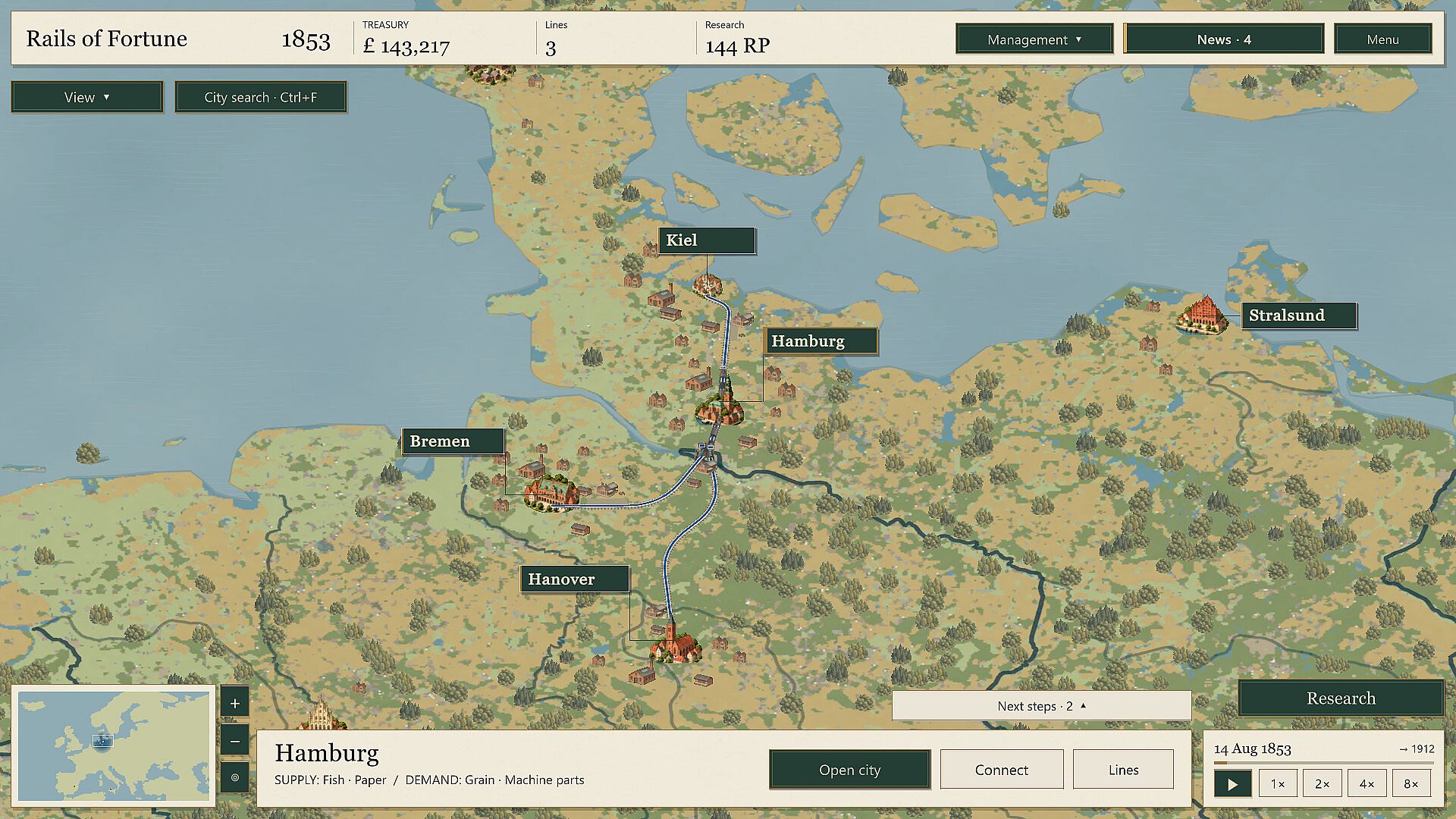
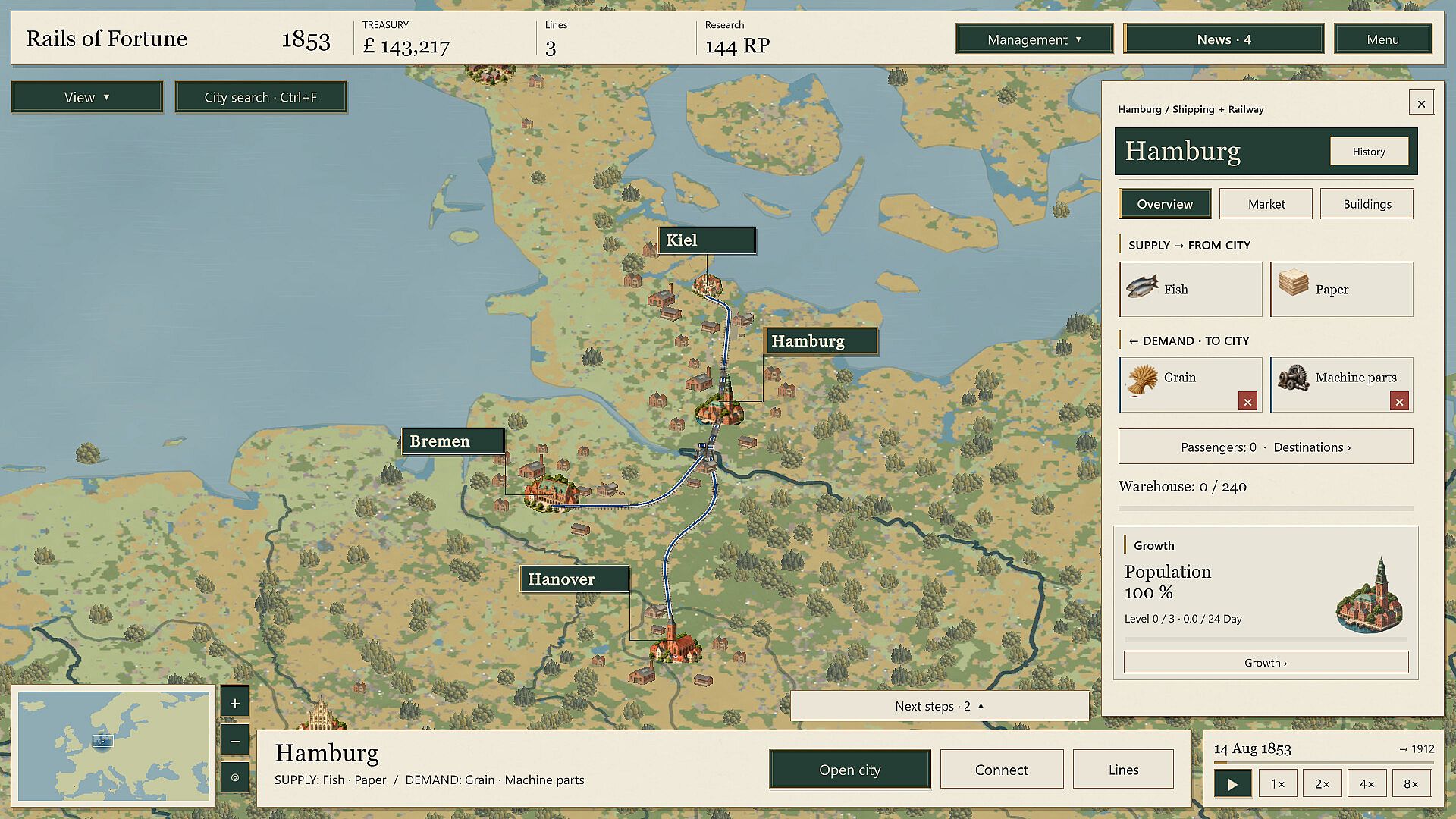
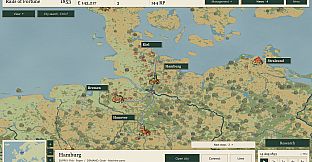
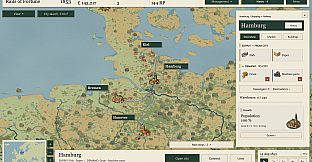
The core loop centers on planning and expanding a transport network across land, rivers, sea, and air. Players choose vehicle types, capacities, and fares that fit the routes they build. Cities generate demand for goods and passengers, so successful connections open new markets and support urban growth. Supply chains form when raw materials reach factories and finished products reach customers, with profitability depending on purchase prices, operating costs, and sales revenue.
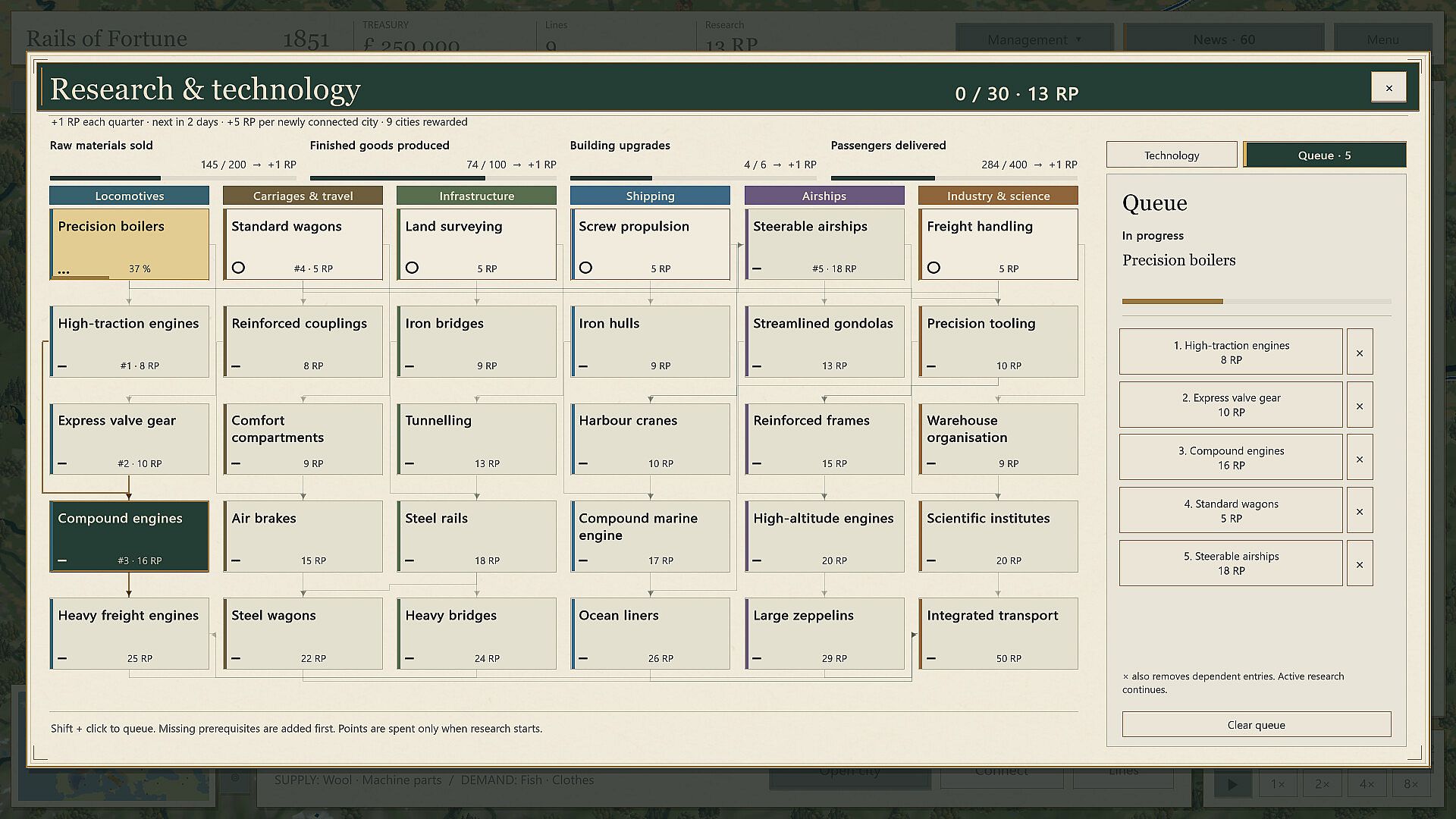
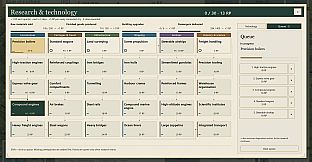
Company development includes researching technologies that unlock new transport options. Historical events can shift regional markets, forcing adjustments to routes or investments. Route management tools allow multiple stops with specific loading and unloading orders, while search, sorting, and bulk editing features help control larger networks. Time controls let players pause or accelerate the simulation to refine plans without pressure.
Game Modes
The main campaign runs from 1850 to 1912 and ends with a final company evaluation. After that point, endless mode allows continued expansion of the existing network without a set endpoint. Separate scenarios provide distinct starting conditions and focused objectives that test different aspects of network building and resource management.
Setting and Presentation
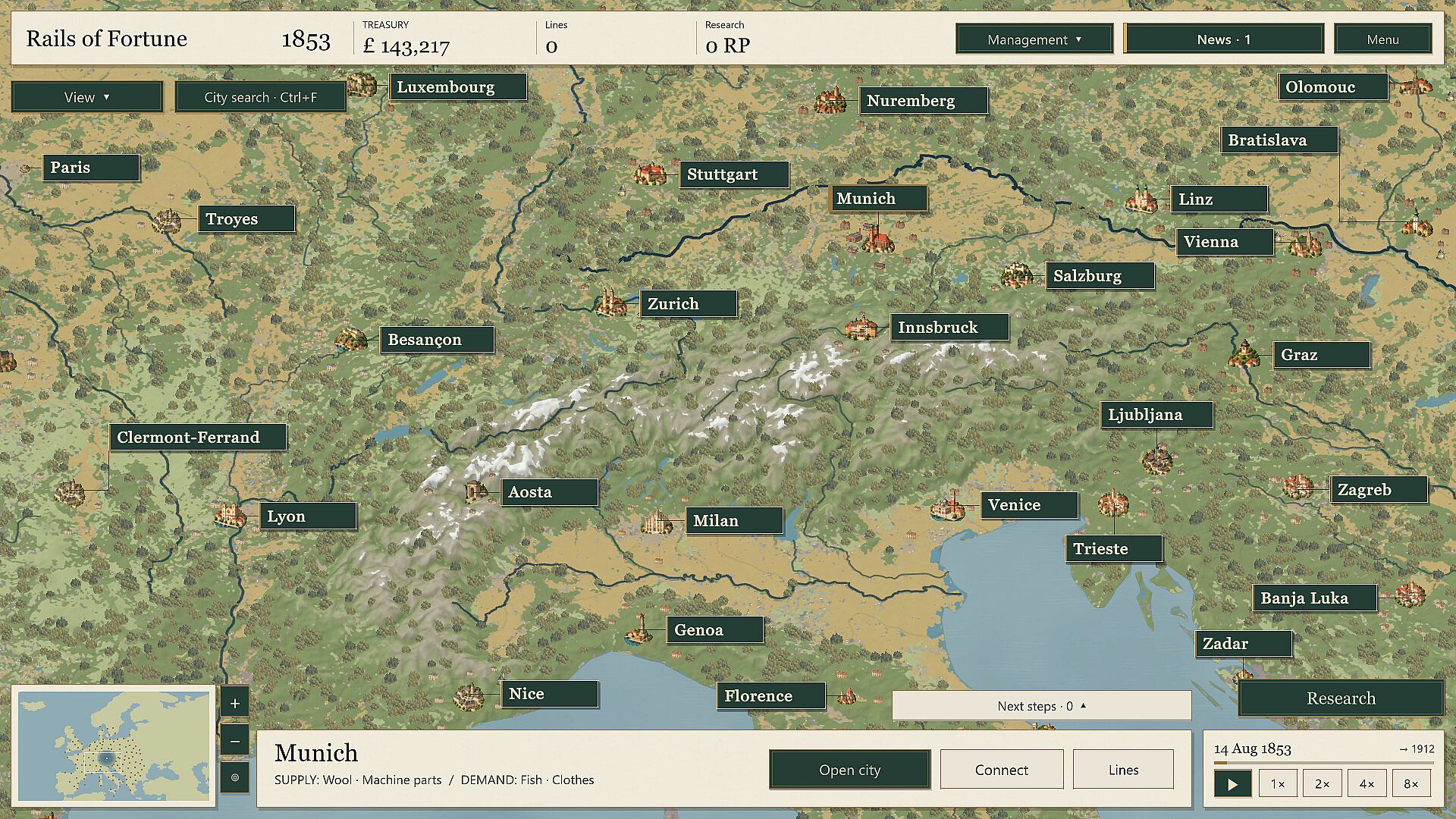
The game uses a stylised map of Europe styled after historical atlases. This visual approach supports the period atmosphere while keeping the focus on strategic decisions rather than detailed graphics. The single-player experience emphasizes careful planning and adaptation over direct confrontation, though rival companies operate in the background and influence market opportunities.
Is It Worth Playing?
Rails of Fortune suits players who enjoy deliberate economic strategy and simulation titles. The combination of route planning, supply chain management, and long-term company growth creates a satisfying progression from small connections to continent-spanning networks. Those who prefer relaxed pacing with meaningful choices will find the time controls and management tools helpful for handling complexity. The campaign structure and scenario variety give clear goals, while endless mode supports extended play sessions. If transport and logistics simulations appeal, this title offers a focused experience centered on building profitable operations across changing historical conditions.