




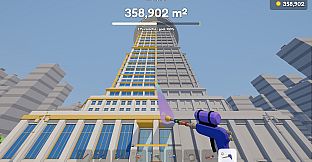
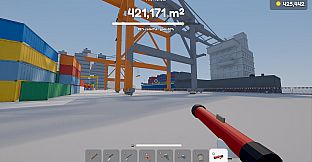
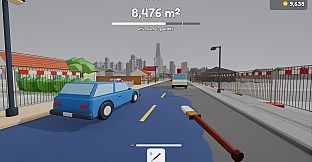
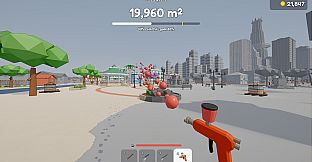
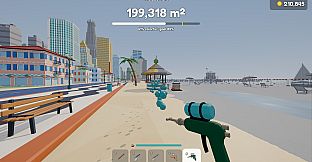
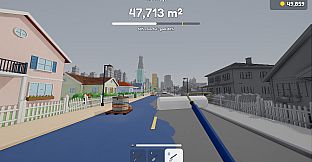
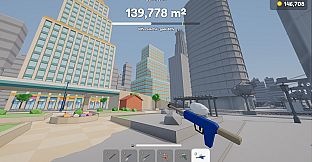
Paint the Town is a casual simulation game on PC in which players restore color to a monochromatic city by painting objects back to their original hues. The experience centers on methodical exploration and steady progress rather than competition or time pressure.
Gameplay
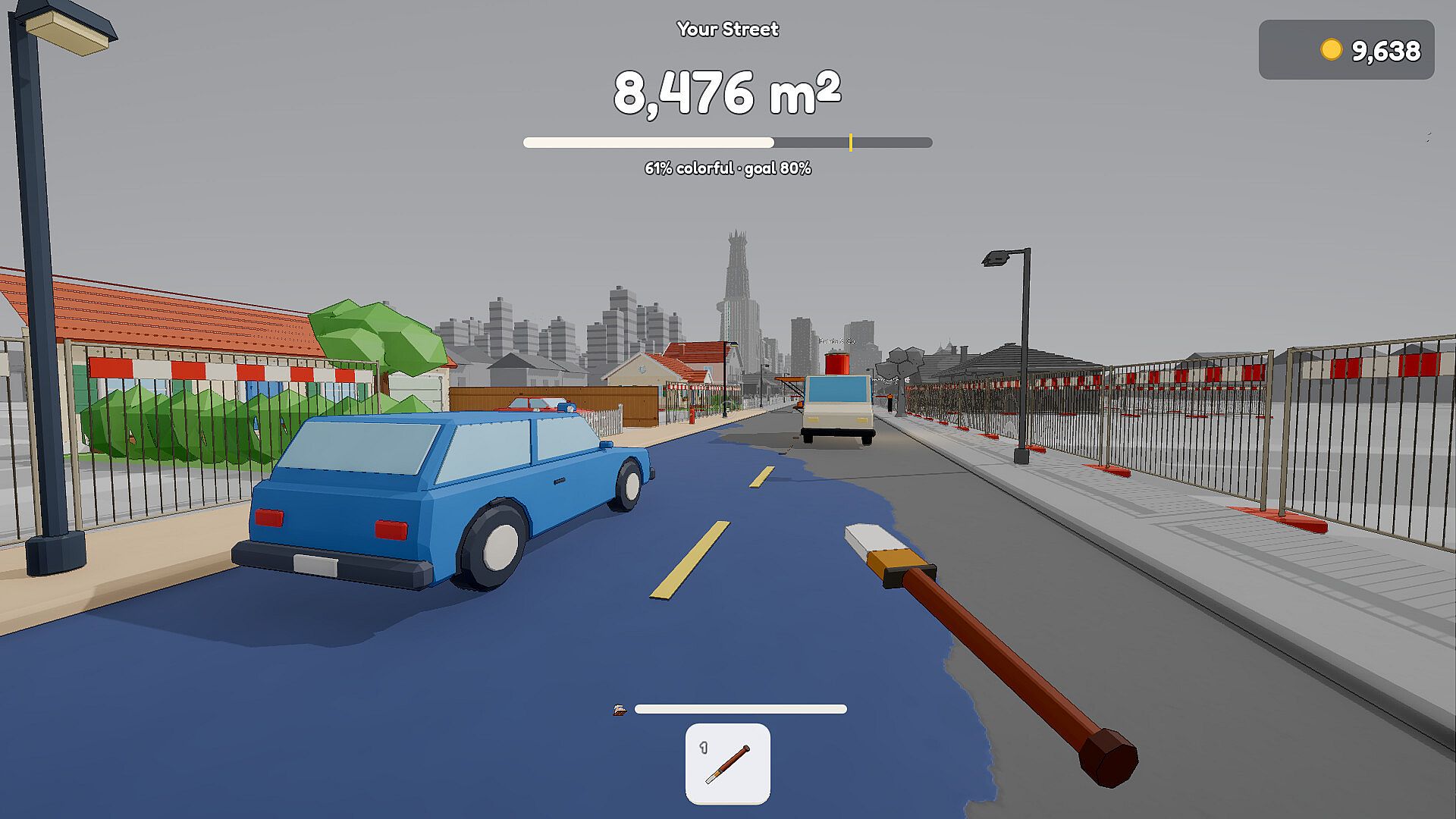
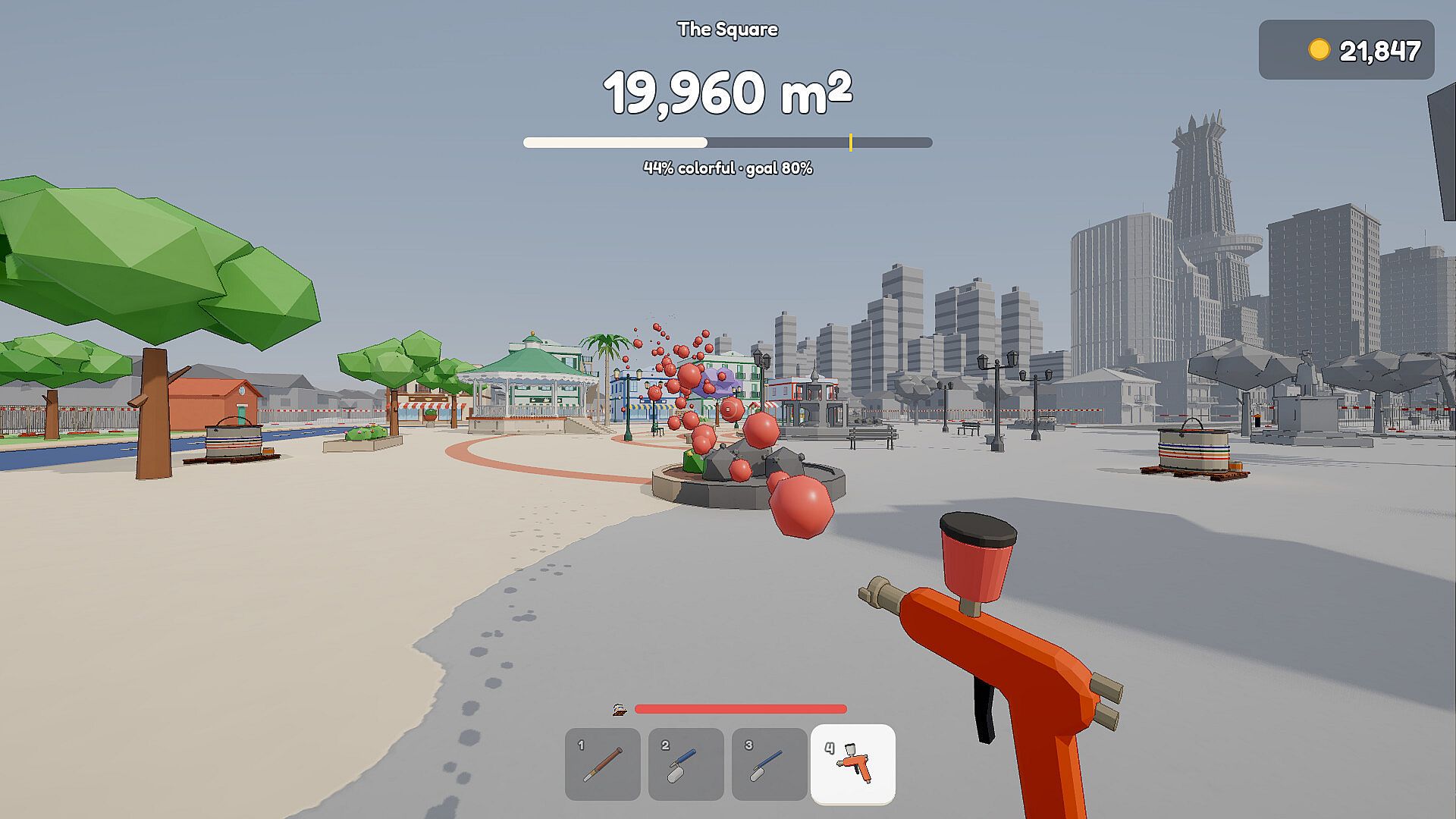
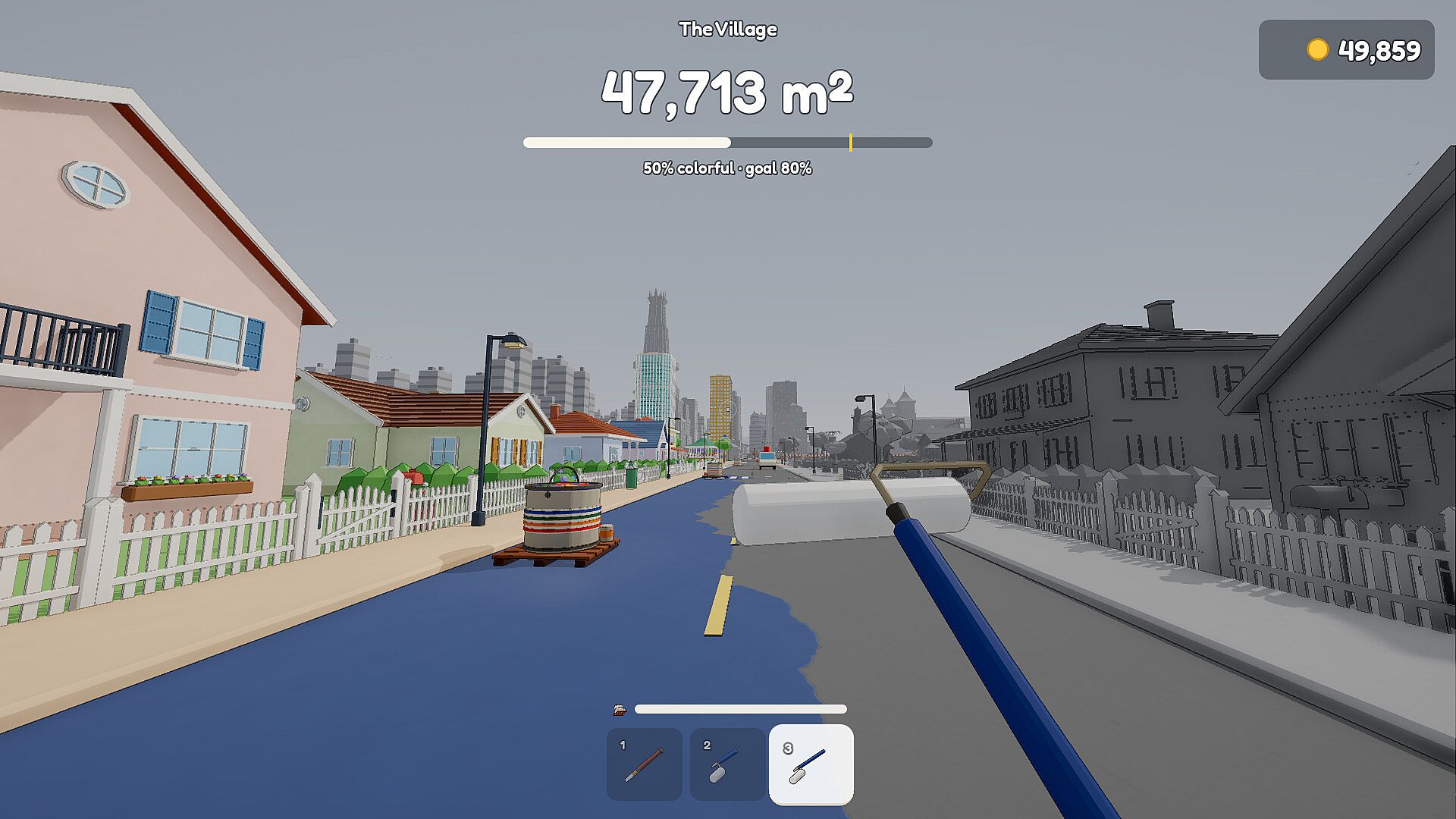
The core loop begins with a gray cityscape where every surface lacks color. Players start with a basic brush and hold the input to apply paint, revealing the true appearance of houses, cars, trees, and other elements one by one. Each completed object triggers a chime, visual sparkles, and coin rewards while the square meter counter advances. Progression feels steady because objects remember their prior colors automatically, removing any need to select palettes or match shades manually.
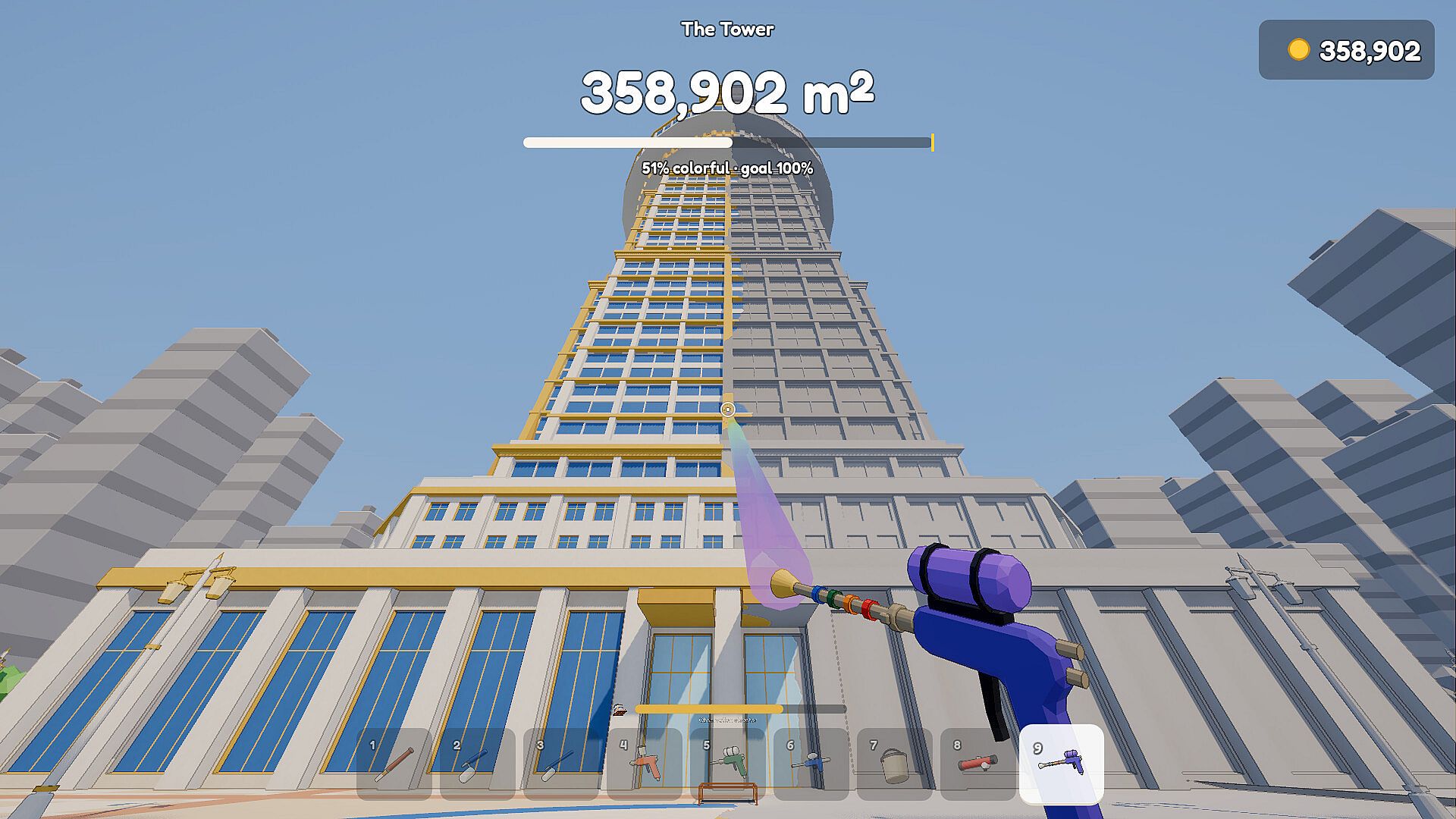
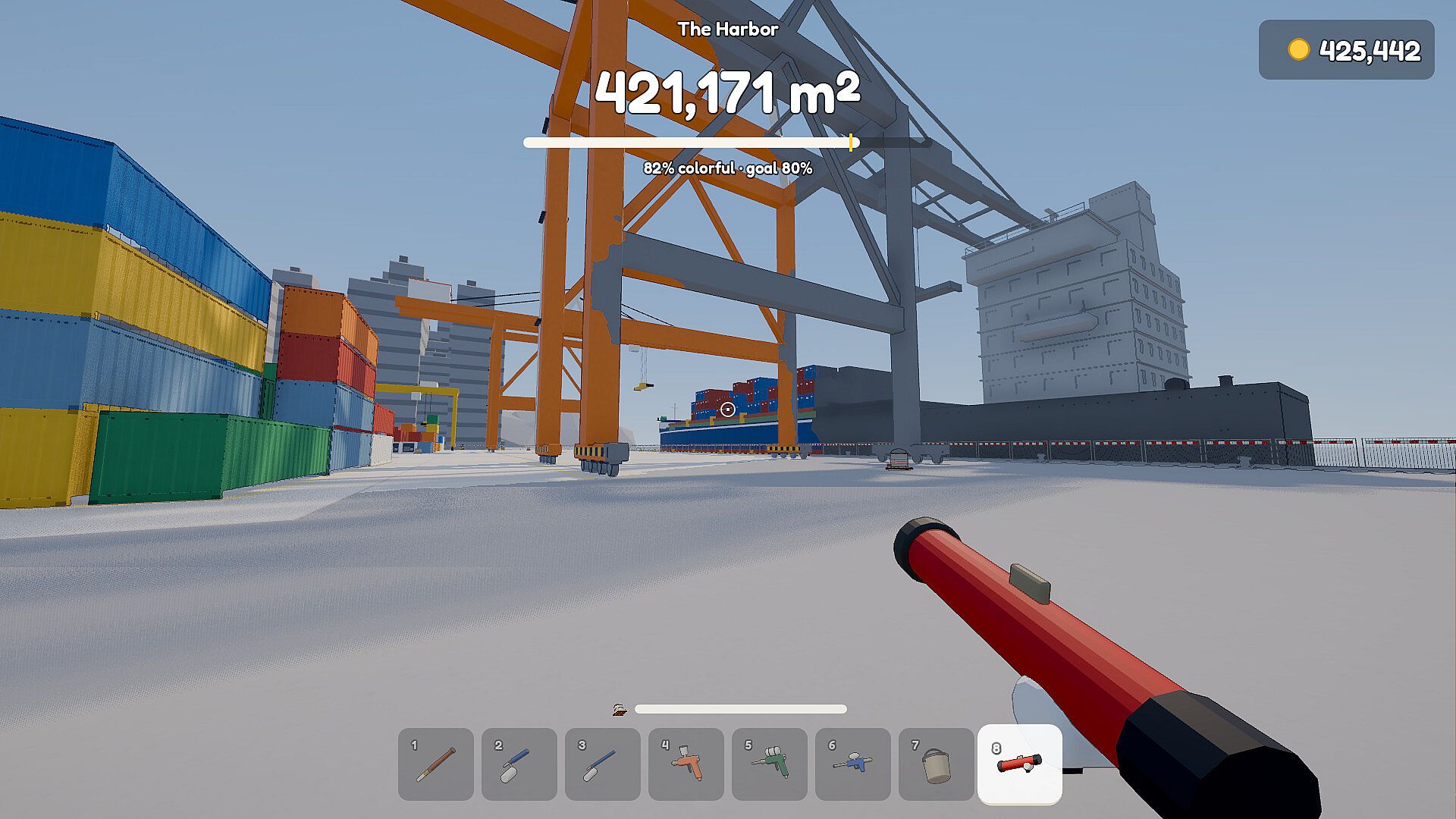
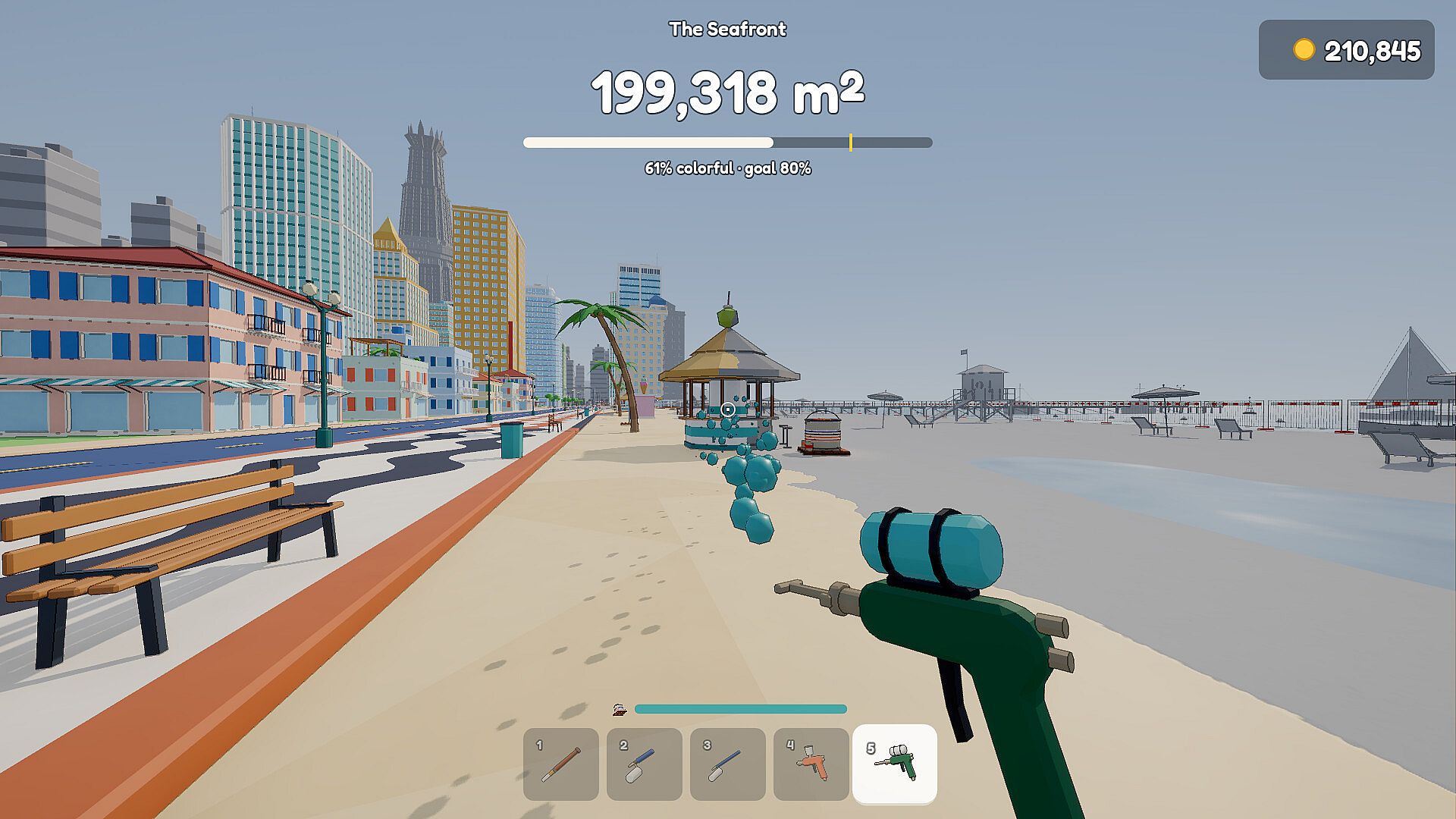
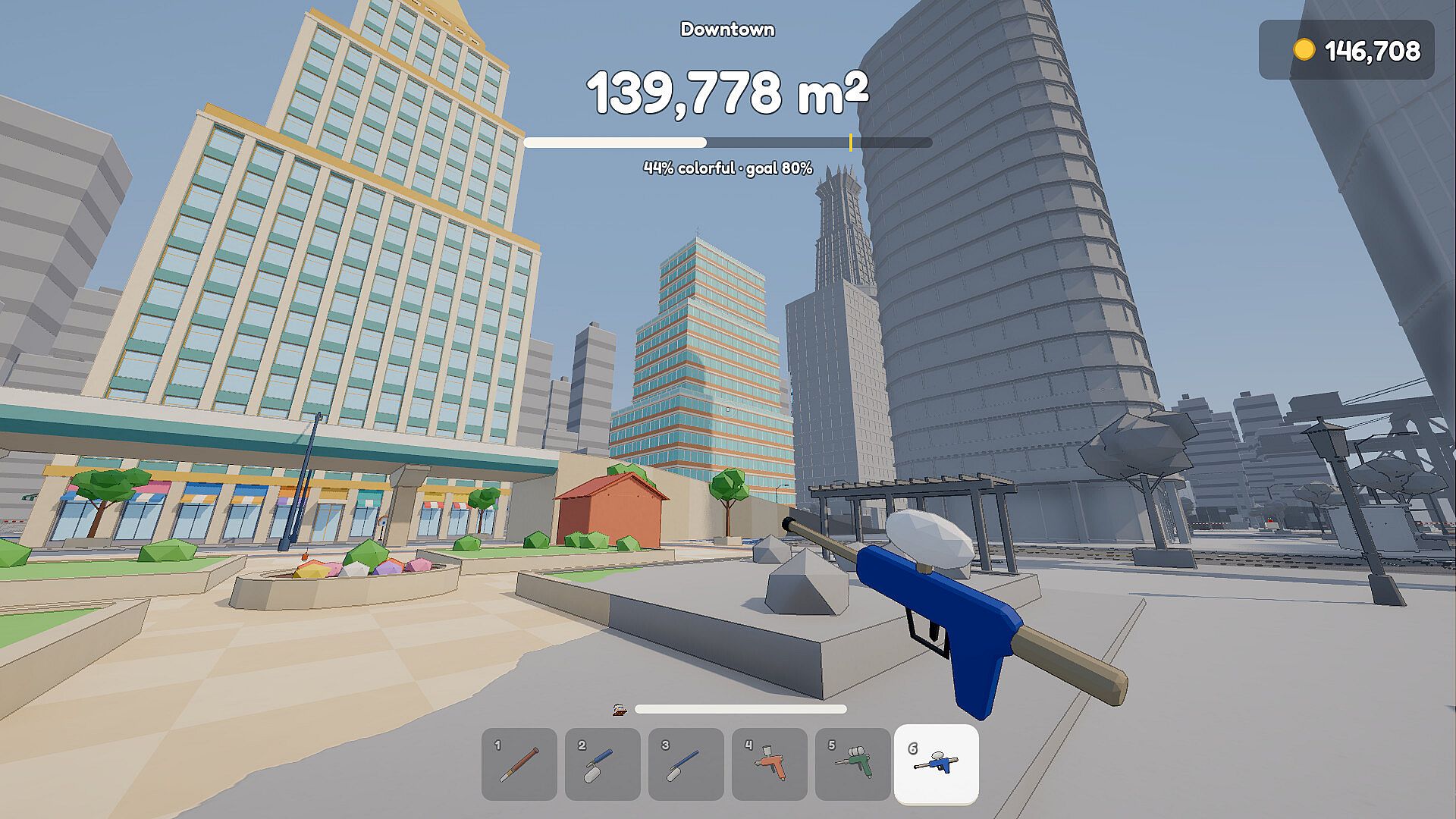
Coins fund upgrades at the paint van, unlocking a sequence of tools that expand reach and efficiency. Early options include rollers and spray guns, while later acquisitions add paintball markers, paint bombs, a shoulder-mounted cannon, and the Rainbow Jet. Painter drones accompany the player on later purchases and handle independent spraying. Combo multipliers reward consecutive completions, and purchases connect through a skill tree divided into six themed branches. The tree contains fourteen abilities, five drones, and nineteen upgrades spread across one hundred seven levels, with free refunds available at any time to encourage experimentation without permanent mistakes.
Paint tanks scattered around the city allow refills without returning to the van, and late-game additions such as a jetpack, multishot spreads, and ricocheting shots or beams further streamline coverage of tall structures. The adaptive soundtrack layers new instruments as neighborhoods regain color, shifting from solo piano to fuller arrangements that match the growing vibrancy.
Game Modes
Paint the Town offers a single continuous experience without separate competitive or timed modes. Players move freely through seven neighborhoods that increase in scale: the starting street, the village, the town square, the seafront, downtown, the harbor, and the three-hundred-meter Tower. A gray-vision toggle highlights unpainted surfaces to prevent exhaustive searching, while optional collectibles such as sleeping doors, hidden radios, ghost murals, and a drifting blimp provide extra goals for those who want them. The dark subway section features glowing paint effects as a visual reward for deeper exploration.
Progression remains linear in structure yet flexible in pace. Completion of one neighborhood opens the next, with the sky gradually turning blue and wildlife returning as color spreads. No enemies, fail states, or timers interrupt the flow, allowing sessions to end at any point with autosave preserving all advances.
Features
The city spans more than four hundred thousand square meters across the neighborhoods with seamless transitions and no loading screens. Nine tools in total range from the initial brush to the Rainbow Jet, supported by the skill tree and drone options. Paint management evolves from manual bucket refills to automated systems that eliminate backtracking in later stages. Fifteen achievements track various milestones, and the full playthrough fits into one or two sittings for most players.
Secrets add replay value without altering the relaxed tone. Seven hidden radios play unique songs, while the blimp and subway provide visual and atmospheric variety. The absence of pressure makes the game suitable for short or extended sessions alike.
Is It Worth Playing?
Paint the Town suits players seeking a low-stress creative outlet focused on steady visual transformation rather than challenge or narrative depth. The mechanics emphasize satisfaction from coverage and collection without risk of failure or repetition beyond the natural expansion of tools and areas. Its short length and flexible pacing appeal to those who prefer complete experiences over ongoing campaigns or multiplayer elements. The combination of intuitive painting, incremental upgrades, and atmospheric progression delivers consistent forward momentum in a compact package.











