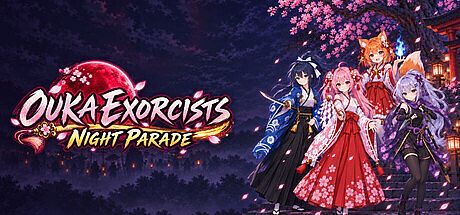


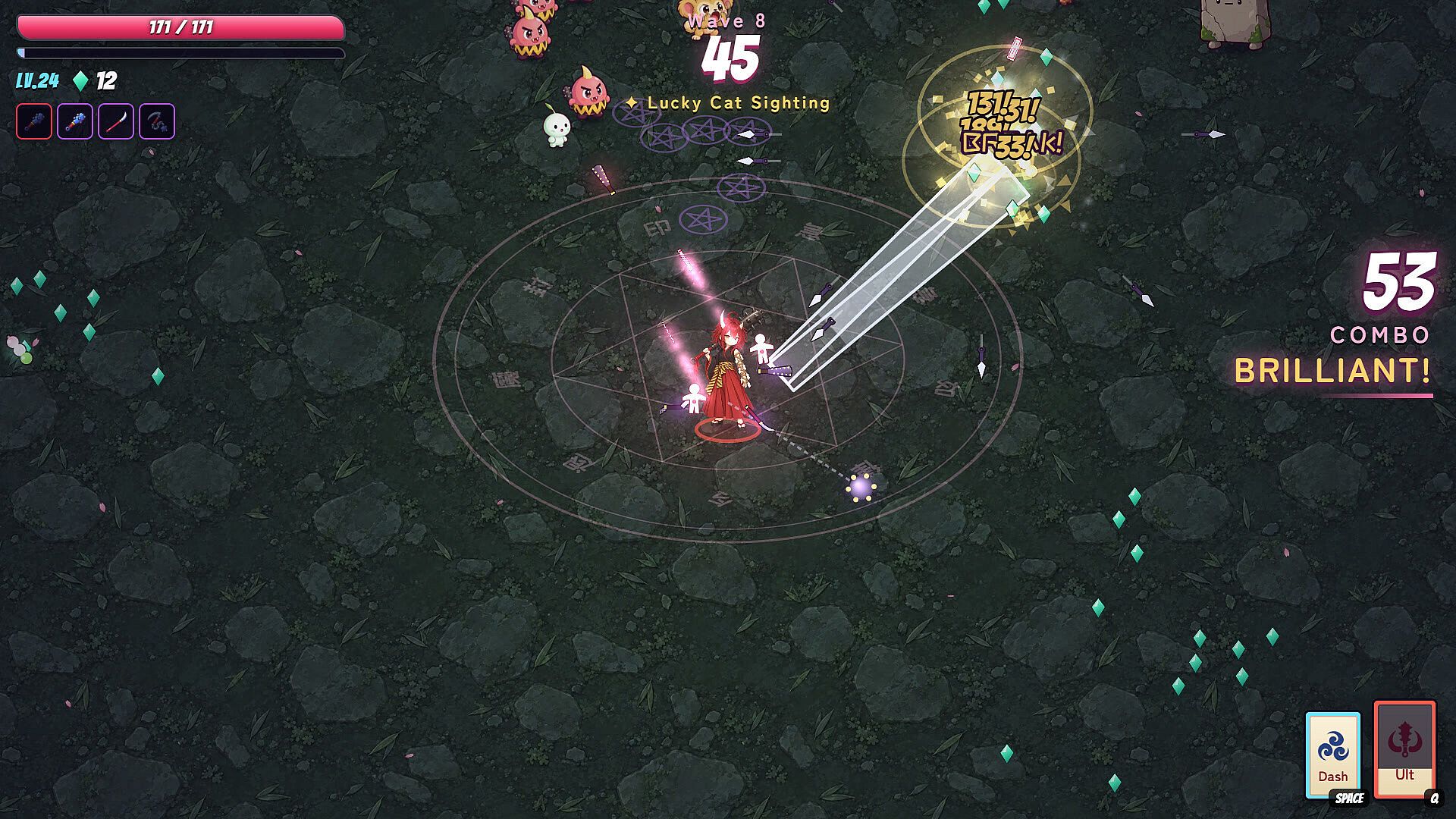
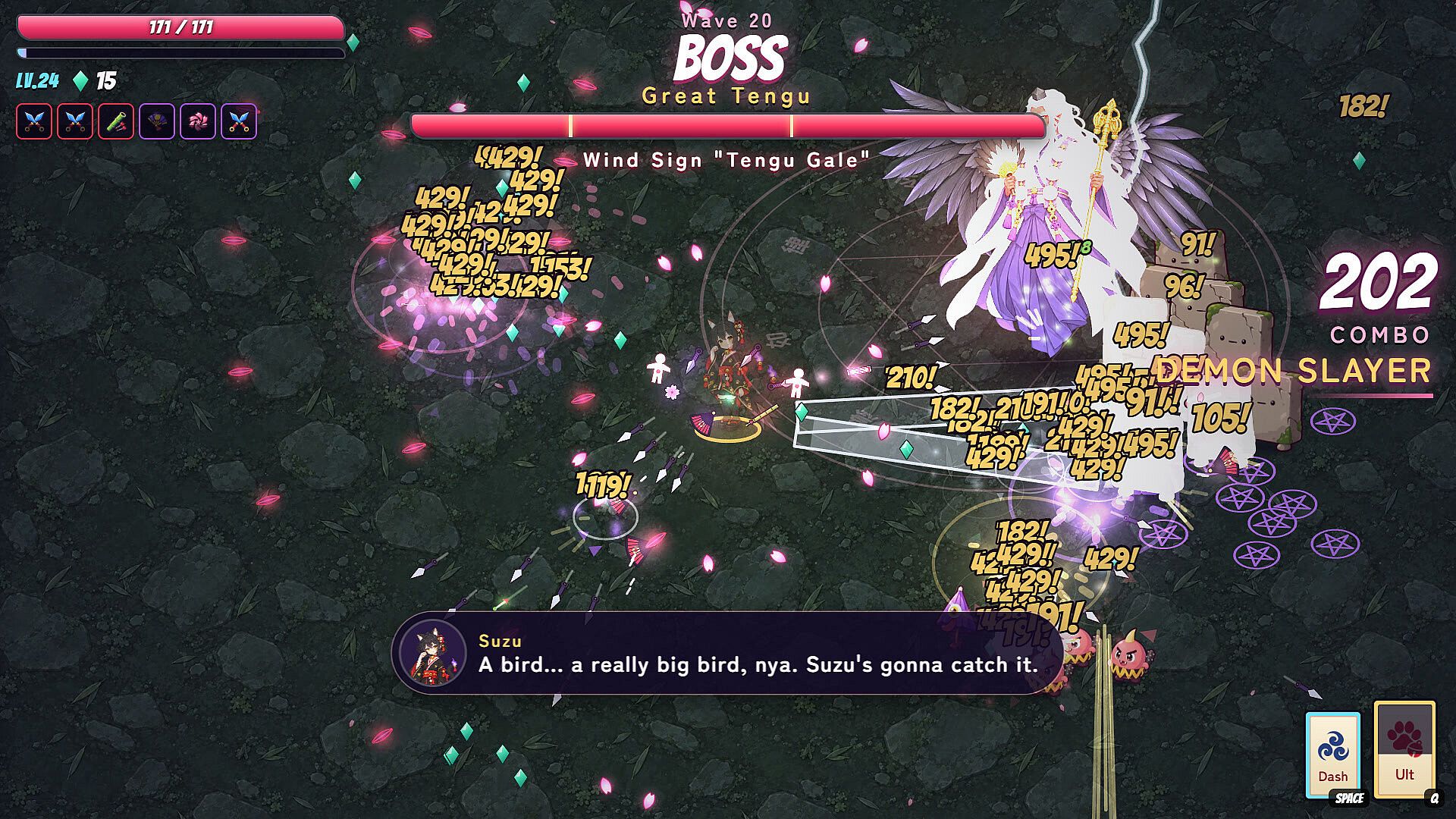
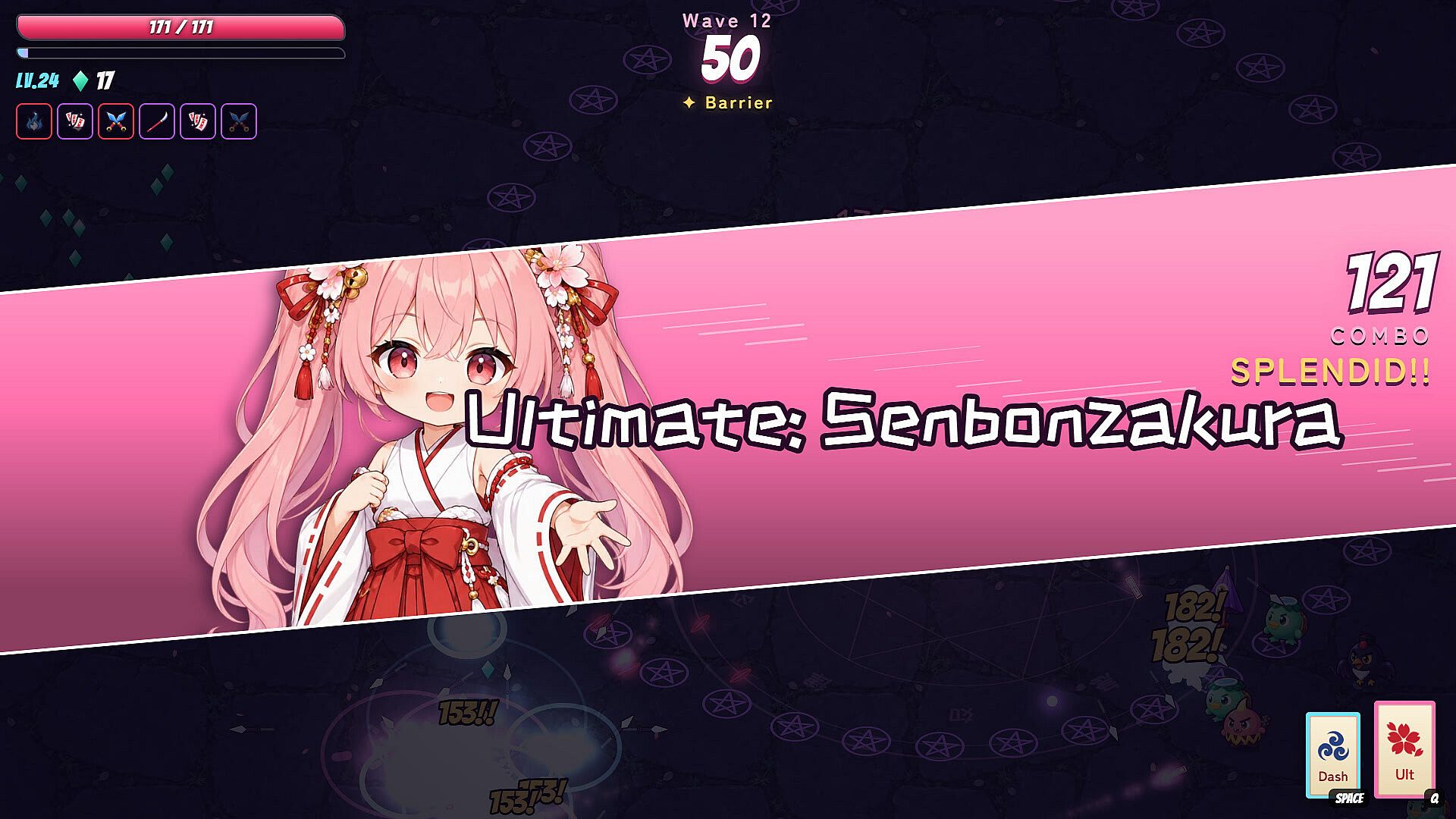
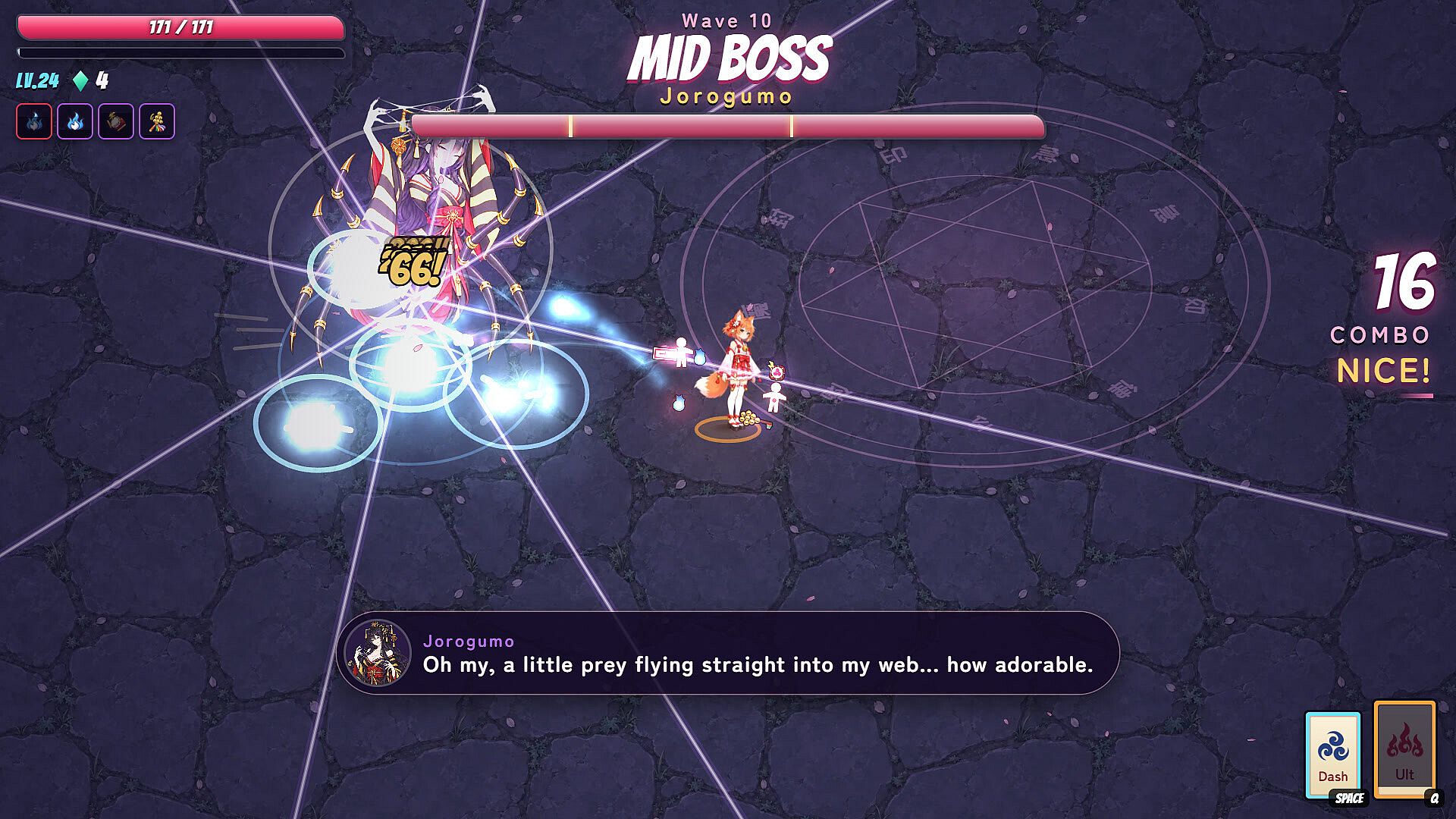

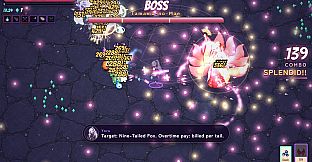




Ouka Exorcists: Night Parade is an action indie RPG survivors-like game set in a world drawn from Japanese folklore. Players control one of six exorcists who must survive waves of yokai during the Hyakki Yagyo, the Night Parade of One Hundred Demons, while restoring a withered shrine and uncovering a visual novel story.
Gameplay
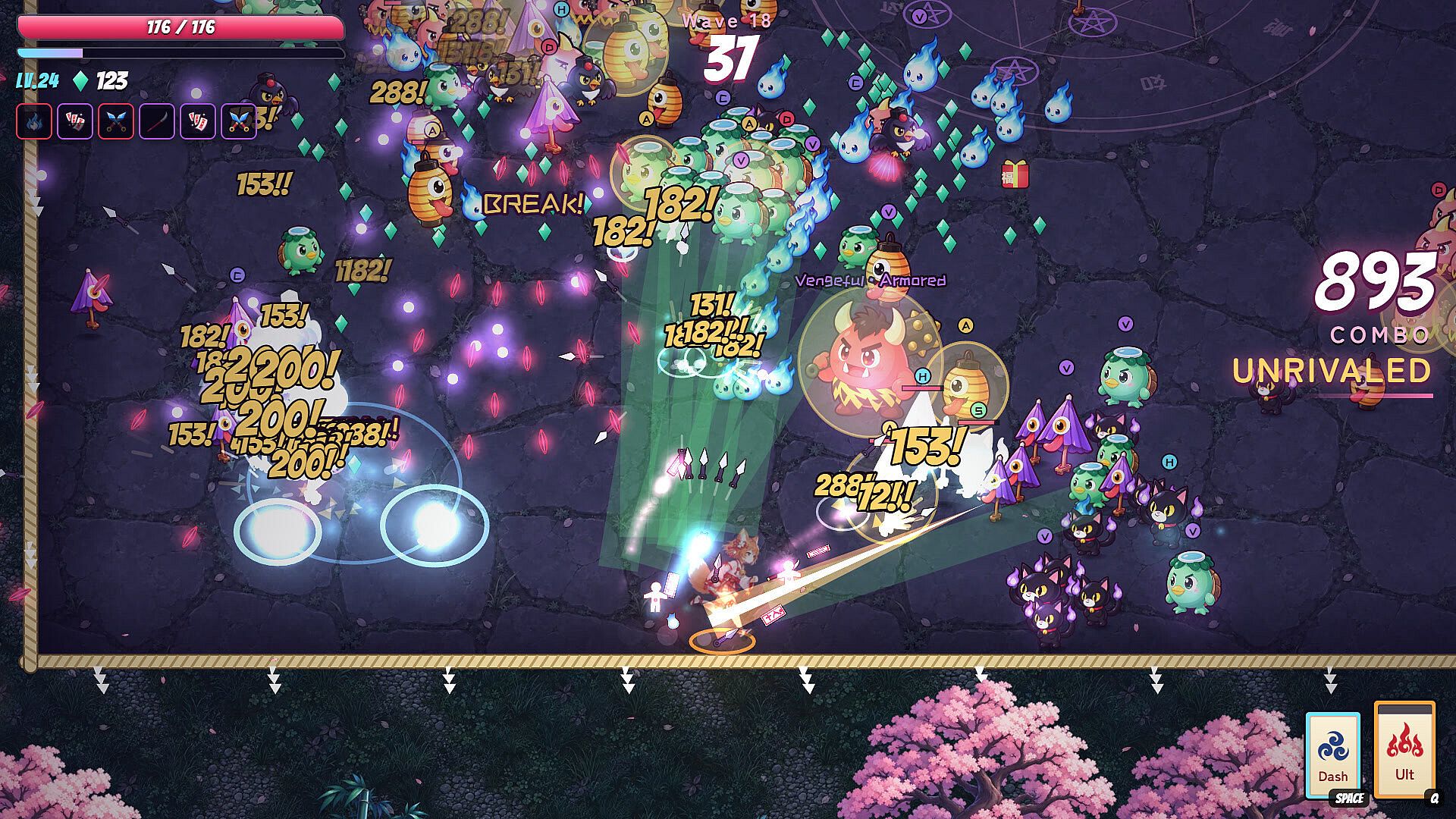
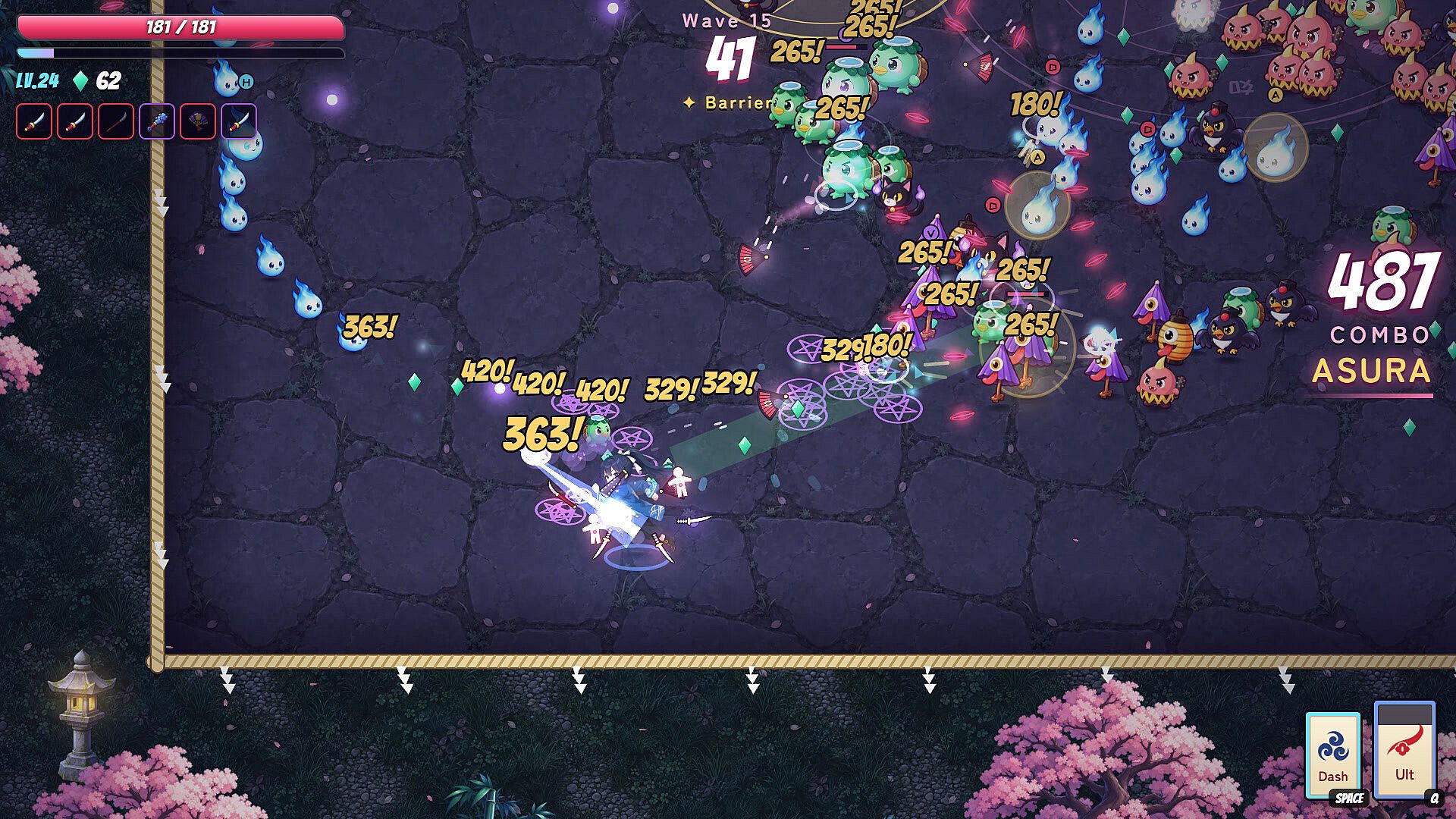
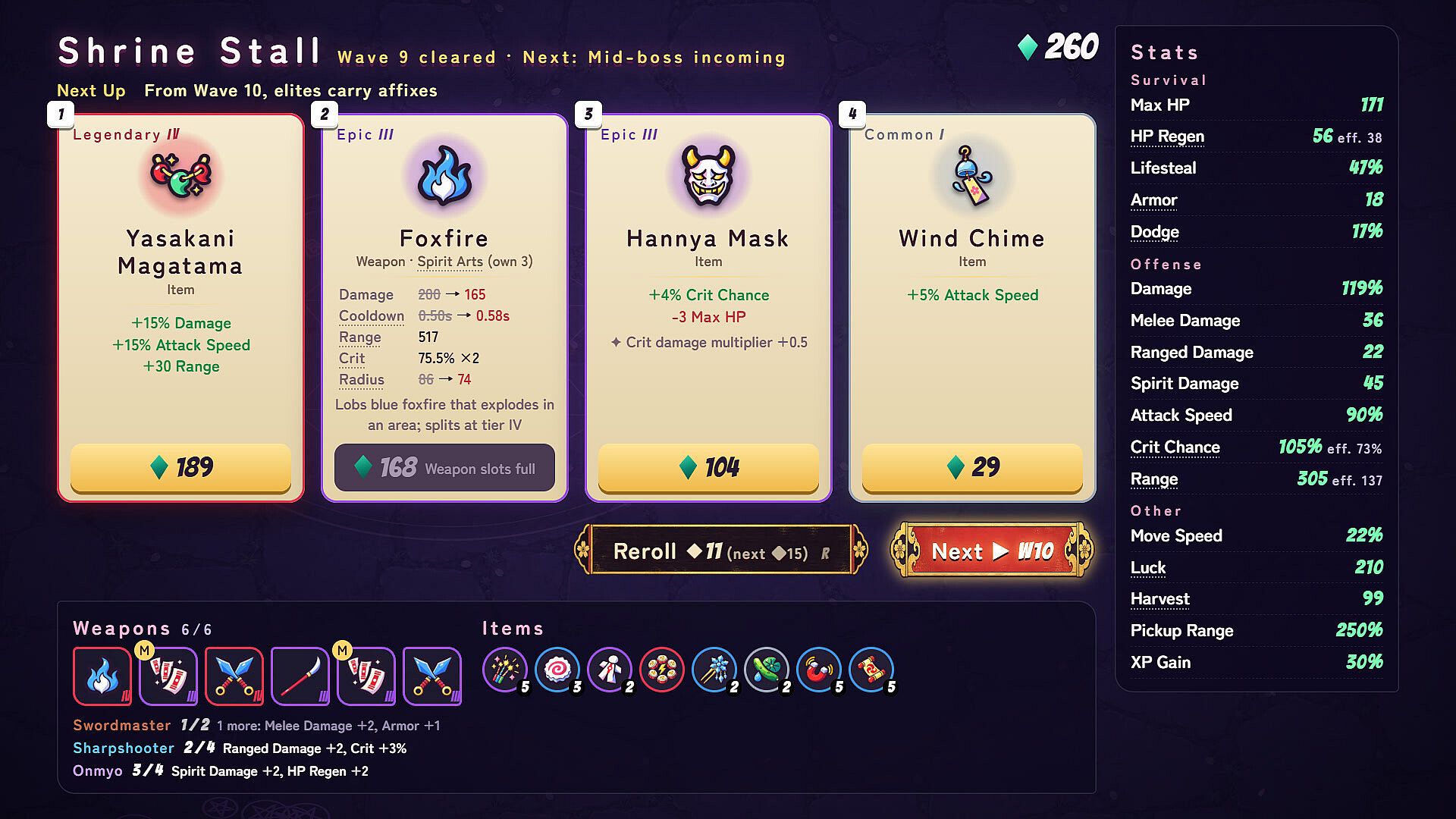
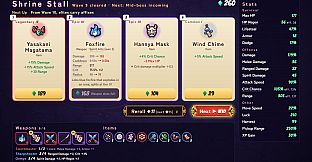
The core loop centers on 20-wave runs that last roughly 20 minutes. Weapons fire automatically while the player weaves through enemy hordes, dashes through gaps, and triggers full-screen ultimates. Between waves, upgrades appear for selection and the shrine stall offers items for purchase. Builds feel distinct because weapons merge up to tier IV and many of the 60 items alter movement, damage, or resource flow in meaningful ways.
Thirteen Japanese-themed weapons span three schools: melee, ranged, and spirit arts. Collecting two, four, or six weapons from the same school grants set bonuses. Starting weapons and passives differ for each exorcist, and bond levels up to 10 unlock alternate colors, awakened passives, and festival illustrations. The six playable characters include Sakura with her protective barrier, Rin whose iai strikes always crit, Tama who gains extra currency and free rerolls, Yoru focused on speed and dashes, Ibaraki whose damage scales with her remaining health, and Suzu who provides one extra life per run.
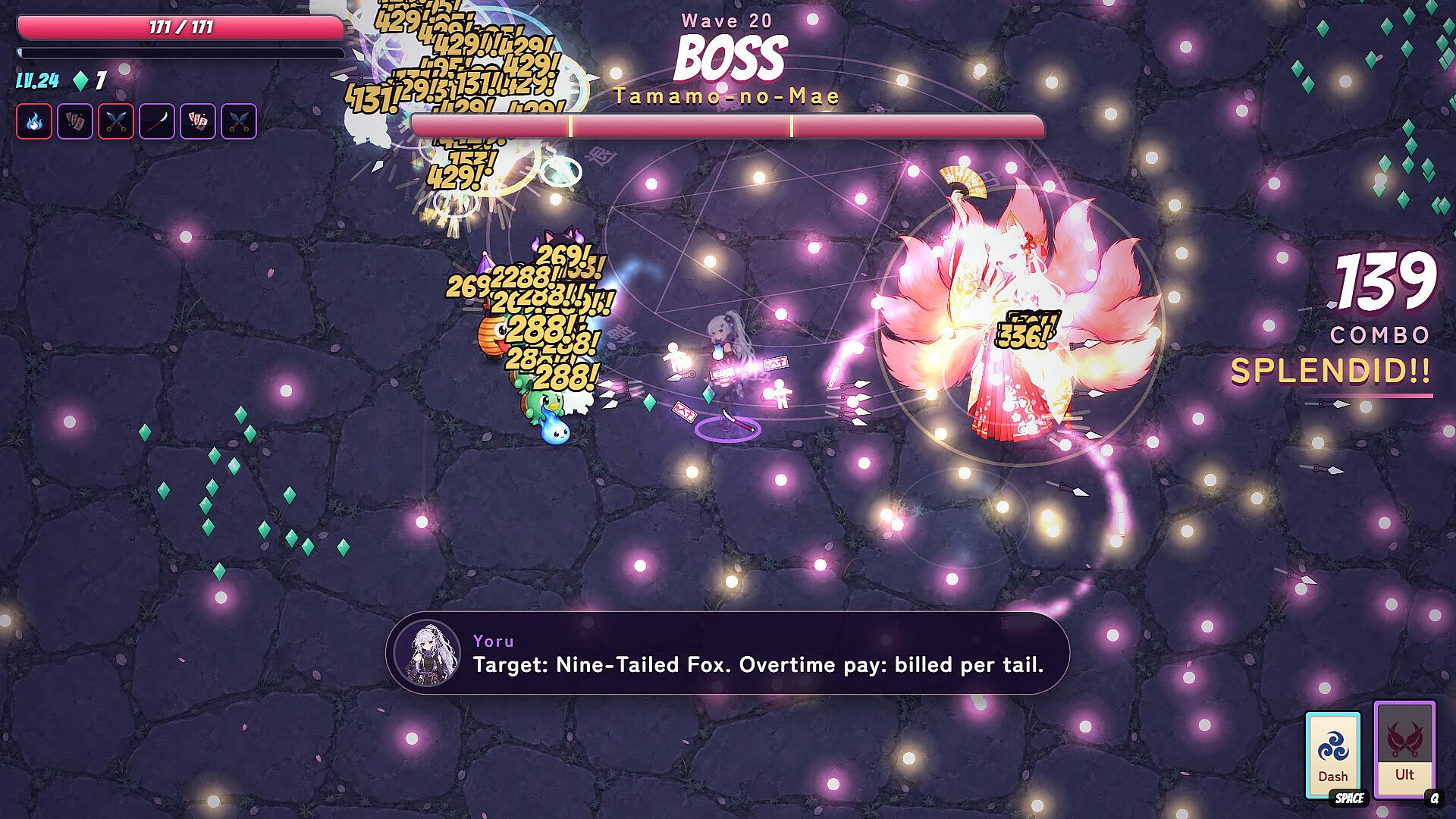
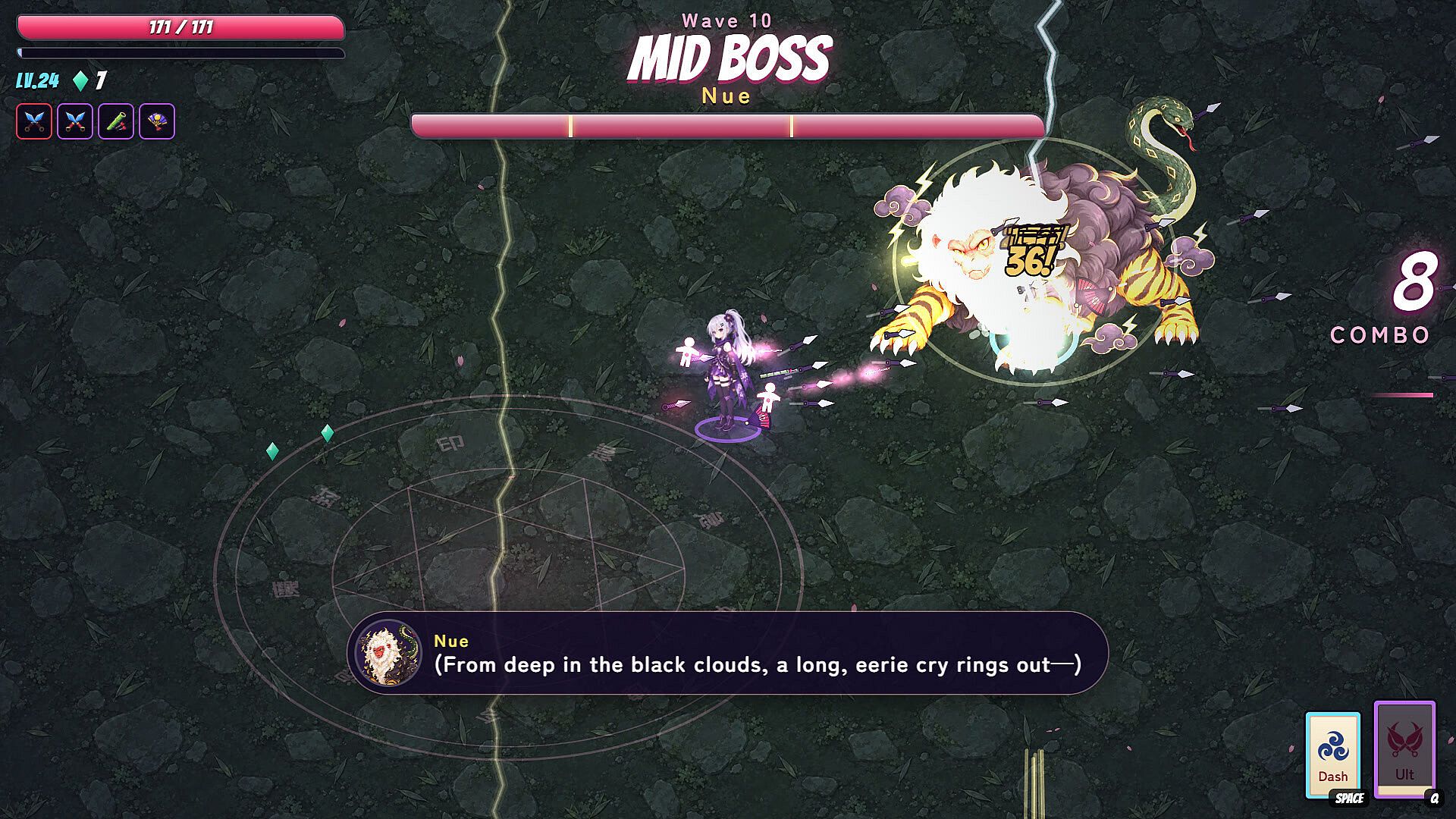
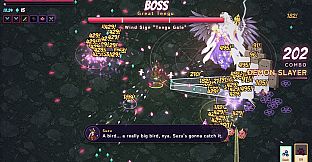
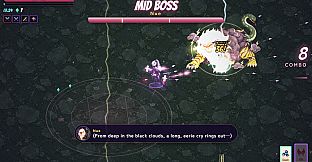
Two stages, Ouka Shrine and the Misty Bamboo Grove, each feature a mid-boss at wave 10 and a final boss. Jorogumo and Nue appear as mid-bosses with distinct bullet patterns, while Tamamo-no-Mae and the Great Tengu serve as stage finales. Elites carry affixes, and wave events such as the lucky-cat chase or the Night Parade march add variety to standard enemy spawns.
Game Modes
Standard runs follow the 20-wave structure across three difficulty settings. Five Seal levels sit above the highest difficulty for additional challenge. An endless mode extends play beyond the normal finale for players seeking longer sessions or higher scores. Wave events and elite affixes appear in every mode, keeping encounters fresh even on repeated attempts.
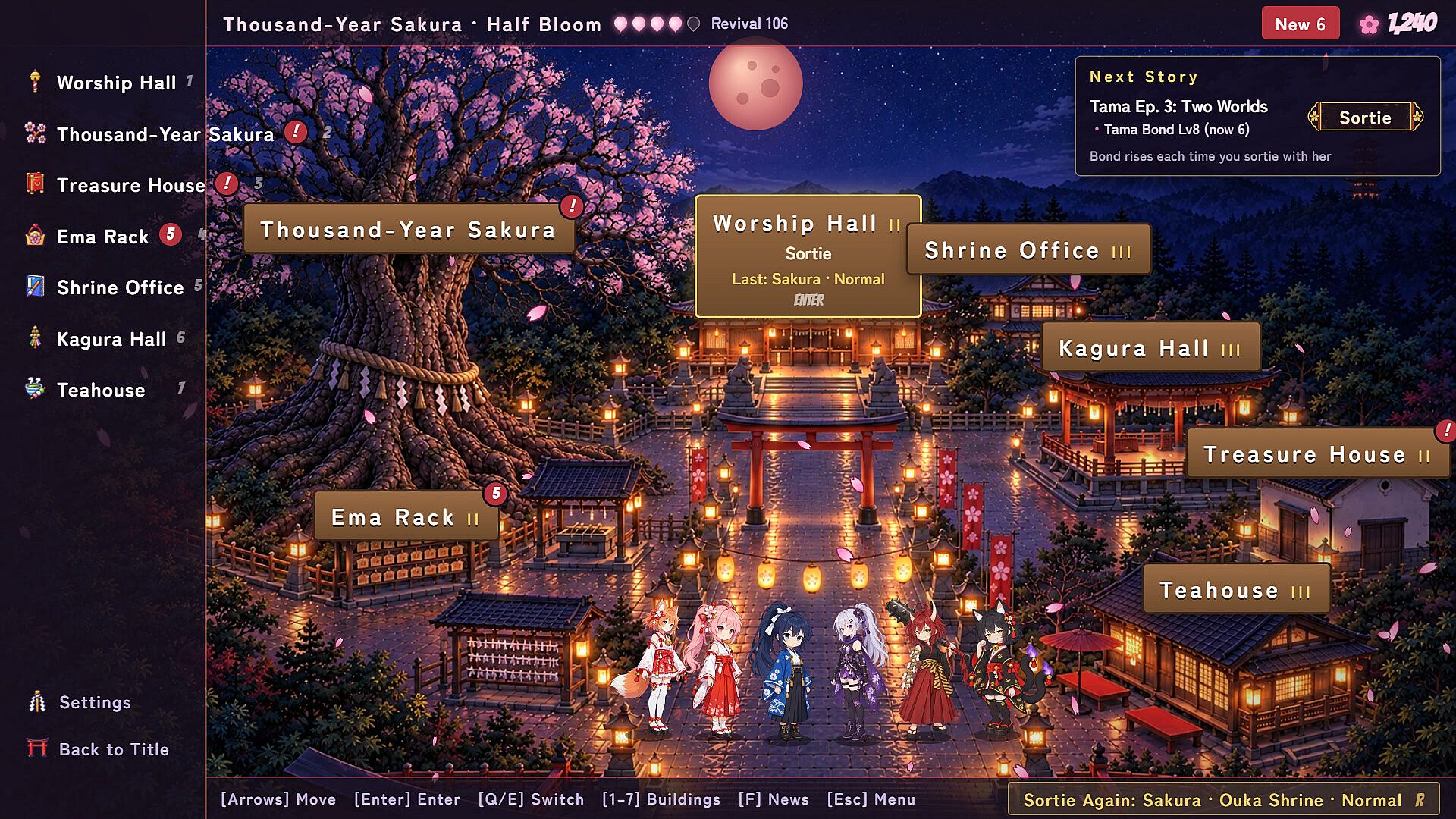
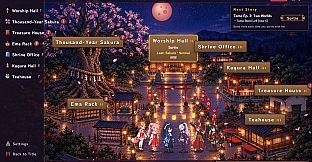
Progression outside runs involves collecting sakura petals to rebuild the shrine. Each completed building unlocks alternate starting weapons, blessings, tea-time conversations, a yokai bestiary, a goshuin stamp book, and 30 ema challenges. The visual novel component runs parallel to this loop, with a prologue, three episodes per heroine, an interlude ending, and joint episodes for Ibaraki and Suzu that feature event CGs and changing character expressions.
Characters and Progression
Each exorcist brings a unique passive, starting weapon, and ultimate that encourages different movement and upgrade priorities. Raising bonds to level 10 not only changes appearance but also activates a stronger passive and unlocks a dedicated festival illustration. The shrine restoration system ties directly into long-term play by gating new starting options and side content behind petal collection from successful runs.
Items such as tri-color dango, the beckoning cat, hannya mask, Yata mirror, Raijin's drum, and tamatebako frequently modify core mechanics rather than simply adding numbers. Three-school set bonuses further reward deliberate weapon selection during merges.
Is It Worth Playing?
The game remains in development and has not yet released, so no player reviews or aggregate scores exist. Its single-player focus and survivors-like structure with roguelite progression, character-specific builds, and integrated visual novel elements target players who enjoy short, repeatable runs combined with light story and collection goals. Those drawn to Japanese folklore themes, automatic combat with manual dodging, and shrine-rebuilding meta-progression will find the described systems align closely with that preference. Availability on PC is confirmed once the title launches.