

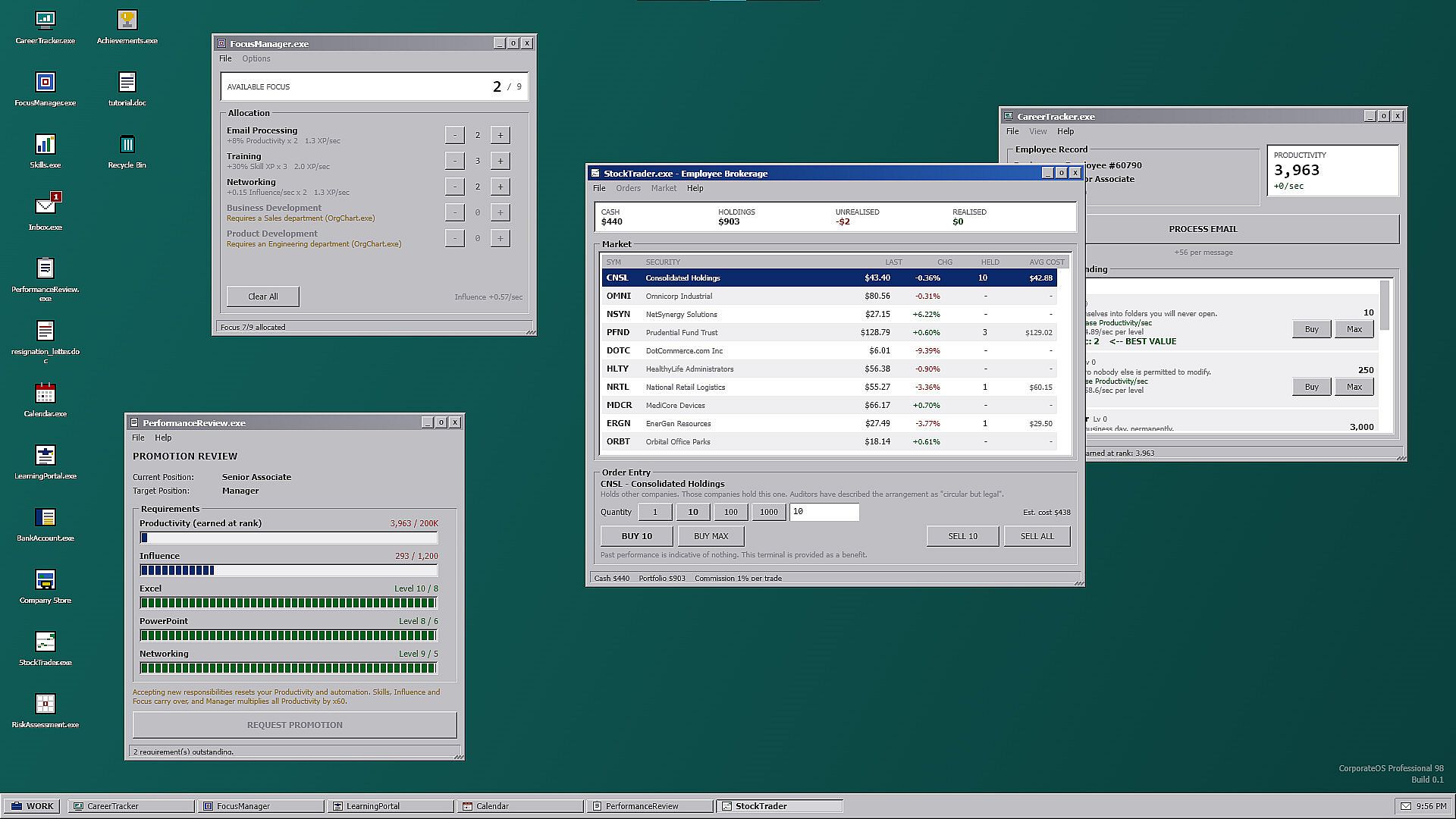
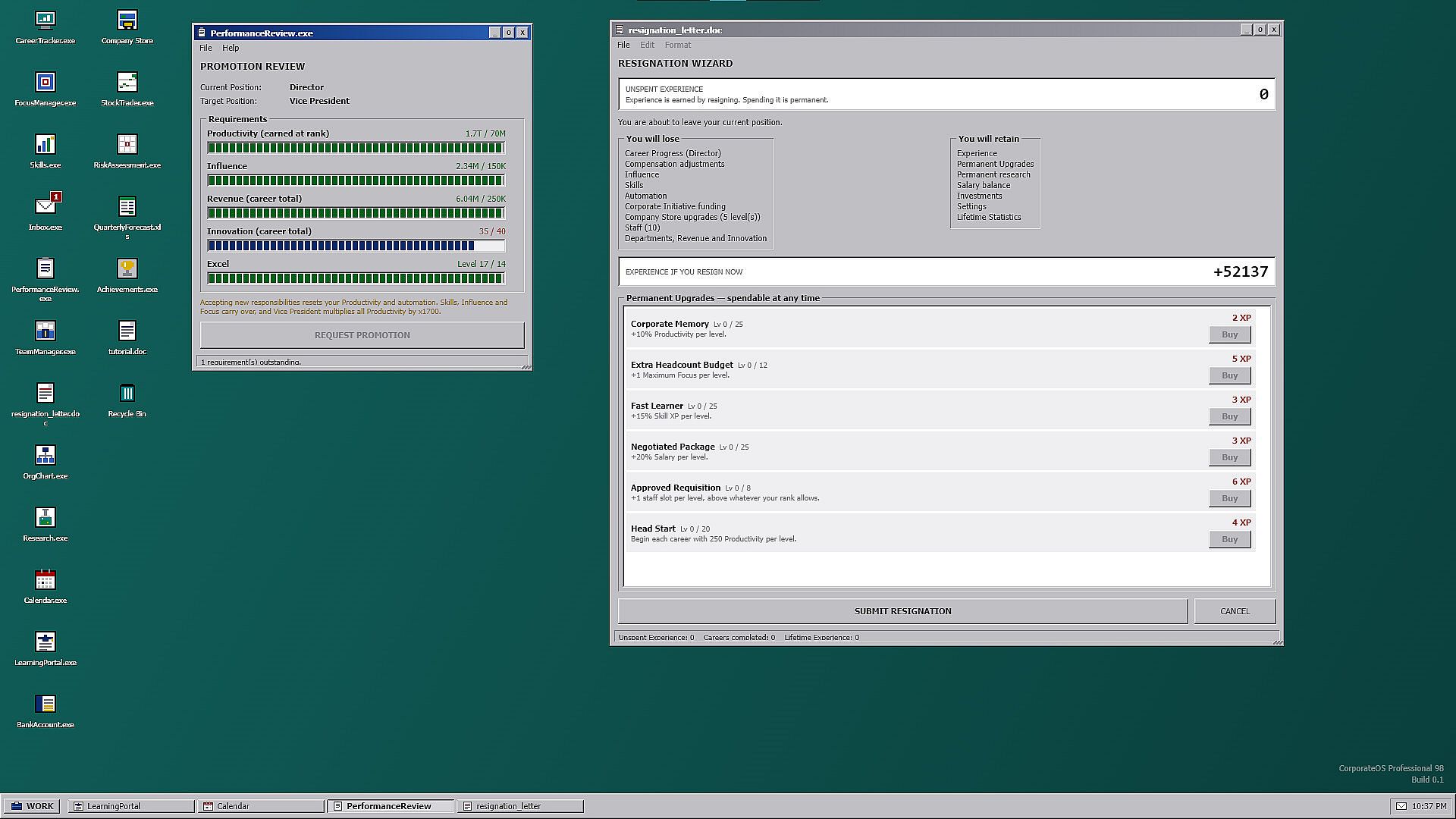
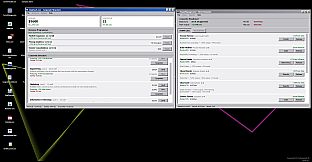
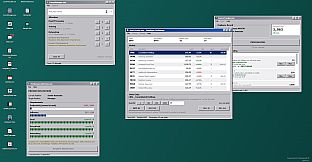
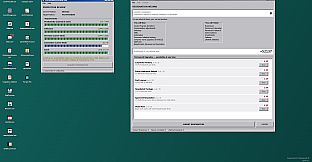
Office God is a satirical incremental strategy and simulation game set entirely within the fictional CorporateOS Professional 98 operating system. Players begin as an intern handling basic email processing and gradually advance through corporate ranks by automating tasks, building teams, and expanding operations until responsibilities reach cosmic scales. The experience unfolds on a retro desktop interface filled with draggable windows, pixel icons, and period-appropriate office sounds, emphasizing steady progression from manual effort to large-scale delegation.
Gameplay
The core loop centers on managing a growing workspace inside the simulated operating system. Early stages involve direct interaction with emails and simple tasks that consume Focus, a limited resource players allocate across skill development or automation upgrades. As the desktop expands, new applications unlock for research, finances, and acquisitions, each presented through beige panels and hold music that reinforce the corporate satire.
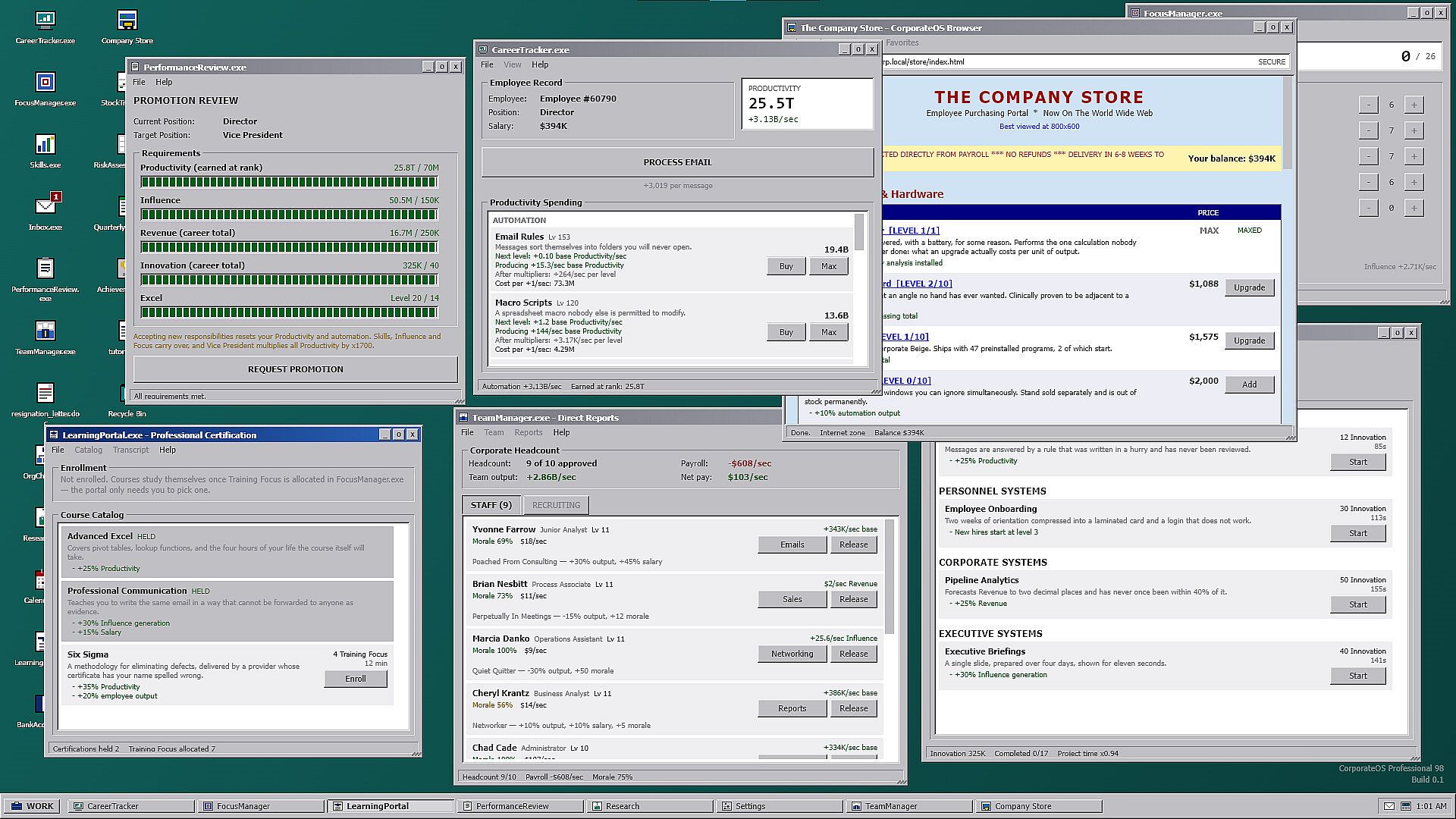
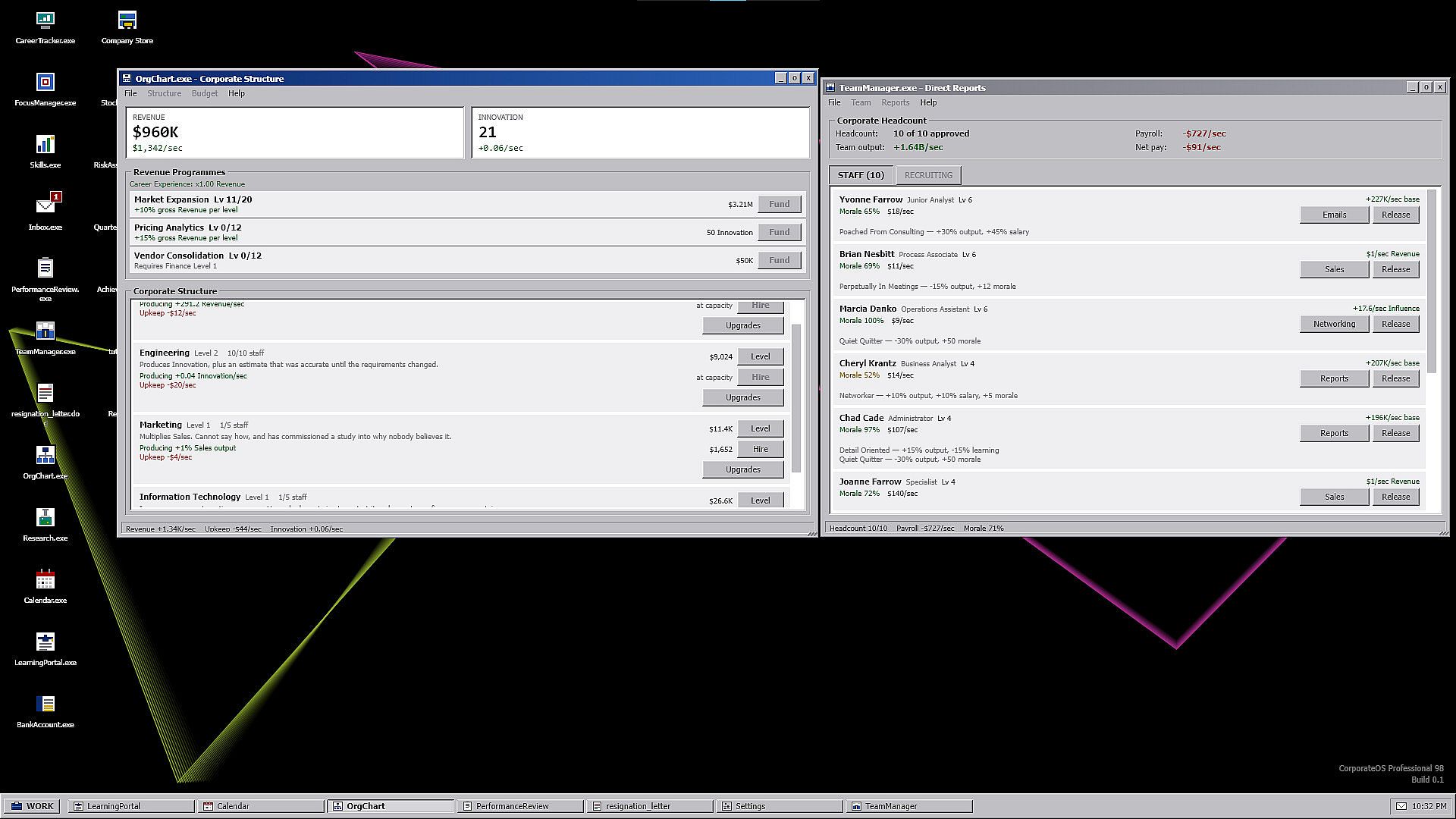
Progression relies on turning repetitive work into automated systems. Players hire employees with individual traits, monitor morale and payroll, and establish departments led by managers. Production continues offline for up to eight hours, allowing returns to substantial gains without constant play. Interactive elements include responding to inbox events, trading stocks, completing certifications, and tackling spreadsheet challenges that provide direct boosts to output.
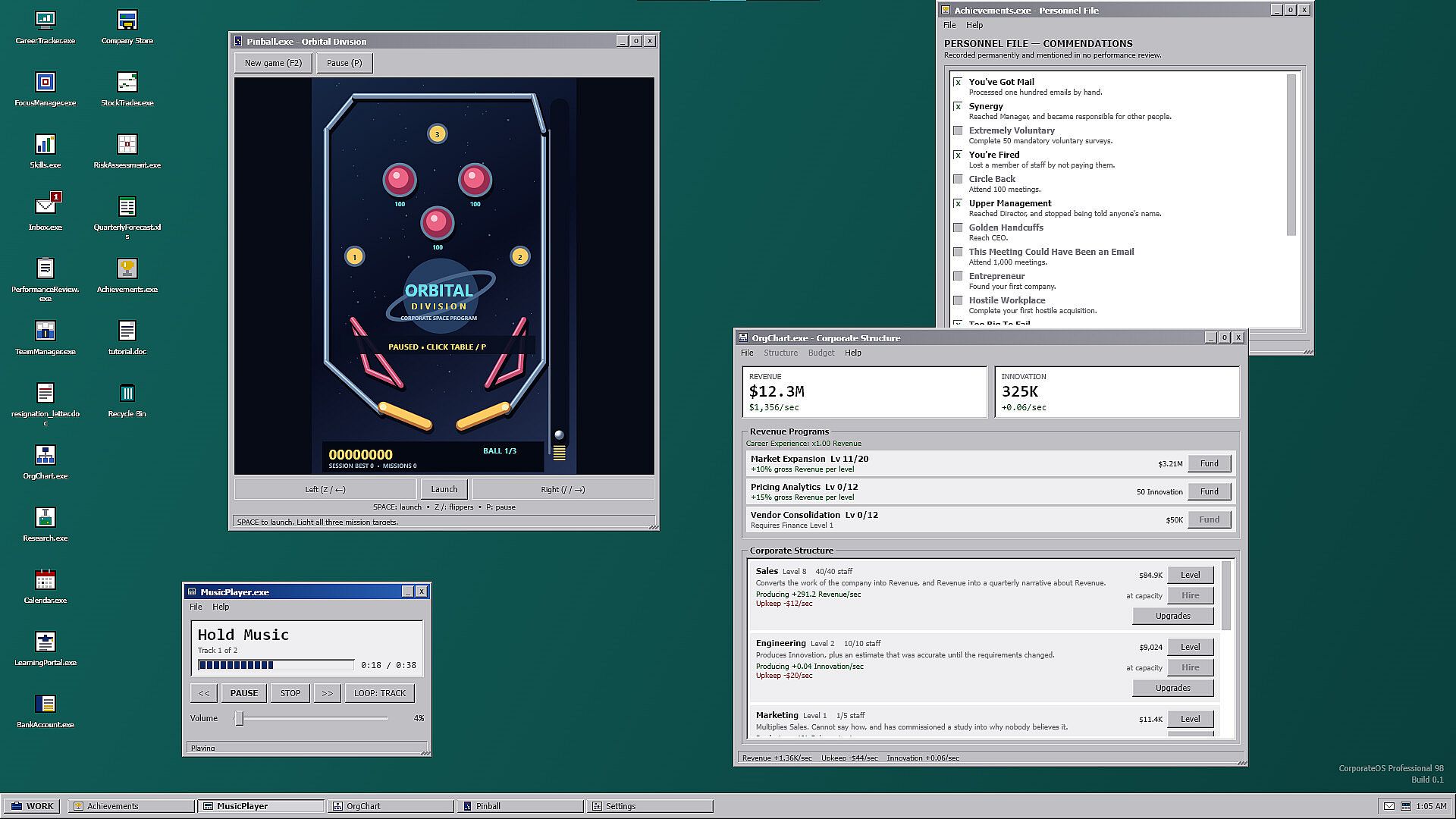
Workspace management adds physical interaction. Windows can be resized and rearranged as more programs become available, creating a cluttered yet functional desktop that mirrors ambition. The soundtrack features distant photocopiers and ambient office noise, maintaining immersion without distraction. Permanent advancement comes through two prestige layers: resigning to carry Experience into future runs and founding companies for Equity that funds lasting advantages.
Game Modes
Office God operates as a single-player incremental experience with built-in progression systems that function like repeated career cycles. The resignation mechanic resets the current role while preserving Experience for permanent perks, encouraging multiple playthroughs with stronger starting positions. Founding companies introduces Equity as a separate currency for empire-building decisions, including competitor acquisitions that scale operations beyond standard business definitions.
These systems integrate seamlessly into the desktop simulation rather than existing as separate selectable modes. All activity remains within the CorporateOS environment, where calendar events, risk assessments, and company store purchases provide optional hands-on activities alongside automated production. The structure supports both short sessions focused on immediate tasks and longer campaigns aimed at universal administration.
Progression and Systems
Advancement follows a clear hierarchy from intern duties to reality-level oversight. Early Focus investments prioritize automation and hiring to reduce personal workload. Mid-game shifts toward department creation and manager appointments, balancing output against payroll and morale. Late stages involve research trees, stock trading, and acquisitions that push administrative scope into absurd territory while still requiring proper form filing through the operating system.
Employee management forms a key layer. Hired staff carry traits that influence efficiency, and players must maintain morale to sustain production. Research unlocks new software tools, while certifications and meetings offer targeted progress opportunities. The Company Store provides salary spending options that can accelerate certain paths without replacing core incremental growth.
Is It Worth Playing?
Office God suits players who enjoy incremental games with strong thematic presentation and gradual automation. The retro desktop interface and satirical tone distinguish it from standard clicker or idle titles, rewarding those who appreciate managing expanding systems through familiar office software metaphors. The dual prestige options add replay value for completionists seeking optimized runs or larger-scale empires.
Availability on PC allows easy access for short or extended sessions, with offline progress reducing the need for constant attention. The gameplay emphasizes thoughtful resource allocation over rapid reflexes, making it appropriate for casual strategy fans who like building from humble beginnings to outsized influence. Those drawn to corporate satire combined with simulation depth will find consistent engagement across career resets and company foundations.