






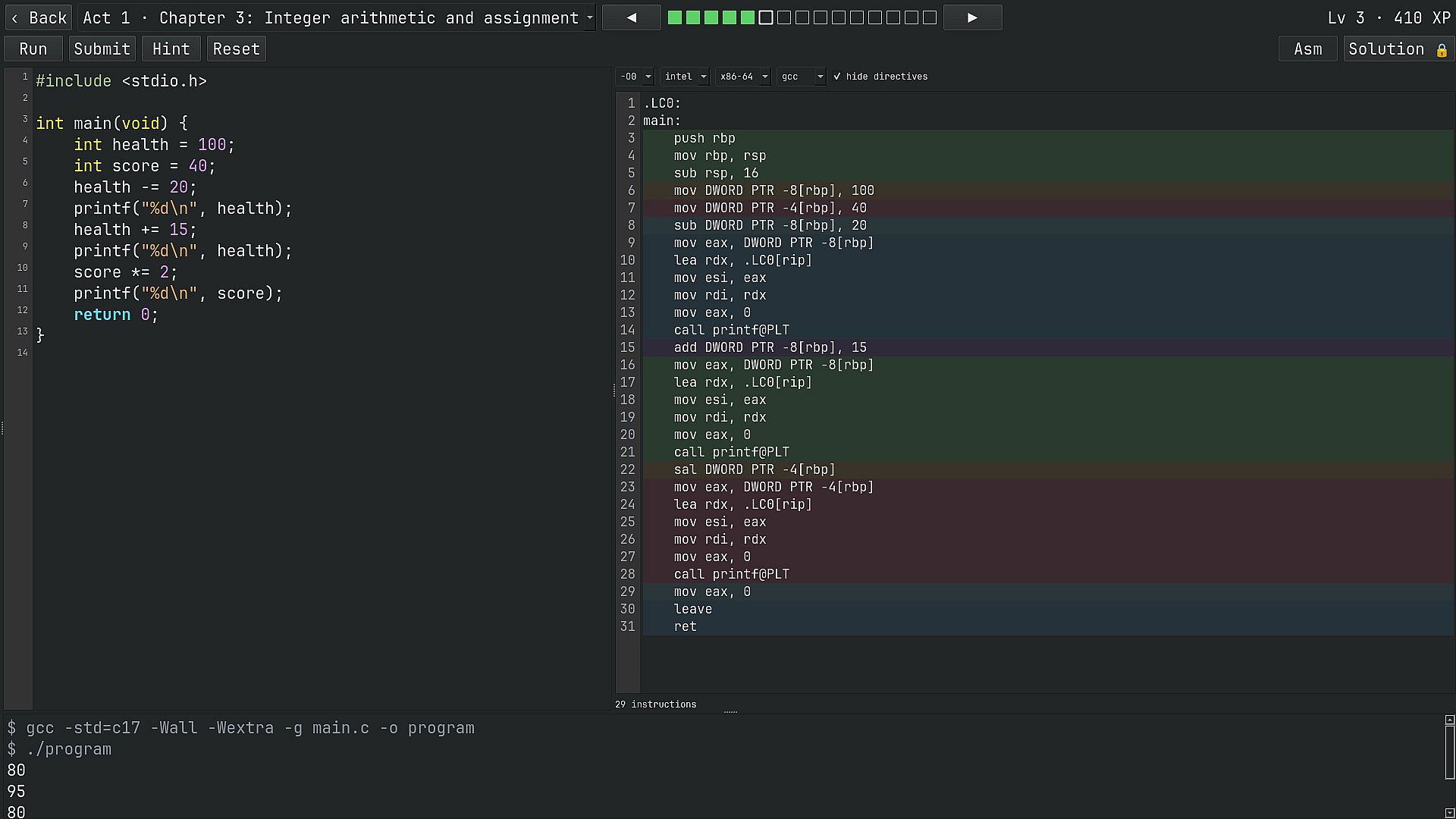
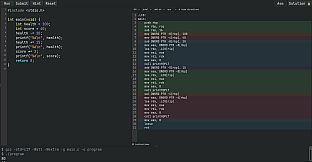
O0 to Hero is a strategy, casual, and simulation game built around learning C programming through direct interaction with the gcc compiler at the -O0 optimization level. Players write C code on one side of the screen while the matching Intel-syntax assembly appears line by line beside it, with colors linking each statement to its output. The experience runs on a real compiler, so every change updates the assembly instantly and shows exactly how the machine interprets the source without any hidden steps or optimizations.
Gameplay
The core loop combines coding exercises with visual feedback and hands-on practice. Animated scenes break down CPU and memory operations in detail, such as loading a value into a register, overwriting a stack slot, or splitting a byte into its two hex digits. These animations can be paused, stepped through frame by frame, or replayed to examine each action. Lessons begin at the absolute basics, covering what a program is, how source code becomes executable machine instructions, and why memory addresses bytes sequentially. New C concepts are immediately translated back into x86-64 assembly for comparison.
Real compiler checks evaluate submitted code. A failed attempt carries no penalty, and missed quiz cards repeat until mastered. The system supports Linux, including Steam Deck with a keyboard required, while Windows support is in development. Every variable maintains its own stack slot at -O0, making the generated assembly the most literal and readable version possible for study.
Game Modes
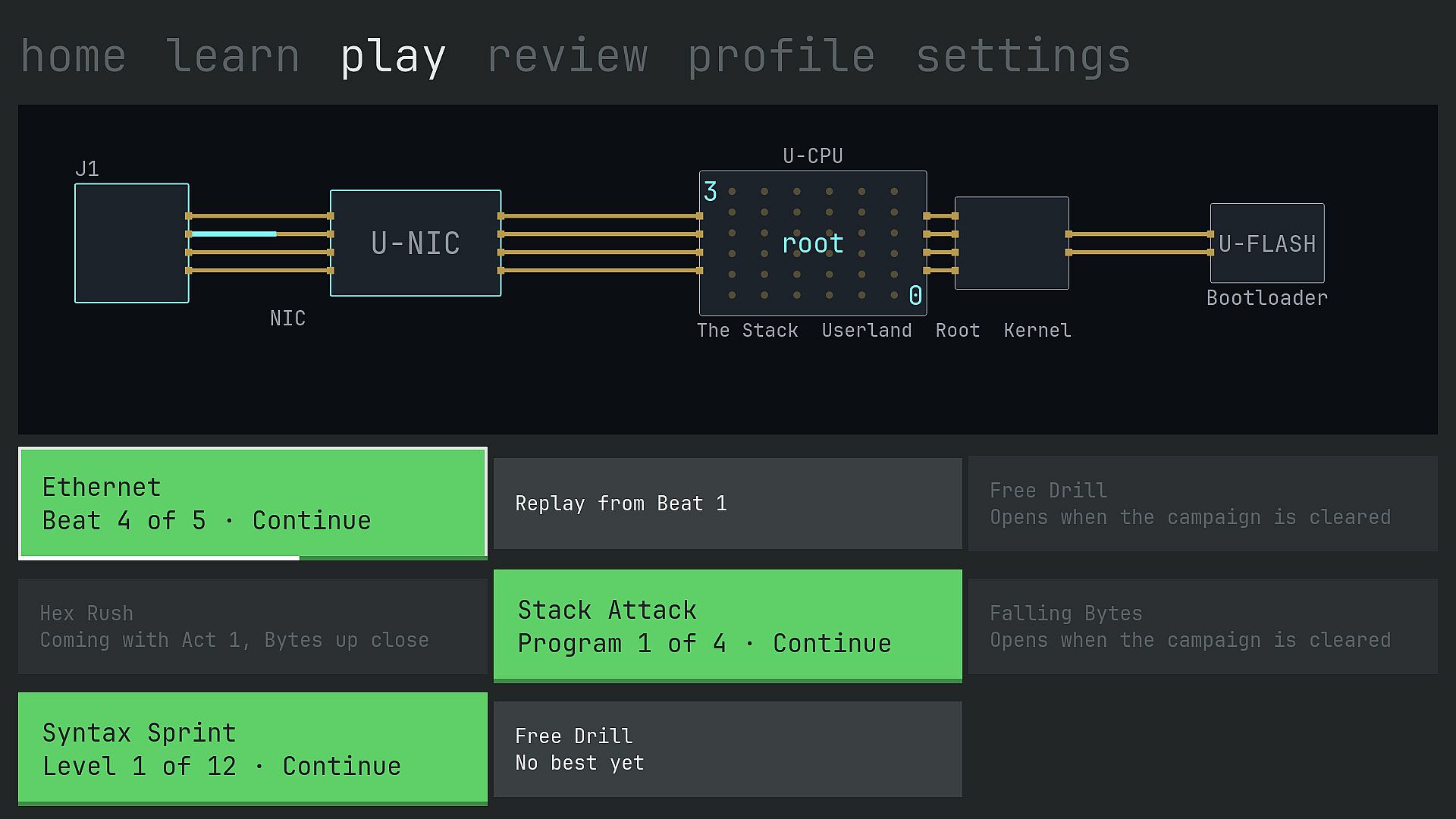
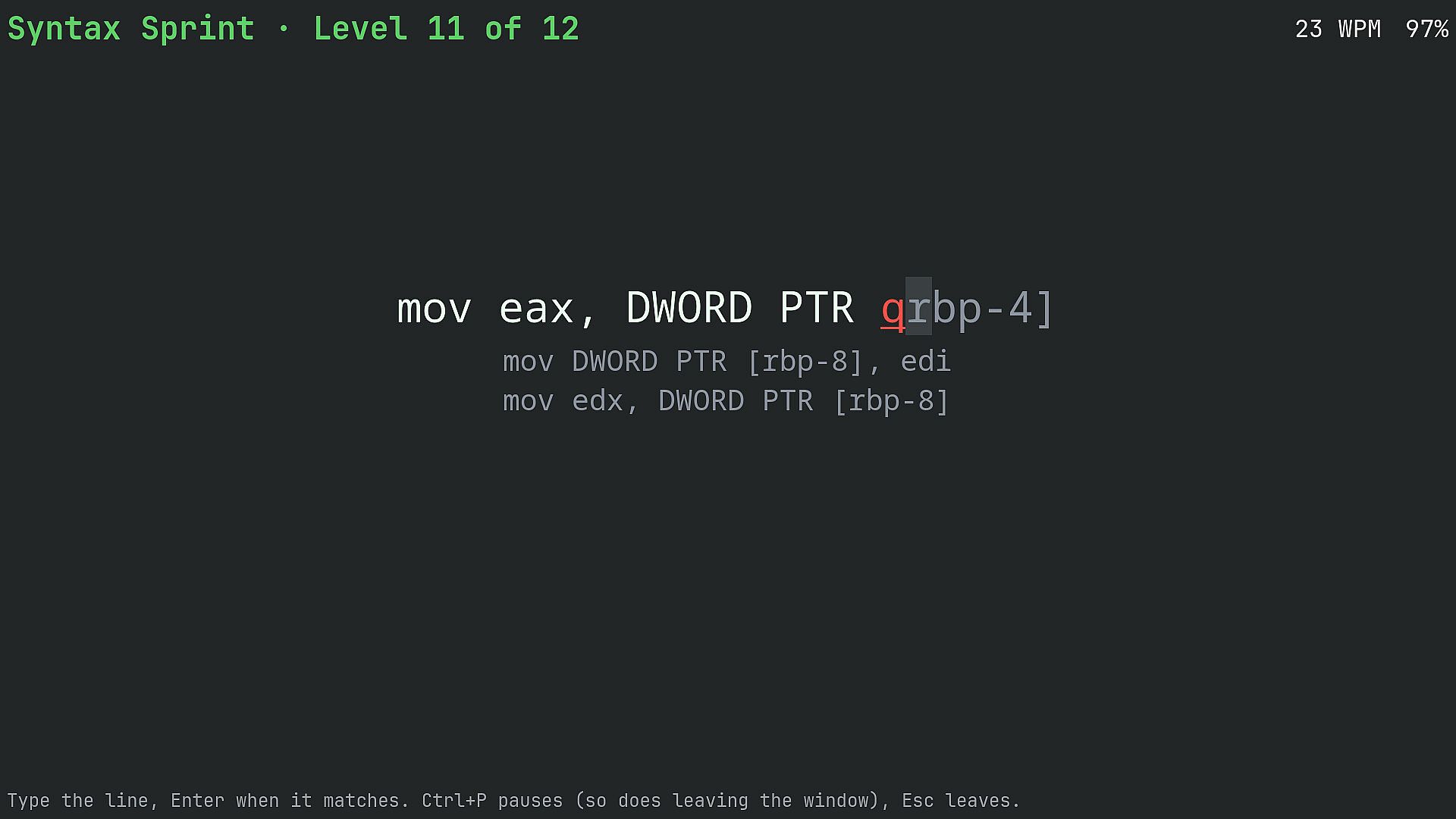
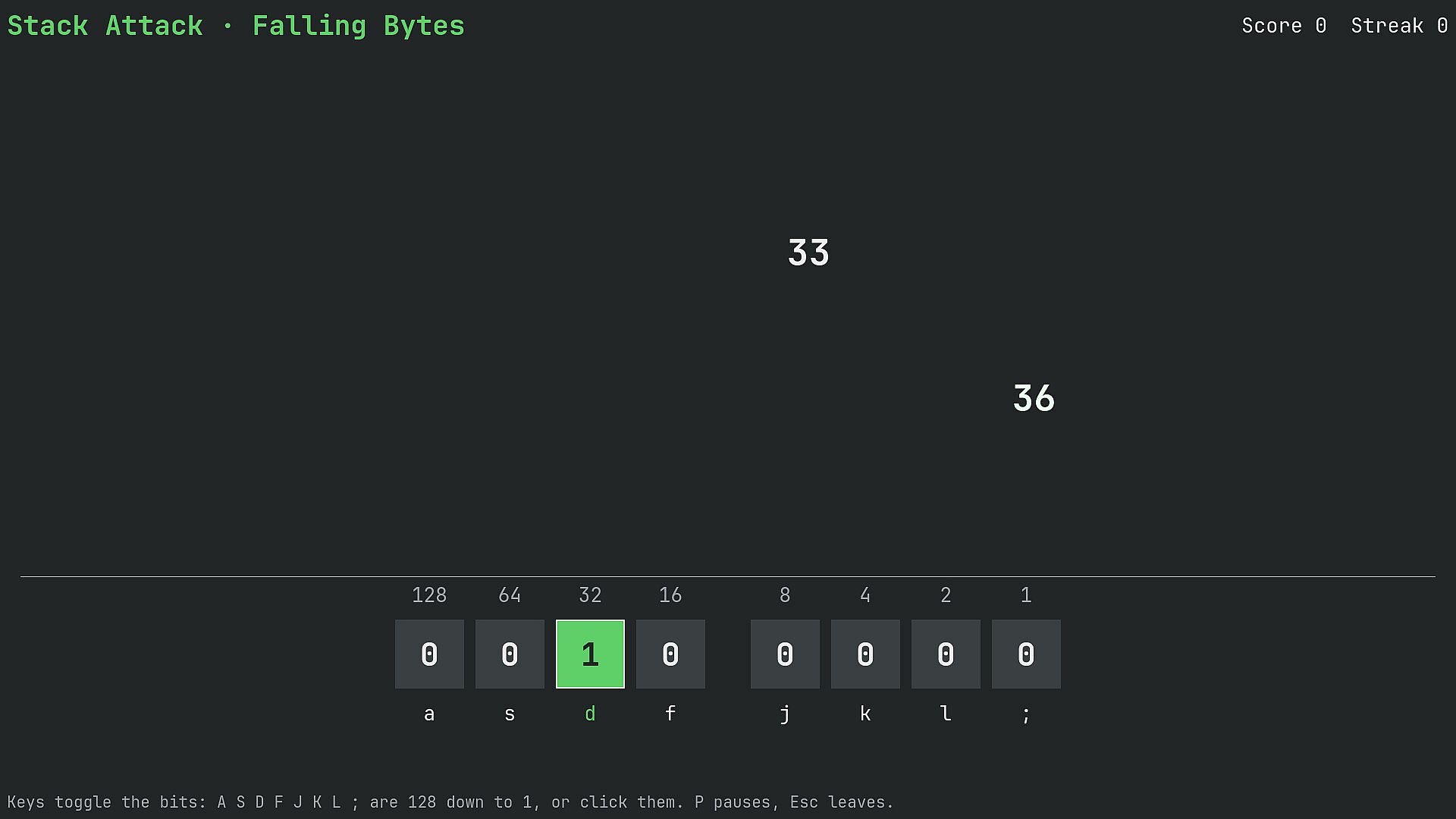
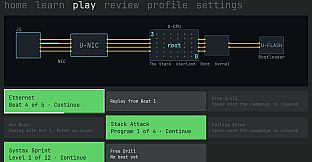
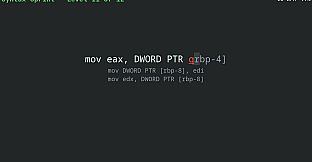
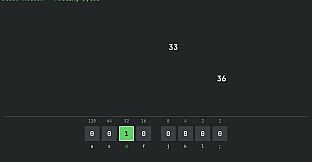
Falling Bytes challenges players to type the correct eight bits using their home-row fingers as each number descends. Syntax Sprint times real C and assembly typing tasks, progressing from single semicolons to complete functions. The board presents a fictional computer rendered like a circuit design tool, where each component functions as an interactive game. It begins at the network card with incoming data and expands district by district as progress continues.
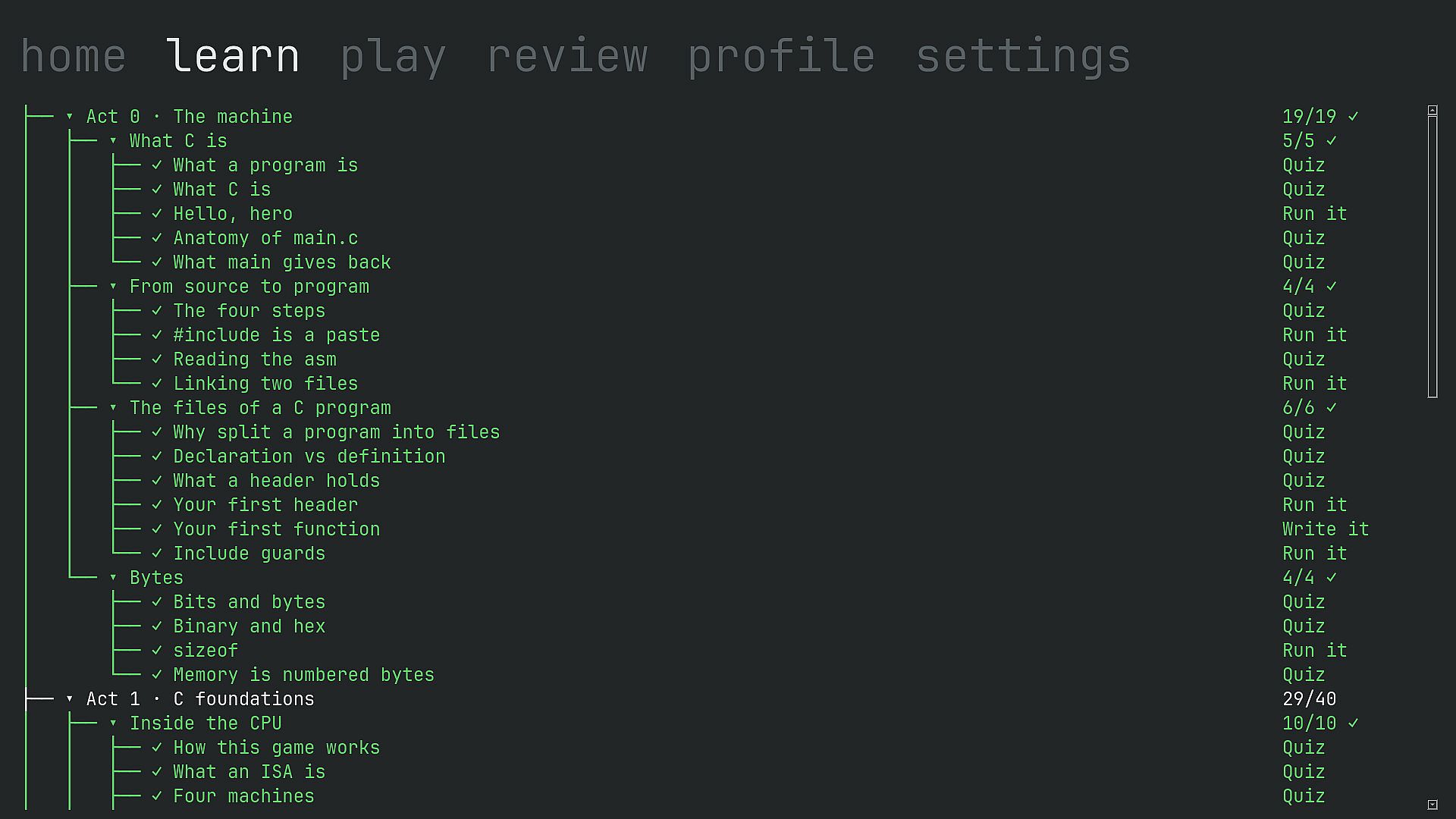
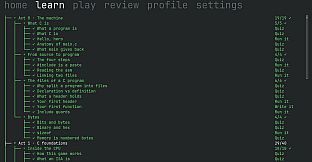
These modes sit alongside the structured lessons rather than replacing them. Act 0, titled The Machine, contains 19 lessons focused on foundational hardware concepts. Act 1, C Foundations, currently includes 40 lessons that build directly on the earlier material with increasing complexity in both C syntax and its assembly representation.
The Board and Progressive Systems
The board serves as the central hub that grows with the player. Early sections introduce data movement and basic operations, while later districts unlock additional interactive challenges tied to specific computer components. This structure mirrors the lesson progression, ensuring each new district reinforces concepts already practiced in the coding interface and mini-games. The simulation keeps every mechanical detail visible, from register loads to stack management, without abstraction layers that obscure the underlying processes.
Is It Worth Playing?
O0 to Hero targets individuals who want to understand C and low-level computing through direct, verifiable interaction rather than passive tutorials. Its combination of live compiler output, steppable animations, and typing practice creates a focused environment for building intuition about how code executes. The absence of penalties for mistakes and the repeating quiz system support repeated practice without frustration. Because the game remains in playtest with no public release date or user reviews available, its value depends on whether the described systems align with a learner's preference for visual and interactive methods over traditional textbooks or lectures. Those seeking a literal, unoptimized view of gcc output and memory behavior will find the core mechanics directly address that goal.











