




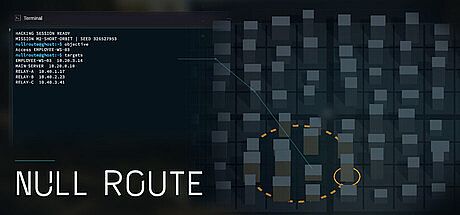


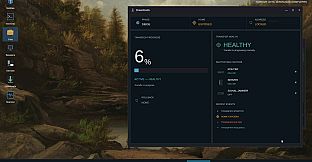
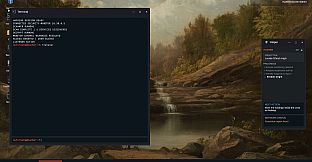
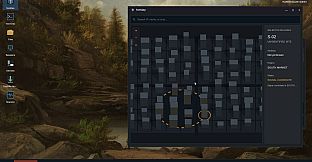
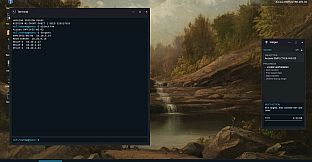
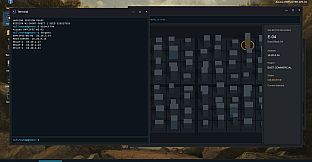
NULL ROUTE is an online asymmetric PvP strategy, indie, and simulation title for PC that centers on digital infiltration and counterplay within shared networks. Two participants approach the same system from opposing directions, with one focused on stealthy intrusion and the other on detection and disruption. The experience emphasizes information warfare, procedural layouts, and deliberate choices over fast reflexes.
Gameplay
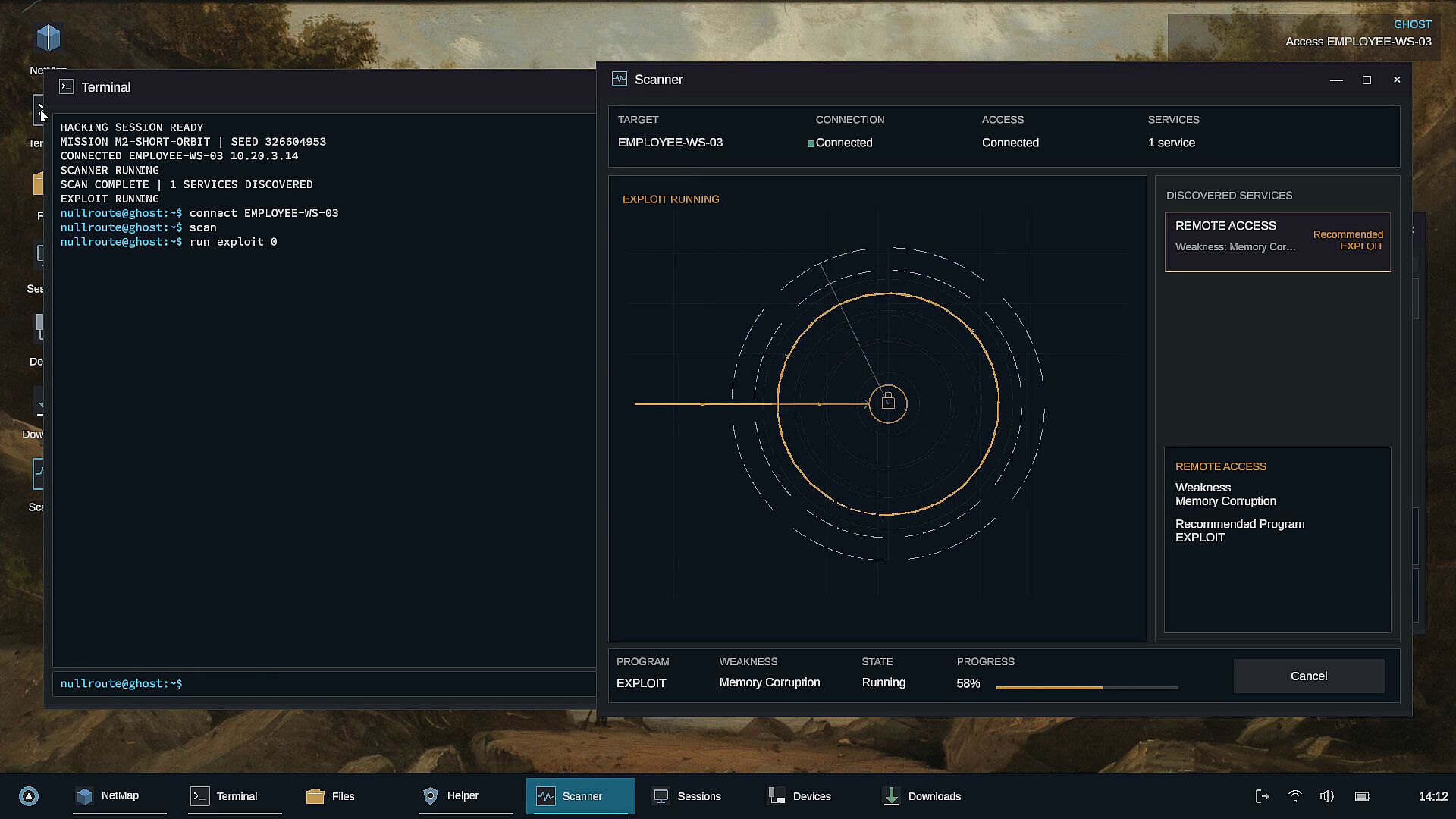
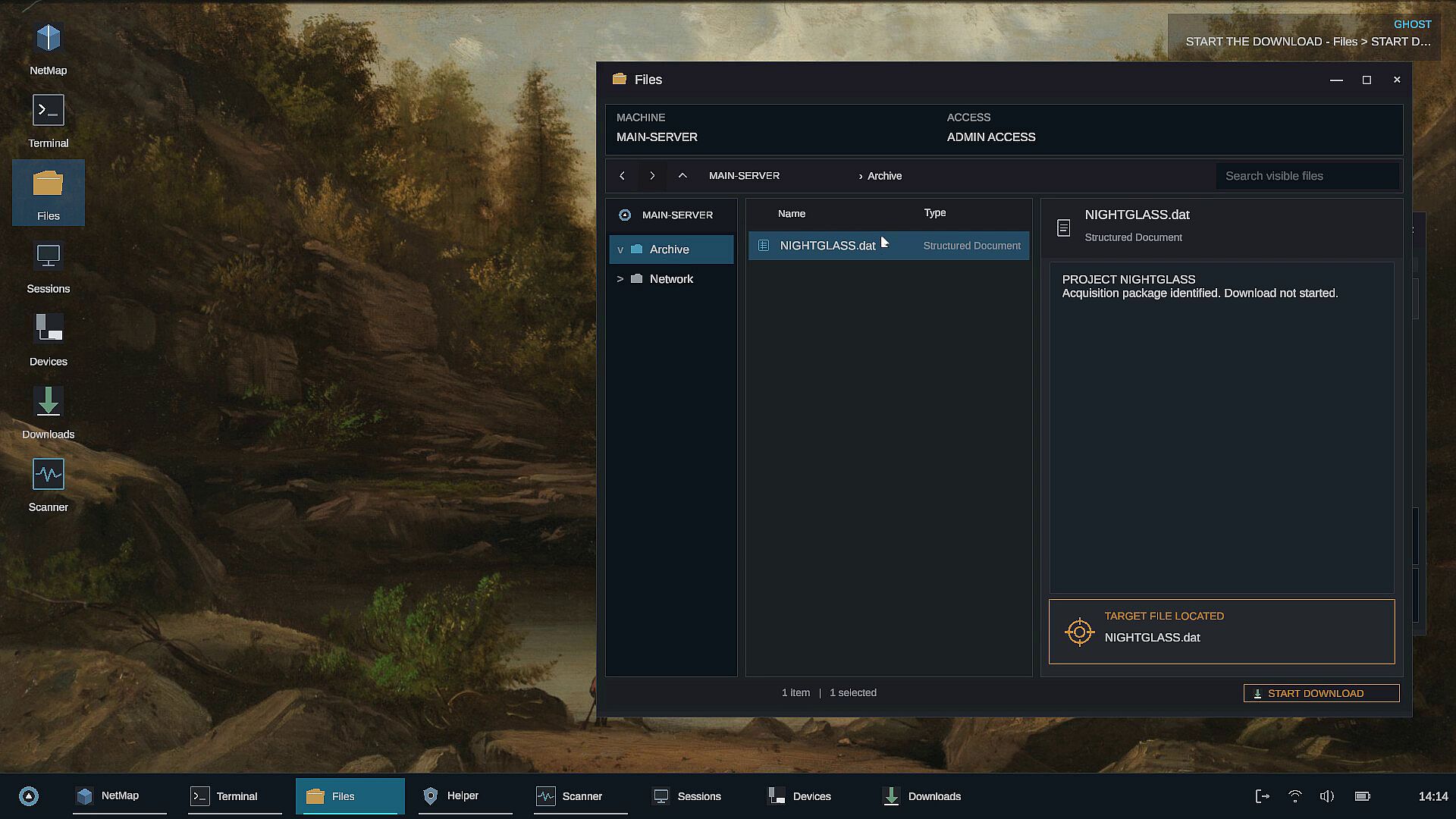
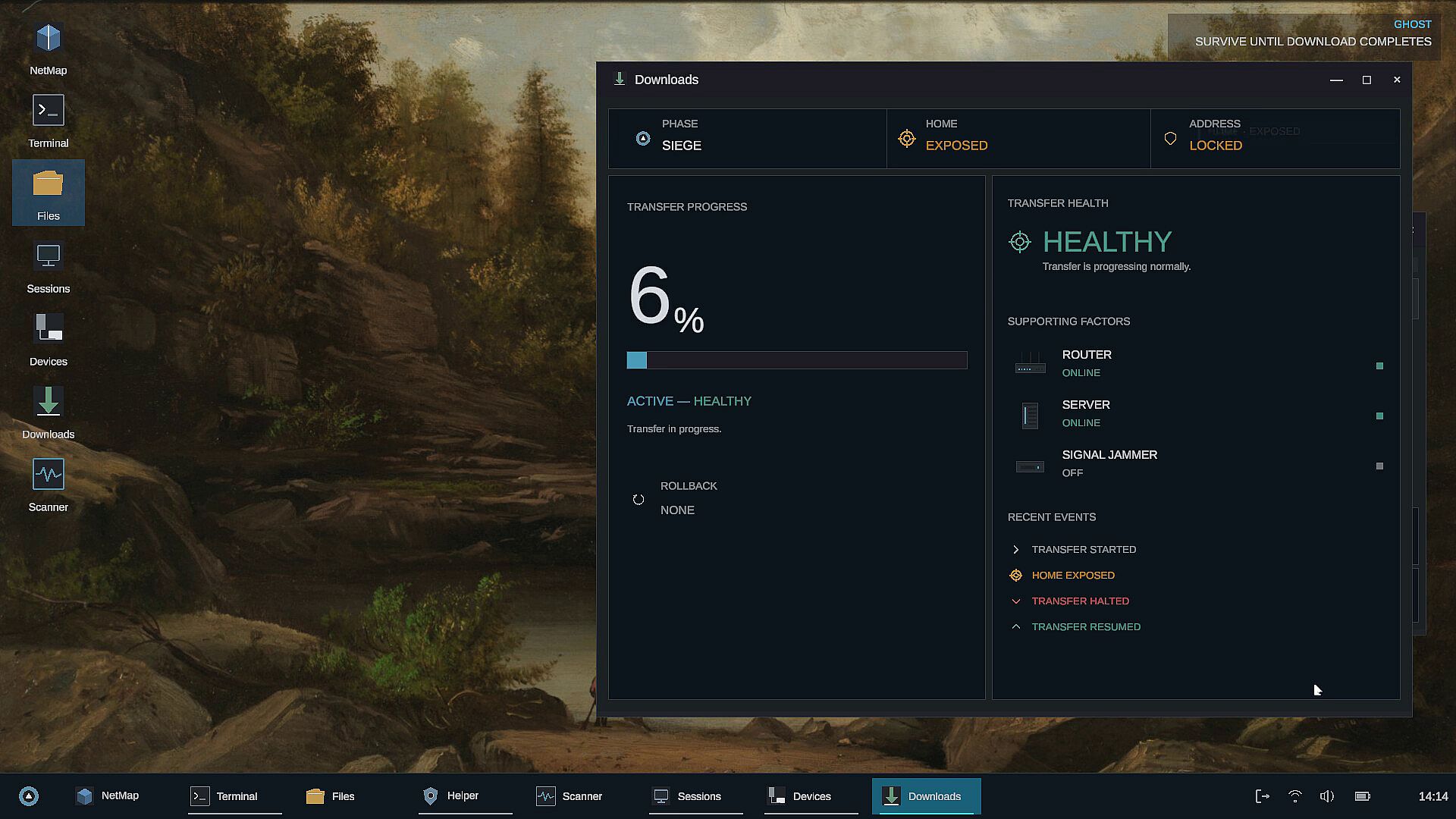
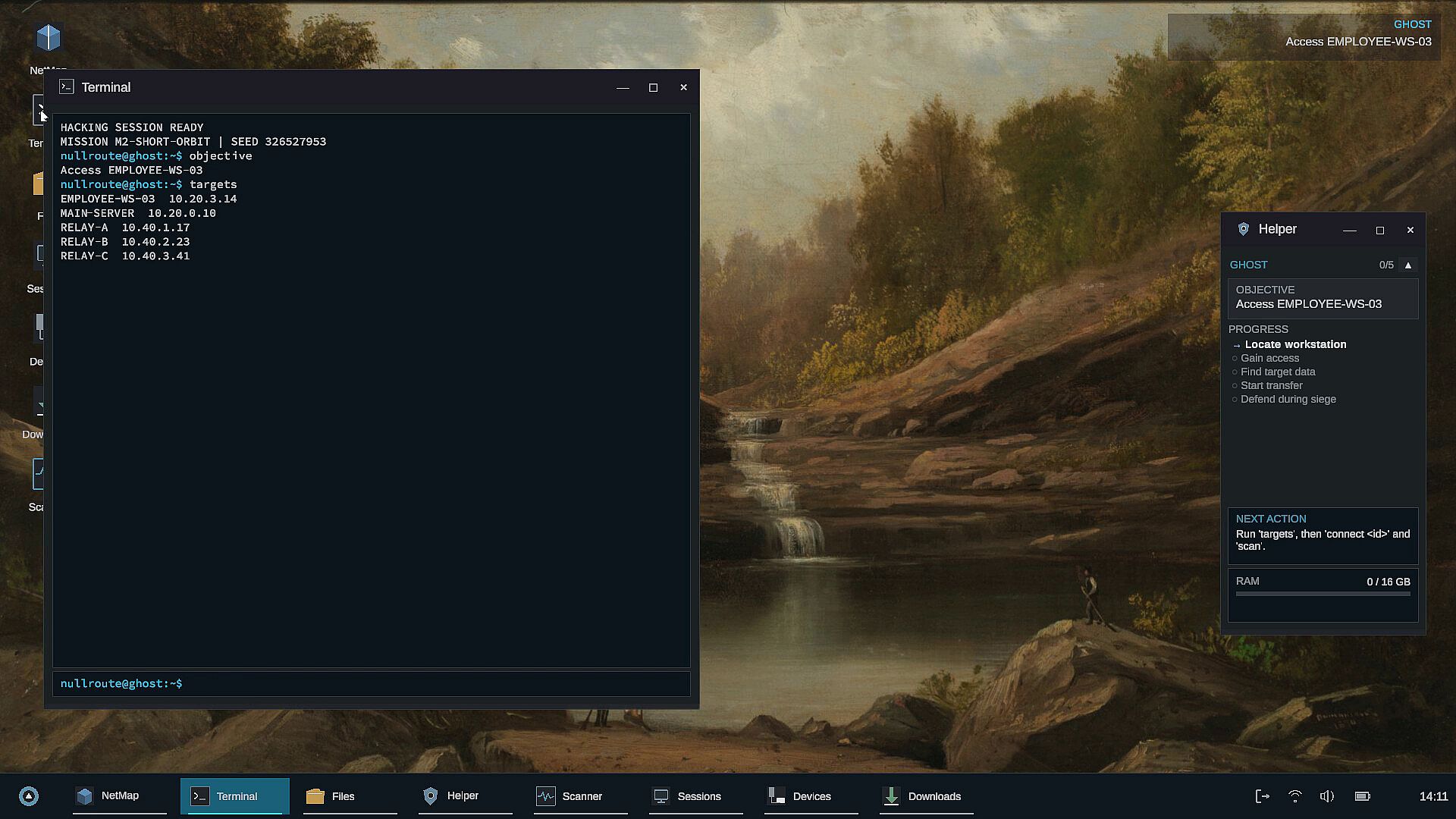
Players assume one of two distinct roles in every match. As GHOST, the objective involves infiltrating systems, mapping out viable routes, exploiting vulnerable machines, securing objectives, and exiting before detection becomes inevitable. Actions such as scanning devices provide critical data on the network ahead, yet they also generate visible patterns that the opposing player can trace. Decisions revolve around timing advances, altering paths, or withdrawing to avoid exposure.
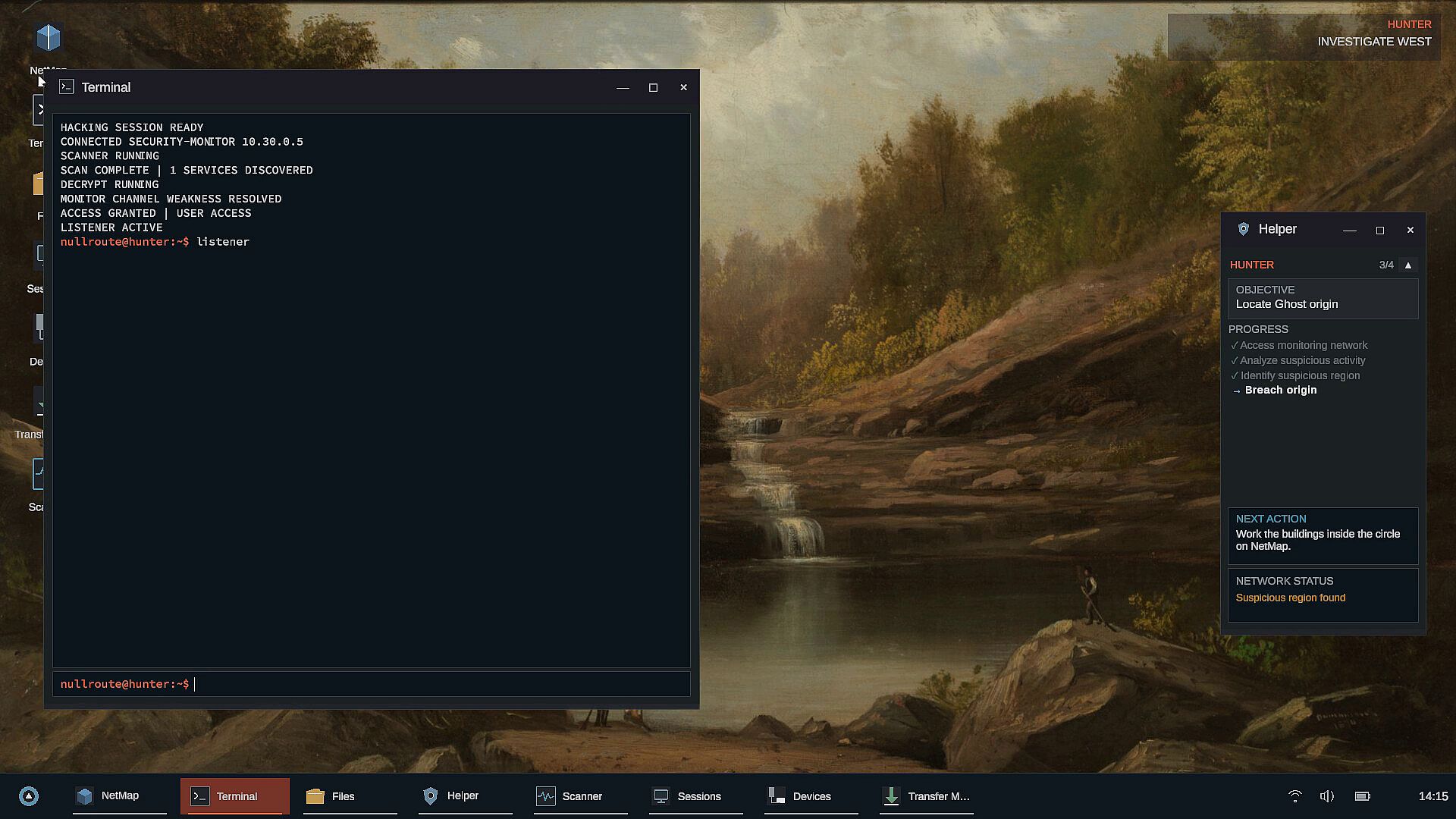
As HUNTER, the focus shifts to monitoring network activity, tracing suspicious connections, narrowing the intruder's possible locations, and applying pressure to compromise the route. Every scan or intervention by GHOST leaves traces that HUNTER can follow, turning the environment into a shared space of observation and response. Both participants operate on the same procedural network of devices, relays, servers, and protected systems, but each accesses different tools and information layers.
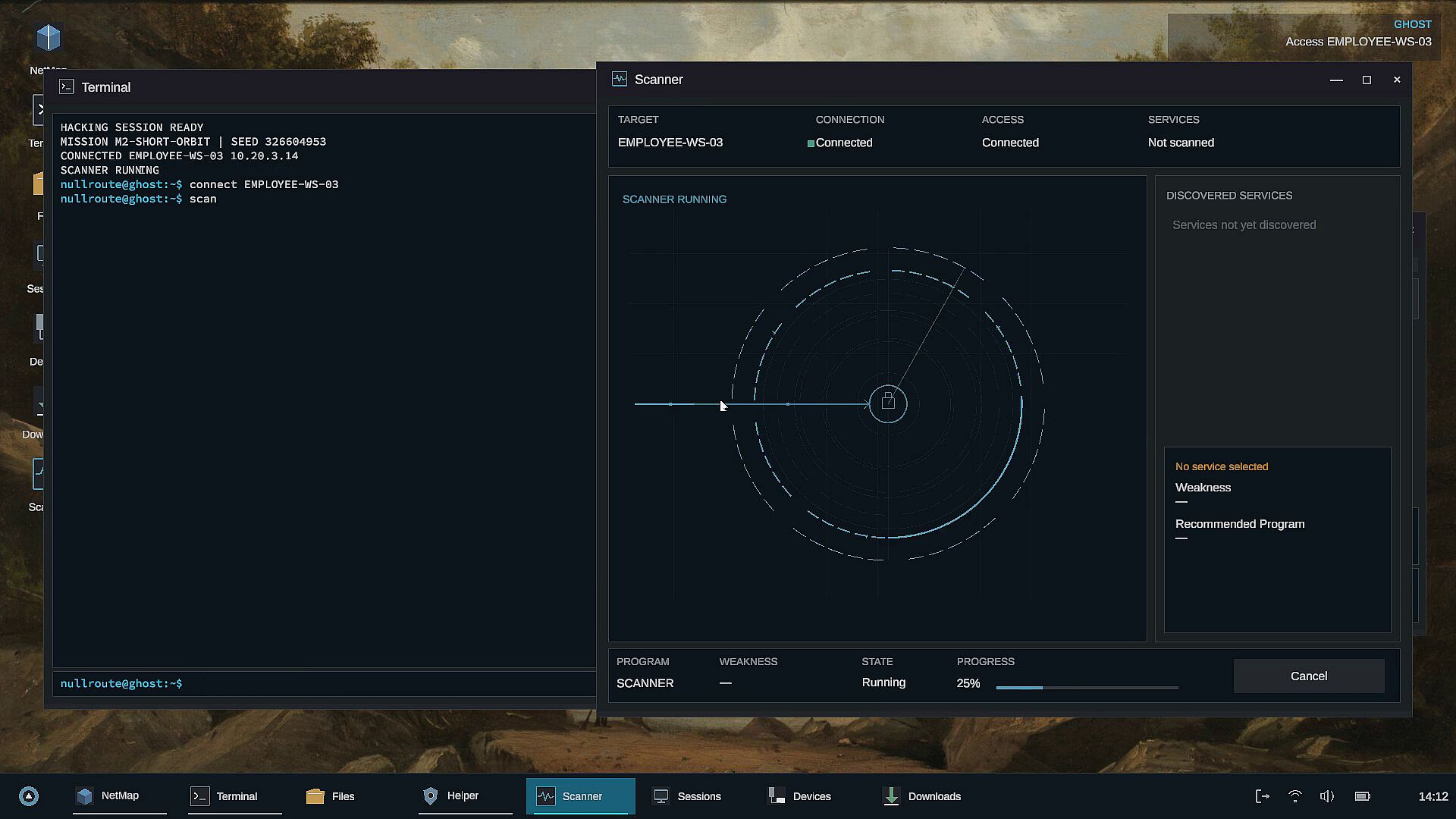
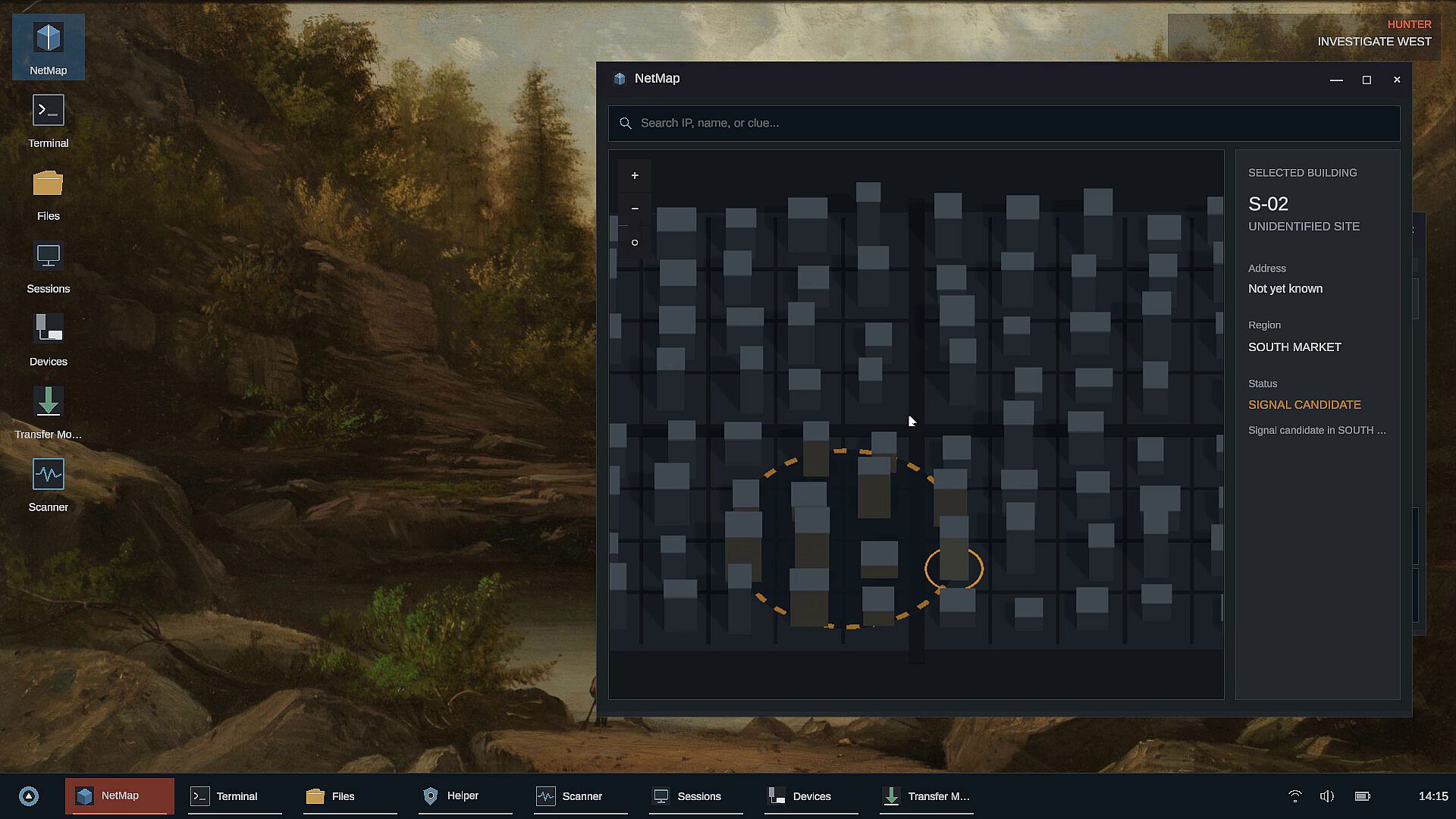
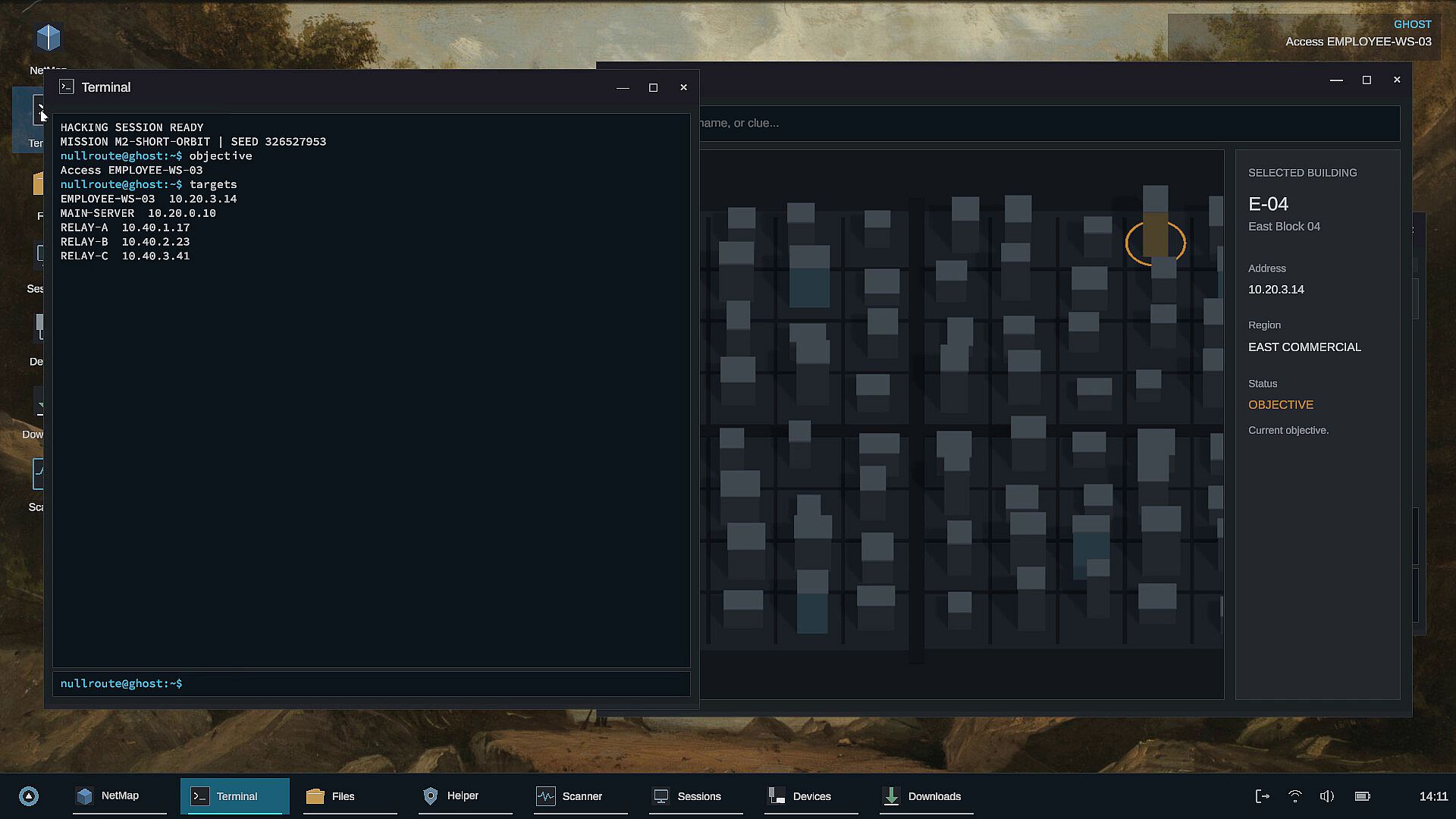
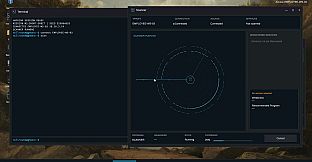
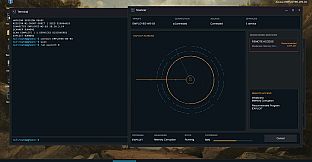
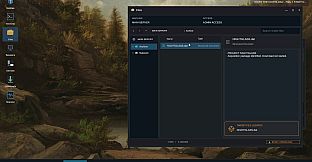
Terminal commands serve as the primary interface, supplemented by specialized utilities like NetMap for visualization and Scanner for probing. The minimal, dark desktop-inspired presentation reinforces the sense of operating within a live system under tension. Success depends on reading incomplete data, anticipating opponent moves, and adapting when a previously safe path becomes compromised.
Game Modes
The core experience consists of online asymmetric PvP matches that pit GHOST against HUNTER in a single operation. Each session places both players in the same generated network, where their opposing goals create ongoing tension through information asymmetry. GHOST pursues infiltration and objective completion while HUNTER conducts investigation and interference, with every action influencing the shared state of the network.
Procedurally generated layouts ensure varied configurations of devices and security layers across matches. Multiple pressures operate simultaneously, requiring GHOST to balance forward progress against the risk of exposure and HUNTER to allocate resources between broad monitoring and targeted disruption. Matches reward adaptation, deduction, and tactical timing rather than repetitive execution of fixed strategies.
Network Navigation and Tools
Participants move through environments built from interconnected machines, relays, and protected nodes. Terminal-driven interactions allow precise control over access, routing, and exploitation for GHOST, while HUNTER relies on analysis tools to interpret activity logs and connection traces. Specialized equipment such as NetMap reveals structural overviews, and Scanner delivers targeted details, though both carry the potential to alert the opponent through observable effects.
The design highlights risk management at every step. Pushing deeper into the network may uncover objectives faster, yet it increases the chance of leaving detectable footprints. Changing direction or pausing to reassess can preserve operational security, forcing players to weigh immediate gains against long-term concealment.
Is It Worth Playing?
NULL ROUTE suits players who prefer thoughtful, deduction-heavy multiplayer over action-oriented formats. The asymmetric structure delivers distinct experiences depending on the chosen role, encouraging repeated matches to explore both perspectives and refine counter-strategies. Procedural networks and information-based mechanics support ongoing adaptation without relying on external progression systems.
Because the game remains in a pre-release state with no user reviews available, prospective players should evaluate the described focus on deliberate decisions and network simulation against their interest in asymmetric strategy titles. Those drawn to terminal interfaces, pattern recognition, and opponent anticipation will find the core loop aligned with those preferences. The emphasis on reading systems and anticipating the other participant provides a foundation for engaging sessions once the title becomes available.











