




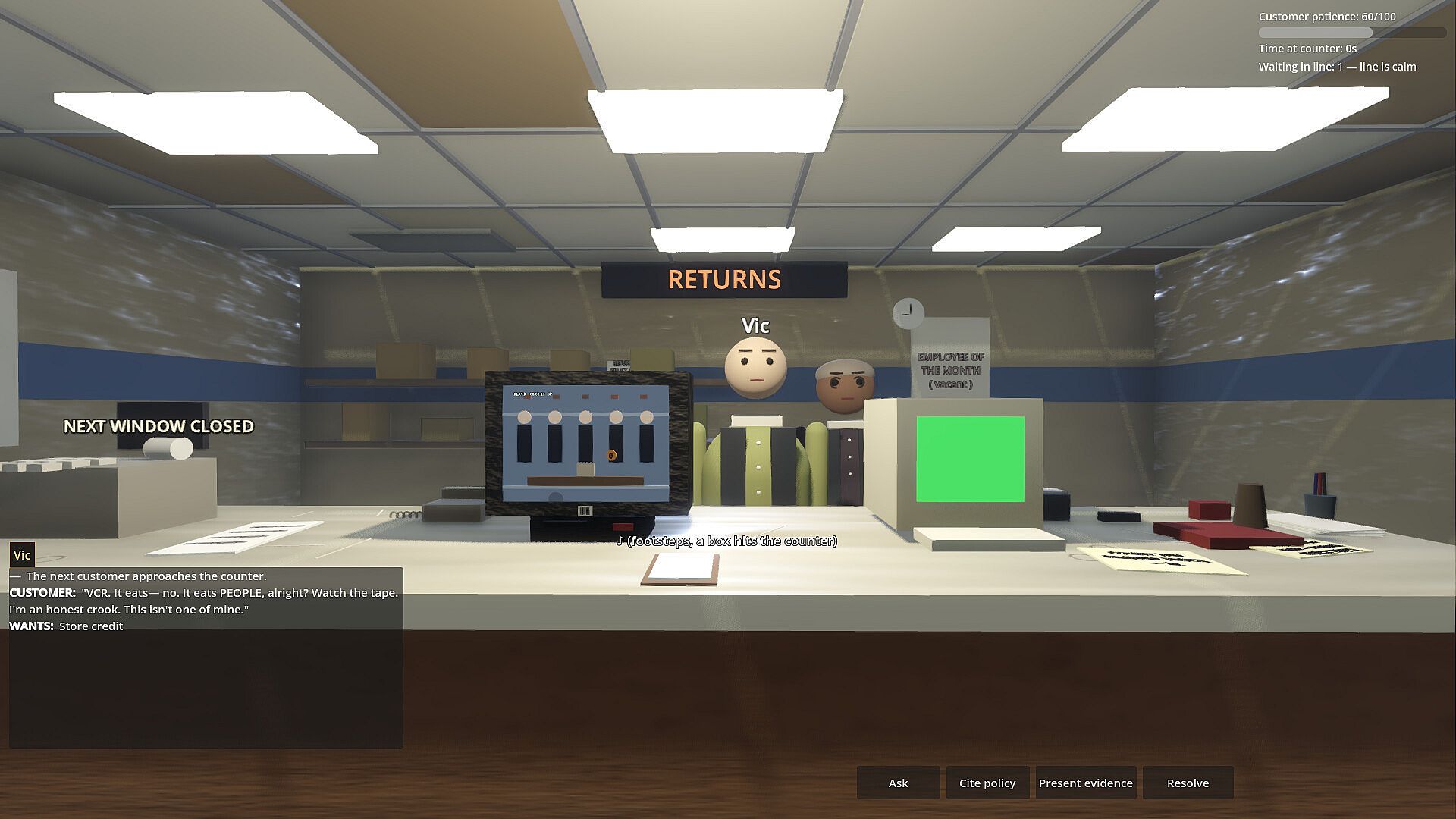




NO RECEIPT is a first-person indie simulation adventure game set in the returns counter of Meridian Department Stores. Players step into the role of a long-serving employee handling customer returns, where every decision rests on physical inspection and store policy rather than trust in the stories customers tell.
Gameplay
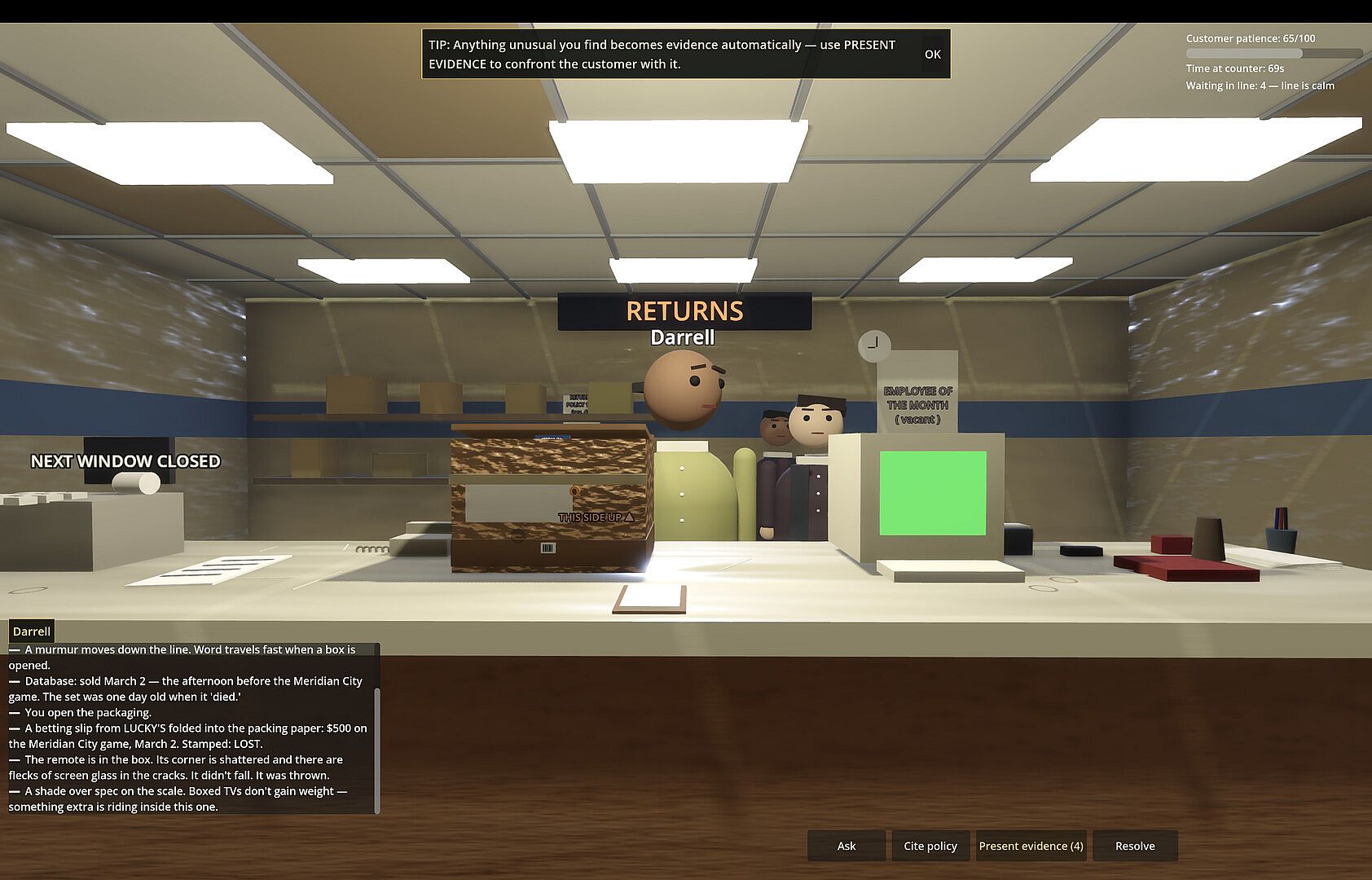
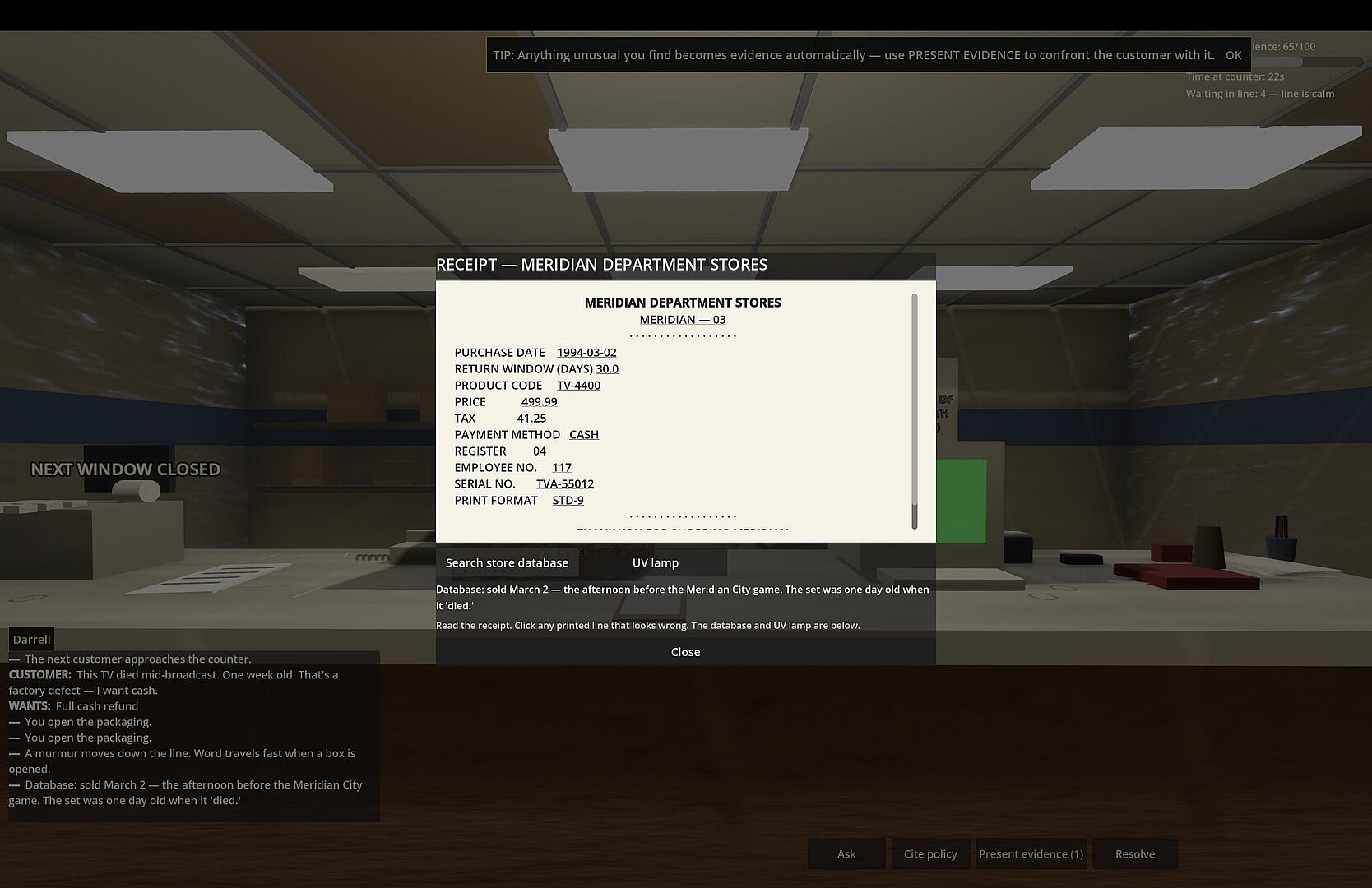
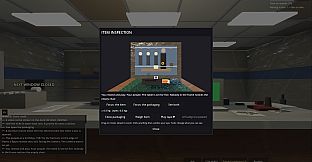
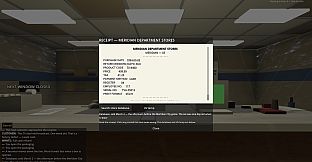
The core loop centers on processing returns across fifteen authored shifts. Each case begins with a customer presenting an item and a narrative, but the work requires separating fact from fiction through direct examination. Items arrive in packaging that must be opened, revealing contents that often contradict the box labels or the receipt details. Line-by-line receipt review pairs with database queries to verify purchase dates, branch locations, and employee numbers.
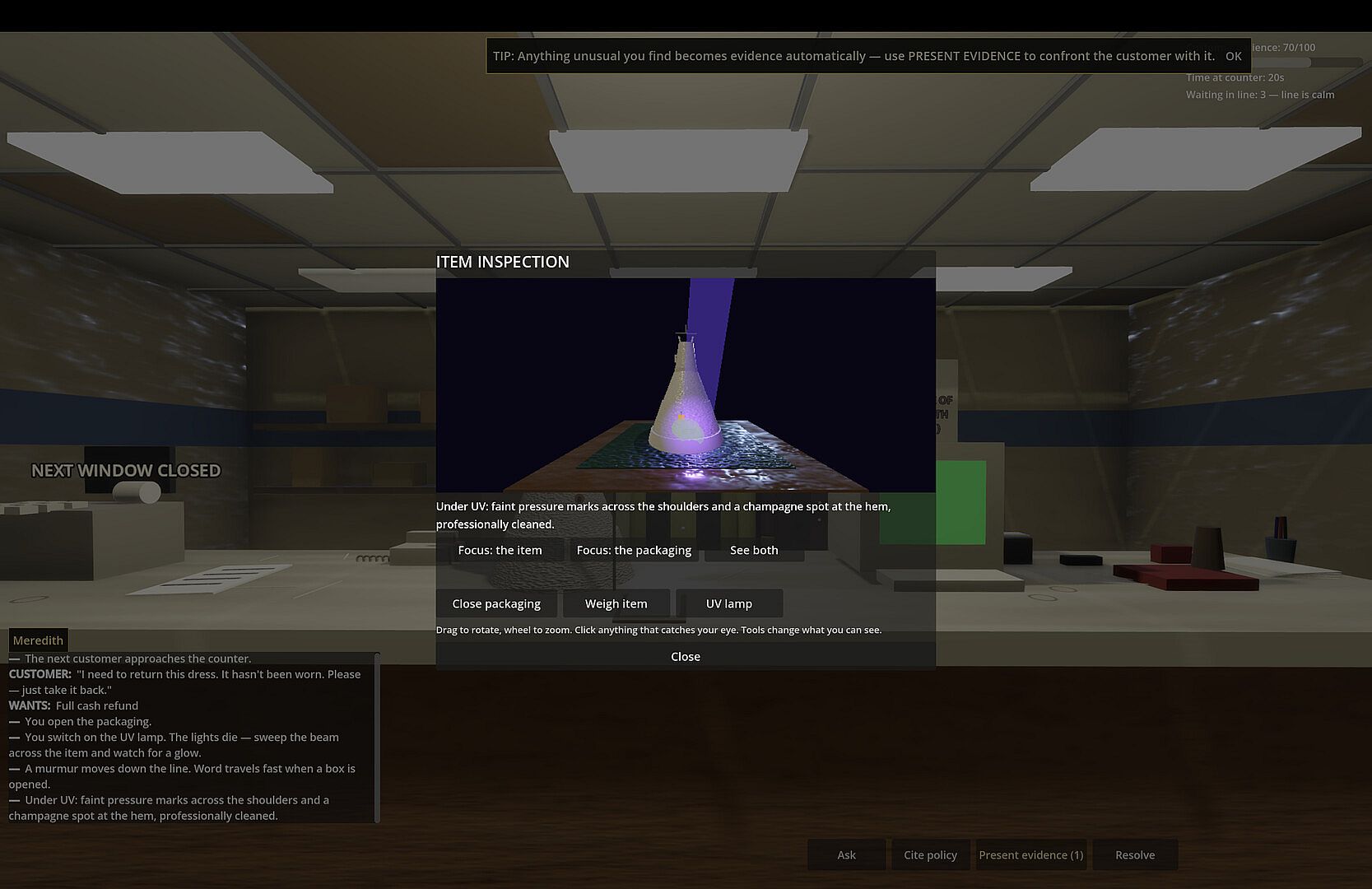
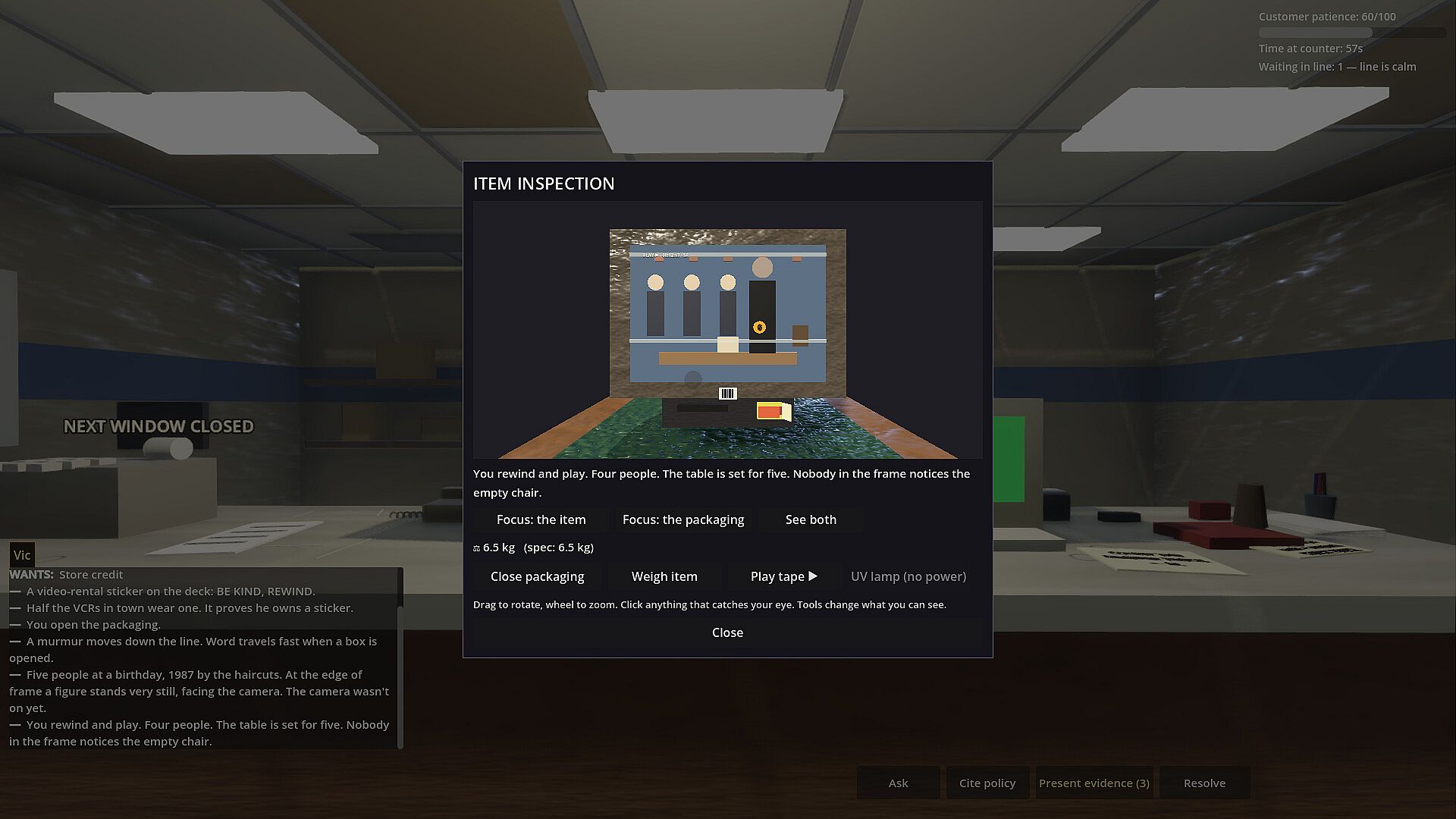
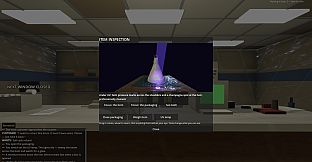
Physical tests form the heart of each inspection. Weighing confirms mass against expected values. Power tests check functionality. A UV lamp reveals hidden marks on fabrics or surfaces once the lights go down. Clickable defects appear as evidence when spotted, turning observations into formal accusations. Outcomes depend entirely on what evidence supports, with no random elements determining success or failure.
Negotiation follows inspection. Available options include full refunds, store credit, exchanges, repairs, or outright refusal when policy allows. Customers respond based on prior interactions, sometimes escalating or returning later with altered attitudes. Corporate oversight tracks performance metrics, and policy shifts appear each morning, forcing adaptation to new rules while maintaining consistency with earlier choices.
Game Modes
The primary experience unfolds as a linear fifteen-shift campaign. Each shift presents a sequence of return cases that grow in complexity, moving from straightforward fraud attempts to situations that strain the boundaries of store procedure and reality itself. Recurring customers carry memory of previous encounters, influencing how they approach the counter on later visits.
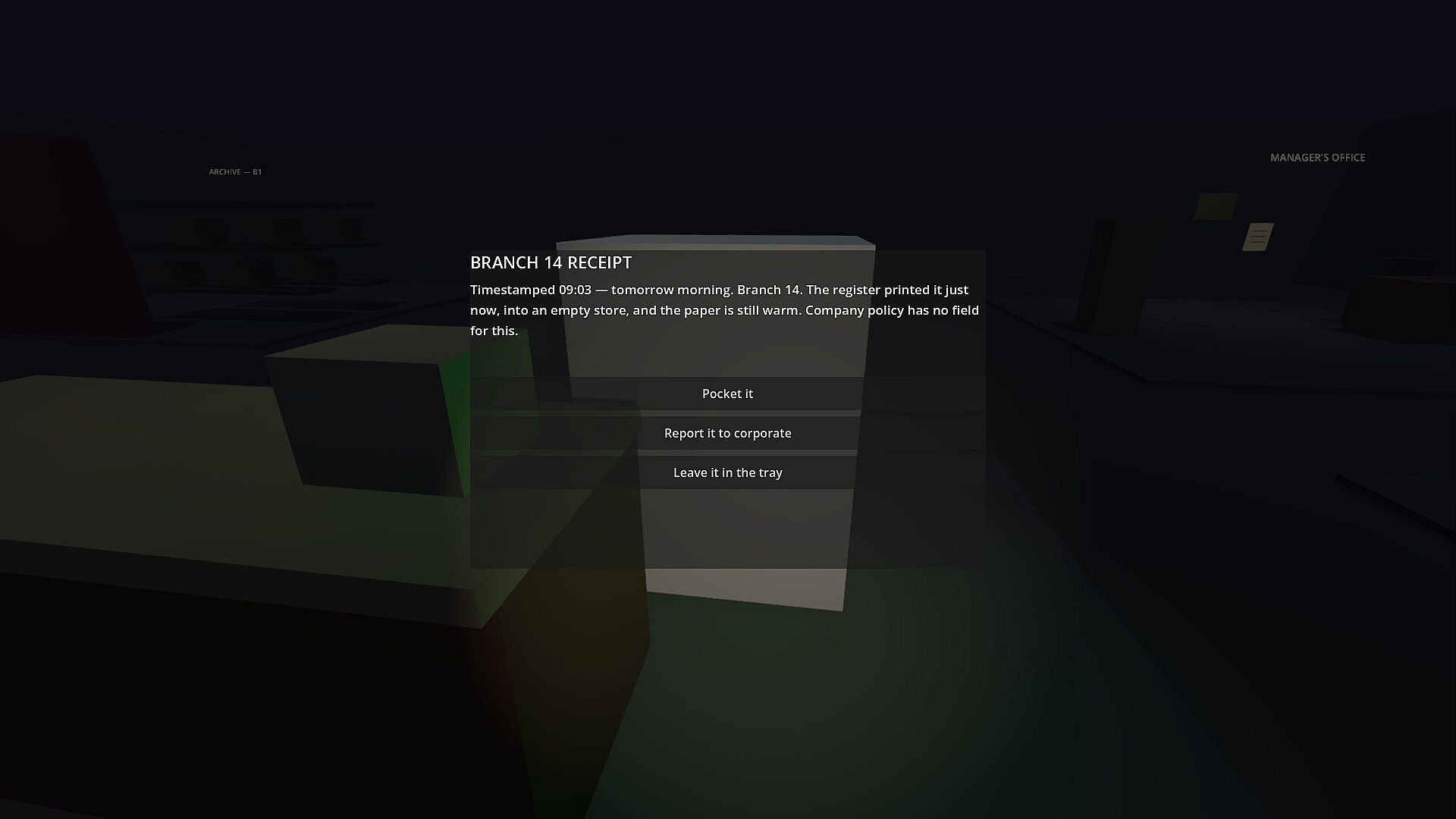
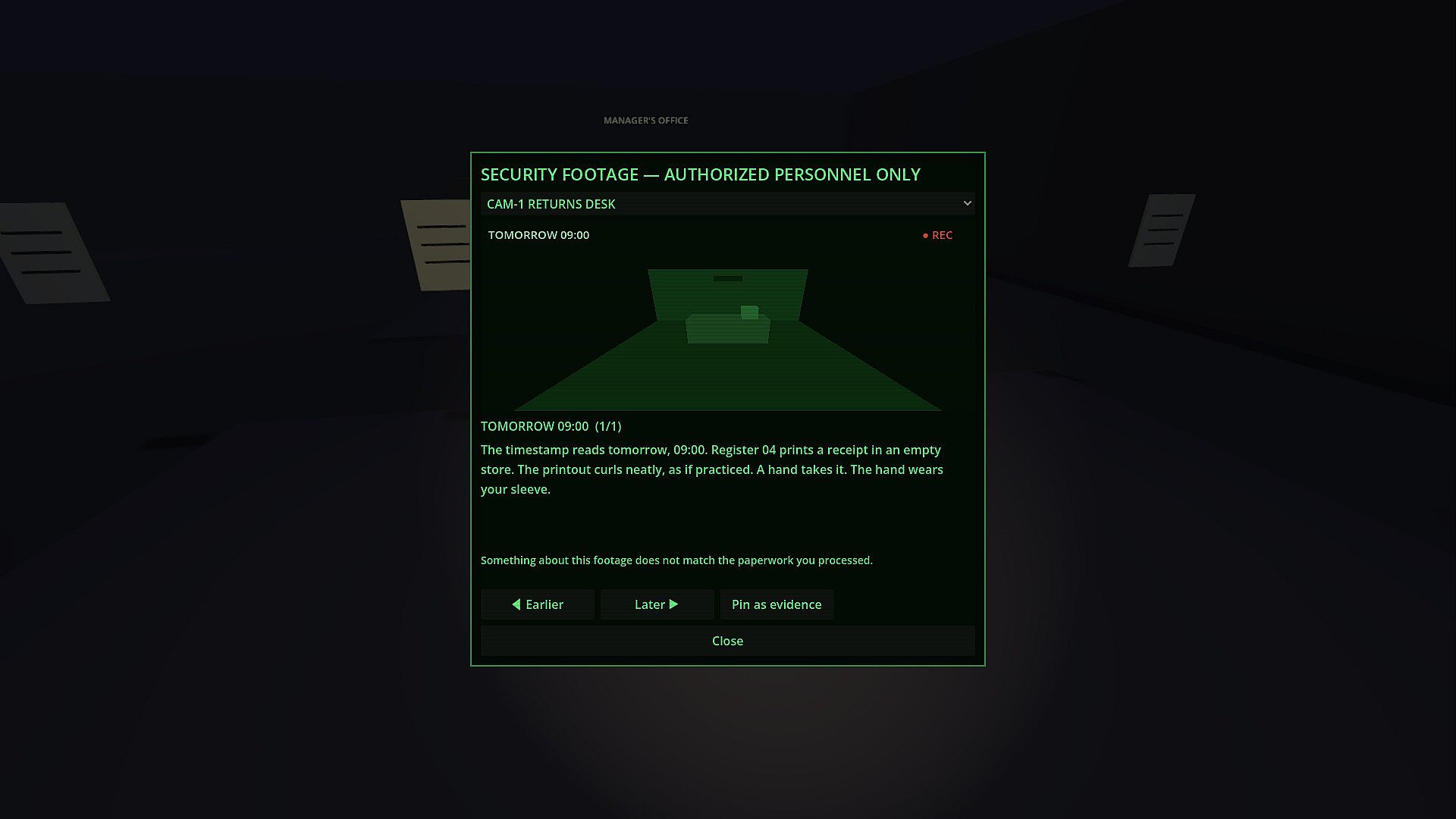
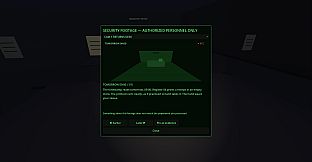
After-hours exploration serves as a secondary layer within the same structure. Once the store closes, locked areas become accessible for investigation. Footage review and register activity reveal discrepancies from the day's processed returns, including anomalous prints from other branches or future timestamps. Choices about what to pocket, report, or leave behind feed directly into the next morning's briefing and overall progression.
Multiple endings emerge from the combination of proven claims, policy adherence, and items retained during shifts. The campaign structure ensures every playthrough follows the same deterministic path based on inspection results and negotiation selections.
Key Mechanics and Features
Inspection tools remain consistent across shifts yet apply to increasingly unusual items. Unboxing treats the container and contents as separate objects that must align or conflict under scrutiny. Database access provides factual anchors against customer claims, while physical tools like scales, power outlets, and UV lamps supply independent verification. Targets for defects stay readable and forgiving to keep focus on evidence gathering rather than pixel hunting.
Customer interactions emphasize consequence without dice or chance. The same sequence of inspections and offers always produces the same customer reactions and corporate feedback. This predictability rewards careful note-taking across shifts, especially when recurring faces appear with updated stories or demands.
Backstage areas expand the environment beyond the counter. Nighttime access uncovers doors and records that daytime operations never reference, creating opportunities to connect loose ends from earlier returns. These explorations tie directly into the campaign's progression and ending variations.
Is It Worth Playing?
NO RECEIPT suits players who enjoy methodical simulation games built around inspection and decision-making under pressure. The dark comedy tone gradually shifts toward corporate horror as cases grow stranger and policy constraints tighten, rewarding those who appreciate steady tension over action or combat.
The fifteen-shift campaign delivers a self-contained story with branching outcomes driven by evidence and choices rather than luck. Deterministic systems mean repeated plays focus on different approaches to the same cases rather than random variation. After-hours segments add discovery without requiring separate modes or additional purchases.
Those drawn to retail-themed simulations or evidence-gathering mechanics will find the inspection loop engaging and the negotiation consequences meaningful. The game offers no multiplayer components and centers entirely on single-player progression through authored scenarios. Availability remains limited to PC, with the full experience contained in the core campaign and its integrated exploration elements.