

















NightClub Manager Simulator is an indie simulation game with RPG and casual elements that places players in charge of running a nightclub on PC. The experience centers on making high-stakes decisions that determine whether the business succeeds or collapses under pressure.
Gameplay
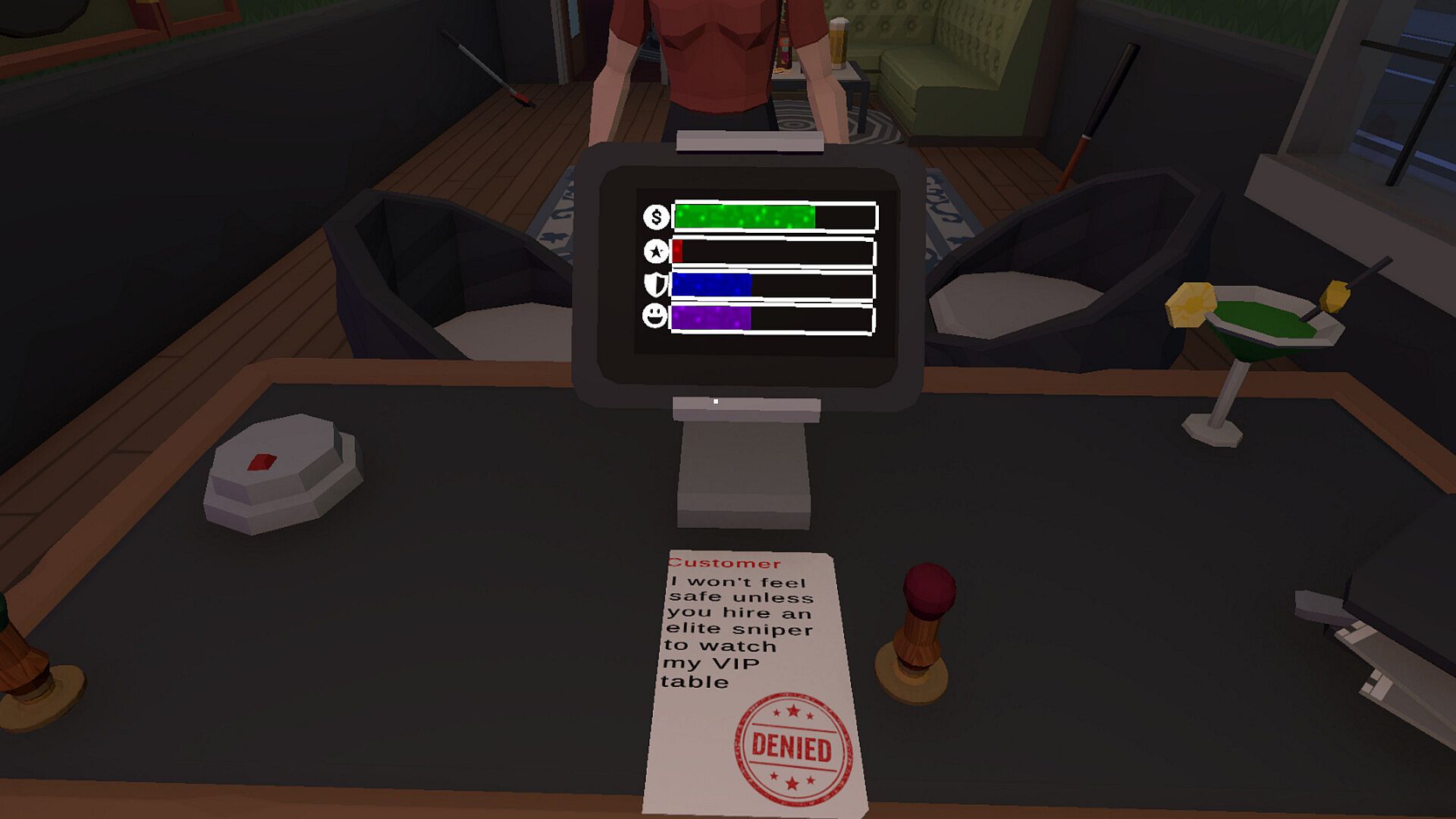
The core loop revolves around acting as the sole authority figure. Characters approach with requests, complaints, proposals, and problems, each tied to their personal situations. Approving or rejecting these interactions influences four key stats: Security, Money, Reputation, and Staff Satisfaction. A choice that boosts one area often weakens another, requiring careful prioritization to avoid tipping the balance toward failure.
Daily operations extend beyond conversations. Dirt and mess accumulate and must be cleared to protect Reputation. Security levels affect the risk of thieves entering the venue; when one appears, direct confrontation is possible to stop the theft. Fires can ignite inside the club, demanding immediate use of a fire extinguisher to contain the damage before it spreads. These systems create constant tension between long-term planning and reactive problem solving.
Progression depends entirely on how well these elements stay balanced. Poor management across the stats leads to escalating issues, while steady control opens paths toward stability. The simulation emphasizes trade-offs rather than simple upgrades or linear growth.
Game Modes
NightClub Manager Simulator operates as a single-player experience without separate multiplayer or competitive modes. The entire game unfolds through the ongoing management of one nightclub, where every decision feeds into the same interconnected systems. Players navigate a continuous sequence of character-driven events and operational challenges rather than switching between distinct game types or campaigns.
Branching outcomes emerge naturally from the choices made across multiple playthroughs. The structure encourages experimentation with different approaches to the same scenarios, as the four core stats respond differently depending on the path taken. No additional modes alter the fundamental loop of decision-making and hands-on maintenance.
Key Mechanics and Systems
Character interactions form the narrative backbone. Each visitor brings unique scenarios that test priorities between the four stats. There is rarely an ideal solution, so players must weigh immediate gains against potential long-term problems. This creates replay value through the variety of requests and their ripple effects.
Maintenance tasks add a layer of direct involvement. Cleaning prevents Reputation decay, while monitoring Security reduces external threats. When problems occur, such as a thief or fire, the response is active rather than automatic. These moments break up the decision tree with urgent, hands-on actions that demand quick thinking.
The simulation tracks progress toward multiple conclusions. Five endings exist in total, with four representing different forms of failure and one representing success. Reaching the positive outcome requires sustained balance across all stats while handling the unpredictable events that arise from character decisions.
Is It Worth Playing?
NightClub Manager Simulator suits players who enjoy management simulations focused on resource trade-offs and branching consequences rather than relaxed building or creative freedom. The emphasis on tough choices and reactive events delivers a focused, decision-heavy loop that rewards attention to the four core stats.
Those interested in narrative-driven simulations will find value in the character scenarios and the way approvals shape the club's trajectory. The presence of five distinct endings supports multiple attempts to discover different outcomes. The game remains accessible through its casual elements while offering depth in the RPG-style decision systems.
Overall, the title appeals to fans of indie management experiences that prioritize consequence and balance over expansive customization or cooperative play. Its straightforward structure makes it easy to pick up, yet the interconnected stats and event responses provide enough complexity to sustain interest across several runs.












