








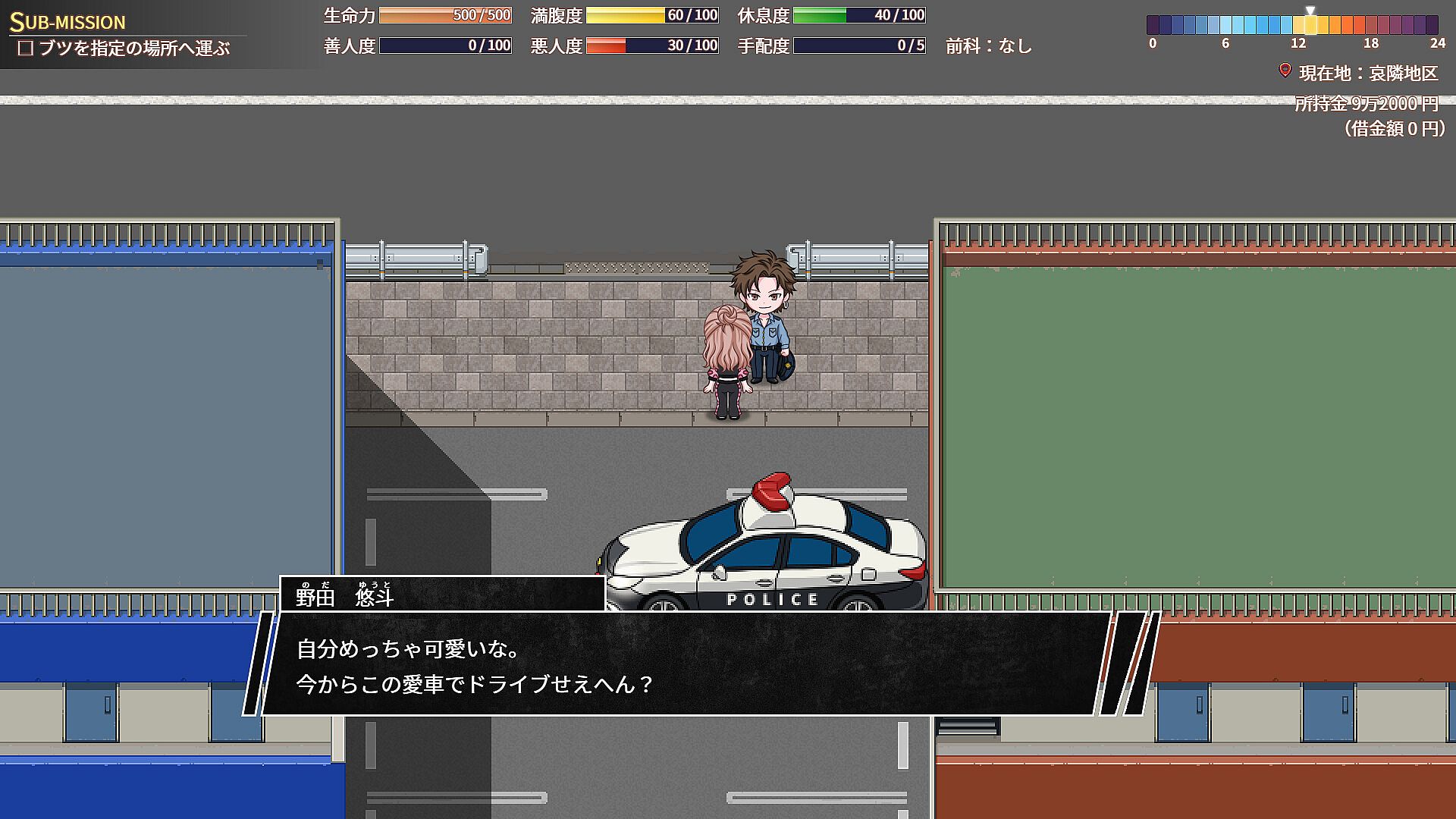


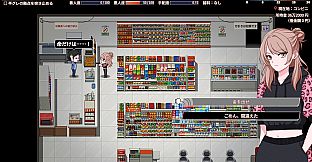

NANIWA UNDERGROUND is an indie simulation game set in a version of Osaka where law and order have broken down completely. Players control a protagonist who has lost his job and apartment, forcing him to navigate survival through work, relationships, or criminal activity in a city that rewards personal choices above all else. The experience centers on daily routines mixed with moral decisions that shape the protagonist's personality and the reactions of those around him.
Gameplay
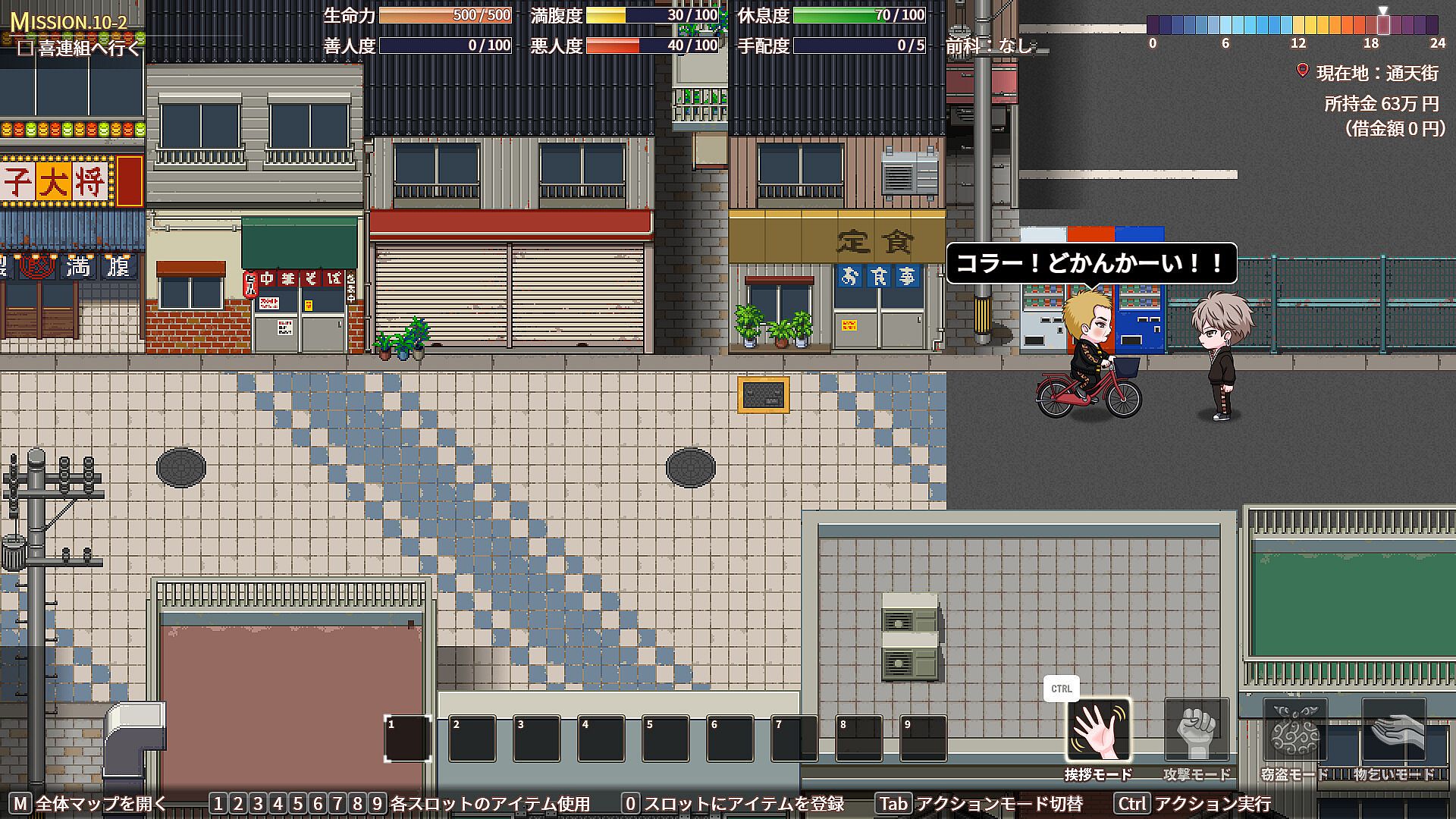
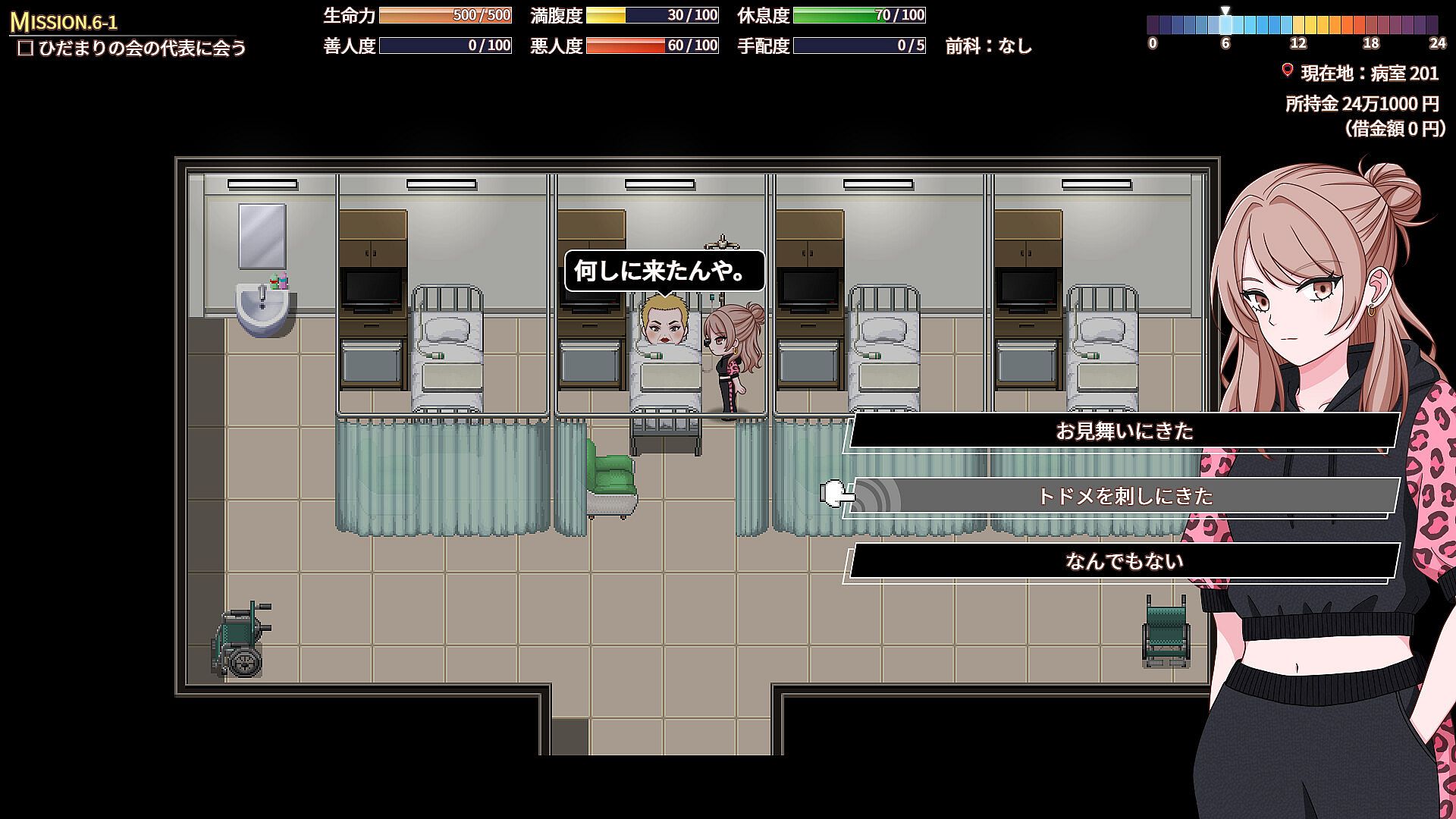
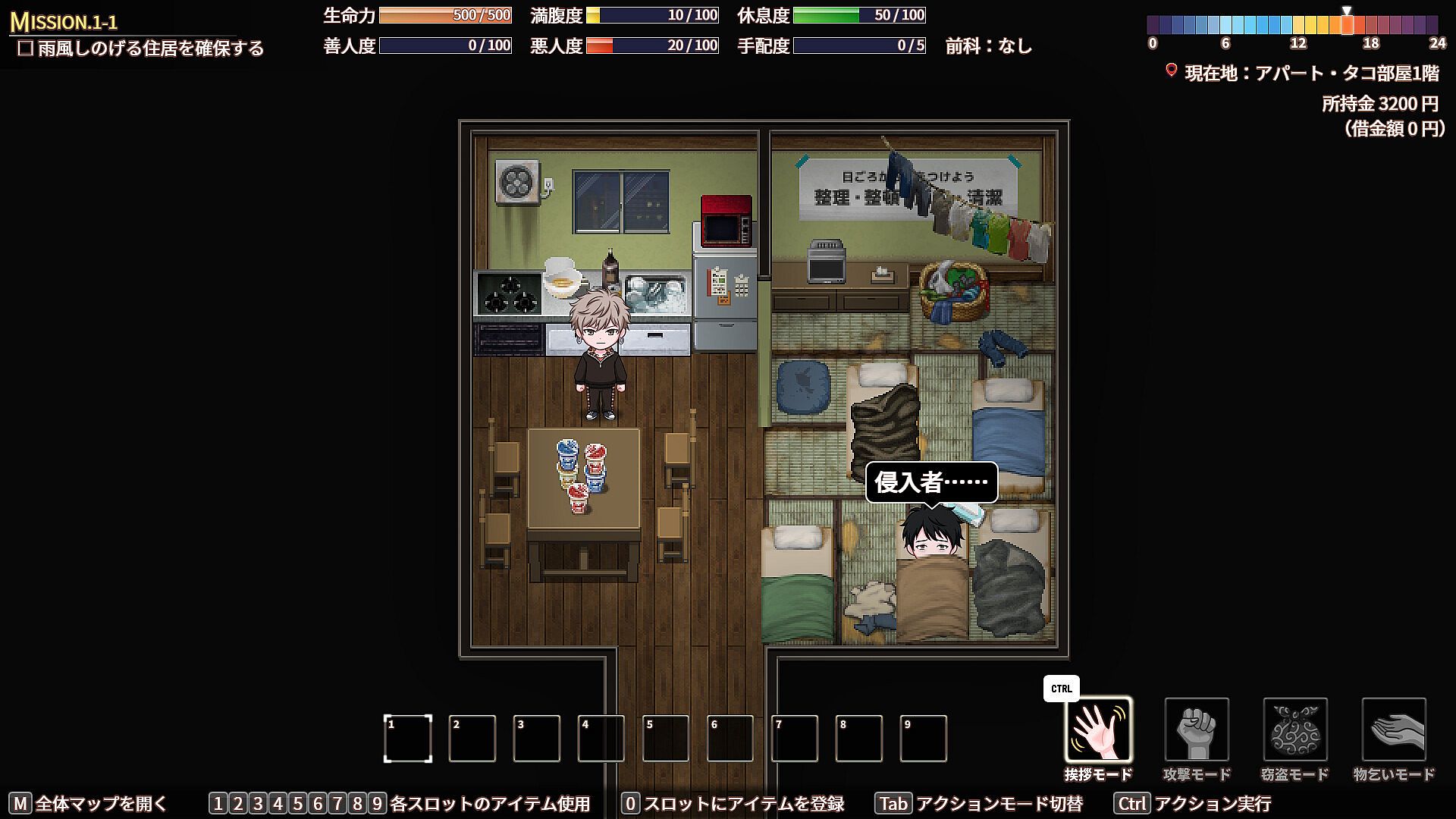
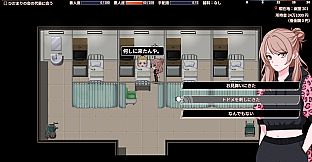
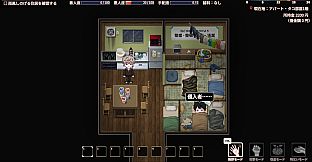
The core loop involves managing basic needs while exploring the streets and interacting with residents. Players earn money through legitimate jobs or shift toward theft and other offenses when resources run low. Hunger and fatigue require regular attention, leading to visits to shops or rest spots. Conversations with locals build over time through repeated greetings, chats, and gifts, gradually unlocking deeper connections or conflicts. Personality shifts occur based on dialogue responses, steering the character toward kindness or aggression. Housing options range from street sleeping, which risks attacks, to acquiring multiple properties or even claiming occupied ones during tough times. Injuries inflicted on citizens send them to the hospital temporarily, opening options to apologize during visits or face lasting hostility upon their return.
Game Modes
No distinct multiplayer or separate campaign modes exist. The single-player structure instead emphasizes branching paths driven by player decisions. One approach focuses on honest labor and positive community ties to restore order. Another leans into crime and dominance to control the streets. A middle path allows mixing elements without committing fully to either extreme. These directions emerge naturally from daily actions and conversation choices rather than from menu selections.
Story and Setting
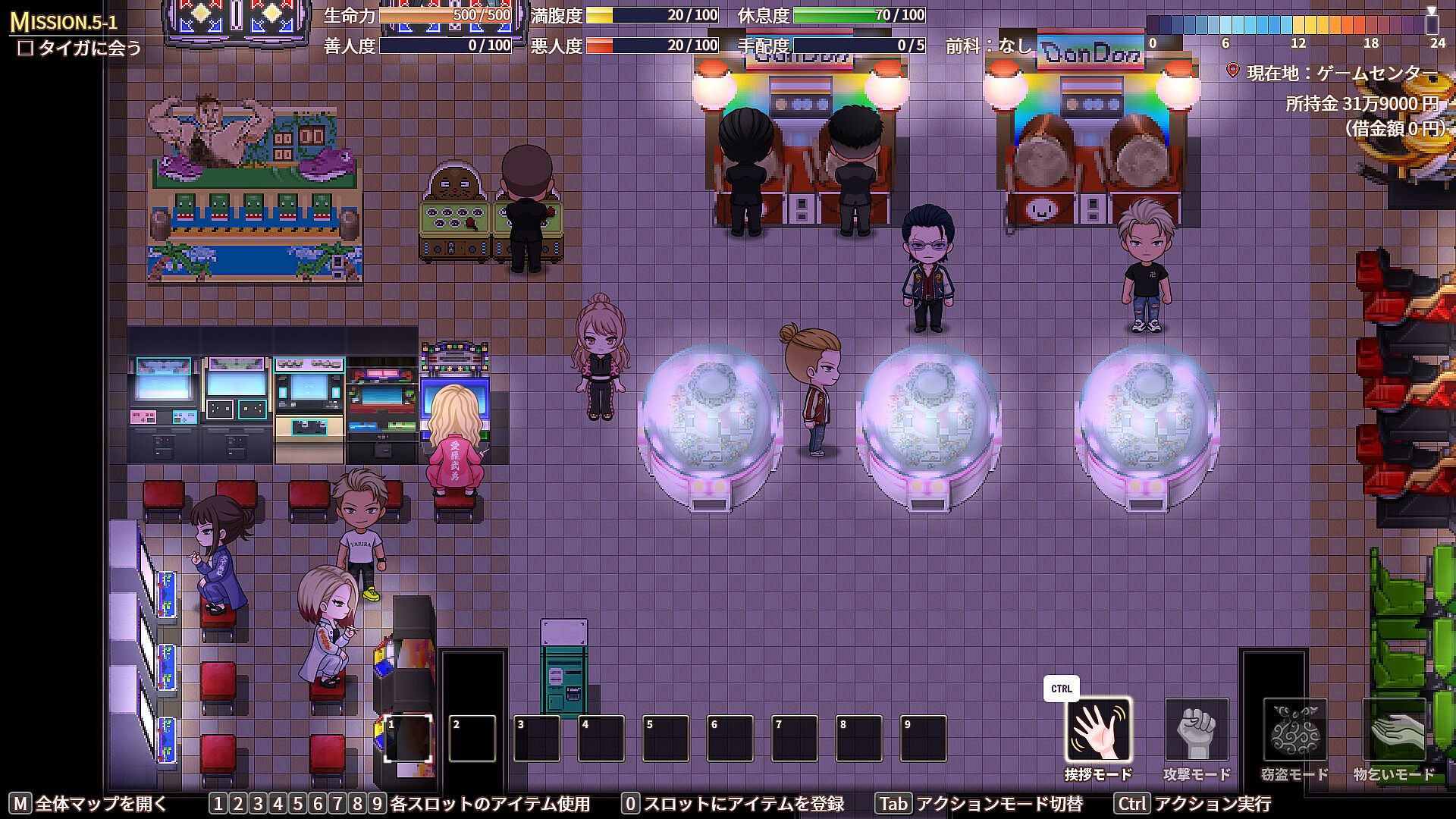
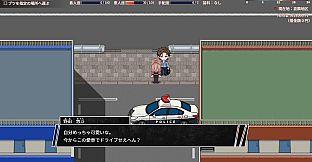
The narrative begins with eviction and financial ruin, pushing the protagonist into a lawless environment. Osaka serves as the backdrop, populated by delinquents, yakuza members, questionable police officers, and neighborhood figures who gossip and form opinions. Relationships develop through consistent effort, sometimes leading to romance if mutual interest grows. Every response in dialogue influences the protagonist's evolving traits, creating outcomes that feel personal rather than scripted in advance.
Crime and Daily Systems
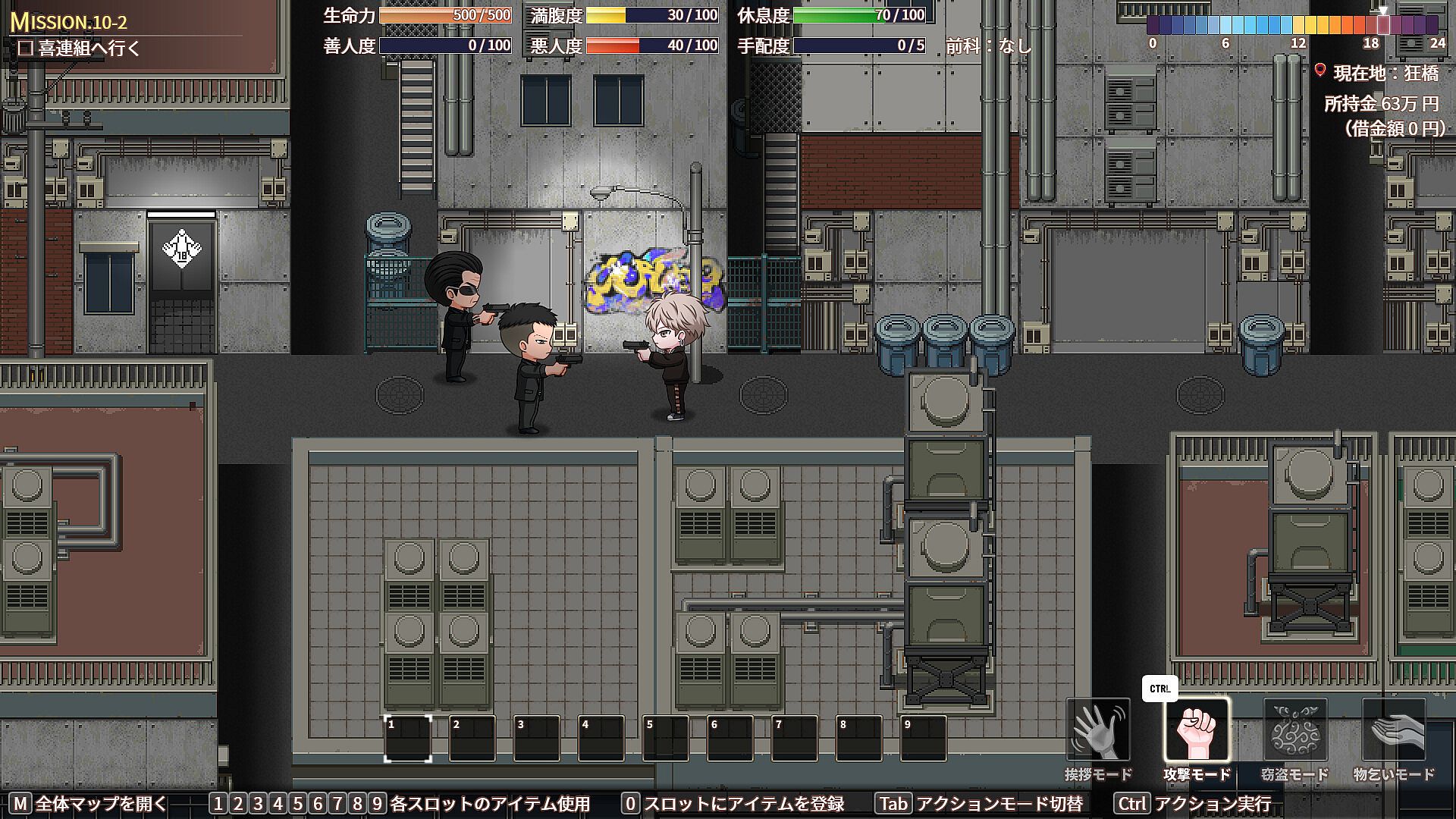
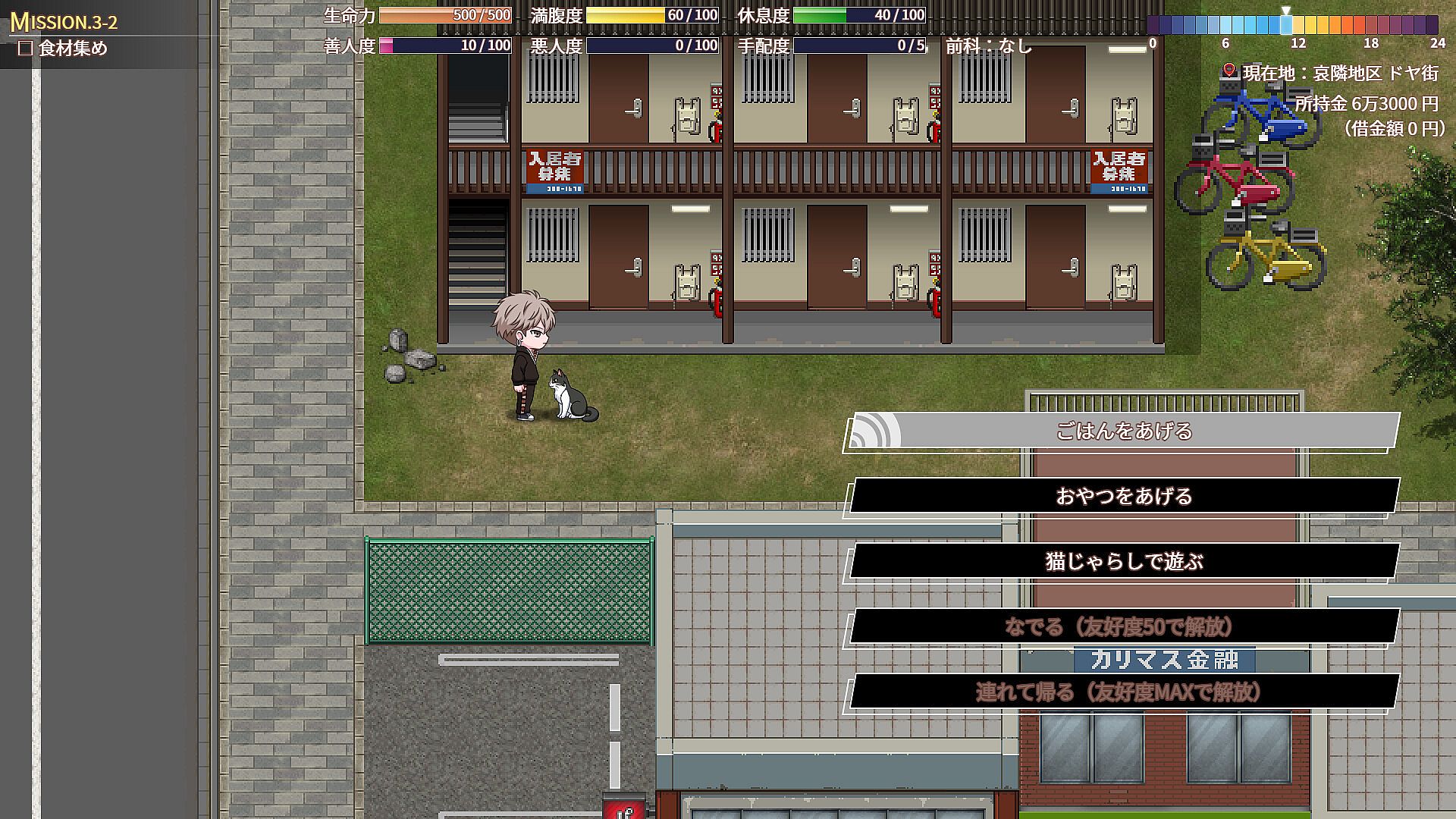
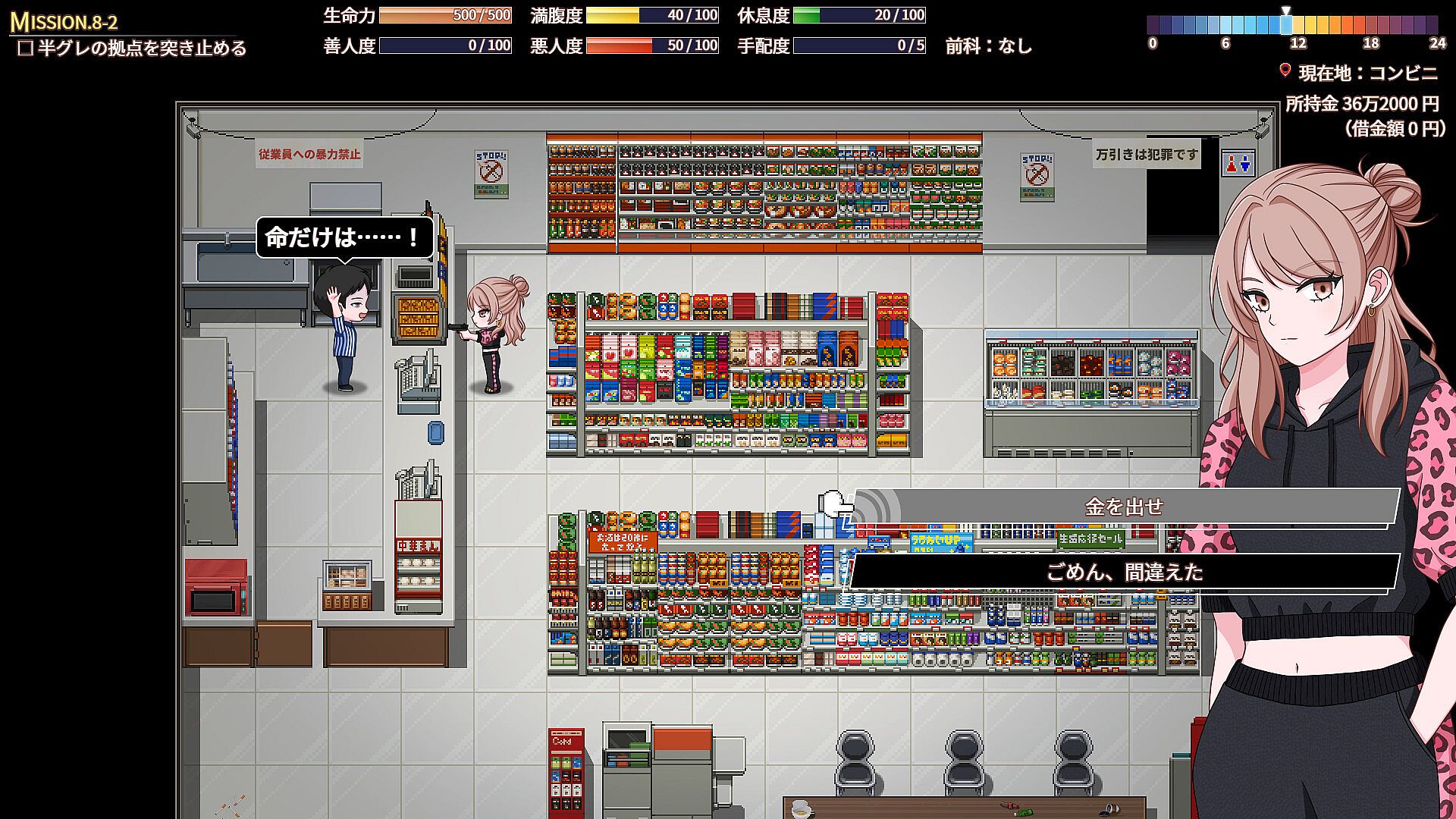
A range of illegal activities becomes available, including pickpocketing, burglary, shoplifting, robbery, vehicle theft, vandalism, assaults, under-the-table jobs, and drug dealing. These options sit alongside routine tasks like shopping or spending time with animals. The systems encourage experimentation, as successful crimes provide quick gains while carrying risks of retaliation or changed perceptions from residents. Hospital stays for victims create temporary windows for reconciliation or further escalation.
Is It Worth Playing?
This title suits players who enjoy choice-heavy life simulations where actions carry visible consequences on both the environment and character development. The blend of routine management with escalating criminal or heroic options creates replay potential through different personality builds. As an independent project still in active development, it appeals most to those patient for updates that expand on the existing interaction and survival mechanics. Those seeking structured missions or competitive elements may find the open-ended nature less engaging.











