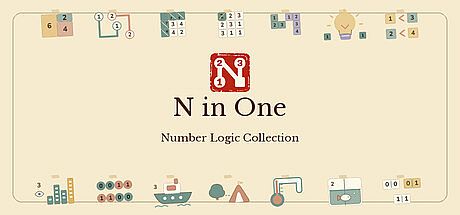


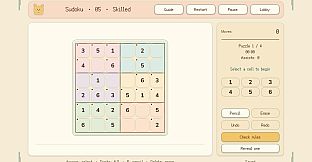
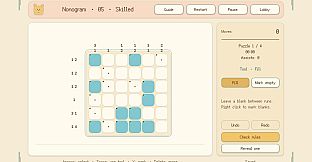
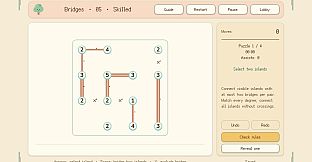
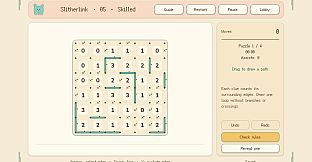
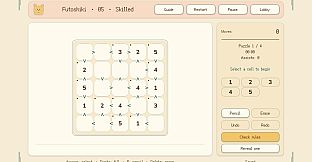
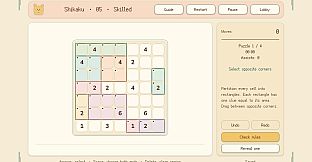
N in One Logic Puzzle Collection brings together twenty distinct number and grid logic puzzles in a single-player casual experience designed for focused, unhurried play on PC. Players work through fixed challenges that emphasize deduction and pattern recognition rather than speed or competition, all presented on a warm, paper-textured interface that evokes a physical desk setup.
Gameplay
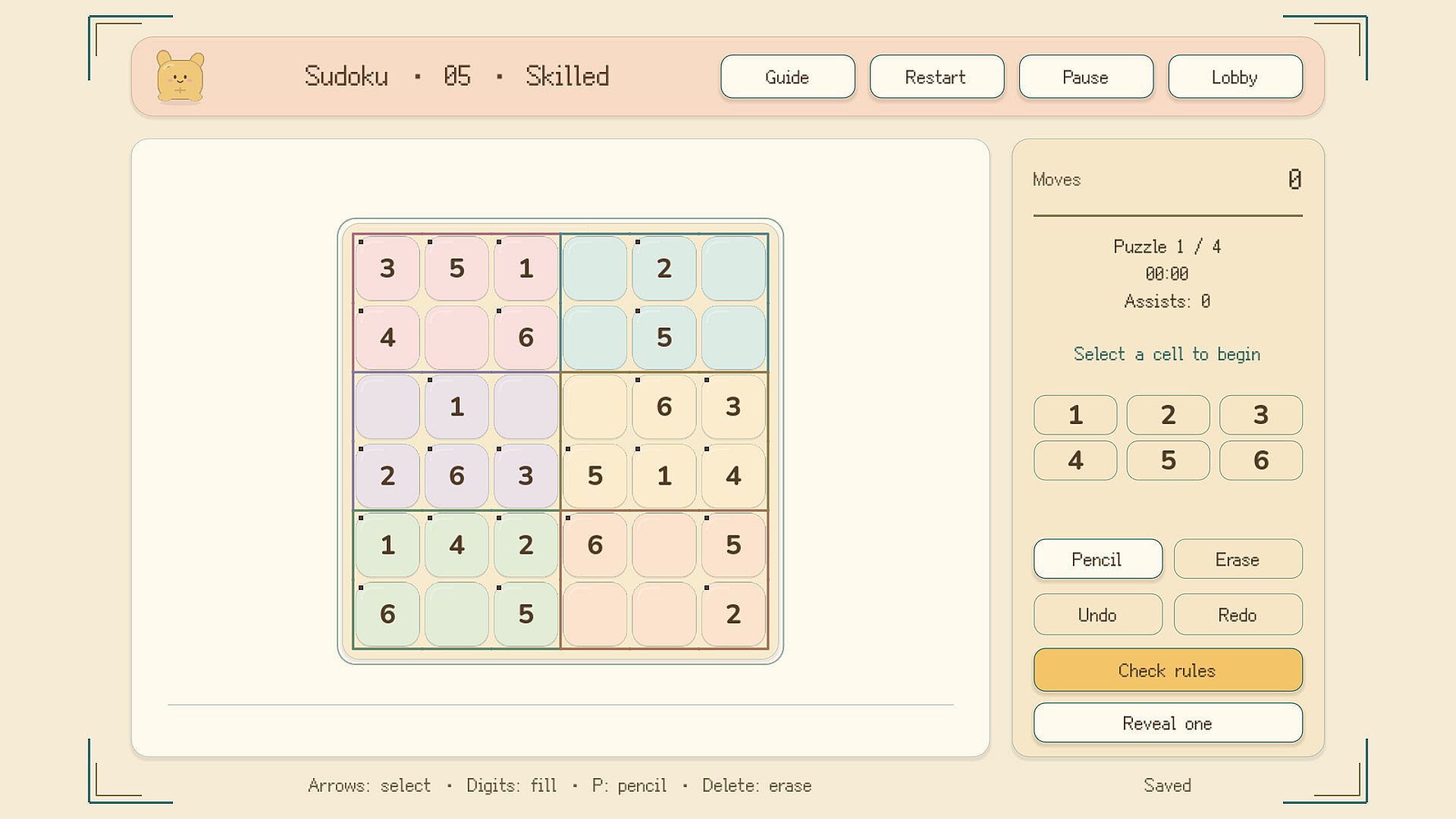
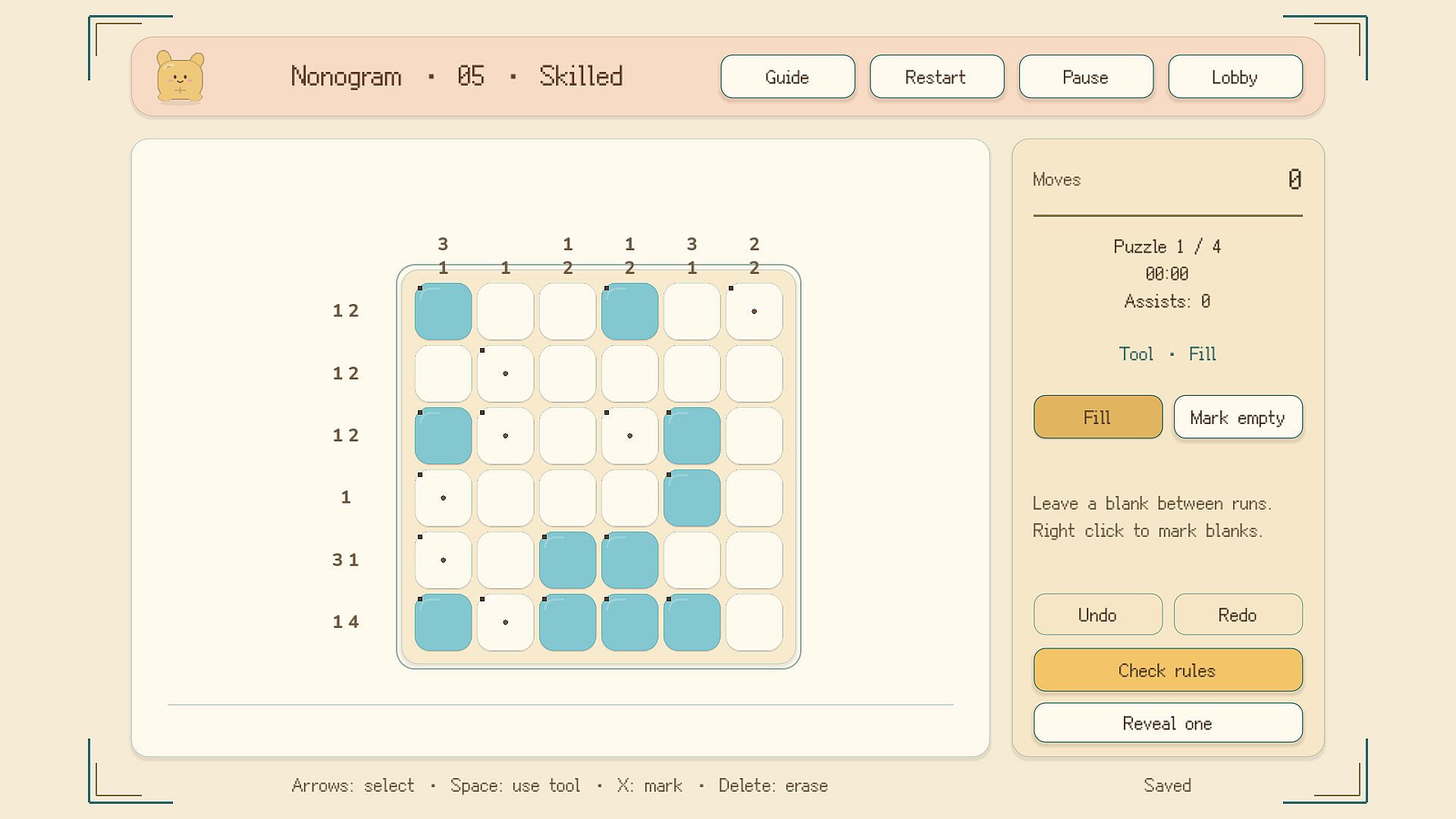
The core loop centers on selecting a puzzle type and progressing through its ten levels, each containing four fixed boards that increase in complexity through layout and clue density. Solvers fill cells, draw lines, or connect elements according to each puzzle's unique rules, using tools such as undo and redo to refine attempts without penalty. Rule checks highlight violations in real time, while optional single-step reveals provide targeted assistance that counts toward an assist tally for those who want to maintain a clean solve record. Progress saves separately for every type and level, allowing players to switch freely or return later. The game runs entirely offline with no account or online features required, supporting mouse or keyboard input and pausing at any moment.
Visual and audio options include eight color themes, adjustable music and sound effects, and optional voice feedback that reads short cues in one of eight supported languages. These elements keep the focus on steady thinking rather than distraction, with rounded tiles and small illustrative guides helping newcomers grasp rules quickly through three-step visual explanations for each type.
Game Modes
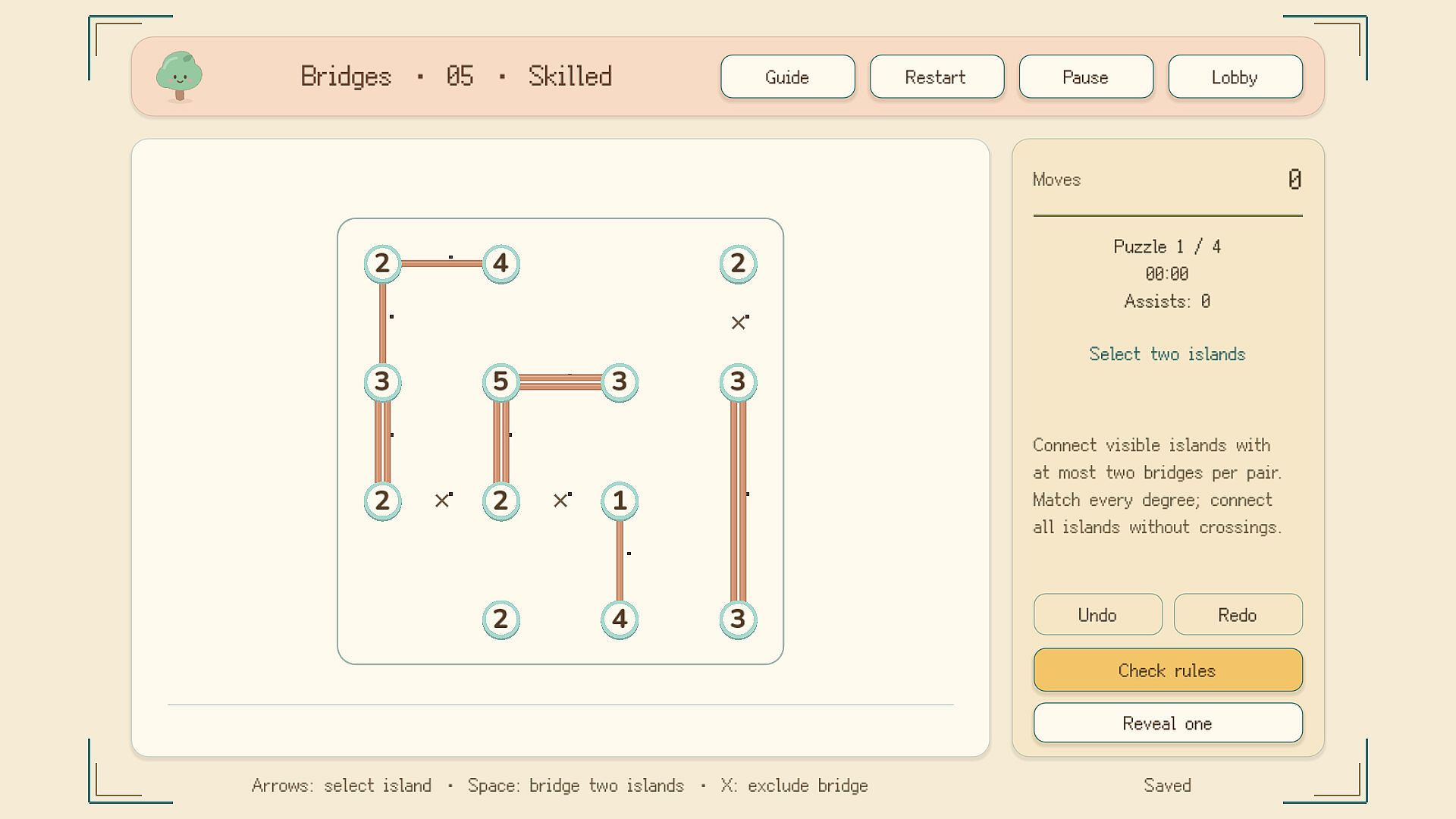
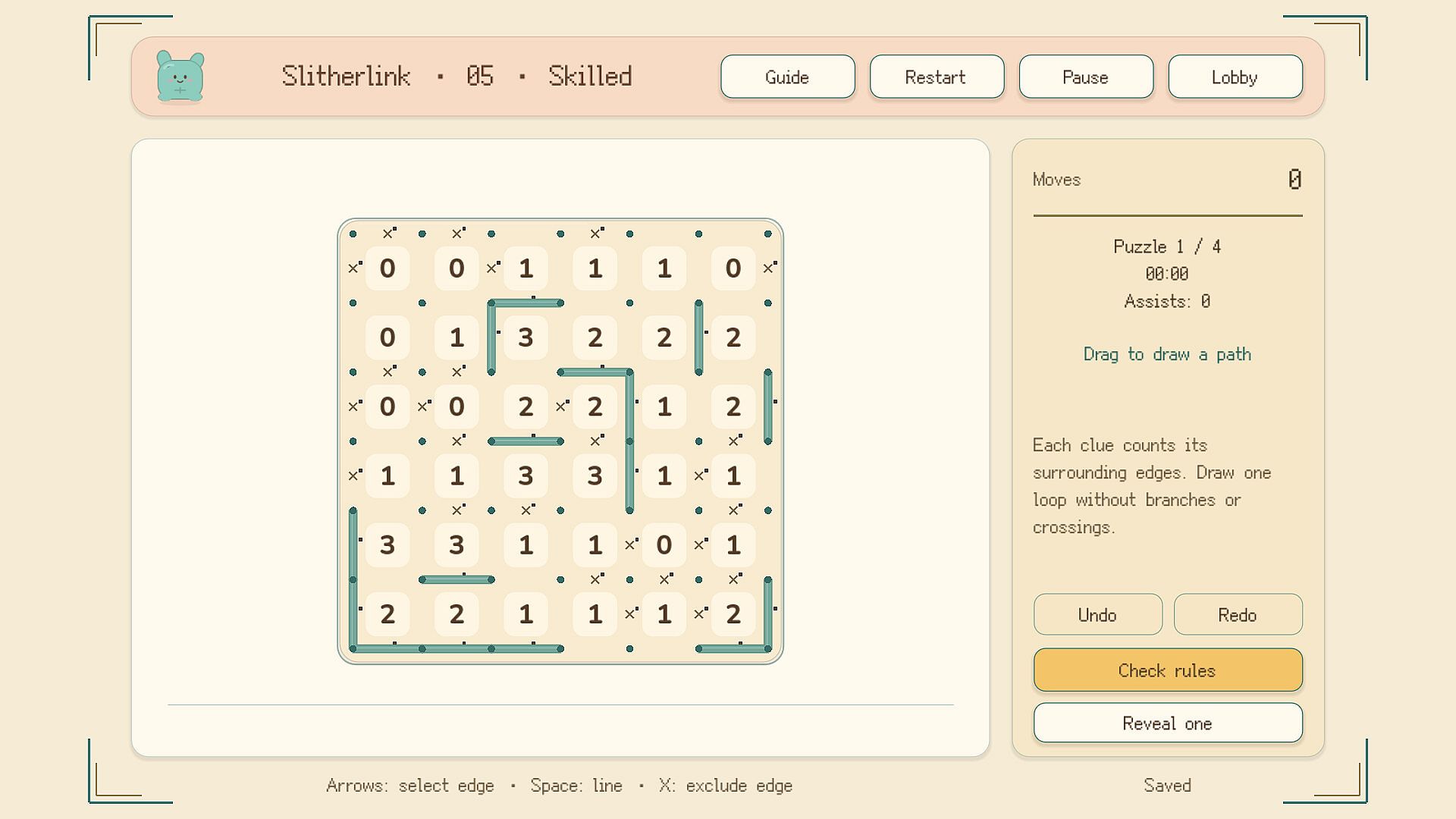
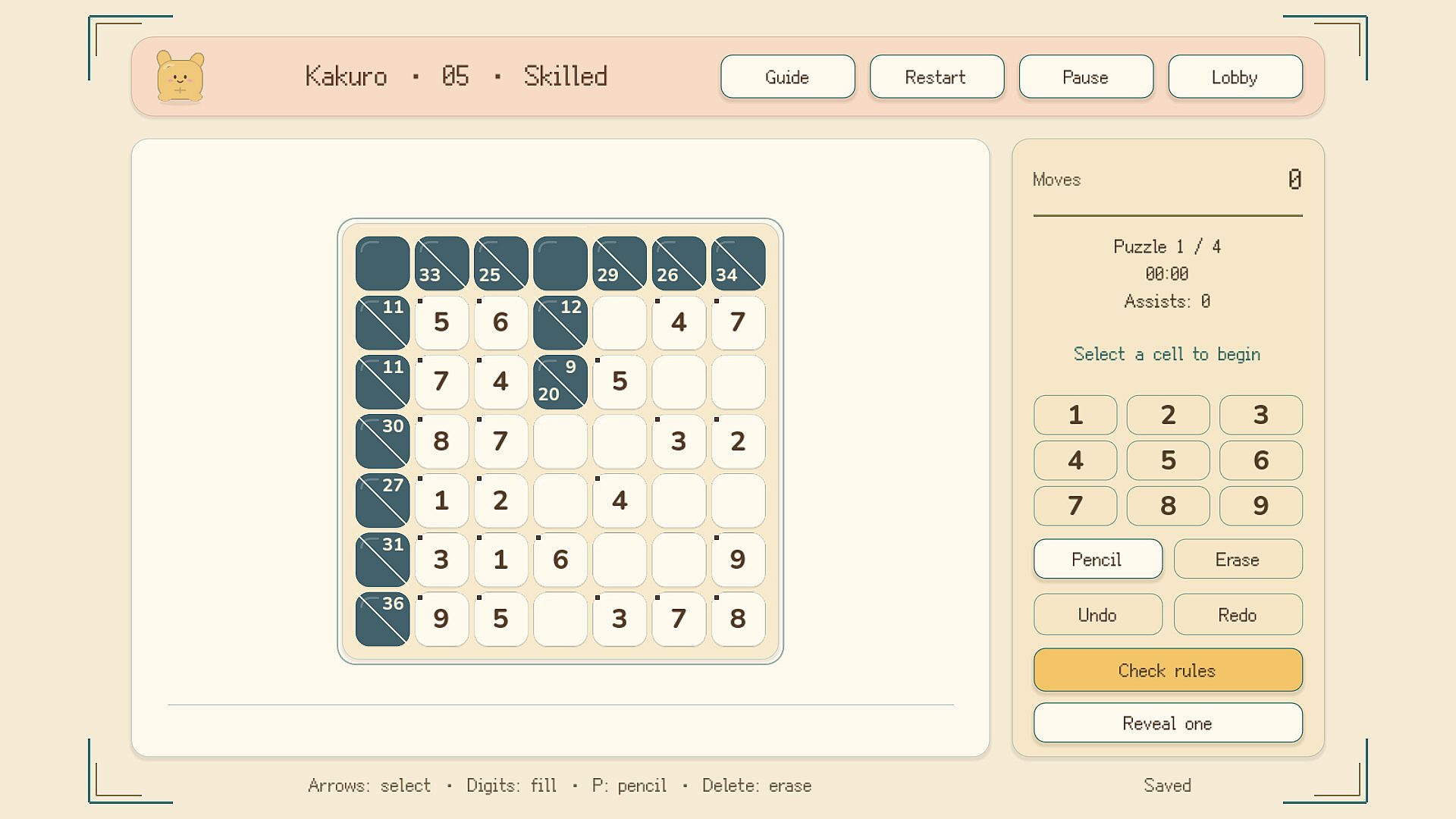
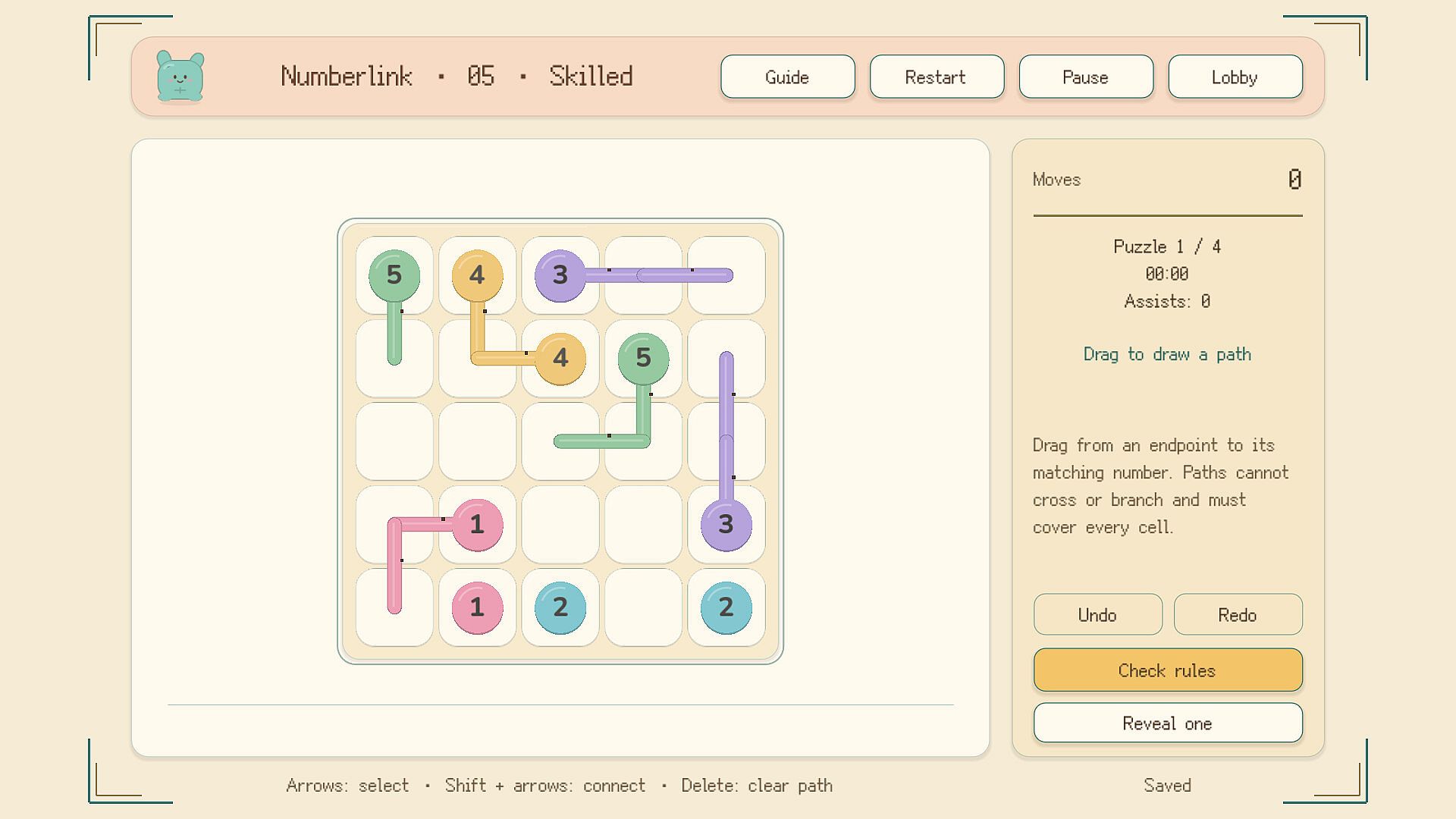
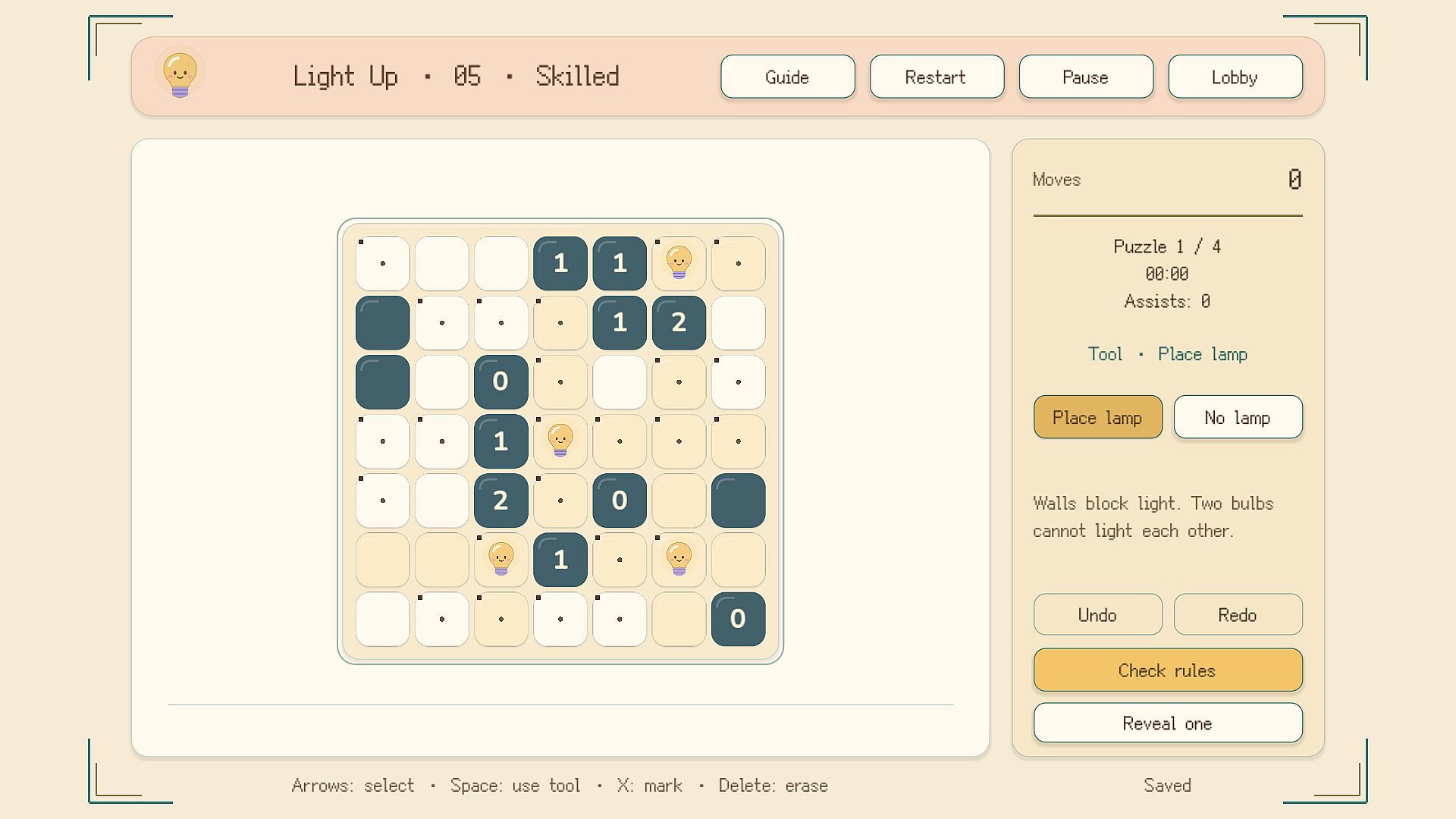
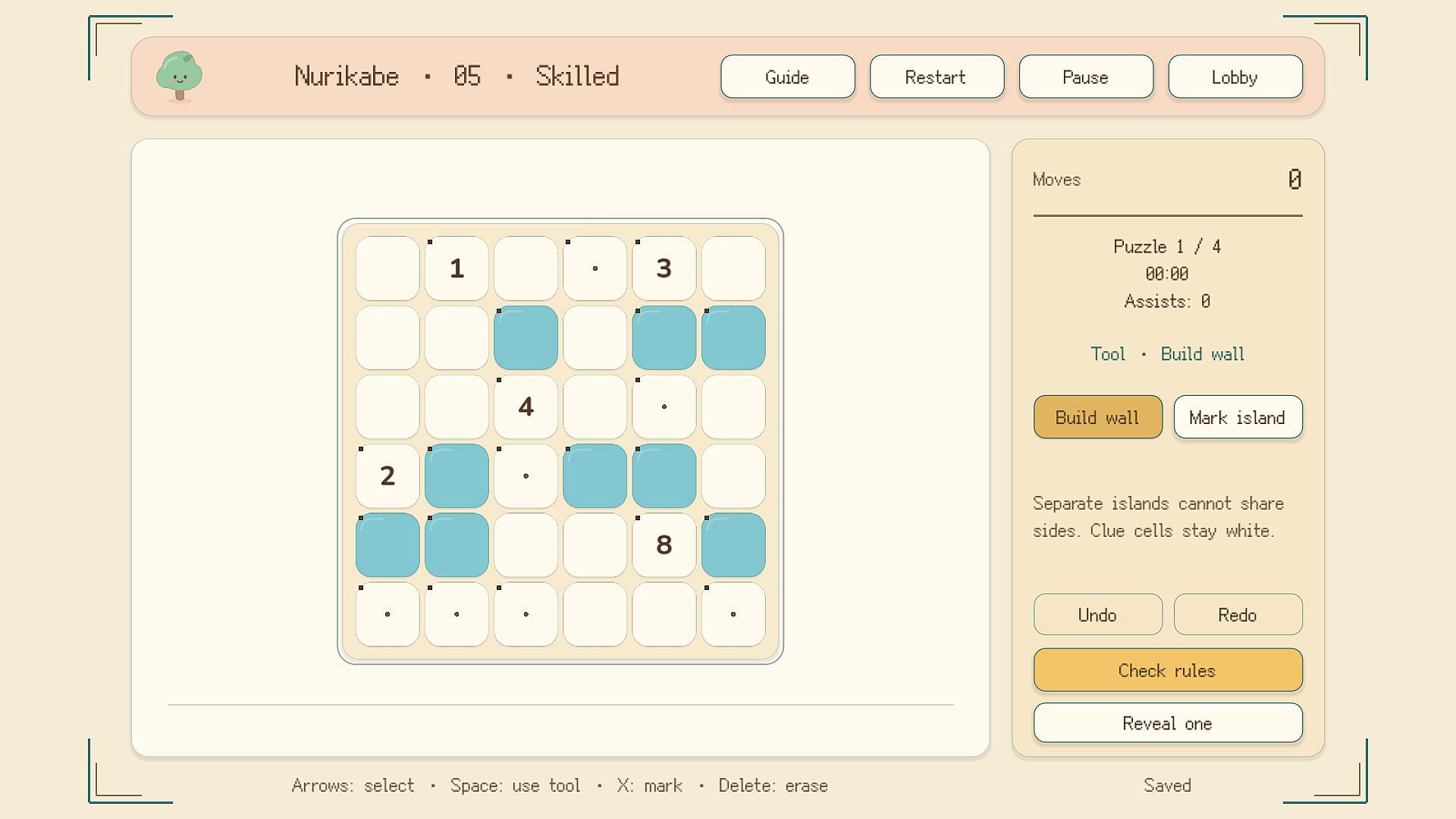
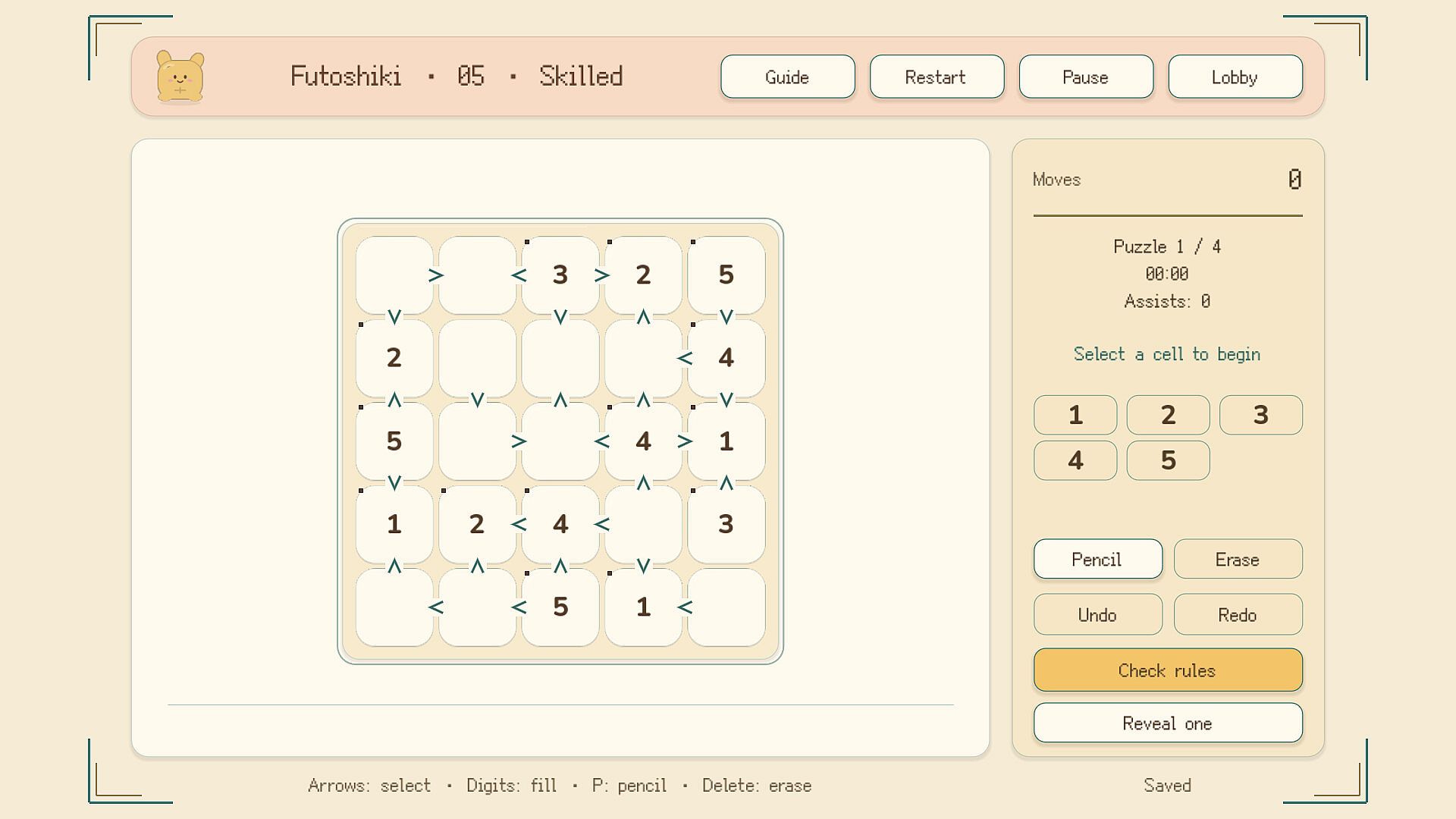
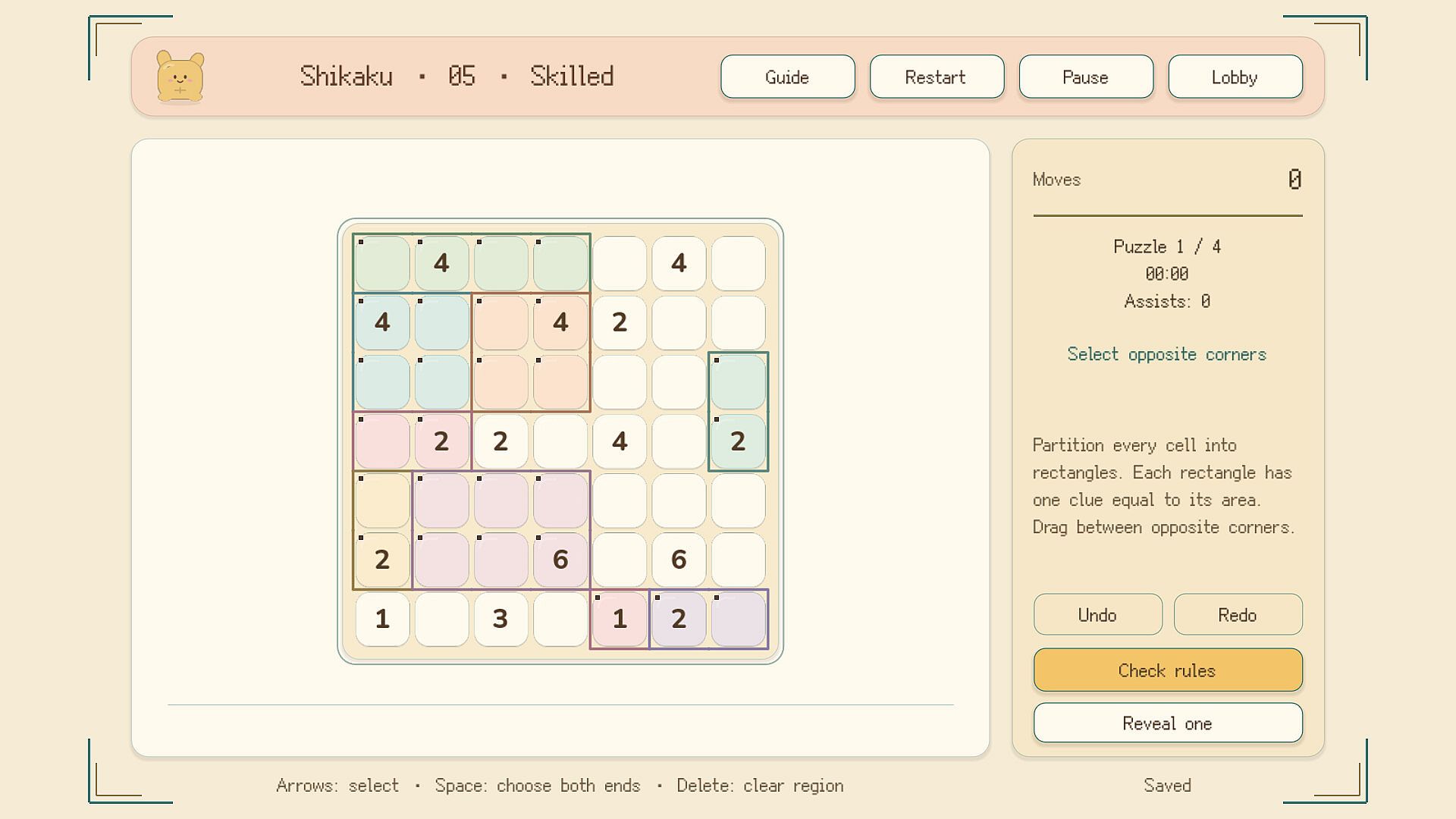
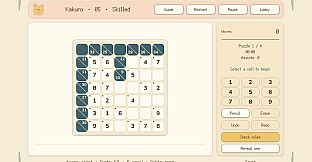
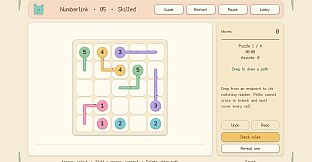
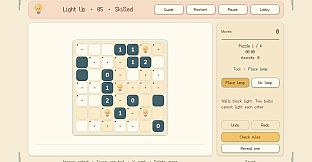
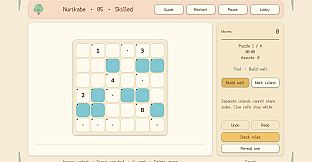
Game modes correspond directly to the twenty puzzle varieties, each with its own rule set and dedicated progression track. The collection includes Sudoku for classic number placement, Nonogram for shading grids to reveal images, Slitherlink for forming closed loops based on edge clues, and Hashi for linking islands with bridges. Additional varieties cover Nurikabe for dividing shaded and unshaded regions, Shikaku for rectangular area division, Numberlink for path connections, Kakuro for sum-based filling, Hitori for duplicate elimination, Suguru for adjacent number constraints, Akari for light placement, Futoshiki for inequality ordering, Skyscrapers for height visibility, Binairo for binary balancing, Battleships for fleet location, Tents for pairing trees with tents, Thermometers for sequential filling, Aquarium for water level logic, Dominosa for domino matching, and Calcudoku for cage-based arithmetic.
Each mode operates independently with its own ten levels and forty puzzles, encouraging players to explore different logical approaches without overlapping mechanics. Completed boards can be replayed in sequence for practice or review.
Features and Controls
Controls emphasize accessibility and comfort during extended sessions. Players navigate boards with precise mouse clicks or keyboard shortcuts, while the interface supports full pausing and seamless switching between types. Separate tracking of solves, assists, and completion records per level helps maintain personal benchmarks without external comparison. The paper-inspired aesthetic uses soft colors and subtle illustrations to reduce eye strain, complemented by customizable audio levels that can be muted entirely for silent play.
Voice feedback provides brief spoken confirmations in Simplified Chinese, Traditional Chinese, English, Japanese, Korean, German, French, or Spanish, aiding players who prefer auditory guidance alongside visual cues. These options make the collection suitable for varied preferences while keeping the experience self-contained and free of timers or pressure elements.
Is It Worth Playing?
This collection suits individuals who enjoy methodical logic challenges in a relaxed solo setting. The fixed puzzle structure delivers consistent, repeatable content across a broad range of deductive styles, from straightforward number grids to spatial connection tasks. Built-in assists and rule verification lower the barrier for newcomers while still rewarding careful reasoning on harder boards. Offline availability and language support further extend its appeal to those seeking portable, interruption-free sessions.
Players who prefer variety within a single purchase will find value in switching between types when one becomes familiar, and the absence of online requirements or additional purchases keeps the focus on the puzzles themselves. Those drawn to quiet, paper-like puzzle solving without competitive elements or procedural generation will likely appreciate the deliberate pacing and clear presentation.