


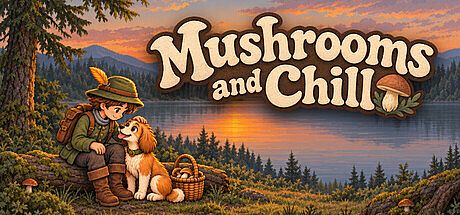


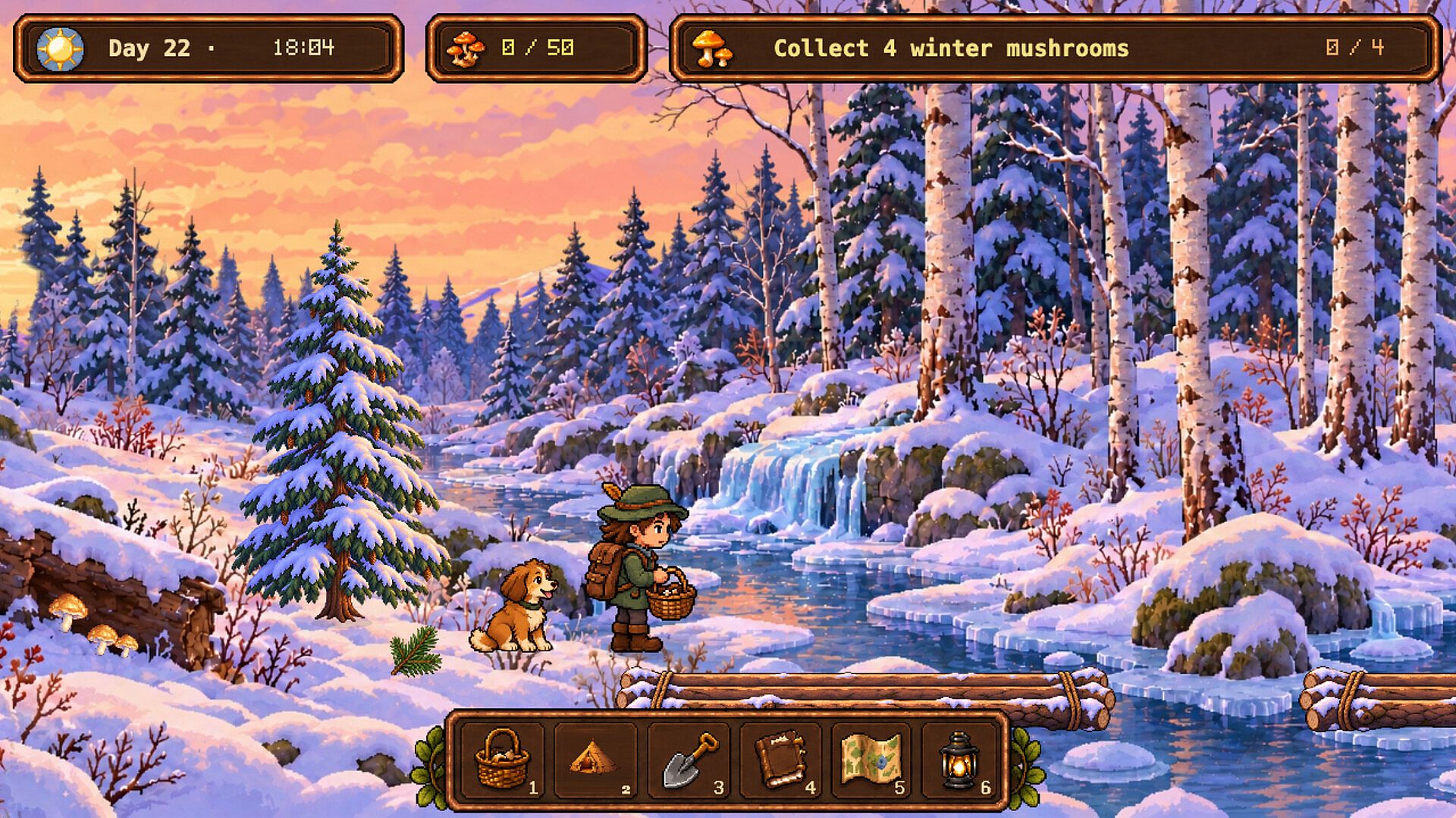
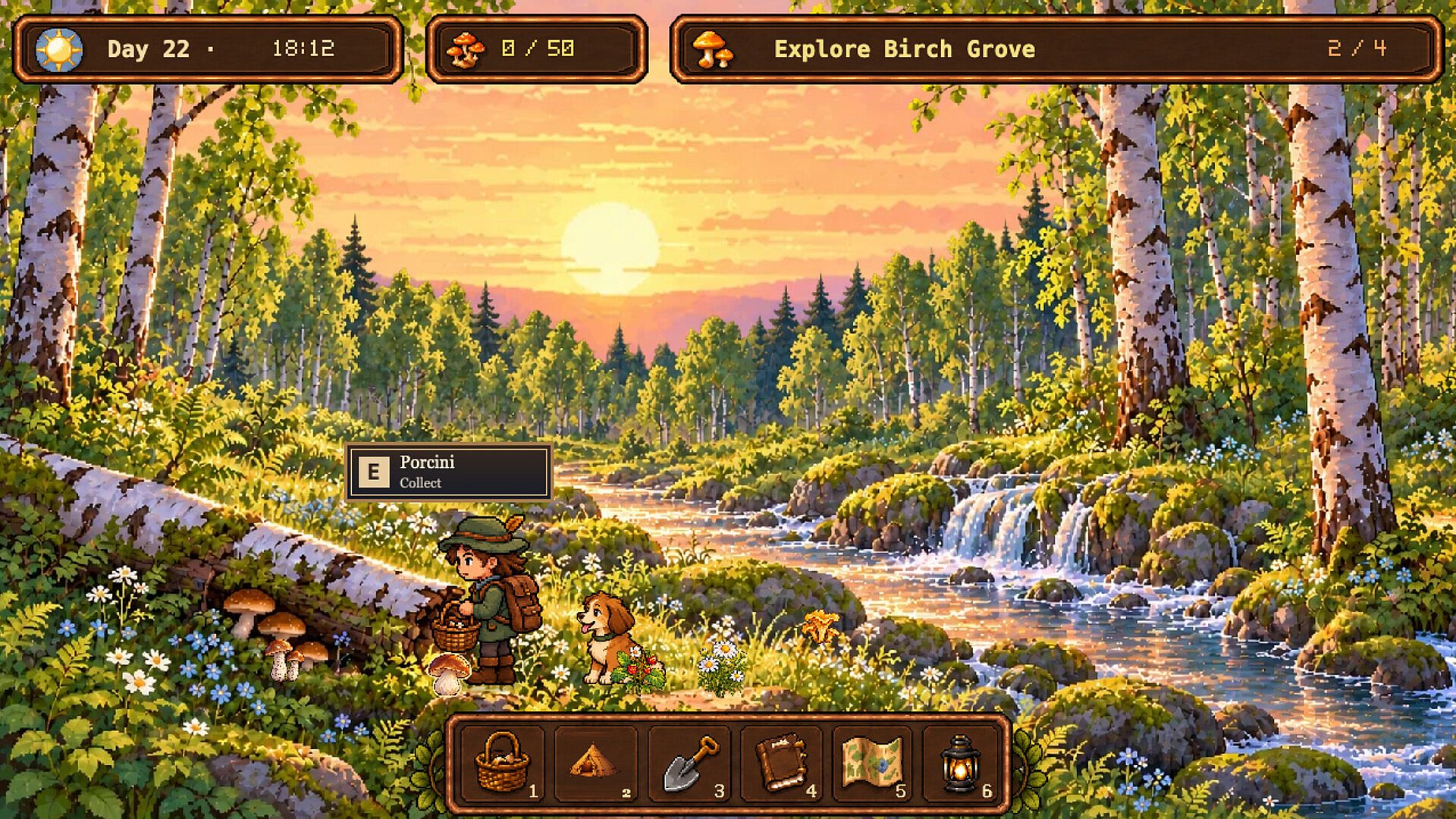
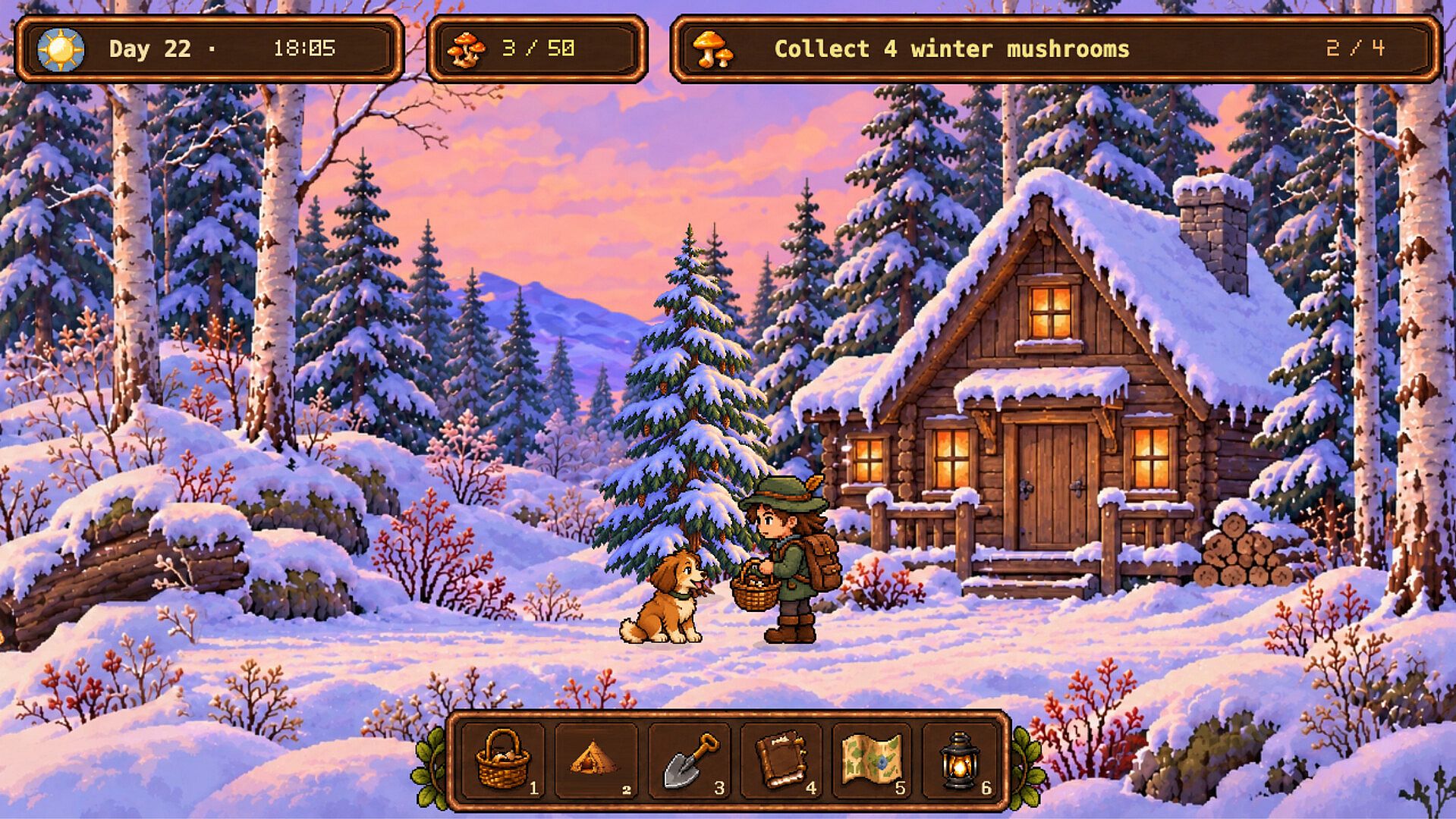
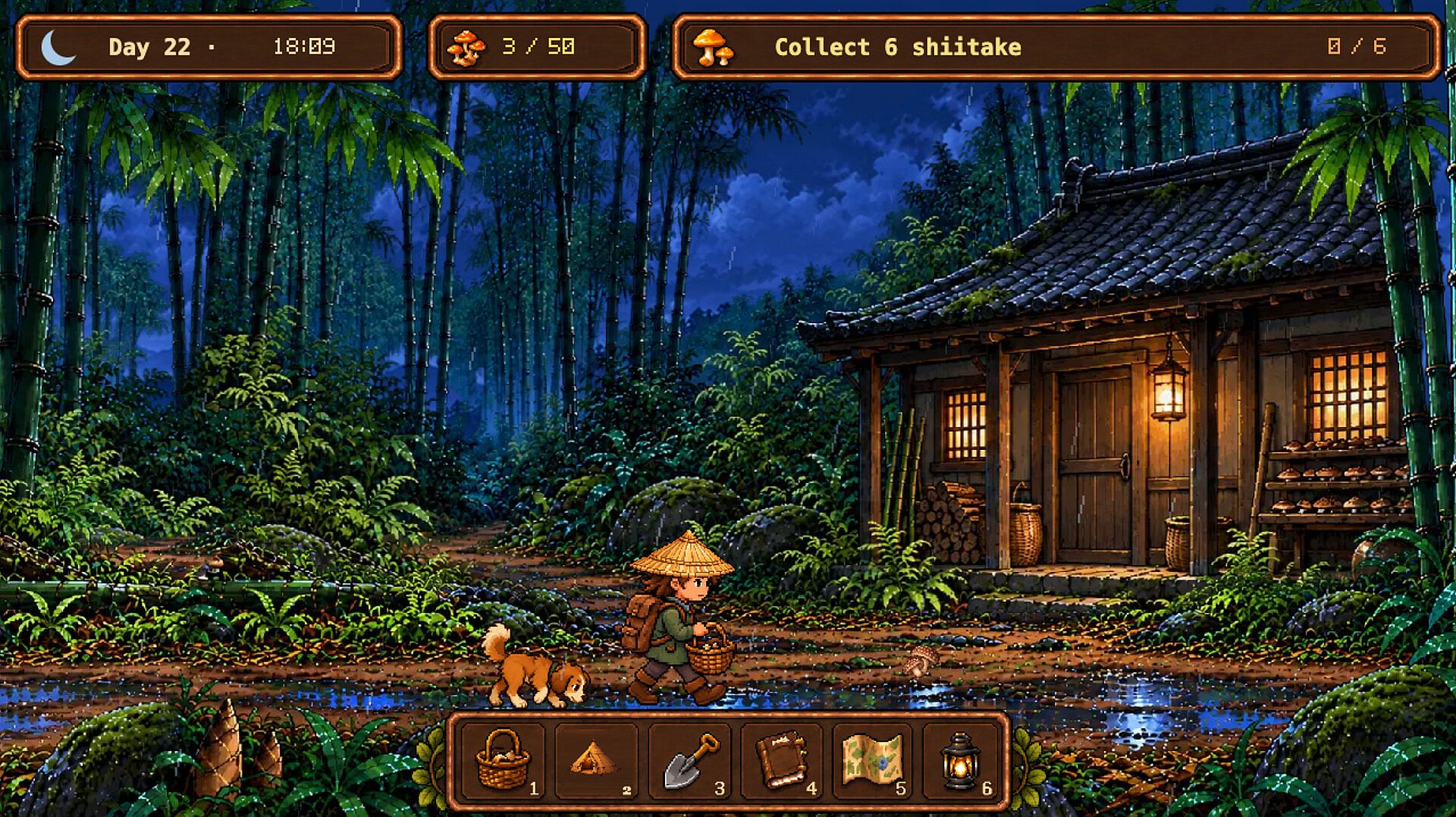
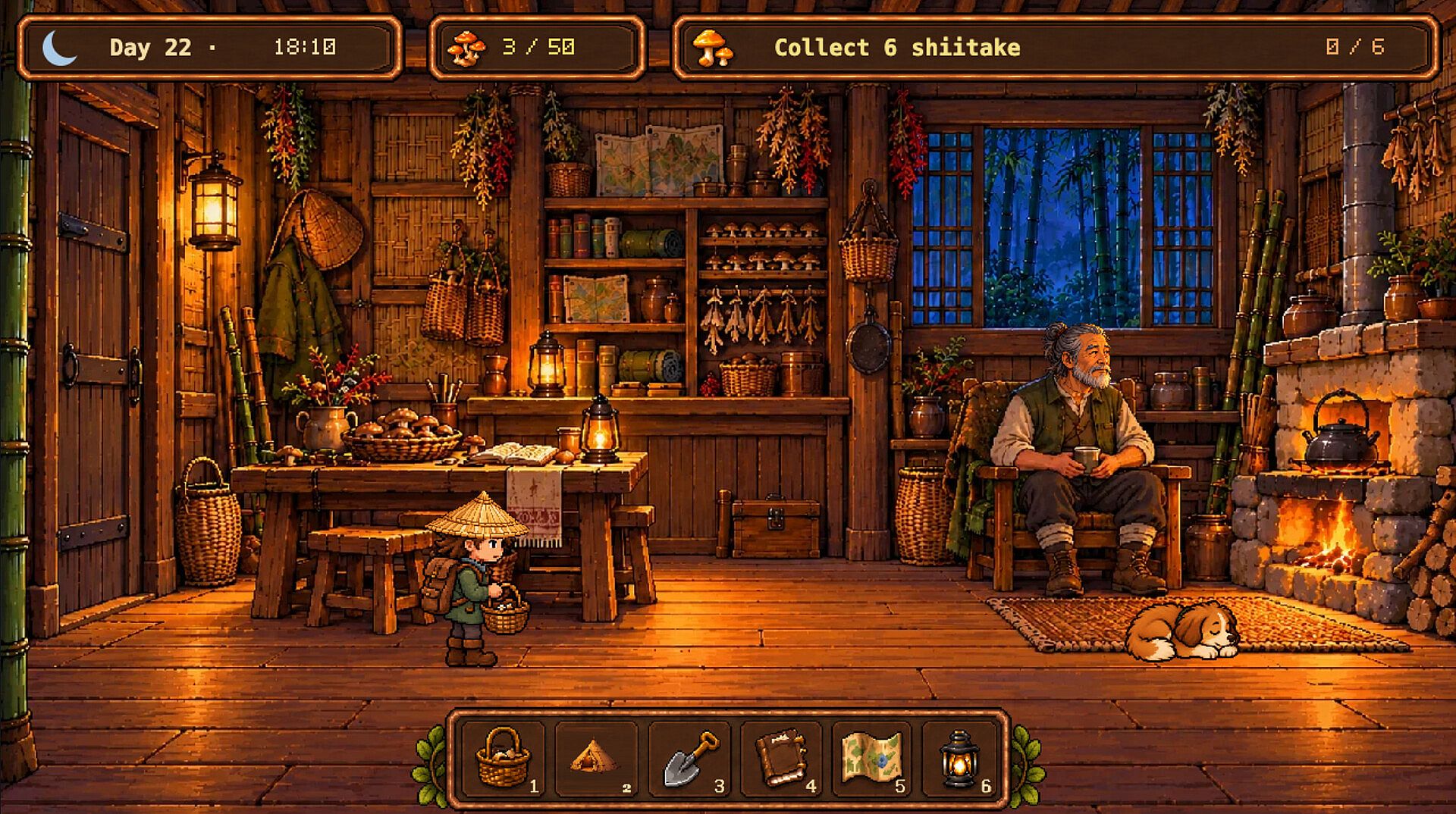
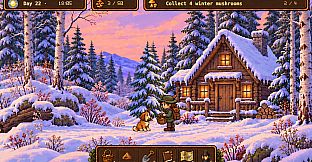
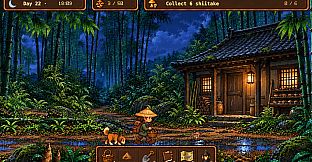
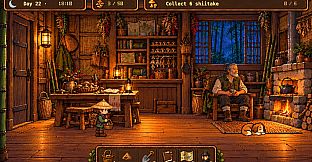
Mushrooms and Chill is a cozy single-player adventure game in the indie and casual genres. Players take on the role of a forager who wanders peaceful woodlands with a loyal dog companion, gathering mushrooms, plants, and berries while uncovering the quiet details of the natural world.
Gameplay
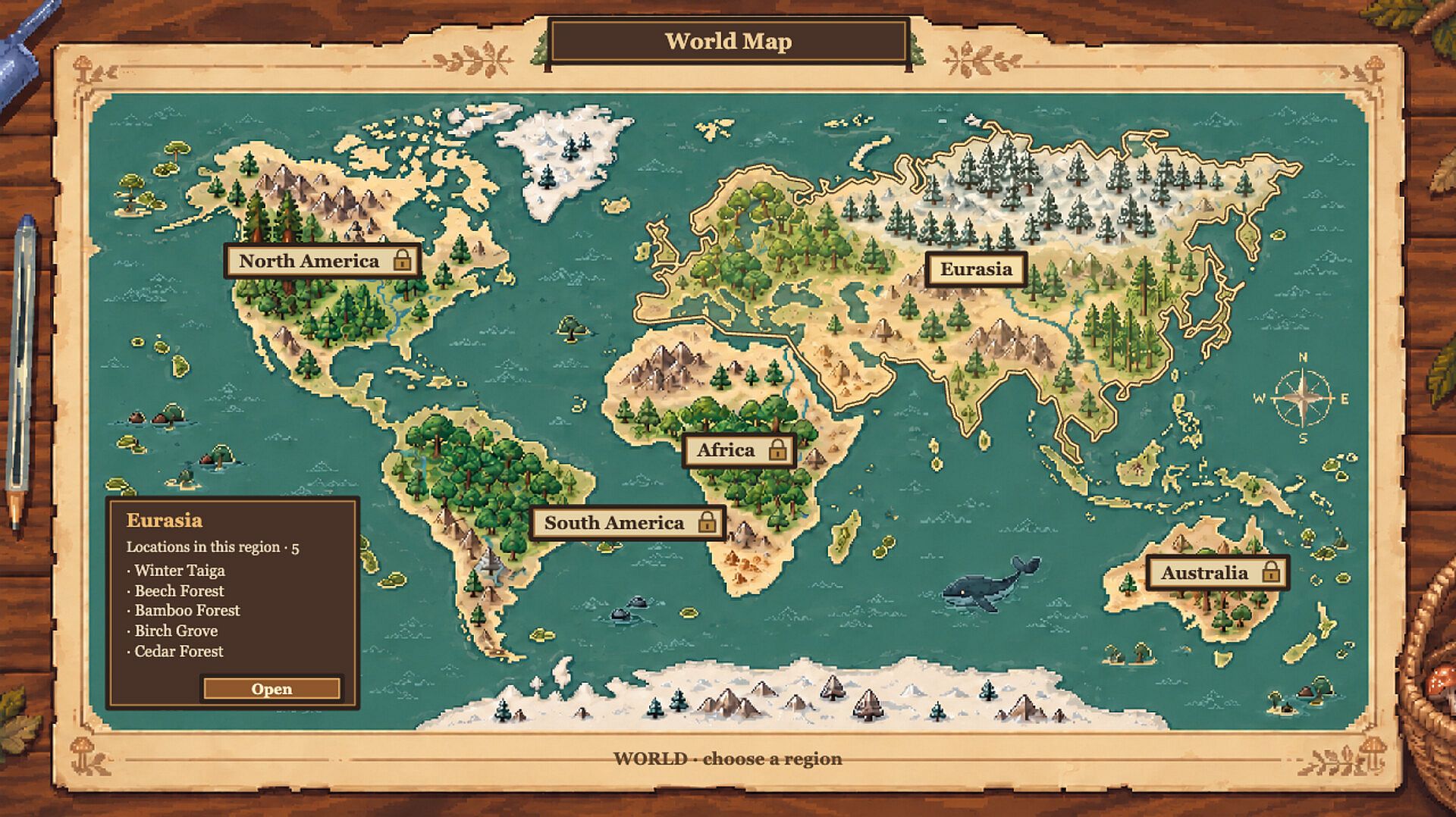
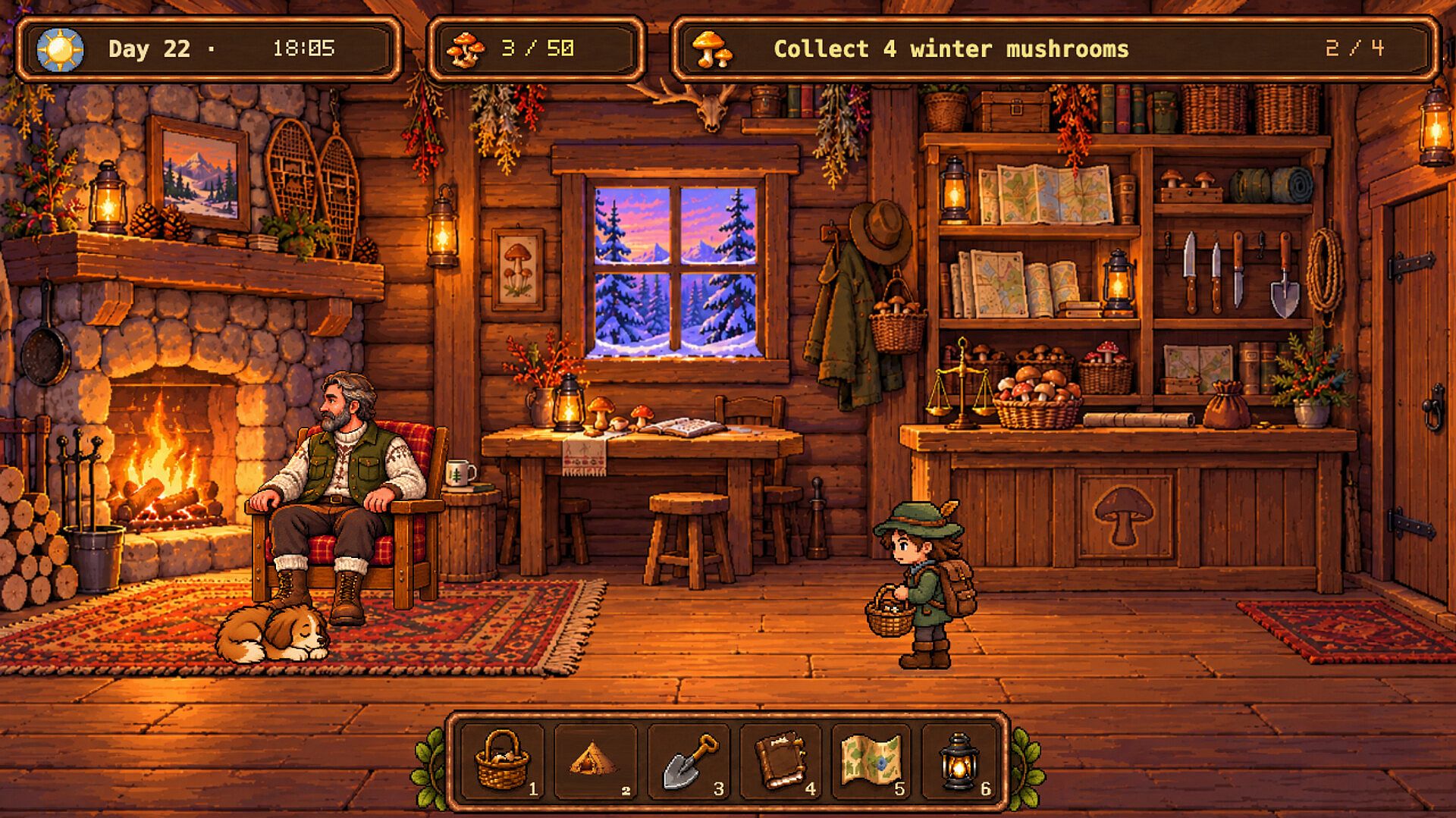
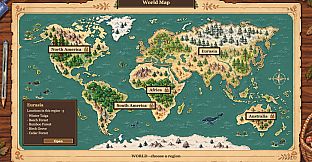
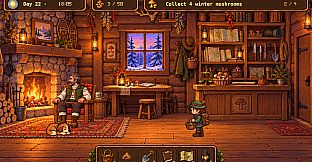
The core loop centers on exploration and collection across varied forest environments. The journey starts in a summer birch grove and continues through taiga, bamboo groves, and North American woodlands. Weather, season, and time of day influence what appears, encouraging players to revisit areas after rain or at night for different results. Rangers provide requests that guide the search toward special finds, and completing these tasks teaches better foraging habits.
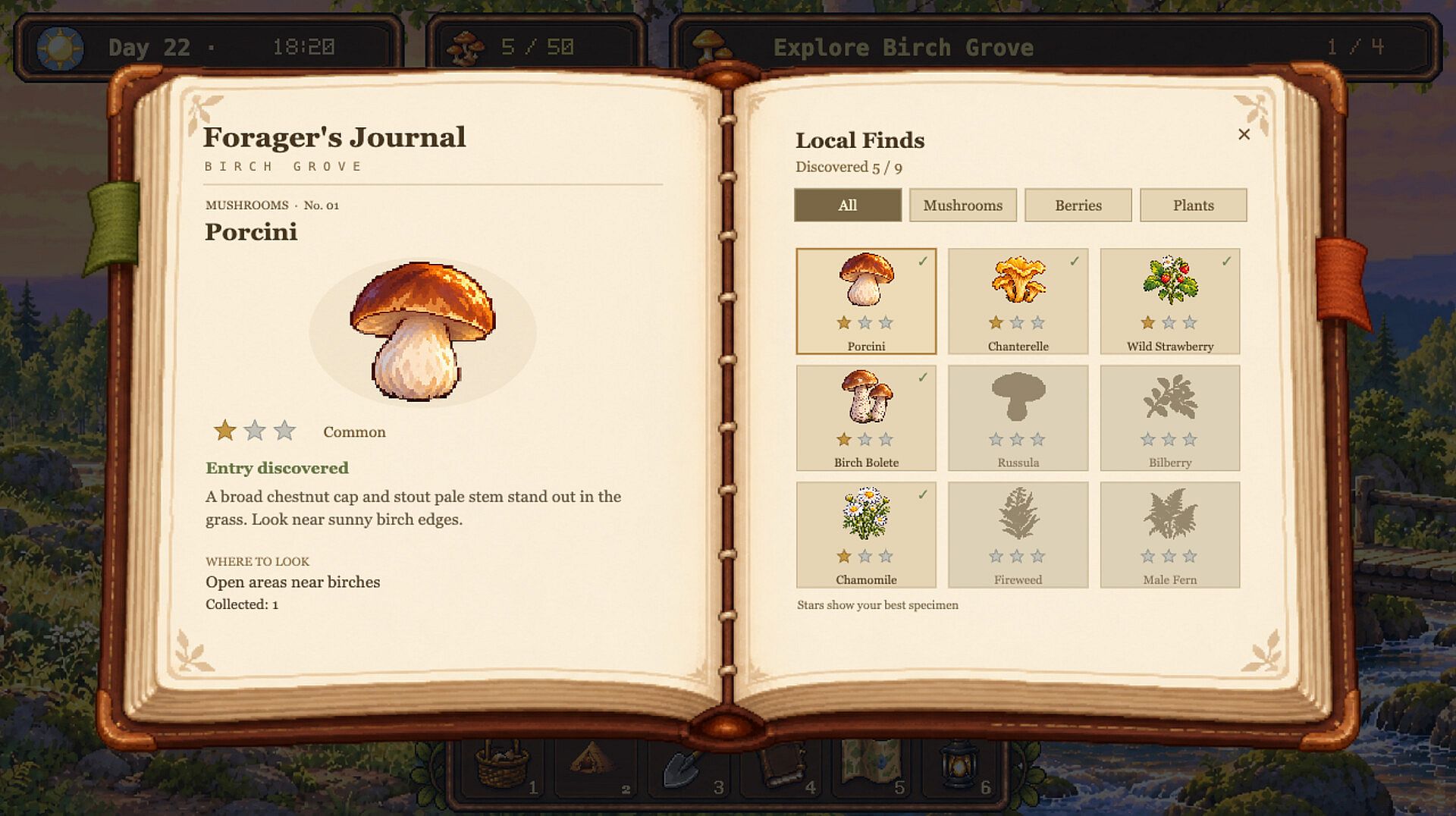
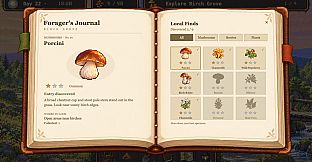
A field guide tracks every discovery with names, illustrations, and descriptions drawn from real species. Players decide how complete their collection becomes, whether aiming for every entry or focusing on high-quality specimens. The dog companion adds practical help by sniffing out unusual items, including truffles, and can learn new skills from the rangers. Naming the dog and pausing for a pet before outings builds a simple bond that supports longer sessions.
Collected ingredients feed into cooking. Recipes cover teas, meals, and preserves, with combinations possible across regions. A short minigame determines the final quality based on ingredient freshness and player input. Finished items can fulfill ranger requests, sell for resources, or serve as supplies for future outings.
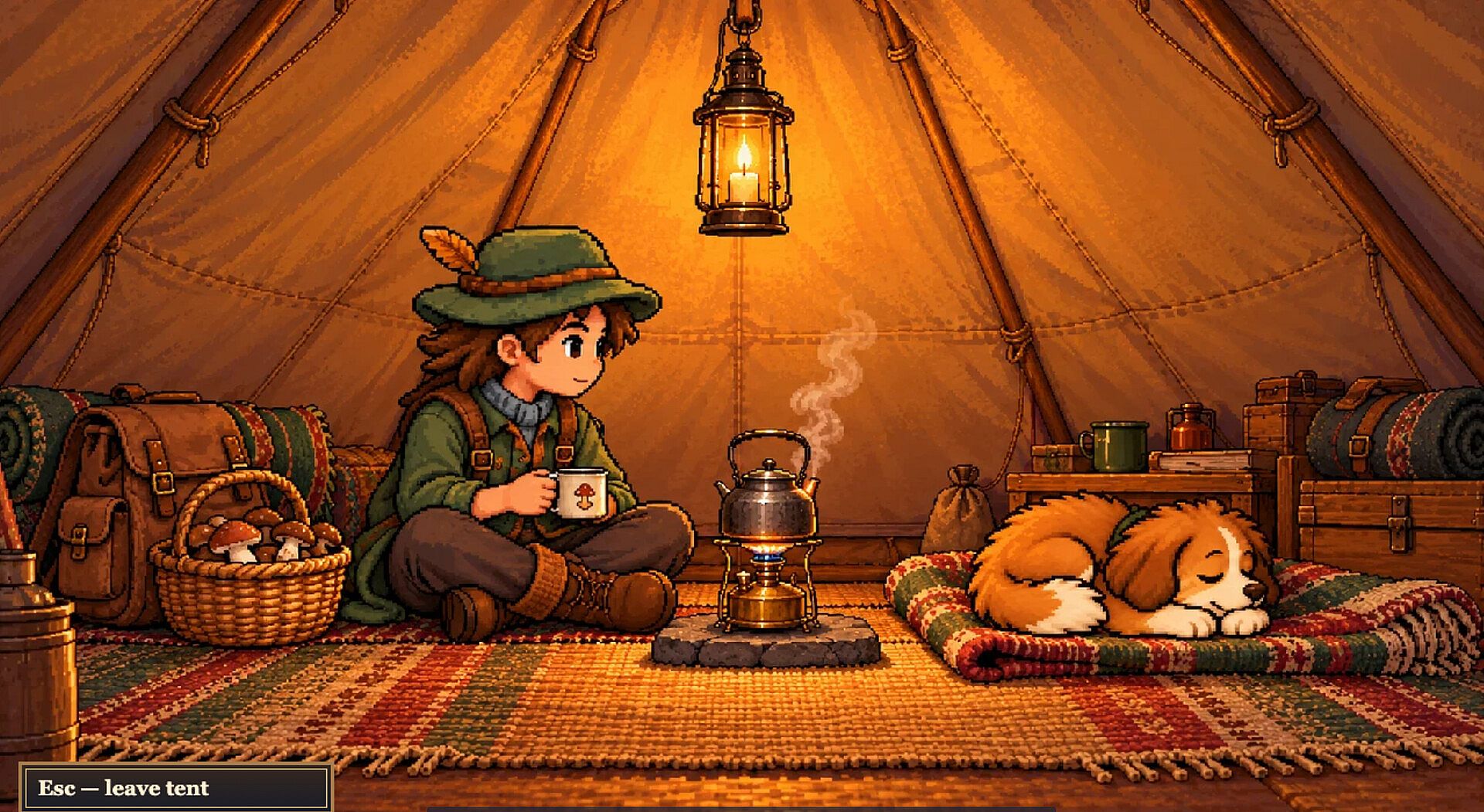
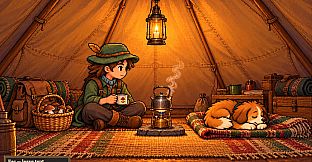
Camping provides a break from the trail. Players pitch a tent at designated sites, prepare a simple drink to warm up, and choose to sleep until dawn or evening. A music player lets users switch between relaxing tracks while the woods remain accessible at any pace.
Game Modes
Two distinct approaches shape the experience. Casual Mode eliminates energy drain and temperature effects, allowing uninterrupted focus on exploration and collection. The full mode requires attention to clothing choices, tonics, and scheduled breaks to manage conditions. Quests carry no time limits in either option, stored finds remain usable indefinitely, and an exhausted player receives a safe return from a ranger without losing collected items.
Exploration and Progression
Progression feels organic rather than linear. New forest types unlock gradually, each with its own set of species and ranger interactions. Returning to earlier areas under changed conditions often yields fresh discoveries, rewarding patience and observation. The field guide grows steadily, turning every walk into a chance to fill gaps or refine existing entries. Cooking and camping systems tie directly into this loop, turning raw finds into practical tools or moments of rest that keep the pace comfortable.
Is It Worth Playing?
This game suits players who enjoy relaxed single-player adventures built around foraging, gentle progression, and nature observation. The combination of real-world species in the field guide, a helpful dog companion, and flexible modes makes it accessible for short sessions or longer, unhurried play. Those who appreciate cozy mechanics without pressure on time or performance will find the systems rewarding. The absence of deadlines and the safety net for exhaustion keep the focus on discovery and personal pace rather than optimization or competition.











