


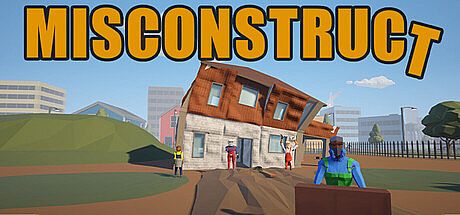


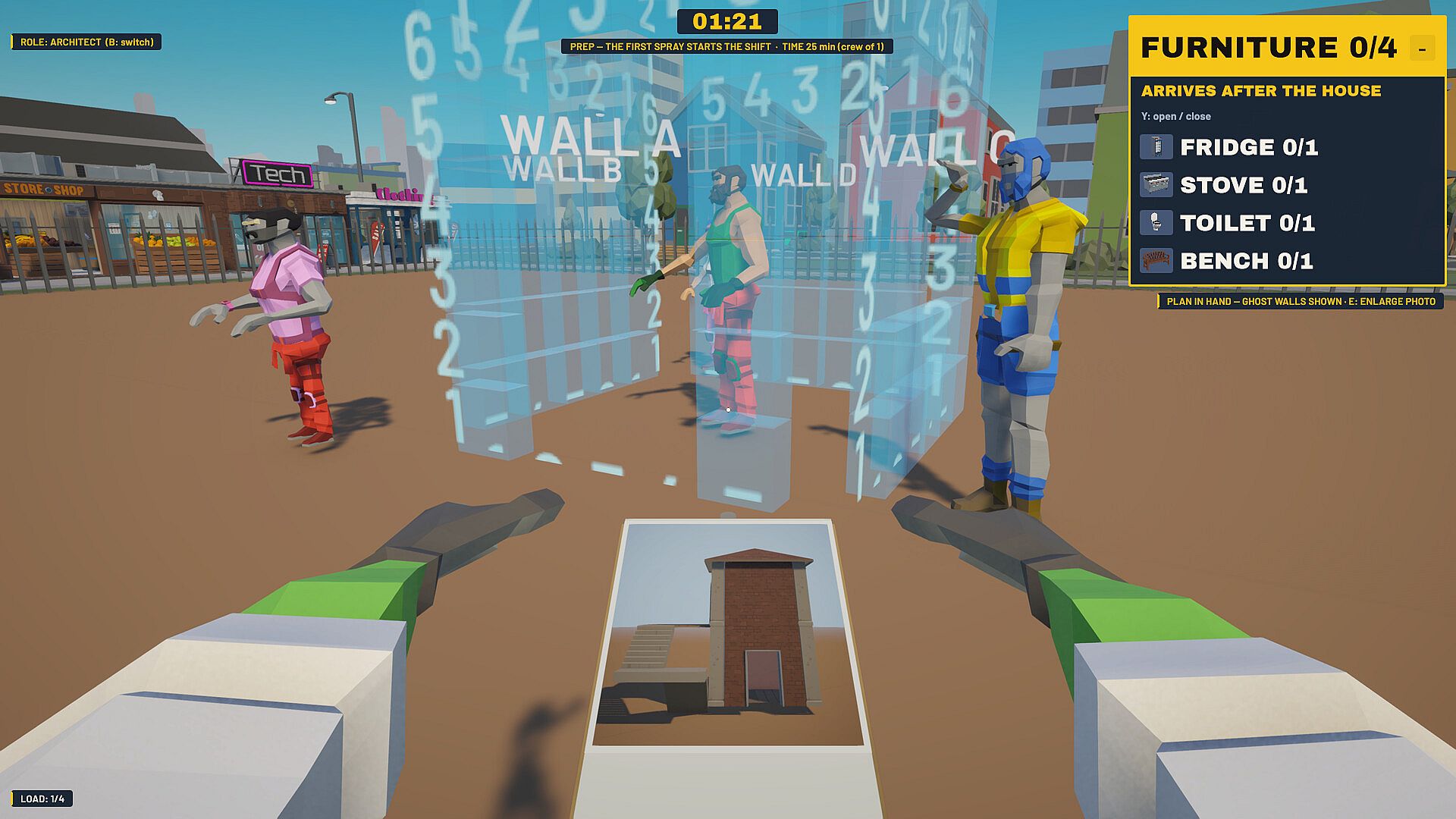
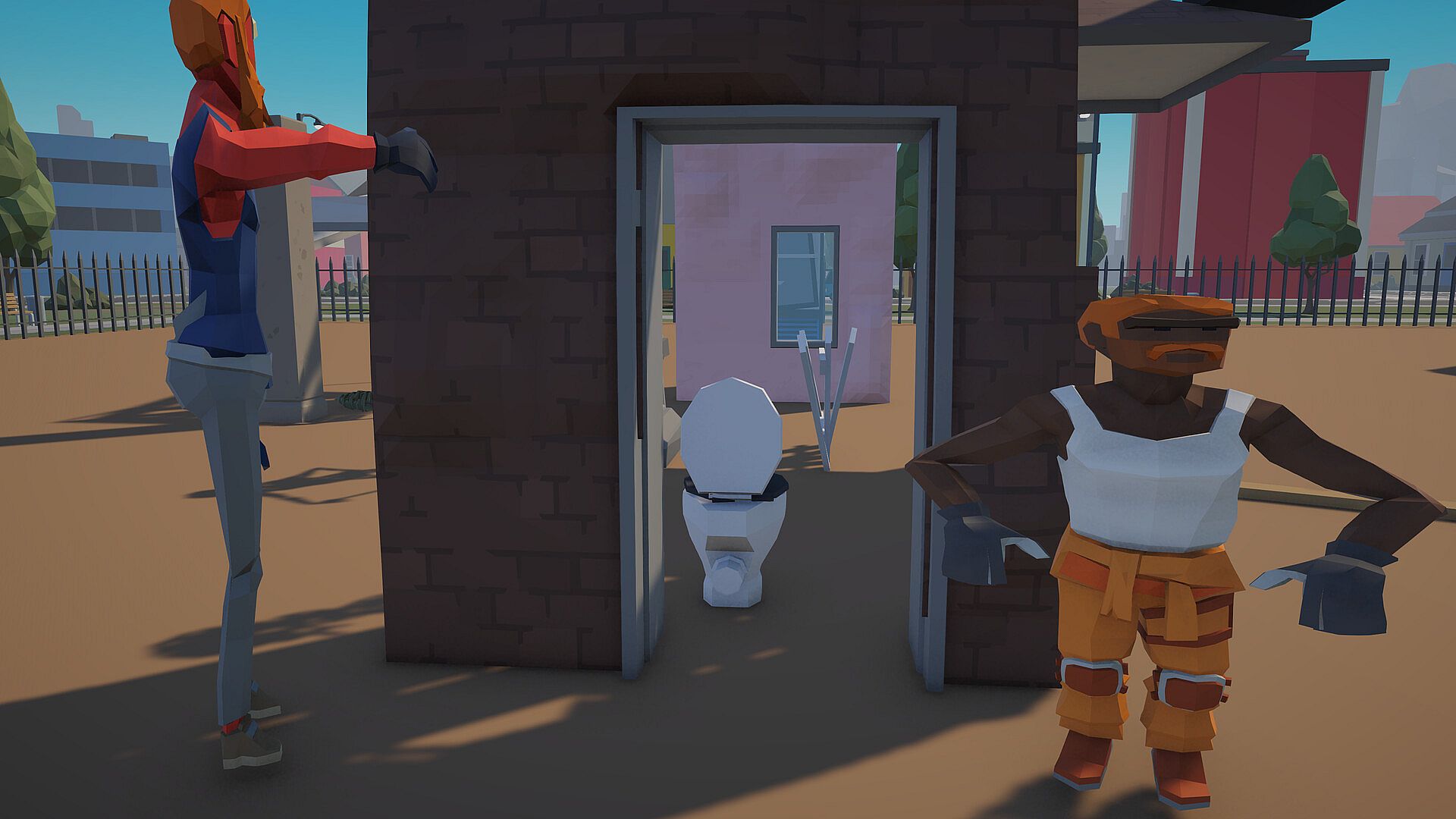
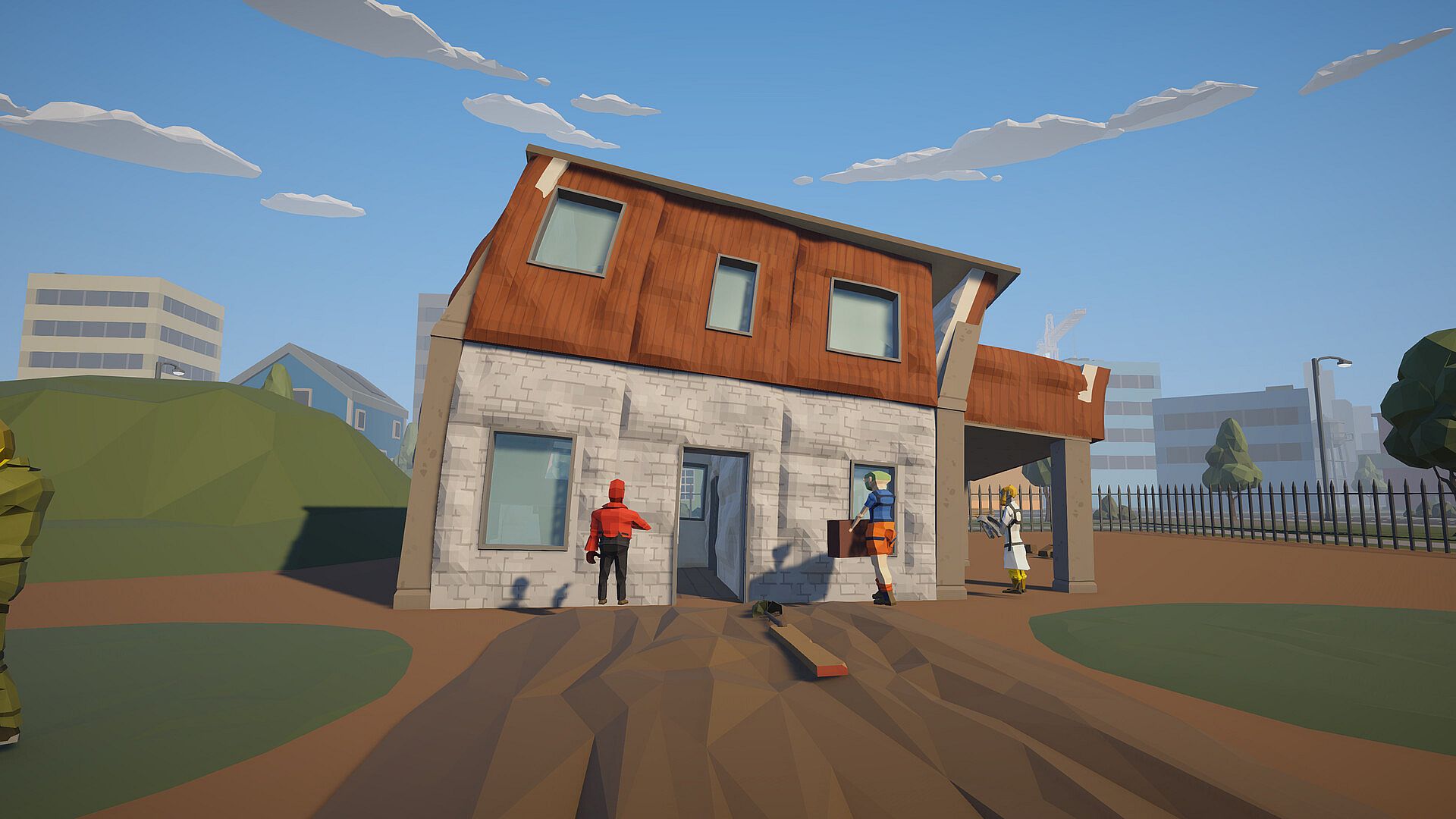
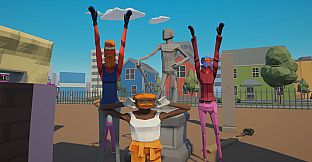
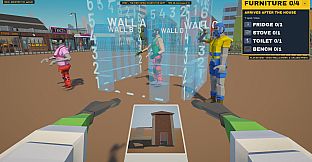
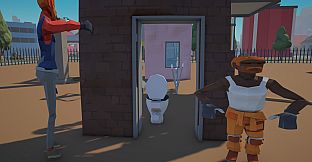
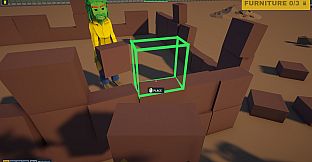
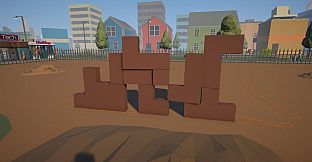
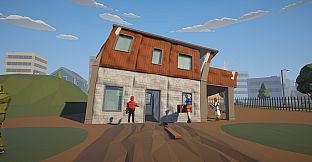
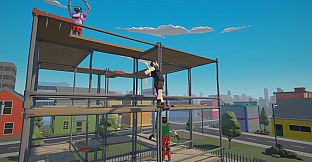
Misconstruct is a casual simulation game built around physics-driven co-op construction for two to four players on PC. One player acts as the Architect and holds the only complete view of the target building, while the rest of the crew works from incomplete instructions passed through voice and spray paint. The result is a house that rarely matches the original plan, with every crooked brick and uneven floor becoming part of the final structure.
Gameplay
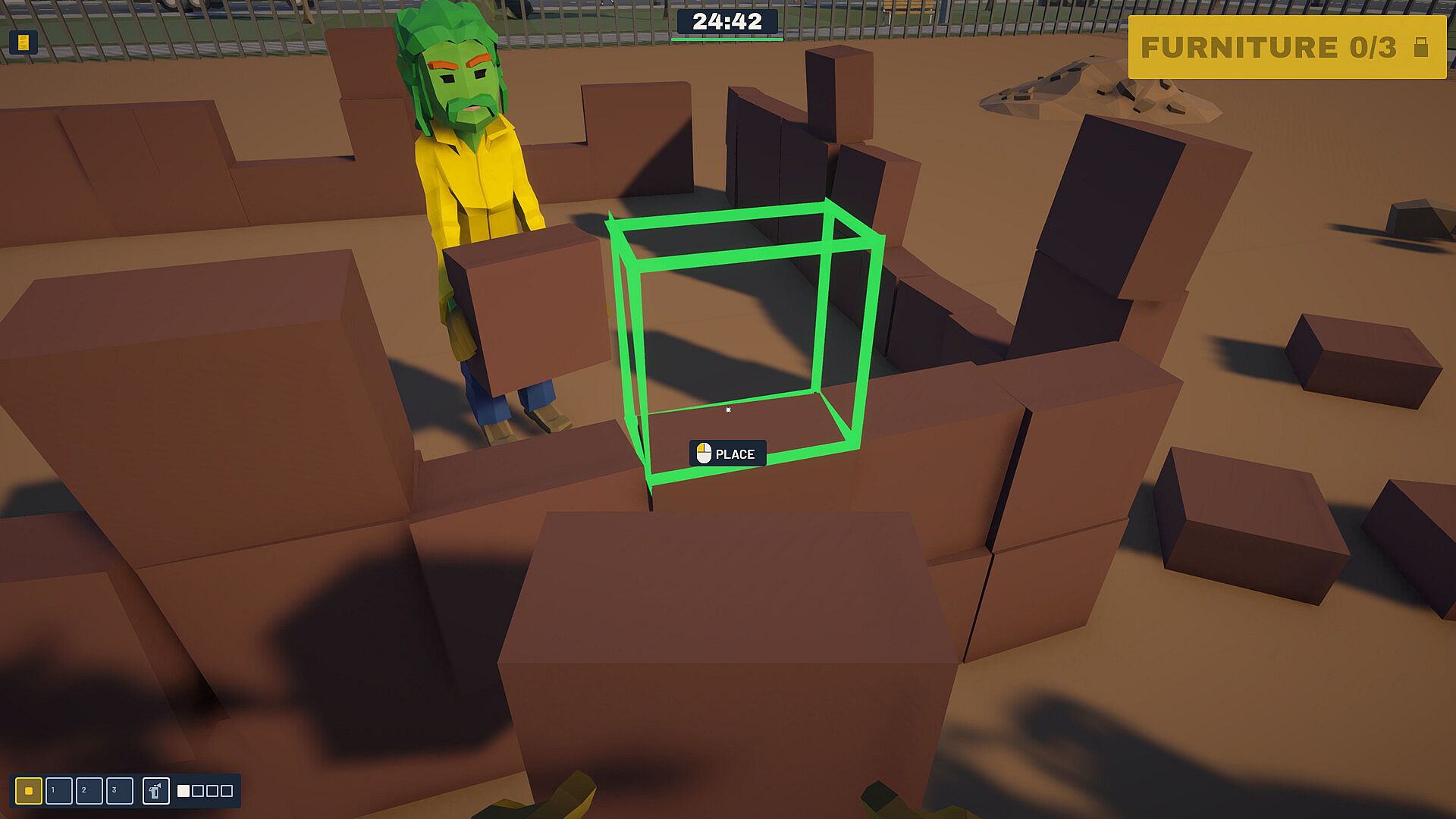
The core loop centers on physical interaction with every object on the construction site. Players lay bricks by hand or hurl them across the lot, and each one remains exactly where it lands, even if the placement creates a leaning wall. Plastering and painting follow the same hands-on approach, with colors chosen according to whatever the Architect claims was on the plan. When a floor is placed, the entire building reacts with creaks and shifts that reflect any mistakes in alignment or support.
Site events add further chaos. Windstorms arrive with advance notice yet still collapse the weakest sections. Crew members can be knocked out by flying bricks and carried to safety by teammates. The prize machine accepts cash earned during shifts and dispenses temporary effects such as reduced gravity across the site, stretchy limbs, or a helium-altered voice. These modifiers change how bricks fly and how workers move until the effect ends.
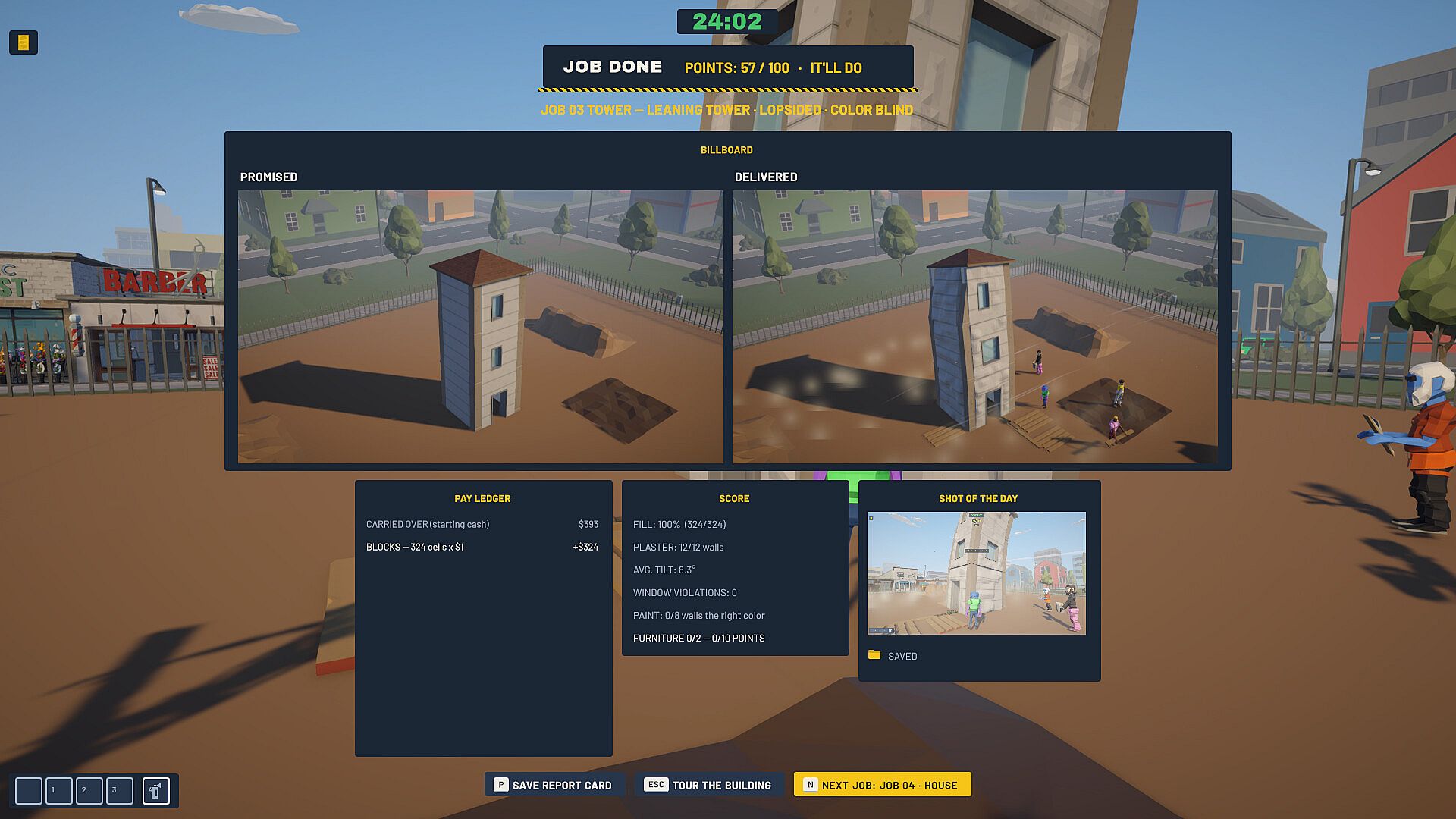
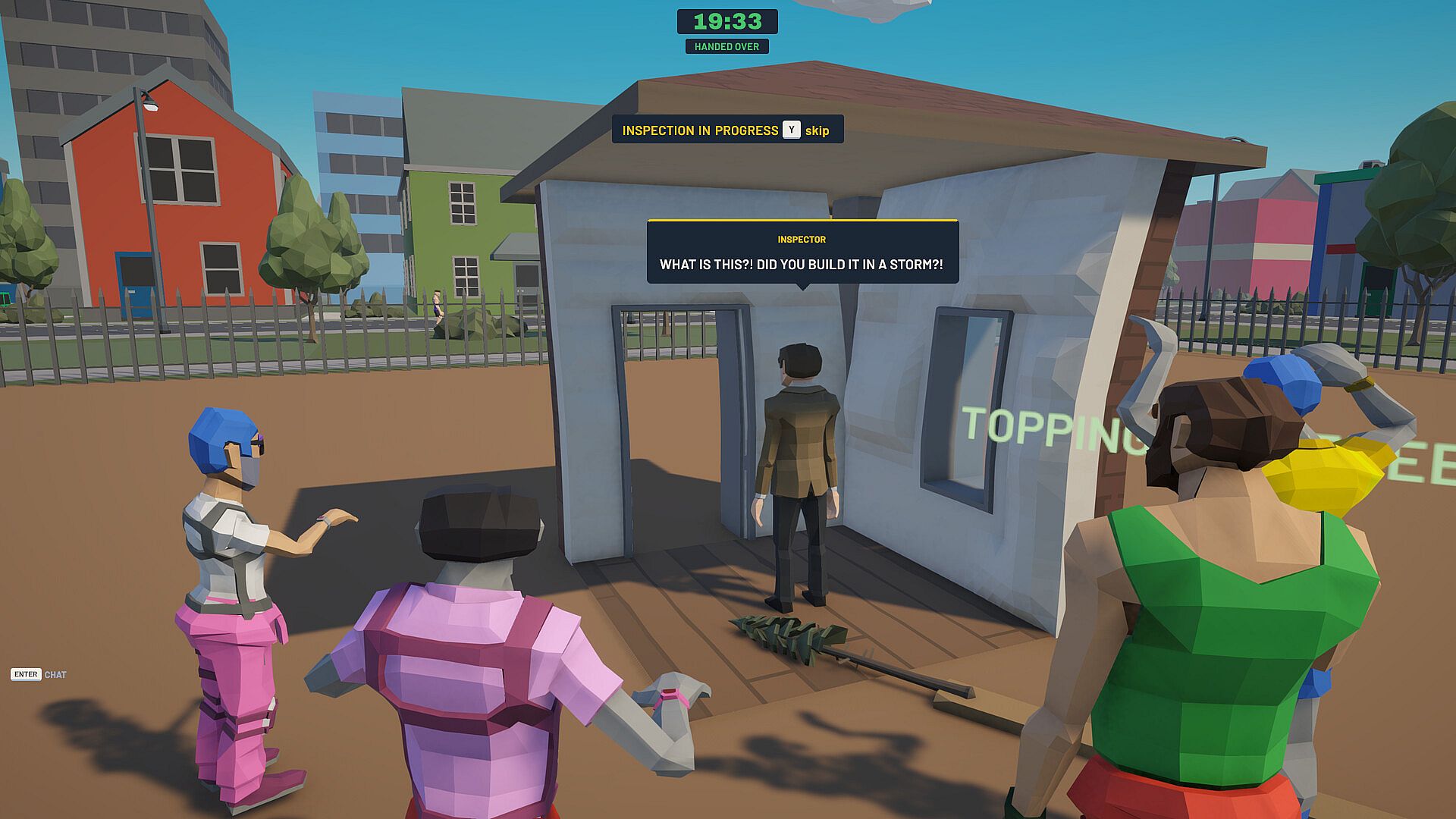
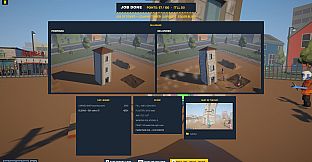
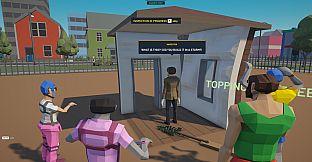
Positional voice chat keeps communication tied to physical location, so teammates must stay close enough to hear instructions clearly. Customizable worker proportions let players adjust height and build for different reach and throwing distances. At the end of each shift an inspector walks the finished structure, notes every flaw including misplaced helmets or mismatched colors, and issues a verdict such as Leaning Tower or Color Blind.
Game Modes
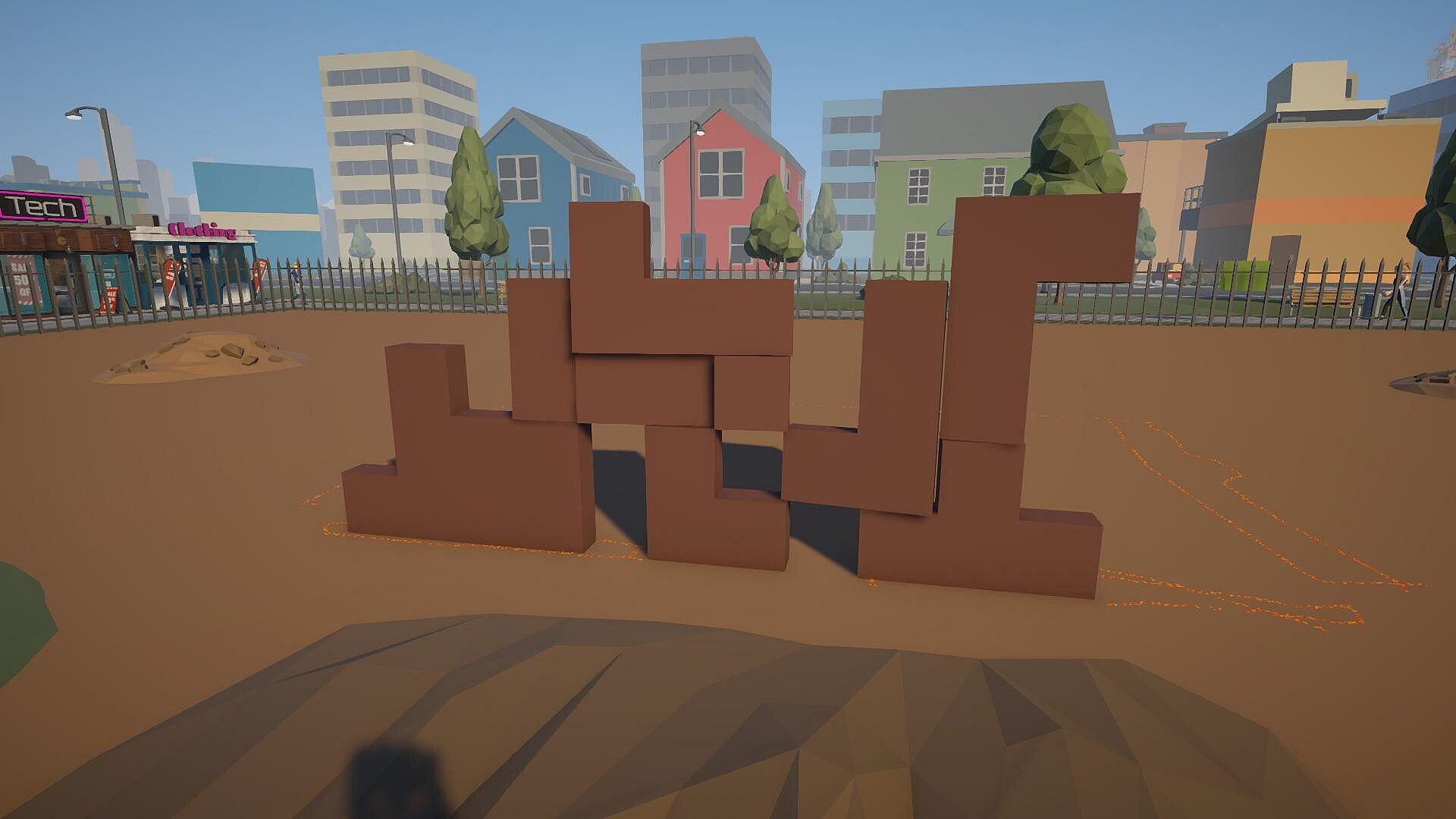
Progression moves through a series of jobs that increase in scale. Early shifts involve completing a single wall to basic specifications. Later jobs require full two-story villas with multiple rooms, windows, doors, and interior finishes. The Architect role rotates between matches so every participant experiences both sides of the communication gap.
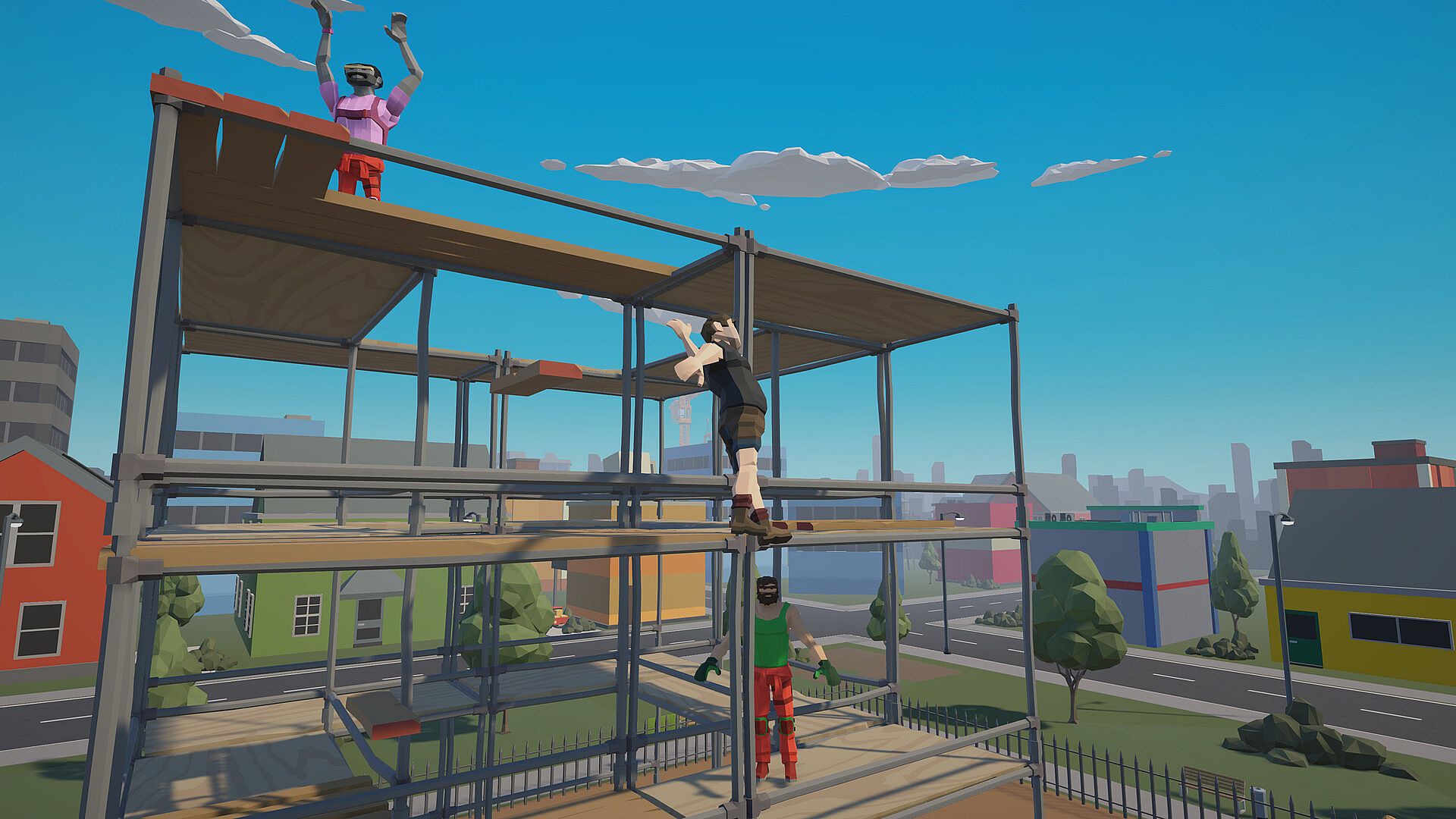
A separate free lot allows unrestricted building without any plan or time limit. Players can experiment with towers, sprawling layouts, or whatever structures the physics engine will support. Site events such as sudden windstorms, surprise inspections, noise complaints, and misplaced supply pallets appear across all job types and force quick adjustments to the build.
Communication and Chaos
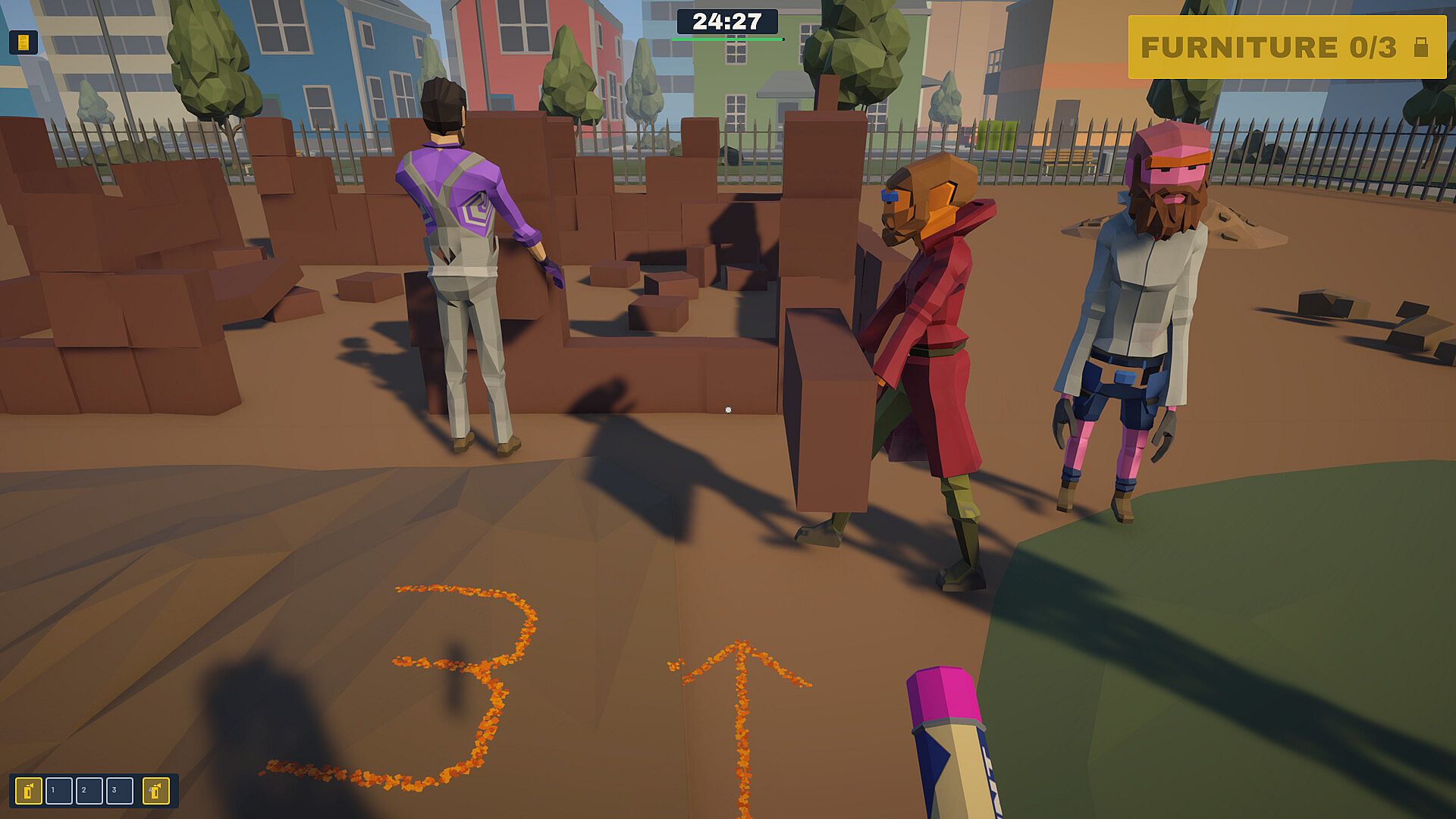
Instructions travel only through spoken words and temporary spray-paint marks, so details are lost or misinterpreted on every handoff. A wall that should be straight may end up bowed, and a color specified as neutral might become a bright mismatch. These small errors compound when multiple crew members work simultaneously on different sections.
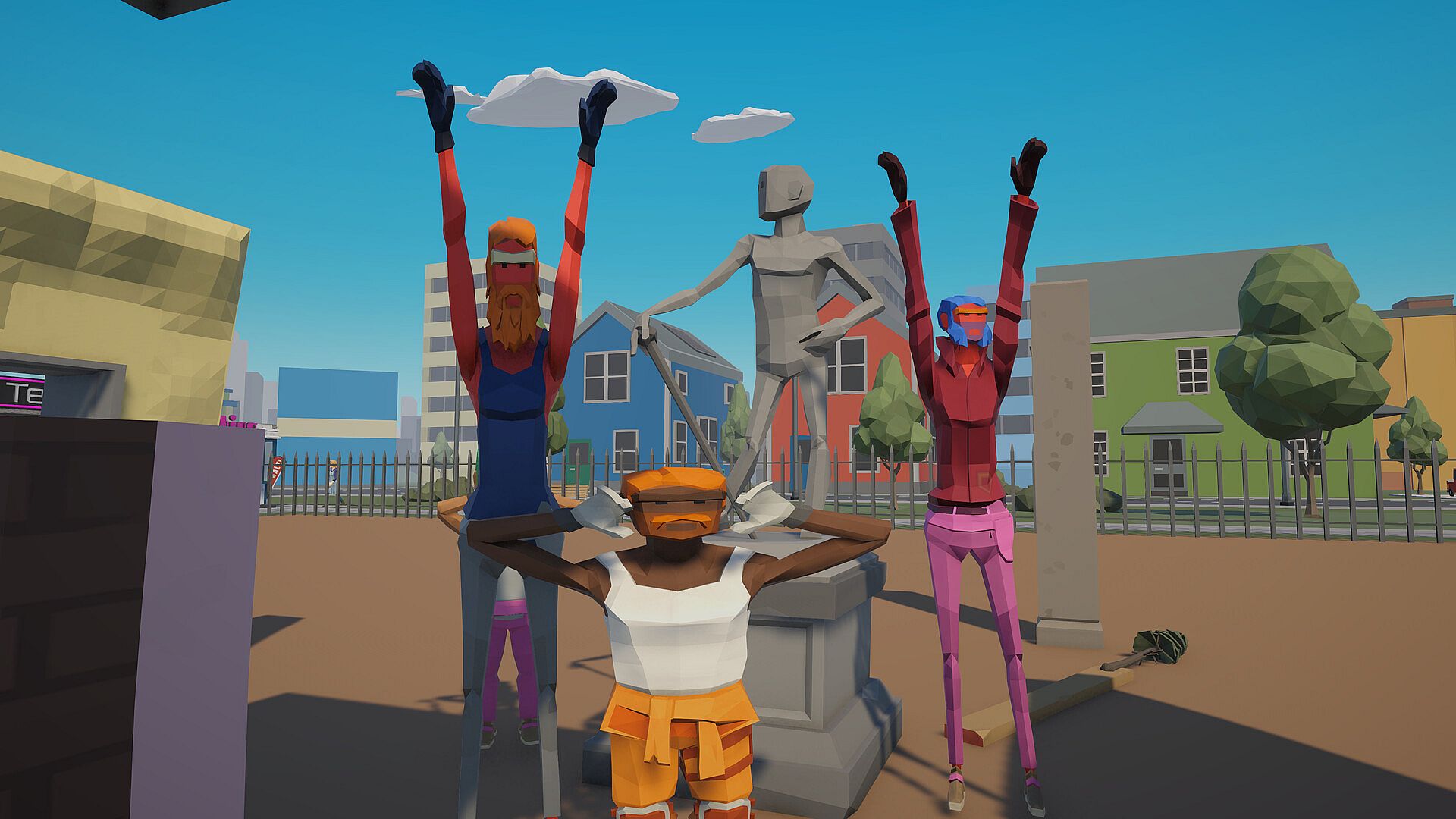
Physical comedy arises naturally from the simulation. A poorly supported floor can tilt an entire floor, sending bricks sliding. Teammates can be lifted and carried when injured, and thrown objects sometimes strike the wrong target. The prize machine introduces further variables that can turn a careful build into an unpredictable scramble.
Is It Worth Playing?
Misconstruct suits groups that enjoy collaborative building mixed with light-hearted blame and unpredictable physics outcomes. The tutorial can be completed solo to learn the controls, but the full experience requires at least one additional player to create the communication breakdowns that define each session. The rotating Architect role and escalating job sizes give repeated play a clear sense of progression, while the free lot supports open-ended experimentation. Players who prefer structured single-player campaigns or competitive multiplayer will find less here, but those comfortable with casual co-op sessions built around shared mistakes and physical surprises will find consistent entertainment in the shifting results of each shift.












