


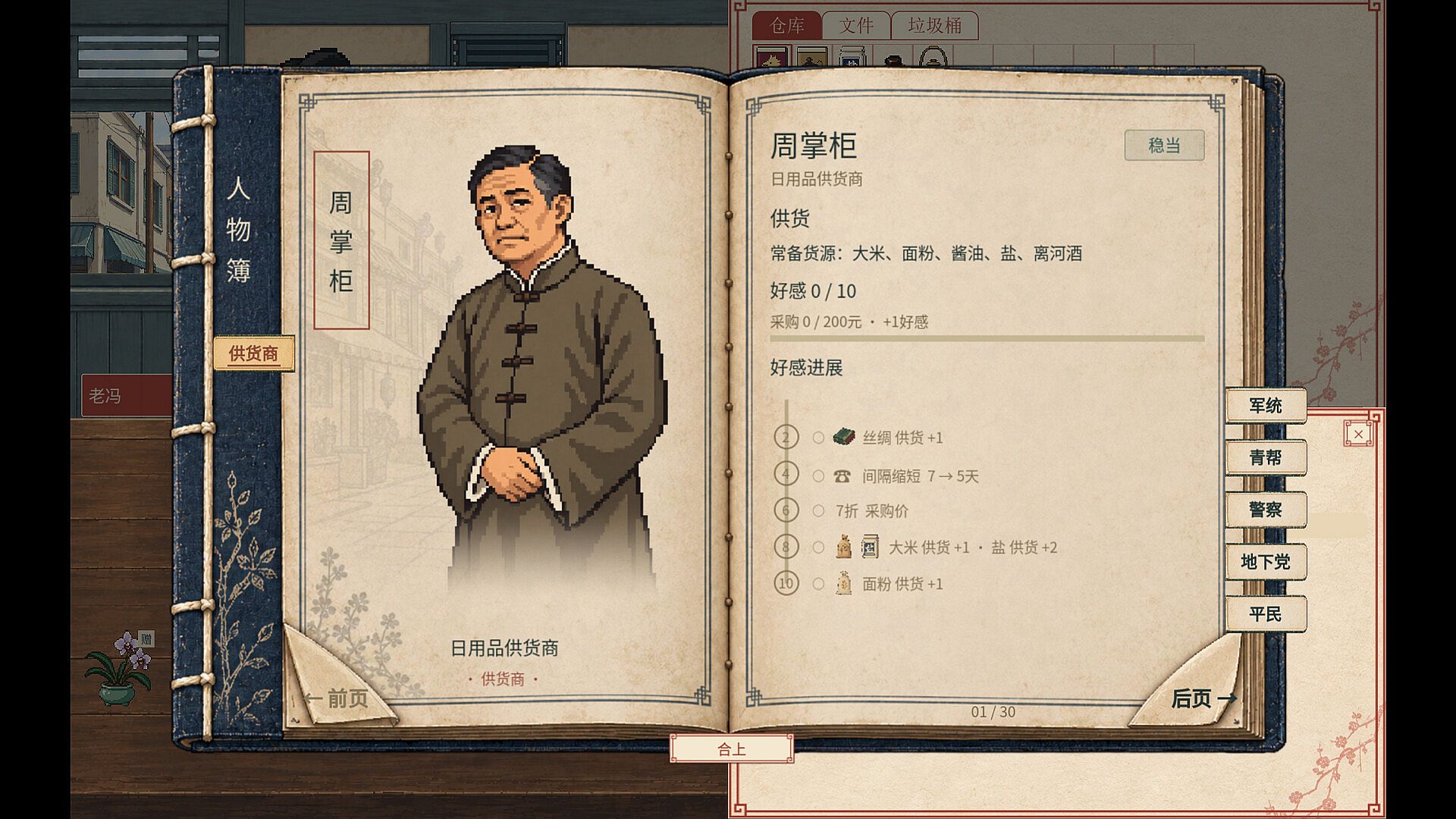
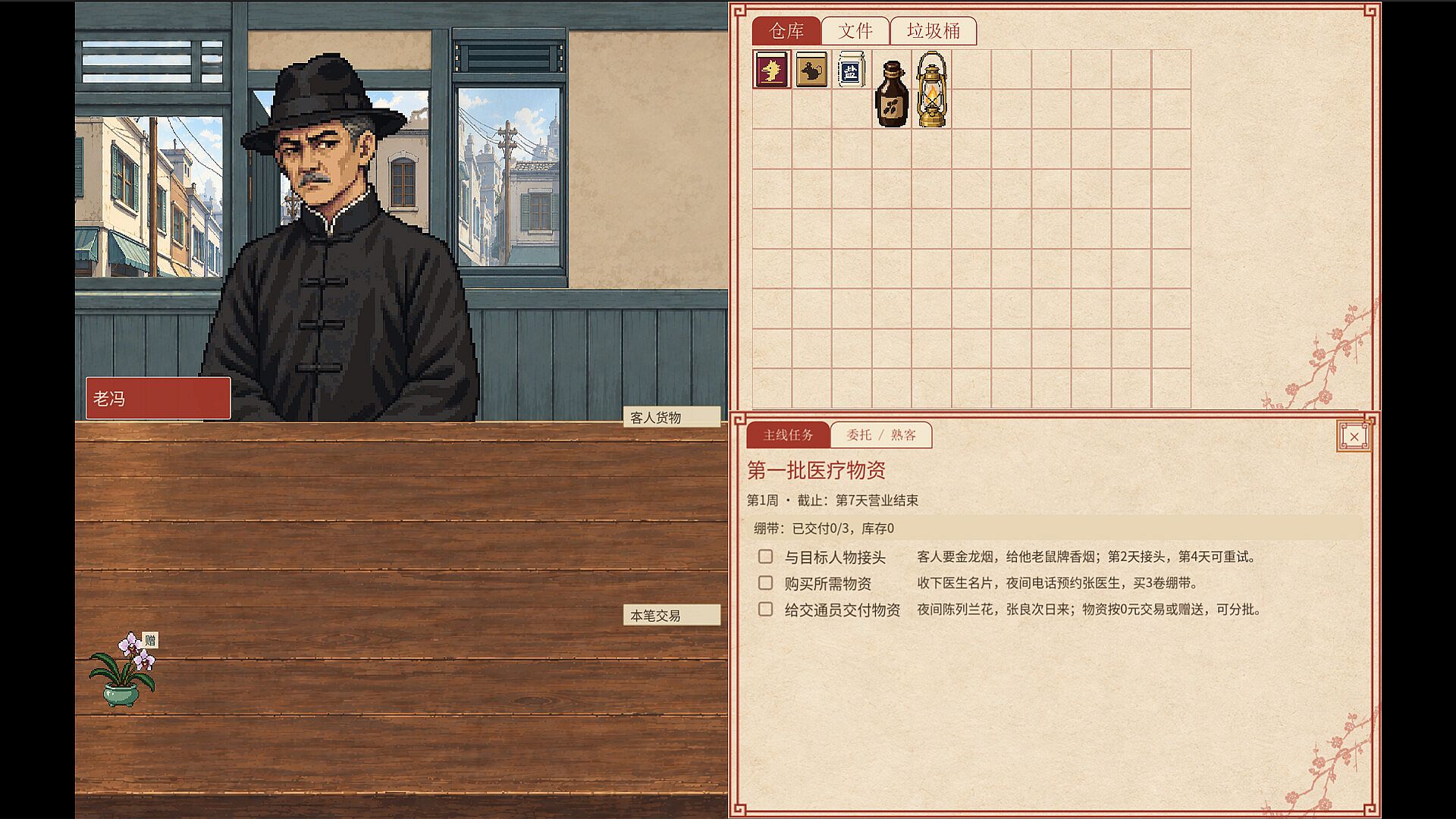
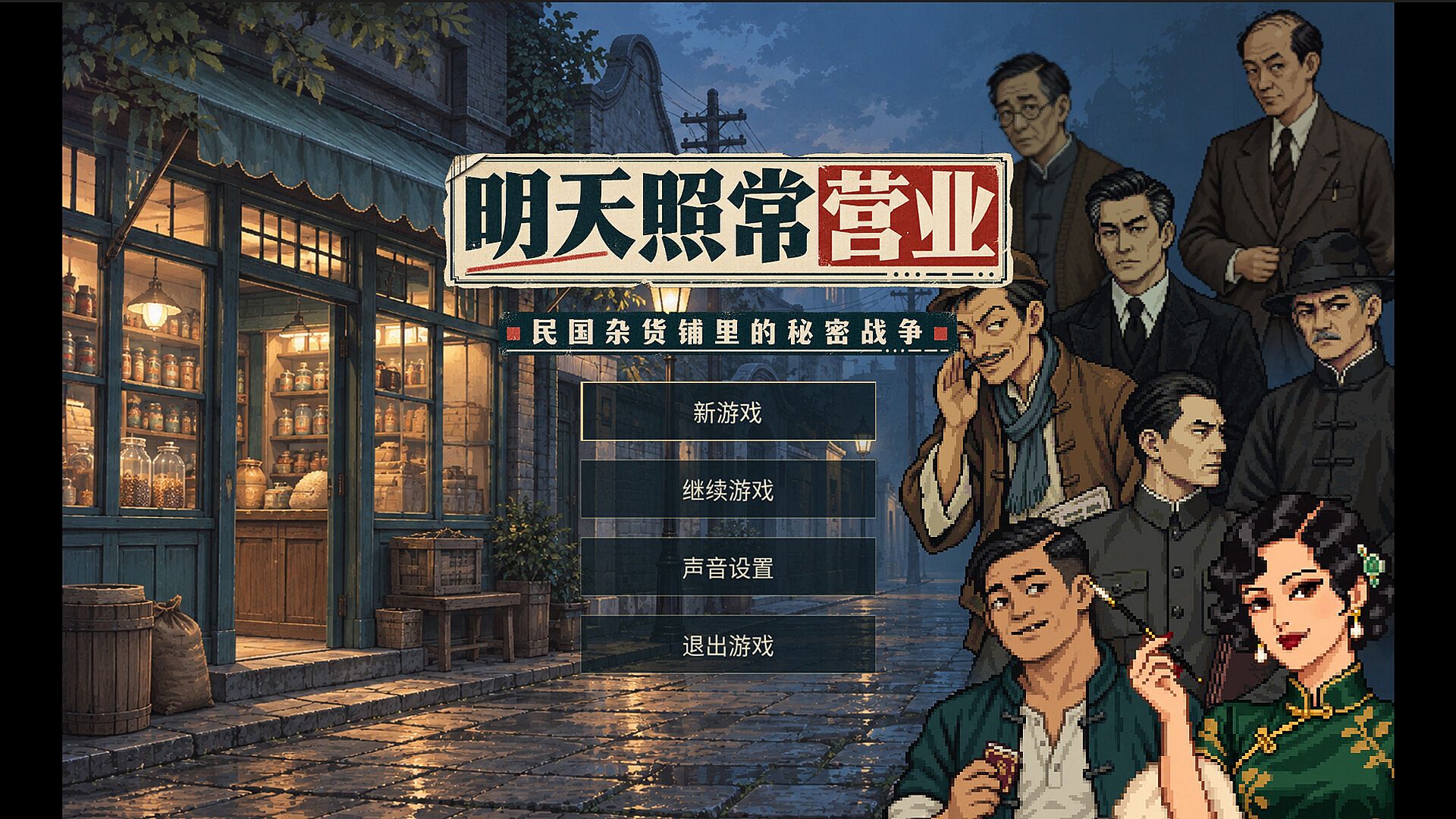
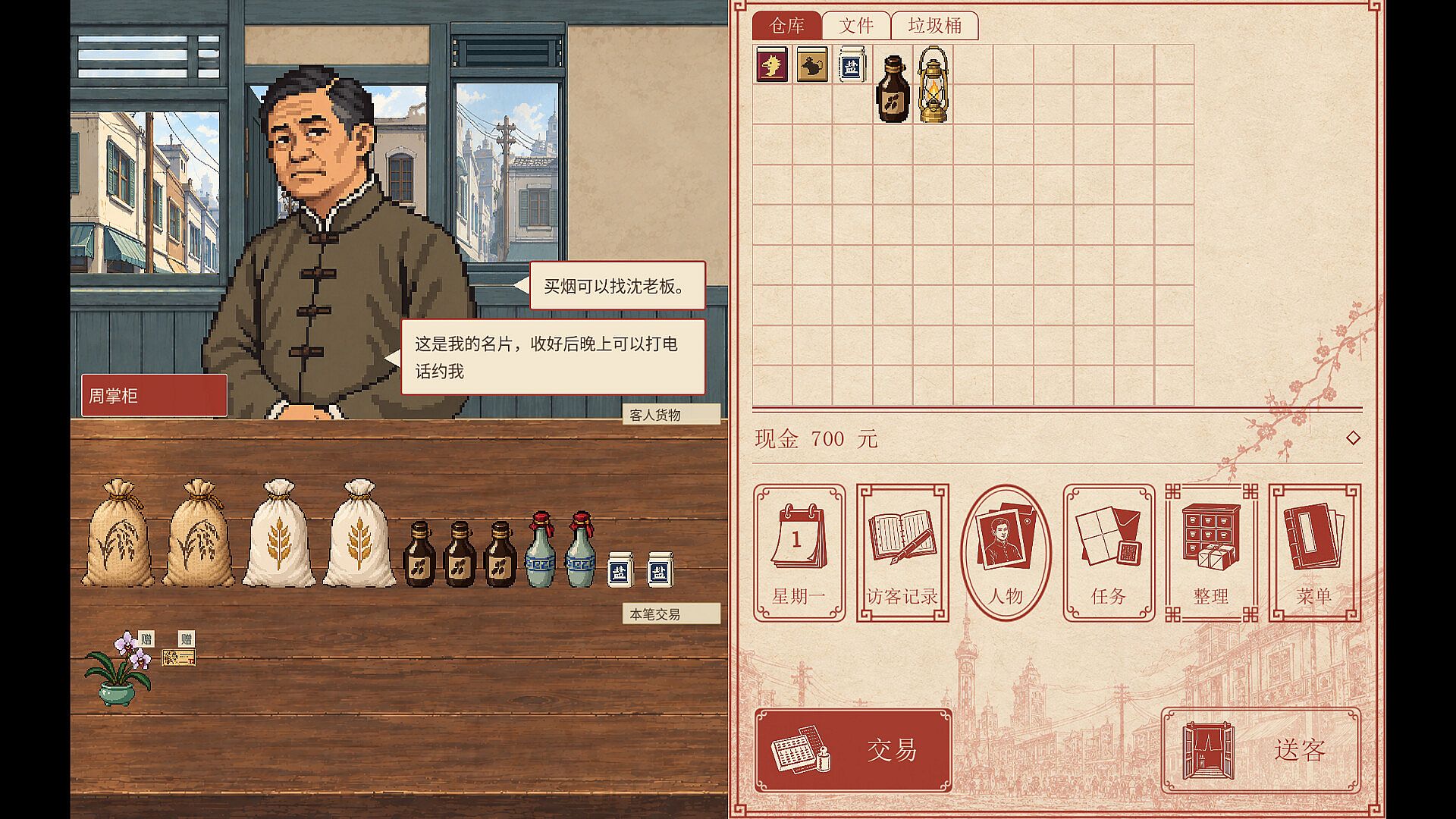
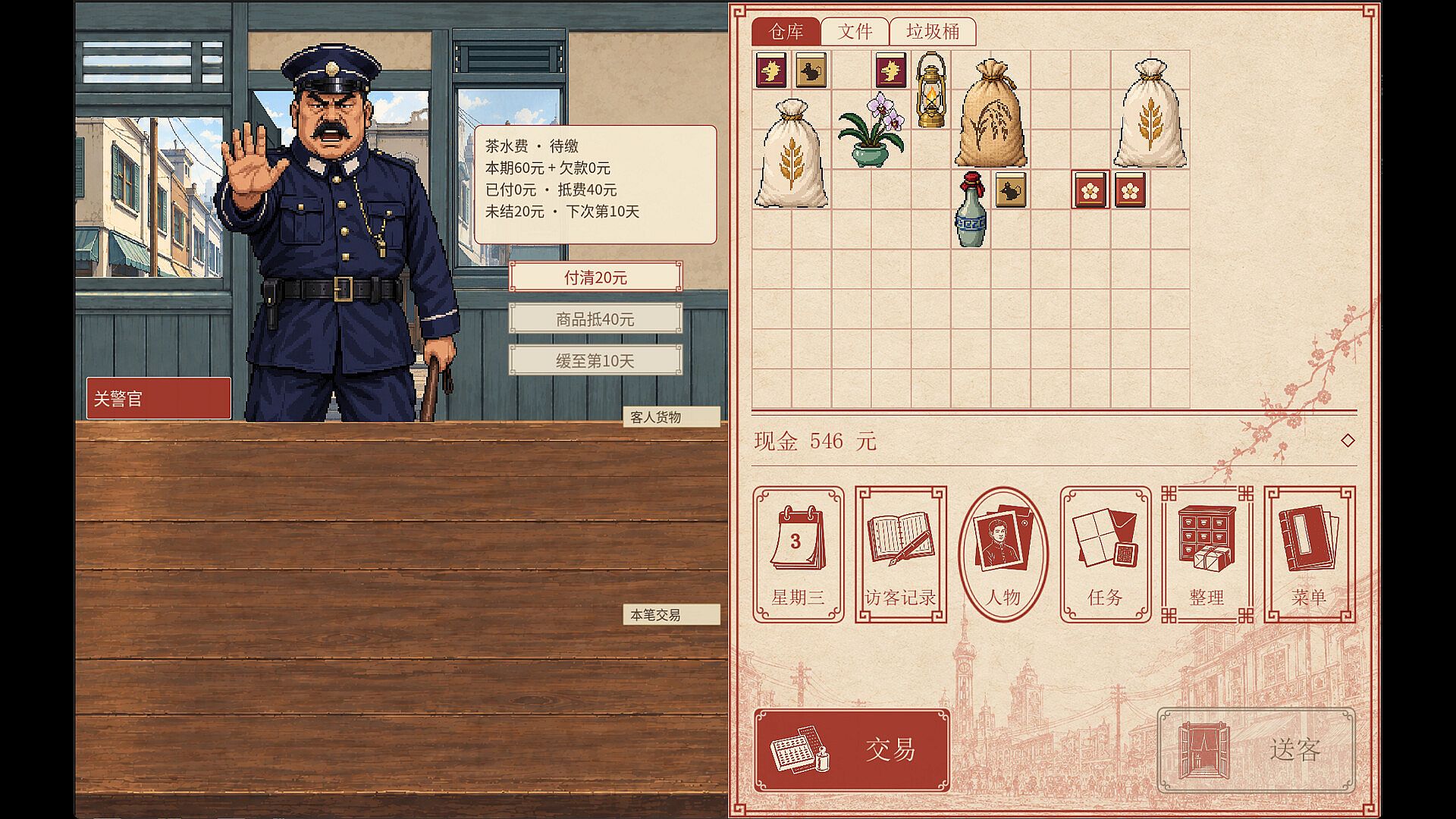




明天照常营业 is an indie simulation game set on PC in which players run a small shop on a street under constant military police surveillance. The experience centers on balancing daily commerce with the need to navigate risky encounters and maintain cash flow amid rising demands from local factions.
Gameplay
The core loop involves serving customers whose backgrounds remain uncertain. Some visitors seek ordinary items like cigarettes or medicine, while others may represent undercover agents, guerrilla fighters, or desperate neighbors. Each transaction requires quick judgment on how to handle payment, whether to pass goods discreetly, feign ignorance, or leave subtle signals. Connections built on the street offer temporary protection but can also attract extra scrutiny from watchers in the shadows.
Protection payments increase steadily regardless of weekly earnings. Falling behind triggers real setbacks: reduced neighborhood support, lower foot traffic, and shrinking normal revenue that widens any cash gap. To recover, players often accept higher-risk delivery jobs that keep operations afloat but expose the shop to greater danger. Stockpiling scarce goods can yield strong returns when successful, yet any seizure, customs failure, or unsold inventory leaves the business short on funds needed for the next round of payments. Every purchase and risk must be weighed carefully because partners in the trade only extend patience as long as the shop stays viable.
Game Modes
The game operates as a continuous single-player simulation without separate named modes. Progress unfolds through repeated days of shop management, customer interactions, and financial decisions that compound over time. Players shift between cautious operations and calculated risks based on the immediate situation rather than selecting from distinct game types.
Core Mechanics and Decision Making
Success depends on reading each customer accurately and choosing responses that protect the shop while preserving revenue streams. Open transactions, hidden handoffs, or deliberate misdirection all carry different levels of exposure. Street connections serve as both buffer and liability, influencing which troubles can be avoided and which new attentions arise. Cash management forms the central tension, as protection costs climb steadily and force periodic choices between safe routines and high-stakes moves that may or may not pay off.
Is It Worth Playing?
Players who enjoy simulation titles focused on resource management, risk assessment, and moral ambiguity in constrained environments will find a consistent loop here. The experience rewards careful observation and measured decisions over time, with consequences that build naturally from each transaction and payment cycle. Those seeking straightforward shop management without the added pressure of external factions and escalating costs may prefer lighter alternatives. The game suits those comfortable with ongoing tension and the need to adapt strategies as the situation tightens.