

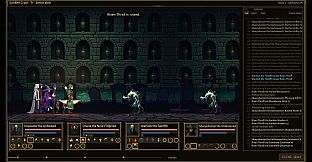
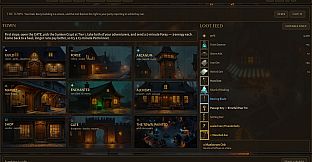
May the Best Craft Win is an idle party-management RPG developed for PC and currently available in Early Access. Players assemble teams of adventurers, configure their behaviors in advance, and dispatch them into dungeons without direct control over combat. The experience centers on preparation, risk assessment, and post-run analysis rather than real-time action.
Gameplay
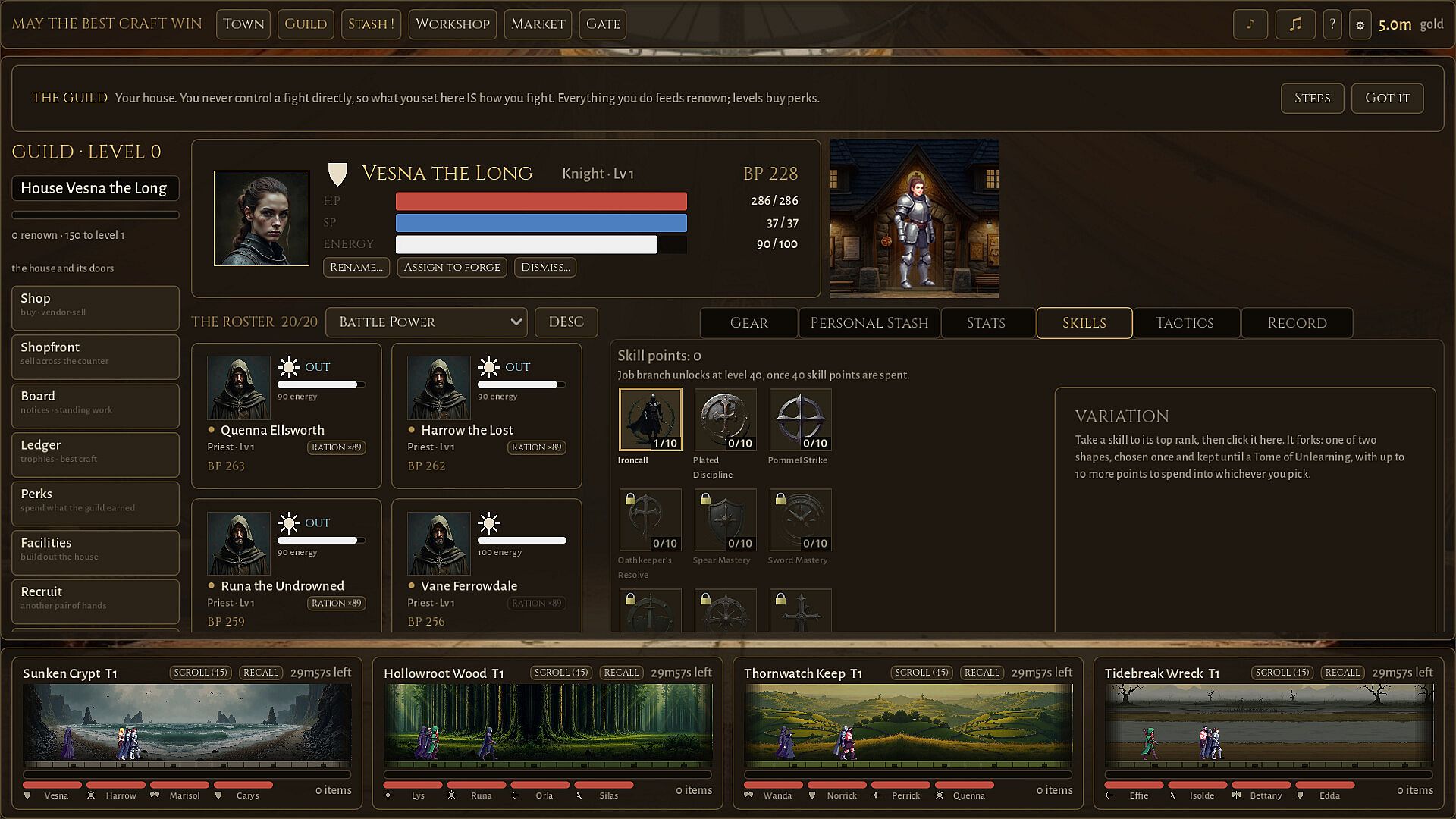
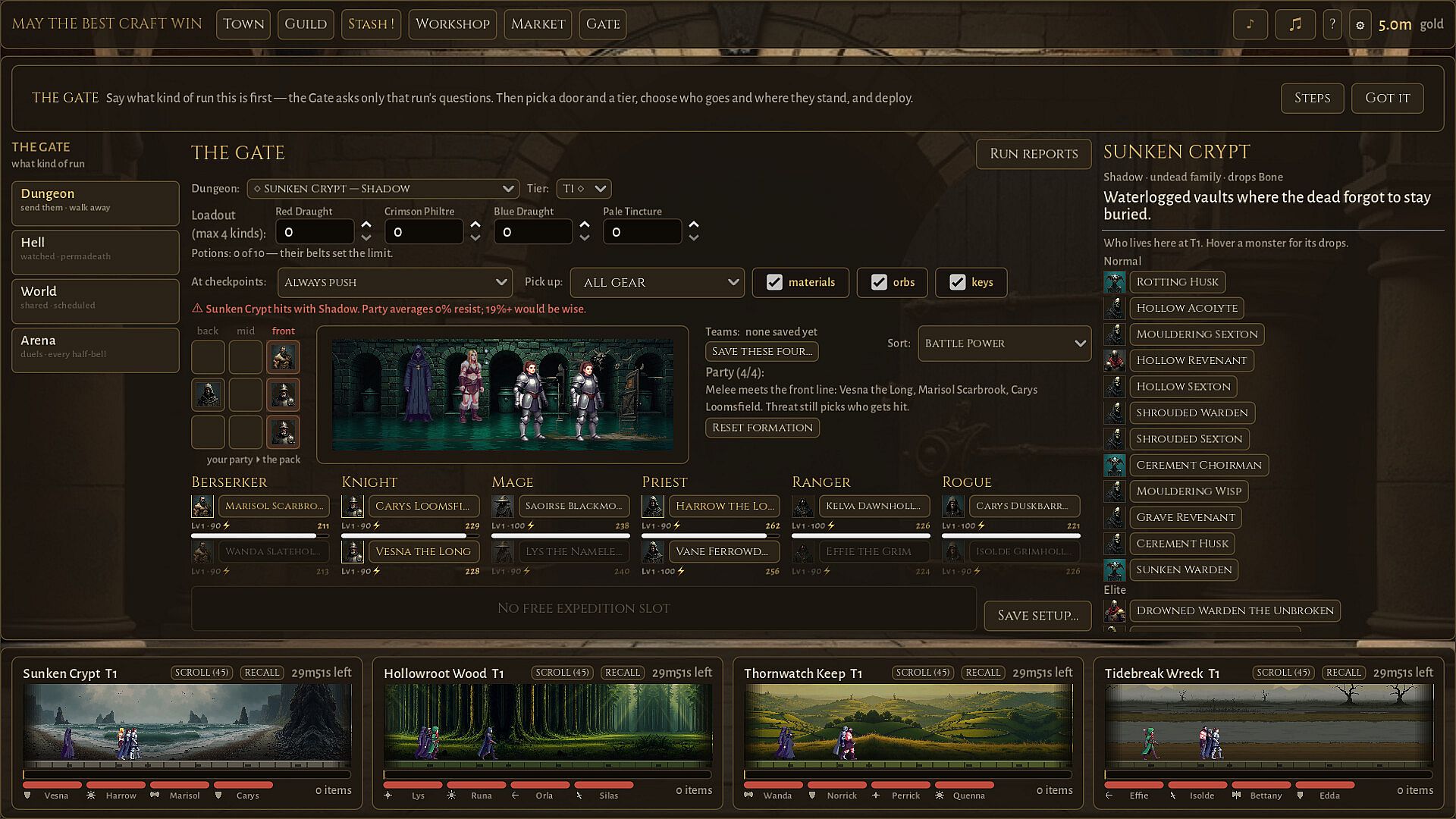
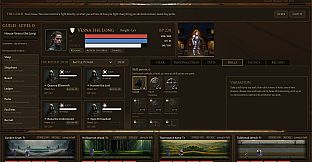
The core loop begins with selecting four adventurers from six available classes: knights, mages, priests, rogues, berserkers, and rangers. Each class offers twelve branches of progression, where mastering one skill unlocks variations that can alter party dynamics. Tactics are set beforehand so the team handles encounters autonomously, including room clearing, resource consumption from belts, and decisions at checkpoints to advance or retreat.
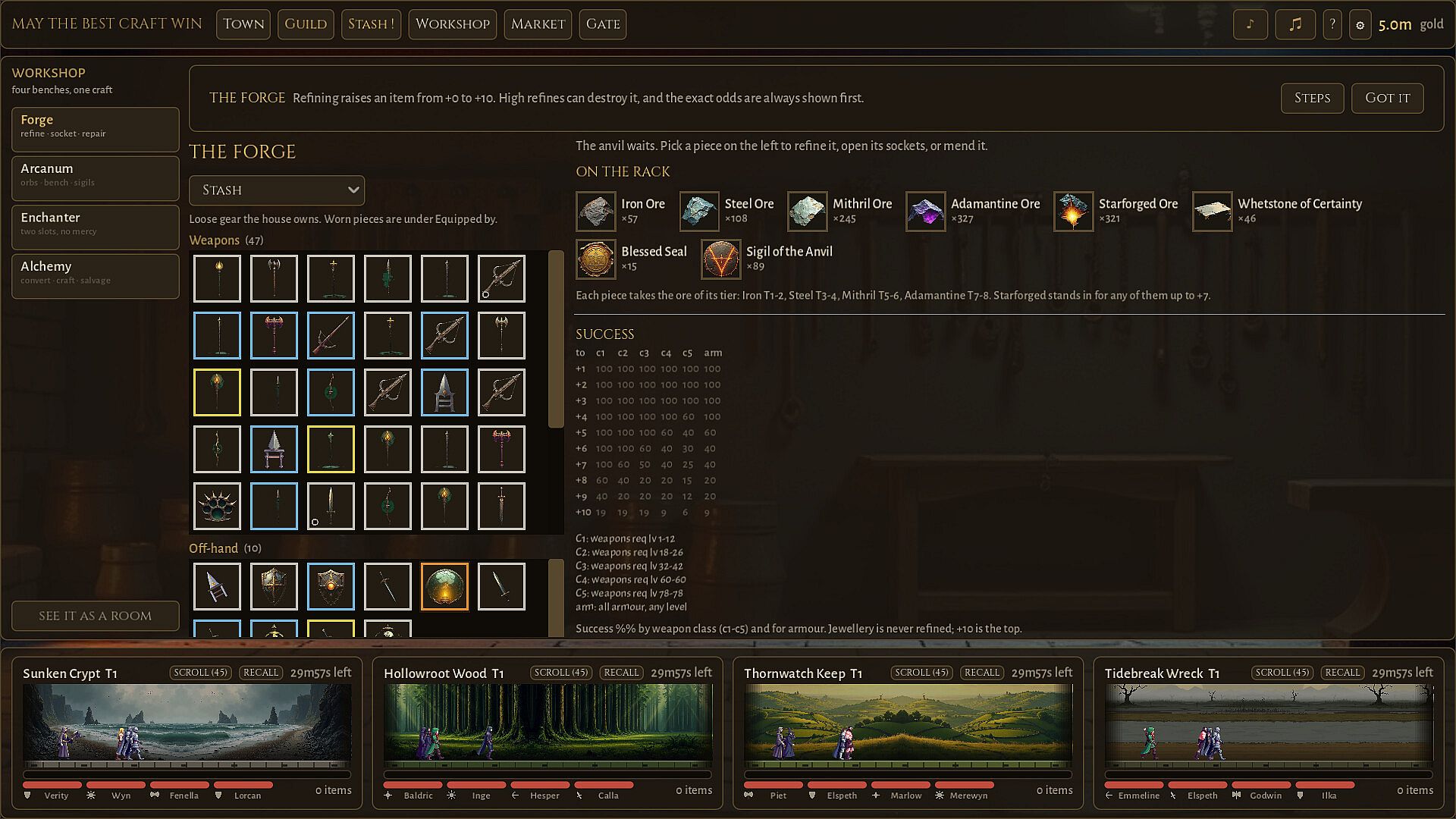
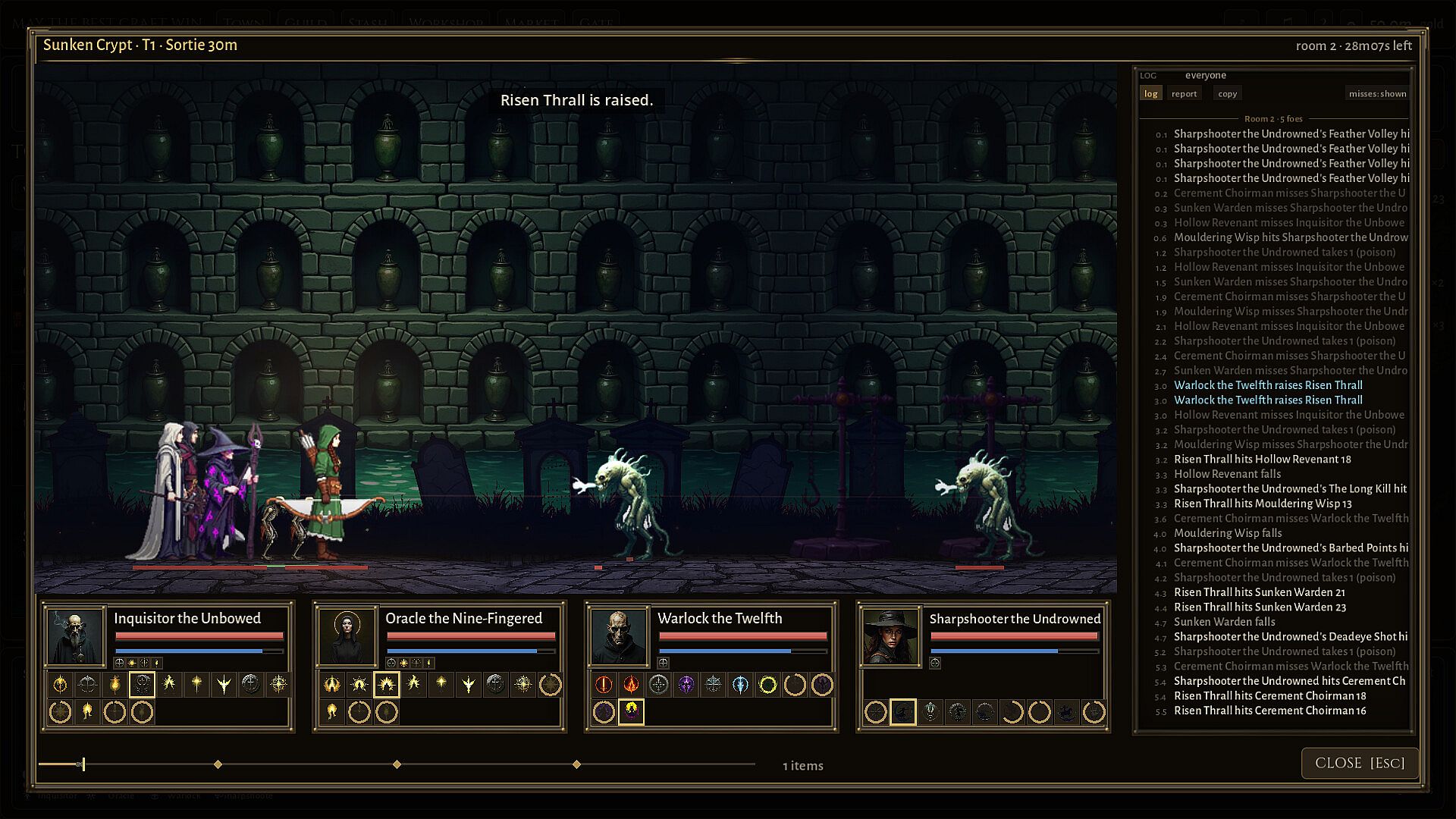
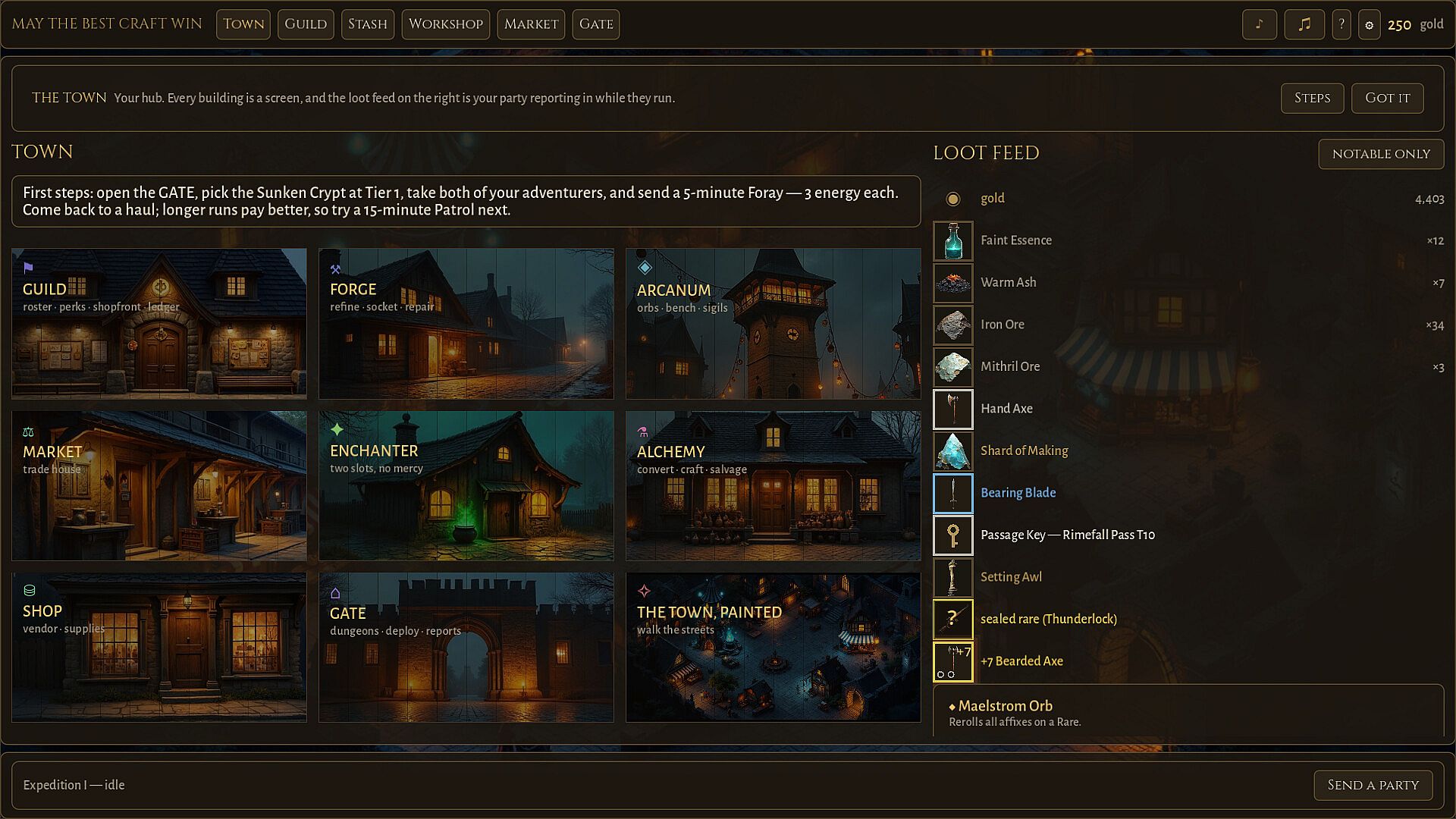
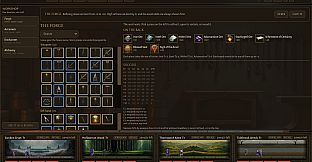
Upon return, the focus shifts to loot management and upgrades. Weapons can be refined from +7 toward +10, with increasing chances of destruction on higher attempts, or players can apply a Blessed Seal to limit gains but reduce risk. Rare orbs enable socketing, enchanting, and affix re-rolling, while identification scrolls reveal sealed rare items one at a time. Bases determine viability for the anvil, and the Run Report provides a detailed breakdown of events, successes, and failures during the expedition.
Party synergies emerge through buffs and auras that affect the entire group, as well as elemental marks placed by casters that trigger on physical hits. All gains carry chosen risks, and a full wipe means permanent loss of unsent items.
Game Modes
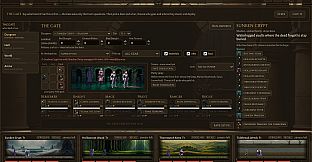
Expeditions vary by chosen dungeon and duration, ranging from short five-minute forays to extended eight-hour campaigns. Twelve painted dungeons span sixteen tiers, each featuring distinct bosses, enemy groups, and mimics. Below these lies Hell, an endless descent measured by depth rather than tiers, where fallen teams can become guardians that challenge subsequent players.
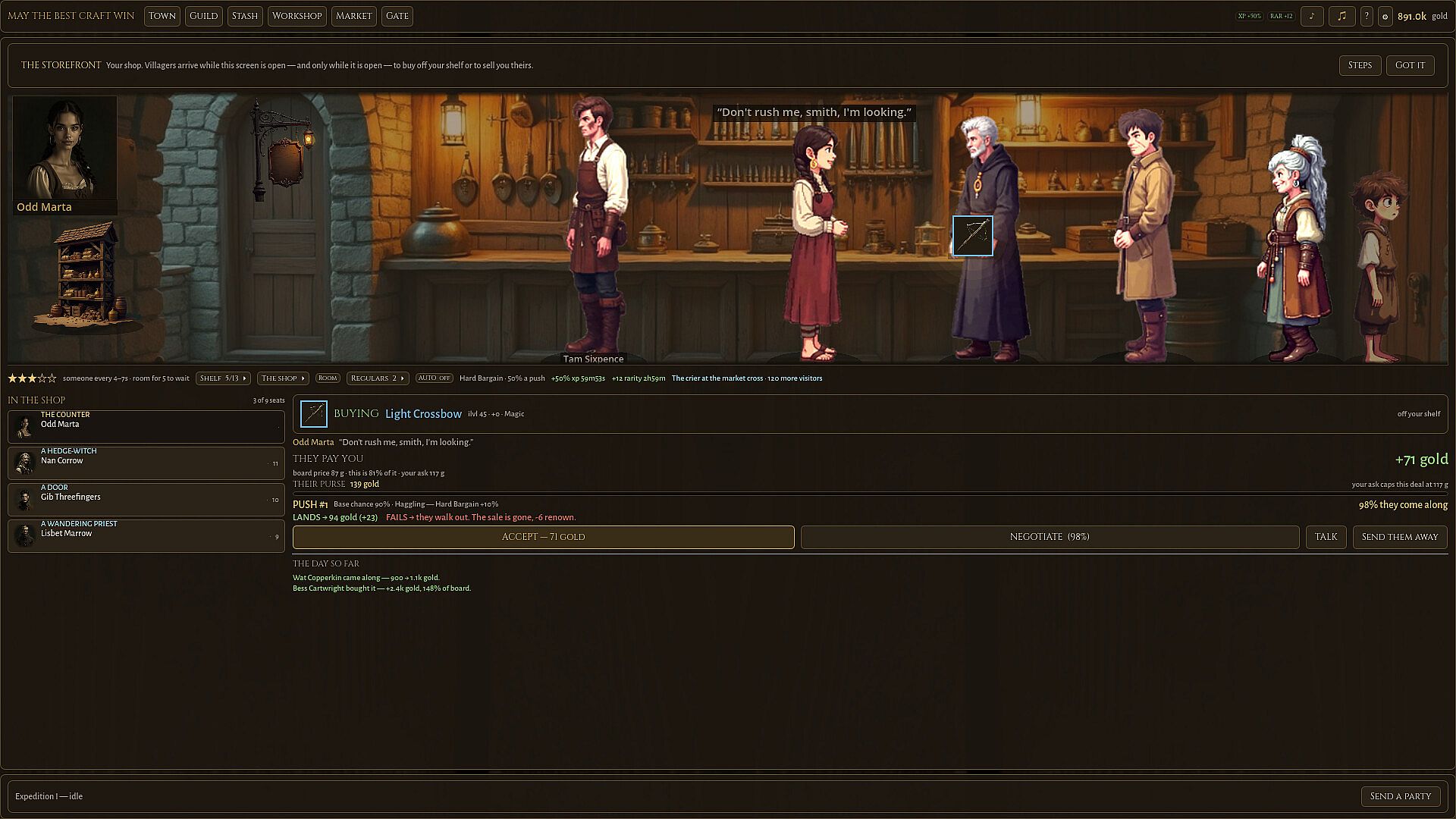
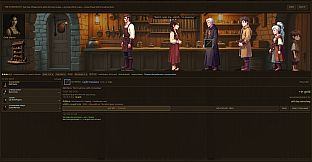
From room 45 onward in Hell, teams face irreversible commitment. Lost parties contribute souls and special scrolls that allow others to bypass waiting periods. Beyond dungeon runs, the game incorporates economic layers including a simulated trade house responsive to player sales, personal shopfronts where villagers haggle over goods, and periodic World Dungeon events that enable alliances or conflicts with other player houses. Items in trades remain in custody until completion.
Progression and Risk Management
Advancement relies on careful calibration of party builds and upgrade paths. Branching skills create diverse options for support roles and damage types, while checkpoint choices force ongoing decisions between pushing for superior rewards or extracting safely. The system rewards foresight in configuration, as offline periods do not penalize progress but simply advance slower than optimized active parties.
Numbers remain transparent for direct comparisons between items. Some visual and audio elements were created with AI assistance under human oversight, as noted in the game's disclosures.
Is It Worth Playing?
May the Best Craft Win suits players who prefer strategic preparation and idle systems over direct combat control. The emphasis on risk-reward choices during upgrades and runs, combined with detailed post-expedition feedback, appeals to those who enjoy managing party synergies across multiple classes and branches. Economic features add layers for players interested in trading and alliances. As an Early Access title, the experience continues to develop, with the provided mechanics forming a complete foundation for repeated sessions focused on optimization and long-term team building. Those drawn to idle RPG elements with tangible consequences for decisions will find consistent engagement in its systems.