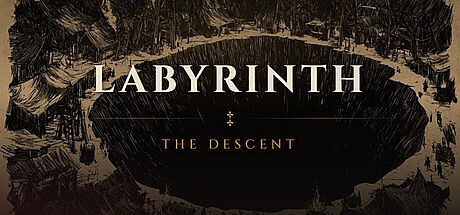


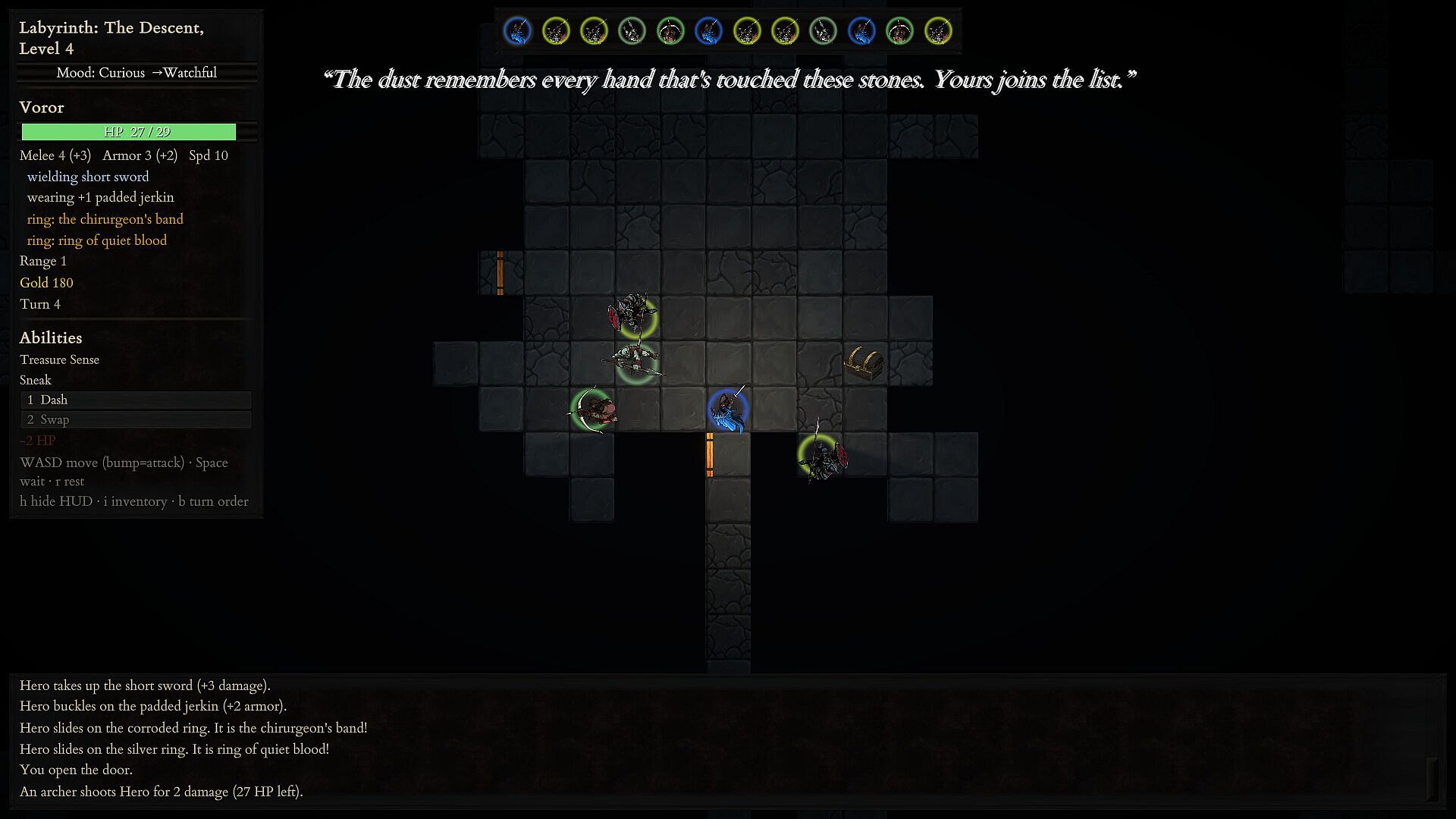
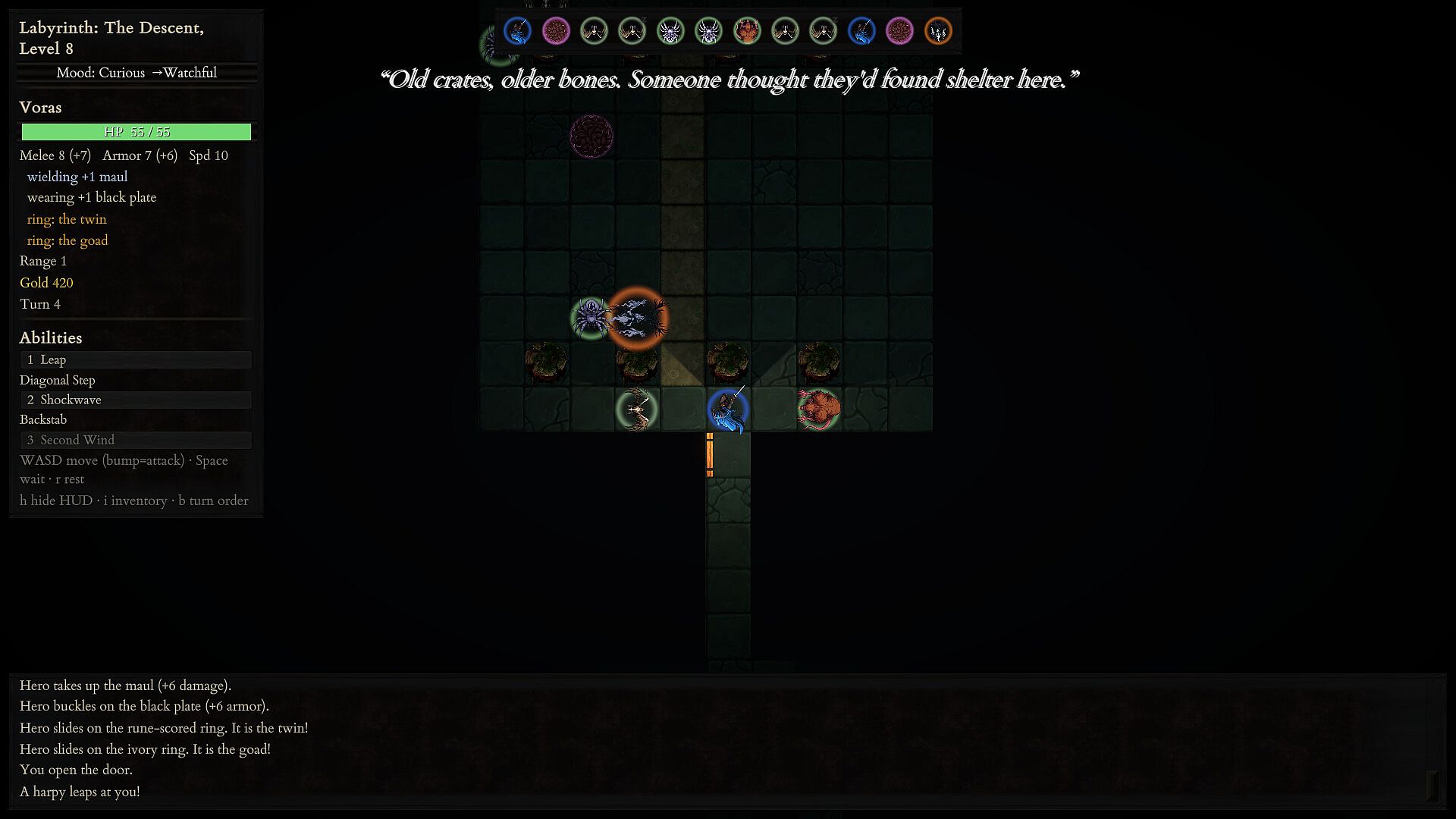
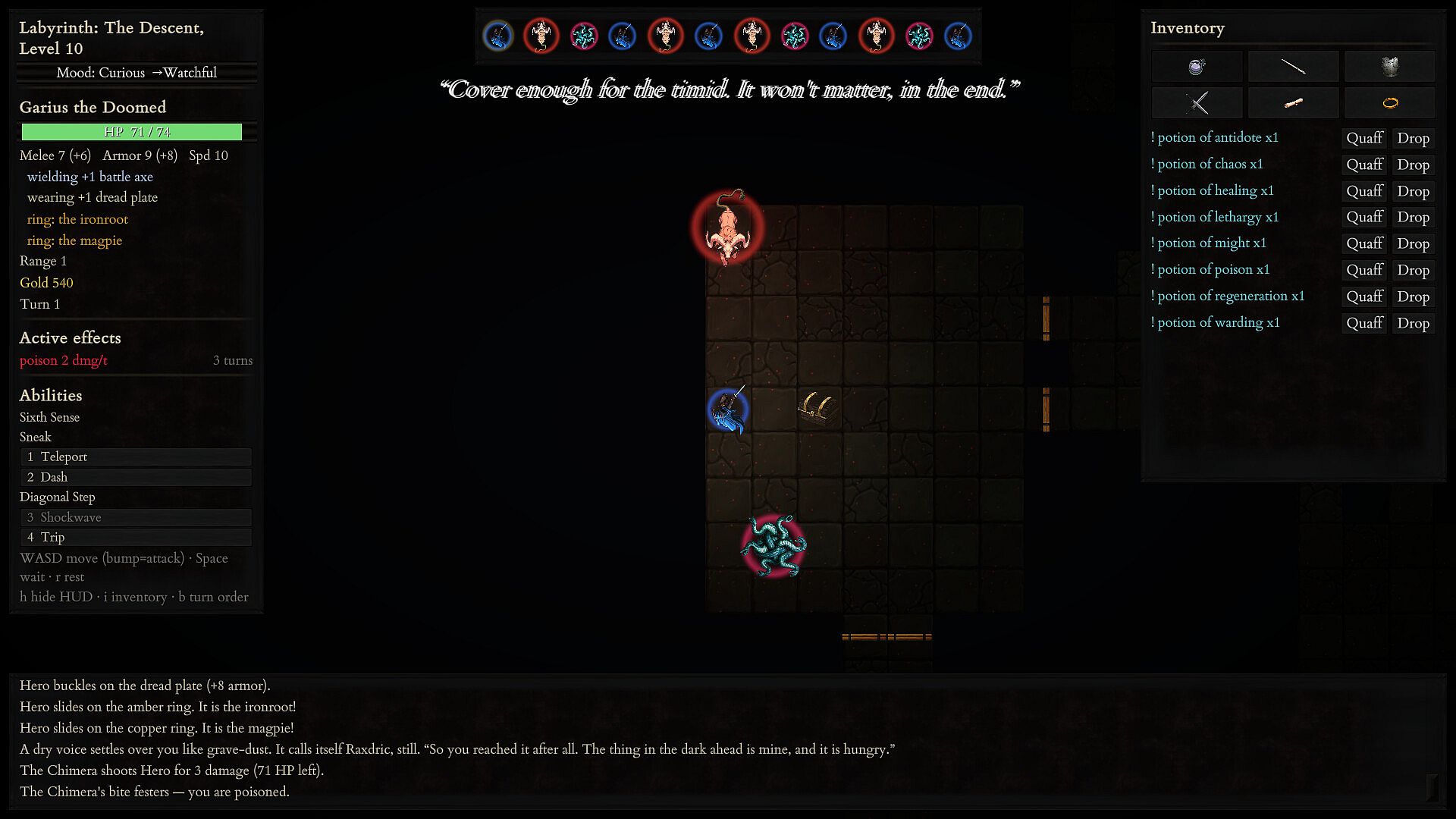
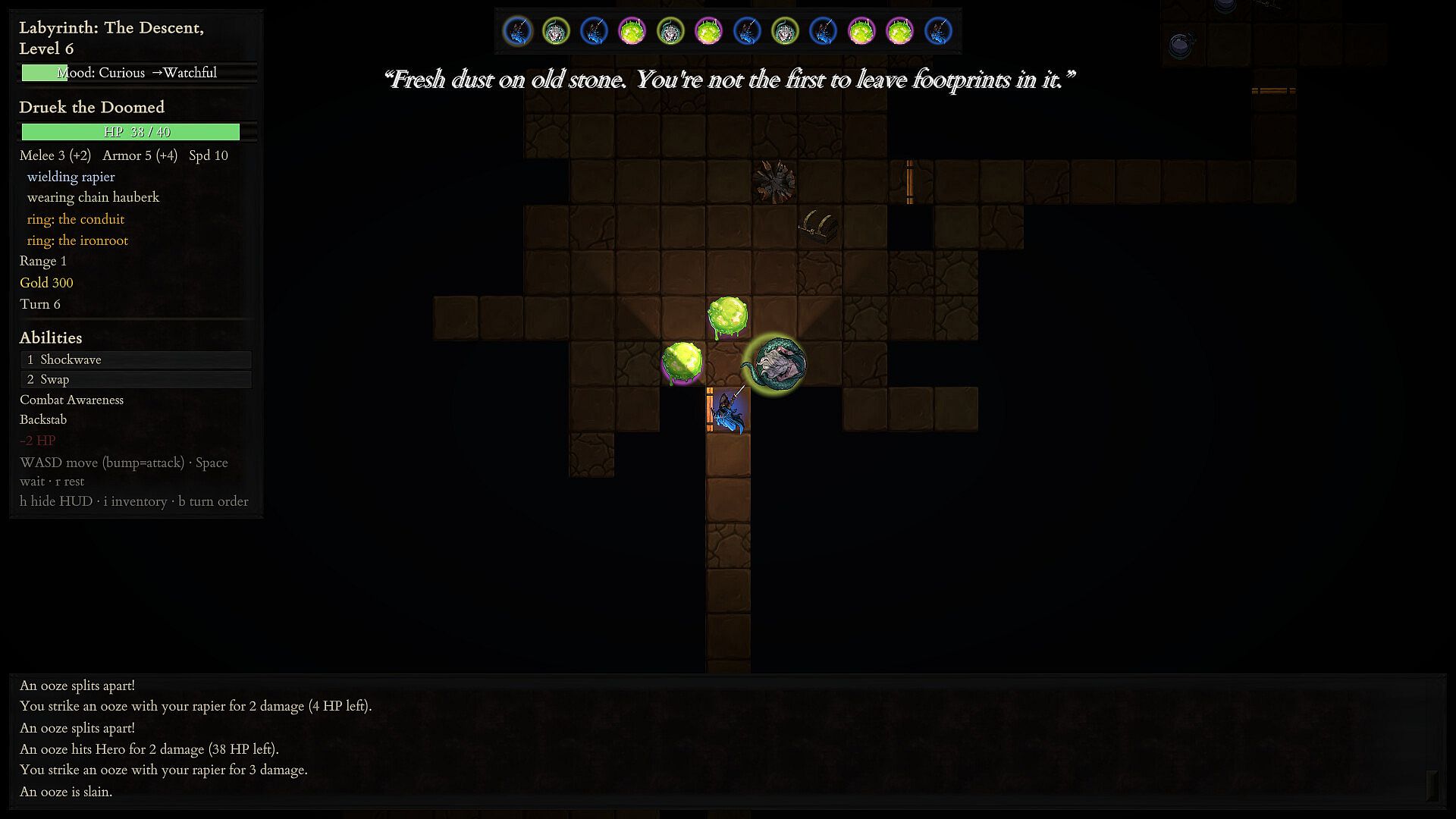
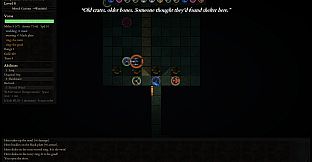
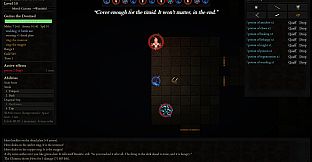

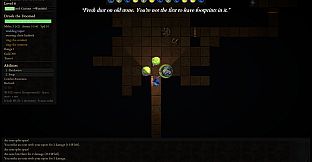

Labyrinth: The Descent is a strategy indie RPG that puts players in control of a single rogue descending into a living dungeon on PC. The core loop revolves around careful navigation and combat across ten floors, where every decision feeds into a persistent relationship tracked by the dungeon itself.
Gameplay
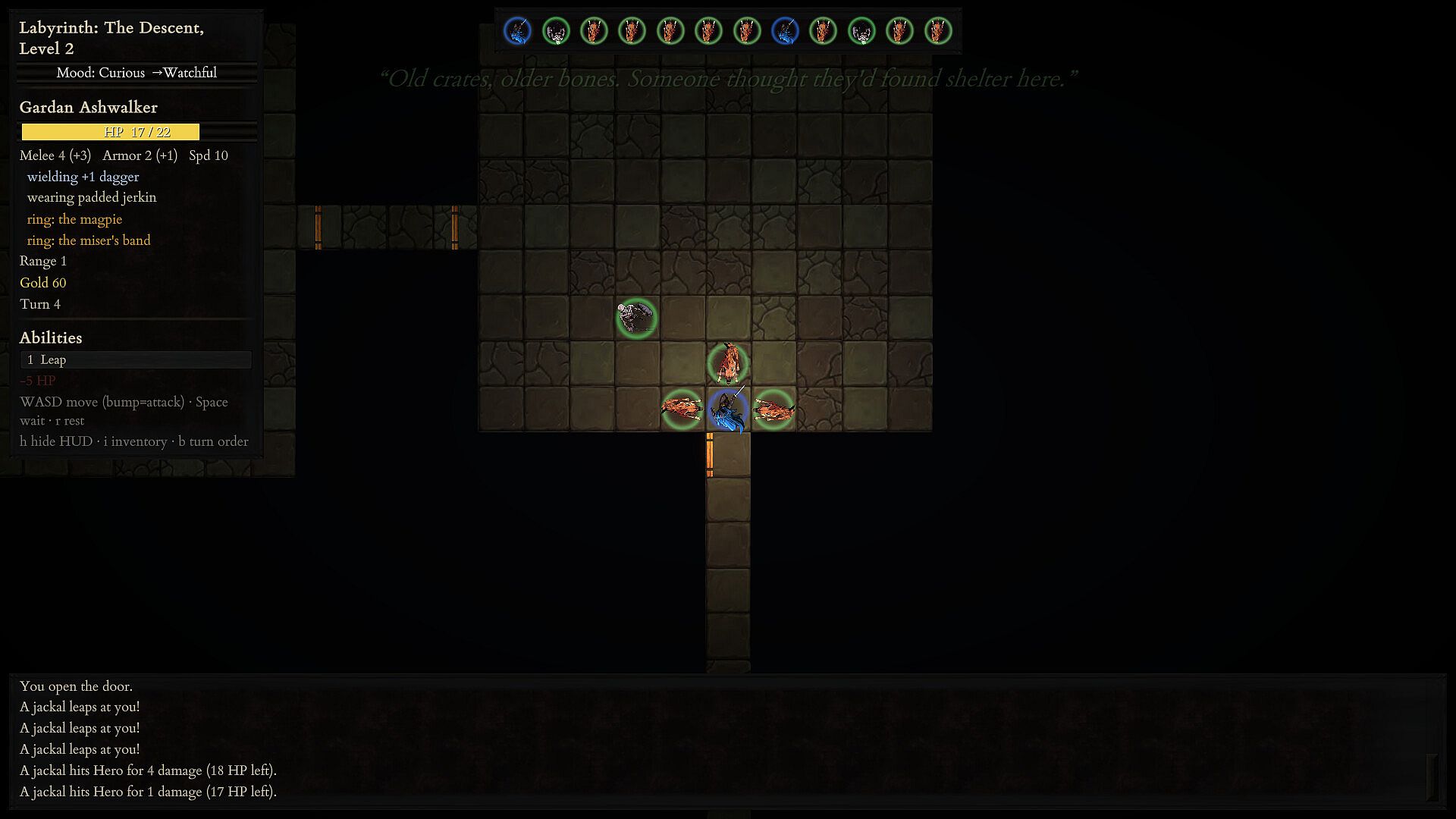
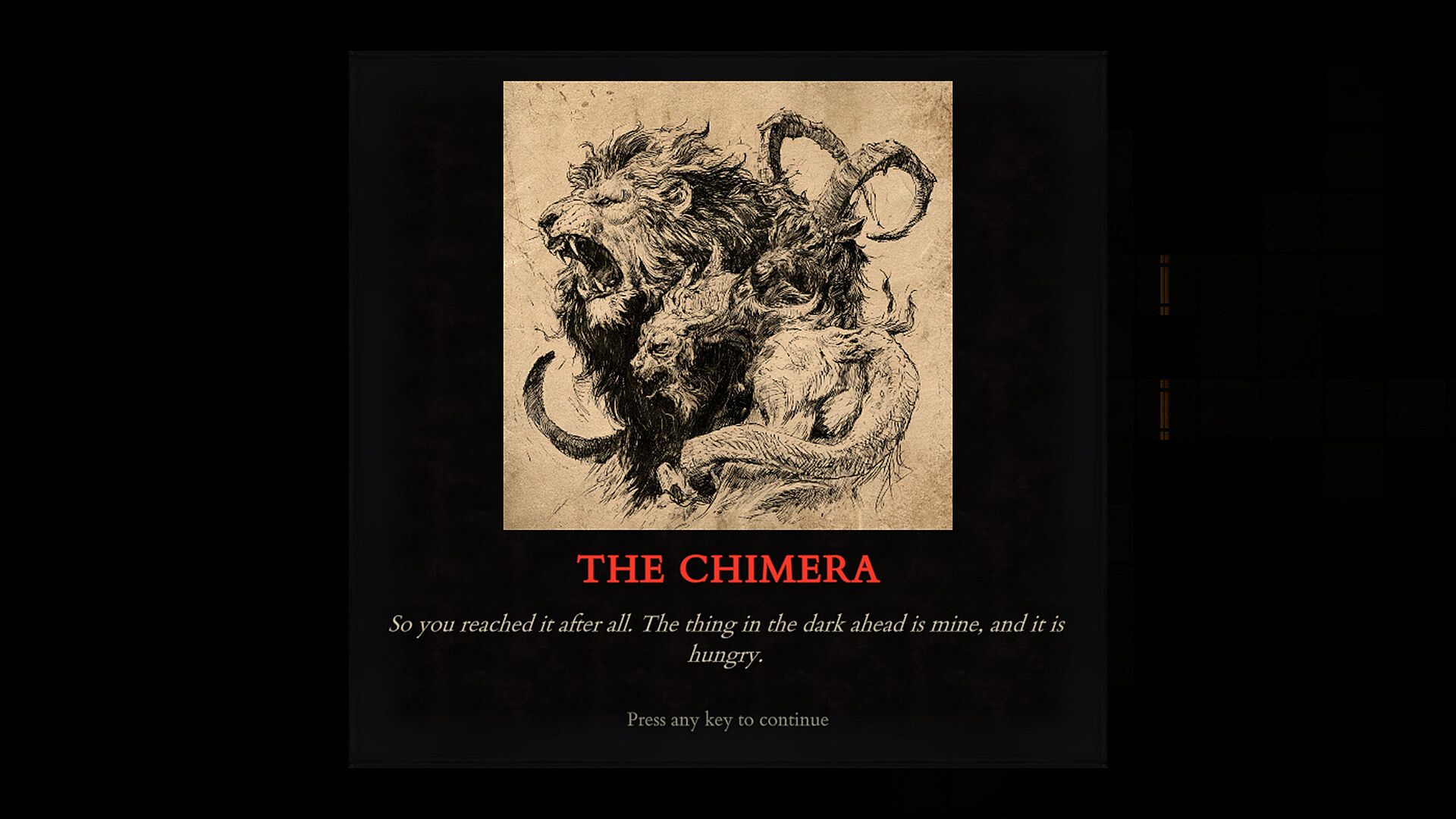
Turn-based combat unfolds on a grid where positioning determines success. Players hold doorways to control chokepoints, use flanking and attack arcs to maximize damage while avoiding exposure, and contend with wary enemies that coordinate advances rather than charging individually. Braced spears punish reckless charges, and terrain features such as cover, chasms, hazards, and mire force constant reassessment of safe positions. The dungeon reacts to player actions through a single-word attitude meter that shifts from Curious to Watchful, Annoyed, Angry, or Furious. Killing enemies raises this meter, which does not decrease on its own, though boss defeats reset it. Deeper floors introduce guardians drawn from myth, including The Minotaur, The Nidhogg, The Charybdis, and The Tarasque, each appearing as a unique encounter. Items like potions, wands, scrolls, and rings remain unidentified until tested, adding risk to every discovery. A wandering Trainer and Merchant offer upgrades in exchange for gold found during the run.
Game Modes
Each playthrough consists of one descent with permadeath, meaning death ends the run permanently. Players select a starting art at the beginning and build capabilities through whatever items and encounters the generated dungeon provides. Deterministic level generation from a run seed ensures identical layouts on repeated attempts with the same seed. A weekly challenge uses a shared seed for community competition, while submitted leaderboard runs undergo server-side verification to confirm results. The Labyrinth communicates directly during play with petty and jealous remarks aimed at the player.
Visuals and Atmosphere
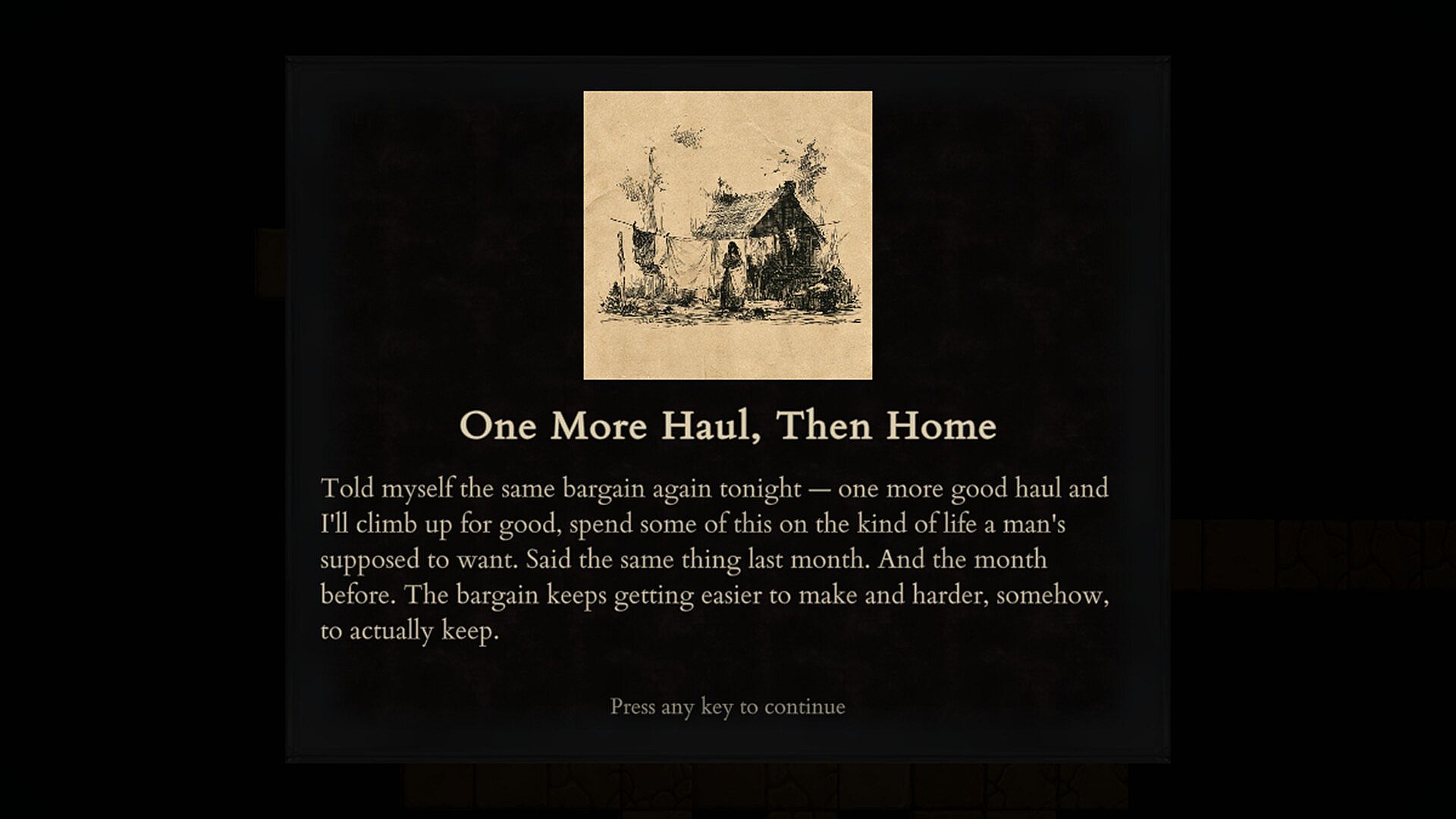
Top-down presentation uses torchlit environments with painted dungeon tilesets and hand-drawn sprites for every creature and boss. Real light sources cast shadows that respect walls and obstacles, preventing light bleed into unseen areas. Story screens and props receive dedicated artwork, and the interface uses its final polished design. The setting depicts a mining town built into something alive that consumes life-force and deploys treasure as a lure, with the dungeon growing more familiar with the player the deeper the descent progresses.
Permadeath and Progression
Death leaves a grave at the depth reached, which later runs can discover for a full heal and a note describing the previous hero's end. Over multiple attempts the dungeon accumulates these named graves, gradually easing future descents through the accumulated traces of failed explorers. Boss encounters at depth ten conclude the run with no return path, emphasizing the one-way nature of each attempt.
Is It Worth Playing?
Labyrinth: The Descent suits players who enjoy tactical grid-based combat, identification mechanics, and high-stakes single-run progression in a strategy indie RPG format. The emphasis on positioning, enemy coordination, and the reactive dungeon attitude creates a focused experience distinct from roster-based or save-anywhere dungeon crawlers. Those drawn to permadeath challenges and deterministic generation will find repeatable depth through seed sharing and weekly events. The developer's background in classic roguelikes informs a design that prioritizes tactical clarity over complexity, making it accessible for those seeking deliberate play without extensive time investment in character management systems. Availability on PC supports straightforward access for the target audience.