




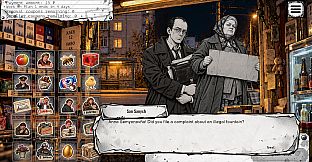
Kursk Kiosk is a roguelike strategy and simulation game set in provincial Russia during 2004. Players take on the role of a kiosk operator tasked with meeting daily sales quotas using a limited starting inventory of five products. The experience blends resource management, inventory building, and light social interactions in an atmosphere of concrete apartment blocks and uncertain economic times.
Gameplay
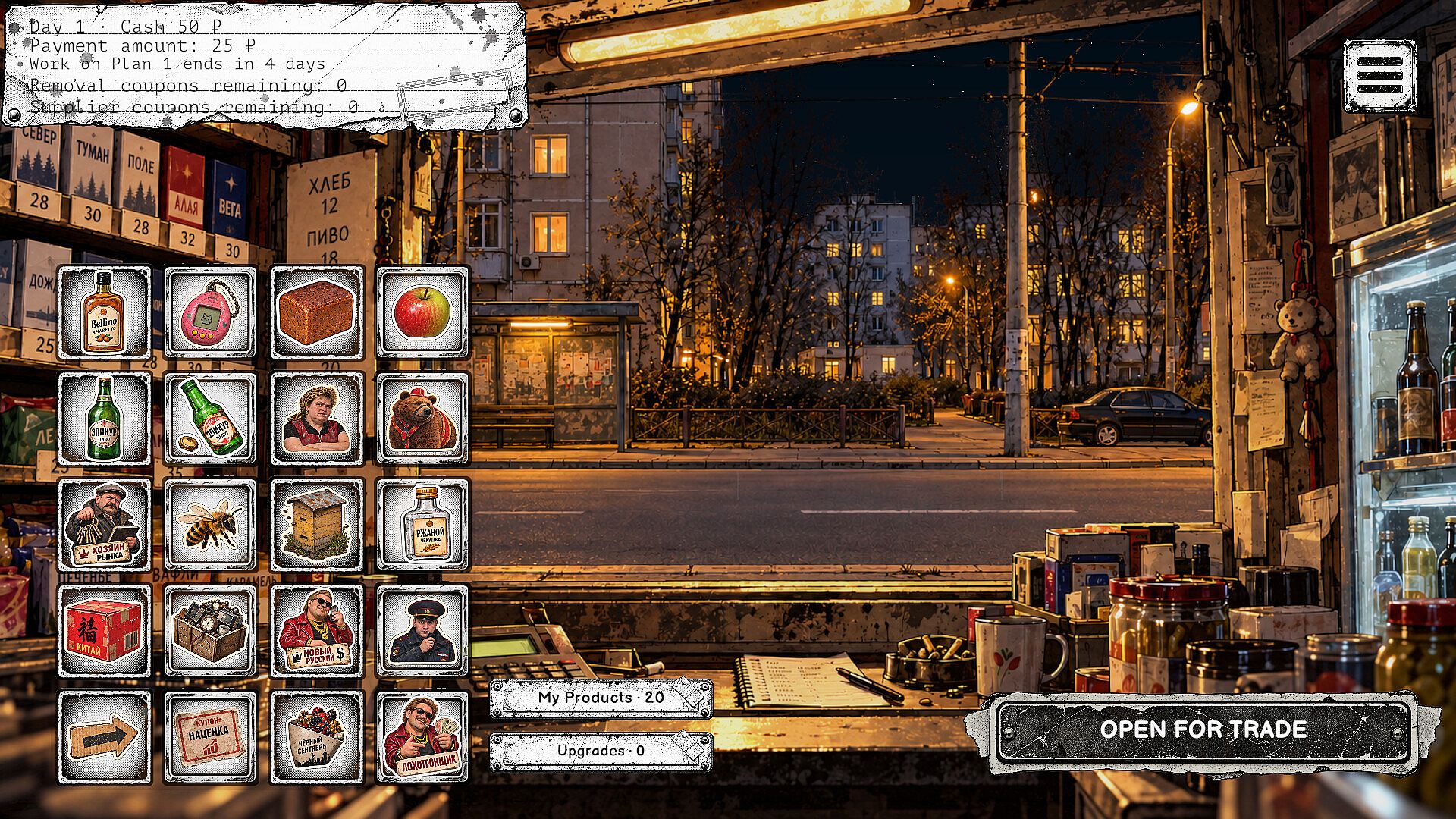
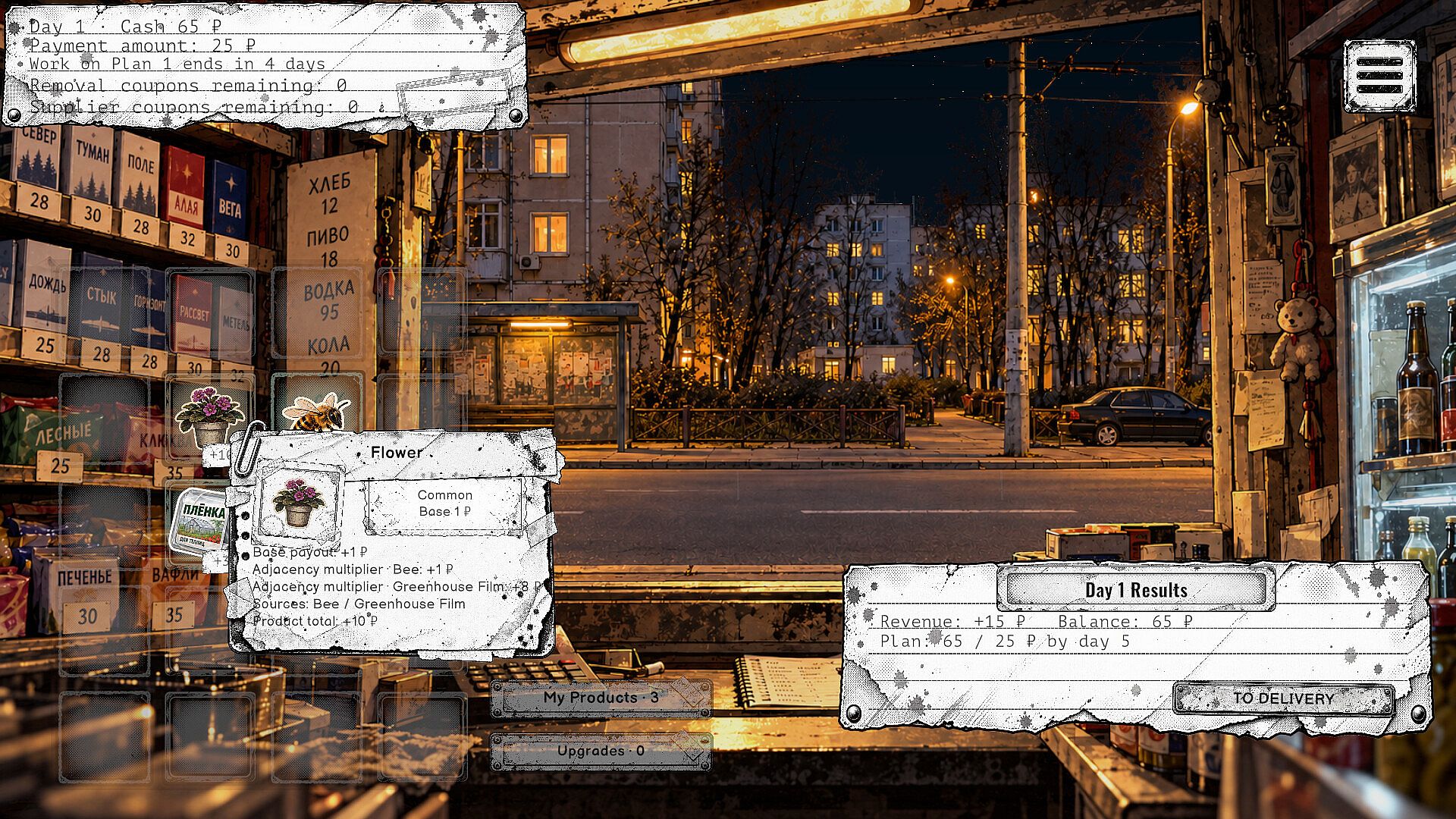
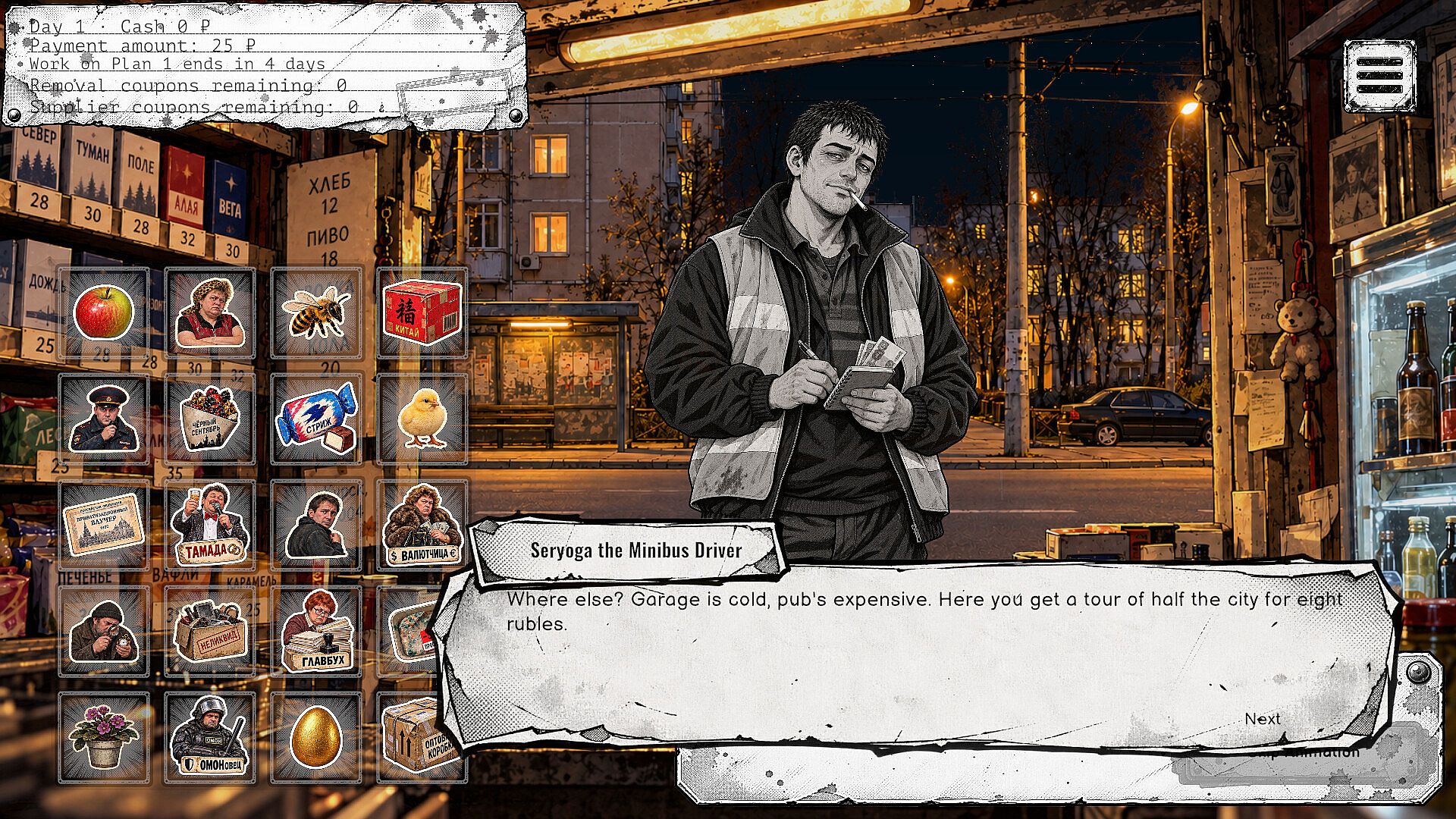
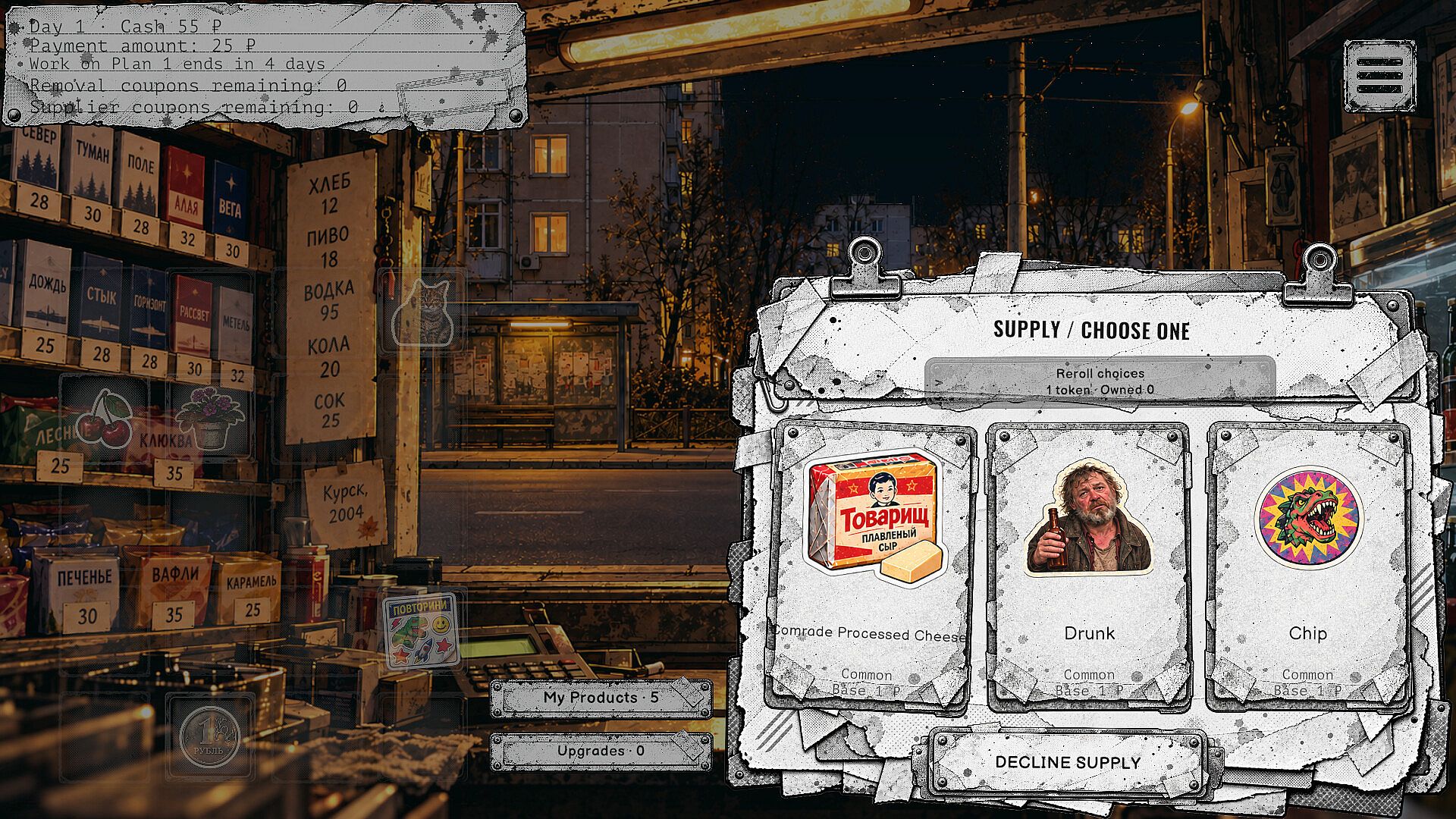
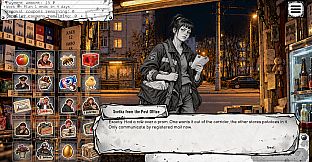
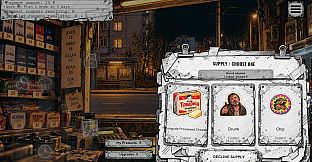
The core loop revolves around buying and selling goods while arranging up to 20 products on a board to generate revenue and create synergies. Each placement influences earnings, and successful combinations can multiply income over the course of a shift. Inventory expands across 150 distinct items, encouraging experimentation with different stock selections to optimize profits and fulfill quotas.
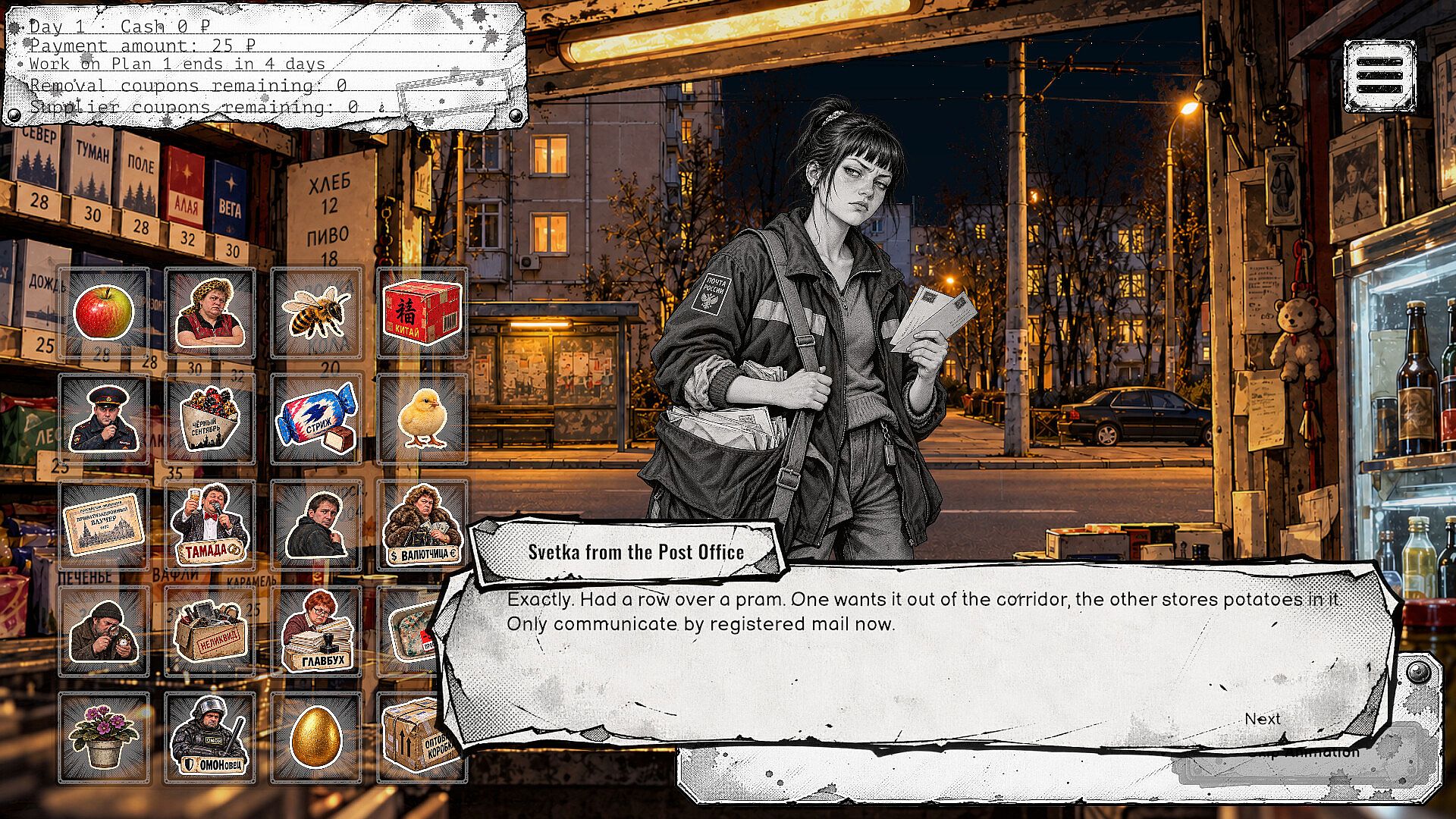
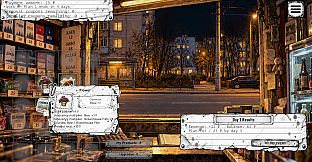
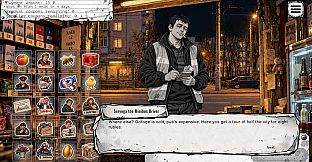
Upgrades for the kiosk itself provide permanent improvements that carry over between attempts. These enhancements focus on efficiency, storage, or sales potential, rewarding careful planning across multiple runs. Conversations with locals occur without dialogue options, allowing players to listen and respond in limited ways that affect the day's outcome. A reel-spinning mechanic determines shift results, adding an element of chance that ties into the roguelike structure of restarting after financial setbacks.
Hand-drawn black-and-white characters stand out against colorful backgrounds depicting autumn in Kursk. The setting emphasizes everyday provincial life, with weather and surroundings that occasionally improve despite the challenges of small-business operation.
Game Modes
Kursk Kiosk operates as a single-player roguelike experience centered on repeated business runs. Each attempt begins with the same core constraints but allows progression through accumulated upgrades and knowledge of product combinations. Failure leads to a full reset of progress except for permanent kiosk improvements, creating a loop of trial, adaptation, and incremental growth.
No separate named modes exist beyond the standard roguelike format. Players manage inventory, meet quotas, and navigate daily events within this framework, with the ability to adjust certain social elements in the settings for those who prefer minimal interaction.
Characters and Interactions
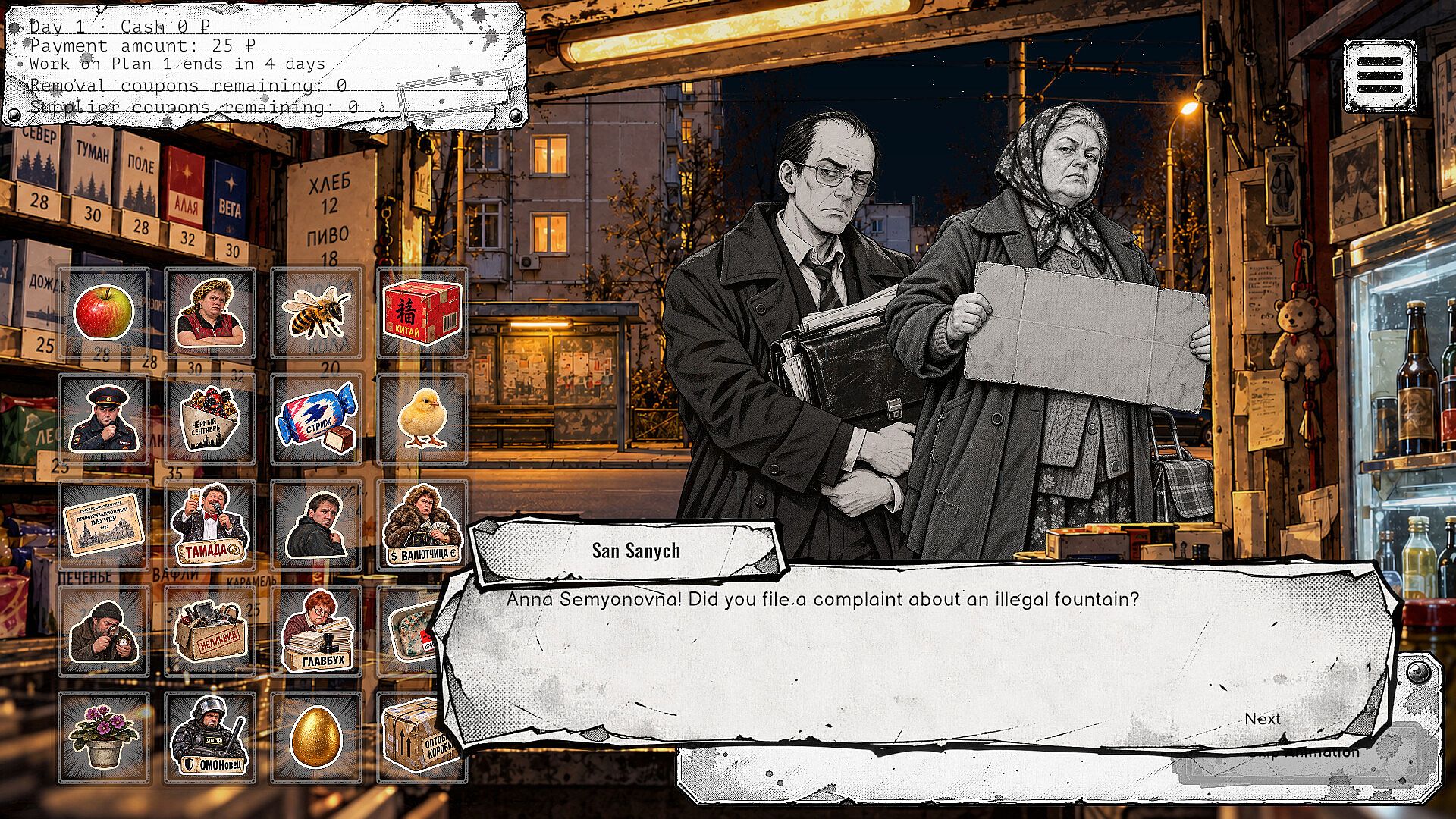
Several recurring residents add personality to the kiosk visits. Artur the Director runs his own business at just 13 years old, leaving questions about his future plans after school. San Sanych serves as an inspector who prioritizes proper paperwork regardless of the subject matter. Romka Bolvanka specializes in duplicating pirated CDs and often mixes up recordings, sometimes delivering unexpected content to customers.
Additional locals appear periodically and require attention during shifts. These encounters integrate into the daily routine without branching dialogue trees, keeping focus on operational decisions rather than narrative choices.
Is It Worth Playing?
Kursk Kiosk suits players who enjoy roguelike management simulations with a focus on inventory arrangement and incremental upgrades. The combination of product synergy mechanics, quota pressure, and occasional social moments creates a distinctive loop set against a specific historical backdrop. Those drawn to indie strategy titles that emphasize experimentation and recovery from setbacks will find the core systems rewarding. The game remains available as a complete experience with no additional content required beyond the base title.












