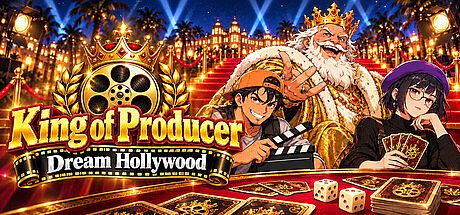


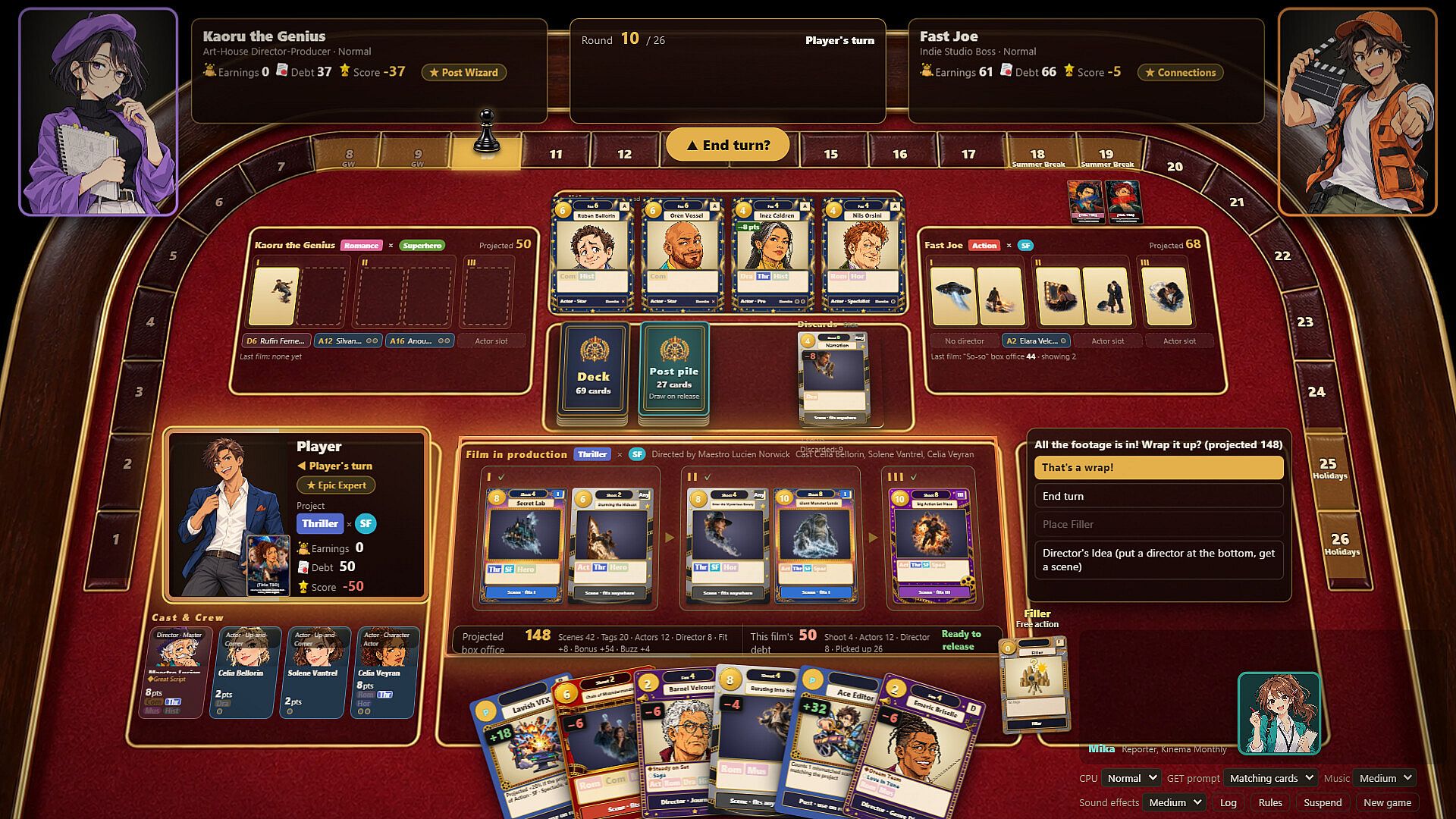
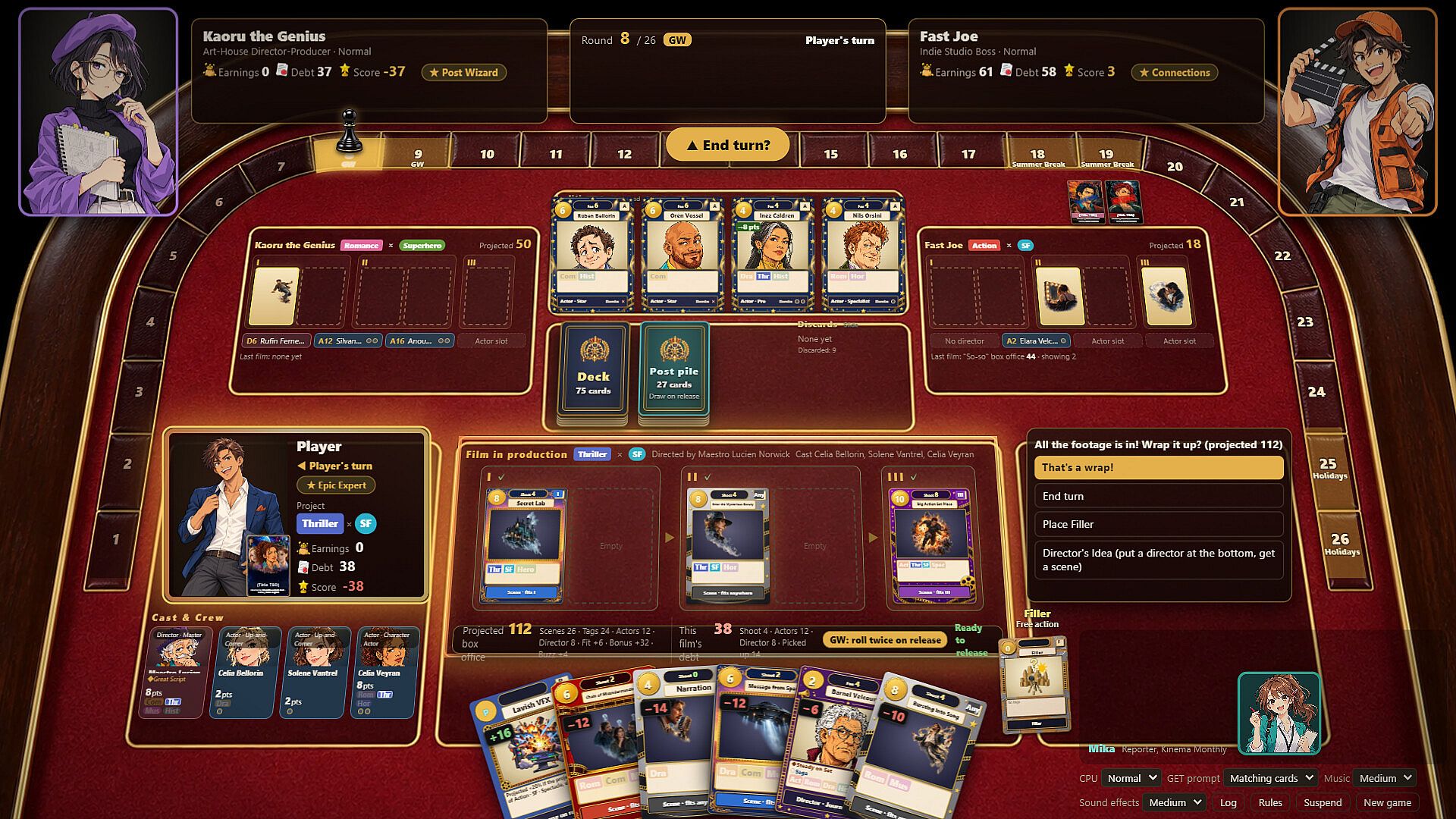
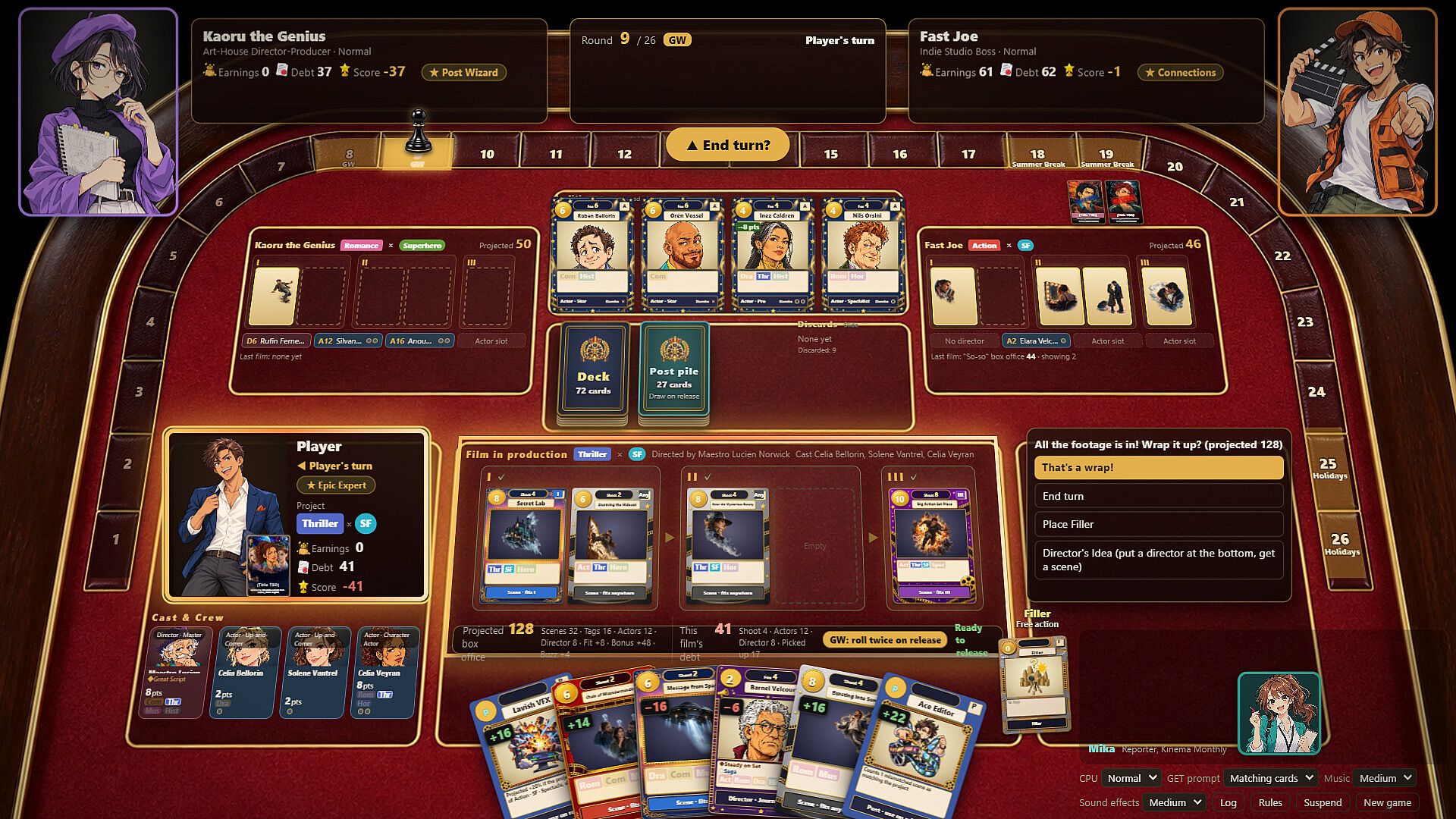


King of Producer: Dream Hollywood is a turn-based strategy game that puts players in the role of rival movie producers navigating the unpredictable world of Hollywood filmmaking. This indie title blends casual accessibility with strategic depth as participants assemble films through card play, auctions, and dice-driven box office results. The core loop revolves around managing budgets, securing talent, and timing releases while rivals interfere at every step.
Gameplay
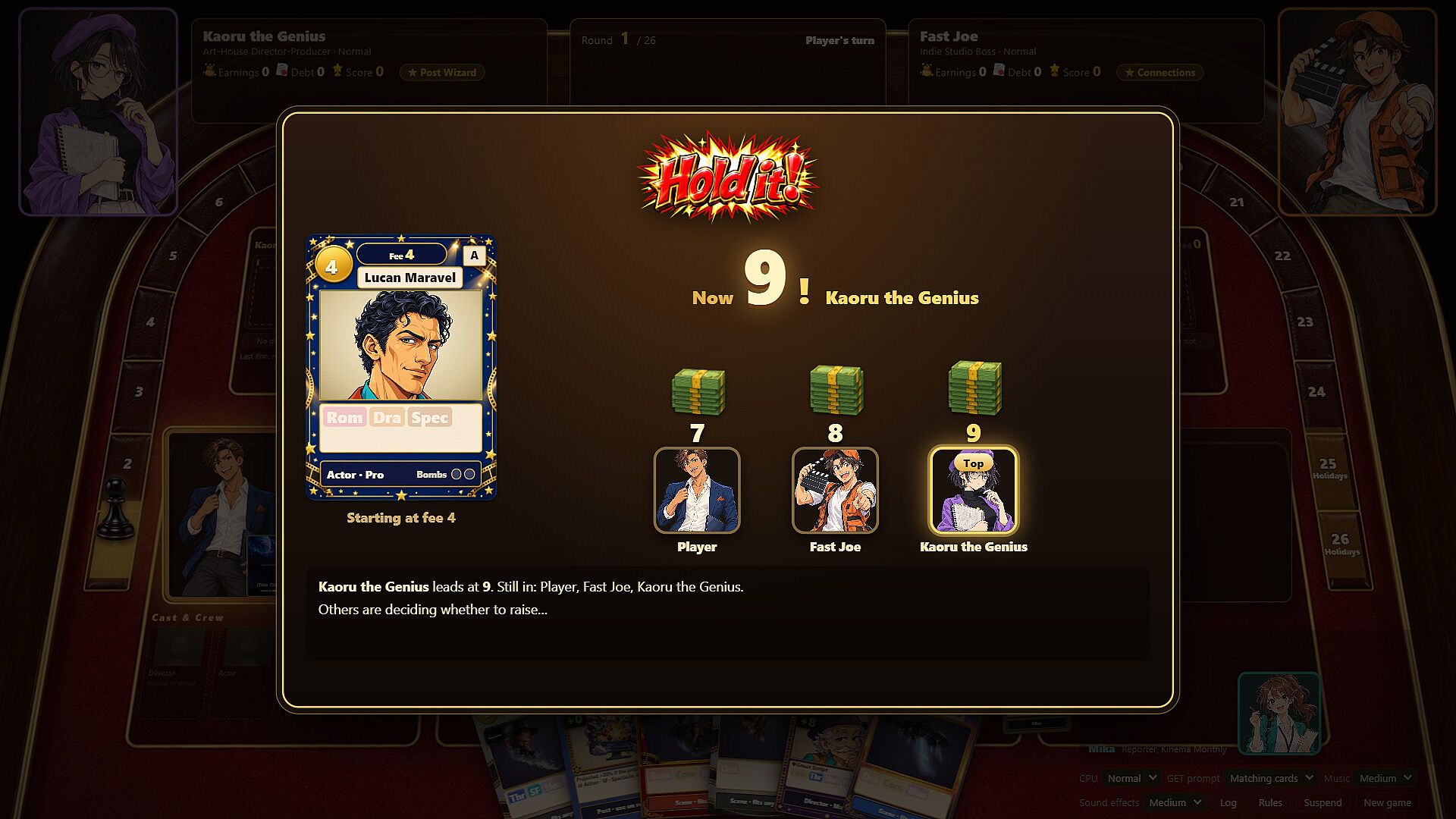
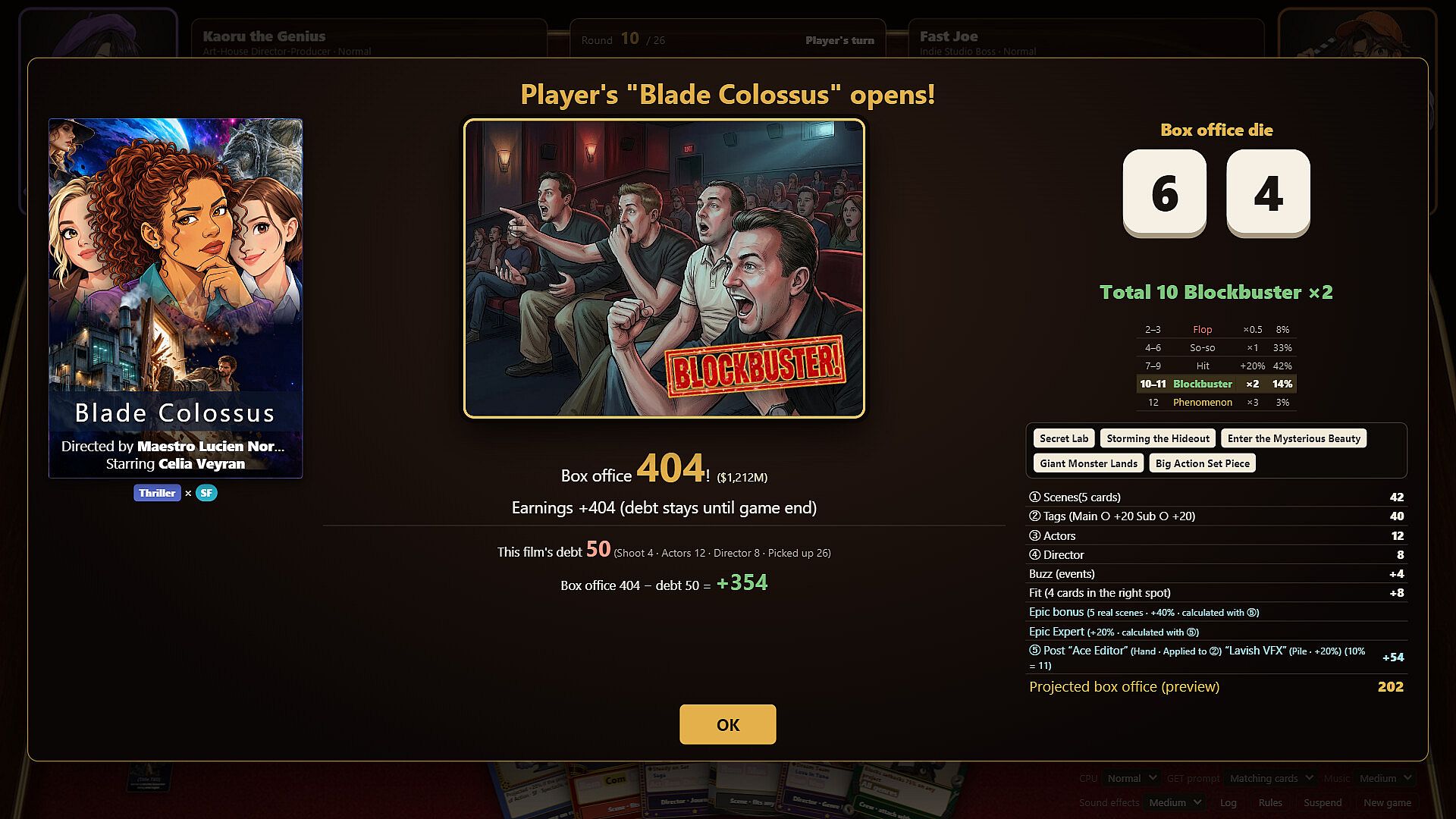
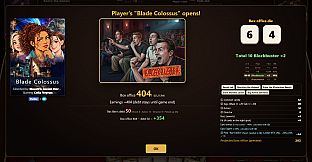
Players start with a hand of cards representing scenes and genres that combine to form complete films. Each production requires careful assembly, where matching elements can create stronger entries, but flexibility allows for quicker or riskier builds. Bidding for actors happens in auctions where higher offers secure better talent yet reduce available funds for the rest of the production. Producer skills and director abilities add variety, offering different approaches such as bonuses for using all cards in a hand or shortcuts that complete a film with fewer scenes. Once assembled, the film moves to post-production before release, at which point dice rolls introduce uncertainty to the final box office performance. Decisions about spending more on a larger production or rushing an earlier release directly influence potential outcomes and overall strategy.
Game Modes
Free matches allow direct competition against CPU opponents in standalone sessions that focus on core mechanics without additional narrative elements. A dedicated story mode features its own cast of rival producers, providing a structured campaign experience with progression through sequential challenges. Both modes incorporate actor auctions, card combinations, and box office rolls as central systems. Built-in rules explanations and turn guidance support new players in learning the flow without external references.
Core Mechanics and Strategy
The auction system creates tension as players weigh the value of star power against budget constraints, since every extra bid reduces resources for other aspects of production. Card combinations reward thoughtful planning while still permitting improvised films that prioritize speed over polish. Director abilities introduce asymmetry, letting different playstyles emerge across matches. The dice element at release ensures no outcome feels predetermined, forcing adaptation even after strong preparation. Music from Maou Damashii and sound effects from Sound Effect Lab and Kenney enhance the thematic presentation without altering the strategic focus.
Is It Worth Playing?
This title suits players who enjoy turn-based strategy games with elements of bidding, resource management, and light randomness. The mix of free matches and story mode provides replay options for both quick sessions and longer campaigns. In-game support for learning the rules makes it approachable for those new to the genre. Those who appreciate board game adaptations on PC, particularly ones centered on creative competition and financial risk, will find consistent engagement here. The current state emphasizes single-player and local multiplayer options through CPU opponents and LAN support where available.