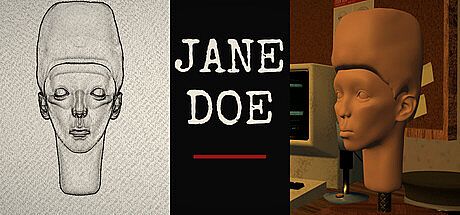


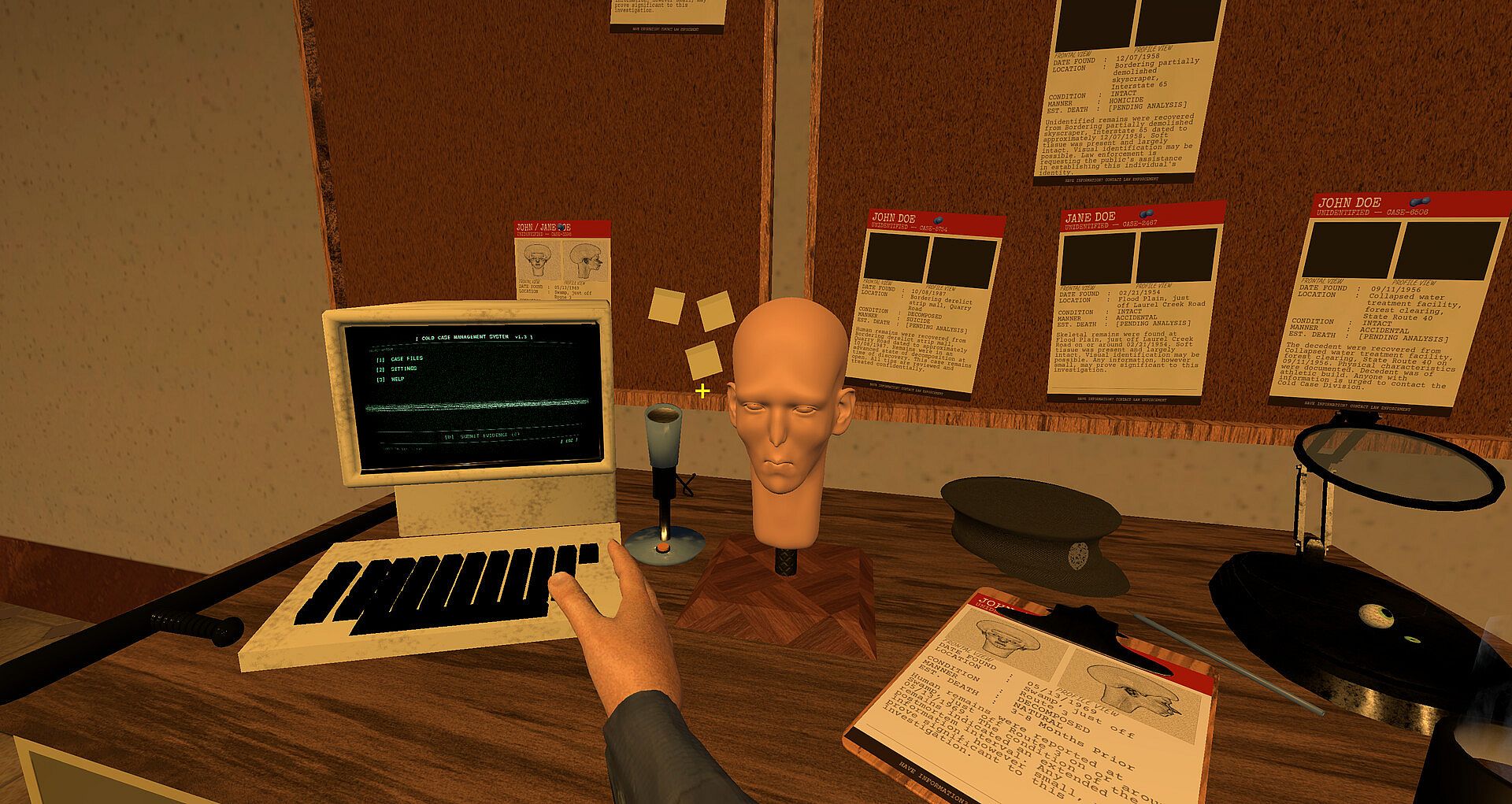
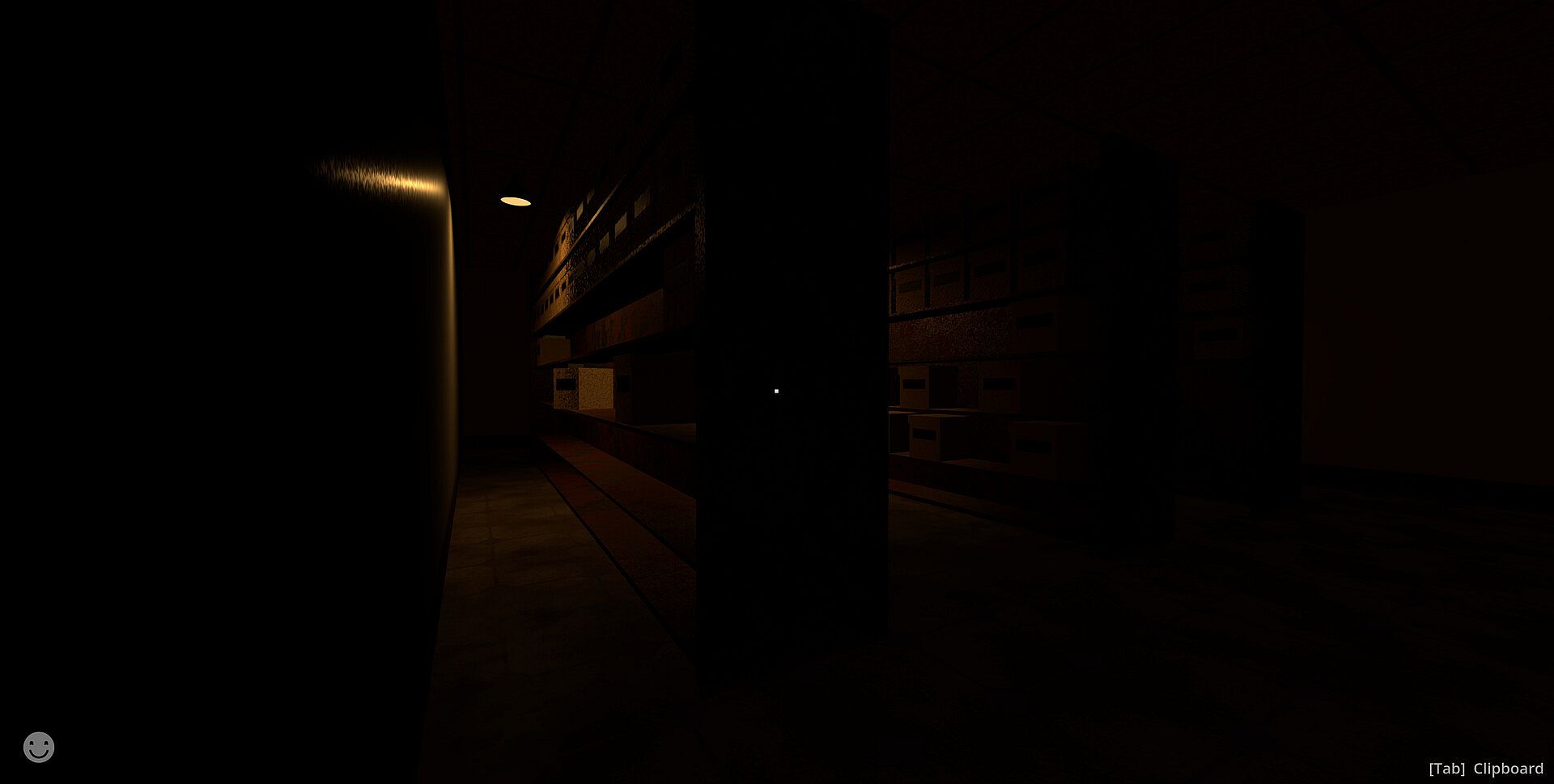
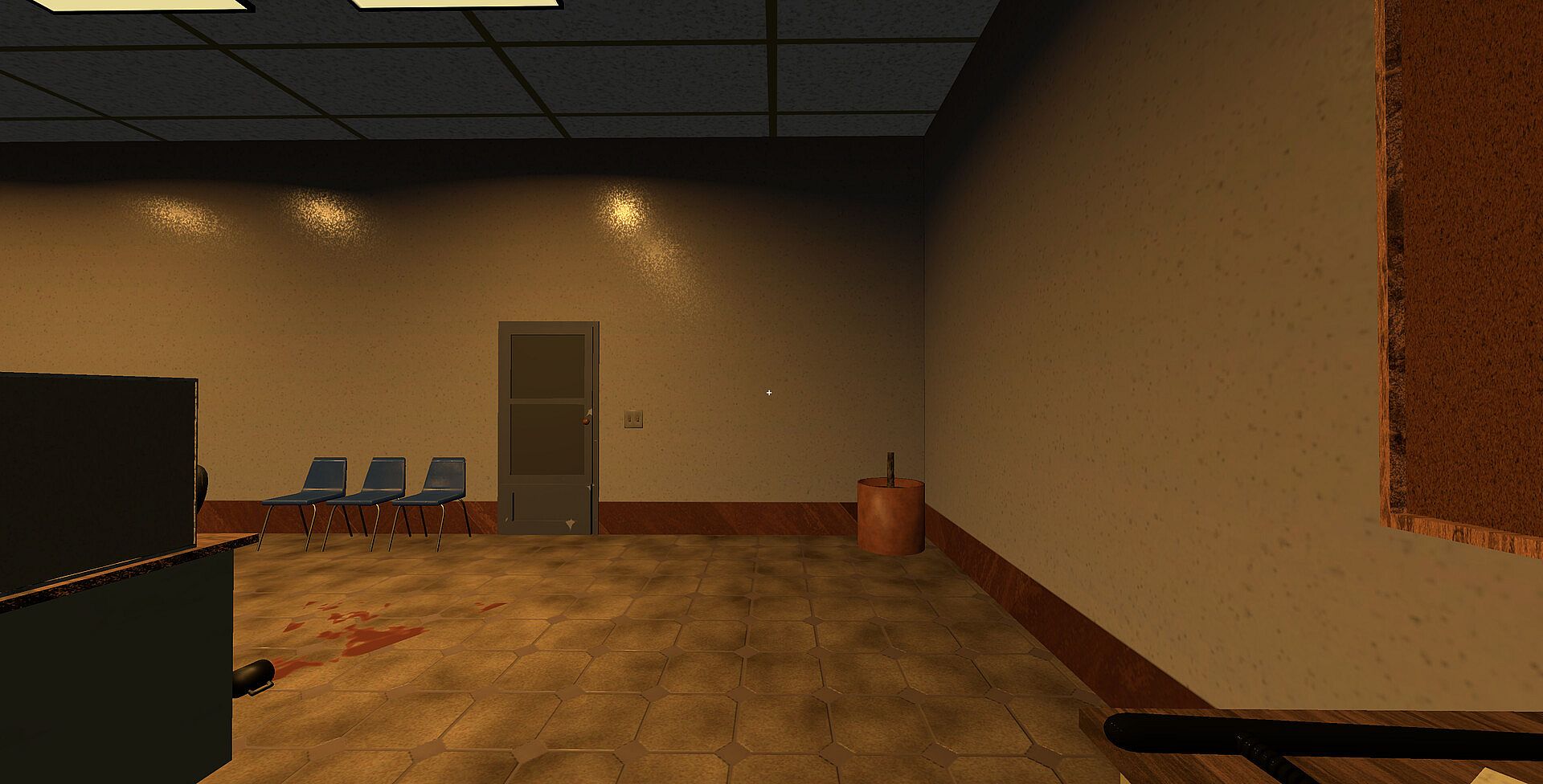
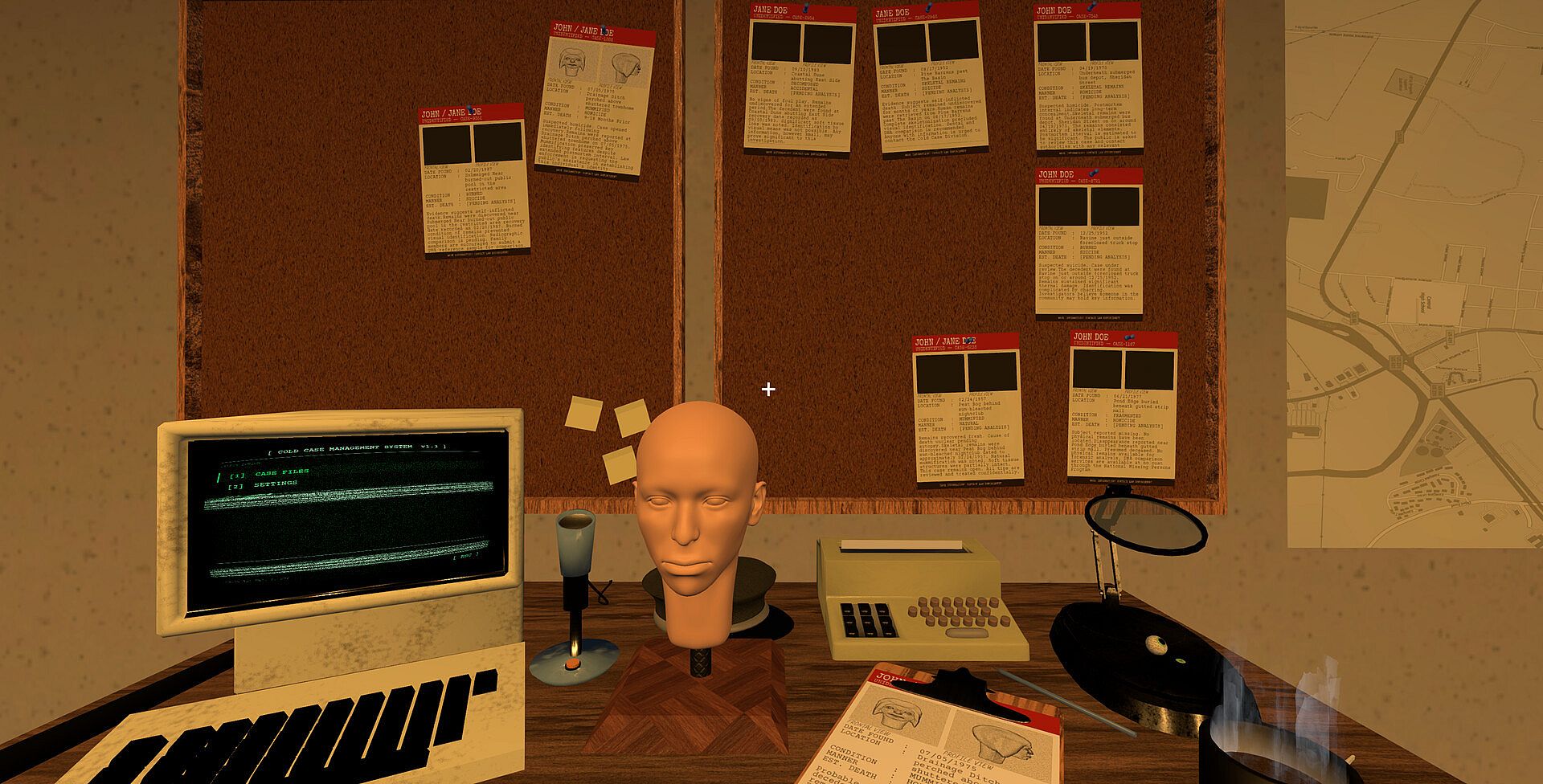
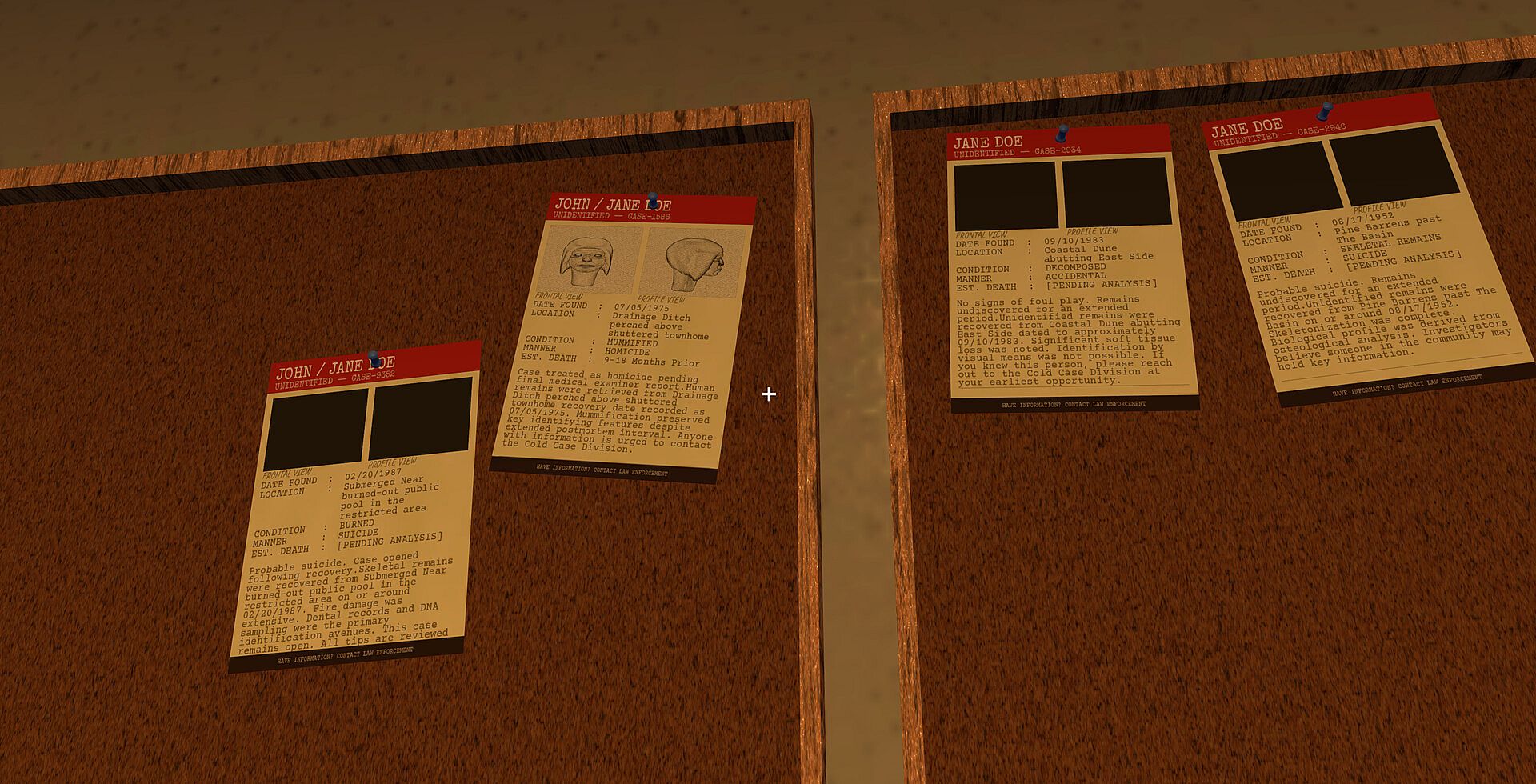

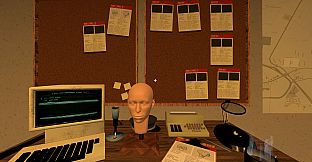
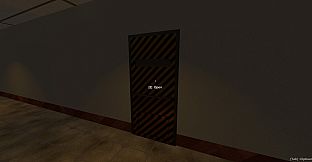
Jane Doe: Cold Case Division is a first-person horror game that blends casual simulation elements with tense investigation and creative sculpting. Players step into the role of rebuilding the identity of an unidentified victim through evidence gathering and facial reconstruction in a dimly lit precinct setting.
Gameplay
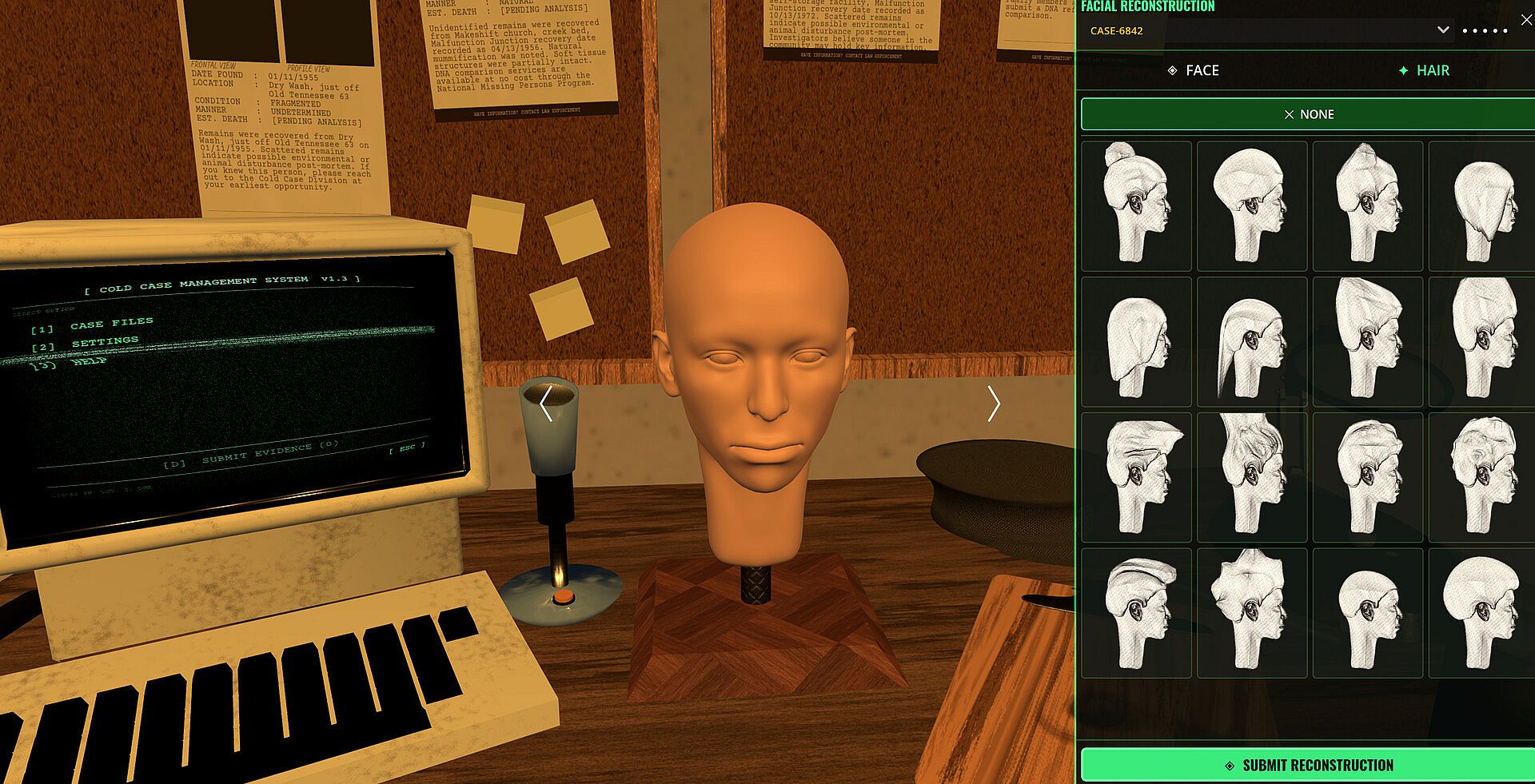
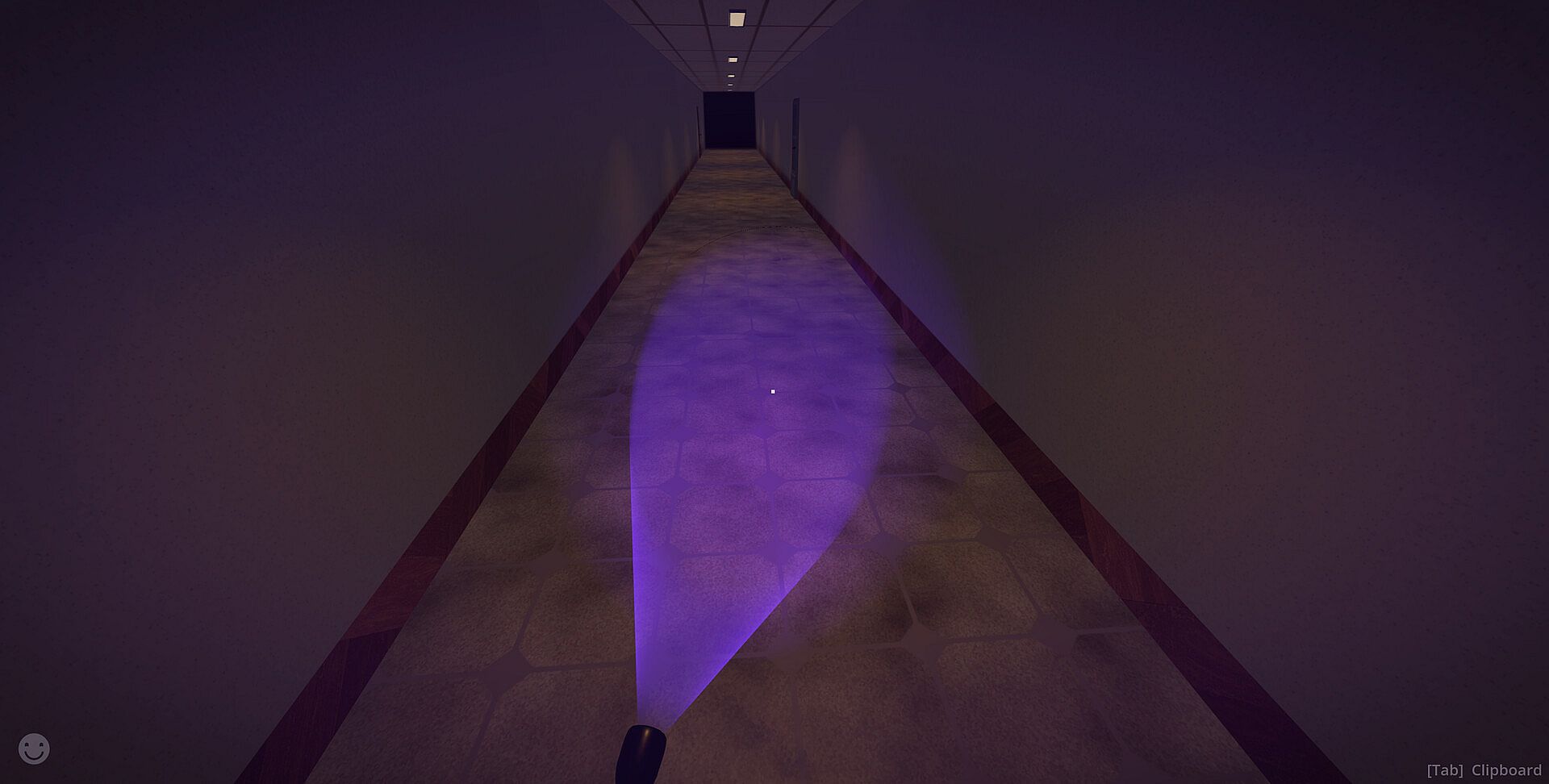
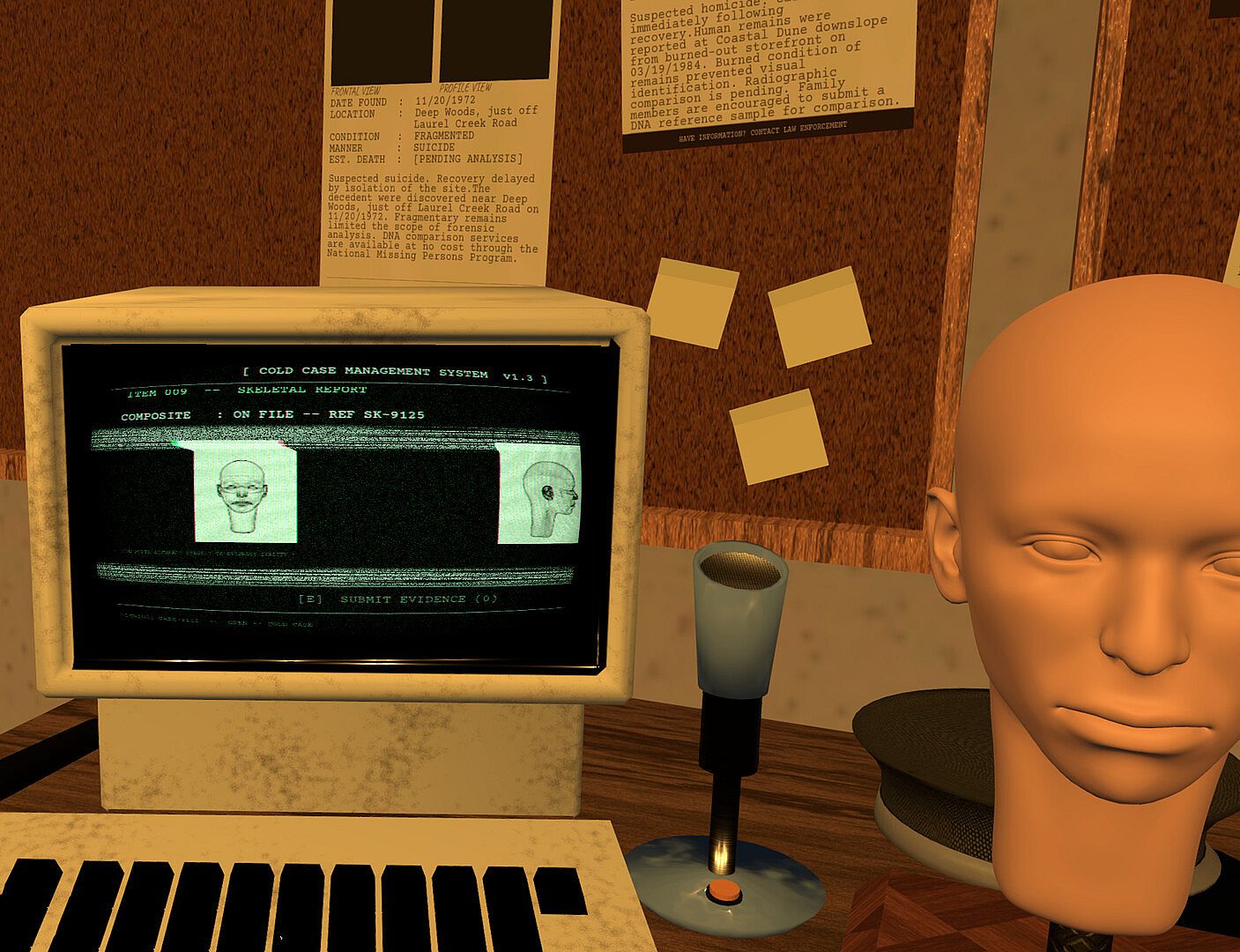
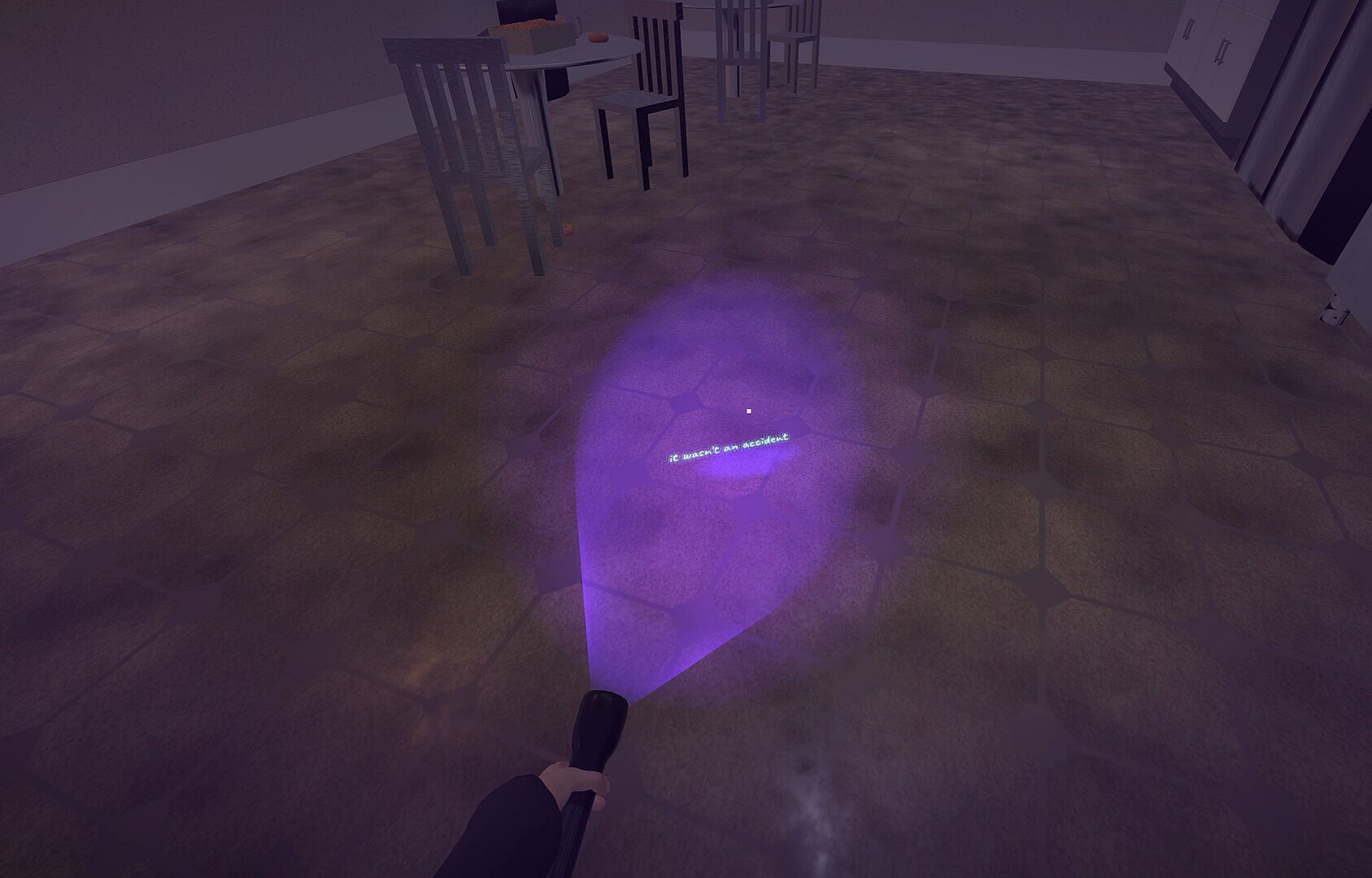
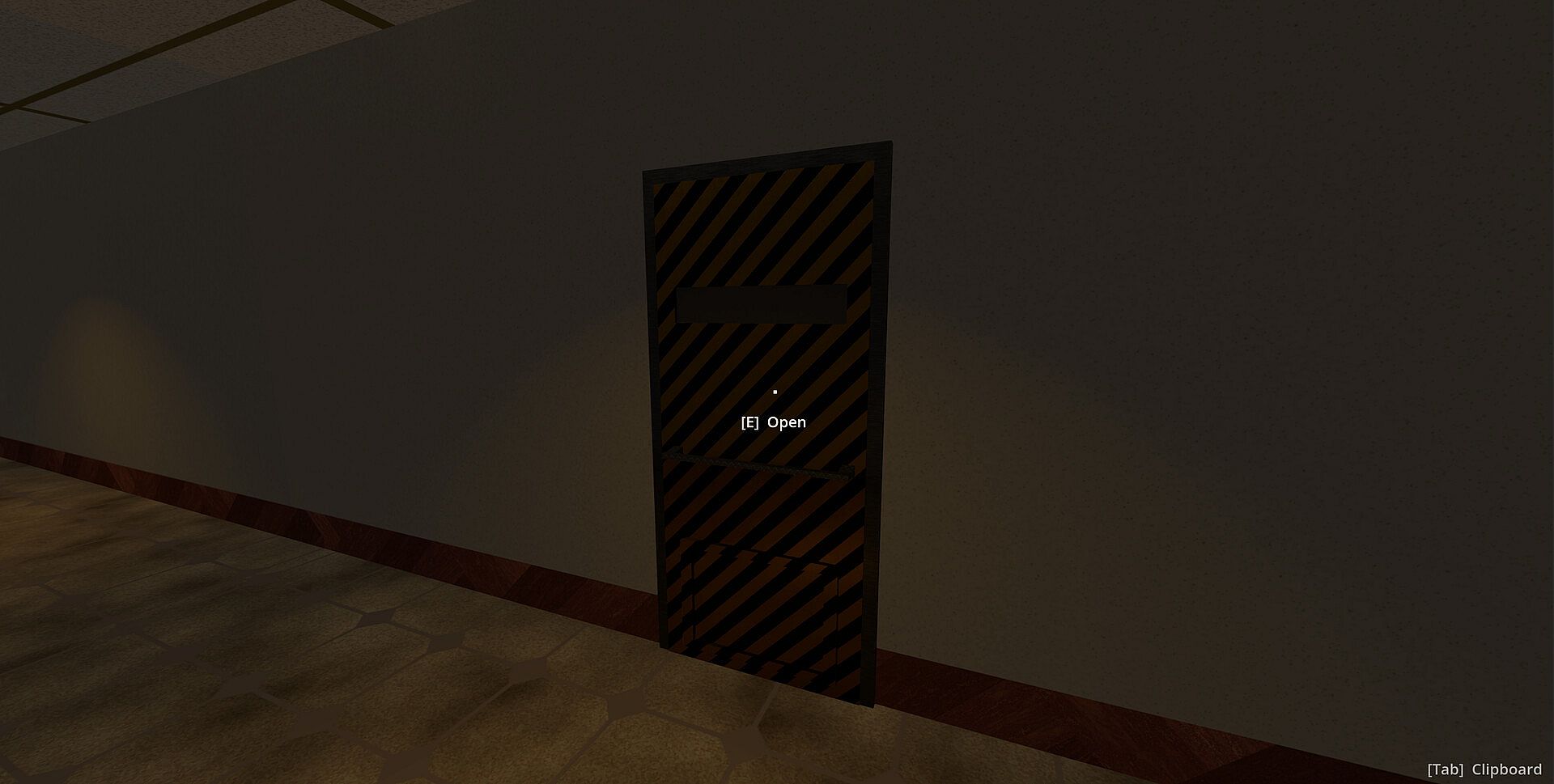
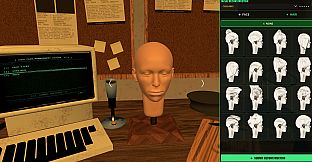
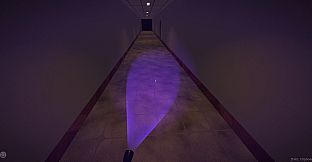
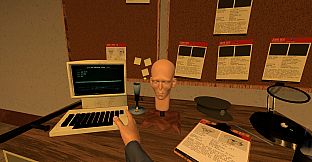
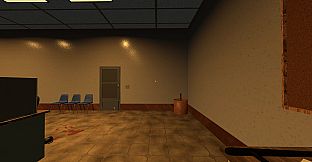
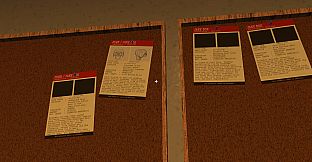
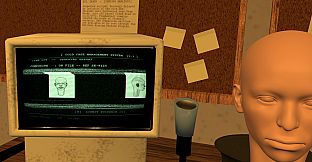
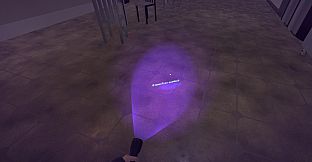
The core loop centers on two distinct roles that demand close coordination. One player acts as the Investigator, navigating dark rooms and locked areas to locate skeletal reports, dental records, witness statements, and photo fragments. These clues directly influence the available options for shaping the victim's face. The other player serves as the Forensic Artist, working at a desk to sculpt features such as the jaw, nose, eyes, brow, cheeks, ears, signs of age, and hair using only verbal descriptions from their partner. Neither sees the other's workspace, which creates natural tension and requires clear communication to refine details like the nose multiple times before submission.
Evidence types unlock specific sliders and adjustments, so the quality of the search determines how accurately the reconstruction can match the victim. Successful cases grant one of three rewards, such as a new tool for exploration or a lasting bonus like expanded carrying capacity or an advantage on the next file. Poor matches yield no rewards, emphasizing careful work without retries at the sculpting stage. Solo play allows one person to handle both roles by moving between the desk and the hallways.
Controls support keyboard and mouse or controllers, with full rebinding options. The experience runs on a single PC through split-screen, across two monitors, or via online connections.
Game Modes
Cooperative sessions form the primary way to experience the game, with one participant focused on evidence collection in the precinct while the other handles the sculpting process. This division encourages discussion and debate over facial details. Single-player mode lets an individual alternate between investigation and reconstruction without a partner.
Additional support for content creators includes Twitch integration, where viewers can activate effects that alter the sculpt, dim the lights, cause the Investigator to drop items, or occasionally correct the face. Streamers customize costs, cooldowns, and hotkeys for these interactions and can disable or pause them as needed. Similar triggers work through tools that connect to local web addresses for platforms like TikTok Live.
Unique Mechanics and Features
Each case begins with an unidentified body and a clay head as the starting point for reconstruction. Players search for physical clues that progressively open sculpting options, making the process feel like a genuine forensic task. The horror atmosphere builds through the isolated precinct environment and the weight of piecing together a lost identity.
Rewards from strong performances carry forward in meaningful ways, such as improved tools or persistent advantages that aid future cases. This structure rewards thorough searches and precise communication without relying on random elements or repeated attempts.
Is It Worth Playing?
The game appeals to players who enjoy cooperative puzzle-solving combined with horror tension and creative decision-making. Its focus on asymmetric roles and verbal collaboration sets it apart from standard investigation titles, suiting those who value teamwork or solo experimentation with both jobs. Streamer tools add replayability for content creators and their audiences through customizable viewer interactions.
Since the title remains in development ahead of its October 2026 release, current interest centers on the described systems of evidence collection, facial sculpting, and co-op dynamics. Fans of simulation-style mechanics in a horror context may find the blend of investigation and reconstruction engaging once it launches.